Best Australian Mobile Casinos in 2026: What Your Phone Reaches, and What Your Bank Will Let Through
 Available in US
Data current as of 23 September 2026, checked against the ACMA Register of blocked and warned services and the Interactive Gambling Act 2001 as amended.

A phone is just another way onto the same offshore sites a desktop browser finds. The Australian market does not license a single online casino product, app or web address, so anything your phone reaches when you tap a “mobile casino” link sits outside Australian law by design. The page below explains how that market actually behaves on a touchscreen, what your own bank does before the offshore operator ever sees the deposit, and which brands the ACMA has already named. It is not a recommendation, and it is not a ranking; the brands appear because the regulator has acted against them, not because they passed any test. The choices on this page are about which reader each fact matters for, not about which operator to join.
Table of Contents
- Money, wallets and what your bank will actually let through
- Payment Rails: Licensed Wagering vs Offshore
- Bonuses, free spins and what they cost
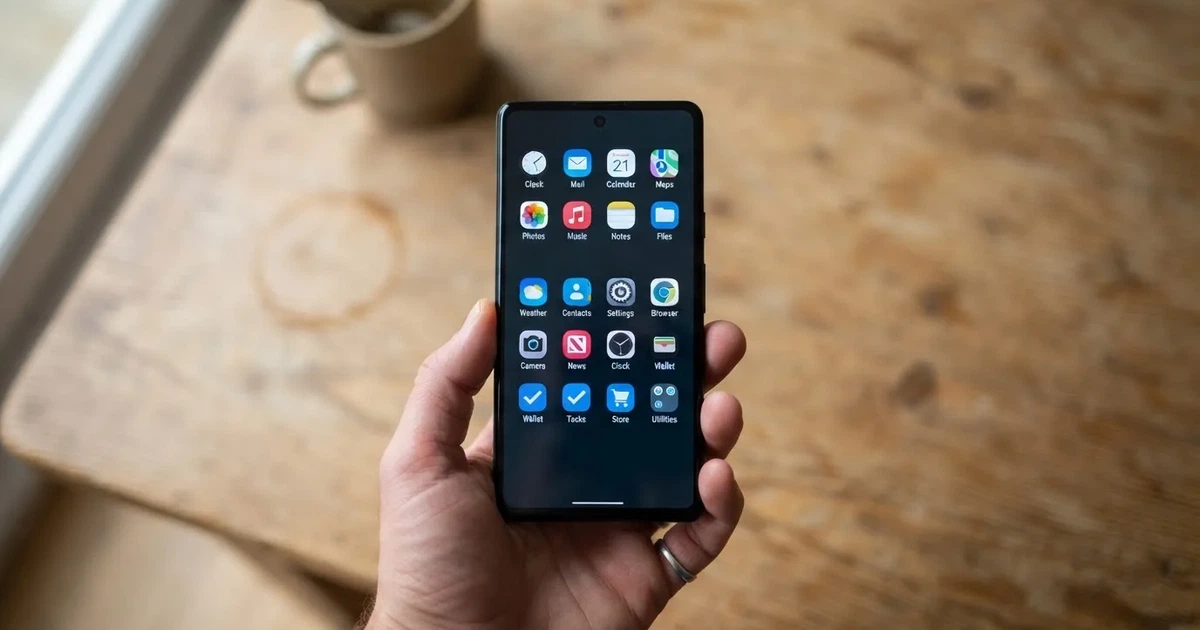
- Touchscreen casino apps, mobile browsers and what is technically different
- The AU offshore casino landscape the ACMA has named
- What is and is not legal on a phone in Australia
- How the ACMA’s blocking tool actually works
- The Australian gambling market’s size and where the leaks are
- Responsible gambling on a phone
- Crypto deposits and offshore mobile casinos
- What this page does and does not do
- Frequently asked questions about mobile casinos in Australia
Money, wallets and what your bank will actually let through
The cheapest way to think about mobile casino money in Australia is to start with the Australian bank, because the bank gets the first and last word. A licensed Australian online wagering service cannot take a credit card, credit-related product or digital currency at all — that has been the rule since the Interactive Gambling Act 2001 was tightened in 2017 and the prohibition was extended in 2023 — so the legal deposit rails on a phone are the same debit-card, bank-transfer, PayID, Osko and BPAY rails a desktop browser sees. Offshore casinos do not follow those rails, and that is the first place the system breaks.

Debit cards sit inside a system most Australian banks now let the customer switch off. Westpac’s gambling block works at the card level: it refuses authorisation of any transaction that arrives under the merchant category code “Betting/Casino Gambling” on eligible personal credit and debit cards. ANZ’s equivalent gambling transaction block, switched on inside the ANZ app, blocks gambling transactions made through a digital wallet such as Apple Pay on the same card, not just the plastic card itself. Commonwealth Bank lets a cardholder apply a gambling lock to eligible cards through the CommBank app, and the bank makes the same plain admission each institution makes: it cannot guarantee every gambling-related purchase will be stopped. ANZ goes a step further and warns that some non-gambling transactions might be blocked in error, and that once the block is on, removing it again requires a 48-hour waiting period. The block stops more than it lets through, but it does not stop everything, and the wording is honest about that.
Apple Pay sits on top of those cards and inherits their blocks. Apple does not charge a fee to consumers for using Apple Pay in stores, online or in apps, so any surcharge that appears at checkout comes from the merchant’s own card-processing fees, not from Apple. Apple also states that transaction limits and PIN requirements for Apple Pay purchases are set by the card issuer or merchant, not by Apple. Apple Pay, Google Pay and Samsung Pay transactions collectively accounted for around 45 per cent of all card payments in Australia by number at the end of 2025, so the wallet is the dominant way an Australian pays with plastic on a phone — and the dominant way a gambling block fires, because the block lives on the card the wallet is presenting. Under the Interactive Gambling Act as amended in 2023, Australian-licensed online wagering services cannot accept payment by credit card or other credit-related products, a restriction that reaches digital wallets linked to a credit instrument.
American Express is the card that runs outside the surcharging reform. The Reserve Bank of Australia’s July 2025 review proposes removing surcharges only on eftpos, Mastercard and Visa card transactions, explicitly leaving American Express outside the scope of the proposed surcharge ban. Amex has historically run as a three-party scheme — issuer, processor and network under one roof — rather than the four-party model Visa and Mastercard use, and the company traces its origins to 1850, when it was founded as a freight-forwarding business; its first charge card launched on 1 October 1958. For a punter paying through a phone wallet, the practical point is that an Amex surcharge on an offshore casino deposit sits in a regulatory grey zone where the bank surcharge regime does not bite.
PayID and Osko are the other side of the deposit story, and the side the regulator treats as the default. Osko, run by Australian Payments Plus, delivers a bank-to-bank transfer between participating Australian banks in under a minute, twenty-four hours a day including weekends, addressed either to a BSB and account number or to a PayID. Paying to a PayID shows the name of the account holder before the transfer is sent, and Australian Payments Plus warns that being asked to transfer to a PayID on an illegal gambling site almost certainly means a scam site. PayID is available at more than a hundred Australian financial institutions, and by April 2025 more than 25 million PayID identifiers had been registered on the New Payments Platform, which became accessible to the public on 13 February 2018 and is owned by New Payments Platform Australia Ltd, a non-profit company whose thirteen shareholders include the Reserve Bank of Australia and the major banks. Platform participants must keep monthly outages to two minutes or less. The platform’s stability is the reason the regulator treats an inbound PayID payment to an offshore casino as both instantaneous and traceable, and the reason a punter is asked to look twice at the account name before sending.
BPAY is the older Australian bill-payment rail and runs on Australian Payments Plus alongside PayID and Osko. A payer enters a Biller Code and a Customer Reference Number printed on the bill; BPAY has operated in Australia since 1997, when it launched on 18 November 1997, and is available through the online banking of more than 140 banks and financial institutions, offered by more than 95,000 businesses. The merger that put BPAY, eftpos and NPP Australia under one roof, Australian Payments Plus, was authorised by the ACCC in September 2021. BPAY is owned equally, through Cardlink Services Limited, by ANZ, Commonwealth Bank, National Australia Bank and Westpac. None of that history changes what matters to a mobile punter: BPAY is the bill-payment rail, not a deposit rail for offshore casinos, and a site asking an Australian for a BPAY transfer to a “biller” that is in fact an offshore operator is misusing a system the customer trusts.
AUSTRAC’s threshold-transaction-report rule, which requires reporting of transfers of A$10,000 or more, applies only to physical cash. Ordinary electronic bank transfers are not subject to that per-transaction reporting requirement, regardless of the amount sent, so the A$10,000 ceiling does not, by itself, flag a large bank transfer to an offshore casino. Reporting happens through other AUSTRAC obligations, not through the threshold rule.
The upshot for a reader on a phone is plain. A licensed Australian wagering service will take a debit card, a PayID, an Osko transfer or BPAY, will not take a credit card or crypto, and will sit inside the BetStop National Self-Exclusion Register. An offshore casino will take a credit card, will take crypto, will not connect to BetStop, and will not accept a complaint from an Australian customer. The customer’s bank can block some of those transactions before they leave the card, cannot block all of them, and will not block them by default — the gambling block is opt-in, and ANZ warns the customer explicitly that removal takes 48 hours.
Payment Rails: Licensed Wagering vs Offshore
| Payment Method | Licensed Australian Wagering | Offshore Casino |
|---|---|---|
| Debit Card | Available | Often blocked |
| Bank Transfer | Available | Unsupported/Risky |
| PayID / Osko | Available | Risky/Scam-prone |
| BPAY | Available | Not a valid rail |
| Credit Cards | Prohibited | Accepted |
| Crypto | Prohibited | Accepted |
Bonuses, free spins and what they cost
The mobile casino bonus is the part of the offer that travels worst from a desktop screen to a phone. On a desktop the page can carry a paragraph of small-print; on a phone the same paragraph gets pinched into a fold the customer has to scroll past, and the small print is the part that carries the cost. The Australian reader who sees a “free spins” or “no deposit” headline on a touchscreen is almost always looking at an offshore casino, because the Australian licensed product is wagering on sport and races, not online pokies or casino games, and licensed wagering carries a different promotional structure altogether. The offshore bonus is the one the phone is most likely to show.
A bonus, in the generic sense, is the operator’s promise of extra play money in exchange for some combination of deposit, wagering and time. A “free spins” offer attaches the extra play to a specific slot title and a fixed stake. A “no deposit” bonus attaches it to nothing at all — sign up and the bonus is in the account. Each shape carries a wagering multiple: a number of times the bonus, the deposit or the combined total has to be turned over before any balance can be withdrawn. The wagering multiple is the number that decides whether the bonus has a real cost or a fictitious one. A 35-times turnover on a small bonus is a large amount of slot play for a small upside; a 10-times turnover on a deposit match is a moderate amount of play for a much larger upside. The marketing word on the offer is “free”; the wagering multiple is the price.
The arithmetic that exposes the price is straightforward. Required turnover is the bonus multiplied by the wagering multiple. Spins to clear the bonus are turnover divided by the stake per spin. Play time in hours is spins multiplied by the five-second interval between spins, divided by 3,600. Each of these is a planning number for the punter, not a guarantee — a slot is volatile, the wagering requirement is a floor and not a ceiling, and most players will run out of money before they run out of requirement. The expected loss is the same arithmetic carried one step further: required turnover multiplied by one minus the return-to-player. On a 96 per cent slot, the expected loss is four cents in the dollar of the turnover the wagering multiple demands. The “free” bonus is, on average, the operator’s money turned over into the operator’s house edge, with the punter’s balance paying for it.
The reader on a phone should see the bonus the way an auditor sees a coupon. The headline is the marketing word. The wagering multiple is the line that matters. The game weighting is the line that quietly doubles the work for a high-house-edge slot. The maximum cashout is the line that caps what the bonus is worth no matter how well the punter plays. The expiry is the line that decides whether the bonus is a real offer or a trap. A bonus without these lines on the page is a bonus the punter cannot evaluate, and a mobile page that hides the lines behind a fold is one that hides the offer’s cost on purpose.
This page does not recommend any bonus. It does not print a code, a promo string or a URL. The reason is structural: the only sources for those strings are affiliate marketing pages, and the offer they describe is an offshore offer on an unlicensed product. The numbers above are what an Australian reader would need to evaluate any bonus that came their way; the absence of a specific code is the point of the page.
Touchscreen casino apps, mobile browsers and what is technically different
The touchscreen product and the desktop product look similar, because most operators run a single web app that resizes to the screen it is shown on. The mechanics differ in three places: input, screen real estate and the wallet. On input, a finger replaces a mouse and the slot machine’s “spin” button is replaced by a single tap on the largest control on the screen; on screen real estate, side panels collapse into hamburger menus and the betting line gets the prime spot; on the wallet, Apple Pay, Google Pay and Samsung Pay dominate, and the merchant-category-code block the bank applies on the card fires identically on the phone.
A native app — one installed from the App Store or Google Play rather than reached through a browser — is a different animal. Apple’s App Store rules prohibit real-money gambling apps for Australians unless the developer holds an Australian licence, and Google Play runs a similar regime; no Australian licence exists for online casino games, so the app the reader is most likely to find is either an offshore wrapper around a mobile browser, a sports-betting app from a Northern Territory-licensed bookmaker, or a poker app running on a peer-to-peer model that sits outside the casino prohibition. A web app reached through Safari or Chrome is the route most offshore casinos take, because it sidesteps the app-store gate entirely and runs on the phone’s HTML5 stack.
The technical difference between a mobile browser session and a desktop browser session is mostly about the screen and the input device, not about the games. The offshore operator’s slot catalogue is the same on phone and desktop: a slot is a JavaScript program and the same program runs on both. Live-dealer tables streamed over video behave the same on a phone, with a smaller picture and a touch-friendly chip stack. The mobile browser is not blocked by the ACMA any differently than a desktop browser; the block sits at the internet service provider level, and the ISP blocks the domain rather than the device. A reader who reaches the same offshore casino on a phone and on a desktop is reaching the same product.
The phone, however, adds two layers of friction a desktop does not have. The first is biometric authorisation: Apple Face ID, Touch ID and Android equivalents gate payments inside the wallet, and the merchant never sees the card number. The second is the gambling block on the card: the bank’s block fires on the card presented through the wallet, and on a phone that block is on by default in fewer than half of accounts. The Australian bank has, on paper, the most powerful single switch on the offshore casino deposit, and the bank has chosen to make that switch opt-in. The phone is where that choice lives.
The AU offshore casino landscape the ACMA has named
The brands on this page are not a ranking. They are the operators the ACMA itself has named in a formal warning under the Interactive Gambling Act 2001 for offering prohibited online casino services to people in Australia. Each entry is what the regulator said about the operator, the date it said it, and — where research carries it — what the operator’s own listings report about support for a particular subject. Where research carries no data on a subject, this page does not attach the operator to that subject at all: the brand appears on its ACMA action and the licence reality, not on subjects research did not cover.
| Brand | ACMA action and date | Operator named by the ACMA | Subject support |
|---|---|---|---|
| RocketPlay | Formal warning, March 2026; earlier warning to Dama N.V., May 2022 | Pulsup Ltd | Listings only — Gamblinginsider.com |
| Level Up Casino | Formal warning, May 2022 | Dama N.V. | Listings only — Westpac.com.au |
| Woo Casino | Formal warning, March 2025 | Dama N.V. | — |
| Spirit Casino | Formal warning, May 2025 | Dama N.V. | — |
| National Casino | Formal warning, July 2025 | Consolutetish S.R.L. | Listings only — acma.gov.au, austrac.gov.au, betstop.gov.au |
| Bizzo Casino | Formal warning, July 2025; earlier warning to TechSolutions, 2022 | Consolutetish S.R.L. | Listings only — Gamblinginsider.com |
| Ignition Casino | Formal warning, July 2025 | Bamboo Media | — |
| Instant Casino | Formal warning, February 2025 | EOD Code SRL | Listings only — Ecopayz.com, Payid.com.au |
| Jackbit | Formal warning, April 2026 | Ryker B.V. | — |
| Casino Intense | Formal warning, April 2025 | Sterplay Holding Ltd | Listings only — austrac.gov.au, betstop.gov.au, Gamblinginsider.com |
| Sky Crown | Formal warning (September 2022 publication) | Hollycorn N.V. | — |
Each row tells the same story in different language. None of these brands is licensed to offer online casino games in Australia, whatever offshore licence the site displays. The licence a player sees on the casino’s footer is a licence to operate in another jurisdiction — Curaçao, Anjouan, Costa Rica — and it does not authorise the taking of an Australian deposit for an online casino game. The brand a player sees is also the brand the regulator has named, which means the brand has been on the ACMA’s radar long enough to attract a formal warning, and any marketing claim of regulatory standing on the Australian market is contradicted by the regulator’s own published action.
What the ACMA blocking rate tells you about the market
The arithmetic that belongs to this page is the ACMA’s blocking rate, and it belongs here because it is the rate at which the regulator is keeping the offshore product off the Australian internet. The figures are research’s: a running total of 1,751 illegal gambling and affiliate marketing websites blocked since the first blocking request in November 2019, reported by the ACMA in June 2026, and a round of 12 further websites blocked in the same month — 7Signs, ChromaBet, Donbet, Duospin, Freshbet, Slots Gem, Jacks Club, Lucky Start, Pointsbetz.com, Spinrise, Vinyl Casino and Wildsino. The time span between November 2019 and June 2026 is roughly 79 months. The blocking rate works out to somewhere in the band of 22 sites per month across the whole period, with the latest monthly round of 12 sitting well above that average and earlier rounds, by all published indications, sitting below it; the band is the honest answer, because the ACMA does not publish monthly totals, only rolling figures, and the rate above is what those rolling figures imply.
The condition on that band is the period it covers. The first blocking request went out in November 2019; for the years before that the ACMA had no blocking power at all, because the Interactive Gambling Amendment Act 2017 had only just given the regulator the ability to direct ISPs to block sites. The pace of blocking has stepped up sharply in 2024 and 2025 as the ACMA’s enforcement function has matured, so a band that averages the whole period flatters the early years and flatters the regulator’s record before the tools were working. Read the band as a long-run average, not as the rate at which new sites are being added today.
RocketPlay
RocketPlay is the brand on this page with the freshest ACMA action. The ACMA issued a formal warning under the Interactive Gambling Act 2001 to Pulsup Ltd over RocketPlay in March 2026, and the same brand sits inside an earlier Dama N.V. warning from May 2022 that named six casino brands at once — RocketPlay among them. The pattern is the one the ACMA’s enforcement record is built out of: a brand operates, the regulator warns the operator of record, the brand re-emerges under a new corporate wrapper, and the regulator warns again. The Australian reader who lands on a RocketPlay promotion on a phone is landing on the third cycle of the same brand under the regulator’s published record.
The verdict here is short. A brand with two formal warnings over four years is not a brand the regulator has left alone; it is one the regulator has named, twice, by name. The Australian player has no Australian licence to point at, no Australian complaints body, and no Australian deposit rail the operator is honouring. The marketing on the page is the operator’s. The regulator’s view is the ACMA’s. The two do not align, and the page is not going to dress them up to look like they do.
Level Up Casino
Level Up Casino sits inside the May 2022 Dama N.V. warning, the warning that covered six brands at once — Bambet, Dazard, Level Up, Rocketplay, Wild Tornado and Cobra Casinos — and is the longest-standing Dama N.V. brand on this list. The brand has not been the subject of a fresh ACMA action in the 2025–2026 window, and that is not because the regulator has stopped looking; it is because the regulator’s enforcement is round-by-round, and a brand that is already on the published list is one the next round does not need to repeat.
The verdict on Level Up Casino is the same as on RocketPlay, with the same gap between the regulator’s view and the operator’s marketing. A brand on the 2022 list is a brand the regulator named three years ago, and the licence the operator displays has not changed since.
Woo Casino
Woo Casino was the subject of a formal warning to Dama N.V. in March 2025, the second Dama N.V. action on this list after the 2022 warning and the first of two Dama N.V. warnings in 2025 alone. The Dama N.V. pattern is the most instructive in the ACMA’s published record, because the same corporate name sits across multiple brands and the regulator’s warnings cluster around the operator rather than the brand. The Australian reader who sees a “Dama N.V.” licence on a casino’s footer is seeing a corporate structure that has been on the ACMA’s warning list twice in three years.
The verdict is structural. Woo Casino is a brand; Dama N.V. is the operator the regulator has named; the licence on the footer is the licence the regulator has named in two separate actions. The reader is not choosing between an offshore brand and a licensed Australian product; the reader is choosing between an offshore product that has been warned twice and an Australian licensed product that does not exist for online casino games.
Spirit Casino
Spirit Casino carries the second Dama N.V. warning of 2025, dated May 2025 and sitting two months after the Woo Casino warning. The pattern is again an operator-level one: the ACMA named Dama N.V., not the individual brand, and the regulator’s record shows the operator appearing across multiple brand wrappers. The Australian reader’s exposure to Dama N.V. extends across at least three brands on this page alone — RocketPlay and Level Up Casino from 2022, Woo Casino from March 2025, Spirit Casino from May 2025 — and the regulator’s view of the operator has hardened across the period rather than softened.
The verdict is identical in shape to Woo Casino’s. A brand inside a multi-brand operator with a fresh 2025 warning is not a brand the regulator considers compliant with the Interactive Gambling Act 2001. The reader looking at Spirit Casino on a phone is looking at the latest in a sequence of operator-level actions.
National Casino
National Casino sits inside a Consolutetish S.R.L. warning from July 2025, the same operator named in the same round as Bizzo Casino. The July 2025 round is the largest Consolutetish S.R.L. action on the regulator’s published record, and it is one of three operator-level actions in that month — the third, Bamboo Media over Ignition Casino, is treated separately below. The pattern is the same Dama N.V.-style operator-level clustering, with a different corporate name.
The verdict is the same shape as the Woo and Spirit verdicts, with one addition. National Casino is named on listings research carried — acma.gov.au, austrac.gov.au and betstop.gov.au — which means the brand’s footprint in directories a regulator or a treatment service would consult is wider than the regulator’s warning alone suggests. The brand a reader sees on a phone is one the regulator has named, the brand a treatment service might surface is the same brand, and the gap between the marketing and the regulator’s record is the gap the reader is being asked to ignore.
Bizzo Casino
Bizzo Casino was the subject of a Consolutetish S.R.L. formal warning in July 2025, the same operator named in the same round as National Casino. Bizzo had already been the subject of a 2022 formal warning to TechSolutions (CY) Group Limited and TechSolutions Group N.V., and the brand has now sat under two separate corporate names on the ACMA’s published list. The 2022-to-2025 sequence is the longest-running corporate re-wrapper on this page, and the regulator’s record shows the brand re-emerging under a new operator and being warned again.
The verdict follows from the sequence. A brand that has been warned twice under two different operators is a brand that has survived a regulator action by changing corporate clothing, and the Australian reader on a phone is reading the second iteration of the same brand. The marketing on the site does not mention the regulator; the regulator’s view is the one that survives the marketing.
Ignition Casino
Ignition Casino sits inside a July 2025 warning to Bamboo Media, the third operator-level action in the same ACMA round as National Casino and Bizzo Casino. Bamboo Media is not a name that appears elsewhere on the regulator’s published record on this page, which makes Ignition Casino a useful counterpoint to the Dama N.V. and Consolutetish S.R.L. patterns: it shows that the regulator’s enforcement reaches operators outside the major multi-brand groups as well as inside them.
The verdict on Ignition Casino is the simplest on the page. A brand with one ACMA action and no Australian licence is a brand the regulator has named and the Australian licensed market has nothing to do with. The reader looking at Ignition Casino on a phone is looking at an offshore product that the regulator has called out by name.
Instant Casino
Instant Casino is the brand on this page with the earliest 2025 action: a formal warning to EOD Code SRL in February 2025. The February action sits ahead of the Dama N.V. cluster in 2025 and the Consolutetish S.R.L./Bamboo Media cluster in July, and the regulator’s published record treats each operator separately. Instant Casino is named on listings research did carry — Ecopayz.com and Payid.com.au — which puts the brand inside directory infrastructure that crosses from the casino side into the payment-rail side of the market.
The verdict on Instant Casino is the same shape as the others, with the payment-rail caveat sharper. A brand whose listings footprint crosses into PayID and eCoPayz directories is a brand that is wired into payment infrastructure the Australian regulator treats as a default for the licensed product, and an offshore operator using that infrastructure to take Australian deposits is asking the customer to use a regulated rail against the regulator’s own rules.
Jackbit
Jackbit sits inside an April 2026 formal warning to Ryker B.V., one of two brands named in the same round (CasinOK is the other). The April 2026 action is among the freshest on this page and sits inside the same enforcement year as the RocketPlay warning to Pulsup Ltd. The brand is not on any subject directory research carried, and the regulator’s published action is the only entry in this row.
The verdict is the regulator’s. A brand with an April 2026 warning is a brand that has just been named, and the corporate wrapper — Ryker B.V. — is not a name that appears on the regulator’s earlier published record. The Australian punter considering a deposit here is engaging with an operator the regulator has just flagged.
Casino Intense
Casino Intense sits inside an April 2025 formal warning to Sterplay Holding Ltd, an action that sits in the same year as the Woo Casino and Spirit Casino warnings and predates the Consolutetish S.R.L. and Bamboo Media actions by three months. Casino Intense is named on listings research did carry — austrac.gov.au, betstop.gov.au and Gamblinginsider.com — which is the same directory pattern as National Casino, with one additional directory.
The verdict follows the National Casino shape. A brand with one regulator action and listings on regulator-side directories is a brand that has crossed paths with the regulator and the regulator’s directory ecosystem; the reader looking at Casino Intense on a phone is reading a brand that the regulator has named and that the regulator’s own directories surface.
Sky Crown
Sky Crown is the brand with the longest-standing ACMA action on this page: the formal warning to Hollycorn N.V. over Sky Crown and Blue Leo was published in September 2022. The publication date sits three and a half years before the most recent actions on the list, and the brand has not been the subject of a fresh formal warning in the 2025–2026 window. The brand is not named on any directory research carried.
The verdict on Sky Crown is the regulator’s view, aged. A brand on the regulator’s list from 2022 is a brand the regulator named when the regulator’s enforcement function was newer; the brand has not fallen off the list because the regulator’s record is cumulative. The reader on a phone is reading a brand whose regulator history is the oldest on the page, and the marketing is no more aligned with Australian law now than it was in September 2022.
What is and is not legal on a phone in Australia
The legal frame around mobile online casino play in Australia is the Interactive Gambling Act 2001, strengthened by the Interactive Gambling Amendment Act 2017, and amended again in 2023. The Act makes it an offence to provide online casino games, online pokies or in-play betting to a person physically in Australia, and no state or territory issues a licence for any of those products. What is licensable is wagering on races and sport placed before the event, lotteries and keno. In practice the wagering side is licensed by the Northern Territory — the Northern Territory Racing and Wagering Commission regulates 52 of Australia’s online bookmakers, including Sportsbet, Bet365 and Ladbrokes, which are licensed in the Territory for tax reasons. The commission has no full-time staff and meets once a month in Darwin. The Commission’s scale is part of the story: the licensable product is sports and race wagering, not casino games, and the regulator that runs the licensable product runs it part-time.
The ACMA is the enforcement agency. It investigates, issues formal warnings and directs internet service providers to block illegal sites; by June 2026 the ACMA had asked ISPs to block 1,751 illegal gambling and affiliate marketing websites since the first blocking request in November 2019, and more than 230 unlicensed gambling services had left the Australian market since enforcement was strengthened in 2017. The individual player is not prosecuted — the Interactive Gambling Act 2001 targets the provider — but the offshore site gives no Australian consumer protection, no Australian complaints body and no Australian recourse if a withdrawal is refused, and the site can be blocked while a balance is still on the account.
The 2026 reform sits on top of this frame. The Interactive Gambling Amendment (Gambling Reform) Bill 2026 passed Parliament on 19 August 2026; its advertising and inducement measures commence on 1 January 2027. The Bill is law with a start date, not yet in force on a page written in 2026, and the inducement measures it carries are the measures that will, on their commencement, change what an offshore casino can advertise to an Australian customer.
Credit cards and digital currency are out as payment for licensed online wagering. The Interactive Gambling Act as amended in 2023 prohibits Australian-licensed online wagering services from accepting payment by credit card or other credit-related products, and digital currency is banned as a deposit method; the prohibition came into force on 11 June 2024, with penalties up to A$247,500 for operators that breach it. The legal deposit rails on the licensed product are debit card, bank transfer, PayID/Osko and BPAY. An offshore casino asking an Australian for a credit card or a crypto deposit is operating outside the Australian rules, and the Australian customer’s bank is the layer that catches part of that traffic.
The minimum age for any Australian gambling product is 18. BetStop, the National Self-Exclusion Register, has been live since August 2023 and binds Australian-licensed online and phone wagering services; an offshore casino is not connected to it, and a customer who has self-excluded through BetStop is not protected against an offshore casino deposit. The National Gambling Helpline is 1800 858 858 — free, twenty-four hours a day — and the same service runs chat at Gambling Help Online. The help line is the line a reader in distress should call; the offshore casino is not.
The tax frame is the last piece of the legal picture. Gambling winnings of a recreational player are not assessable income under section 6-5 of the ITAA 1997, and losses are not deductible, unless the person carries on a business of gambling. The Australian Taxation Office treats the recreational punter as a punter, not as a trader, and the standard advice — “check with the ATO” — covers the edge cases where a punter has crossed into a business.
How the ACMA’s blocking tool actually works
The Interactive Gambling Amendment Act 2017 gave the ACMA the power to direct Australian internet service providers to block illegal gambling websites by domain, and the first blocking request went out in November 2019. The ACMA’s blocking tool is a domain-level block: the regulator identifies the illegal site, asks ISPs to block the domain, and the block fires at the ISP’s network rather than at the customer’s device. The mechanism is blunt and it works at scale: a blocked site is unreachable from a connection on a participating ISP, on a phone or on a desktop, without the customer taking any action.
The ACMA does not publish a monthly blocking total. It publishes a running total, and the running total is the one the regulator cites when asked about progress; by June 2026 the running total was 1,751 blocked sites and affiliate marketing destinations. The round reported in June 2026 added 12 websites — 7Signs, ChromaBet, Donbet, Duospin, Freshbet, Slots Gem, Jacks Club, Lucky Start, PointsBetz, Spinrise, Vinyl Casino and Wildsino — to the running total. The pace of the running total is the only pace the ACMA reports; the pace at which new sites are added is a derived figure, and the derived figure is the band quoted above.
The block is not a takedown. A blocked domain is still online for non-Australian customers; it is only unreachable for connections on the ISPs that have received the ACMA direction. A blocked site can re-emerge under a new domain, and the ACMA’s record shows that re-emergence pattern across the operator-level warnings — Dama N.V. alone has been warned across multiple brands over four years. The block is a way of raising the cost of reaching the Australian market, not a way of removing the offshore product.
The affiliate marketing side of the block is the one that catches the casual reader. The 1,751 figure includes affiliate marketing websites, not just gambling sites, and an Australian reader who has clicked through a Google result for an “Australian mobile casino” review has often clicked through an affiliate site that itself falls inside the ACMA’s blocked set. The block therefore reaches the entry point, not just the destination, and an Australian reader looking at a search result page is closer to a block than the destination itself suggests.
The Australian gambling market’s size and where the leaks are
H2 Gambling Capital’s 2025 report estimates that Australians lose about A$3.9 billion a year to illegal gambling sites, and that the share of gambling going through legal channels fell from 74 per cent in 2021 to 64 per cent. The fall in the legal share is the leak the regulator is trying to plug, and the A$3.9 billion figure is the size of the offshore flow. The Australian licensed wagering market is not a casino market; the A$3.9 billion figure is the offshore casino and offshore wagering combined, and the proportion of it that flows through casino products specifically is the proportion the Interactive Gambling Act 2001 is trying to reduce to zero.
The licensed share is 64 per cent; the illegal share is 36 per cent of total gambling spend. The 36 per cent is the headline. The headline is the regulator’s case for the block-and-warn enforcement regime, and the headline is the reader’s reason for being on this page: the illegal share is the share that reaches the reader’s phone, and the legal share is the share that does not include casino games at all.
The Northern Territory Racing and Wagering Commission’s licensing of 52 online bookmakers — Sportsbet, Bet365, Ladbrokes among them — is the legal wagering side of the market, and the commission’s part-time operation is the regulator’s footprint on that side. The legal casino side of the market does not exist. The 36 per cent illegal share is therefore not a share of an existing legal casino market; it is a share of a market whose legal casino side has been removed by statute.
Responsible gambling on a phone
The responsible gambling frame for mobile play in Australia is the same as for desktop play, with the phone adding two layers: the gambling block on the card, and the help line in the pocket. The National Gambling Helpline is 1800 858 858, free and twenty-four hours a day, with chat at Gambling Help Online. The help line is the line a reader in distress should call; the offshore casino is not a service that handles distress, and an offshore casino has no obligation to.
BetStop, the National Self-Exclusion Register, has been live since August 2023 and binds Australian-licensed online and phone wagering services. A punter who has self-excluded through BetStop is excluded from the licensed wagering market; the punter is not excluded from the offshore casino market, because offshore casinos do not connect to BetStop. The exclusion is partial by design, and the partial design is the gap a reader with a gambling problem is most at risk of falling through.
The bank-side block is the other layer. Westpac’s gambling block, ANZ’s gambling transaction block and Commonwealth Bank’s gambling lock all sit at the card level, and the block fires whether the transaction comes through a wallet on a phone or through a card-present terminal. ANZ’s block applies to digital wallet transactions on the same card; the others apply to the card directly. ANZ warns explicitly that some non-gambling transactions might be blocked in error and that removing the block takes 48 hours, and Commonwealth Bank warns that it cannot guarantee every gambling-related purchase will be stopped. The block is a strong tool that is not a complete tool, and the honest framing is the one the banks use.
The reader’s position, then, is layered. The offshore casino is reachable from a phone if the domain is not blocked by the ISP and the card is not blocked by the bank. The bank block is opt-in. The ISP block is regulator-driven. The self-exclusion register is licensed-only. The help line is twenty-four hours a day, free and confidential. The order in which these layers matter is the order in which they fire: the ISP block fires first, the bank block fires at the point of payment, the self-exclusion register binds licensed operators only, and the help line is the line the reader calls after the other layers have not held.
Crypto deposits and offshore mobile casinos
Crypto sits at the intersection of the offshore market and the licensed market’s prohibition. Under the Interactive Gambling Act as amended, digital currency is banned as a deposit method for Australian-licensed online wagering services, with the prohibition in force from 11 June 2024. The same prohibition does not bind an offshore casino, because the offshore casino is not an Australian-licensed operator, and the offshore casino is therefore the destination a crypto-holding Australian punter is most likely to be steered toward.
The mechanics of a crypto deposit on a phone are not specific to gambling. A punter sends bitcoin, ethereum or a stablecoin from a self-custody wallet or an exchange account to the casino’s wallet address; the casino credits the deposit after a number of confirmations on the relevant blockchain; the punter plays in a crypto-denominated balance. The withdrawal is the same path in reverse. The block at the bank is not relevant, because the bank is not in the transaction. The block at the ISP is at the domain, not at the wallet. The block at AUSTRAC is at the cash threshold, and an electronic transfer — including a crypto transfer — is not subject to the A$10,000 threshold-transaction-report rule.
The reason this page treats crypto as context rather than as a route is that the route is exactly what the regulator is trying to close. The 2023 amendment closed credit cards and credit-related products as deposit methods on the licensed product; the 2024 prohibition closed digital currency on the licensed product; the offshore product is the path that remains. A reader looking at crypto deposits on a phone is looking at the path the licensed market has been engineered to avoid.
What this page does and does not do
This page describes the offshore mobile casino market in Australia, the regulator’s view of it, the bank-side tools that limit it and the help-line services that respond to it. It does not recommend any operator, does not print a bonus code, a promo string or a URL, and does not rank the brands on it. The brands are listed because the ACMA has acted against them; the order in which they appear is the order research carries, and that order is the order in which the regulator’s published record treats them.
The reader’s decision, on the evidence this page carries, is between the licensed wagering product — which is not a casino product — and the offshore casino product — which is unlicensed in Australia, blocked at the ISP for some domains, blocked at the bank for some cards, and excluded from BetStop by design. The choice the reader makes on a phone is the same choice the reader would make on a desktop; the phone changes the wallet, not the regulator’s view of the product.
The figure that closes the page is the A$3.9 billion H2 Gambling Capital estimate, because it is the figure that makes the rest of the page legible. A market the size of A$3.9 billion a year is a market large enough to attract the regulator’s enforcement, the bank’s block and the affiliate industry’s marketing at the same time. A market of that size, on the Australian side, is a market where the licensed product does not include casino games at all. The reader looking at a mobile casino on a phone in Australia is looking at the leak the regulator is trying to plug, and the page above is the picture of what the leak looks like in 2026.
Frequently asked questions about mobile casinos in Australia
Is there a mobile casino app that is legal to install and use in Australia?
No. Online casino games and online pokies cannot be licensed anywhere in Australia under the Interactive Gambling Act 2001, so no Australian-licensed mobile casino app exists. The App Store and Google Play do not list Australian-licensed real-money casino apps for that reason, and any app the reader finds in those stores is either a sports or race wagering app licensed in the Northern Territory or an offshore wrapper around a mobile browser. The web app reached through Safari or Chrome is the route most offshore casinos take.
How does mobile casino play technically differ from playing through a desktop browser?
The mechanics are largely the same, because most operators run a single web app that resizes to the screen it is shown on. The differences are in the input device — a finger replaces a mouse — in the screen real estate — side panels collapse into hamburger menus — and in the wallet, where Apple Pay, Google Pay and Samsung Pay dominate. The slot catalogue is the same on phone and desktop, and live-dealer tables behave the same. The merchant-category-code block the bank applies on the card fires identically on the phone, because the block lives on the card the wallet presents.
Can a mobile browser be blocked from reaching an offshore casino the same as a desktop one?
Yes, because the ACMA’s block sits at the ISP level rather than at the device. The regulator directs Australian ISPs to block illegal sites by domain, and the block applies to any connection on a participating ISP, on a phone or on a desktop. By June 2026 the ACMA had asked ISPs to block 1,751 illegal gambling and affiliate marketing websites since the first blocking request in November 2019. The block is domain-level, not app-level, and a blocked site can re-emerge under a new domain.
Do offshore mobile casino sites use the same games as their desktop versions?
Yes. Offshore operators run the same game catalogue on phone and desktop, because a slot is a JavaScript program and the same program runs in both contexts. Live-dealer tables streamed over video are the same on phone and desktop, with a smaller picture and a touch-friendly chip stack on the phone. The product is not a separate product; the screen is a separate screen.
Is a mobile casino covered by the same warnings the ACMA issues for desktop sites?
Yes. The ACMA’s formal warnings under the Interactive Gambling Act 2001 name the operator and the brand, not the device. The warnings on this page — over RocketPlay, Level Up Casino, Woo Casino, Spirit Casino, National Casino, Bizzo Casino, Ignition Casino, Instant Casino, Jackbit, Casino Intense and Sky Crown — apply whether the customer reaches the brand through a mobile browser, a desktop browser or an app wrapper. The block at the ISP and the warning at the regulator both fire at the brand level rather than at the device level.
What’s the legal difference between a mobile casino app and a licensed pokies venue’s app?
A licensed pokies venue’s app, where one exists, sits inside the state or territory framework that regulates the physical venue, and the venue’s gaming machines are regulated as part of the venue’s licence. A mobile casino app that offers real-money casino games to a person in Australia sits outside the Interactive Gambling Act 2001 by definition, because no Australian licence for online casino games exists. The licensed venue’s app is licensed; the mobile casino app is not, and the reader who installs the second is installing an unlicensed product on the same phone.
Published by the Pokies Info Hub team.