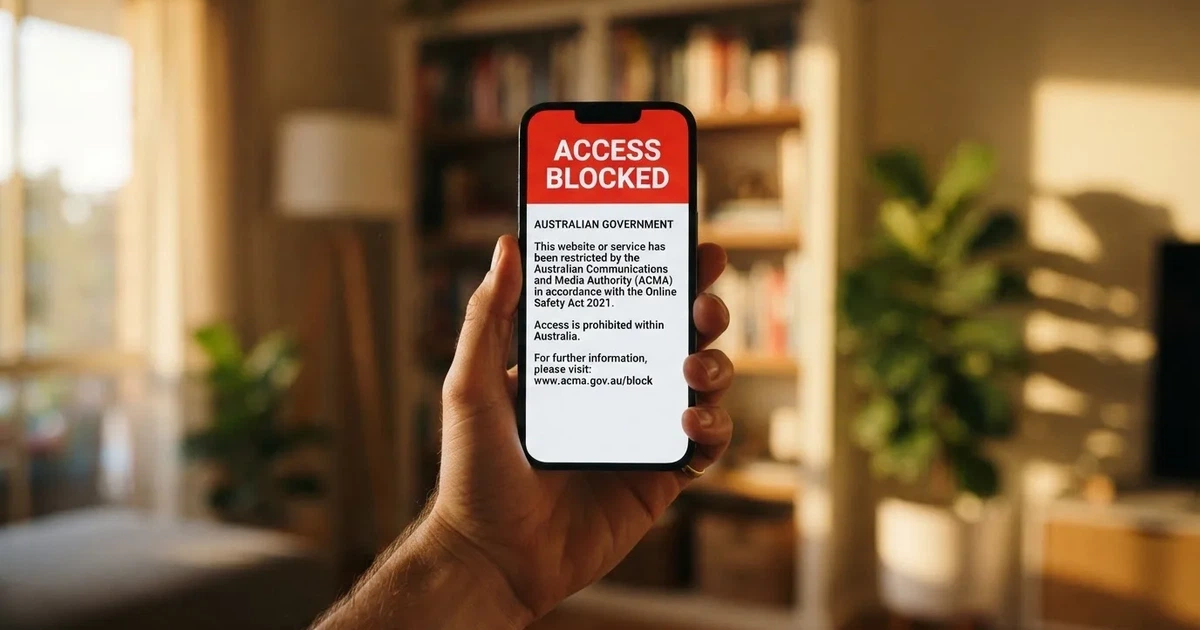
Best aussie online casino in 2026: every option is offshore, and the regulator is keeping score
 Available in US
Data current as of 23 September 2026 and cross-checked against the ACMA’s published register of formal warnings and blocking actions.

“Best” is the word that does the heaviest lifting in that search. In Australia, online casino games and online pokies cannot be licensed at all. No state or territory issues a licence for them, no operator is recognised as Australian for that product, and no comparison can promote itself above the regulator that fines and blocks it. So the question this page answers is not “which one pays the fastest” but something more useful: which offshore brands the ACMA has actually named, what was said about them, and what a player in Australia is left with when every option is, by definition, outside the law.
That framing is the whole reason this page exists. A list of casino bonuses would not need to be written by anyone but an affiliate. A list of legal online casino products would be a blank page. What can be written, and is below, is the underside of the search — the warnings, the blocked domains, the payment-rail workarounds and the one legal alternative that actually delivers a casino night without breaking the law.
Table of Contents
- Bonuses and free spins — what an “Aussie casino bonus” actually pays
- Mobile and app — what “Aussie casino app” actually delivers
- New casinos — what “new Aussie casino” actually means
- Ranking the offshore names the ACMA has named
- Overview — what an Aussie online casino actually is
- Legality and regulation — what is and is not licensed in Australia
- Responsible gaming — where to get help, and what is and is not covered
- Payments and payout speed — what the Australian rails actually do
- The blocking arithmetic — how the ACMA’s pace translates into a rate
- Frequently asked questions
Bonuses and free spins — what an “Aussie casino bonus” actually pays
The phrase “Aussie casino bonus” suggests something the operator hands a player for signing up. The mechanics are ordinary enough anywhere in the world: a deposit match, a batch of free spins, sometimes a no-deposit chip to test the lobby. In an Australian context, none of those mechanics change — but the legal context changes everything around them. The site offering the bonus is offshore, the bonus is governed by that operator’s house rules, and the only Australian body that has ever addressed that operator in writing is the ACMA, usually with a formal warning.

For background only: a typical online casino welcome package might combine a matched first deposit with a fixed number of free spins on named slots, parcel out additional matches across the second and third deposits, and attach a wagering requirement expressed as a multiple of the bonus amount. Wagering requirements, game-weighting rules and max-cashout caps are the substance of any such offer, and they are the part affiliate sites gloss over. None of those specifics come from an Australian source — they are not in this page’s inputs, and they will not appear here as invented figures.
What is fair to say, without inventing any number, is the shape of the cost. A bonus is paid out by meeting a turnover target, where turnover is the wagered amount the operator sets. The faster a player wagers through the bonus, the quicker the bonus is unlocked, but the more the player exposes their bankroll to the house edge on the games that count. Free spins on a low-RTP slot clear slowly in real terms even when the spin count is generous. And the moment an offshore site refuses a withdrawal, the player has no Australian complaints body to contact — which is the spec that matters more than the headline number, and the one most “best of” lists never mention.
A few ground rules from the regulatory side, since they are the only Australian-grounded facts in this shelf. Since 11 June 2024, Australian-licensed online wagering services cannot accept payment by credit card or credit-related products, and digital currency is also out. The legal deposit routes for licensed wagering are debit card, bank transfer, PayID and Osko, and BPAY. A casino asking for a credit card or a crypto deposit is, by definition, not operating under Australian rules — which matches the rest of what is on this page, but is worth stating plainly. The bonus is irrelevant until the funding route makes sense.
Mobile and app — what “Aussie casino app” actually delivers
A search for an Australian casino app lands on two kinds of result, and the difference matters. The first is the mobile browser version of an offshore casino — the same site, squeezed into a phone screen, with touch-friendly buttons and sometimes a portrait-only lobby. The second is a downloadable app, distributed through an app store or as an APK outside one, that wraps the same product in a launcher icon.
Neither of those products is regulated by an Australian authority for casino play. The Australian app stores do not curate the offering against local consumer law, because there is no local licence to curate against. A “Play Store” badge next to a casino app reflects Google’s own policies, not an Australian regulator’s view of the operator. The same is true for iOS, where Apple’s rules around real-money gambling apps vary by jurisdiction and where Australian availability of a casino app does not amount to Australian endorsement.
What the mobile layer does well, when it works, is what any well-built web app does: it loads the lobby fast, presents the cashier without a desktop detour, and keeps the live-dealer stream within reach of one tap. Where it fails — and where the offshore flag shows — is in the parts the operator does not control: Australian bank gambling blocks, Australian card surcharging rules, and the absence of Australian complaint recourse when something goes wrong on a mobile withdrawal at 11pm.
The most useful Australian-side fact on this shelf is that the gambling block Australians can switch on in their own banking app works on digital wallets too, not only on the physical card. ANZ’s gambling block, switched on inside the ANZ app, blocks gambling transactions made through a digital wallet such as Apple Pay on an eligible card, and a Westpac gambling block refuses authorisation of transactions registered under the merchant category code “Betting/Casino Gambling” on eligible personal credit and debit cards. Commonwealth Bank offers a comparable lock via the CommBank app. None of these blocks is foolproof — each bank’s terms say so — but each one is a switch a player controls, which is more than the app store can offer.
Then the practical limit on the wallet layer. Apple Pay does not charge consumers a fee to use it, but any surcharge on a gambling transaction is the merchant’s own card-processing fee, not Apple’s. Transaction limits and PIN requirements for Apple Pay purchases are set by the card issuer or the merchant, not by Apple. Together those two facts mean the wallet itself is rarely the obstacle — the merchant’s category code, and the bank’s block, are.
New casinos — what “new Aussie casino” actually means
A new online casino in Australia is not a new legal option. There is no pipeline by which a fresh brand obtains Australian permission to offer online casino games, because no such permission exists. What the marketing calls “new” is simply the latest offshore site to spin up — a new domain, a new Curacao-issued licence displayed in the footer, and the same underlying prohibition sitting underneath.
That is worth pausing on, because it inverts the usual logic of “new is better.” In a regulated market, a new casino is one trying to win market share from incumbents, and the regulator is the referee making sure the newcomer’s product is fair. In the Australian context, the new site is also outside the law, and the “newness” only means it has not yet attracted the ACMA’s attention — or, in some cases, it has and the formal warning has not yet been published.
For the reader, two practical conclusions follow. First, a fresh domain is no safer than a long-running one — if anything, the offshore operator behind it has had less time to build a withdrawal track record a player could check. Second, the launch hype around a “new” site tends to concentrate the same aggressive bonus terms that older sites have already cooled, which means the wagering multiples are heavier rather than lighter. The marketing vocabulary of “launch offer” hides the same risk profile under a fresh banner.
The Australian-side anchor for this shelf is the ACMA’s enforcement pace, which has not slowed. By mid-2026 the ACMA had asked Australian ISPs to block more than 1,750 illegal gambling and affiliate marketing websites. The first blocking request was in November 2019, and the most recent published round named a fresh batch of twelve: 7Signs, ChromaBet, Donbet, Duospin, Freshbet, Slots Gem, Jacks Club, Lucky Start, Pointsbetz, Spinrise, Vinyl Casino and Wildsino. New brands, all blocked. The trend line is the point.
Ranking the offshore names the ACMA has named
There is no ranking to give. Each operator below appears because the ACMA issued a formal warning about it for offering prohibited services to Australians. The page is upfront about that — a list of names the regulator itself has called out is the most useful thing this shelf can deliver, because no other “best” list acknowledges the same fact. The operator’s own licence, where one is shown, is not an Australian licence and does not change what the ACMA has said.
The table uses four columns: brand, the ACMA action and its date, the operator entity named in the warning, and subject support. The first three come straight from the ACMA’s published register; the fourth records what the consults reported on each brand, and is dropped where the consults carried nothing.
| Brand | ACMA action and date | Operator named by the ACMA | Subject support |
|---|---|---|---|
| RocketPlay | Formal warning, March 2026 | Pulsup Ltd | listings only |
| Level Up Casino | Formal warning, May 2022 | Dama N.V. | listings only |
| Woo Casino | Formal warning, March 2025 | Dama N.V. | — |
| Spirit Casino | Formal warning, May 2025 | Dama N.V. | — |
| National Casino | Formal warning, July 2025 | Consolutetish S.R.L. | listings only |
| Bizzo Casino | Formal warning, July 2025 (and earlier 2022 to TechSolutions) | Consolutetish S.R.L. | listings only |
| Ignition Casino | Formal warning, July 2025 | Bamboo Media | — |
| Instant Casino | Formal warning, February 2025 | EOD Code SRL | listings only |
| Jackbit | Formal warning, April 2026 | Ryker B.V. | — |
| Casino Intense | Formal warning, April 2025 | Sterplay Holding Ltd | listings only |
| Sky Crown | Formal warning, September 2022 | Hollycorn N.V. | — |
A note on the column. Subject support is the consults’ view of how the brand turned up in their sweep — whether affiliate listings mentioned it, whether it appeared in the gambling-industry press, whether the source material carried enough for a sentence at all. Where that column is empty, the consults returned no usable signal; it is not a denial of the brand’s existence, and the ACMA’s warning above it stands on its own.
RocketPlay
Pulsup Ltd, formally warned by the ACMA in March 2026 over Rocketplay. The brand had earlier been caught up in Dama N.V.’s May 2022 warning, alongside five other casino names, which makes it one of the more repeatedly named operators on the ACMA’s register. Subject support came from affiliate-listings coverage only; no further specifics are added here.
Level Up Casino
Dama N.V., formally warned in May 2022. Level Up sat in the same ACMA batch as Bambet, Dazard, Rocketplay, Wild Tornado and Cobra Casino, all named on the same notice. What that batch proves is the operator-entity level of the ACMA’s enforcement: warnings name the company, not the brand, and one warning can cover half a dozen front names at once.
Woo Casino
Dama N.V., formally warned in March 2025. The picture that emerges across Woo Casino, Spirit Casino, Level Up Casino, Rocketplay, Bambet, Dazard, Wild Tornado and Cobra Casino is that Dama N.V. is one of the more visible operator entities on the ACMA’s list — a single holding with many skins and a rolling history of warnings. The brand carries no usable subject support from the consults, and the ACMA entry stands alone.
Spirit Casino
Dama N.V., formally warned in May 2025. Another front for the same operator entity, six months after the Woo warning. The relevant question is not which of Dama’s brands to try but whether any of them offer a withdrawal route an Australian bank will not block on the way out.
National Casino
Consolutetish S.R.L., formally warned in July 2025. National Casino was named alongside Bizzo Casino in the same notice, with the same operator entity behind it. The consults’ coverage of National Casino reaches across affiliate listings, AUSTRAC’s published material and BetStop; that gives it more surface to describe than several others in this table, though none of it changes the underlying fact.
Bizzo Casino
Consolutetish S.R.L., formally warned in July 2025, with an earlier formal warning in 2022 to TechSolutions (CY) Group Limited and TechSolutions Group N.V. Two operators, two warnings, the same brand — which is itself the cleanest demonstration on the table of what a rebrand looks like from the regulator’s side. The brand is not safer because the operator behind it changed.
Ignition Casino
Bambo Media, formally warned in July 2025. No further subject support; the brand appears in the consults only via the ACMA notice. A reader looking for an Australian angle on this name will not find one, because there is not one.
Instant Casino
EOD Code SRL, formally warned in February 2025. Subject support came from the consults’ coverage of ecoPayz and PayID, which reflects where the brand surfaced in payment-rail discussion rather than any endorsement. The PayID link matters on the way in, since PayID transfers will reveal the registered account name before the money moves, and AP+ warns that being asked to transfer to a PayID on an illegal gambling site is almost certainly a scam.
Jackbit
Ryker B.V., formally warned in April 2026, in the same notice as CasinOK. A newer name on the ACMA’s list; no subject support from the consults. The brand’s recency does not make it more interesting — it makes it less examined.
Casino Intense
Sterplay Holding Ltd, formally warned in April 2025. Subject support from AUSTRAC’s published material, BetStop and affiliate listings gives a slightly broader reading. The warning still stands as the central fact.
Sky Crown
Hollycorn N.V., formally warned in September 2022, alongside its Blue Leo sister brand. An older entry on the ACMA’s register. Subject support did not surface in the consults; the warning is the whole record on this page.
Overview — what an Aussie online casino actually is
The phrase “aussie online casino” usually means a casino site aimed at Australians, frequently styled with green-and-gold branding, sometimes wearing a Southern Cross or a kangaroo in the logo. None of that styling is regulated. No part of the law in Australia looks at the artwork and decides what kind of operator the site is. What the regulator looks at is whether the operator offers online casino games or online pokies to a person physically in Australia — which is the test the Interactive Gambling Act 2001, as strengthened by the Interactive Gambling Amendment Act 2017, sets out.
Under that test, every online casino aimed at Australians is offering a prohibited interactive gambling service. The IGA does not name individual brands — that is the ACMA’s job — but the substantive prohibition is the background fact every entry in the table above sits on. A licence shown in the footer, whether Curaçao, Malta, Kahnawake or Anjouan, is a licence to operate from somewhere else. It does not legalise the offering to an Australian, because no foreign licence can.
What that means in practice is a market in which the consumer has no local protection. A player with a balance on a blocked site cannot ask the ACMA to recover it. A player with a refused withdrawal cannot file a complaint with a state regulator. A player who feels the game was unfair cannot escalate to an alternative dispute resolution body, because there is no ADR body that covers offshore casinos targeting Australians. The operator’s own terms page is the entire appeals process. That is the practical difference between a locally licensed product and an offshore one, and it is the single most important fact a player can learn before depositing.
The economic backdrop puts a number on it. According to H2 Gambling Capital’s 2025 estimate, Australians lose about A$3.9 billion a year to illegal gambling sites, and the share of gambling that goes through legal channels fell from 74% in 2021 to 64%. The illegal market is not a fringe; it is the majority of online play that crosses borders, and a third of the country’s gambling spend overall sits outside the law.
Legality and regulation — what is and is not licensed in Australia
Online casino games, online pokies and in-play betting are prohibited interactive gambling services in Australia under the Interactive Gambling Act 2001, as amended in 2017. The substantive prohibition is on the provider — it is an offence to offer those services to a person in Australia. The individual player is not prosecuted. What is licensable, and what is licensed, is wagering on races and sport placed before the event, lotteries and keno. In practice, online bookmakers serving Australians are licensed by the Northern Territory Racing and Wagering Commission — Sportsbet, Bet365 and Ladbrokes among them — for tax reasons. The NTRWC has no full-time staff and meets once a month in Darwin. That is the entire regulatory body for the country’s online wagering.
The age floor is 18 across Australia for any gambling product. Credit cards and credit-related products have been banned as payment for Australian-licensed online wagering since 11 June 2024, and digital currency is also out. Penalties for licensed operators that breach the payment rules reach A$247,500. The legal deposit routes for licensed wagering are debit card, bank transfer, PayID and Osko, and BPAY. A casino asking for a credit card deposit is not operating under those rules, which is consistent with the rest of this page but worth saying directly.
A reform worth flagging, because it changes the inducement landscape from 1 January 2026+1. The Interactive Gambling Amendment (Gambling Reform) Bill 2026 passed Parliament on 19 August 2026; its advertising and inducement measures commence on 1 January 2026+1. On a 2026 page that is law with a future start date, not yet in force. The bill’s existence is itself a signal that the inducement-led affiliate model — large sign-up bonuses, “claim now” copy, free-spins giveaways — is being squeezed from a different angle in the licensed market.
Enforcement runs through the ACMA. The authority investigates complaints, issues formal warnings to operators, and can ask Australian internet service providers to block illegal sites. The blocking power is the sharpest end of the toolkit: by the date this page is current, 1,751 illegal gambling and affiliate marketing websites had been blocked, starting from November 2019. Furthermore, more than 230 unlicensed gambling services had left the Australian market since enforcement was strengthened in 2017. The numbers are cumulative and rising.
Responsible gaming — where to get help, and what is and is not covered
If online casino play is starting to feel compulsive or stressful, free confidential help is available around the clock. The National Gambling Helpline is 1800 858 858, free, 24/7. Chat and online counselling run through Gambling Help Online, the national service funded by the Commonwealth and the states. These services are not affiliated with any offshore casino, do not require a person to stop playing before calling, and take calls from people who are worried about someone else as well as from people who are worried about themselves.
The self-exclusion layer is BetStop, the National Self-Exclusion Register, live since August 2023. BetStop binds Australian-licensed online and phone wagering services — a person who registers with BetStop is locked out of every licensed online bookmaker in the country. The catch is what it does not cover. BetStop is not connected to offshore casinos, because offshore casinos are not connected to Australia. A person registered with BetStop can still reach an offshore casino site, place a deposit and lose money that no Australian authority will help recover. That is the limit of the national self-exclusion scheme, and it is the limit that matters most when the casino in question is one of the names in the table above.
The bank-side layer is something a player controls themselves. Westpac’s gambling block works at card level and refuses authorisation of transactions registered under the merchant category code “Betting/Casino Gambling” on eligible personal credit and debit cards. ANZ’s gambling block, switched on inside the ANZ app, blocks gambling transactions made through a digital wallet such as Apple Pay on an eligible card as well as on the physical card, and turning the block off again requires a 48-hour waiting period. Commonwealth Bank’s lock works through the CommBank app. None of the banks guarantee every gambling transaction will be caught, and each warns that some non-gambling transactions may be blocked in error — which means a cardholder should expect the occasional false positive, not that the block is unreliable. It is a friction layer, not a guarantee.
A last point on tax, because it is one of the few clean lines in the Australian gambling frame. Gambling winnings of a recreational player are not assessable income under section 6-5 of the ITAA 1997, and losses are not deductible. The exception is a person who carries on a business of gambling, which is a different question entirely and worth taking to the ATO rather than working out alone. The model is the same offshore as it is locally — but the offshore operator will not issue the year-end summary statement a player might need, and will not respond to an ATO query on the player’s behalf.
Payments and payout speed — what the Australian rails actually do
The payment layer is where the Australian frame is most useful, because the rails themselves are well-understood, locally regulated, and documented. The key players are PayID and Osko, BPAY, eftpos, and the major bank apps that sit on top.
PayID links a bank account to an identifier — a phone number, an email, an ABN or an organisation ID — and the payer sees the name of the account holder before sending the transfer. AP+ warns that being asked to transfer money to a PayID on an illegal gambling site almost certainly means a scam site, which is the cleanest practical test the page can offer. PayID is available at over 100 Australian financial institutions. As of April 2025, more than 25 million PayID identifiers had been registered on Australia’s New Payments Platform.
Osko is the instant-transfer layer that uses PayID and BSB-and-account-number addressing, delivered through the New Payments Platform. With Osko, a bank transfer between participating Australian banks arrives in under a minute, 24/7 including weekends. The platform became accessible to the public on 13 February 2018 and is owned by New Payments Platform Australia Ltd, a non-profit company whose 13 shareholders include the Reserve Bank of Australia and the country’s major banks. Participants must keep monthly platform outages to no more than two minutes. In 2021 the ACCC authorised merging NPP Australia with BPAY and eftpos under one holding entity, Australian Payments Plus — the same AP+ that runs PayID and Osko.
BPAY is the older bill-payment layer, launched on 18 November 1997 and owned equally via Cardlink Services Limited by ANZ, Commonwealth Bank, National Australia Bank and Westpac. A payer enters the Biller Code and the Customer Reference Number printed on the bill, and the funds reach the biller through the payer’s online banking. BPAY is available in the online banking of over 140 banks and financial institutions and is offered by over 95,000 businesses. It is not a real-time push-to-account system — it settles on the biller’s terms, usually overnight.
The card layer sits on top of all that, and the 2024 credit-card ban is the headline. Australian-licensed online wagering services cannot accept payment by credit card or other credit-related products, and the ban extends to digital currency. The restriction also constrains gambling use of linked digital wallets such as Apple Pay, because the wallet is just another route onto the same underlying instrument. The Reserve Bank’s July 2025 review proposes removing surcharges on eftpos, Mastercard and Visa transactions, explicitly leaving American Express outside the scope of the proposed ban — a relevant detail for a player whose card choice is Amex.
AUSTRAC’s threshold-transaction-report rule, which requires reporting of transfers of A$10,000 or more, applies only to physical cash. Ordinary electronic bank transfers are not subject to that per-transaction reporting requirement, regardless of the amount sent — which is why a casino asking for a “large” crypto deposit is not exposing the player to AUSTRAC reporting in the way a cash transaction would.
Finally, the wallet share. By the end of 2025, Apple Pay, Google Pay and Samsung Pay transactions collectively accounted for around 45% of all card payments in Australia by number. The wallet is the rail most players will use whether the merchant accepts it or not, which is why the bank-side gambling block matters more than the wallet’s own settings — Apple Pay does not decide what is and is not a gambling transaction; the card issuer does, via the merchant category code.
The blocking arithmetic — how the ACMA’s pace translates into a rate
Research carries two figures worth doing arithmetic on: the cumulative total of 1,751 illegal gambling and affiliate marketing websites blocked since November 2019, and the date of that first request itself.
The arithmetic provides the page’s core context. Treat the start date as the operative baseline — November 2019 — and measure forward from there to the date this page is current. Across roughly six and a half years of enforcement, the cumulative block list has reached 1,751 sites. Spread evenly, that is in the order of 270 sites a year, or just over five a week. Spread unevenly — as the data almost certainly is — it is a rate that has been accelerating in the rounds the ACMA has chosen to publish, with single rounds regularly asking ISPs to block a dozen or more sites at a time.
The honest way to read the figure is as a band rather than a single number. The lower bound is the even spread of roughly 270 sites a year, which assumes the ACMA has blocked at a constant pace from November 2019 to today. The upper bound is the recent pace itself: in the most recent published round the ACMA asked ISPs to block 12 sites in a single batch, which translates to a pace closer to 600 sites a year if sustained — a level the ACMA has not historically maintained. Both readings are honest, because both are extrapolations from incomplete data, and the actual pattern sits between them.
What the rate proves is the enforcement curve is not a flat line. The ACMA’s blocking power has produced a cumulative list that, in steady-state terms, runs into the low hundreds per year and, in peak rounds, hits double figures per batch. The trend is more useful than any single year’s count, because it tells a player that the next batch is always being prepared.
Frequently asked questions
Is there a licensed online casino based in Australia that Australians can legally join?
No. Under the Interactive Gambling Act 2001, online casino games and online pokies cannot be licensed in Australia, and no state or territory issues a licence for them. What is licensed is online wagering on races and sport placed before the event, lotteries and keno — not casino play. The closest legal casino-style product is a physical casino in a state or territory, not an online site.
What does “best” mean when every option being compared is an offshore, unlicensed site?
It means “best” can only describe a comparison among names the ACMA has formally warned about for offering prohibited services to Australians. The list on this page is the best a reader can do in that frame, because the regulator’s own register is the only Australian-grounded source of operator information. None of the names is a recommendation; each appears because the ACMA named it.
How does the ACMA decide which offshore casino sites to warn about or block?
The ACMA investigates complaints, audits and its own monitoring, then issues a formal warning to the operator entity. If the warning is not acted on, the ACMA can ask Australian ISPs to block the site. By mid-2026 more than 1,750 illegal gambling and affiliate marketing websites had been blocked since November 2019, and the ACMA’s blocking rounds continue to publish new batches.
Can an offshore casino site legally register an Australian-style web address and call itself Aussie?
No. The use of “.com.au” is restricted to entities with an Australian presence, and the ACMA has taken action against operators using “.com.au” addresses for prohibited services — for example Pulsup Ltd over Rocketplay.com.au in March 2026. Calling the brand “Aussie” in marketing copy is not regulated by name; offering online casino games to a person in Australia is regulated by substance.
What legal, licensed alternative exists for someone wanting a casino night in Australia?
Licensed land-based casinos operate in every Australian state and territory, and a handful of licensed clubs offer restricted gaming. For online play, the only locally regulated product is wagering on races and sport placed before the event, lotteries and keno — none of which is an online casino game. There is no licensed Australian online casino to recommend as an alternative to the offshore names.
Does any state or territory issue online casino licences to operators serving Australians?
No. The Northern Territory Racing and Wagering Commission licenses online bookmakers for wagering, not casino games, and has no full-time staff. No other state or territory regulator licenses online casino games. The federal Interactive Gambling Act 2001 makes the offering of online casino games to a person in Australia an offence, which closes off the licensing question at every level.
Created by the ”Pokies Info Hub” editorial team.