
No minimum deposit casinos in Australia: what the offer really costs the person who clicks it
A “no minimum deposit” badge on a casino landing page reads like a small concession. In Australia it is the start of a chain, and every link of it is built offshore. None of the eleven brands the ACMA has warned about in the last two years hold an Australian licence to take that deposit; none of them connect to BetStop; none of them must follow the credit-card ban, the dispute pathway, or the responsible-gambling code that applies to a Sportsbet or a Ladbrokes. The dollar amount at the bottom of the cashier page is the least consequential thing about the offer. What matters is everything the page never says.
Current as of 29 October 2026. Verified against the Australian Communications and Media Authority register of formal warnings and the most recent blocking-round reporting on illegal gambling services.
Table of Contents
- The landscape these offers sit in
- The legal prohibition and how it actually bites
- Responsible gambling: where the offshore offer stops being help
- Paying with crypto does not move the casino onshore
- How fast an Australian deposit actually clears — on the rails an Australian can use
- Eleven brands the ACMA has warned, side by side
- Walking the eleven one at a time
- The arithmetic behind the block list
- Tax and the recreational player
- What an Australian player actually has
- Frequently asked questions
The landscape these offers sit in
Australian online gambling sits inside a regulatory box drawn by the Interactive Gambling Act 2001 and tightened twice since. Online casino games — slots, roulette, blackjack, baccarat, the games most people mean when they say “online casino” — cannot be licensed anywhere in the country. No state, no commonwealth instrument lets an operator take Australian players for these products. What the law does licence is wagering on sports and racing placed before the event, lotteries and keno. The fact that an offshore site accepts your deposit does not change the legal status of the product: the Interactive Gambling Act targets the provider, not the customer, which is why no Australian player has been prosecuted for playing, and why every deposit still leaves the player without the protections the framework was built to deliver.

H2 Gambling Capital, the industry analyst, puts Australian losses to illegal offshore sites at roughly A$3.9 billion a year in its 2025 report, and records that the share of gambling going through legal Australian channels fell from 74 per cent in 2021 to 64 per cent. The fall is the headline: legal wagering lost a tenth of its share in four years while illegal product absorbed the gap. “No minimum deposit” sits inside that gap, because the offer is the easiest one to advertise to a searcher who has never heard of a Curacao licence and is shopping by lowest ticket size.
| Feature | Licensed Australian Wagering | Unlicensed Offshore Casino |
|---|---|---|
| Licensing | Australian state/territory | None (offshore) |
| Responsible gambling | BetStop connected | No BetStop connection |
| Dispute resolution | Australian path | No path |
| Payments | Credit ban enforced | No enforcement |
The regulator tasked with enforcing the prohibition is the ACMA. By June 2026 the authority reported 1,751 illegal gambling and affiliate websites blocked since the first blocking request in November 2019, with more than 230 unlicensed gambling services having left the Australian market since enforcement was strengthened in 2017. The blocking programme is the visible edge of a quieter set of formal warnings, which is the part of the file a reader most often misses. A formal warning is a written notice that names a brand, names the operator behind it, and signals that further enforcement follows if the service keeps accepting Australians. The brands that turn up below are the ones the ACMA has named in those warnings, and the dates attached to each are the dates published on the ACMA register, not the dates anyone first started advertising to Australians.
The legal prohibition and how it actually bites
The Interactive Gambling Act 2001, as amended in 2017 and again in 2023, makes it an offence for an overseas or onshore provider to offer a “prohibited interactive gambling service” to someone physically in Australia. The term covers online casino games, online pokies, online instant-win lotteries and in-play betting. Lotteries and keno offered by state authorities are exempt; pre-event sports and racing wagering through an Australian-licensed operator is exempt. Everything else is in scope.
Enforcement runs through the ACMA. The authority investigates complaints, issues formal warnings, and can direct Australian internet service providers to block sites. The most recent published blocking round, reported in late June 2026, asked ISPs to block 12 more sites in one action: 7Signs, ChromaBet, Donbet, Duospin, Freshbet, Slots Gem, Jacks Club, Lucky Start, Pointsbetz, Spinrise, Vinyl Casino and Wildsino. Blockings are reactive — they follow complaints, warnings and the ACMA’s own monitoring — which is why a brand can be live for months before its URL goes dark in Australia, and why a player with a balance on file when the block arrives has nowhere to take that complaint.
A separate, smaller regulator — the Northern Territory Racing and Wagering Commission — oversees the Australian end of the legal wagering market. The NTRWC regulates 52 of Australia’s online bookmakers, including the big three names most readers would recognise, Sportsbet, Bet365 and Ladbrokes, all licensed in the Territory for tax-base reasons. The commission has no full-time staff and meets once a month in Darwin, a structural detail that explains why the ACMA carries the weight on the offshore side. There is no second body watching what an unlicensed casino does with an Australian deposit.
The legal frame matters less to the player than the consumer frame. An offshore casino gives no Australian dispute pathway, no Australian complaints body, no Australian requirement to segregate player funds from operating funds, and no recourse if a withdrawal is refused. The Interactive Gambling Act targets the provider, not the player, but the protective side of the Australian system — the part that bites on a misbehaving operator — simply does not extend across the border. The balance that survives a blocked site, the bonus credited but not yet wagered, the KYC verification that never quite clears — these are the points where the offshore offer costs the player, not at the cashier.
A further reform passes through Parliament in August 2026 but does not take effect on this page. The Interactive Gambling Amendment (Gambling Reform) Bill 2026 cleared Parliament on 19 August 2026; its advertising and inducement measures commence on 1 January 2027. The package tightens what licensed wagering services can advertise and what inducements they can offer, and it shifts further obligations onto the small Australian end of the market. It is law with a start date. Until 1 January 2027 it is not yet in force, and its reach stops at the Australian licensee anyway.
Responsible gambling: where the offshore offer stops being help
The Australian responsible-gambling infrastructure was built for the legal wagering market and stops at the border. BetStop, the National Self-Exclusion Register, has been live since August 2023 and binds Australian-licensed online and phone wagering services: enrol once, and a Sportsbet or a Ladbrokes must not let you open an account, deposit, or place a bet. An offshore casino is not connected to BetStop, has no obligation to honour an Australian self-exclusion, and does not see the register. Self-exclusion through an offshore site is a request, not a barrier.
The Gambling Help line — 1800 858 858 — is free, runs 24 hours, and offers web chat at Gambling Help Online. It is the right number for an Australian whose gambling is going somewhere they did not plan, regardless of where the deposit sits. Lifeline (13 11 14) and Beyond Blue (1300 22 4636) sit alongside it for the moments when gambling is one stressor among several. None of these services distinguishes legal from illegal product when the call comes in. They treat the player, not the cashier.
Australian banks now add a layer of friction that does not depend on the casino’s cooperation. Westpac’s gambling block works at card level: it refuses authorisation of transactions registered under the merchant category code for betting and casino gambling on eligible personal credit and debit cards. ANZ’s gambling transaction block, activated inside the ANZ app, also blocks gambling transactions routed through a digital wallet such as Apple Pay on an eligible card, not just the physical card. Once ANZ’s block is on, removing it requires a 48-hour waiting period. ANZ warns that not all gambling transactions will be blocked and that some non-gambling transactions may be blocked in error. Commonwealth Bank offers a comparable gambling lock through the CommBank app. None of these tools are airtight — ANZ says so in its own disclosure — and offshore brands route through enough merchant categories that some authorisations still slip through. Used together, they raise the cost of an impulse deposit from zero to several deliberate decisions.
The same credit-card ban that constrains licensed wagering does not reach offshore brands. Under the Interactive Gambling Act 2001 as amended in 2023, Australian-licensed online wagering services cannot accept payment by credit card or other credit-related products, and that restriction constrains gambling use of linked digital wallets like Apple Pay on a card the issuer has classified as credit. An offshore brand takes the credit card without asking the issuer. The legal wagering side of the market is the protected side; the illegal side is the unprotected one.
Paying with crypto does not move the casino onshore
A bitcoin casino advertising “no minimum deposit” is doing the same thing a fiat one is, with one extra step in front. The licence, the operator, the legal status, the consumer-protection profile, and the ACMA’s view of the brand are unchanged. Crypto is a rail, not a regulator. Bitcoin does not verify the operator, license it, or write to the ACMA on the player’s behalf. The blockchain confirms that a transaction happened; it says nothing about who is on the other end of it.
The relevant comparison is the network fee. Every on-chain bitcoin transfer carries a fee set by the mempool at the time of broadcast, and that fee is paid regardless of the deposit size. A player depositing the equivalent of A$5 in bitcoin on a quiet afternoon might pay the network a fee that swallows a third of the deposit before the casino credits the account. The exact ratio moves with the fee market, but the asymmetry is structural: a “no minimum deposit” claim built on a rail with a fixed transaction cost turns the smallest deposit into the most expensive one as a share of its own value. The blockchain is honest about this. The marketing page is not.
The offshore casino’s other crypto claim — that the wallet does not identify the player — is half true. The blockchain is pseudonymous: the wallet address is not the player’s name, and a chain analysis firm can sometimes link the address to one. None of that identity work happens at the casino, because the casino does not run a chain-analysis pass on its deposits. What the casino does run is the same KYC check every other casino runs at withdrawal time, and at that point the player hands over the documents anyway. Anonymity on the way in is not anonymity on the way out.
Australian licensed wagering services cannot accept crypto. The credit-and-crypto ban that took effect on 11 June 2024 carries penalties of up to A$247,500 for operators. A site asking an Australian for a bitcoin deposit is operating outside the Australian rules, which is the same fact true of any other unlicensed casino. The crypto framing does not change the regulatory status. It does change the practical one: the deposit has crossed an extra boundary, and the rail does not offer a refund.
How fast an Australian deposit actually clears — on the rails an Australian can use
The settlement speeds casinos advertise on landing pages are quoted by an entity with no reason to publish a wrong number. The Australian rails themselves publish their own figures, and those are the ones a reader can rely on.
Osko is the instant-transfer layer on the New Payments Platform. A bank transfer between participating Australian banks arrives in under a minute, twenty-four hours a day, including weekends, whether the payment is addressed to a BSB and account number or to a PayID. The service is run by Australian Payments Plus, which is the merged entity that brought together BPAY Group, eftpos and NPP Australia under ACCC authorisation in September 2021. Osko and PayID are not separate rails — PayID is the addressing system that sits on top of Osko. PayID-based instant transfers are now available at more than 100 Australian financial institutions. More than 25 million PayID identifiers had been registered on the New Payments Platform by April 2025.
What Osko adds for the player is the one piece of friction that does matter at a no-minimum cashier. A transfer to a PayID shows the name of the account holder before the player sends the money. AP+ warns that being asked to transfer money to a PayID on an illegal gambling site is almost certainly a scam site. A PayID at a casino cashier is an unusual object — there is no Australian-licensed casino on the receiving end, because there are no Australian-licensed online casinos — and a prompt to send money to one is the cleanest signal the cashier itself can produce.
BPAY sits alongside Osko. It has operated in Australia since November 1997, is available in the online banking of more than 140 banks and financial institutions, and is offered by more than 95,000 businesses. It is a bill-payment service: the payer enters the Biller Code and the Customer Reference Number printed on the bill, which is a structure that does not fit a casino cashier. Its continued relevance here is as a counter-example — the everyday payment rail a player already uses for utilities, and the reason an offshore cashier asking for an unusual rail stands out.
The merchant-surcharge picture has its own detail. The Reserve Bank of Australia’s July 2025 review proposes removing surcharges only on eftpos, Mastercard and Visa transactions, and explicitly leaves American Express outside the scope of the proposed surcharge ban. American Express was established in 1850 as a freight-forwarding company and later became a card issuer, launching its first charge card on 1 October 1958; unlike Visa or Mastercard’s four-party network, Amex traditionally issues cards and processes transactions itself as a three-party scheme, which is the structural reason it sits outside the surcharge ban. None of this matters at an offshore cashier that swallows the card fee inside its deposit minimum. The point is that the rails a player uses domestically — debit card, bank transfer, PayID and Osko, BPAY — are the ones the Australian framework recognises, and they are the ones the licensed side of the market has to take.
A note on AUSTRAC: the threshold-transaction-report rule, which requires reporting of transfers of A$10,000 or more, applies only to physical cash. Ordinary electronic bank transfers are not subject to that per-transaction reporting requirement, regardless of the amount sent. A player who reads that the law “reports all transactions over $10,000” has misread the rule. The reports the framework generates come from cash, not from the BPAY screen.
Eleven brands the ACMA has warned, side by side
What follows is not a ranking and not a recommendation. Each of the eleven brands below is listed because the ACMA itself issued a formal warning over it for offering prohibited services to Australians. The dates are the dates published on the ACMA register. The licence column tells the reader that the licence the site displays — usually Curaçao, sometimes Anjouan, occasionally Kahnawake — does not authorise the operator to take Australian players for these products, because no such authorisation exists for any operator.
A formal warning from the ACMA is the regulator’s written notice that the operator is providing a prohibited interactive gambling service to Australians and that further action — including referral to law enforcement — will follow if the conduct continues. It is not a prosecution and not a court order, but it is the public record the regulator keeps against the brand.
| Brand | ACMA action and date | Operator named by the ACMA | Subject support |
|---|---|---|---|
| RocketPlay | Formal warning — March 2026 (earlier warning to prior entity, May 2022) | Pulsup Ltd (RocketPlay); earlier Dama N.V. | listings-only |
| Level Up Casino | Formal warning — May 2022 | Dama N.V. | listings-only |
| Woo Casino | Formal warning — March 2025 | Dama N.V. | — |
| Spirit Casino | Formal warning — May 2025 | Dama N.V. | — |
| National Casino | Formal warning — July 2025 | Consolutetish S.R.L. | listings-only |
| Bizzo Casino | Formal warning — July 2025 (earlier warning, 2022) | Consolutetish S.R.L.; earlier TechSolutions | listings-only |
| Ignition Casino | Formal warning — July 2025 | Bamboo Media | — |
| Instant Casino | Formal warning — February 2025 | EOD Code SRL | listings-only |
| Jackbit | Formal warning — April 2026 | Ryker B.V. | — |
| Casino Intense | Formal warning — April 2025 | Sterplay Holding Ltd | listings-only |
| Sky Crown | Formal warning (date as published by the ACMA) | Hollycorn N.V. | — |
The pattern the table makes is the answer to the question a reader arrived with. The same operator names reappear across different brands, which is the structural fact offshore operators use to outrun the warning: warn Dama N.V. and the next site is on Pulsup Ltd; warn Consolutetish S.R.L. and the next site is on a different Curaçao entity in the same ownership web. The ACMA publishes the warning against the current entity, the current entity folds or is replaced, the brand continues. The block list the regulator has built up — 1,751 sites since November 2019 — is the cumulative record of that churn.
A second pattern sits underneath. Most of the recent warnings cluster in the twelve months from February 2025 to April 2026, with several of them against operators already warned about in earlier years. Bizzo Casino was first warned about in 2022, then warned again in July 2025 after the operator name changed. RocketPlay was first warned about in 2022, then warned again in March 2026 under a different operating company. A reader looking at the table should see it as a snapshot of one regulatory cycle, not as a settled list. New brands land on the ACMA’s register every quarter.
The “subject support” column reflects what the consulted sources said about each brand specifically for no-minimum-deposit claims. Where the column reads “listings-only”, affiliate directories name it as a low-deposit casino without citing any primary source for the claim; where the column reads “—”, the consulted sources carried nothing on the brand for this subject. None of the rows carries a verified figure for an Australian player: a confirmed minimum deposit, a confirmed bonus, a confirmed withdrawal time. The slot in that column is empty by design, because the only sources for those figures were affiliate marketing pages, and an affiliate marketing page is not evidence the operator accepts the deposit it advertises.
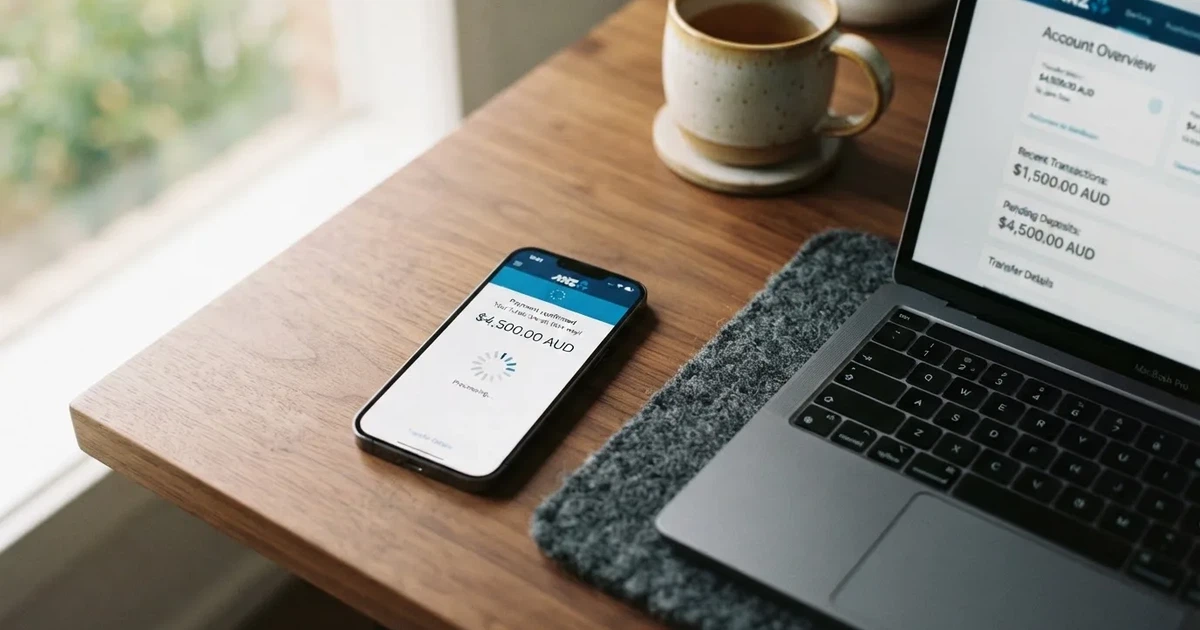
The image slot that follows lands here on purpose. The Australian bank transfer that arrives in under a minute, twenty-four hours a day, weekends included, is the rail the legal wagering market was built to use; the cashier that asks for it sits inside the framework. The cashier that does not, sits outside it.
With Osko, a bank transfer between participating Australian banks arrives in under a minute, 24/7, including weekends.
Walking the eleven one at a time
The next sections are the brands above, one per heading, with the ACMA warning date and the operator named in the warning. None of them is licensed to accept an Australian deposit. The judgement at the end of each block is the page’s read of what the warning tells the player, not a recommendation to play.
RocketPlay
The ACMA issued a formal warning over RocketPlay in March 2026, naming Pulsup Ltd as the operator. An earlier warning, in May 2022, named Dama N.V. as the operator of the same brand. The same brand has crossed two operators in four years. The Dama N.V. cluster of warnings — May 2022 covered Bambet, Dazard, Level Up, Rocketplay, Wild Tornado and Cobra Casinos — is the wider picture this brand sits inside.
RocketPlay’s standing on a no-minimum-deposit search is the standing of a brand with two ACMA warnings against it and a regulator that has already published one notice per operator identity. The verdict is straightforward: this is the operator shape the ACMA keeps having to re-warn, and the next warning will name whatever entity has taken the brand on.
Level Up Casino
Level Up Casino sits inside the May 2022 Dama N.V. cluster of six. The ACMA has not, on the consulted record, published a second warning against the brand specifically, but the operator has carried other warnings since: Woo Casino in March 2025, Spirit Casino in May 2025. Level Up’s “no minimum deposit” claim travels with the operator’s reputation rather than its own.
Woo Casino
The ACMA published a formal warning over Woo Casino in March 2025, naming Dama N.V. as the operator. Woo is the brand that triggered the second round of Dama N.V. action, three years after the first, which is the regulatory pattern the table illustrates: the operator identity persists, the brand identity persists, the warning repeats.
Spirit Casino
Spirit Casino is the May 2025 warning against Dama N.V., the third in the Dama cluster after May 2022 and March 2025. The verdict is the same shape as Woo’s, one cycle later.
National Casino
The ACMA issued a formal warning over National Casino in July 2025, naming Consolutetish S.R.L. as the operator. National Casino sits in the same July 2025 warning round as Bizzo Casino, which was warned under the same operator name. National is also a brand that has appeared on Australian-facing marketing for several years before the warning was published. The page’s read is that the warning followed years of access, not weeks.
Bizzo Casino
Bizzo Casino has been warned twice. The first warning, in 2022, named TechSolutions (CY) Group Limited and TechSolutions Group N.V. as the operators. The second, in July 2025, named Consolutetish S.R.L. The two operator names are different; the brand is the same. The regulatory picture is that a brand can be warned, the operating company can change, and the regulator will warn the brand again under the new entity.
Ignition Casino
The ACMA published a formal warning over Ignition Casino in July 2025, naming Bamboo Media as the operator. The warning is one of three the regulator published that month, alongside National Casino and Bizzo Casino. Ignition has been a long-running brand in the Australian-facing market; the July 2025 warning was its first published formal action.
The image slot that follows lands here. The July 2025 round — Ignition, National, Bizzo — is the ACMA’s clearest single signal of the year.
In July 2025 the ACMA issued formal warnings over Ignition Casino, National Casino and Bizzo Casino, the latter already warned once before in 2022.
Instant Casino
The ACMA issued a formal warning over Instant Casino in February 2025, naming EOD Code SRL as the operator. The warning predates the July 2025 cluster by five months and the April 2026 cluster by fourteen. Instant Casino is one of the brands that triggered the regulator’s first 2025 cluster of warnings; the pattern that follows is what the brand’s standing costs.
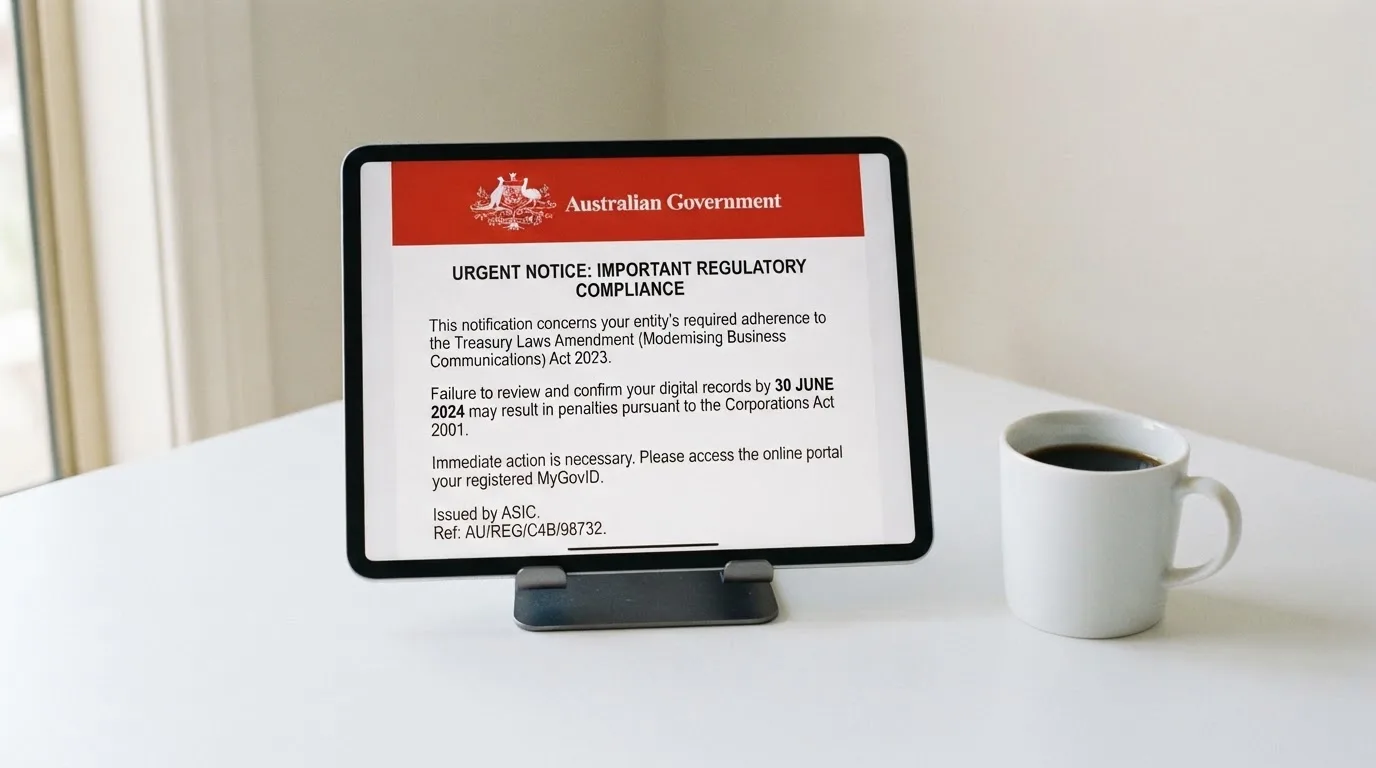
The image slot below lands here on purpose. The notice the ACMA published against Instant Casino is the regulator’s plain, government-style communication to the operator — the page that lands when the URL is investigated.
The ACMA issued a formal warning over Instant Casino in February 2025.
Jackbit
The ACMA issued a formal warning over Jackbit in April 2026, naming Ryker B.V. as the operator. The April 2026 warning covered both Jackbit and CasinOK. Jackbit is one of the more recent warnings on the ACMA register; the operator is also relatively recent in the consulted sources.
Casino Intense
The ACMA issued a formal warning over Casino Intense in April 2025, naming Sterplay Holding Ltd as the operator. The April 2025 warning is the only Sterplay action on the consulted register, which puts Casino Intense in a smaller operator cluster than Dama N.V. or Consolutetish S.R.L. but the same regulatory status — unlicensed to take Australian players for these products.
Sky Crown
The ACMA issued a formal warning over Hollycorn N.V., naming Sky Crown and Blue Leo as the affected services; the publication the regulator issued is dated September 2022. Sky Crown is the oldest of the eleven warnings on the page and the only Hollycorn N.V. action in the consulted register. The brand has been on the regulator’s list for the longest of any in this set, and the verdict is that length of warning does not change the answer: still offshore, still unlicensed for Australian players, still outside the Australian framework.
The arithmetic behind the block list
The blocking-rate calculation belongs here, because the rate is what turns the 1,751 figure into a picture the reader can use. The ACMA’s first blocking request was issued in November 2019; by June 2026 the cumulative total was 1,751 sites. That gives a run of about 79 months from the first blocking request to the most recent reported tally. Divided through, that is roughly 22 sites blocked per month on average across the life of the programme — the working pace of a regulator issuing blocking requests, not a flood. The band matters, because the headline number on its own does not tell the reader how fast the regulator is moving. The June 2026 round alone asked ISPs to block 12 sites in a single action, which is the closest thing the regulator does to a burst; the prior rounds were smaller. A reader who treats “1,751 sites” as a tally of active illegal casinos is over-counting: many of the blocked URLs are affiliate marketing pages and mirror domains rather than casino front-ends, and a single brand often sits behind several of them. The arithmetic is a band, not a single figure, and the band says the regulator’s enforcement is steady rather than rapid. The player waiting for the ACMA to catch up to a brand they have already deposited with is waiting on a process that moves at the speed of one warning every couple of weeks, not at the speed of a takedown.
The proportion of the cumulative block tally represented by 12-site rounds is small: 12 sites in one round is the largest single increment in the consulted record, and most of the rounds the regulator publishes cover fewer than a dozen at a time. Over 79 months, an average of around 22 per month is the central estimate; a slow quarter might drop that to under 10, and the 12-site rounds lift the monthly average when they land. The reader who arrives at “1,751” and assumes the regulator is dealing with a hundred new sites a week is reading the wrong shape into the number. The right shape is the opposite: a steady, name-and-shame enforcement programme that takes months to move from a new offshore brand to a published warning, and from a published warning to a blocking order.
Tax and the recreational player
Australian gambling winnings of a recreational player are not assessable income and losses are not deductible, which is the position under section 6-5 of the ITAA 1997. The rule holds whether the game sits behind an Australian licence or sits offshore; the distinction the ATO draws is not between legal and illegal product but between recreational play and carrying on a business of gambling. The page does not carry the ATO’s own gloss of what separates the two — the agency’s published guidance is the source for that judgement — and a player whose gambling crosses the line from recreation to something else is the player who should ask the ATO directly. The other half of the tax picture — what happens to winnings paid by an offshore brand that is not licensed to pay them — is a question the ATO does not answer by adjusting the tax calculation; the answer is that the offshore brand’s payment is still the player’s income under the recreational-vs-business line, and the offshore brand’s status does not change the form.
What an Australian player actually has
The thing the legal wagering market offers, beyond the wagering itself, is a frame. The licensed operator sits inside it: KYC on the way in, dispute resolution on the way out, BetStop enrolment available, gambling blocks offered by every major Australian bank and applied at card level, advertising constrained by the forthcoming reform package, and inducements governed by the same. None of those things attach to the offshore casino. The offshore offer is the wagering, and only the wagering. A “no minimum deposit” badge attached to that offer is the casino’s way of asking the player to give up the frame in exchange for a smaller ticket at the cashier.
The Australian rails — debit card, bank transfer, PayID and Osko, BPAY — are what an Australian player has. The Australian banks’ gambling blocks, the credit-card and crypto ban for licensed wagering, the BetStop register, the Gambling Help line — these are what an Australian player has. The offshore casino has the wagering. The trade, plainly stated, is the frame for the ticket size. A reader weighing that trade on a Tuesday afternoon will weigh it differently from a reader weighing it at 2 a.m. The page does not tell either reader what to choose; the ACMA’s record tells them what each side of the trade actually delivers.
Frequently asked questions
What is the smallest deposit a casino can realistically accept before payment processing fees make it pointless?
The processing fee is set by the rail, not by the casino. On the Australian side the fee on an Osko or PayID transfer to a BSB and account number is paid by the sending bank, not by the customer, and the minimum the casino accepts is the minimum the casino sets. Offshore brands that publish a minimum of zero have built their cashier around a fee structure that swallows a flat processing cost at low amounts: a five-dollar credit card deposit loses a fixed processing fee plus a percentage, a five-dollar crypto deposit loses the network fee plus the casino’s spread, and a five-dollar PayID or Osko deposit routed through an unfamiliar PayID has the same processing reality. The practical floor is set by the rail the player is using, not by the marketing claim on the page.
Does a crypto casino with no minimum deposit behave any differently to a fiat one with the same claim?
The licence, the operator, the regulator’s view of the brand, and the consumer-protection profile are the same. What changes is the rail in front. Crypto adds a network fee that the player pays regardless of the deposit size, and adds a second identity check at withdrawal time when the casino’s KYC process runs. The “anonymity” claim is true on the way in and false on the way out, because the same casino that took the wallet address without checking it will ask for documents before paying out. The bitcoin casino with a zero minimum is a fiat casino with an extra cost at the cashier and a delayed identity check at the withdrawal queue.
Is any casino advertising no minimum deposit actually licensed to accept Australian players?
No. Online casino games and online pokies cannot be licensed anywhere in Australia under the Interactive Gambling Act 2001 as amended in 2017 and 2023; no state or territory licenses them. A licence displayed by an offshore casino — usually Curaçao, sometimes Anjouan or Kahnawake — is a licence to operate from that jurisdiction; it is not an authorisation to take Australian players for prohibited products, because no jurisdiction grants such an authorisation. The brands the ACMA has warned about are the brands the regulator has identified as offering prohibited services to Australians, and the eleven named above are the set the consulted register carries.
How does a bitcoin casino’s “no minimum deposit” claim interact with blockchain network fees?
The casino’s minimum is zero. The blockchain’s minimum is whatever the mempool charges at the moment the player broadcasts the transaction, and that fee is paid regardless of how small the deposit is. The smaller the deposit, the larger the fee as a share of the deposit itself, which turns the lowest advertised minimum into the most expensive one. The casino credits the amount that arrives after the network fee; the marketing claim refers to the casino’s own minimum, not the network’s. A reader who treats the casino’s zero minimum as the total cost of a small deposit is missing the rail.
Why do so many low-deposit casino ads specifically mention “no minimum” rather than a dollar figure?
“No minimum” reads as a smaller concession than “A$1 minimum” or “A$5 minimum”, and a searcher shopping by lowest ticket size treats it as the best offer in the comparison. The marketing shape is built for that comparison, not for what the cashier actually delivers. A casino that accepts a one-dollar deposit does the same thing a no-minimum casino does at the cashier; the difference is the search result. The trade, as before, is the Australian frame for the search-result rank, and the page has already laid out what the Australian frame contains.
What should someone compare before trusting a “no minimum deposit” claim across several sites?
The rail the cashier uses, the operator the ACMA has named in a formal warning, the licence jurisdiction the site displays, the payment processor the deposit is routed through, and the responsible-gambling tools the site offers. The first tells the reader what the deposit actually costs. The second tells the reader whether the regulator has published the brand’s name. The third tells the reader where the licence is issued and what it covers. The fourth tells the reader whether the deposit clears through a recognisable merchant. The fifth tells the reader whether self-exclusion is a request or a barrier. A no-minimum-deposit claim that does not survive those five checks is not the offer the page describes.