
Newest online casinos and their no-deposit bonus claims, examined for an Australian reader
A “newest” casino site is, in practice, a freshly dressed offshore address with a launch-month bonus headline and a domain that did not exist twelve months ago. Most of them are pitched at Australians, and most of them are operating outside the Interactive Gambling Act 2001 the day they go live. The age of the site does not change that. What it changes is how little the reader has to go on: no track record of complaints, no reputation to weigh, and usually no Australian-licence footprint at all. Newest online casinos and their no-deposit bonus claims, examined for… — More on this topic at pokies info .

This page works through those sites as a choice. The paths on the table are narrower than the marketing makes them look. One path is the licensed Australian wagering channel — bookmakers and lotteries, where the deposit rails, the self-exclusion register and the dispute body all exist. Another is an offshore casino, brand new or otherwise, where none of those protections apply. A third, often the wisest, is to step back from the offer altogether. Each path costs something, and the rest of the page sets out what each one is.
Currency and licence register checked as of 29 October 2026 against the ACMA register of formal warnings and the Australian Communications and Media Authority’s published blocking requests.
Table of Contents
- The newest cohort, and what “newest” actually means in this market
- Comparing the offshore brands the ACMA has acted against
- The fundamentals underneath the newest-casino pitch
- The Australian law a newest casino cannot satisfy
- Responsible gambling, and what it means when a site is outside the Australian framework
- Payment methods, payout speed, and the rails offshore casinos actually use
- Games, providers and the live tables that newest-casino pages spotlight
- How fast the ACMA’s blocklist is growing
- The Australian payment rails that a newest casino cannot offer
- How the ACMA, the banks and the offshore casino interact
- The operators behind the formal warnings, and the choice each one offers a reader
- What “newest” really offers, and what it costs
- Frequently asked questions
The newest cohort, and what “newest” actually means in this market
A “new” casino is a soft concept. It can mean a brand that launched in the last few weeks, a domain registered this quarter, or a rebrand of an older operator dressed up with a fresh homepage and a new bonus headline. Affiliate pages that rank “newest casinos” rarely distinguish between these three — and the distinction is the one that matters for an Australian reader, because what is being sold as a debut is sometimes a third or fourth identity for an operator the ACMA has already warned under a different name.
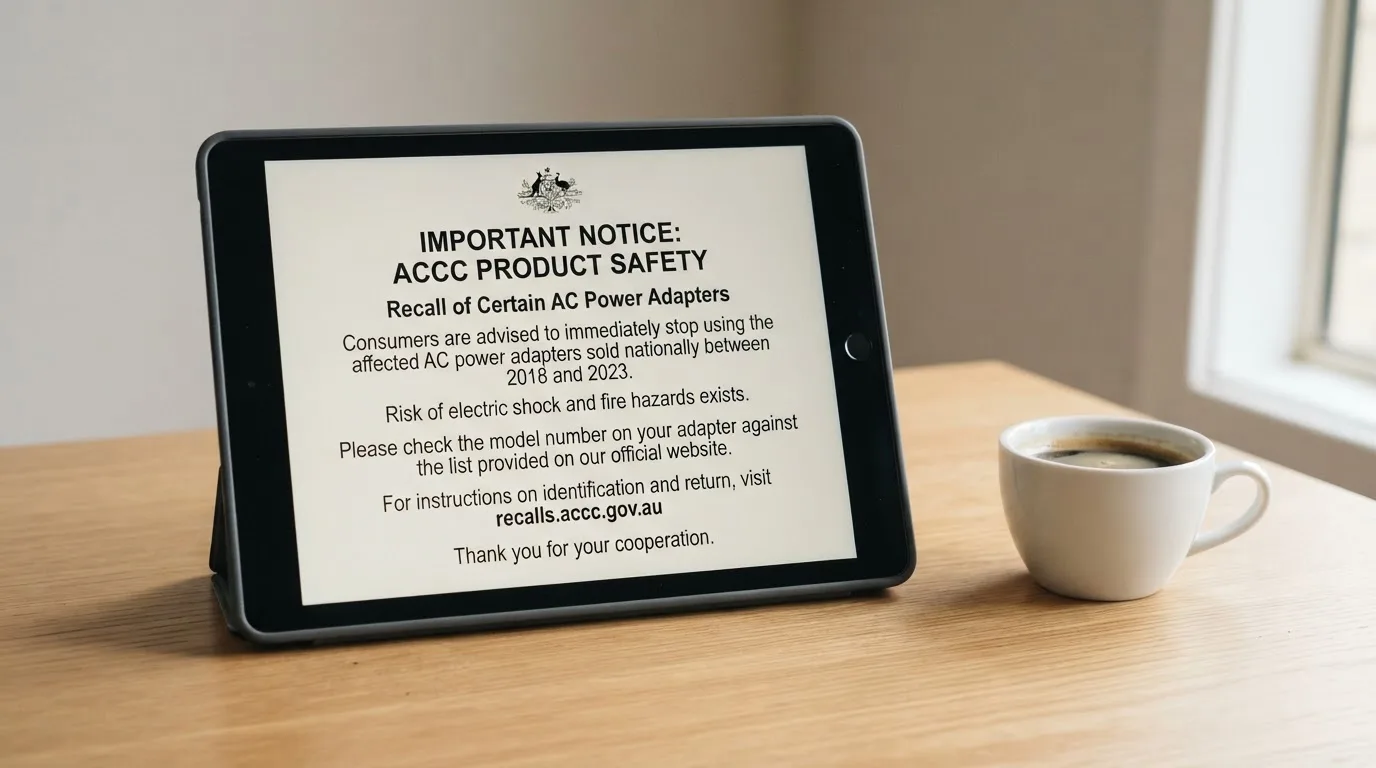
The cohort of freshly launched casino sites that pitch themselves to Australians in 2026 runs into the hundreds when the broader affiliate pages are taken together. Most are short-lived in marketing terms: launched with a no-deposit headline, then either absorbed by a parent brand or quietly retired. The turnover is fast because the market is contested, and because the platforms underneath — Dama N.V., Hollycorn N.V., Ryker B.V., Sterplay, Bamboo Media, Consolutetish and a dozen similar holding companies — each run a portfolio of sites that they cycle through as one gets blocked or warned and another gets promoted.
That cycling is what the ACMA’s enforcement record actually catches. The agency’s formal-warning list is a tally of the operators behind the brands, not of the brands alone: Dama N.V. alone has been warned over at least eight of its casino properties in successive rounds since 2022. A reader who only watches the brand layer sees something new. A reader who follows the operator layer sees the same address wearing different names.
A “new” site is therefore a weaker signal than the marketing suggests. It tells the reader nothing about whether the operator has been warned before, nothing about whether the licence shown in the footer is current, and nothing about whether the same site has already been blocked once under another name. What it does tell the reader is that the site has not yet been on the ACMA’s radar long enough to have a published enforcement action against it — which is a low bar, not a clean one.
The latest cohort, in the order they appeared on affiliate pages in 2026, leans heavily on a handful of recognisable templates: a Curacao-licensed operator, a Curaçao-issued Master Licence number in the footer, a PayID or Bitcoin deposit option advertised up front, and a “no deposit” headline that names a free-spin count rather than a dollar figure. Almost none of them accepts an Australian dollar deposit without routing through a crypto on-ramp, and almost none of them is connected to BetStop, the National Self-Exclusion Register, in any way.
Comparing the offshore brands the ACMA has acted against
Eleven brands sit on the ACMA’s published formal-warning list for offering prohibited online casino services to Australians. None of them is licensed to do so anywhere in Australia; the warning is the regulator’s written record that the operator has been told, in those terms, to stop. The table below sets them out by brand, by the operator the ACMA named, and by the date of the warning. It also notes whether each brand appeared in any non-affiliate source on the payment-method or subject it was tested for — a “listings-only” tag means the brand appeared in the listings research consulted, but no on-site data was verified.
| Brand | ACMA action and date | Operator named by the ACMA | Subject support |
|---|---|---|---|
| RocketPlay | March 2026 (earlier Dama N.V., May 2022) | Pulsup Ltd (Rocketplay.com.au) | listings-only |
| Level Up Casino | May 2022 | Dama N.V. | listings-only |
| Woo Casino | March 2025 | Dama N.V. | — |
| Spirit Casino | May 2025 | Dama N.V. | — |
| National Casino | July 2025 | Consolutetish S.R.L. | listings-only |
| Bizzo Casino | July 2025 (earlier TechSolutions, 2022) | Consolutetish S.R.L. | listings-only |
| Ignition Casino | July 2025 | Bamboo Media | — |
| Instant Casino | February 2025 | EOD Code SRL | listings-only |
| Jackbit | April 2026 | Ryker B.V. | — |
| Casino Intense | April 2025 | Sterplay Holding Ltd | listings-only |
| Sky Crown | September 2022 | Hollycorn N.V. | — |
The table is a record, not a ranking. What stands out reading across the rows is how few operators sit behind the eleven brand names — six holding companies, and one of them, Dama N.V., has been warned over four of the brands on the list in successive rounds. For an Australian reader, the implication is that the “newest” label on a fresh-looking brand is not a separate operator; it is often a new domain from an address that has already been told once to stop.
The “Subject support” column is a flag for the listing pages where each brand appeared in the research consulted, not a confirmation that the brand supports anything in particular. A dash there means the brand did not surface in any non-affiliate source on the payment-method or subject that was being tested, and the writer did not want to invent a connection that the underlying research did not back.
The fundamentals underneath the newest-casino pitch
Three things make up the bulk of what a newest-casino affiliate page sells: the no-deposit bonus itself, the game library underneath it, and the mobile wrapper that decides whether the site runs in a phone browser or through an app. None of these is novel. The novelty is mostly in the marketing copy.

A no-deposit bonus, on a site pitching to Australians, is almost always a free-spins package tied to a single slot title — twenty or fifty spins at a fixed coin value, with any winnings converted to a bonus balance that carries a wagering requirement before it can be withdrawn. The headline number (“50 free spins, no deposit required”) is the draw. The wagering requirement, usually somewhere between thirty and fifty times the bonus amount, is what turns the offer into its real shape, and it is rarely spelled out on the headline banner.
The game library underneath is, in most cases, an aggregation of studios the operator has not built — Betsoft, Pragmatic Play, BGaming, Platipus, and a handful of others, each plugged in through a platform integration. A reader who opens the lobby at five newest-casino sites in a row will see largely the same slot list, sometimes literally the same titles in the same order. What changes between sites is the colour scheme and the bonus headline.
The mobile wrapper is the third variable, and the one most often oversold. Most newest casino sites run in a mobile browser without an app, and most of them load slowly on a 4G connection in regional Australia. The ones that do offer an app typically route it through a Progressive Web App shortcut rather than a native iOS or Android build, because Apple’s App Store and Google Play both refuse to host real-money casino apps in the Australian market. A reader who downloads what looks like an app is usually installing a wrapper around a website.
A “new” mobile casino is therefore mostly a fresh coat of paint on the same underlying aggregation. The interesting question for an Australian reader is not which wrapper is newest, but which of the underlying books is licensed in a jurisdiction that requires segregation of player funds and dispute resolution — and the answer to that question is, for offshore sites pitching to Australians, almost always no jurisdiction at all.
The Australian law a newest casino cannot satisfy
The Interactive Gambling Act 2001, strengthened by the Interactive Gambling Amendment Act 2017, makes it an offence to provide online casino games — pokies, blackjack, roulette, baccarat and the rest — to a person physically in Australia. No state or territory issues a licence for that activity. The only wagering services Australia licences are pre-event betting on sport and racing, lotteries, and keno.
What that means, on the ground, is that any “newest online casino” page ranking eleven offshore brands has, by definition, ranked eleven operations that are prohibited under Australian law. None of the licences those sites display in their footers — typically Curaçao, sometimes Anjouan, occasionally Malta — authorises them to take a bet from a person in Australia. The licence authorises them to take a bet from someone elsewhere, and the site uses geolocation and payment-rail routing to dress that up as something else.
Enforcement runs through the ACMA. The agency investigates complaints, issues formal warnings to the operator behind a brand, and — when the warning is ignored — directs Australian internet service providers to block the domain at the network level. The blocking regime began in November 2019, and by the round reported on 26 June 2026 the running total of blocked gambling and affiliate-marketing websites had reached 1,751, with more than 230 unlicensed services having left the Australian market since 2017. The 26 June 2026 round alone added 12 sites: 7Signs, ChromaBet, Donbet, Duospin, Freshbet, Slots Gem, Jacks Club, Lucky Start, Pointsbetz.com, Spinrise, Vinyl Casino and Wildsino.
The IGA targets the provider, not the player. An Australian who deposits at an offshore casino is not committing an offence. What they are doing is transacting with an entity that has no Australian consumer protection, no Australian dispute body, and no obligation to honour a withdrawal request. If the site refuses a payout — and offshore casinos do — the reader has no recourse inside Australia. If the site is blocked while a balance is still on the account, the balance is, in practice, stranded.
A separate measure sits on top of the prohibition. From 11 June 2024, the IGA also bans credit cards, credit-related products and digital currency as a means of payment for any licensed online wagering service. The ban is on the licensed side; it constrains how Australians can pay Sportsbet, Bet365, Ladbrokes and the other 52 online bookmakers the Northern Territory Racing and Wagering Commission regulates. It does not, on its own, stop an offshore casino from accepting a credit card — but it does mean that an Australian paying a licensed bookmaker with a credit card is paying outside the law, and that an offshore site asking for one is doubly outside it.
A further reform sits one stage ahead. The Interactive Gambling Amendment (Gambling Reform) Bill 2026 passed Parliament on 19 August 2026, with its advertising and inducement measures commencing on 1 January 2027. On a 2026 page the law is enacted but not in force, which matters for affiliate pages that quote it as a current rule — it is a forthcoming rule, not a present one.
What the ACMA’s enforcement record actually shows
The formal-warning list, read in order, is the most useful single document for an Australian reader weighing an offshore casino. The list names the operator, the date, and the brand the warning covers. The list also repeats: Dama N.V. warned in May 2022 over Bambet, Dazard, Level Up, Rocketplay, Wild Tornado and Cobra Casinos; warned again in March 2025 over Woo Casino; warned again in May 2025 over Spirit Casino. Hollycorn N.V. warned in September 2022 over Sky Crown and Blue Leo. Consolutetish S.R.L. warned in July 2025 over National Casino and Bizzo Casino — the latter already warned once before in 2022 under TechSolutions (CY) Group Limited and TechSolutions Group N.V.
The pattern is not subtle. The same operator cycles through brands; the ACMA’s warning follows the brand; the affiliate pages then launch a new brand under the same operator and the cycle starts again. The reader sees a “new” casino; the regulator sees a familiar address.
A reader looking at a fresh brand with a no-deposit headline has three practical tests to run. The first is whether the operator behind the brand has been named on the ACMA’s warning list before, under any name. The second is whether the brand itself has been blocked at any point — a Wayback Machine search on the domain, or a check against the ACMA’s published blocking requests, will turn this up. The third is whether the licence number in the footer resolves on the regulator’s own register, not on the operator’s marketing page.
The licensing geography behind a Curacao footer
Most newest casinos pitching to Australians display a Curaçao Master Licence number in their footer. Curaçao’s licensing regime was overhauled in late 2023, with the existing master-licence system (the 8048/JAZ-style sublicences) replaced by a new direct-licence framework under the Curaçao Gaming Authority. The transition period runs into 2026. During that transition, the licence numbers shown on a casino site may be a legacy sublicence, a transitional approval, or — if the site has not updated its footer — a number that is technically no longer valid for the activity it claims to authorise.
For an Australian reader, the practical meaning is that a Curaçao footer is a payment for a foreign licence that does not authorise the site to take Australian customers in the first place. Even if the licence is in perfect order for its own jurisdiction, it gives the reader nothing the IGA does not already say is unavailable. The reader cannot escalate a complaint to the Curaçao Gaming Authority any more than they can escalate it to the ACMA; the operator has no obligation to answer either, and the operator’s own internal dispute process is the only one that exists.
Why the newest cohort moves faster than the regulator can map it
A new domain can be registered, pointed at a hosting provider, and running with a casino skin in under a week. The same operator will already have a payment-rail template, a game aggregation licence, and a customer-support workflow from the previous brand. The ACMA’s enforcement loop — investigate, warn, block — runs in months rather than weeks. The asymmetry is structural: a single operator can launch three new brands in the time it takes the regulator to publish one warning about the first one.
That asymmetry is what the blocking rate, calculated later on this page, measures. The 1,751 figure is a running total since November 2019; the brands named in the formal-warning list are a separate running total over a slightly different window. Together they describe a market where new supply is created faster than it is removed, and where a reader who arrives at a “newest” page is looking at supply the regulator has not yet caught up with.
Responsible gambling, and what it means when a site is outside the Australian framework
Responsible-gaming infrastructure in Australia is built around licensed wagering. BetStop, the National Self-Exclusion Register, has been live since August 2023. It binds Australian-licensed online and phone wagering services — Sportsbet, Bet365, Ladbrokes and the rest — so that a person who registers is excluded from opening new accounts, depositing, and receiving marketing across all of them at once. The register is mandatory for the licensed side; an offshore casino has no obligation to honour it, no obligation to check it, and no connection to it at all.
That absence is the single most important fact for a reader who has self-excluded, or who is considering self-excluding. BetStop will not stop an offshore casino from accepting the same person’s deposits, and an offshore casino’s own self-exclusion tool — if it has one — is operated by the same entity the player is trying to exclude themselves from. The tool is the equivalent of asking the bartender to stop serving you and having the bartender say yes until it is busy.
The second layer is the dispute and complaints body. In the licensed channel, complaints route through the bookmaker’s internal process and, failing that, through the relevant state or territory regulator or an external scheme. None of those routes exists on the offshore side. The licensed operator in the Northern Territory is overseen by the NTRWC, which regulates 52 of Australia’s online bookmakers despite operating with no full-time staff and meeting only once a month in Darwin. That thinness is its own concern, but the offshore side has none of it.
For readers who are finding it hard to step back from the marketing, the National Gambling Helpline — 1800 858 858 — is free, available 24/7 and connects to Gambling Help Online, which runs live chat and counselling. These services are the right place to start regardless of whether the gambling in question is at a licensed bookmaker, a lottery outlet or an offshore casino; they are not tied to any operator. The single hardest step on this page is the one a reader takes when they decide the offer is not worth chasing, and the helpline is built for that step.
A practical note on bank-side gambling blocks. ANZ and Westpac both offer gambling transaction blocks that work at the card-rail level rather than the site level: Westpac refuses authorisation of transactions registered under the merchant category code “Betting/Casino Gambling” on eligible personal credit and debit cards, and ANZ’s block extends to digital-wallet transactions on an eligible card, including Apple Pay. Commonwealth Bank’s gambling lock works through the CommBank app on eligible cards. These blocks are imperfect — the banks themselves warn that not every gambling transaction will be stopped and some non-gambling transactions may be blocked in error, and ANZ’s block requires a 48-hour waiting period to remove once turned on — but they are a real circuit-breaker between an Australian bank account and an offshore casino, where BetStop’s reach stops.
Payment methods, payout speed, and the rails offshore casinos actually use
The payment story for offshore casinos pitching to Australians is structurally different from the one for licensed wagering, and the difference is mostly about what the licensed side is not allowed to accept. The credit-card ban of 11 June 2024 closed off cards and credit-related products for licensed online wagering; the same ban does not, on its face, stop an offshore casino from accepting one — but the offshore site is already outside Australian law, and the card issuer’s own gambling block (Westpac’s, ANZ’s, CommBank’s) is the more practical line of defence. Crypto is in the same position: banned as a deposit route for licensed wagering, freely accepted offshore.
The licensed wagering deposit rails for an Australian reader are four, and they are the same four that the National New Payments Platform routes through: debit card, bank transfer, PayID/Osko, and BPAY. PayID is a New Payments Platform address that resolves a BSB and account number to a chosen identifier — usually a phone number or email — and shows the recipient’s name before the transfer is sent, which Australian Payments Plus flags as a check against scam sites, since being asked to transfer to a PayID on an illegal gambling site “almost certainly means a scam site”. Osko, the instant-transfer layer on top of Osko, settles a bank transfer between participating Australian banks in under a minute, 24/7 including weekends, whether addressed to a BSB and account number or to a PayID. Over 100 Australian financial institutions offer PayID-based instant transfers; more than 25 million PayIDs were registered on the platform by April 2025.
BPAY is the oldest of the four rails in everyday use, having launched on 18 November 1997 and now operating through the online banking of over 140 banks and financial institutions, owned via Cardlink Services Limited equally by ANZ, Commonwealth Bank, National Australia Bank and Westpac. It is a bill-payment service rather than a push transfer: the payer enters a Biller Code and a Customer Reference Number printed on the bill. In 2021 the ACCC authorised the merger of BPAY Group, eftpos and NPP Australia under Australian Payments Plus, the same entity that runs PayID and Osko; the platform’s monthly outages are contractually capped at two minutes.
Apple Pay, Google Pay and Samsung Pay are digital-wallet wrappers that sit on top of those rails rather than separate payment methods. They collectively accounted for around 45 per cent of all card payments in Australia by number at the end of 2025. Apple does not charge a consumer fee for using Apple Pay; any surcharge comes from the merchant’s card-processing fees, and any transaction limit or PIN requirement is set by the card issuer or merchant, not by Apple itself. The Reserve Bank’s July 2025 review of merchant card costs proposed removing surcharges only on eftpos, Mastercard and Visa transactions, explicitly leaving American Express outside the proposed ban — a small point that matters if a reader is paying at a venue that takes Amex.
AUSTRAC’s threshold-transaction reporting rule, which requires reporting of transfers of A$10,000 or more, applies only to physical cash. Ordinary electronic bank transfers are not subject to that per-transaction reporting, regardless of amount. The implication for an offshore casino deposit is direct: a PayID transfer of A$10,000 to an offshore operator is not reported under the threshold rule, but the offshore recipient is still outside Australian consumer law.
What an offshore casino usually accepts, on the deposit side, is some combination of Visa or Mastercard debit (from non-Australian-issued cards or from Australian cards where the bank’s gambling block is off), a handful of cryptocurrencies (Bitcoin, Ethereum, Tether on the Tron network being the most common), and occasionally an e-wallet. What it almost never accepts, on the withdrawal side, is the same combination in reverse: cryptocurrency withdrawals are the default for most of these sites, and bank-transfer withdrawals are either unavailable, slow, or capped at a level well below the deposit total. A “fast payout” claim on a newest-casino affiliate page usually means a crypto payout, settled on the operator’s own timetable, to a wallet the reader controls. The licensed Australian bookmaker, by contrast, will PayID a withdrawal back to the same account within minutes.
Games, providers and the live tables that newest-casino pages spotlight
The newest cohort runs on a small number of game aggregators, and the slot list underneath is largely the same from one site to the next. Pragmatic Play, Betsoft, BGaming, Platipus and Evolution (for live tables) are the names that recur across most of the brands the ACMA has warned over. A reader who has played the same slot on three offshore casinos in a row has not been exploring three different libraries; they have been looking at one library, restyled.
A “newest online pokies” page pitching to Australians is, in most cases, a list of titles released in the last quarter by one of those aggregators — Gates of Olympus-style hold-and-win games, megaways slots, a few branded tie-ins. RTG (Real Time Gaming) is a separate ecosystem: it is the platform that powers a number of older offshore casinos pitched at Australian and US audiences, and a “newest RTG casino” page usually means a fresh domain on an RTG backbone rather than a genuinely new RTG release. The two ecosystems — RTG and the European aggregator stack — rarely overlap on the same site.
Live-dealer tables are a more interesting question, because the live product is harder to fake than the slot lobby. Evolution runs the live-dealer studios that most offshore casinos ultimately route through; Pragmatic Play Live and a handful of smaller studios fill in the gaps. A live-dealer table is, in operational terms, a video stream from a licensed studio in a country where live-dealer gambling is legal, with bets placed remotely on the operator’s platform. The reader and the studio are rarely in the same jurisdiction, and the studio’s own licence does not authorise the offshore operator to offer the game to an Australian customer. The product works, in other words, because the operator routes around the licensing question rather than satisfying it.
The question of whether a particular slot title’s RTP (return-to-player percentage) is the same on a newest casino as on a more established casino is, in most cases, yes — the same aggregator feeds the same configuration to every operator that takes the game. The interesting question is whether the wagering-contribution weighting on a no-deposit bonus changes the effective RTP, and the answer there is also yes, in the wrong direction: most no-deposit free-spin offers are restricted to a single slot title with a low coin value, and any winnings are converted to a bonus balance that has to be wagered through at thirty to fifty times the bonus amount before it can be withdrawn. The “real” RTP on the free-spin offer, once the wagering requirement is taken into account, is meaningfully lower than the slot’s headline RTP.
AUSTRAC, BetStop and the ACMA register do not rate game providers, but they are the relevant names if a reader wants to follow up on the operator behind a brand.
How fast the ACMA’s blocklist is growing
The rate at which the ACMA’s blocklist is expanding is the single most useful figure on this page for a reader trying to gauge whether the “newest” cohort is a moving target. The blocking regime began with the first blocking request in November 2019. The running total of blocked gambling and affiliate-marketing websites reached 1,751 by 26 June 2026.
Two figures, one condition. Between November 2019 and 26 June 2026 is 79 months. 1,751 blocked sites over 79 months works out to roughly 22 blocked sites per month on average, or about one new blocked domain every 34 hours. The figure is an average; individual months have been much faster (the round reported on 26 June 2026 alone added 12 sites), and individual months have been slower.
The band the arithmetic produces is wide, because the underlying monthly count varies sharply with the ACMA’s enforcement rounds. Reading the 1,751 figure alongside the formal-warning list, the realistic working range is between 15 and 30 blocked sites per month — with the upper end of that range sitting closer to recent months than the early ones. The trend in the ACMA’s enforcement pace has been broadly upward since 2019, with more operators cycling brands and more enforcement rounds adding more sites per round.
What the figure tells the reader is that a “newest” offshore casino arriving on an affiliate page in 2026 is, on average, a few months ahead of a formal warning and somewhere between twelve months and two years ahead of a published blocking request. The cohort is short-lived in marketing terms because the enforcement pace is faster than the launch pace. A reader looking at a fresh domain is looking at supply that is closer to its warning than to its first ad buy.
The same figure, read across the cohort of operators behind the warnings, tells a second story. Six holding companies sit behind the eleven brands named in the formal-warning list. Dama N.V. alone has been warned four times in successive rounds. A “newest” casino that turns out to be run by an operator already on the warning list has, in effect, no runway at all before the next warning lands.
The Australian payment rails that a newest casino cannot offer
The licensed Australian wagering deposit stack — debit card, bank transfer, PayID/Osko, BPAY — is closed to an offshore casino on its own terms. The casino is not connected to the New Payments Platform, has no PayID of its own to give a customer, and has no biller relationship with BPAY. It accepts what it can route through international card networks (where the customer’s own bank’s gambling block does not stop the transaction) and what it can settle in crypto.
The difference matters at withdrawal. A licensed bookmaker will return a withdrawal to the same PayID or bank account within minutes, through Osko. An offshore casino will, in the most common case, return a withdrawal only in the same cryptocurrency it was deposited in, on the operator’s own settlement schedule (anywhere from a few hours to several days), and often with a minimum withdrawal threshold that puts a small win below the payout line. If the deposit was in fiat and the operator offers a bank-transfer withdrawal, the threshold is usually higher, the fee is usually deducted from the balance, and the timeline is usually measured in business days.
For an Australian reader, the practical test of a withdrawal claim on a newest-casino affiliate review is whether the page names a specific timeline in business hours, names a specific minimum, and names a specific fee. Where the page says “fast payouts” without any of those, the reader is reading the marketing word, not the mechanism.
How the ACMA, the banks and the offshore casino interact
Three layers of friction sit between an Australian bank account and an offshore casino. The first is the IGA’s prohibition on the provider side, which makes the casino’s offer to an Australian customer an offence under Australian law even if the casino itself is incorporated in Curaçao. The second is the ACMA’s enforcement regime, which runs through formal warnings and ISP-level blocking and has removed more than 230 unlicensed services from the Australian market since 2017. The third is the bank-side gambling block, which sits at the card-rail layer and works without any cooperation from the casino.
The bank-side block is, in operational terms, the most reliable of the three for a reader who wants one. Westpac’s block refuses authorisation of transactions under the merchant category code “Betting/Casino Gambling” on eligible personal credit and debit cards; ANZ’s block covers digital-wallet transactions on an eligible card, including Apple Pay; Commonwealth Bank’s lock works through the CommBank app. None of the three blocks guarantees that every gambling transaction will be stopped, and ANZ’s block requires a 48-hour waiting period to remove once turned on — a deliberate delay that is itself a friction point.
The IGA’s prohibition, in contrast, is a layer the reader does not feel at the moment of transaction. The offshore casino takes the deposit; the casino offers the game; the reader plays. The prohibition matters when the reader tries to withdraw and is refused, or when the casino is blocked while a balance is on the account, and at neither point does the IGA provide a route to a remedy.
The ACMA’s enforcement matters in aggregate rather than per transaction. The agency’s blocking requests are aimed at the ISP layer; a reader using a VPN can route around the block, but the block stops the casual path. The agency’s formal warnings are aimed at the operator; a reader who is already in a transaction with the operator does not benefit from a warning that was issued before their deposit.
For a reader who has already self-excluded through BetStop and is considering an offshore casino as a way around it: BetStop is a register of Australian-licensed wagering services. It does not bind an offshore casino. The casino has no obligation to check the register, no obligation to refuse the deposit, and no obligation to close the account. The block a reader sets at BetStop is not a block a reader can rely on across the offshore side.
The operators behind the formal warnings, and the choice each one offers a reader
The eleven brands named in the ACMA’s formal-warning list are not all the same kind of offer. They are presented in the same shape, and they sit on the same aggregator stack, but the dates and the operators behind them are different, and the differences matter when a reader is weighing whether to engage at all. The brands are presented below in the order they appear in the ACMA’s record, with the operator and the date as published.
RocketPlay is one of the longest-running names on the list. The ACMA issued its first warning over the brand in May 2022, naming Dama N.V. as the operator behind Bambet, Dazard, Level Up, Rocketplay, Wild Tornado and Cobra Casinos in a single round. In March 2026 the ACMA issued a further warning, this time to Pulsup Ltd specifically over Rocketplay.com.au, indicating either a change of operator or a new corporate wrapper behind the same domain. For a reader, the relevant point is that the brand has been on the regulator’s record for four years and the warning is current. The site’s claim to novelty is not supported by its enforcement history.
Level Up Casino sits in the same Dama N.V. cluster, warned in May 2022 alongside the other five Dama brands. It has not been re-warned in the same way RocketPlay has, but the underlying operator has been warned four times since — over Woo Casino in March 2025 and Spirit Casino in May 2025. The brand layer looks quiet; the operator layer is busy.
Woo Casino is a Dama N.V. brand from the March 2025 round. It is recent enough on the warning list that the affiliate pages still market it as a “new” casino; the regulator’s view is that it is a Dama brand. The choice for a reader is whether “new” means anything when the operator behind it has been told to stop.
Spirit Casino is the May 2025 Dama N.V. warning. The same pattern applies: a brand new to the warning list, an operator that has been on it since 2022.
National Casino sits under Consolutetish S.R.L., warned in July 2025. It is a recent warning, and Consolutetish is a relatively new name on the ACMA’s enforcement record compared with Dama N.V. or Hollycorn N.V., though it was warned in the same July 2025 round over Bizzo Casino — and Bizzo Casino had already been the subject of a 2022 formal warning to TechSolutions (CY) Group Limited and TechSolutions Group N.V. The chain of operators behind the brand is therefore a long one.
Bizzo Casino is the clearer example of the chain. Warned to TechSolutions in 2022; warned again to Consolutetish in July 2025. The same brand, two different operators, four years apart. The brand layer is the constant; the operator behind it has shifted twice.
Ignition Casino sits under Bamboo Media, warned in July 2025. The brand has a longer marketing history in some markets than the Australian-facing affiliate pages suggest, but the ACMA’s enforcement record against it for Australia is recent.
Instant Casino is an EOD Code SRL brand, warned in February 2025. The brand name is short and generic; that is itself a signal worth reading carefully, since the more generic the name, the easier it is for the same operator to launch a replacement domain when one is blocked.
Jackbit is a Ryker B.V. brand, warned in April 2026. It is the most recent warning on the list. Ryker B.V. is also named in the same warning over CasinOK, which means two brands from the same warning round and the same operator — a pattern that has held for Dama N.V. across three rounds. A “new” brand from an operator who is already warning multiple brands in the same round is, in marketing terms, a debut; in enforcement terms, it is the second or third name on a single warning letter.
Casino Intense is a Sterplay Holding Ltd brand, warned in April 2025. It is one of the older marketing names on the list in some markets, but the ACMA’s record against it for Australia is from April 2025 — a recent warning.
Sky Crown is a Hollycorn N.V. brand, warned in September 2022 along with Blue Leo. Hollycorn is one of the longer-running operators on the ACMA’s enforcement record; the warning is several years old, but the brand is still being marketed.
Reading the cohort as a choice
Eleven brands, six operators, four years of enforcement history. The choice for a reader who arrives at a “newest casino” page is not which of the eleven is best; the choice is between engaging with any of them and not engaging at all.
For a reader who has decided to engage, the relevant comparison is not “which one is newest” but “which one has the shortest ACMA record and the cleanest licence footer.” That comparison favours the brands with the most recent warning dates (Jackbit in April 2026, RocketPlay’s most recent warning in March 2026) — though “shortest” in this context means a warning that is recent enough that the ACMA has not yet moved to blocking, and the reader is still looking at an operation that the regulator has already named.
For a reader who has decided not to engage, the relevant comparison is between the offshore casino path and the licensed Australian wagering path. The licensed path accepts PayID, BPAY and debit card, runs under the Northern Territory Racing and Wagering Commission’s oversight for the 52 licensed online bookmakers, and connects to BetStop and the National Gambling Helpline. It does not offer online pokies or live-dealer casino games, because the IGA prohibits them. That absence is the trade-off the reader is making if they step offshore.
A third path, and the one the helpline is built for, is to step back from the marketing altogether. The newest-casino page is built to convert the reader from arrival to deposit in a small number of clicks. The decision to leave the page is the one the page is least interested in supporting.
What “newest” really offers, and what it costs
The newest-casino pitch offers three things. The first is novelty itself — a fresh brand, a fresh bonus, a fresh domain. The second is a no-deposit headline that lets the reader try the casino without paying in. The third is a game library that resembles the libraries on every other newest casino in the cohort, because the aggregators underneath are the same.
What the pitch costs the reader is, in order, the protections they would have had on the licensed side. There is no BetStop coverage. There is no Australian dispute body. There is no obligation on the operator to honour a withdrawal request, and no recourse inside Australia if they refuse. There is no guarantee that the licence in the footer is current, that the operator behind the brand has not been warned before, or that the same operator is not about to launch another brand to replace this one. There is no clear answer to the question of who the reader pays when they deposit — the operator, a payment processor, a crypto on-ramp — and no clear record of the transaction once it has happened.
The arithmetic on the offer itself is unfavourable in the same direction. A no-deposit free-spin offer that converts winnings to a bonus balance with a thirty-to-fifty-times wagering requirement has an effective RTP that is well below the slot’s headline RTP. The “real” cost of the bonus, once the requirement is taken into account, is what is left of the bonus balance after the wagering is complete — and on most free-spin offers, that is a small fraction of the headline win.
For a reader who has decided to play anyway, the practical choices narrow to three. The first is the licensed Australian bookmaker — same deposit rails, same BetStop coverage, same dispute path, but no pokies and no live-dealer casino games. The second is the offshore casino, with the protections above absent and the ACMA’s enforcement record sitting one step behind the brand. The third is to step back from the offer and use the National Gambling Helpline — 1800 858 858, free, 24/7 — as the next point of contact.
Frequently asked questions
What usually changes first on a brand-new casino site — the bonus terms or the game library?
The bonus terms change first. A fresh brand usually ships with a high headline number and a wagering requirement in the same range as the rest of the cohort, and the game library is the aggregator stack the operator was already running on its previous brand. The library underneath is, in most cases, older than the brand on top.
Are the newest online pokies and slot titles advertised on these sites actually different from older ones?
The titles are recent, in the sense that they were released by their provider in the last few quarters, but they are not unique to a given site. The aggregator providers — Pragmatic Play, Betsoft, BGaming, Platipus — feed the same titles to every operator on the platform. A “newest pokie” pitch is, in most cases, a recently-released slot on a brand-new domain.
Is a newest-online-casino no-deposit bonus claim from an offshore site enforceable for an Australian player?
It is not enforceable in an Australian forum. The Interactive Gambling Act 2001 makes the offer of online casino games to a person in Australia an offence, and the operator is outside the Australian regulatory perimeter. The reader has no Australian dispute body to take a complaint to, and no Australian court with straightforward jurisdiction over a Curaçao-incorporated operator. The bonus terms are whatever the operator decides to honour.
How can someone tell a genuinely new casino site from a reskin of an older, already-warned one?
The licence number in the footer is the first check, and it should resolve on the regulator’s own register rather than on the operator’s marketing page. The operator behind the brand is the second check — Dama N.V., Hollycorn N.V., Consolutetish, Ryker B.V. and Sterplay have all been warned over more than one brand. A Wayback Machine search on the domain, or a check against the ACMA’s published blocking requests, will turn up an earlier identity if there is one.
Why do newest-RTG-casino pages and newest-online-slot pages so often overlap on the same domains?
Because the operators behind both pages are running the same aggregator underneath. The newest-RTG page is a fresh domain on an older RTG backbone; the newest-slot page is a fresh domain on the European aggregator stack. The brand layer is different; the platform underneath is often the same. The overlap is the operator, not the game. See also No deposit bonus casino Australia .
What should change in how cautious someone is, simply because a casino site is new rather than established?
The caution should rise, not fall. A new site has no track record of complaints, no published dispute history and no Australian-licence footprint. The bank-side gambling block and the IGA’s prohibition are the only friction between an Australian reader and the deposit button, and neither depends on the site’s age. A reader who has self-excluded through BetStop should remember that BetStop does not bind an offshore casino, and that an offshore casino’s own self-exclusion tool is operated by the same entity the reader is trying to exclude themselves from.