
Dragon Link pokies in Australia: how the format works and why the online version is a different question
Updated as of 29 October 2026 against the Australian Communications and Media Authority register of formal warnings and the Interactive Gambling Act 2001 as amended.
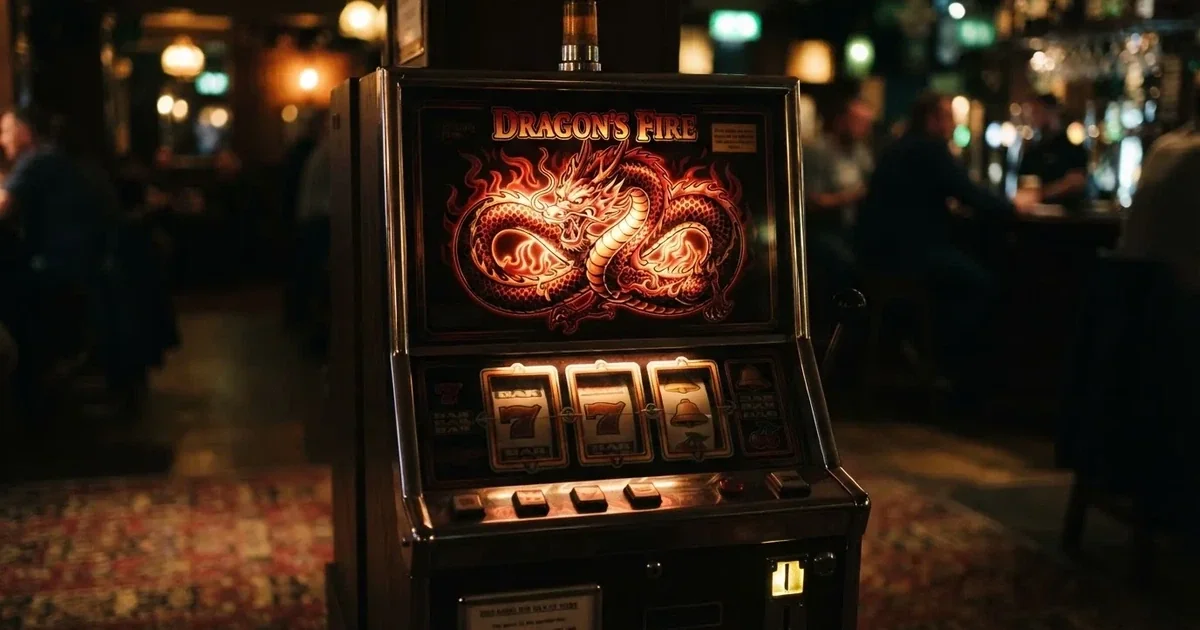
Dragon Link is one of the most-played poker machine families in Australian clubs and casinos. Its signature is a linked jackpot feature shared across machines that are otherwise separate. Almost every search result that pairs the name “Dragon Link” with the words “online pokies” and “Australia” runs into the same wall, though, and the wall is not a marketing choice. The Interactive Gambling Act 2001 prohibits an online casino game from being supplied to a person in Australia. Dragon Link sits inside that prohibition, alongside every other pokies title, the moment a site offers it over the internet to an Australian resident. The page below closes that gap piece by piece — what the format actually is, why the linked jackpot works the way it does, what an Australian player can and cannot lawfully do, and what to know about the offshore sites that ignore the rule.
The angle from here is consequence: what follows from each feature for the person sitting with a wallet open or a phone in hand, and when that consequence lands. Dragon Link is built to keep a player watching the reels, and the law around it is built to keep offshore sites from offering the game at all. Both of those things have costs the reader pays. This page is written to make those costs visible.
Table of Contents
- How the Dragon Link format actually works
- What an Australian player can lawfully play
- What offshore sites mean for the player sitting at one
- Where the ACMA has already moved, and how fast the wall is closing
- Why the credit-card and crypto ban is part of the same picture
- The paytable layer underneath the licence question
- How the licensed providers actually operate inside the framework
- What the responsible-gaming layer actually delivers
- What the numbers say about how Australians actually play pokies
- A closer read on the featured set of offshore brands
- The app question, in plain terms
- What to read before opening an account
- Frequently asked questions about Dragon Link online pokies
How the Dragon Link format actually works
The first thing to clear up is what Dragon Link is and what it is not. Dragon Link is not a single game. It is a family of linked poker machine titles produced by Aristocrat for land-based play in Australia and a small number of overseas markets. Each title in the family shares a structural feature: the jackpots are not standalone. They are “linked”, meaning the same progressive pot is fed by every eligible machine in the venue, and a portion of every wager on every machine contributes to that pot. The visible result on any single cabinet is a ticker that climbs while you sit in front of it, paid for by bets placed by every other player in the building.

That structure has two consequences a player usually meets by accident.
The first consequence is that any individual spin is funded against a much wider pool of bets than the one cabinet shows. A standalone progressive, the kind found on many older poker machines, accumulates from that one machine only; a linked progressive accumulates from a network of cabinets. The advertised jackpot figure is therefore larger — and the rate at which it climbs is faster — than a standalone at the same stake level. What a player gives up in exchange is the share of return they would have received on a machine without the link. A fixed portion of every wager is siphoned off to feed the link, and that portion never returns to the paying machine.
The second consequence is harder to see from the seat. A linked jackpot feature is built to keep a player in the chair because the prize can be claimed at any spin. The trigger is independent of bet size on most Dragon Link configurations: a fixed symbol combination on a reel, decided by a random number generator, lights the bonus and the player is in the feature regardless of how much was staked. The feature is what the marketing calls the “hold and spin” — the screen switches to a new layout, three or more pearl or fireball symbols lock in place, the player is granted a small number of respins, and each new pearl that lands resets the count. The round ends when the respins run out without a fresh symbol, and the locked symbols carry whatever values are behind them. The headline prize is one of four jackpot tiers — Mini, Minor, Major and Grand — assigned by the linked network itself.
That is the part of the format that translates cleanly to an online description. The cabinet graphic, the reel sets, the named bonus rounds, and the “Happy & Prosperous” or seasonal branding a marketing page borrows from a real land-based title — those copy across. The legal status of the online copy does not.
What an Australian player can lawfully play
Australia’s prohibition is on the supply side. The Interactive Gambling Act 2001, sharpened by the Interactive Gambling Amendment Act 2017, makes it an offence to provide an online casino game or online pokies to a person who is physically in Australia. The statute does not name Dragon Link, and it does not need to — the prohibition sits on the category of game, not on the title. A site that streams, simulates, or otherwise offers Dragon Link-style reels to an Australian resident is breaking the IGA in the same way a site offering roulette, blackjack, or baccarat to that resident would be. No state or territory issues the kind of licence that would cover that activity.
What is licensable is a narrower set of products. Online wagering on racing and on sport — placed before the event, not in-play — is licensed. Lotteries and keno are licensed. Each falls under a state or territory regulator; in practice the largest group of online bookmakers, including Sportsbet, Bet365 and Ladbrokes, is licensed by the Northern Territory Racing and Wagering Commission, a small body that meets once a month and has no full-time staff. The federal regulator, the Australian Communications and Media Authority, oversees the prohibition: it investigates complaints, issues formal warnings, and orders Australian internet service providers to block illegal sites. The player on the other side of the screen is not the one the IGA aims at — the law targets the provider, not the punter — but the consequences of playing at an offshore site still flow to the player, because the protection an Australian licence brings does not.
The Interactive Gambling Amendment (Gambling Reform) Bill 2026, passed by Parliament on 19 August 2026, layers new advertising and inducement measures onto the existing regime. Those measures commence on 1 January 2027. They are law with a start date, not law in force on this page, and they affect how operators may market to Australians rather than which games they may offer. Anyone reading later will see them written about as if they already applied; on a 2026 page they belong in a forward-looking sentence, not in a description of what is enforceable today.
What offshore sites mean for the player sitting at one
The practical picture for someone who has already opened an account at an offshore site is what the warning letters on the ACMA’s register are pointing at. The register names operators by their corporate entity and the brand they served, and the substance of every warning is identical: the operator has been offering a prohibited interactive gambling service to customers in Australia. Some operators recur. Dama N.V., for example, took a formal warning in May 2022 covering six brands and then further warnings in 2025 over Woo Casino and Spirit Casino. The sequence matters because the warnings were not the first contact — the ACMA publishes only after earlier steps have not changed the offer.
Three consequences follow from this that a player usually meets only when something goes wrong.
The site can be blocked while money sits on it. The ACMA’s blocking power is exercised against internet service providers, not against the player, and it removes access from inside Australia without warning. The running total of blocked illegal gambling and affiliate marketing websites reached 1,751 as of June 2026, with twelve more asked to be blocked in a single round reported the same month: 7Signs, ChromaBet, Donbet, Duospin, Freshbet, Slots Gem, Jacks Club, Lucky Start, Pointsbetz, Spinrise, Vinyl Casino and Wildsino. A balance at any of those brands — and at the hundred-plus other sites that have already been blocked since the first blocking request in November 2019 — becomes a balance the player can no longer reach through the device the block was placed on.
There is no Australian complaints body. Offshore sites display licences on their own pages, frequently from Curaçao, Anjouan, or another jurisdiction that does not sign the IGA. Those licences license the site in their home jurisdiction; they do not license it to serve Australia, and they come with no Australian-side escalation path. A withdrawal that is delayed, a bonus term that is restated after deposit, a dispute over a cancelled wager — each one ends at the operator’s own decision-making, because the Australian courts and the Australian regulators do not have a recognised seat at that table.
Self-exclusion does not bind offshore sites. BetStop, the National Self-Exclusion Register, has been live since August 2023 and gives a person the ability to bar themselves from every Australian-licensed online and phone wagering service in one registration. It does what it says, and it does it only across the services that opt in — which is the licensed wagering set. An offshore casino has no obligation to honour a BetStop registration, and the technical means of enforcing one across an international domain is limited to the ACMA’s blocking power. For someone whose self-exclusion is the reason for the question, the protection is real for licensed wagering and absent for everything else.
The 1800 858 858 number — the National Gambling Helpline — is the one piece of the system that holds whether the site is licensed or not. It is free, runs 24/7, with online chat at Gambling Help Online, and is the right first call from inside any of the situations above.
Where the ACMA has already moved, and how fast the wall is closing
The blocking rate is the cleanest measure of how serious the prohibition has become. The first ACMA blocking request went to Australian ISPs in November 2019. By the round reported on 26 June 2026, the running total of blocked illegal gambling and affiliate marketing websites stood at 1,751, against 230 or more unlicensed services that had left the Australian market entirely since enforcement was strengthened in 2017. The arithmetic works out as follows: from November 2019 to the June 2026 round is roughly 79 months, and 1,751 sites blocked over that period averages around 22 blocks per month, or just over one every other working day. That is not a one-off crackdown; it is a steady administrative cadence, and the data point that the prohibition is enforced rather than merely declared.
The single round reported the same day asked ISPs to block twelve sites at once. The same register has been publishing formal warnings through that period, with a 2025 cluster covering Dama N.V. (Woo Casino in March 2025, Spirit Casino in May 2025), Bamboo Media over Ignition Casino and Consolutetish S.R.L. over National Casino and Bizzo Casino (both July 2025), EOD Code SRL over Instant Casino (February 2025), and Sterplay Holding Ltd over Casino Intense (April 2025). The 2026 cluster extended into Pulsup Ltd over RocketPlay (March 2026) and Ryker B.V. over Jackbit and CasinOK (April 2026). Each entry on that list is the operator’s name and the date the ACMA published the warning; each one is a brand that, at the time of warning, was offering prohibited services to Australians and was told to stop. Some continued to operate anyway and were blocked later; some changed the offer; some simply rebranded.
The figure for illegal offshore gambling’s annual drag on Australian players — A$3.9 billion a year in losses, per H2 Gambling Capital’s 2025 estimate — frames the same point from the other side. The estimate further notes that the share of gambling going through legal channels fell from 74% in 2021 to 64%. Those are not numbers that suggest the prohibition is being ignored as a sideline; they are numbers that suggest a market where the demand is large enough that offshore operators keep trying, and the ACMA keeps removing them, at scale.
Why the credit-card and crypto ban is part of the same picture
A second lever sits beneath the prohibition and makes it harder to reach in practice. Since 11 June 2024, credit cards, credit-related products and digital currency have been banned as payment for licensed online wagering in Australia, with penalties up to A$247,500 for operators that break the rule. The law applies to the licensed side; that is its reach. The deposits that an Australian-licensed wagering service can lawfully accept are a debit card, a bank transfer, PayID and Osko, and BPAY.
Why this matters for a Dragon Link search is not the credit-card ban itself — that targets wagering, not casino games — but the tell it gives. The list of legal deposit routes is short and dated, and any site asking an Australian player for a credit card or a cryptocurrency deposit is operating outside the Australian rules. The same operator will, in most cases, be the one displaying a Curaçao or Anjouan licence and serving the country anyway. The deposit rule is a small part of why an offshore site is a particular kind of risk — the IGA prohibition is the headline — but the deposit rule and the IGA prohibition reinforce each other in the player’s experience: both are Australian-side rules, both are breached, both come with no Australian-side recourse.
The paytable layer underneath the licence question
The paytable layer is where the format and the legal status meet, and where an honest description of Dragon Link has to land. The minimum return-to-player for poker machines is set by jurisdiction in Australia. New South Wales, the Northern Territory, Queensland, and (generally) Victoria operate at a legal minimum of 85% (Crown Melbourne’s tables sit at 87%). The Australian Capital Territory and Tasmania sit at 87%, South Australia at 87.5%, and Western Australia at 90% — that last figure because Crown Perth is effectively the only venue holding poker machines in Western Australia, after the state banned the machines in pubs and clubs in 1985 with Crown’s opening. Those are the published minima, and every licensed cabinet in those venues sits at or above them.
The relevant consequence for an Australian player is that the linked jackpot feature does not raise the RTP of the underlying reel game. It raises the prize ceiling. A portion of every wager is siphoned to feed the link, and that portion returns in proportion to the network — a long-run zero-sum against every machine that is part of the link. The “hold and spin” feature round is structured the same way: the average return of the round plus the value of the feature trigger lands somewhere inside the venue’s published RTP, often 87% or 90% at the cabinet, with the rest of the venue’s machines feeding the linked pot. What that means is that the larger top prize a player sees on the screen comes at the cost of a lower hit rate per spin on the base reels. That trade is structural, not promotional, and it is the reason a player who treats the linked ticker as “free money” tends to run out of session money sooner than they expect.
How the licensed providers actually operate inside the framework
Aristocrat Leisure Limited, the developer of the Dragon Link family in Australia, is a different actor from the offshore sites that offer Dragon Link-style games online. Aristocrat designs and supplies the cabinets and the game titles to licensed venues in each jurisdiction; the cabinets themselves are state-regulated and physically located in clubs, hotels, and casinos. The licensed venues are the only places where a real-money spin on a Dragon Link machine happens lawfully in Australia. The federal government’s policy — pursued through the IGA and through ACMA enforcement — is that the licensed venue is the only place a real-money spin on any pokies format happens lawfully, with online wagering on racing and sport the narrow exception.
That arrangement does not touch what Aristocrat does overseas. Dragon Link cabinets exist in other markets, and the online “Dragon Link” names that appear in marketing pages are sometimes built by other studios on the theme of the cabinet, sometimes a skin on a different provider’s game, sometimes a streamed version of a real cabinet feed. The Australian player looking for one online is buying into a non-Australian offer, and the right reading of the marketing claims is to set them beside the ACMA register and ask, plainly, whether the brand the marketing is selling is one the ACMA has already named in a formal warning.
What the responsible-gaming layer actually delivers
The responsible-gaming layer in Australia is narrow and was built to match the prohibition. BetStop is the National Self-Exclusion Register, and it covers Australian-licensed online and phone wagering services. It does not cover the venues where Dragon Link machines physically sit; venues carry their own state-run exclusion schemes, which are run separately. A person who wants to bar themselves from every licensed wagering channel can do so in one BetStop registration; a person who wants to bar themselves from poker machines in clubs and casinos in their state has to register separately with the relevant state scheme. BetStop does not, and cannot, reach an offshore site.
Tasmania carried the early momentum on pre-commitment reform. Mandatory pre-commitment cards were planned for the state’s poker machines as a nation-leading measure, but implementation was delayed until late 2025 — the system that was meant to make every Tasmanian player set a spending limit before sitting at a machine did not go live in the form first legislated. The Tasmanian Liquor and Gaming Commission now holds oversight, after the legislation passed in November 2021 ended the Federal Group’s monopoly on the machines that had run since 1968. The shape of the regime elsewhere — Victoria’s 30,000 statewide cabinet cap (with 26,380 outside Crown Casino as of 2021–22, across 488 venues), Queensland’s 21,122 machines in 351 venues (October 2023), New South Wales’ 87,298 machines outside casinos across 2,195 venues (June 2023) — is a series of state-level configurations, each one separately regulated, each one carrying its own set of exclusions, signage, and break-even rules. The Australian Capital Territory and Western Australia each have their own settings.
The deposit limits that come with a licensed account sit on top of all of this. On the licensed wagering side, an Australian player can set deposit and time limits through the operator’s safer-gambling tools, and the National Gambling Helpline (1800 858 858) is a 24/7 number anyone in the country can call. None of these tools reaches an offshore casino. The withdrawal of the tool layer is part of the consequence of the prohibition: an Australian player who limits themselves to the licensed wagering set has protection that the same player in front of the same wallet on the same day at an offshore casino does not.
What the numbers say about how Australians actually play pokies
The scale is what makes the prohibition a real question. In 2020–21 Australians bet almost A$150 billion through gaming machines and lost A$12.18 billion on them — from a country with about 3% of the world’s pub and club poker machines and 0.3% of the global population. New South Wales alone lost A$8.18 billion on the machines outside its casinos in 2022–23, an order of magnitude the policy is built against. Victoria’s 30,000-machine limit and Queensland’s 351-venue footprint are state-level responses to that scale, and the IGA’s prohibition on online supply is the federal response.
The 1985 policy in Western Australia — banning poker machines in pubs and clubs with the opening of Crown Perth — is the cleanest test case the country has. Crown Perth itself has grown from about 200 machines in 1985 to roughly 2,500 today, all approved by the state’s Gaming and Wagering Commission. The machines have become concentrated where the only venue exists. That trajectory has been the subject of expert commentary citing the machines as the most addictive form of gambling; it is also the reason Western Australia’s minimum RTP, at 90%, is the highest in the country — a consequence of the political decision to keep the cabinet count low.
That whole history — the 1956 start of legal poker machines in New South Wales registered clubs, the 1968 monopoly in Tasmania, the 1985 WA ban, the 2017 strengthening of the IGA, the 2024 payment ban, the 2026 reform bill, the 2027 commencement — is the policy layer an offshore site operates against. None of it reaches an offshore site; it is what an offshore site ignores. The licensed venues, with all the limits and exceptions and jurisidictional variation they carry, are what survives when an Australian player steps away from the screen.
A closer read on the featured set of offshore brands
The brands below are presented as a reading of the ACMA register, not as a ranking. Each has been named in a formal warning under the Interactive Gambling Act 2001 for offering prohibited interactive gambling services to customers in Australia. The status of the offer is the same for all of them: online casino games, including online pokies, cannot be licensed to a person who is in Australia, whatever licence the site itself displays. No player protection, no Australian complaints body, no recourse at withdrawal. Read the register entry, read the date, and read what the operator has been told to stop doing.
RocketPlay. Pulsup Ltd was issued a formal ACMA warning in March 2026 over RocketPlay; the brand had already been named in the May 2022 warning to Dama N.V. that covered six casino names. The repetition across operators is the part of the picture worth keeping: the operator name on the corporate side has shifted, but the offer to Australians has not. A player who opened an account at the old brand and tries the URL after the warning should expect access from inside Australia to be unstable.
Level Up Casino. Dama N.V., May 2022 formal warning. The same warning covered five other brands in the same group — Bambet, Dazard, Wild Tornado, Cobra Casinos, Rocketplay — and Dama has since drawn further warnings in 2025. The repetition at the operator level is what the ACMA action is signalling: when a warning is published, the operator’s wider portfolio is treated as part of the same offer.
Woo Casino. Dama N.V., March 2025 formal warning. Listed in a separate round from the May 2022 batch, which is itself a signal — the ACMA took action, the operator continued offering prohibited services, the ACMA acted again. The 2025 entry is the ACMA telling the operator that the first round had not been honoured.
Spirit Casino. Dama N.V., May 2025 formal warning. Same operator sequence as Woo Casino. The consecutive 2025 warnings to the same operator make the pattern plain: the prohibition is being ignored across the operator’s brand portfolio, not by accident.
National Casino. Consolutetish S.R.L., July 2025 formal warning. The first ACMA action against the brand at the corporate-entity level; the offering to Australian customers has run for some time before the warning. A player landing on the brand today is landing on a site the ACMA has formally told to stop.
Bizzo Casino. Consolutetish S.R.L., July 2025 formal warning, with a prior 2022 warning to TechSolutions (CY) Group Limited and TechSolutions Group N.V. The repeat framing here is at its clearest: the brand has survived at least one prior corporate-level warning, and the same operator group draws another one. The protective layer an Australian player would gain from a licensed site — a regulator, a complaints body, a withdrawal dispute forum — is absent in either corporate iteration.
Ignition Casino. Bamboo Media, July 2025 formal warning. The brand is widely known across markets outside Australia; in Australia it sits on the prohibited-services side of the register. Anything marketed as an Ignition product to an Australian player at a Dragon Link-style reel is offering that player an unlicensed product.
Instant Casino. EOD Code SRL, February 2025 formal warning. The earliest of the 2025 entries on this list, and one of the cleanest illustrations of how thin the operator layer can be: a single corporate-entity entry in the register, a brand running on an offshore licence, no Australian consumer law behind it.
Jackbit. Ryker B.V., April 2026 formal warning. The action was published alongside one for CasinOK over the same operator. The 2026 timing matters: by that date the ACMA’s blocking power was well established, the 2024 deposit rule had been in force for nearly two years, and the 2026 reform bill was two months from passing Parliament. An operator entering or re-entering the Australian-facing offer in 2026 was doing so in plain view of all of that.
Casino Intense. Sterplay Holding Ltd, April 2025 formal warning. One corporate entity, one brand, one warning — the simplest case on this list, and the clearest against which to judge the others.
Sky Crown. Hollycorn N.V. formal warning covering the Sky Crown and Blue Leo casino services, published in September 2022. The 2022 dating puts the action at the front of the register cluster this page reads against, and the brand has been continuous since. A player finding a Sky Crown landing page through an Australian-focused affiliate link is finding exactly the brand the register names.
The set above is not a ranking by quality, payout speed, or bonus generosity. It is a list of the operators the register names, and the order above follows the order the ACMA has acted. Read it that way. The same register names the blocked sites that closed the door entirely, and the same set of consequences runs across each one.
The app question, in plain terms
Searches for “Dragon Link pokies app”, “Dragon Link casino app”, “Dragon Link slot app” and “Dragon Link slots app” land on essentially the same set of results — sites that package the same offshore casino offer with a phone-shaped interface. Nothing about the packaging changes what is being offered. An app claiming to run Dragon Link pokies on a phone is offering the same unlicensed activity as a desktop site, and the ACMA’s blocking power covers the domain regardless of how it is reached.
There is a secondary layer to the app question, and it is the part that costs the player. Apps that take real money for Dragon Link-style gameplay are not on Google’s Play Store or Apple’s App Store in Australia, because both stores enforce local-law compliance. The versions that do reach an Australian device are most often sideloaded APKs, web-app shells, or browser-side installs that route around the store rules. Each route bypasses the only Australian-content review process that runs before install. A “best Dragon Link app” search result is, in this market, a route past the only layer between the player and an unlicensed offer.
What to read before opening an account
Three pieces of information sit before any account decision. The first is the ACMA register itself, which publishes every formal warning under the IGA and every blocking request to Australian ISPs. A name on that register is a name on a site the regulator has acted against. The second is the operator’s own terms, which set the bonus rules, the withdrawal rules, and the country restrictions — read for “Australia” and “Australian residents” and for the deposit methods the operator accepts. The third is the operator’s licence: a Curaçao or Anjouan licence is a licence to operate from that jurisdiction, not a licence to serve Australia.
If the answer to any one of those three reads “this site has been formally warned by the ACMA”, the rest is detail. The detail matters — withdrawal times, game RTP, payment-method restrictions — but the prohibition sits above all of it.
Frequently asked questions about Dragon Link online pokies
Is it legal to play Dragon Link online pokies for real money in Australia?
No, the Interactive Gambling Act 2001 strictly prohibits the supply of online casino games, including online pokies, to anyone physically present in Australia. No state or territory provides a licence for this activity, meaning any site offering these games to Australians is operating illegally and without consumer protection.
What triggers the bonus round on a Dragon Link pokies machine?
The bonus round is triggered by landing a specific combination of symbols on the reels, which is determined entirely by the machine’s certified random number generator. On almost all configurations, this trigger is independent of the bet size, launching the “hold and spin” feature with locked symbols and respins.
Is Dragon Link available at regulated land-based venues in Australia?
Yes, Dragon Link machines are fully licensed and operate lawfully in various Australian clubs, hotels, and casinos. These physical cabinets are subject to strict state and territory regulations, which govern everything from return-to-player percentages to venue operating requirements, ensuring a regulated experience unlike anything found at offshore online casinos.
How does the linked jackpot feature on Dragon Link differ from a standalone jackpot?
A standalone jackpot accumulates only from the specific machine being played, whereas a linked jackpot pools contributions from a network of machines. While this network design allows the jackpot to climb faster and reach higher totals, it also means a portion of every wager is diverted to the link.
Does a Dragon Link app on a phone offer a different game to the desktop version?
No, an app claiming to provide real-money Dragon Link gameplay is offering the exact same prohibited interactive gambling service as any desktop-based offshore site. Regardless of whether it is a web app or a sideloaded installation, these mobile offerings bypass the essential consumer protection reviews required by Australian app stores.