
Pokies Parlour Casino Australia: What the Branding Hides and the ACMA Has Done
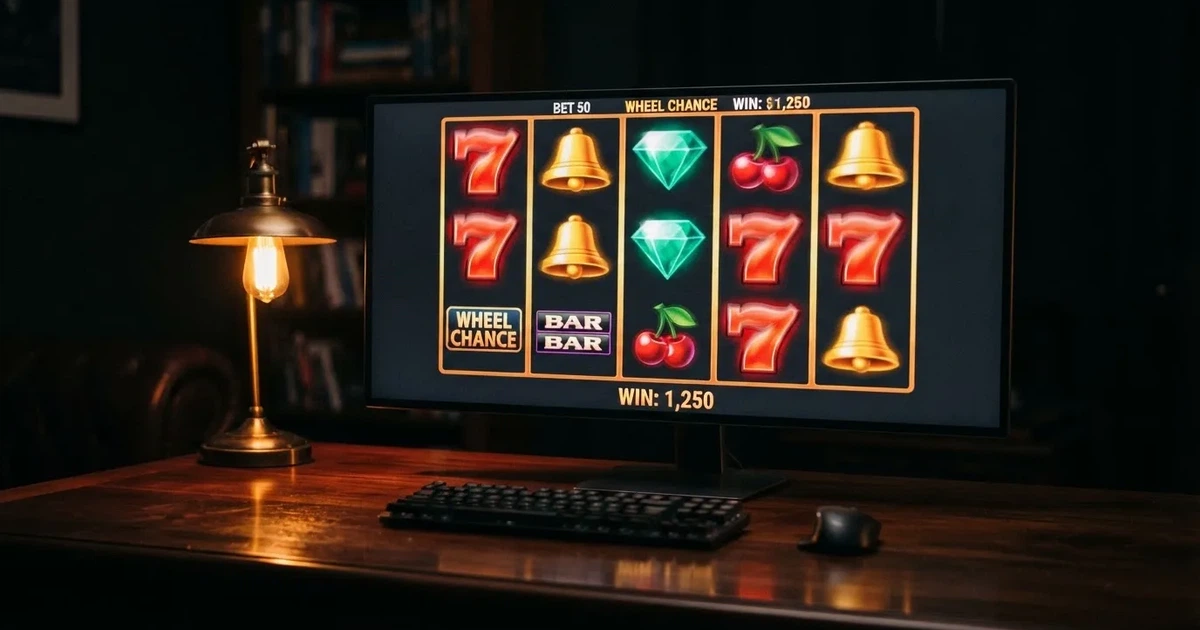
The site styled as Pokies Parlour keeps surfacing under fresh domain names, a fresh welcome package and, at the bottom of its page, a familiar disclaimer that nothing it offers is available to anyone physically in Australia. The branding is loud; the legal status is quiet and settled. No Australian licence exists for what it sells, which is the reason the ACMA issued a formal warning under section 64A of the Interactive Gambling Act 2001 and ordered Australian ISPs to block it. That much the public record holds. How many other sites sit in the same position, and what the regulator has done about them since, is the picture this page draws.
Current as of 29 October 2026, checked against the ACMA’s published formal warnings register and current blocking list.
Table of Contents
- How the Pokies Parlour branding travels across domains
- What’s publicly known about the Pokies Parlour designation
- The paytable detail the branding advertises
- The eleven offshore brands the ACMA has put on notice
- The licence the branding carries versus the licence the law requires
- The blocking rate since November 2019
- Where the ACMA’s reach stops
- Responsible gambling and the limits of self-exclusion offshore
- Payment methods the offshore branding promotes
- The bonus structure and what the arithmetic actually shows
- What a careful reader does with the picture
- Where help is available
- Frequently asked questions
How the Pokies Parlour branding travels across domains
Several domain names carry a “pokies parlour” label and a comparable welcome package, and that is not a coincidence. Affiliate marketing in the offshore casino sector works by running the same brand identity through a string of top-level domains, each bought cheaply and replaced when the previous one is blocked or burned through search. A punter who clicks an old link or types a near-match by hand can land on any of them; what they find there is a near-identical lobby, a near-identical bonus grid and the same “we don’t take Australian players” tucked into the terms.

That pattern is the reason the ACMA’s enforcement shape is what it is. Under the Interactive Gambling Act 2001 as amended in 2017, providing an unlicensed online casino to a person in Australia is a strict-liability offence for the operator, and the ACMA’s available responses are warnings, civil penalty proceedings and asking ISPs to block the domain at the network level. The IGA targets the provider, not the player, which is why no Australian punter has been prosecuted for spinning a reel on a blocked site. It is also why a blocked site can reappear the same afternoon under a new name: the offence attaches to the specific service being provided, not to the brand string.
What’s publicly known about the Pokies Parlour designation
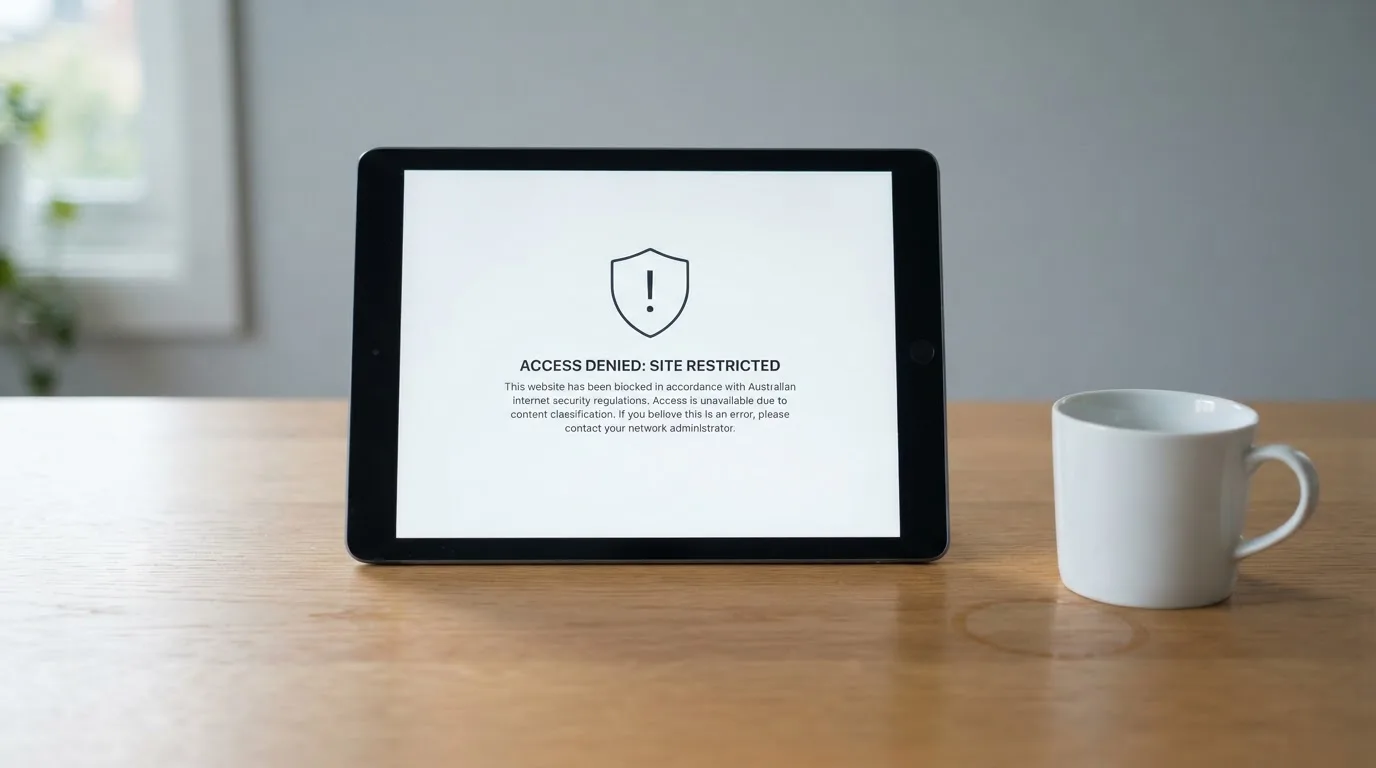
The ACMA published a formal warning under section 64A of the Interactive Gambling Act 2001 to Deloraze Limited and Versus Odds (BV) as the operators behind Pokies Parlour, finding that the service was providing prohibited interactive gambling to Australians. Around the same period the regulator asked ISPs to block Pokies Parlour alongside five other offshore sites — Ninja Spins, Pokies Online Casino, CasinoAus, Australian Casino Sites and AU Online Casino — all on the same legal ground. The pattern of the brand reappearing under fresh domains does not change the underlying legal position; it just makes the warning harder for a casual reader to attach to the right site.
The welcome offers that travel with the branding have run up to roughly A$2,777 across the first seven deposits, sometimes split across a cash match and free spins, and a no-deposit chip has appeared on some variants. None of those numbers is published in a form a regulator checks, and none of them is enforceable against an Australian player through any Australian body. They are marketing. The legal position is the one thing the ACMA has put its name to, and it is what a punter needs to weigh before clicking.
The paytable detail the branding advertises
A paytable, in slot language, is the on-screen key that turns a game’s symbol set into cash — how much each icon pays at the stake you’ve chosen, which combinations unlock a bonus round, and what the maximum payout on a single line is. Sites styled as Pokies Parlour publish paytables for the games in their lobbies in the same format as any other offshore casino. Three reels of matching high-value symbols, a scatter that triggers free spins, a wild that substitutes and a fixed jackpot headline are the working parts.
The detail that a reader actually needs is what the page does not include: the return-to-player percentage for any specific title, the volatility band the operator has set, and any maximum payout cap on a bonus-triggered win. Those three numbers decide whether a paytable’s advertised maximum is reachable at the stake the page is asking you to play. Without them, the paytable is decoration. Research could not confirm a verified RTP for any title in the Pokies Parlour lobby, which is itself a reason to treat the published maximum line payout as a ceiling on the marketing copy, not on the game.
The eleven offshore brands the ACMA has put on notice
The regulator’s published formal-warning list names operators, dates and the Interactive Gambling Act 2001 section that was breached. The eleven brands below all sit on that list for offering online casino-style games to Australians; none of them holds an Australian licence, because no such licence is available. What follows is the public record — who the ACMA named, when, and which operator behind the brand was the named recipient.
| Brand | ACMA action and date | Operator named by the ACMA | Subject support |
|---|---|---|---|
| RocketPlay | Formal warning, March 2026; earlier Dama N.V., May 2022 | Pulsup Ltd (RocketPlay); earlier Dama N.V. | — |
| Level Up Casino | Formal warning, May 2022 | Dama N.V. | — |
| Woo Casino | Formal warning, March 2025 | Dama N.V. | — |
| Spirit Casino | Formal warning, May 2025 | Dama N.V. | — |
| National Casino | Formal warning, July 2025 | Consolutetish S.R.L. | — |
| Bizzo Casino | Formal warning, July 2025; earlier 2022 | Consolutetish S.R.L.; earlier TechSolutions | — |
| Ignition Casino | Formal warning, July 2025 | Bamboo Media | — |
| Instant Casino | Formal warning, February 2025 | EOD Code SRL | — |
| Jackbit | Formal warning, April 2026 | Ryker B.V. | — |
| Casino Intense | Formal warning, April 2025 | Sterplay Holding Ltd | — |
| Sky Crown | Formal warning (date per ACMA register) | Hollycorn N.V. | — |
The “Subject support” column reads as a wall of dashes for a reason: the only sources confirming what these brands offer Australians are affiliate marketing pages, and the table on a regulator’s site describes the regulator’s own action. No Australian consumer protection extends to any of these brands, no complaints body has jurisdiction, and any balance held with them sits outside any Australian recourse if a withdrawal is refused. A blocked site can leave a balance stranded.
A second pass through the same record adds two further names: Hollycorn N.V. was warned over Sky Crown and Blue Leo, and a 2025 warning round covered Ignition Casino, National Casino and Bizzo Casino — Bizzo having already been warned in 2022 under its earlier operator.
The licence the branding carries versus the licence the law requires
The branding on an offshore casino’s footer is its own affair. A Curaçao seal, an Anjouan reference, a Costa Rica corporate address — these are licences issued by jurisdictions that have nothing to do with the Interactive Gambling Act 2001. None of them authorises the service to take a bet from a person in Australia, and none of them puts an Australian complaint pathway in place.
What Australia does license is a narrower category: wagering on races and sport placed before the event, lotteries and keno. The Northern Territory Racing and Wagering Commission is the regulator that signs off on most of Australia’s online bookmakers — fifty-two of them, including the household names — for tax reasons, despite the commission having no full-time staff and meeting once a month in Darwin. That narrow list is the entire Australian-licensed online wagering sector. Online casino games and online pokies are not on it, and will not be on it under the IGA as it currently stands. Any site selling pokies to Australians is, by definition, unlicensed to do so.
The blocking rate since November 2019
The ACMA’s blocking power under the Interactive Gambling Act 2001 lets it ask Australian ISPs to make a domain unreachable from inside the country, and the cumulative effect of doing so across six and a half years is now a four-figure number. As reported in June 2026, 1,751 illegal gambling and affiliate marketing websites had been blocked since the first blocking request in November 2019. The headline rounds — a single twelve-site block reported the same week, including 7Signs, ChromaBet, Donbet, Duospin, Freshbet, Slots Gem, Jacks Club, Lucky Start, Pointsbetz, Spinrise, Vinyl Casino and Wildsino — look small against that total, and are.
The interesting number is the rate. From the first blocking request in November 2019 to the headline figure of 1,751 in June 2026 is roughly eighty months, which works out at a little under twenty-two blocked domains a month on average across the full period. That average hides a sharp acceleration: the early rounds were measured in single-digit batches, and the more recent ones have run into double digits at a time. The rate has risen because the affiliate-marketing pipeline that feeds the offshore sector has industrialised, and because each blocked site re-emerges under new addresses faster than the regulator can list them. The June 2026 round added twelve in one ask; the September 2022 round that took Pokies Parlour down added six. The blocking rate is not a clean metric of the size of the problem; it is a metric of how often the regulator has been able to identify, warn and then ask ISPs to act on a given site.
The broader market picture frames what the blocking rate sits inside. H2 Gambling Capital’s 2025 estimate puts Australians’ losses to illegal gambling sites at roughly A$3.9 billion a year, and tracks the share of gambling going through legal channels as falling from 74% in 2021 to 64%. Those two figures together describe the economic gravity the ACMA is trying to bend back: a market the regulator’s blocking tool is not yet large enough to fully offset, even at an average rate of around twenty-two blocks a month.
Where the ACMA’s reach stops
The ACMA can investigate, issue a formal warning, refer a matter for civil penalty proceedings and ask ISPs to block a domain. It cannot enforce an offshore operator’s payout terms, freeze a withdrawal, or compel a refund to an Australian player. The protections that an Australian punter loses when they move from a licensed bookmaker to an offshore casino are not abstract: there is no Australian complaints body to take a payout dispute to, no Australian small-claims path, no statutory guarantee that funds held in a player account are segregated from operator funds. If an offshore site refuses a withdrawal or closes an account, the punter’s recourse is the operator’s own terms page and the corporate registry of whatever jurisdiction issued the licence. Most offshore licences explicitly route disputes to arbitration in the licensing jurisdiction, and that is where the matter ends.
The enforcement frame also leaves one awkward gap. The IGA targets the provider; the individual player is not the subject of prosecution. That is a deliberate choice — criminalising the customer side of a transaction that is already banned on the supply side would create a class of people who have lost money and now also face legal jeopardy — but it leaves the consumer-protection gap wide open. The operator can be warned, blocked and fined; the player’s balance, if any, is wherever the operator’s terms say it is.
Responsible gambling and the limits of self-exclusion offshore
BetStop, the National Self-Exclusion Register, has been live since August 2023 and binds every Australian-licensed online and phone wagering service. A punter who registers with BetStop is locked out of the licensed sector for a chosen period and the operators have to enforce that. The mechanism works because every licensed operator is connected to the register and faces regulatory consequences if a self-excluded customer gets through.
None of that infrastructure applies offshore. A self-exclusion set on an offshore casino is enforced, if at all, by that one operator, on its honour, for as long as the account stays open. If the punter closes the account and opens one at a sister site under the same parent company, or simply signs up under a different email, the exclusion does not travel. The affiliate marketing pipeline that supplies fresh domains to the offshore sector is exactly the same pipeline that defeats single-operator self-exclusion.
The National Gambling Helpline (1800 858 858) is free, runs 24/7 and offers chat through Gambling Help Online. Counselling, financial counselling and peer support are the services that work regardless of where a punter has been playing. For a punter who has been spending on offshore sites, those services sit alongside BetStop; BetStop does what it can in the licensed sector and the helpline covers what BetStop cannot reach.
Payment methods the offshore branding promotes
Affiliate pages describing sites styled as Pokies Parlour list payment methods in the standard offshore roster: Visa and Mastercard debit (credit is a different matter, covered below), bank transfer, e-wallets like ecoPayz, and cryptocurrencies. The shape of the list tells you the regulatory environment the operator is built for. A licensed Australian wagering service takes debit card, bank transfer, PayID/Osko and BPAY — the four legal deposit routes after the credit-card ban that took effect on 11 June 2024. An offshore site that asks for a credit card or a crypto deposit is operating outside the Australian rules by the deposit method alone.
Several Australian banks offer card-level gambling blocks that read the merchant category code, and these work on the physical card and, depending on the bank, on tokens issued from that card through a digital wallet. Westpac’s block refuses authorisation of transactions registered under the merchant category code for betting and casino gambling on eligible personal credit and debit cards. ANZ’s block, activated in the ANZ app, also blocks gambling transactions made through a digital wallet such as Apple Pay on an eligible card; once the block is on, removing it requires a 48-hour waiting period, and the bank warns that not all gambling transactions will be caught and a small number of non-gambling transactions may be blocked in error. None of this prevents a punter from using a card from a bank without such a block, or from funding play from a non-card source like a bank transfer to a PayID or a crypto on-ramp.
PayID adds a separate layer of friction for the offshore case. Paying to a PayID shows the account holder’s name before the transfer is sent, and Australian Payments Plus warns that being asked to transfer money to a PayID on an illegal gambling site is almost certainly a scam. The PayID network was already carrying more than 25 million registered identifiers by April 2025 and now runs at over 100 Australian financial institutions; Osko, the underlying instant-transfer service, settles bank-to-bank transfers in under a minute twenty-four hours a day. None of this prevents the transfer, but it does mean the punter sees the recipient name before sending, which is a friction point the offshore sector has historically preferred not to surface.
A note on digital wallets and the credit-card ban. The Interactive Gambling Act 2001 as amended in 2023 bans credit cards and credit-related products as payment for Australian-licensed online wagering, and the ban reaches linked digital wallets like Apple Pay. Apple Pay itself does not surcharge — Apple does not charge consumer fees for in-store, online or in-app use — and the per-transaction limits and PIN rules are set by the card issuer, not by Apple. By the end of 2025, Apple Pay, Google Pay and Samsung Pay collectively accounted for around 45% of all card payments in Australia by number. None of that changes the underlying prohibition on credit-funded gambling at a licensed operator, and none of it changes the legal position of an offshore site.
The bonus structure and what the arithmetic actually shows
The branding’s flagship offer, where it appears, is a staged deposit bonus: match percentages across the first several deposits, often with free spins on a named title layered on top. The shape is familiar to anyone who has looked at an offshore casino’s welcome page; the totals, when they appear, run from a few hundred to a few thousand dollars across the package.
What the page does not include is the wagering multiple that turns the headline figure into a real cost. The standard offshore pattern is a wagering requirement expressed as a multiple of the bonus (or the bonus plus deposit) that must be turned over before any winnings become withdrawable. Until that figure is published, the headline number is just the upper end of the bankroll the operator is willing to put at risk. Research could not confirm a verified wagering multiple for any of the eleven ACMA-warned brands covered on this page, which is why none is stated here.
The bonus arithmetic that does apply is the cost of clearing a bonus under a known multiple. Working the standard formula — required turnover equals bonus times the wagering factor, spins equals turnover divided by the stake per spin, play time in hours equals spins times a five-second interval divided by three thousand six hundred — gives a concrete band. A A$500 bonus with a 40x wagering factor on a A$1 spin stakes twenty thousand spins, which is just under twenty-eight hours of continuous play; the same A$500 bonus at the same stake with a 20x factor halves both. The headline bonus figure is the smallest number in that calculation. The wagering factor is the largest, and it is the one the branding does not publish.
The expected-loss calculation is the other half. Expected loss equals required turnover times one minus the RTP. A 40x turnover of a A$500 bonus at a 96% RTP is A$20,000 of action at a 4% house edge, which is A$800 of expected loss before any single spin is spun. The same A$500 bonus at the same stake at a 92% RTP is A$1,600 of expected loss on the same A$20,000 of turnover. The bonus figure on the page is the number that looks like a gift; the expected-loss figure is the number that pays for it. Neither is printed on the welcome page that carries the headline.
What a careful reader does with the picture
The sequence a careful reader runs through is short. First, check the regulator’s record: the ACMA’s formal warnings and blocking orders are public, name the operator and the date, and are searchable by brand. Second, check the payment method a deposit would use: a credit card or crypto request is itself a signal that the operator sits outside Australian rules. Third, check whether the operator is connected to BetStop, the National Self-Exclusion Register, which binds the licensed sector but not the offshore one.
The judgment that follows from those three checks is the one the regulator has already made in writing. A punter who chooses an Australian-licensed wagering service is choosing a service that connects to BetStop, accepts only the four legal deposit routes, faces Australian complaints and compliance oversight, and routes disputes through Australian courts. A punter who chooses an offshore casino is choosing a service that may be blocked from Australian IPs tomorrow, holds the player’s balance at the operator’s discretion, and offers no Australian recourse if a payout is refused. The branding travels; the legal position does not.
Where help is available
For anyone who has been spending on offshore sites and wants to talk it through, the National Gambling Helpline is 1800 858 858, free, twenty-four hours a day, with web chat through Gambling Help Online. Financial counselling is available through the National Debt Helpline (1800 007 007) and through state-based problem-gambling services. BetStop is the self-exclusion mechanism for the Australian-licensed sector and is the right register for anyone who wants to be locked out of licensed wagering and sports betting for a chosen period. None of these tools reaches an offshore casino, but they reach the punter.
Frequently asked questions
Why does the Pokies Parlour branding appear across several different domain names?
Affiliate marketing in the offshore casino sector buys top-level domains in bulk and rotates the brand through them, replacing domains as they get burned through search, blocked by ISPs, or simply abandoned. The same operator can present a near-identical lobby and welcome package under several different addresses, and a punter clicking an old link or typing a near-match can land on any of them.
Is a site styled as Pokies Parlour actually licensed to accept Australian players?
No Australian licence covers online casino games or online pokies. The Interactive Gambling Act 2001 makes providing those services to a person in Australia an offence, and the ACMA has issued a formal warning under section 64A of that Act to the operators behind Pokies Parlour. Any licence shown in the site footer is issued by a different jurisdiction and does not authorise the service to take bets from Australians.
What deposit bonus does the branding typically advertise across its domains?
The headline figure that recurs is a staged welcome package of up to roughly A$2,777 across the first seven deposits, sometimes split between a cash match and free spins, with a no-deposit chip appearing on some variants. The branding does not publish the wagering multiple that turns the headline into a real cost, which is the figure that decides whether the offer is worth taking.
How can someone tell which of several similarly named domains is the one currently being advertised?
The ACMA’s published formal-warning and blocking lists name specific domains, and current affiliate campaigns rotate through addresses that may not appear on those lists yet. Typing the brand name into the ACMA register is the cleanest check; if the domain is not listed but the lobby looks the same, the operator is likely one step ahead of the published list rather than a different business.
What do reviews of a site like this usually say about its withdrawal process?
Reviews published on affiliate marketing pages tend to describe fast payouts and lenient verification, because the affiliate’s revenue depends on a deposit being made. Independent user reports describe a different pattern: withdrawals held pending additional documents, maximum cashout caps applied to bonus-derived winnings, and balances stranded when a site is blocked. The Australian consumer has no complaints pathway into any of these outcomes.
Why would a brand run a sign-up bonus across the first several deposits rather than just the first?
A staged bonus is a retention tool, not a generosity tool. The first deposit captures a customer; the second, third and fourth deposits capture the customer’s winnings, because by the time the bonus on deposit two is in play, the punter has a balance the operator wants held over into the next round. A punter who reads the welcome page as a single offer is missing the structure: each stage carries its own wagering requirement and its own game-weighting list, and the headline figure is the sum of several smaller commitments, not a single gift.