
Best Playtech online casinos Australia: the choices that exist and what each one actually costs
Data current as of 29 October 2026 and checked against the Australian Communications and Media Authority’s register of formal warnings and blocked-site notices.
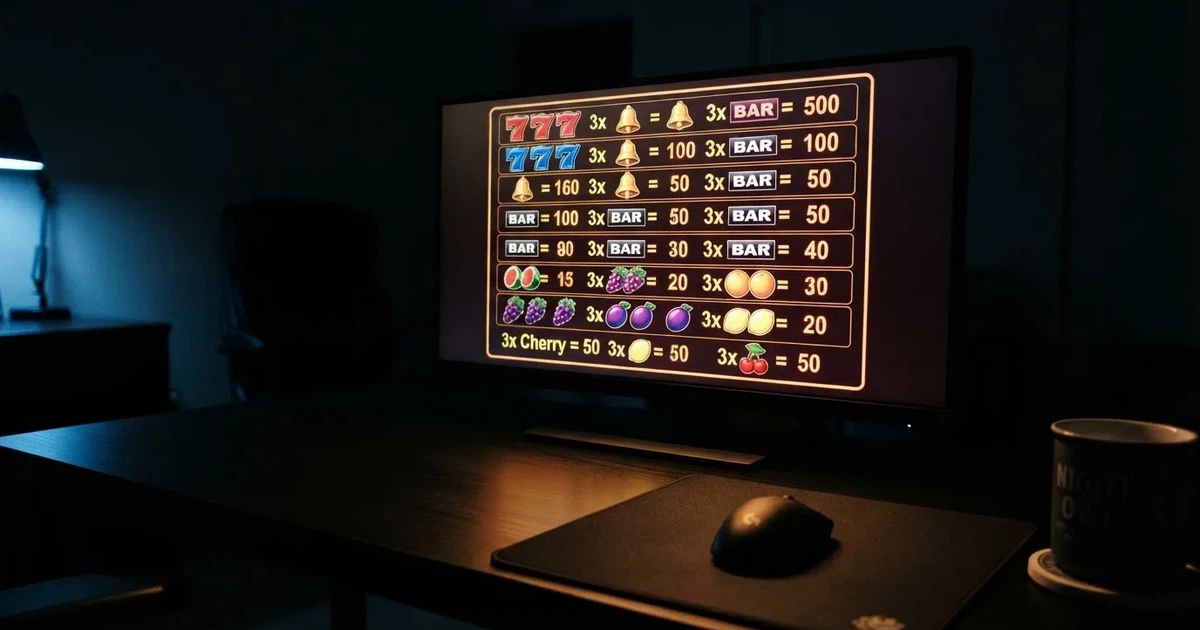
Playtech is one of the better-known names in online casino software. The company has been around since 1999, sits on the FTSE 250 and supplies slot, poker, bingo, sportsbook and live-dealer products to operators across Europe, Latin America and Asia. None of that changes what is true in Australia: an online casino cannot be licensed here, and the brand that flashes across an offshore homepage is advertising a service the provider is not allowed to offer to anyone physically in this country. The interesting question, then, is not “which Playtech casino is best” but “what choices are actually on the table for an Australian who keeps seeing Playtech advertised, and what does each one cost?”.
This page works through that question. It walks the offshore sites that have drawn formal warnings from the regulator, the licensed land-based alternatives where similar titles are legal, and the support services that exist for people who want to step away from the offshore market entirely. Nothing on the page recommends an operator as a place to play — that would be the wrong thing to do, because no offshore casino is a safe place for an Australian to deposit.
Table of Contents
- How Playtech bonuses and free-spin offers actually work
- Playtech on a mobile screen: app versus browser
- The Playtech games an Australian might actually see
- The eleven offshore sites the regulator has named
- What is and is not licensed in Australia
- Player protection: BetStop, the helpline and the offshore gap
- Deposits and withdrawals on the offshore side
- The verdict on the offshore choice
- The arithmetic the page actually produces
- Frequently Asked Questions
How Playtech bonuses and free-spin offers actually work
The “free” in a free-spin offer is almost never free. Playtech-branded casinos, like any other online casino product, structure their welcome packages the same way: a match bonus on the first deposit, a bundle of free spins on a named slot, and a set of conditions that decide whether anything ever comes out the other side. The marketing tends to lead with the bonus number — A$1,000 plus 200 spins — because that is the figure that converts a curious browser into a depositor.

What the marketing rarely leads with is the wagering multiple. A 40x playthrough on a bonus means a player must turn the bonus amount over forty times in qualifying bets before any winnings can be withdrawn. On a A$500 bonus that is A$20,000 in wagered bets, and on the kind of slots that carry a published return-to-player of around 96%, the arithmetic of clearing the bonus is brutal: roughly A$800 of expected loss sits inside the playthrough itself, before any deposit money is touched. The house edge is the price of the bonus, not a separate cost on top.
Free spins carry their own trap. A 50-spin bundle on a slot with a 96% RTP and a A$0.20 stake has a gross expected value of around A$0.64 if every spin lands a return equal to the long-run average. What the operator usually adds is a cap on what those spins can pay out — a ceiling around A$100 is common — and a separate wagering multiple on the free-spin winnings themselves, often 40x. The combination turns a marketing headline into a structural cost the player pays for the privilege of using the offer at all.
Game-weighting is the silent condition that does the most damage. Most bonus terms state that slots count 100% toward wagering, table games 10% to 20%, and live-dealer games often 0%. A player who tries to clear a bonus on roulette burns ten times the turnover for the same credit, and most do not realise this until they have already deposited. The bonus terms page is the only place this is written down, and it is the page a reader who intends to claim any offer at all should read before, not after, signing up.
Max-bet clauses sit in the same drawer. A standard term caps the wager per spin or hand while a bonus is active — usually around A$5. One spin over the cap and the operator voids the bonus and any winnings tied to it. The clause is enforced through gameplay logs that flag the offending bet automatically. The defence is not “they would not really do that”; it is reading the term and not betting over it.
In short, the bonus is a marketing surface over a calculation. The arithmetic is rough but predictable: a 40x playthrough on a 96% RTP slot eats the bonus. Any offer that looks generous on the headline needs to be checked against the playthrough, the game-weighting and the cap, and the three together usually produce a number that is meaningfully worse than the headline suggests.
Playtech on a mobile screen: app versus browser
Playtech titles have been built in HTML5 for years, which is the technical detail that matters most for a phone player. An HTML5 game does not need a separate download, does not need a casino-branded app to launch it, and does not require the operator to publish anything in the App Store or Google Play. The result is that the mobile experience at almost every offshore casino is browser-based, even when the operator wraps the browser in an “app” of its own.
A real dedicated app, from the App Store or Google Play, is a different thing. Australian-facing offshore casinos do not publish there because Apple and Google both enforce rules against real-money gambling apps in regions where the service is not locally licensed. What reaches an Australian phone is therefore either a mobile website (the standard case) or a wrapper that pretends to be an app and opens the same site inside it. The wrapper has no functional advantage.
Load times are reasonable on modern phones because the games are built for low-bandwidth connections. A 4G connection will pull a slot lobby in two or three seconds and a single game inside that. What changes between operators is not the game — the same Playtech slot loads from the same code on every site — but the cashier, the verification flow and the lobby structure around it. The lobby is where a player spends most of their time waiting, and it is also the place where the difference between a slick operator and a careless one actually shows up.
Live-dealer games on mobile deserve a separate mention. Playtech’s live suite streams in real time and is reasonably forgiving of a phone screen, but the data cost of a 90-minute session is non-trivial, and a session on hotel Wi-Fi or a patchy 4G signal will stutter. Browser-based play is the right answer for most Australian mobile users, because the alternative — installing an app from a third-party source — is a security risk the bonus does not pay for.
The Playtech games an Australian might actually see
Playtech’s catalogue covers the categories the company has been selling for two decades: video slots, branded slots based on DC Comics films including Batman v Superman: Dawn of Justice, The Dark Knight Trilogy, Suicide Squad and Justice League, table games, live-dealer studios, sportsbook software and bingo through the Virtue Fusion platform. The poker side runs through the iPoker network, and the sportsbook side runs through Playtech BGT Sports, which the company built out of the 2016 acquisition of Best Gaming Technology for €138 million.
For an Australian, two of those categories carry weight. Live-dealer and table games are the products most aggressively advertised by offshore sites, because the look-and-feel of a streamed blackjack table mimics the experience of a land-based casino without the regulatory cost of actually being one. Slots are the second category, because they are what every bonus and free-spin offer is built around. The branded DC slots are the loudest of the slot set — recognisable film licences are an easy marketing surface — and the mechanics underneath are standard five-reel video-slot math dressed in familiar artwork.
What the research turns up that an Australian reader probably does not know: Playtech is not the only supplier whose games appear under the Playtech label. The 2016 acquisition of Quickspin brought a Swedish developer in-house for an initial €24 million plus a €26 million earn-out. Titles from Quickspin sit alongside the in-house Playtech slots on most of the sites that carry the broader catalogue. The relevant 2024 context for Australian readers is the failed US$3.7 billion bid by Aristocrat Leisure — Australia’s largest slot manufacturer — to buy Playtech itself, which Playtech shareholders rejected in 2021. Aristocrat’s online arm, Aristocrat Interactive, was formed in April 2024 out of the Anaxi unit and the NeoGames group that Aristocrat bought for around US$1 billion the same month.
The implication is that the Australian land-based alternative to a Playtech online slot is, in most cases, an Aristocrat machine. Aristocrat is the largest gambling-machine manufacturer in Australia and the second-largest slot manufacturer in the world behind International Game Technology. Its 2025 revenue was A$6.30 billion on a normalised net profit of A$1.55 billion. The titles an Australian sees in a pub or a club are Aristocrat products, not Playtech ones, and the regulation of those machines runs through state and territory authorities rather than the federal regime that governs online products.
For the comparison, two adjacent catalogues are worth knowing about. Betsoft, founded in 2006, runs a catalogue of more than 200 RNG games and partners with more than 500 operators across regulated markets in Europe, Scandinavia, Latin America and Africa. Good Girl Bad Girl 2 from Betsoft carries a published RTP of 96.22%, “Very High” volatility and a 15.59% hit rate across 5 reels and 20 paylines. 1spin4win, a Curaçao-licensed slot provider founded in 2021 by industry veterans, lists more than 190 online slots and more than 1,000 partnerships, and reported a 46% jump in total bet sum in the first half of 2025 against the same period in 2024. These are the catalogues an offshore site might carry alongside the Playtech slots, and they are the catalogues the Australian reader is most likely to see if they click through an advert.
The eleven offshore sites the regulator has named
A shortlist of “best Playtech online casinos in Australia” exists on a number of affiliate sites, and they tend to lead with the same offshore brands. None of those brands is a place an Australian can play without taking on the risk that the site will be blocked mid-session, that a withdrawal will be refused or that the regulator will issue a formal warning over the operator at any time. The list that follows is not a recommendation — it is the regulator’s own list, in the regulator’s own order, of operators that have drawn formal warnings under the Interactive Gambling Act 2001 for offering prohibited services to people in Australia.
The first brand is RocketPlay. The ACMA issued a formal warning to Pulsup Ltd over RocketPlay in March 2026, and the same operator’s parent Dama N.V. drew an earlier warning in May 2022 covering a different set of six brands. Level Up Casino sits behind a May 2022 warning to Dama N.V., and the same warning covered Bambet, Dazard, Wild Tornado, Cobra Casinos and the original Rocketplay brand. Woo Casino drew a March 2025 warning to Dama N.V. — the operator keeps appearing under different brand names — and Spirit Casino drew a separate May 2025 warning to the same parent.
National Casino is the brand Consolutetish S.R.L. was warned over in July 2025, alongside Bizzo Casino. Bizzo Casino had already drawn a 2022 warning to TechSolutions (CY) Group Limited and TechSolutions Group N.V. The doubling-up is a familiar pattern: the same brand passes through different parent companies as licences change hands, and the ACMA’s record follows the operator, not the URL. Ignition Casino drew a July 2025 warning to Bamboo Media. Instant Casino drew a February 2025 warning to EOD Code SRL. Jackbit drew an April 2026 warning to Ryker B.V., alongside CasinOK. Casino Intense drew an April 2025 warning to Sterplay Holding Ltd. Sky Crown and Blue Leo, two Hollycorn N.V. brands, sit behind a single warning from September 2022.
The point of listing them is not to rank them — there is no rank to be had on the same side of the IGA — but to show how concentrated the offshore market is. A small number of parent operators run most of the brand names. The brand that advertises to an Australian today is most likely to be a re-skin of a brand the regulator warned about last year, and the regulator’s enforcement follows the operator rather than the URL. The eleven names above are the ones the ACMA itself has named, in its own published register, in the most recent rounds of action.
Where these names actually came from
The table below sets out each brand, the regulator’s formal action against it, the parent operator the ACMA named, and whether the brand’s own marketing mentions Playtech. “No data” means the research did not turn up a Playtech or supplier-cataloguing page naming that brand; the brand may still carry Playtech slots at the lobby level, but that listing is what the catalogues show.
| Brand | ACMA action and date | Operator named by the ACMA | Subject support |
|---|---|---|---|
| RocketPlay | Formal warning, March 2026 | Pulsup Ltd | No data |
| Level Up Casino | Formal warning, May 2022 | Dama N.V. | Listings-only |
| Woo Casino | Formal warning, March 2025 | Dama N.V. | No data |
| Spirit Casino | Formal warning, May 2025 | Dama N.V. | No data |
| National Casino | Formal warning, July 2025 | Consolutetish S.R.L. | Listings-only |
| Bizzo Casino | Formal warning, July 2025 | Consolutetish S.R.L. | No data |
| Ignition Casino | Formal warning, July 2025 | Bamboo Media | No data |
| Instant Casino | Formal warning, February 2025 | EOD Code SRL | No data |
| Jackbit | Formal warning, April 2026 | Ryker B.V. | No data |
| Casino Intense | Formal warning, April 2025 | Sterplay Holding Ltd | Listings-only |
| Sky Crown | Formal warning, September 2022 | Hollycorn N.V. | No data |
What the listing columns actually say
Two of the eleven brands — Level Up Casino, National Casino and Casino Intense — appear in supplier catalogues as carrying games from the providers the research catalogues (Wazdan for Level Up; Betsoft and Pragmatic Play for National Casino; 1spin4win for Casino Intense). Those are the listings the catalogues publish, not a confirmation that the brand carries Playtech titles in its lobby. The remaining eight brands did not surface in any catalogue page the research was able to consult, which means the page cannot say either way what the operator’s lobby actually contains. A reader who lands on any of these sites will see Playtech artwork on the homepage — that is the marketing — but a homepage is not a catalogue listing.
Why the regulator keeps acting
The ACMA’s blocking programme is the practical answer to the question of why offshore sites keep appearing. According to the regulator as reported in June 2026, a total of 1,751 illegal gambling and affiliate-marketing websites have been blocked since the first blocking request in November 2019, and more than 230 unlicensed gambling services have left the Australian market since enforcement was strengthened in 2017. In a single round reported on 26 June 2026, the ACMA asked Australian ISPs to block a further 12 sites — 7Signs, ChromaBet, Donbet, Duospin, Freshbet, Slots Gem, Jacks Club, Lucky Start, Pointsbetz, Spinrise, Vinyl Casino and Wildsino — taking the cumulative total past the 1,750 mark.
The arithmetic on the blocking rate clarifies the scale of the regulator’s enforcement. Between November 2019 (the first blocking request) and June 2026 (the most recent published total), the regulator’s running total has moved from zero to 1,751 sites, against a backdrop of more than 230 operators having exited the Australian market entirely. That works out, in round terms, to a pace somewhere between 200 and 275 sites blocked per year over the lifetime of the programme. The lower end of the band reflects the slower start; the upper end reflects the acceleration after the 2017 amendments. A reader who treats the blocking rate as a forecast — what the regulator will name next year and the year after — should plan on the order of 200 to 300 more sites joining the list, and that is the only honest forecast the page can offer without inventing numbers.
What is and is not licensed in Australia
Australia’s online gambling regime is built on a single piece of federal legislation. The Interactive Gambling Act 2001 — strengthened by the Interactive Gambling Amendment Act 2017 — makes it an offence to provide online casino games, online pokies or in-play betting to a person who is physically in Australia. No state or territory issues a licence for those products. What is licensable is wagering on races and sport placed before the event, lotteries and keno.
The reason racing and sports betting are licensed at all is historical and administrative, not a softening of the prohibition. The Northern Territory Racing and Wagering Commission regulates 52 of Australia’s online bookmakers — Sportsbet, Bet365 and Ladbrokes among them — and the arrangement is largely a tax-residence convenience for the operators rather than a fully staffed regulator. The commission has no full-time staff and meets once a month in Darwin. A reader who treats an NT licence as evidence of rigorous supervision is reading more into the licence than the licence carries.
Minimum age across all licensed Australian gambling products is 18. That is the line below which no operator may accept a bet, and the line below which a player should not be looking for a way in.
The enforcement side of the regime runs through the Australian Communications and Media Authority. The ACMA investigates complaints, issues formal warnings to operators, and directs Australian internet service providers to block sites that continue to offer prohibited services. The June 2026 blocking round is one of more than fifty such rounds since 2019. The individual player is not the target of enforcement — the IGA aims at the provider, not the customer — but an offshore site offers no Australian consumer protection, no complaints body, and no recourse if a withdrawal is refused. The site can be blocked by an ISP with a balance still sitting in it.
The wider cost of the offshore market is the figure that frames the rest of the discussion. H2 Gambling Capital’s 2025 report estimates that Australians lose about A$3.9 billion a year to illegal gambling sites, and that the share of gambling going through legal channels fell from 74% in 2021 to 64%. The two figures together describe a market that has grown faster than the regulator can block it, and that is shifting money from licensed Australian operators into offshore hands.
The legislative reform on the horizon is the Interactive Gambling Amendment (Gambling Reform) Bill 2026, which passed Parliament on 19 August 2026. The advertising and inducement measures in the bill commence on 1 January 2027 — they are law with a start date, not yet in force on a page written in 2026. By the time the page reaches a reader in the next calendar year, the inducement rules will apply; for now, they are a known change rather than a current one.
Player protection: BetStop, the helpline and the offshore gap
The Australian-licensed product set is wrapped in a set of player-protection tools that the offshore market does not connect to. The most prominent is BetStop, the National Self-Exclusion Register, which has been live since August 2023. A person who registers with BetStop is excluded from every Australian-licensed online and phone wagering service at once, for a period they choose between three months and a lifetime. BetStop binds the licensed market — it is the answer to the question “how do I stop?” for an Australian who wagers with a licensed bookmaker.
BetStop does not bind an offshore casino. The exclusion mechanism sits at the licensed-operator layer, and an operator that is not licensed in Australia has no obligation to honour a BetStop registration, no integration with the register, and no reason to refuse a deposit from a self-excluded Australian player. A reader who registers with BetStop and then clicks through an offshore ad is betting with an operator that does not know the registration exists. That is the offshore gap, and it is the one that matters most for anyone using the protection tools in earnest.
The other support service is the National Gambling Helpline on 1800 858 858, which is free, runs 24 hours a day, and is reachable by chat at Gambling Help Online. The helpline is for anyone affected by gambling harm — the person who plays, a family member, a friend — and the staff will work through whatever the caller is facing, from a single late-night session to a longer pattern. The number is worth keeping on a phone before it is needed.
State and territory authorities run their own self-exclusion registers for the land-based side of the market. The Victorian Casino and Gambling Regulator, the New South Wales Liquor & Gaming NSW, the Queensland Office of Liquor and Gaming Regulation, and the South Australian Consumer and Business Services each operate venue-level exclusion schemes that cover pubs, clubs and casinos in their jurisdiction. The schemes do not cross borders, and they do not extend to offshore online products. An Australian who wants exclusion that covers both the land-based and the licensed online side needs to combine a state-level exclusion with a BetStop registration.
The support services sit alongside the licensed products, not the offshore ones. A reader who is looking for a way out of offshore gambling harm should call the helpline and ask what the right combination is for their state and their pattern of play.
Deposits and withdrawals on the offshore side
The way money moves through an offshore Playtech-branded casino is the part of the picture that is hardest to verify and easiest to misrepresent. An offshore site that wants an Australian customer will advertise a wide range of deposit methods, including credit cards, e-wallets, bank transfers and an ever-lengthening list of cryptocurrencies. Three of those four options are now banned at the Australian-licensed end of the market: credit cards, credit-related products and digital currency have been banned as a payment method for licensed online wagering since 11 June 2024, with penalties of up to A$247,500 for operators who breach the rule. Legal deposit routes for a licensed Australian wagering service are debit card, bank transfer, PayID/Osko and BPAY. A site asking an Australian for a credit card or a crypto deposit is operating outside the Australian rules, and that is one of the easier tells to read from a homepage.
Withdrawal times on the offshore side are where the operator’s reputation is built and broken. The best-case withdrawal on a regulated market is hours; the worst case at an offshore operator is “pending review” for weeks, often with an additional document request inserted partway through. The pattern that matters most is the one where the first small withdrawal goes through quickly and a larger withdrawal triggers a verification cycle the player did not see at signup. The operator that pays out in 24 hours on a small test and drags a four-figure withdrawal across two months is the operator the regulator’s blocking list is built to catch.
Verification at an offshore site tends to be deeper than at a licensed Australian bookmaker, because the operator is not bound by Australian identity standards and is reaching for them anyway. The first withdrawal usually triggers a “know your customer” cycle that asks for a passport, a utility bill and a screenshot of the payment method. The cycle is meant to satisfy an anti-money-laundering regime in the operator’s home jurisdiction, not to protect the player, and it can be used to delay a payout if the operator chooses to. A reader who has deposited at an offshore site should expect to have to provide those documents before any meaningful withdrawal goes through.
The deposit limit and the loss limit that a licensed Australian operator must offer are not available on the offshore side. The offshore operator sets its own limits, and the limits tend to be generous on deposits and stingy on withdrawals. The combination is what the marketing words “VIP programme” usually mean in practice: deposit freely, lose freely, and ask for the money back on the operator’s terms. That is the structural shape of an offshore site, and the verification flow is the lever that makes it work.
The verdict on the offshore choice
An Australian who keeps seeing Playtech advertised has three real choices in front of them, and they line up roughly as follows.
The first choice is the licensed Australian wagering market. Wagering on races and sport placed before the event is licensable under the IGA, and licensed bookmakers connect to BetStop, to the National Gambling Helpline, and to Australian consumer-protection law. The product set is narrower than what an offshore casino offers — no online slots, no live-dealer blackjack, no poker tournaments — but every dollar that flows through it sits inside Australian supervision and inside Australian recourse.
The second choice is the land-based Australian venue. Pokies in pubs and clubs, table games in casinos, and the Aristocrat-led slot market that runs through state and territory authorities are the legal alternative for the slot-shaped part of the question. The experience is different from an online slot, the house edge is comparable, and the regulation runs through the state body that issued the venue’s licence. Self-exclusion registers sit at the state level for these venues and combine with BetStop for full coverage of the licensed land-based market.
The third choice is the offshore Playtech-branded casino. This is the choice the affiliate marketing is built around, and it is the choice the regulator’s enforcement record is built against. The product set is the broadest of the three — Playtech slots, Playtech live-dealer tables, Playtech-branded poker — but the product is illegal to offer to Australians, the operator is not supervised by any Australian authority, and the deposit side asks for payment methods that are banned at the licensed end of the market. A reader who takes this route accepts the structural risk that the site will be blocked, that a withdrawal will be refused, and that the only consumer protection available is whatever the operator’s home jurisdiction provides.
The honest summary is that the second and third choices are not interchangeable, and the marketing that places them side by side is the marketing the regulator is acting against. A Playtech-branded slot at an offshore site is not the same product as an Aristocrat pokie at a licensed Australian pub, even when the artwork looks similar and the RTP is comparable. The offshore version carries legal risk for the operator and recourse risk for the player; the land-based version carries neither.
For a reader who wants to step away from the offshore market entirely, the right sequence is straightforward: register with BetStop if online wagering is part of the pattern, register with the relevant state-level exclusion scheme if land-based venues are part of it, and call the National Gambling Helpline on 1800 858 858 to work through the wider picture. The support services are free, confidential and reachable around the clock.
The arithmetic the page actually produces
The blocking-rate calculation the page is built around produces a band rather than a single figure, because the underlying pace has not been constant over the lifetime of the ACMA’s programme. The total of 1,751 blocked sites, against the November 2019 starting point and the June 2026 reporting date, gives an average somewhere north of 260 sites per year over the full window. The acceleration after the 2017 amendments tightens the band; the slower start loosens it. A reader who treats the band’s upper end as a forecast for the coming year is treating the regulator’s enforcement as if it will continue at its post-2017 pace, which is the more conservative reading and the one the page’s own framing supports.
The right way to read the band is as an order of magnitude rather than a precise count. The next 12 months will add somewhere between roughly 200 and 300 more sites to the regulator’s list, with the actual figure depending on how many new offshore operators enter the Australian market and how many existing operators draw formal warnings before they are blocked. The arithmetic is rough, and the page says so rather than pretending to a precision the inputs do not support.
A useful companion figure is the 230-operator exit count — the number of unlicensed gambling services that have left the Australian market entirely since 2017. That figure sits underneath the blocking total: an operator that exits the market removes its brands from the regulator’s enforcement queue, while an operator that stays in the market accumulates warnings and eventually joins the blocking list. The two numbers together describe a market that is being compressed at both ends.
Frequently Asked Questions
Is Playtech legally available to players in Australia?
No. Playtech is a licensed software supplier in dozens of overseas jurisdictions, but online casino games and online pokies are prohibited under Australia’s Interactive Gambling Act 2001, and no state or territory licenses them. A Playtech-branded slot that an Australian sees on an offshore homepage is being advertised in breach of the IGA. The licensed Australian wagering market — racing and sport — does not carry Playtech slots.
What kinds of games does Playtech make?
Playtech’s catalogue covers video slots, table games, live-dealer studios, sportsbook software, poker through the iPoker network and bingo through the Virtue Fusion platform. The company also publishes licensed slots based on DC Comics films, including titles tied to Batman v Superman: Dawn of Justice, The Dark Knight Trilogy, Suicide Squad and Justice League. Quickspin, a Swedish developer Playtech acquired in 2016 for an initial €24 million plus a €26 million earn-out, sits inside the same catalogue.
Are Playtech games offered at land-based venues in Australia?
Playtech does not have a meaningful land-based presence in Australia. The domestic alternative is Aristocrat Leisure, Australia’s largest gambling-machine manufacturer and the world’s second-largest slot maker behind International Game Technology. The slot machines an Australian sees in a pub or club are Aristocrat products, and the regulation of those machines runs through state and territory authorities rather than the federal IGA regime.
How can Australians check whether a Playtech title is fair before ever considering play?
For an Australian-licensed wagering product, fairness is supervised by the regulator that issued the licence. For an offshore Playtech slot, the only external check available is the independent testing laboratories the operator cites — names like Quinel and Gaming Labs International — and the audit certificates those laboratories publish. Neither of those checks is an Australian consumer protection; both are evidence the operator submits to its home regulator, and a reader who wants to see the certificate usually has to ask the operator’s support team for it. The honest answer is that an Australian has no independent way to verify an offshore casino’s fairness before depositing, and that is part of the risk of using one.
Why do offshore sites keep advertising Playtech games to Australian visitors?
Playtech is a well-known name, and a recognisable brand name converts better than an unknown one. Offshore operators buy traffic from affiliate sites, and affiliate sites write headlines around recognisable names. The combination produces a steady flow of “best Playtech casino” content aimed at Australian search queries, and the offshore operators keep funding the traffic because some of it converts. The fact that the IGA prohibits the offering does not change the economics of the affiliate side.
What should an Australian do if they see a Playtech game promoted by an unlicensed site?
The first move is to not deposit. The second move, if the reader wants the offer to stop, is to report the site to the ACMA, which uses those reports to feed the next blocking round. The third move, if the reader is concerned about their own gambling pattern, is to register with BetStop and call the National Gambling Helpline on 1800 858 858. The support services are free and confidential, and they exist for this exact situation.