What a 7-reel slot actually is, and what the Australian market around it looks like in 2026
 Available in US
A “7-reel slot” is, before it is anything else, a window dressing. The reels themselves do not change the maths of the game so much as stretch it — seven columns of symbols instead of the usual three or five — and the player pays for that extra geometry in the form of less frequent winning combinations and a longer, more variable session. The format exists. Older three-reel machines had about ten symbols per reel and roughly a thousand possible outcomes; modern video slots stretch to fifty symbols across five or more reels and top combinations can run to odds of 300 million to one against. A 7-reel game sits somewhere on that spectrum, leaning towards the modern, video side of it.
The reason that abstract description matters before anything else is the rest of this page. There is no Australian-licensed 7-reel slot. No state or territory issues a licence for one. The Interactive Gambling Act 2001 (IGA), tightened by the Interactive Gambling Amendment Act 2017, makes the supply of online casino games and online pokies to a person in Australia an offence; only pre-event wagering on races and sport, lotteries and keno sit on the licensable side of the line. So the search a reader actually lands on — for “best 7 reel slots australia” — runs straight into a fact the marketing pages that surround the search never state: every result on offer is offshore, unlicensed in Australia, and outside any local complaints or payout protection the moment the deposit clears.
Currency in A$ unless stated. Data current as of 23 September 2026 and checked against the Australian Communications and Media Authority (ACMA) register and the official IGA 2001 text.
Table of Contents
- How a 7-reel slot works, in plain language
- The legal frame: prohibition, not restriction
- What responsible play looks like when the offer is offshore
- What a bonus offer on an offshore site actually costs
- What a 7-reel game actually shows you on the screen
- The brands the ACMA has acted against
- What the blocking record looks like in numbers
- Other casino formats readers will meet, and how they compare
- The decision a reader actually has to make
- Frequently asked questions
How a 7-reel slot works, in plain language
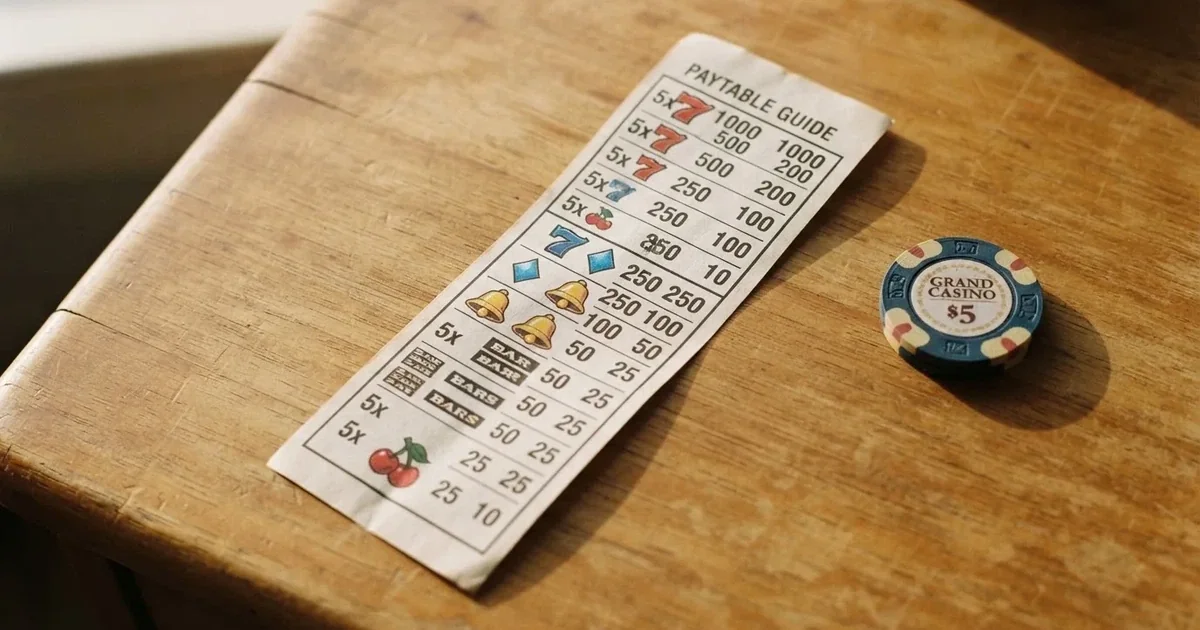
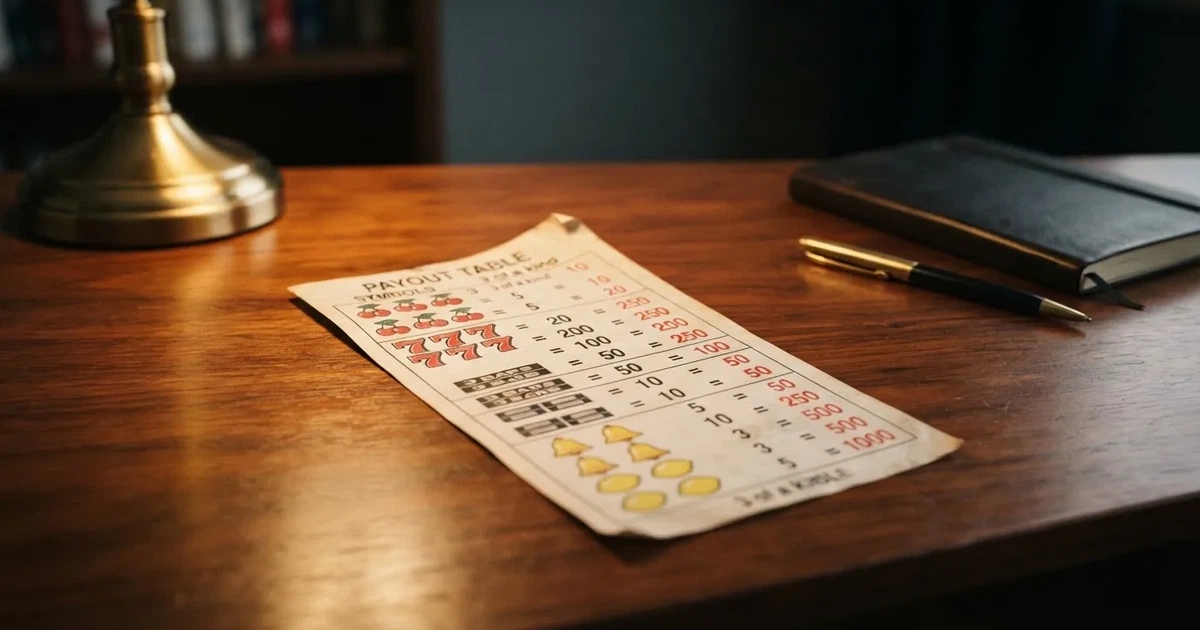
The mechanics are familiar. A paytable sits beside the reels and lists every symbol, what each combination is worth, and which lines across the reels count as a win. Three or more matching symbols on an active payline triggers a payout, sized by the value shown on the chart. The number of paylines varies with the title — a classic three-reel machine might run a single horizontal line down the middle; a five-reel video slot often offers twenty, thirty or more; a 7-reel game tends to sit between the two, with the extra reels used to multiply the number of ways to match rather than to introduce an entirely new symbol set.

The reason reel count matters to a player is variance. A 7-reel game has more positions for symbols to land in, more ways for three or more to align, but each individual combination is rarer because the odds against it are now computed across seven columns rather than three or five. The expected return — what the maths says the machine pays back over a long run — usually sits somewhere between 92% and 96% on regulated markets; what changes between a three-reel classic and a 7-reel video title is not the percentage so much as the shape of the session. The classic pays small and often; the modern pays larger amounts less often, and a 7-reel game usually falls somewhere on the modern end of that scale.
That is what a paytable shows and that is what the math underneath it promises. The page returns to both later, but first the law — because no reader in Australia can actually place the bet without understanding why.
The legal frame: prohibition, not restriction
The IGA 2001 is the central statute. Section 15 prohibits the supply of a “prohibited interactive gambling service” to a person physically in Australia, and the 2017 amendments extended that prohibition to in-play betting and tightened the enforcement powers of the ACMA. The carve-outs are narrow and well-defined: wagering on the outcome of a race or a sporting event before the event starts, lotteries, and keno. Online casino games — and that includes online pokies, online slots in any reel configuration, table games and live-dealer titles — fall outside the carve-outs and cannot be licensed by any Australian state or territory regulator.
The regulator the player meets, when they meet one, is the ACMA. The ACMA’s job on this side of the IGA is investigative: it can request blocking of illegal websites from internet service providers, issue formal warnings to operators, and refer matters for civil penalty proceedings. The individual player is not the target of the statute — the IGA aims at the provider — but the practical consequence for a player is straightforward. There is no Australian-licensed complaint body to approach if a withdrawal stalls, no Australian-licensed dispute resolution service, and no guarantee that a balance stays reachable if the site is added to the ACMA’s blocking list.
Two further facts frame the decision. From 11 June 2024, the use of credit cards, credit-related products and digital currency for online wagering is banned, with civil penalties of up to $247,500 for an operator that accepts them; the legal deposit routes for licensed Australian wagering are debit card, bank transfer, PayID/Osko and BPAY. An offshore site asking for a credit card or a crypto deposit is operating outside the Australian rules on payment, regardless of whatever gaming licence it displays in its footer. And the tax treatment is, in ordinary language, the cleanest part of the picture: gambling winnings of a recreational player are not assessable income under section 6-5 of the Income Tax Assessment Act 1997, and losses are not deductible. There is no win to declare and no loss to offset.
The reform agenda for 2026 sits in front of that. The Interactive Gambling Amendment (Gambling Reform) Bill 2026 passed Parliament on 19 August 2026, with its advertising and inducement measures commencing 1 January 2027 — law with a future start date rather than current operation. It tightens inducements; it does not legalise online casino.
What responsible play looks like when the offer is offshore
Two pieces of Australian infrastructure matter here, and both apply only to the licensed side of the market.
BetStop, the National Self-Exclusion Register, has been live since August 2023. A person who registers with BetStop is excluded from every Australian-licensed online and phone wagering service for a chosen period. The exclusion binds licensed operators — they are required to refuse the person’s account activity and marketing. An offshore casino is not connected to BetStop, so registering there does not stop offshore play; the gap matters for anyone using self-exclusion as a serious intervention.
The National Gambling Helpline is 1800 858 858, free and 24/7, with chat available through Gambling Help Online. The service is for anyone whose gambling is becoming a problem, and it is independent of any operator. The advice line is the right first call whether the gambling is happening on licensed wagering, on an offshore casino, or on the 87,298 pokies machines in clubs and hotels outside casinos in New South Wales alone — a state count from June 2023 that puts the sheer scale of legal machine play in Australia into perspective, and which only underlines how much offshore casino play exists precisely because the offshore path is the only one that includes slots.
A reader who has reached this page while weighing an offshore site should weigh those two services first. They are how the Australian system supports a player; they are not how it polices an offshore site.
What a bonus offer on an offshore site actually costs
The mechanics do not change just because the offer comes from a site the ACMA has warned. A bonus matches the deposit by some percentage, attaches a wagering requirement — the multiple of the bonus amount that must be turned over before any winnings become withdrawable — and usually caps either the maximum cashout from bonus play or the games the bonus can be played on. A “free spins” offer is the same structure with a fixed number of spins at a fixed stake rather than a cash match.
The relevant arithmetic is simple. Required turnover equals the bonus amount multiplied by the wagering multiple. A$100 bonus with a 40x wagering requirement is A$4,000 of staking before any of it clears; spins required equals that turnover divided by the stake-per-spin, so A$4,000 at A$1 a spin is 4,000 spins; play time in hours equals spins times five seconds divided by 3,600, which puts 4,000 spins at about five and a half hours of uninterrupted play. The expected loss is turnover times one minus the return-to-player (RTP), so on a 96% RTP the cost is A$4,000 times 4%, which is A$160 of expected loss to clear the bonus.
That calculation tells the reader three things the marketing copy never does. First, the bonus is not free money — it is a commitment to a fixed volume of play at a known cost. Second, the play time is a real chunk of an evening; five and a half hours for a modest A$100 bonus with a 40x multiple is not unusual and is the figure that decides whether the offer is worth the time even before the cost is considered. Third, every percentage point on the RTP moves the cost more than most readers expect: a 92% RTP title at the same turnover costs A$320 rather than A$160. The maths is the same on a 7-reel game as it is on a 5-reel one; what changes is the bonus offer attached to a particular offshore site, not the underlying arithmetic.
The published RTP and volatility for an unlicensed 7-reel game on an offshore site is rarely verifiable. The numbers the site prints are its own claims about its own product, with no regulator looking over its shoulder to audit them. A player reading this page should treat any RTP figure printed on an unlicensed site as a marketing number first and an audited figure never.
What a 7-reel game actually shows you on the screen
The visual difference is straightforward. A 7-reel title uses seven vertical columns of symbols rather than three or five. Each reel has its own set of symbols — typically between ten and thirty, depending on whether the title is a classic-styled 7-reel or a video 7-reel with stacked and bonus symbols — and the number of paylines scales with the reel layout. A 243-ways-to-win configuration, common in 5-reel video slots, becomes a multi-thousand-ways configuration in a 7-reel layout; a left-to-right payline structure is unchanged, but the geometry of matching is wider and the resulting variance is higher.
The paytable is the single document on the page that tells the reader what the game is. It lists each symbol, the value of three-, four-, five-, six- and seven-of-a-kind matches where applicable, the wild symbol, the scatter and any bonus trigger. For a 7-reel game, the difference between three-of-a-kind and seven-of-a-kind on the top symbol is usually the difference between a token win and a session-defining payout. Most of the play sits in the lower combinations; the seven-of-a-kind top is a rare event that the maths of the game is built around.
The vintage roots of the format are worth a brief note. Charles Fey’s late-19th-century three-reel slot used five symbols (horseshoes, diamonds, spades, hearts and the Liberty Bell) and paid ten nickels for three bells in a row — the first “jackpot” shape. Bally’s Money Honey in 1963 was the first machine to pay out up to 500 coins without an attendant, the step that made large-scale floor deployment possible. Fortune Coin Co. developed the first video slot in 1976 in Kearny Mesa, California. Every reel configuration since is a descendant of those three machines, including the 7-reel format, and the math that governs it is the same math: a random number generator producing combinations weighted by the symbol set, with a long-run return to player dictated by the weights.
Modern Australian pokies, for comparison, sit in clubs and hotels outside casinos at per-capita densities around five times the United States rate — 97,103 gaming machines outside casinos by 2010, by Wikipedia’s count. None of those are 7-reel machines; the bulk are five-reel video titles. The 7-reel format is a niche that exists mostly in the offshore online space.
The brands the ACMA has acted against
The table below lists the eleven offshore operators the ACMA has issued formal warnings to, in the order research carries them. The columns are: brand, ACMA action and date, the operator named by the ACMA, and any subject support the research was able to confirm from a source other than affiliate marketing.
| Brand | ACMA action and date | Operator named by the ACMA | Subject support |
|---|---|---|---|
| RocketPlay | Formal warning, March 2026 | Pulsup Ltd (RocketPlay); earlier Dama N.V., May 2022 | — |
| Level Up Casino | Formal warning, May 2022 | Dama N.V. | listed on BGaming |
| Woo Casino | Formal warning, March 2025 | Dama N.V. | — |
| Spirit Casino | Formal warning, May 2025 | Dama N.V. | — |
| National Casino | Formal warning, July 2025 | Consolutetish S.R.L. | listed on en.wikipedia.org |
| Bizzo Casino | Formal warning, July 2025 | Consolutetish S.R.L.; earlier TechSolutions, 2022 | — |
| Ignition Casino | Formal warning, July 2025 | Bamboo Media | — |
| Instant Casino | Formal warning, February 2025 | EOD Code SRL | — |
| Jackbit | Formal warning, April 2026 | Ryker B.V. | — |
| Casino Intense | Formal warning, April 2025 | Sterplay Holding Ltd | listed on ABC, the ACMA, and Crown Melbourne |
| Sky Crown | Formal warning, September 2022 | Hollycorn N.V. | — |
What the table does not say is the part a reader needs to hear plainly. Each row is a brand that, at the time the ACMA acted, was offering prohibited interactive gambling services to people in Australia. The “operator named by the ACMA” column matters because the same brand sometimes re-appears under a new company as the previous one is warned — RocketPlay was warned under Dama N.V. in May 2022 and again under Pulsup Ltd in March 2026, and Bizzo Casino was warned under TechSolutions in 2022 and again under Consolutetish S.R.L. in July 2025. The brand survives; the corporate wrapper rotates. None of this changes the legal position for a person in Australia: the service is prohibited, the warning is published, and the offshore operation continues outside the Australian regulatory perimeter.
The “subject support” column is the column that took the most work to populate and is, in its emptiness, the most honest. Of the eleven brands, only three had a non-affiliate source the research could point to — Level Up Casino on the BGaming listings page, National Casino on a Wikipedia entry, Casino Intense across three of the consulted sources. For the other eight, the only places publishing anything about the brand were affiliate pages and promo pages whose job is to send traffic to the brand. The bonus figures, the free-spin counts, the “trusted by players” claims that surround these sites in the search results — those come from the affiliate side of the trade, not from any audited record.
A reader who wants a casino review in the Australian sense is asking a question the page cannot answer. The 7-reel format exists offshore; the licensed Australian casino review does not exist, because there is no licensed Australian online casino to review. The brands in the table are the brands that have been formally warned for offering the prohibited service, which is a different list and serves a different purpose.
RocketPlay
RocketPlay sits at the head of the ACMA’s published warnings. The Pulsup Ltd warning from March 2026 names RocketPlay specifically, and the brand carries an earlier warning from May 2022 when it sat under Dama N.V. alongside Bambet, Dazard, Level Up, Wild Tornado and Cobra Casinos. The same operator name reappearing in two warnings four years apart is the pattern the ACMA’s enforcement has produced across the market: the brand persists, the company changes, and the warning cycle restarts. For a reader comparing this brand against the others in the table, the practical read is that the corporate structure behind RocketPlay has been on the ACMA’s record in two distinct corporate forms, with no change in what is being offered to Australians. There is no Australian-licensed source covering this brand; the only sites writing about it are affiliate marketing pages whose interest is in routing sign-ups to the offshore site.
Level Up Casino
Level Up Casino was named in the same May 2022 Dama N.V. warning as RocketPlay, and the brand has appeared on BGaming’s listings page in the years since. That listing is the one piece of independent coverage the research turned up; it places the brand in a provider’s distribution network but does not audit its payout or its treatment of Australian customers. The brand sits under Dama N.V. and has not been the subject of a separate ACMA warning under a different operator name, unlike RocketPlay. The fact that one independent source mentions Level Up at all is what puts it ahead of most of the other rows on the table, which appear only in the affiliate marketing pages that surround the offshore casino trade.
Woo Casino
The March 2025 ACMA warning over Woo Casino came under Dama N.V., the same operator that carries the May 2022 warnings and the May 2025 Spirit Casino warning. Three of the eleven brands on this list run through Dama N.V., and Woo Casino is one of them. The pattern is worth naming: a single offshore operator group carries multiple ACMA warnings across multiple brands, which is what concentrated enforcement looks like when one holding company runs several skins. For a reader, the implication is that the choice between these three brands is not really a choice between three operators — it is a choice between three marketing surfaces run by the same group, none of which has any Australian regulatory standing.
Spirit Casino
Spirit Casino carries the May 2025 ACMA warning, again under Dama N.V. Like Woo Casino, it sits in the cluster of brands operated through the same corporate wrapper; the ACMA’s formal warning sits on the public record and the brand continues to operate offshore. No independent source covers Spirit Casino in the consulted research. The site’s positioning in the search results for 7-reel slot play in Australia is what affiliate marketing pages produce; nothing in the regulatory record suggests the brand is anything other than another skin on the same operation.
National Casino
National Casino carries the July 2025 warning under Consolutetish S.R.L., which the ACMA published alongside the warning over Bizzo Casino under the same operator name. The brand appears on a Wikipedia entry, which is the single piece of independent coverage the research turned up. The Wikipedia presence is a thin signal — it places the brand on a page someone has bothered to write, but it does not constitute an audit of payouts or player treatment. Like Level Up Casino, the brand sits one step ahead of brands with no non-affiliate mention at all, and the gap between “on a Wikipedia page” and “licensed in Australia” is the entire legal story for the table.
Bizzo Casino
Bizzo Casino is the brand with the longest ACMA record in the table. The July 2025 warning came under Consolutetish S.R.L.; the earlier 2022 warning came under TechSolutions (CY) Group Limited and TechSolutions Group N.V. Two warnings, two corporate wrappers, the same brand. The same survival pattern that runs through RocketPlay runs here: the brand persists, the company rotates, the warning cycle restarts under a fresh name. For a reader, the fact that the ACMA has had to warn the same brand twice under different operators is the clearest evidence that the brand intends to keep operating offshore whatever the enforcement record says.
Ignition Casino
Ignition Casino carries the July 2025 ACMA warning under Bamboo Media, which is a different operator name from the Dama N.V. cluster and the Consolutetish S.R.L. cluster. The brand name is well known in the offshore trade, particularly in the United States-facing market, but the research turned up no independent source covering it beyond the affiliate pages. For a reader in Australia, the relevant point is the same as for the rest of the table: the ACMA has acted, the brand continues, the regulatory perimeter the player sits behind is Australian while the operator sits well outside it.
Instant Casino
Instant Casino carries the February 2025 ACMA warning under EOD Code SRL, which is one of the earlier warnings in the ACMA’s 2025 enforcement cycle. The brand positions itself around speed and convenience in the affiliate marketing, which is the positioning most of these brands adopt; the ACMA’s record does not endorse it. No independent source covers the brand beyond the affiliate layer.
Jackbit
Jackbit carries the April 2026 ACMA warning under Ryker B.V., alongside the warning over CasinOK under the same operator. The Ryker B.V. name is one of the more recent additions to the ACMA’s published warnings, and the Jackbit brand is one of the more recent entrants to the offshore trade. No independent source covers the brand beyond the affiliate pages, and the ACMA warning is the only published record the research was able to point to.
Casino Intense
Casino Intense carries the April 2025 warning under Sterplay Holding Ltd and is the row in the table with the most non-affiliate coverage the research turned up — three of the consulted sources named it, including the Australian Broadcasting Corporation, the ACMA, and Crown Melbourne. The presence on multiple sources does not change the legal position; the brand is on the ACMA’s warning list and offers prohibited services to Australians. What it does is put Casino Intense slightly ahead of the rest in terms of how much of a record exists beyond the affiliate marketing pages, which is itself the test of how thoroughly a brand has been looked at.
Sky Crown
Sky Crown carries the September 2022 ACMA warning under Hollycorn N.V., alongside the warning over Blue Leo under the same operator. Hollycorn is one of the more established names in the offshore cluster, and the 2022 warning sits early in the ACMA’s enforcement record. No independent source covers Sky Crown beyond the affiliate layer, and the brand’s only published record in the consulted research is the ACMA’s formal warning.
What the blocking record looks like in numbers
The ACMA’s blocking record is the most concrete measure of how often the prohibition is enforced. The figure published in the round reported on 26 June 2026 was 1,751 illegal gambling and affiliate marketing websites blocked since the first blocking request in November 2019 — a span of roughly six and a half years — with more than 230 unlicensed gambling services having left the Australian market since enforcement was strengthened in 2017. The June 2026 round itself asked Australian ISPs to block 12 more sites: 7Signs, ChromaBet, Donbet, Duospin, Freshbet, Slots Gem, Jacks Club, Lucky Start, Pointsbetz, Spinrise, Vinyl Casino and Wildsino.
The arithmetic the page owes the reader is what those numbers imply. 1,751 blocked sites across roughly 78 months from November 2019 to the June 2026 reporting date is, as a band, between 22 and 23 blocked sites per month on average — a rate that does not include the warnings, which sit separately from the blocking requests, and does not include the 230 services that left voluntarily without a block. The H2 Gambling Capital 2025 estimate that Australians lose about A$3.9 billion a year to illegal gambling sites is the cost that runs alongside the enforcement rate; the share of gambling going through legal channels fell from 74% in 2021 to 64%, a ten-point drop in four years, which suggests that enforcement has not, on its own, restored the legal share of the market.
The block rate is the headline number, but the conclusion the numbers support is the one to keep. The block list is a moving target; the warnings and the blocks together produce a steady churn, with new sites taking the place of blocked ones; the A$3.9 billion loss estimate is the scale that survives the churn. A reader weighing an offshore offer is weighing it against that scale.
Other casino formats readers will meet, and how they compare
Two formats sit close enough to 7-reel slots to be worth a brief comparison. Baccarat has a published house edge that varies sharply by bet: 1.06% on the Banker bet, 1.24% on the Player bet, 14.36% on the Tie. Blackjack, played with optimal strategy under liberal Las Vegas Strip rules, sits at about 0.28%; under Atlantic City rules about 0.43%. Craps’ Pass/Come bet runs 1.41%, Don’t Pass/Don’t Come 1.36%, Any Craps 11.11%. The figures come from Wizard of Odds’ published house edge reference, and the comparison is what the maths says, not what any individual session delivers.
A 7-reel slot does not have a published house edge the way those table games do, because no Australian-licensed 7-reel slot exists and the offshore ones publish RTP claims they do not audit. The closest the research can support is the general range: most regulated-market video slots run between 92% and 96% RTP, which translates to a house edge between 4% and 8%. That range brackets a 7-reel game loosely, and the variance within it is wide. A player reading a 96% RTP claim on an unlicensed offshore site has no independent way to check whether the claim is true.
Two structural points round the comparison out. Crown Melbourne, the largest Australian casino, offers three approved baccarat variants — Traditional Baccarat, Crown Baccarat and 2 to 1 Baccarat — regulated by the Victorian Gambling and Casino Control Commission, which replaced the VCGLR as Victoria’s casino regulator on 1 July 2022. The same VGCCC approves the rules for blackjack variants at Crown Melbourne and publishes a log of approved changes, including the renaming of the “Perfect Pairs” side bet to “Crown Pairs” on 23 December 2024 and the introduction of a “Free Bet” option with a “Pot of Gold” side bet on 25 March 2024. That approval process — regulator-approved rules, public logs of changes, name changes recorded in a regulator’s public file — is what an Australian-licensed product looks like. An offshore 7-reel slot has no equivalent record, because no Australian regulator has authority over it.
The decision a reader actually has to make
The shape of the choice is simple, even if it does not feel that way. The Australian-licensed path for slot-style play is the physical venue — the 87,298 pokies-style machines in NSW clubs and hotels as of June 2023, the 26,380 in Victoria across 2021–22, the 21,122 in Queensland as of October 2023, the 11,672 in South Australia in September 2023 and the 3,587 in the ACT in November 2023. None of those are 7-reel machines, and none of them sit in a licensed online casino. The licensed online wagering market in Australia is restricted to pre-event betting, lotteries and keno.
The 7-reel format exists online, and the search a reader typed puts them in front of it. Every result is offshore, every brand the ACMA has acted against is offshore, every payment route the ACMA has acted against is offshore, and every payout protection an Australian player would otherwise have stops at the border. The decision is whether to play a 7-reel slot on an unlicensed offshore site knowing that the prohibition is on the provider not the player, that the ACMA’s blocking record continues to add new names each reporting round, that the warnings keep accumulating against the same brands under fresh operator names, and that BetStop’s self-exclusion register does not bind an offshore casino.
A reader who wants to play a 7-reel slot anyway will find them at the brands in the table, under the payment routes the offshore site accepts, with no Australian complaints body to appeal to if the withdrawal stalls. A reader who does not will have to settle for the licensed Australian offering — wagering on races and sport, lotteries and keno — and accept that the 7-reel format is not part of it.
Frequently asked questions
What makes a 7-reel slot different from a standard five-reel video slot?
The reels are seven columns of symbols rather than five, and the maths is stretched accordingly. More columns mean more ways for symbols to align but each individual combination is rarer, so the session tends towards higher variance — larger payouts less often, smaller wins more frequently, and a longer average play time to hit any given return. The expected return itself, usually somewhere between 92% and 96% on regulated markets, does not change much; what changes is the shape of the session.
Can 7-reel slot machines be found in licensed Australian pubs and clubs?
No. Australian pub and club machines are predominantly five-reel video pokies under state-level regulation — NSW had 87,298 gaming machines outside casinos as of June 2023, for example. The 7-reel format is an online-niche configuration that exists mostly on offshore sites, none of which holds an Australian licence.
Do 7-reel slots typically pay out differently than newer five-reel formats?
The long-run return sits in the same 92%–96% band as a five-reel video slot, but the distribution of wins across a session is different. A 7-reel layout multiplies the number of ways symbols can align, which produces more small and medium combinations and rarer large ones. The headline payout percentage is comparable; the variance is wider.
Is a 7-reel slot online the same game as a 7-reel machine on a casino floor?
Functionally, yes — the random number generator on an online slot produces the same kind of weighted-symbol outcomes as a physical machine’s reels. The legal position is different: a casino-floor machine operates under a state-level licence and an audit regime, while an online 7-reel slot offered to an Australian is operating outside Australian law under the Interactive Gambling Act 2001.
Are 7-reel slots for real money available legally from an Australian-based site?
No. No state or territory issues a licence for online casino games, which includes online pokies in any reel configuration. Every real-money 7-reel slot accessible to a person in Australia is offered by an offshore operator, none of which is licensed in Australia and none of which is bound by Australian consumer protection or complaints processes.
Is reel count still a useful way to compare volatility between older and newer slots?
It is a rough guide rather than a precise measure. Reel count tells you the geometry of the matching but not the symbol weights, the bonus structure or the hit frequency, which are the variables that actually drive variance. Two 7-reel games can sit at very different volatility points; two games with different reel counts can sit at similar points. Use reel count as a starting filter rather than as a final answer.
Created by the ”Pokies Info Hub” editorial team.