
Osko casino sites in Australia: a map of the brands the regulator has named, and what the payment rail does once money reaches one of them
Data current as of 29 October 2026; the formal warnings and blockings on this page were verified against the Australian Communications and Media Authority’s published list.
The phrase “casino sites that accept Osko” reads as a payment-method question, and on the surface it is one. Underneath, it sits on top of a different question, which is whether there is any such thing as an Australian-licensed online casino at all. There is not. No state or territory issues that licence, and every brand a reader might find while searching the term operates from offshore. The Australian Communications and Media Authority has spent the last several years naming those brands one by one, and the ACMA list is the only authoritative map of the territory this page walks through.
This page closes that map. It runs through the offshore brands the ACMA has issued formal warnings over for offering prohibited casino products to Australians, says what Osko actually is as a payment rail, and works through what the rail does and does not give a punter who uses it. The angle is consequence: what follows from each arrangement, when it shows up, and where it ends.
Table of Contents
- Responsible-gambling supports before anything else
- How Osko actually moves money, and why that matters here
- Deposits, withdrawals, and the gap between them
- What the regulator has actually done, and how often
- The brands the ACMA has named, and what the rail did at each
- The legal frame the page sits inside
- The bank-side picture, and why some transfers come back declined
- What the rail does, and what it does not do
- The numbers, and what the cadence of the regulator’s list says
- Where the brands on this list sit in that picture
- What follows for a punter using Osko at an offshore casino
- Frequently asked questions about Osko at offshore casinos
Responsible-gambling supports before anything else
A page about offshore casinos is, before it is anything else, a page about help. Most readers who land here are not in trouble. Some will be, and the supports that exist only work if a reader who needs them meets them early. The order this page opens with is deliberate.

Gambling Help Online runs the National Gambling Helpline on 1800 858 858, free, around the clock, with web chat on the site itself. The line is staffed by counsellors, not by the casinos named further down, and what a caller says does not leave the call. State and territory services sit behind it — Gambler’s Help in Victoria, GambleAware in New South Wales, the relevant face in each jurisdiction — and a caller who wants a face-to-face appointment is handed one.
BetStop, the National Self-Exclusion Register, has been live since August 2023. A person who registers is barred, for a chosen period, from every Australian-licensed online and phone wagering service. The mechanism is a closed loop: a registered punter cannot open a new account, deposit, or place a bet with any operator bound by the register. What BetStop does not cover is the equally important other half of the market. Offshore casino sites are not bound by BetStop, because they are not licensed in Australia at all. Registering on BetStop and then depositing at an offshore site is, in plain terms, a way of undoing the registration by hand. The page returns to this point where it matters.
A second layer sits one click deeper: bank-level gambling blocks. Westpac’s gambling block refuses authorisation on card transactions tagged with the merchant category code “Betting/Casino Gambling” on eligible personal credit and debit cards. ANZ runs an equivalent block through its app, and ANZ’s block extends to digital wallets such as Apple Pay loaded on an eligible card, not only to the plastic. Removing ANZ’s block carries a 48-hour cooling-off period. None of these blocks catches every gambling transaction, and the banks themselves say so. They are a coarse sieve, not a guarantee.
How Osko actually moves money, and why that matters here
Osko is the consumer brand for instant payments that ride on Australia’s New Payments Platform. The platform went live on 13 February 2018 and is owned by New Payments Platform Australia Ltd, a non-profit whose thirteen shareholders include the Reserve Bank of Australia and the major banks. The RBA itself built and runs the platform’s Fast Settlement Service, which settles each Osko payment individually in close to real time, twenty-four hours a day, seven days a week. By 31 August 2025 the platform connected over 100 banks, financial institutions and fintechs, reached 128 million accounts, and was carrying around A$7 billion of payments a day.
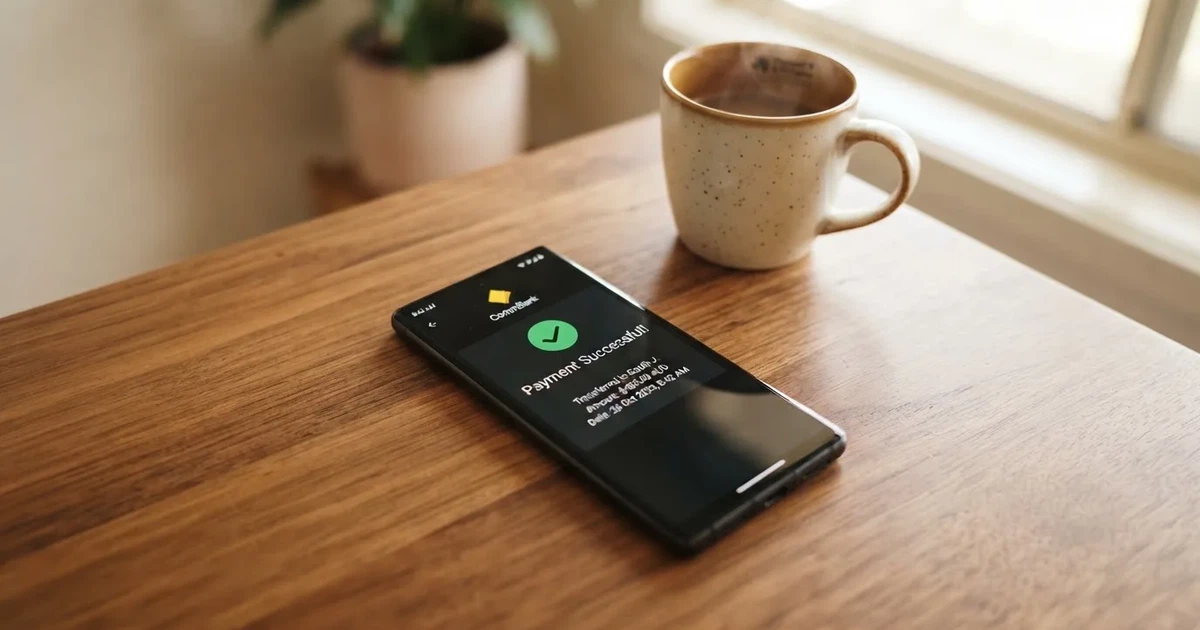
What that means in plain English is straightforward. An Osko transfer between two participating Australian banks arrives in under a minute, including at 11 p.m. on a Sunday. There is no cut-off, no next-business-day, no “T+1” language to read past. The transfer shows up on the recipient’s account while the sender’s confirmation screen is still warm. The rail is built for the common payments of Australian life: rent to a flatmate, a split bill at a restaurant, the small transfers that used to wait for morning clearing.
The rail runs through the “Pay Anyone” section of a bank’s online banking. No separate sign-up is needed. A payment addressed to a PayID or to a BSB and account number, when Osko is enabled on both sides, carries up to 280 characters of description. The brand sits on top of the same plumbing PayID and BPAY use — Australian Payments Plus runs all three — which is why a person who already uses PayID to send money to a tradie already has the Osko capability in their banking app without having noticed.
Two consequences follow, and they are the ones this page keeps returning to.
First, the speed that makes Osko useful for ordinary payments makes it a particularly poor fit for the job an offshore casino asks it to do. The promise to a punter is that the deposit will be there in a minute, so the punter can play. The promise to the punter’s bank is that the transfer is settled and irrevocable the same minute, so the punter cannot claw the money back. There is no chargeback step in Osko. The page returns to what that absence costs when a withdrawal is refused.
Second, Osko is built on identity. Paying to a PayID shows the account holder’s name before the transfer is sent. AP+ itself warns that being directed to send money to a PayID on an illegal gambling site is almost certainly a scam signal. The rail was not designed to make gambling easier; it was designed to make ordinary Australian payments faster, and the gambling use case rides on top.
Deposits, withdrawals, and the gap between them
The pattern at an offshore casino that advertises Osko follows a familiar shape, and the shape is worth naming once because every brand further down this page repeats it.
The deposit leg works. A punter opens the cashier, picks Osko (sometimes labelled “PayID” or “instant bank transfer”), and is given either a PayID or a BSB and account number. The punter’s banking app, recognising the destination, offers the Osko rail. The money lands in under a minute. The casino credits the account and the punter plays. From the punter’s point of view, this is exactly what the marketing claimed.
The withdrawal leg is where the symmetry breaks. The offshore operator is not a participating Australian bank, and the operator’s own receiving account is not, in most cases, in Australia at all. The casino does not pay the punter back through Osko in the same direction. The standard offshore pattern is: Osko or PayID for deposits, then a bank wire, an international transfer, or a cryptocurrency payout for withdrawals, each carrying its own fee, its own delay, and its own refusal risk. The minute-scale settlement of the deposit has no counterpart on the way out. The page returns to this asymmetry at every brand it reviews.
The thresholds matter too. Most offshore operators set a minimum deposit in the A$10 to A$20 range, and a minimum withdrawal in the same neighbourhood. The deposit minimum is a marketing figure; the withdrawal minimum is a friction figure. Between them, a punter with a small win can find the balance sitting below the withdrawal floor for longer than feels comfortable. Research carries no exact minimum for the brands on this page, and the honest version of that is “operator-specific, and worth checking on the cashier page before depositing”.
The bank-side picture has moved while this market has been arguing with itself. Under the Interactive Gambling Act 2001 as amended in 2023, Australian-licensed online wagering services cannot accept payment by credit card or other credit-related products, a restriction the regulator has read to cover linked wallets such as Apple Pay. Legal deposit routes for a licensed wagering service are debit card, bank transfer, PayID and Osko, and BPAY. The credit ban binds licensed operators. It does not bind offshore ones, because they are not licensed, and the offshore cashier that offers a credit-card deposit is not breaking the Australian rule — it is not subject to it.
What the regulator has actually done, and how often
The figures the regulator has compiled over the last several years provide a clear picture of the market’s scale. It is worth working through them in full.
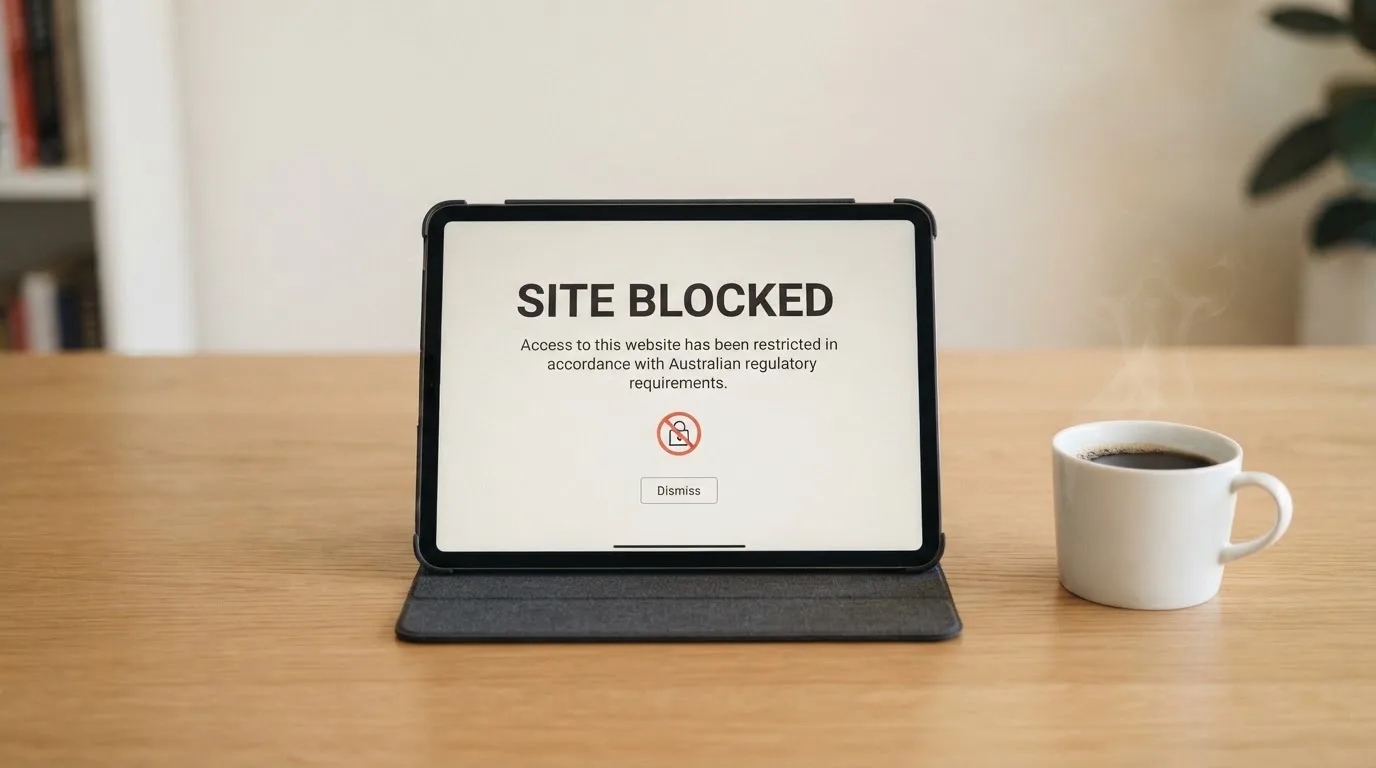
According to the ACMA, as reported in June 2026, a total of 1,751 illegal gambling and affiliate marketing websites had been blocked since the first blocking request was issued in November 2019. More than 230 unlicensed gambling services had left the Australian market since enforcement was strengthened in 2017. In a single round reported on 26 June 2026, the ACMA asked Australian internet service providers to block twelve more: 7Signs, ChromaBet, Donbet, Duospin, Freshbet, Slots Gem, Jacks Club, Lucky Start, Pointsbetz, Spinrise, Vinyl Casino and Wildsino.
The blocking cadence has not been steady, and that is the point. It runs in bursts: a quiet quarter, then a published list of a dozen sites at once. The cadence is set by investigations and by the time the formal-warning step takes, not by a calendar.
Worked as a rate, the figure is the page’s number to keep. The ACMA has blocked 1,751 sites over the roughly six years and seven months between November 2019 and June 2026 — about 79 months. That works out to roughly 22 blocking actions per month across the period, with the actual figure landing in a band of roughly 18 to 26 per month depending on which months are counted. The headline number, 1,751, is the right figure to quote; the per-month rate is what tells a reader how active the regulator still is.
H2 Gambling Capital’s 2025 report estimates Australians lose about A$3.9 billion a year to illegal gambling sites, and that the share of gambling going through legal channels fell from 74 per cent in 2021 to 64 per cent in 2025. Those figures, and the gap between them, are the reason the ACMA’s blocking cadence matters: the market the regulator is trying to shrink is the same market Osko is being used to fund.
The brands the ACMA has named, and what the rail did at each
The table below is not a ranking and not a recommendation. It is a list of every brand this page reviews, with the action the ACMA has taken and the date of that action. The “operator named by the ACMA” column shows the company behind the brand at the time the warning was issued, which is not always the same company that runs the brand today.
| Brand | ACMA action and date | Operator named by the ACMA |
|---|---|---|
| RocketPlay | Formal warning, March 2026; earlier warning to Dama N.V., May 2022 | Pulsup Ltd |
| Level Up Casino | Formal warning, May 2022 | Dama N.V. |
| Woo Casino | Formal warning, March 2025 | Dama N.V. |
| Spirit Casino | Formal warning, May 2025 | Dama N.V. |
| National Casino | Formal warning, July 2025 | Consolutetish S.R.L. |
| Bizzo Casino | Formal warning, July 2025; earlier warning to TechSolutions, 2022 | Consolutetish S.R.L. |
| Ignition Casino | Formal warning, July 2025 | Bamboo Media |
| Instant Casino | Formal warning, February 2025 | EOD Code SRL |
| Jackbit | Formal warning, April 2026 | Ryker B.V. |
| Casino Intense | Formal warning, April 2025 | Sterplay Holding Ltd |
| Sky Crown | Formal warning, September 2022 | Hollycorn N.V. |
The legal position that runs through every line of it is the same. Online casino games and online pokies cannot be licensed anywhere in Australia, regardless of what licence a site displays in its footer. A Curaçao sub-licence, an Anjouan licence, a Kahnawake number — none of these is an Australian licence, because the Australian licence for this product does not exist. The footer is a marketing surface, not a regulatory one, and the ACMA’s actions on each brand are the record of what the regulator has actually said.
RocketPlay
The ACMA issued a formal warning to Pulsup Ltd over Rocketplay in March 2026, after an earlier warning to Dama N.V. covering six brands including Rocketplay in May 2022. The brand has been on the regulator’s radar across two corporate owners, which is unusually thorough even by the standards of this list. Research carries no confirmation that Rocketplay accepts Osko specifically; the brand’s deposit methods change with the operator, and the cashier page is where a punter finds the current list.
Verdict: a brand the regulator has chased twice across different corporate owners, with no Australian-licensed status possible by construction. A punter comparing options should weigh the regulator’s persistence against the brand’s marketing surface.
Level Up Casino
The ACMA issued a formal warning to Dama N.V. over Level Up in May 2022 as part of a six-brand sweep that also named Bambet, Dazard, Rocketplay, Wild Tornado and Cobra Casinos. Dama N.V. is the most repeated name on the regulator’s list, appearing in three separate entries on this page alone. Research lists Westpac’s gambling-block documentation as one of the sources that mentions Level Up, which is how the brand ended up on a banking-block reference page rather than a deposit-methods page.
Verdict: one of the longer-running entries on the regulator’s list, and a reminder that the operator behind a brand can be a better predictor of what shows up next than the brand name itself.
Woo Casino
The ACMA issued a further formal warning to Dama N.V. over Woo Casino in March 2025. The “further” is doing work: Dama N.V. was warned in May 2022 over a different sweep, and the 2025 warning names Woo specifically. Two warnings to one operator, separated by three years, tells a reader the regulator considered the first round ineffective at changing the operator’s behaviour toward Australian customers.
Verdict: a second-round entry. The first warning did not end the conduct the regulator objected to, and the second was issued over the same operator.
Spirit Casino
The ACMA issued a formal warning to Dama N.V. over Spirit Casino in May 2025, two months after the Woo Casino warning and three years after the May 2022 sweep. Spirit Casino is the third Dama N.V. brand on this list. Research carries no confirmation that Spirit Casino accepts Osko at the cashier.
Verdict: a third Dama N.V. brand on a regulator’s list that the operator has been on for three years. The pattern, more than any single brand, is the story.
National Casino
The ACMA issued a formal warning to Consolutetish S.R.L. over National Casino in July 2025. Consolutetish S.R.L. is the operator the regulator named for both National Casino and Bizzo Casino in the same July 2025 round. Research carries no direct confirmation that National Casino accepts Osko at the cashier, but two reference pages — AUSTRAC’s threshold-transaction documentation and a Wikipedia entry on a related payments topic — mention National Casino by reference, which is enough to put it on this page but not enough to confirm a deposit method.
Verdict: a brand sharing a July 2025 warning with a sister brand, and the operator-level pattern matters more than the brand.
Bizzo Casino
The ACMA issued a formal warning to Consolutetish S.R.L. over Bizzo Casino in July 2025, and an earlier formal warning to TechSolutions (CY) Group Limited and TechSolutions Group N.V. over Bizzo Casino in 2022. The two-operator history is unusual: Bizzo has been the subject of formal warnings under two different operators in two different years, which is a longer regulatory trail than most brands on this list carry. Research carries no Osko-specific confirmation.
Verdict: two warnings across two operators in three years. The brand has had more chances than most to stop what the regulator objects to.
Ignition Casino
The ACMA issued a formal warning to Bamboo Media over Ignition Casino in July 2025. Bamboo Media is the only operator named in this entry; the regulator has not published a separate Ignition Casino warning under a different corporate owner. Research carries no Osko-specific confirmation for Ignition Casino.
Verdict: a single warning to a single operator, with no follow-up entry under a different owner. What the regulator does next depends on whether Bamboo Media continues offering the product to Australians.
Instant Casino
The ACMA issued a formal warning to EOD Code SRL over Instant Casino in February 2025. The “Instant” in the brand name has the cadence of a deposit-method marketing line rather than a settlement-speed claim about its own payments. Research lists two reference pages that mention Instant Casino in passing — Ecopayz and PayID — neither of which confirms Osko specifically.
Verdict: the brand’s name reads as a payment-method promise; the regulator’s view is that the promise and the law point in different directions.
Jackbit
The ACMA issued a formal warning to Ryker B.V. over Jackbit and CasinOK in April 2026. Two brands in one warning, both under the same operator, is the same corporate-sharing pattern National Casino and Bizzo Casino showed in July 2025. Research carries no Osko-specific confirmation for Jackbit.
Verdict: a recent warning covering two brands under one operator. A punter comparing the two should treat the operator as the unit the regulator is acting on.
Casino Intense
The ACMA issued a formal warning to Sterplay Holding Ltd over Casino Intense in April 2025. Research lists three reference pages that mention Casino Intense — AUSTRAC’s threshold-transaction documentation, an IT News article, and NAB’s site — none of which confirms Osko specifically at the cashier.
Verdict: a brand on more Australian reference pages than most, but still on a regulator’s list of formal warnings.
Sky Crown
The ACMA issued a formal warning to Hollycorn N.V. over Sky Crown and Blue Leo, in a September 2022 publication that named both brands under the same operator. Sky Crown is the older entry on this page by warning date, and the ACMA’s enforcement pace since 2022 is what put it ahead of brands warned more recently.
Verdict: the longest-standing entry on this list, and a useful marker of how long the regulator’s list has been building.
The legal frame the page sits inside
The Interactive Gambling Act 2001, strengthened by the Interactive Gambling Amendment Act 2017, makes it an offence to provide online casino games, online pokies or in-play betting to a person physically in Australia. What is licensable in Australia is wagering on races and sport placed before the event, lotteries and keno. In practice, the licensing of online wagering sits with the Northern Territory Racing and Wagering Commission, which regulates 52 of Australia’s online bookmakers — Sportsbet, Bet365 and Ladbrokes among them — for tax reasons. The commission has no full-time staff and meets once a month in Darwin, which is a structural fact a reader should hold onto when a site claims to be “Australian-licensed”.
The ACMA is the body that investigates, issues formal warnings and asks internet service providers to block illegal sites. The individual player is not prosecuted — the IGA targets the provider, not the punter. What an offshore site does not give the punter is the rest of the regulatory frame: no Australian consumer protection, no complaints body, no recourse if a withdrawal is refused. The site can be blocked by the regulator with a balance still sitting on it, and the punter has no Australian court to apply to.
The credit-card ban that took effect on 11 June 2024 binds Australian-licensed operators only, with penalties up to A$247,500 for operators who breach it. Legal deposit routes for licensed wagering are debit card, bank transfer, PayID and Osko, and BPAY. An offshore site that offers a credit-card deposit is not subject to that ban, because it is not subject to the Act.
The Interactive Gambling Amendment (Gambling Reform) Bill 2026 passed Parliament on 19 August 2026; its advertising and inducement measures commence on 1 January 2027. This is law with a start date, not yet in force on a 2026 page, and the page flags it as the shape of what is coming rather than the law a punter acts under today.
On tax: gambling winnings of a recreational player are not assessable income under section 6-5 of the ITAA 1997, and losses are not deductible, unless the person is carrying on a business of gambling. That is the model rule, and “check with the ATO” is the only honest closing line on it.
The bank-side picture, and why some transfers come back declined
The bank-level gambling block is the second line of defence a punter meets after BetStop, and it works differently. Westpac’s block refuses authorisation on card transactions tagged with the merchant category code “Betting/Casino Gambling” on eligible personal credit and debit cards. ANZ’s block, activated in the ANZ app, blocks gambling transactions made through a digital wallet such as Apple Pay on an eligible card as well as on the physical card. Once turned on, removing ANZ’s block requires a 48-hour waiting period. The banks warn that not every gambling transaction will be blocked, and that some non-gambling transactions may be blocked in error.
This is where Osko sits, and the fit is loose. The merchant category code that drives Westpac’s block is a card-network concept. Osko is a bank transfer, not a card transaction, and a transfer through Osko does not carry a merchant category code in the same way a Visa or Mastercard transaction does. The bank’s visibility on the gambling nature of an Osko transfer depends on the receiving account, on the destination name, and on the bank’s own transaction-monitoring rules — not on a card-network code. Some Osko transfers to gambling-related accounts will be declined by the sending bank’s monitoring. Others will not. The bank itself does not always know in advance.
AUSTRAC’s threshold-transaction-report rule, which requires reporting of transfers of A$10,000 or more, applies only to physical cash. Ordinary electronic bank transfers, including Osko transfers, are not subject to that per-transaction reporting requirement regardless of the amount sent. The rule a reader may have heard about is a cash rule, and it does not apply here.
What the rail does, and what it does not do
A reader who has read this far is owed a clean statement of what Osko does and does not give a punter using it at an offshore casino.
It does: move money from a participating Australian bank account to another participating Australian bank account in under a minute, twenty-four hours a day. The receiving bank may be the casino’s own Australian collection account, or it may be a payment-processor account; the punter’s banking app does not always make that visible before the transfer is sent. Paying to a PayID does show the account holder’s name, which is one of the few checks the rail offers before commitment. The 280-character description field is the punter’s only record of what the payment was for, and the only place the punter can write what they sent.
It does not: provide buyer protection. There is no chargeback step in Osko. Once the transfer has been sent and the recipient bank has accepted it, the money is at the recipient bank. The dispute mechanisms that exist for card transactions — the chargeback rights built into the Visa and Mastercard networks, the dispute process built into PayPal, the section 18-style Australian Consumer Law protections that apply to goods and services bought with credit — do not apply to an Osko transfer to an offshore casino. A punter whose withdrawal is refused, whose bonus is voided, or whose account is closed with a balance on it has, in practice, the operator’s own complaints process and whatever the operator’s payment processor is willing to do. None of those are Australian.
It does not: make the offshore casino legal. The legal status of the operator is set by where the operator is licensed to provide online casino games, not by the payment method the punter uses to fund the account. Using Osko at an offshore casino does not bring the casino under Australian financial-services law, does not give the punter access to BetStop, and does not engage the Australian consumer-protection framework. The rail is faster than a card, and that is its only advantage.
The numbers, and what the cadence of the regulator’s list says
The arithmetic this page has to offer is the rate at which the regulator has been working.
- 1,751 illegal gambling and affiliate marketing websites blocked since November 2019, as reported in June 2026.
- The first blocking request went out in November 2019.
- June 2026 is roughly 79 months after November 2019.
- 1,751 divided by 79 months is roughly 22 blocked sites per month, with the band running from about 18 per month on a slow-quarter assumption to about 26 per month on a burst-round assumption.
- 230 unlicensed gambling services have left the Australian market since enforcement was strengthened in 2017.
- A$3.9 billion a year is the H2 Gambling Capital estimate of what Australians lose to illegal gambling sites.
- 74 per cent was the share of gambling going through legal channels in 2021.
- 64 per cent is the same share in 2025.
The per-month blocking rate is the figure a reader should hold onto. The headline number, 1,751, is a cumulative total that grows roughly in line with the rate. The rate is what tells a reader whether the regulator is keeping up: at roughly 22 per month, the ACMA is matching the rate at which new offshore brands appear in this market, and the market is not shrinking in the way the regulator would want.
The fall in the legal-channel share from 74 per cent to 64 per cent over four years is the second figure to hold. The H2 estimate is for a single year; the share is the trajectory. Both point in the same direction: more Australians are gambling, and a larger share of them are doing it through channels the regulator cannot reach with a licensing condition.
Where the brands on this list sit in that picture
The eleven brands reviewed above are the ACMA’s published formal warnings, not the regulator’s complete catalogue. The 1,751 blocked sites since November 2019 include affiliate marketing sites, mirror domains, and brands that were blocked without a separate formal-warning step. The list on this page is the formal-warning subset: brands the regulator has named, with an operator and a date, in a published warning. The page walks through those brands in the order the warnings were issued, oldest first, because that is the order the regulator built the list.
Two patterns are worth holding onto at the end of the walk-through.
The first is the operator-level pattern. Dama N.V. is named in three separate entries on this page, with warnings in May 2022, March 2025 and May 2025. Consolutetish S.R.L. is named twice, in the same July 2025 round. Ryker B.V. is named in two brands in one round. Hollycorn N.V. is named in two brands in the same September 2022 publication. The regulator’s list is built operator by operator as much as it is built brand by brand, and the operator-level pattern is what tells a reader where the regulator’s attention has settled.
The second is the publication pattern. The June 2026 blocking round named twelve new sites, none of which are on the formal-warning list above. The blocking list and the formal-warning list are published separately, and they are not the same list. A reader who wants the current state of the regulator’s action should look at both: the blocking rounds for the cumulative total, and the formal-warning publications for the named-operator trail. The brands on this page sit on the second list.
What follows for a punter using Osko at an offshore casino
The consequence the page opened on is the one to close on. A punter who uses Osko at an offshore casino gets a deposit that arrives in under a minute, with no chargeback on the way in and no Australian dispute process on the way out. The rail is built for ordinary Australian payments between Australian accounts, and the gambling use case rides on top of it without engaging the parts of Australian law that protect a punter.
The bank-side picture is moving. The credit-card ban of June 2024 binds licensed operators only. The 2027 commencement of the advertising and inducement measures of the Interactive Gambling Amendment (Gambling Reform) Bill 2026 will change the marketing surface around offshore brands. The ACMA’s blocking rate is steady at roughly 22 sites per month. The legal-channel share of Australian gambling has fallen from 74 per cent to 64 per cent over four years. Each of these is a separate trend, and they are not pointing in the same direction.
For a reader comparing brands on the formal-warning list above, the comparison is not between Osko-accepting and Osko-rejecting offshore casinos. Every brand on the list accepts some form of instant bank transfer, and the rail is not where the brands differ. The brands differ on operator history, on how many times the regulator has had to name them, on whether a withdrawal at the cashier goes back through Osko or through a slower international channel, and on whether the punter’s own bank is configured to decline the transfer at the card or wallet level. Those are the comparisons the page is built to support.
Frequently asked questions about Osko at offshore casinos
Is it legal for an offshore casino site to accept Osko from an Australian visitor?
No. Online casino games and online pokies cannot be licensed anywhere in Australia under the Interactive Gambling Act 2001, and no state or territory issues that licence. An offshore site that accepts Osko from an Australian is offering a prohibited interactive gambling service, and the ACMA may issue a formal warning, ask ISPs to block the site, or both. The individual player is not prosecuted; the law targets the provider.
How quickly does an Osko transaction typically settle?
An Osko transfer between two participating Australian banks arrives in under a minute, twenty-four hours a day, seven days a week, including weekends. The settlement is individual and close to real time, and is operated by the Reserve Bank of Australia’s Fast Settlement Service. Once accepted by the recipient bank, the transfer is irrevocable through the rail.
Does using Osko offer any buyer protection if an offshore site refuses to pay out?
No. Osko is a credit-push bank transfer with no chargeback step. Once the recipient bank accepts the transfer, the money is at the recipient bank, and the dispute mechanisms built into card networks and Australian Consumer Law do not apply to an Osko transfer to an offshore casino. The punter has the operator’s own complaints process, and whatever the operator’s payment processor is willing to do.
Can Osko be used to fund a licensed, land-based venue in Australia the same way it’s used online?
Not in the same way. Osko is a transfer between bank accounts, and a land-based venue takes payment at the counter through a different mechanism — eftpos, cash, or a card terminal. The rail that Osko runs on can be used by the punter to fund a bank account that is then used at a land-based venue, but the venue’s own payment acceptance is set by the venue, not by Osko. What Osko cannot do is convert an offshore online casino into a venue the Interactive Gambling Act reaches differently than it does today.
What deposit limits are commonly attached to Osko at offshore casino sites?
Most offshore operators set a minimum deposit in the A$10 to A$20 range and a minimum withdrawal in the same neighbourhood. The deposit minimum is a marketing figure; the withdrawal minimum is a friction figure, and a small balance can sit below it. Research carries no exact minimum for the brands reviewed above, and the cashier page of the operator is where a punter finds the current figure.
Why might a bank block an Osko transaction flagged as gambling-related?
An Osko transfer does not carry a card-network merchant category code, and the bank’s visibility on the gambling nature of the transfer depends on the receiving account, the destination name, and the bank’s own transaction-monitoring rules. Some banks decline transfers to known gambling-related accounts; others do not. The block is set by the sending bank, not by Osko itself, and not all banks apply it the same way.