Best 3-reel slots in Australia: the format, the law, and the brands on the ACMA list
 Available in US
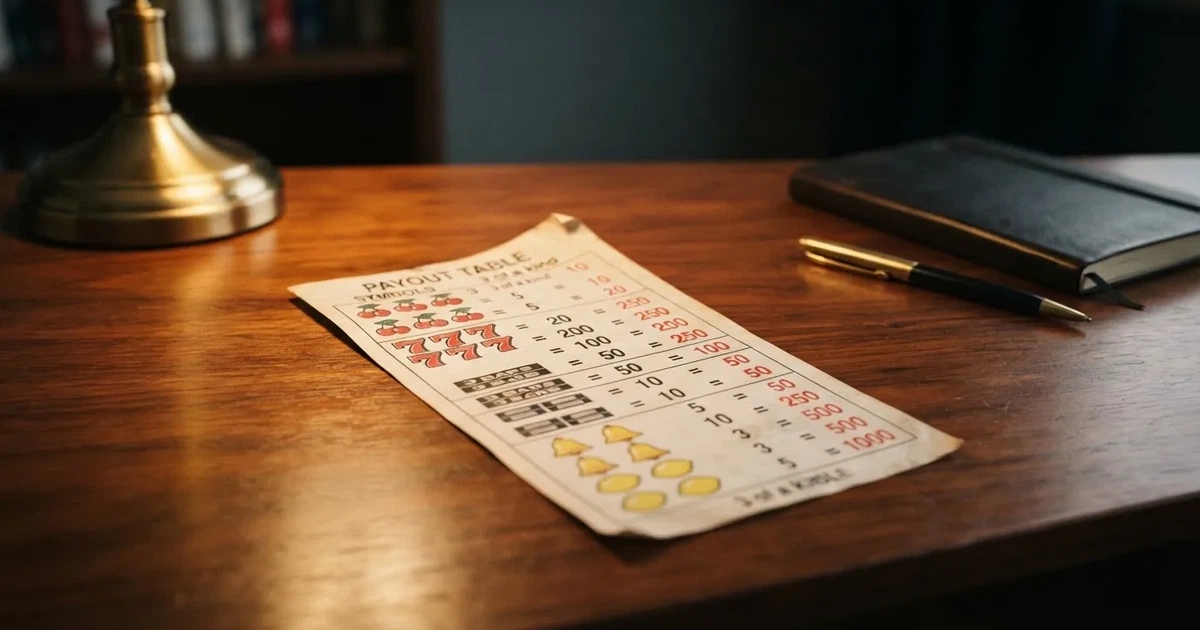
Three reels, a handful of symbols, a single payline, and a payout table that fits on one printed strip. That is the mechanical skeleton the modern five-by-three video slot was built to replace, and it is also the form a person typing “best 3-reel slots Australia” is usually trying to find. In Australia, the search ends in an unusual place: not on a regulated product page, but on offshore sites the Australian Communications and Media Authority has spent the last several years working through one warning at a time. The rest of this page reads in that order — the format first, then the prohibition that shapes where it can actually be played, then what the ACMA has done about the operators who try.
This article was checked against the ACMA’s published enforcement record as of 23 September 2026, with operator licences verified against that register.
Table of Contents
- The fundamentals of a 3-reel slot
- The paytable of what is legal in Australia
- What the ACMA has actually done about offshore 3-reel slots
- Bonuses, free spins and the 3-reel bonus slot
- Specific games, providers and what a 3-reel catalogue actually looks like
- A ranked comparison of the brands the ACMA has named
- What a fair comparison of offshore 3-reel slot sites would weigh
- Responsible gambling and where to get help
- Frequently asked questions
The fundamentals of a 3-reel slot
A 3-reel slot is the form Charles Fey developed in San Francisco in the late 19th century. His original machine carried five symbols — horseshoes, diamonds, spades, hearts and the Liberty Bell — and three bells in a row paid the top prize of ten nickels. That mechanical lineage still sets the shape of the format. Three reels spin, each reel shows a small fixed set of symbols, and wins are read across a handful of horizontal paylines. Bally’s Money Honey in 1963 added a bottomless hopper and automatic payouts of up to 500 coins without an attendant, and the 1976 Fortune Coin video slot replaced the physical reels with a screen. The basic grammar did not change: reels, symbols, paylines, paytable.

Two numbers from the same family of machines tell the format apart from its modern successor. A classic mechanical three-reel machine with around ten symbols per reel produces roughly 1,000 possible symbol combinations. A modern video slot with five or more reels and 50-plus symbols per reel can push the odds against a top combination to around 300 million to one. The 3-reel format trades visual variety for a much smaller combination space, which is what gives the format its old, recognisable feel and what keeps a small paytable legible.
Three things follow from that shape, and they are what a reader comparing formats usually wants to know.
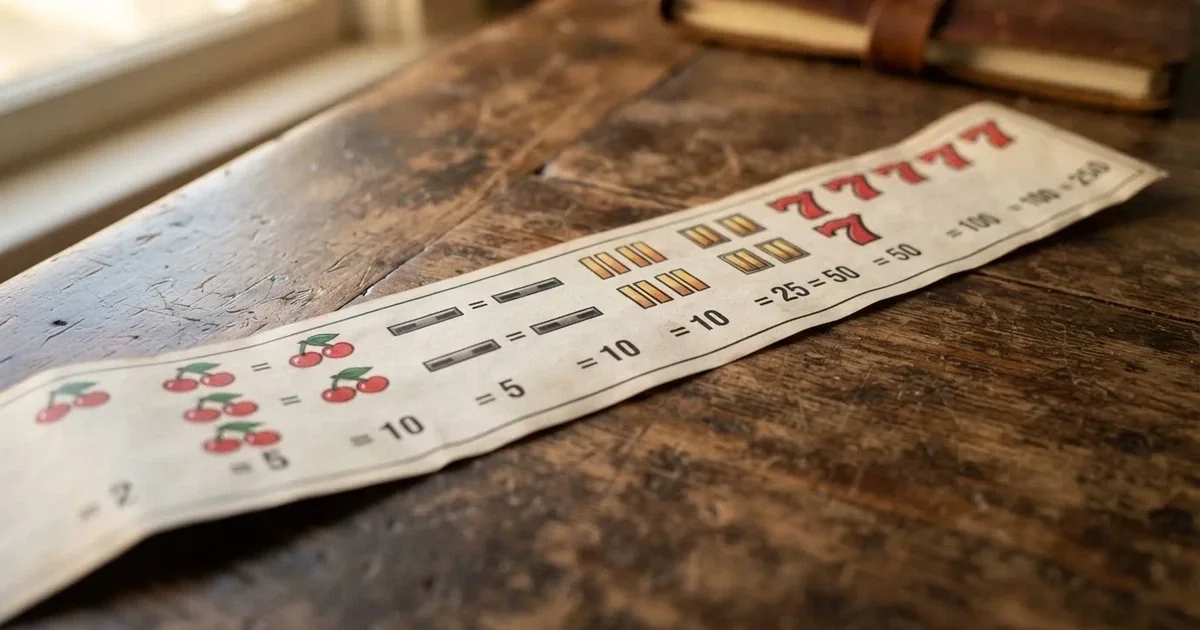
The paytable is the whole game. On a 5-reel video slot, a paytable can run to several screens of scatter pays, free-spin retriggers, pick-me bonus rounds and multipliers stacked on multipliers. On a 3-reel machine, the paytable is a single chart: each symbol, each line, each payout. That is why the format reads as a reference card rather than a game — and why, for a punter who likes to know what a spin is worth before it is spun, the older form still has a following.
Volatility reads differently. On a 3-reel slot, variance is mostly driven by the symbol set and the symbol weighting, and top combinations are rare enough that a session can run a long way without one. On a 5-reel video slot, the volatility story is split between base-game hits, scatter pays and bonus features, and the same denomination can behave very differently depending on which of those is firing. The format itself does not determine volatility — the symbol table does — but the simpler shape tends to push a 3-reel title toward longer dry spells punctuated by the occasional meaningful win.
Denomination and stake are visible. Most 3-reel machines carry a single stake per spin, displayed on the cabinet, with no bet-level slider and no coin-multiplier gimmickry. A punter who wants to know exactly what one spin costs at any moment has more chance of doing so on this format than on most modern ones.
A useful piece of historical context: Australia operates an estimated 97,103 gaming machines outside casinos as of 2010 — a per-capita rate about five times that of the United States — and the older 3-reel form is still part of the country’s pub and club landscape, sitting alongside the more common five-reel video pokies. New South Wales alone counted 87,298 of those machines in June 2023, with 26,380 in Victoria (2021–22), 21,122 in Queensland (October 2023), 11,672 in South Australia (September 2023) and 3,587 in the ACT (November 2023). The 3-reel machine on a pub floor is a real Australian object. The 3-reel slot offered as an online casino product to an Australian is not, and the next section is the reason.
The paytable of what is legal in Australia
The Interactive Gambling Act 2001, strengthened by the Interactive Gambling Amendment Act 2017, makes it an offence to provide online casino games, online pokies or in-play betting to a person physically in Australia. No state or territory issues a licence for those products, and the prohibition applies whatever licence a site displays in its footer. What is licensable in Australia is wagering on races and sport placed before the event, lotteries and keno, and that side of the market is regulated mostly through the Northern Territory, where the Racing and Wagering Commission oversees 52 of the country’s online bookmakers — Sportsbet, Bet365 and Ladbrokes among them — for tax reasons, with no full-time staff and a once-a-month meeting in Darwin.
The reason that matters for a 3-reel slot search: an “online casino” offering 3-reel slots to an Australian is offering a prohibited service, even if the underlying RNG is certified by an overseas testing house and even if the licence it advertises is real in its own jurisdiction. The page does not say “the offshore site is unsafe” as a slogan — it says “the offshore site is outside the Australian regime”, which has several practical consequences a punter should know before clicking through.
A blocked site can hold a balance. When the ACMA directs Australian internet service providers to block an offshore site, the block is a network-level intervention, not a wind-down. A punter who had money on the site when it was blocked may find the balance frozen, the site’s terms having moved on in the meantime, and the only available complaints path running through a regulator that does not have jurisdiction over the operator. The Australian regime targets the provider, not the player, so there is no Australian prosecution risk for the individual — but there is also no Australian recourse if the provider refuses a withdrawal.
The licence on the page is not the licence in the regime. A Curaçao or Anjouan licence is a real licence, in a real jurisdiction, with real obligations. It is not an Australian licence, and the protections that travel with an Australian licence — dispute resolution, segregated player funds, advertising rules — do not travel with it. For a punter comparing formats, that is the single most consequential fact about an offshore 3-reel slot: the paytable is real, the spin is real, and the regulatory surround is not.
Payment rails are part of the prohibition. Since 11 June 2024, credit cards, credit-related products and digital currency have been banned as payment for licensed online wagering in Australia, with penalties of up to A$247,500 for an operator that takes them. A site asking an Australian for a credit card or a crypto deposit is, on that single point, outside the Australian rules. The legal deposit routes for licensed wagering are debit card, bank transfer, PayID/Osko and BPAY.
A reader looking for the payout percentage of a 3-reel slot will not find it in an Australian register. In the United States, state regulation sets minimum slot machine payout percentages that vary by jurisdiction: Nevada requires at least 75%, Mississippi at least 80% and New Jersey at least 83%. No equivalent Australian floor exists for an online casino product, because the product itself is prohibited. That absence is the kind of information a comparison can usefully work with — not as a complaint, but as a fact about what a punter can and cannot check.
What the ACMA has actually done about offshore 3-reel slots
Enforcement against prohibited online gambling services has been a steady feature of the ACMA’s work since 2017. As reported in June 2026, a total of 1,751 illegal gambling and affiliate marketing websites had been blocked since the first blocking request in November 2019, and more than 230 unlicensed gambling services had left the Australian market since enforcement was strengthened in 2017. In the most recent round reported on 26 June 2026, the ACMA asked Australian internet service providers to block 12 more websites: 7Signs, ChromaBet, Donbet, Duospin, Freshbet, Slots Gem, Jacks Club, Lucky Start, Pointsbetz, Spinrise, Vinyl Casino and Wildsino.
The blocking rate sits at roughly 22 websites per month on average since the first blocking request in November 2019 — a band of about 20–25 a month depending on which month you anchor against, with the pace picking up noticeably in the last two years. The arithmetic is not subtle: 1,751 sites blocked across roughly 80 months of enforcement. That average understates what has been happening lately. The number of operator names in a single ACMA announcement has grown, the intervals between rounds have shortened, and the same operator group is showing up under more than one brand at a time. A punter who finds a new offshore site offering 3-reel slots today is, on the historical pattern, looking at a service with months rather than years of Australian visibility ahead of it.
Beyond blocking, the ACMA issues formal warnings, and several of the brands on this page’s ranked list have been on the receiving end of one. In March 2026 the ACMA warned Pulsup Ltd over Rocketplay. In May 2022 it warned Dama N.V. covering six casino brands — Bambet, Dazard, Level Up, Rocketplay, Wild Tornado and Cobra Casinos. In March 2025 and May 2025 Dama N.V. was warned again, this time over Woo Casino and Spirit Casino. In July 2025 the ACMA warned Bamboo Media over Ignition Casino and Consolutetish S.R.L. over National Casino and Bizzo Casino, the last of which had already been the subject of a 2022 warning to TechSolutions. In February 2025 the ACMA warned EOD Code SRL over Instant Casino. In April 2026 the ACMA warned Ryker B.V. over Jackbit and CasinOK. In April 2025 the ACMA warned Sterplay Holding Ltd over Casino Intense, and the ACMA has also warned Hollycorn N.V. over its Sky Crown and Blue Leo services.
What the warnings tell a punter is not that the ACMA is policing individual bonuses or individual games. The ACMA is policing the offer of prohibited services to Australians, and the 3-reel format is part of that offer alongside 5-reel video slots, live dealer tables and the rest of the catalogue. The brands below are listed because the ACMA has named them. None of them is recommended. None of them is licensed in Australia. Some of them carry subject-key signals from third-party listings; those signals are reported as the listings report them, not as the operator’s own claim.
Bonuses, free spins and the 3-reel bonus slot
A 3-reel bonus slot is a real product category in the offshore catalogue: a classic three-reel layout with a bonus feature attached, most often a free-spin round triggered by a scatter or a particular symbol combination, sometimes with a multiplier on the bonus line. The free-spin bonus is the most common shape because it lets the format keep its clean paytable while still giving the player a session event that pays differently from the base game. For the same reason, “free 3-reel slots with bonus” is a frequent search term — the player wants the format and the bonus structure together.
What changes when the offer is real and the site is not is the cost side of the equation. A bonus offer in this market is structured around a deposit match, a wagering requirement expressed as a multiple of the bonus (or, less often, the deposit plus bonus), a max-cashout cap on bonus-derived winnings, a list of games counted toward clearing the requirement, and a time limit on the clearing window. The wagering multiple is the figure that does the most work. A 35x wagering requirement on a A$100 bonus is A$3,500 of required turnover before the bonus becomes withdrawable — a figure that, on a 3-reel slot at, say, A$1 a spin, is 3,500 spins; on a 5-reel slot with a higher line count and a different symbol distribution, the same turnover crosses a different set of paylines. A max-cashout cap at, say, 10x the bonus amount is A$1,000 — meaning any bonus-derived winnings above that figure simply do not get paid, regardless of what the spin showed.
The marketing word that does the most damage on this page is “free”. A free-spin bonus is not free in the economic sense. It is a credit against future wagering, with conditions attached, and the conditions are the offer. A punter who reads a free-spin offer as a no-cost chance to try the format is reading past the small print, and the small print is where the cost lives.
None of the brands on this page is described with a working bonus, promo or voucher code. The figures above are what an offer of this kind generally involves, not what any one operator is currently running. The reasons are twofold: first, an affiliate marketing page is the only place a current code lives, and the ACMA’s published warnings over several of the brands below have been triggered in part by exactly that kind of marketing to Australians; second, the offer changes weekly in this market, and any figure written today would be wrong next week. What does not change is the shape of the offer, and the shape is what a comparison is for.
Specific games, providers and what a 3-reel catalogue actually looks like
The offshore 3-reel catalogue tends to share a small set of design choices. The reels are three, the paylines are usually one to five, and the symbol set is a recognisable vocabulary of cherries, bars, 7s and a top symbol drawn from the brand’s own theme — diamonds, bells, lucky icons. Bonus features, where they exist, are usually a free-spin round with a multiplier rather than a pick-me or a wheel. The volatility on this format is driven by the symbol weighting on each reel, and a 3-reel title with a single high-paying top symbol and lots of low-paying filler is a very different game from a 3-reel title with a flatter payout ladder.
Two caveats belong with that picture. First, the operator usually does not publish a per-title RTP for 3-reel games with the same transparency it applies to its 5-reel video catalogue; where the figure is published, it tends to be on the provider’s own page rather than the operator’s game info screen. Second, the 3-reel format is increasingly a minority of the catalogue on offshore sites — most operators lead with 5-reel video slots, Megaways-style titles, and live dealer tables, and the 3-reel selection sits in a “classic” tab with a small number of titles, often from a single provider. A punter who wants the format specifically should expect to scroll past a much larger 5-reel collection to find it.
The Australian licensed side of the market does not offer 3-reel slots online, because the product itself is prohibited. The licensed wagering operators — the 52 NT-licensed bookmakers and the state-lottery products — sell sports and race wagering, lotteries and keno. They do not sell slots of any reel count. The 3-reel machine a reader can play in Australia is the one on the pub floor, where the format still sits in the gaming-machine mix in NSW, Victoria, Queensland, South Australia and the ACT.
A useful way to read the gap between what is licensed and what is on offer offshore: the offshore site’s classic tab is not a regulated product with an Australian certification. It is an overseas product, sold by an overseas operator, governed by an overseas licence, into a market where the local regulator has already named the brand or its parent in a formal warning.
A ranked comparison of the brands the ACMA has named
The table below is not a ranking of recommended casinos. It is a record of which brands the ACMA has issued formal warnings over for offering prohibited online gambling services to Australians, in the order they appear in this article, with the date and operator the ACMA itself named. Where a third-party listing shows the brand attached to a relevant subject, that signal is reported as the listing reports it; where no such signal is carried by the inputs, the brand sits on its ACMA record alone.
| Brand | ACMA action and date | Operator named by the ACMA | Subject support |
|---|---|---|---|
| RocketPlay | Formal warning March 2026; earlier warning May 2022 | Pulsup Ltd (Rocketplay); earlier Dama N.V. | — |
| Level Up Casino | Formal warning May 2022 | Dama N.V. | listings report the brand on a third-party games-provider site |
| Woo Casino | Formal warning March 2025 | Dama N.V. | — |
| Spirit Casino | Formal warning May 2025 | Dama N.V. | — |
| National Casino | Formal warning July 2025 | Consolutetish S.R.L. | listings report the brand on a generalist reference page |
| Bizzo Casino | Formal warning July 2025; earlier warning 2022 | Consolutetish S.R.L.; earlier TechSolutions | — |
| Ignition Casino | Formal warning July 2025 | Bamboo Media | — |
| Instant Casino | Formal warning February 2025 | EOD Code SRL | — |
| Jackbit | Formal warning April 2026 | Ryker B.V. | — |
| Casino Intense | Formal warning April 2025 | Sterplay Holding Ltd | listings report the brand on Australian news, regulator and operator pages |
| Sky Crown | Formal warning (September 2022 publication) | Hollycorn N.V. | — |
A row carrying only an em dash in the subject-support column is not a blank row. It is a brand whose only verifiable signal in the inputs is the ACMA warning itself. A row carrying a listings-only note is a brand that appears in third-party lists, reported as those lists report it, never as the operator’s own claim. No row in this table represents a place to play.
RocketPlay — the most recent warning in this set
The ACMA warned Pulsup Ltd over Rocketplay in March 2026, on top of the earlier Dama N.V. warning from May 2022. Two warnings to two different operators over the same brand name is the kind of pattern the ACMA’s blocking work keeps surfacing: when one operating entity is warned, another takes over the URL, and the warning process starts again. For a punter comparing the format across offshore sites, that is the practical shape of the market — a brand name is not a stable address, and a stable address is not a guarantee against a future warning. The verdict on this brand is the same as the warning itself: it is offering a prohibited service, and the format it offers does not change that.
Level Up Casino — warned under the original 2022 round
Level Up Casino sits inside the May 2022 warning to Dama N.V., which covered six brands at once: Bambet, Dazard, Level Up, Rocketplay, Wild Tornado and Cobra Casinos. Third-party listings report the brand on a games-provider page; that signal is reported as the listing reports it. A punter reading this row should note that a single warning covering six brands is a wider net than a single warning covering one, and the operator-group pattern is part of why the blocking pace has accelerated — the same group tends to surface under new brand names after a warning, and the warning process has to start again for each one.
Woo Casino and Spirit Casino — the 2025 Dama N.V. follow-up
Dama N.V. returned to the ACMA’s list in March 2025 (Woo Casino) and May 2025 (Spirit Casino). The pattern is the same one seen in the 2022 round: a named operating entity, a list of brands, a warning per brand. The subject support signal for both is absent from the inputs, which means the only thing the ACMA record itself says about these brands is that they offered prohibited services to Australians.
National Casino — part of a wider 2025 round
National Casino was warned in July 2025, alongside Bizzo Casino, in the same round that also warned Bamboo Media over Ignition Casino. The third-party listing reports National Casino on a generalist reference page. The wider point is that Consolutetish S.R.L. was named as the operator for both National Casino and Bizzo Casino in the same action, which is the same group-pattern shape the Dama N.V. warnings showed in 2022 and 2025.
Bizzo Casino — a repeat warning, four years apart
Bizzo Casino is the only brand in this set with a documented history of two formal warnings to two different operators: Consolutetish S.R.L. in July 2025, and TechSolutions (CY) Group Limited and TechSolutions Group N.V. in 2022. A repeat warning is a stronger signal than a first one — the ACMA’s process moved on after the first warning, the brand changed hands or changed operator, and the conduct continued. For a comparison, that is the brand to look at if the question is what an offshore 3-reel slot site’s track record can look like at its worst.
Ignition Casino — a single 2025 warning
Ignition Casino was warned in July 2025, with Bamboo Media named as the operator. The subject support signal is absent from the inputs. The single warning sits inside the same round as National Casino and Bizzo Casino, which means three brands from two operator groups were warned in the same action — a scale that is itself the kind of information a comparison can use.
Instant Casino — the February 2025 warning
EOD Code SRL was warned in February 2025 over Instant Casino. Instant Casino has been a visible name in affiliate marketing for the Australian market in recent years; the ACMA warning puts it on the same list as the rest of this set. The subject support signal is absent from the inputs. The verdict is the same: prohibited service, no Australian licence, no Australian recourse.
Jackbit and CasinOK — the April 2026 warning
Ryker B.V. was warned in April 2026 over both Jackbit and CasinOK, a single warning covering two brands. The pattern — one operator, multiple brands, one warning — is now the dominant shape in the ACMA’s published enforcement record, and it is the reason the blocking rate has picked up: each warning can sweep in more than one URL at a time.
Casino Intense — third-party listings place it on Australian pages
Sterplay Holding Ltd was warned in April 2025 over Casino Intense. Third-party listings place the brand on Australian news, regulator and operator pages, which is reported here as the listings report it. A punter who sees the brand mentioned on a local page should read the mention as a listing signal, not an endorsement, and the ACMA warning is the regulatory signal that sits beside it.
Sky Crown — the Hollycorn N.V. warning
Hollycorn N.V. was warned over its Sky Crown and Blue Leo casino services in a publication dated September 2022. The Hollycorn N.V. warning is the oldest in this set and is the kind of warning that, on the historical pattern, tends to be followed by further warnings to the same operator group under new brand names — a pattern the 2025 Dama N.V. round shows clearly. The subject support signal is absent from the inputs.
The most consequential thing this table is not is a buyer’s guide. Every row represents a brand the ACMA has named for offering prohibited services to Australians. The comparison the table supports is the comparison of warnings — dates, operators, whether the brand has been warned once or twice — not the comparison of offers, because the offer on an offshore site is, on the regulatory level, the same prohibited service in every row.
What a fair comparison of offshore 3-reel slot sites would weigh
A fair comparison of offshore 3-reel slot sites would have to weigh a small number of things, and a fair comparison of this set has to weigh even fewer, because the regulatory surround is the same on every row. Here is the shape of the comparison, with the row-by-row figure it would lean on.
The date of the most recent ACMA action. A brand warned in 2026 is on a faster track than a brand warned in 2022, because the blocking pace has picked up and the same brand is more likely to be inside a future blocking round. RocketPlay (March 2026) and Jackbit (April 2026) sit at the top of this dimension; Sky Crown (September 2022) sits at the bottom.
The number of times the brand has been warned. A repeat warning is a stronger signal than a first one, and Bizzo Casino is the only brand in this set with two warnings to two different operators. For a punter, the repeat-warning brand is the one whose conduct has survived an enforcement cycle.
The breadth of the operator-group warning. A warning covering six brands (the May 2022 Dama N.V. round) is a wider pattern than a warning covering one brand. Woo Casino, Spirit Casino, National Casino and Bizzo Casino sit inside warnings that covered other brands in the same action; RocketPlay (March 2026) and Instant Casino (February 2025) sit inside warnings that named a single brand.
The presence of a third-party listing signal. A brand that shows up on a games-provider page, a news page or a regulator-adjacent page is a brand that has some independent visibility. Level Up Casino, National Casino and Casino Intense carry listings-only signals in this comparison; the rest sit on the ACMA record alone.
What the comparison is not weighing is the offer — the bonus, the wagering requirement, the payout speed, the game list. Those figures change weekly in this market and the only place they are reliably published is an affiliate marketing page, which is the same kind of page that has historically triggered ACMA warnings to the operators in this set. The offer is part of why the warning exists.
Responsible gambling and where to get help
If thinking about 3-reel online slot play ever starts to feel compulsive or stressful, free confidential help is available around the clock through Gambling Help Online and the National Gambling Helpline on 1800 858 858. BetStop, the National Self-Exclusion Register, has been live since August 2023 and binds Australian-licensed online and phone wagering services — an offshore casino is not connected to it, which means a self-exclusion through BetStop will not stop an offshore site from accepting bets, but it will stop the licensed Australian side. That distinction is worth holding clearly: the Australian self-exclusion tool works inside the Australian regime and does not extend outside it, and the help line and chat service work independently of any operator.
The same logic applies to a financial limit or a session limit. An Australian-licensed wagering operator will honour a deposit cap or a session timeout because the regime requires it. An offshore site will honour whatever its own terms page says, and the page can change. The tools available inside the Australian regime are the ones that hold.
Frequently asked questions
How is a 3-reel slot different from a five-reel video slot?
A 3-reel slot uses three reels with a small fixed set of symbols, typically one to five paylines, and a single paytable that fits on one printed strip. A five-reel video slot uses five or more reels with 50 or more symbols per reel, a much larger combination space, and usually multiple bonus features. The mechanical three-reel format produces roughly 1,000 possible symbol combinations; a modern video slot can push the odds against a top combination to around 300 million to one.
Can 3-reel slot machines be found in licensed Australian pubs and clubs?
Yes. Australia operates an estimated 97,103 gaming machines outside casinos as of 2010 — a per-capita rate about five times that of the United States — and the 3-reel form is still part of the pub and club gaming-machine mix in NSW, Victoria, Queensland, South Australia and the ACT. What is not licensed is the online 3-reel slot offered to an Australian over the internet.
Do 3-reel slots pay out differently from five-reel formats?
The format itself does not determine payout — the symbol table does. A 3-reel slot with a single high-paying top symbol and lots of low-paying filler will have longer dry spells punctuated by occasional meaningful wins; a flatter payout ladder will pay smaller amounts more often. In the United States, state regulation sets minimum slot machine payout percentages that vary by jurisdiction: Nevada requires at least 75%, Mississippi at least 80%, and New Jersey at least 83%.
Is a 3-reel slot online the same game as a 3-reel machine on a pub floor?
The format is the same — three reels, a small symbol set, a simple paytable. The regulatory surround is not. A pub-floor machine is governed by a state or territory gaming regulator and operates inside the Australian regime. An online 3-reel slot offered by an offshore site is governed by an overseas licence and sits outside the Australian regime, which is why the ACMA has issued formal warnings to the operators offering them.
Are 3-reel slots for real money legally available from an Australian-based site?
No. The Interactive Gambling Act 2001 makes it an offence to provide online casino games, online pokies or in-play betting to a person in Australia, and no state or territory issues a licence for them. The 3-reel format, like every other online casino format, is a prohibited interactive gambling service when offered online to an Australian. Any site offering it is operating outside Australian law.
Does reel count affect how a slot’s volatility is described?
Not directly. Volatility is driven by the symbol set and the symbol weighting on each reel, not by the number of reels. A 3-reel title can be high volatility or low volatility depending on how the symbols are distributed; a 5-reel title can be either as well. The simpler shape of the 3-reel format tends to push a title toward longer dry spells punctuated by occasional wins, but that is a tendency of the format rather than a property of it.
Prepared by the Pokies Info Hub editorial staff.