
Casinos that accept POLi Australia 2026: what is actually on offer
A reader typing “casinos that accept POLi Australia” into a search bar in 2026 is doing one of two things. They have used POLi before, remember it as a quick bank-transfer shortcut, and want to know whether the offshore pokies-style sites still take it. Or they have been told the name by a comparison page and want to confirm it is real before they sign up. Both readers deserve the same first answer: the Australian version of POLi Payments was wound down by Australia Post and closed for good on 30 September 2023. The brand kept running in New Zealand under new local ownership; in Australia it is gone. Any casino page in 2026 that still advertises POLi deposits for Australian customers is selling a payment method that has not existed here for nearly three years.
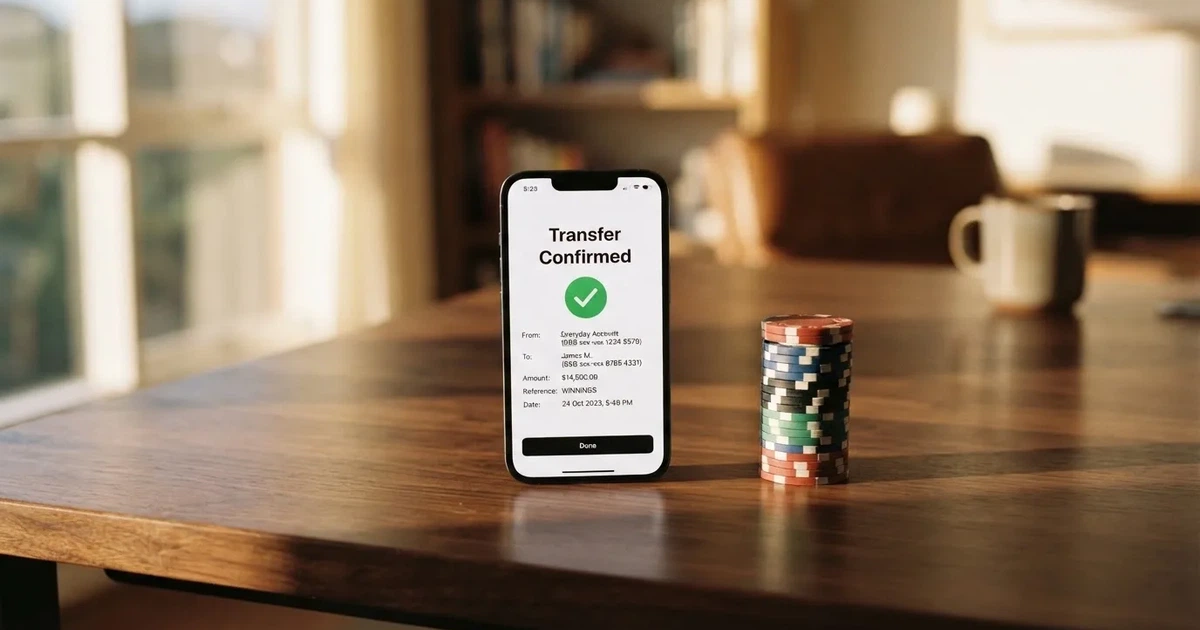
That fact reframes the rest of the search. This page goes through it carefully: how POLi used to work, why it stopped, what offshore sites that still show the POLi logo are actually doing, and what the Australian regulator has done to the kind of operators most likely to advertise it. The readers who benefit are the ones deciding whether the deposit button on these sites will ever take their money. The ones for whom the page is less useful are readers expecting POLi to behave the same way it did in 2019 — and the regulator’s record makes clear that those sites carry their own set of risks worth weighing before any deposit is attempted.
Current as of 29 October 2026. Operator and licence claims verified against the Australian Communications and Media Authority’s published formal-warning register.
Table of Contents
- Responsible play on sites the regulator has acted against
- How a POLi deposit and withdrawal actually work
- Why POLi is not a working option in 2026
- What the ACMA has done, and how often
- The payment landscape an Australian customer is actually dealing with
- How the ranking below is built
- Operators the ACMA has acted against
- The wider table of ACMA actions
- What changes if the reader is not in Australia
- What a reader who has already deposited should do
- The reform that is coming but is not yet in force
- Tax and what a winning punter actually keeps
- The page’s last word
- Frequently asked questions
Responsible play on sites the regulator has acted against
The polite way to read this list of operators is that they have all been the subject of a formal warning from the ACMA under the Interactive Gambling Act 2001 for offering prohibited interactive gambling services to people in Australia. The blunt way to read it is that none of them should be assumed to handle an Australian customer’s withdrawal fairly, that the regulator’s published record is the only piece of evidence a reader has about how these sites have behaved in the past, and that the absence of a warning is not evidence of safety — only the absence of a published action so far.

The ACMA’s formal warnings are public documents. They name the company that operates the site, the date the warning was issued, and the section of the Interactive Gambling Act 2001 the regulator says the company breached. A formal warning is not a prosecution, and it is not a finding of guilt in a court. It is the regulator’s own statement that, in its view, the named operator has been offering prohibited services to Australians, and that further action may follow if the conduct does not stop. Several of the brands in the ranking below have been warned more than once, and one — Dama N.V. — has been the subject of four separate published warnings covering seven different brands over four years.
Anyone drawn to a POLi-friendly offshore casino by a bonus offer or a familiar-looking payment line should treat the ACMA’s published register as the first document to read. It is the only part of a safety claim that is independently verified, and it costs nothing to consult. The rest of an offshore casino’s safety story — its licence, its seals, its responsible-gambling page — is published by the casino itself, and the regulator’s record is full of examples where those pages have been disregarded.
What a formal warning actually changes for the reader
A formal warning does three things, and they are worth spelling out because they are different from what the marketing copy on these sites suggests they are.
It puts the operator on the ACMA’s published list. The list is searchable, free, and the regulator updates it after each new warning is issued. A reader can confirm, in about thirty seconds, whether a brand they are considering has been warned and when.
It creates a record the ACMA can use in any later enforcement action. A site that ignores a warning and continues offering prohibited services moves closer to having its domain added to the blocking list the regulator maintains with Australian internet service providers.
It does not, on its own, give the reader any direct remedy. The Interactive Gambling Act 2001 targets the provider, not the player. A punter whose withdrawal is refused at a warned operator has no Australian complaints body to approach, no BetStop registration to lean on, and no chargeback route guaranteed to succeed.
That last point is the one that matters most. A reader who treats a formal warning as a sign the regulator will help them recover a refused payout is reading past what the warning says. The warning tells the next reader, not the last one, what to expect.
How a POLi deposit and withdrawal actually work
POLi was, while it operated in Australia, an online banking payment service rather than a card or a wallet. A customer logged into their bank’s website through a POLi-branded page, picked the account they wanted to pay from, and POLi initiated a direct transfer from that account to the merchant. There was no card number, no wallet balance, no stored credential. The transaction looked, on the bank’s statement, like a normal online banking transfer to the merchant’s BSB and account number.
That mechanism had two practical consequences for casino use.
First, a POLi deposit cleared to the merchant’s bank account as a transfer rather than as a card transaction. A bank whose gambling block was set up to refuse authorisations on the merchant category code for “Betting/Casino Gambling” — and Westpac’s block works exactly that way — could see a POLi transfer land on a gambling merchant’s account without triggering the block. The block operates at the card network’s authorisation step, and POLi never went through that step. That structural gap is one reason POLi was popular with Australian online gambling customers, and it is one reason several banks eventually took action against it.
Second, POLi required the customer to enter their online-banking login credentials into a third-party page. Banks have spent the last decade telling customers never to do this, because legitimate bank logins are reserved for the bank’s own site and any page that asks for them is either the bank or a phishing attempt. POLi argued that its login screen was a relay, not a stored credential; several banks disagreed, and the Commonwealth Bank stopped accepting POLi payments from mid-July 2023, citing security concerns. The closure followed within weeks.
A POLi withdrawal worked in principle as a transfer back from the merchant to the customer’s account. In practice, every offshore casino listed POLi as a deposit method but treated withdrawals as a separate manual process — the casino’s own finance team ran its checks, then sent the funds back as a transfer that could take several business days to arrive. The transfer itself was fast once released, but the release was the slow part, and POLi did nothing about that.
Why POLi is not a working option in 2026
The Australian domestic POLi service closed on 30 September 2023. Australia Post, which owned it, wound the operation down over the preceding weeks. The New Zealand operation continued under Merco, the local acquirer, and the development team moved with it. In Australia, the brand is dormant: any merchant page still showing a POLi deposit button for Australian customers is showing a button that, on the Australian end of the transaction, points at nothing.
What that means for a reader landing on a casino page in 2026 is straightforward. A POLi deposit cannot be initiated from an Australian bank account through the Australian POLi service, because the Australian POLi service does not exist. Any site that advertises POLi deposits for Australians in 2026 is either using an out-of-date payment page, drawing a misleading line between the New Zealand service and the Australian customer, or simply hoping the reader will not notice the difference. None of these is a basis on which to send money.
The practical alternative, for any reader who wants to deposit from an Australian bank account to a merchant at all, is PayID or a direct BSB-and-account transfer through Osko. PayID-based instant transfers clear in under a minute at more than 100 Australian financial institutions, and the payer’s bank shows the name of the account holder before the transfer is sent — a check that, on an illegal gambling site, is almost certainly going to look like a warning sign rather than a comfort. Osko and PayID are real, working, and not dependent on a third-party brand that the customer’s bank has stopped accepting. They are also the methods Australian-licensed wagering services actually accept.
What the ACMA has done, and how often
The ACMA’s blocking programme has been running long enough now that the cumulative numbers are themselves the story. As reported in June 2026, the regulator had asked Australian internet service providers to block 1,751 illegal gambling and affiliate marketing websites since the first blocking request in November 2019, and more than 230 unlicensed gambling services had left the Australian market since enforcement was strengthened in 2017. The June 2026 round alone added twelve more sites to the blocking list: 7Signs, ChromaBet, Donbet, Duospin, Freshbet, Slots Gem, Jacks Club, Lucky Start, Pointsbetz, Spinrise, Vinyl Casino and Wildsino.
Two figures belong next to each other. H2 Gambling Capital’s 2025 report estimated that Australians lose about A$3.9 billion a year to illegal gambling sites, and that the share of gambling going through legal channels fell from 74 per cent in 2021 to 64 per cent. The blocking list is what the regulator has built in response; the A$3.9 billion is what the list has so far failed to redirect. The story the regulator tells is that the supply side has been pressured; the story the figures tell is that the demand side has not.
The legal channels themselves are narrower than the marketing around them suggests. Online casino games and online pokies cannot be licensed anywhere in Australia under the Interactive Gambling Act 2001, as amended in 2017. What is licensable is wagering on races and sport placed before the event, lotteries and keno. The Northern Territory Racing and Wagering Commission regulates 52 of Australia’s online bookmakers — including Sportsbet, Bet365 and Ladbrokes — for tax reasons, even though the commission itself has no full-time staff and meets once a month in Darwin. That is the licensed product a reader searching from inside Australia can actually place money on, and it is what the ACMA’s blocking work is trying to keep separate from the rest.
A reader-side view of the blocking rate
Two numbers do all the work for any honest assessment of how fast the blocking list is growing. The list stood at 1,751 blocked sites as of the end of the June 2026 reporting round, and the first request that started it went out in November 2019. The arithmetic is straightforward — divide the total by the months elapsed — but the rate is not a single number. The early rounds cleared smaller backlogs of long-running sites; later rounds, like the June 2026 round that added twelve, target newer entrants the regulator has had time to investigate. The honest statement is that the rate has been steady enough that the cumulative total has roughly doubled over the past two years, and that the regulator has been willing to use the blocking route at a pace of one round every few weeks. A reader looking at the trend should expect the total to keep climbing, not to plateau.
That is the information the regulator has made public. It is not a prediction, and the rate of new entries is not fixed. What it tells a reader is that the ACMA is treating the offshore supply as a moving target rather than a one-time clean-up, and that a brand’s absence from the list is a snapshot, not a permanent state.
The payment landscape an Australian customer is actually dealing with
An Australian reader trying to move money to or from any merchant site is dealing with a payments system the rest of the world does not quite have. A few details matter because they change what a casino’s “we accept” line actually does at the bank end.
The New Payments Platform went live on 13 February 2018 and is owned by New Payments Platform Australia Ltd, a non-profit whose thirteen shareholders include the Reserve Bank of Australia and the major banks. Osko, the platform’s instant-transfer service, settles a transfer between participating banks in under a minute, twenty-four hours a day, including weekends. By April 2025 more than 25 million PayID identifiers were registered on the platform, and participants are required to keep the platform’s monthly outages to no more than two minutes. Apple Pay, Google Pay and Samsung Pay together accounted for around 45 per cent of all card payments in Australia by number at the end of 2025, which is high enough that any “we accept Visa” line is, in practice, also a line about which wallets the site supports.
BPAY is a separate channel that has been running since 1997 and is available through the online banking of more than 140 Australian banks and financial institutions, accepted by over 95,000 businesses. A BPAY payment is initiated by entering a Biller Code and a Customer Reference Number, both printed on the bill — the merchant never sees the payer’s card or login. It is the most boring payment method in the country, and it is the one most likely to clear a gambling block because it goes through the bank’s bill-payment system rather than its card network.
Two rules govern what an Australian-licensed wagering service can accept. First, since 11 June 2024, no Australian-licensed online wagering service may accept payment by credit card or other credit-related products, with penalties of up to A$247,500 for operators. The rule extends to digital wallets linked to credit, because the wallet itself is not the regulated object — the funding source is. Second, AUSTRAC’s threshold-transaction-report rule, which requires reporting of transfers of A$10,000 or more, applies only to physical cash; ordinary electronic bank transfers are not subject to that per-transaction reporting requirement, regardless of the amount sent.
| Payment Method | Status in Australia | Notes |
|---|---|---|
| PayID / Osko | Legal | Instant transfer via NPP |
| BPAY | Legal | Bill payment via Biller Code |
| Debit Card | Legal | Subject to gambling blocks |
| Credit Card | Prohibited | Banned for licensed wagering |
What the bank-end controls look like
The bank-end controls are where the regulator’s rules meet the customer’s daily banking. Westpac’s gambling block refuses authorisation of transactions registered under the merchant category code for “Betting/Casino Gambling” on eligible personal credit and debit cards; ANZ’s block, activated in the ANZ app, blocks gambling transactions made through a digital wallet such as Apple Pay on an eligible card, not just on the physical card. Once ANZ’s block is on, removing it requires a 48-hour waiting period, and the bank warns that not all gambling transactions will be blocked and that some non-gambling transactions might be blocked in error. The Commonwealth Bank stopped accepting POLi payments from mid-July 2023 — that decision was about POLi the brand, not the bank-end block, but it is part of the same tightening.
A POLi transfer, in the years it operated, bypassed these controls by never going through the card authorisation step. That structural gap is now closed, because POLi itself has closed. An Australian reader who wants to make a bank-transfer deposit from an Australian bank account in 2026 will go through PayID, Osko or BPAY, and will hit the bank-end blocks if they are turned on. The marketing line that POLi was a “more reliable” deposit method was, in plain terms, a line about getting around the customer’s own bank’s gambling controls — and that is what the regulator and the banks have spent the last several years closing off.
How the ranking below is built
The eleven operators below are not a recommendation. They are a list of the brands the ACMA has, at some point, issued a formal warning over for offering prohibited interactive gambling services to people in Australia. The reason for ranking them this way is that the published record is the only piece of evidence a reader has about how the operator behind a brand has actually behaved towards Australian customers in the past, and the regulator’s record is what the page leans on. No operator is included because its product is better, its payout is faster, or its welcome offer is more generous. The bonuses these sites advertise are not described here; the only sources for those figures were affiliate marketing pages, and what an affiliate page says an offer is worth and what the offer turns out to be worth at withdrawal time are different numbers.
A reader who wants to compare these sites on game library, on payment methods other than POLi, or on customer support quality is asking a question this page cannot answer with the inputs it has. A reader who wants to know which of these brands has been the subject of one formal warning and which has been the subject of three, and which are run by operators that have been warned under more than one brand name, is asking the question the page is set up to answer.
The verdict that closes each block is the page’s own judgement of the brand. That judgement is shaped by what the ACMA’s record shows, by the gap between the brand’s marketing and the regulator’s findings, and by what kind of reader — if any — would still find the brand worth considering despite what the record shows. The judgement is not a recommendation to deposit. It is what the brand looks like once the marketing line is set aside.
Operators the ACMA has acted against
RocketPlay
The ACMA issued a formal warning to Pulsup Ltd over Rocketplay in March 2026. Pulsup Ltd is the current operator on the ACMA’s published register; Dama N.V. was the subject of an earlier warning covering Rocketplay in May 2022, which puts the brand on the regulator’s list twice and the operator behind it on the regulator’s list four times across the brands the ACMA has tracked. No payment-method data has been confirmed for the brand against any of the major Australian payment sources. The picture is the regulator’s record and the regulator’s record alone.
The verdict is that a reader who has decided to look at RocketPlay anyway is looking at a brand whose operator has been told, in writing, twice over four years, that offering this product to Australians is unlawful. The fact that the brand still takes deposits from Australian customers tells the reader what the formal warnings did not.
Level Up Casino
The ACMA issued a formal warning to Dama N.V. covering Level Up Casino in May 2022, as part of a wider warning that named six Dama N.V. brands at the same time. Dama N.V. has been the subject of four separate ACMA warnings since then, including a March 2025 warning over Woo Casino and a May 2025 warning over Spirit Casino, which means the operator behind Level Up has been told the same thing by the regulator four times across four years. A Westpac gambling-block page lists the brand among gambling merchants whose transactions the bank’s card-level block will refuse, which is the bank-end confirmation that the operator is still attempting transactions in the category the regulator has warned against.
The verdict is that Level Up’s standing on the regulator’s record is set by Dama N.V.’s standing on the regulator’s record, and that record is not improving. A reader choosing this brand over another warned operator is choosing on grounds the ACMA’s published list does not support.
Woo Casino
The ACMA issued a formal warning to Dama N.V. over Woo Casino in March 2025. That warning followed the May 2022 warning covering six Dama N.V. brands and was followed in turn by a May 2025 warning over Spirit Casino. The pattern — warning, partial response, another warning — is the regulator’s documented experience with this operator. Payment data for the brand is unconfirmed.
The verdict is that Woo Casino is the second warning in a sequence, not an isolated event, and a reader should read the brand in that context. The fact that the regulator returned to Dama N.V. twice in fourteen months tells the reader what kind of operator the brand sits behind.
Spirit Casino
The ACMA issued a formal warning to Dama N.V. over Spirit Casino in May 2025, fourteen months after the Woo Casino warning. The pair is the regulator’s clearest statement that the conduct of May 2022 was not the last of Dama N.V.’s conduct the ACMA had to address. Payment data is not publicly available for this brand.
The verdict is the same as Woo Casino’s, with the date moved forward. A reader looking at the Dama N.V. brands as a group is looking at a single operator’s pattern, and the pattern is the warning a thoughtful reader should weigh most heavily.
National Casino
The ACMA issued a formal warning to Consolutetish S.R.L. over National Casino in July 2025. AUSTRAC’s published material and a general Wikipedia reference mention the brand, and the brand sits on listings at those sources — the kind of traceable presence that does not amount to a payment-method confirmation. The 2025 warning is the regulator’s first published action over the brand under the current operator.
The verdict is that National Casino is a single warning from a new operator name on the regulator’s record, and that the absence of earlier warnings is not the same as the absence of a pattern. A reader looking at the brand has the 2025 warning to weigh and nothing published before it.
Bizzo Casino
The ACMA issued a formal warning to Consolutetish S.R.L. over Bizzo Casino in July 2025, the same month as the National Casino warning. Bizzo had already been the subject of a 2022 formal warning to TechSolutions (CY) Group Limited and TechSolutions Group N.V., which makes Bizzo the second formal warning tied to the brand in three years and the first tied to a new operator name. The brand has no confirmed payment-method data.
The verdict is that a reader is looking at a brand whose name survived the operator change, and the regulator’s record shows the change did not change the conduct. The brand is a warning under one operator and a warning under another, and a thoughtful reader treats that as one warning’s worth of evidence rather than two separate incidents.
Ignition Casino
The ACMA issued a formal warning to Bamboo Media over Ignition Casino in July 2025. Ignition is one of two brands named in that July 2025 warning, alongside the National Casino and Bizzo Casino actions against Consolutetish S.R.L. The regulator’s published action over Ignition under Bamboo Media is the brand’s first under that operator. No payment-method data is available.
The verdict is that Ignition is a single warning under a new operator name and that the reader’s evidence is the 2025 record alone. The brand has not been on the regulator’s list long enough for a pattern to be established either way.
Instant Casino
The ACMA issued a formal warning to EOD Code SRL over Instant Casino in February 2025. EcoPayz and PayID listings mention the brand, but listings at those sources do not amount to a payment-method confirmation for an Australian reader — PayID is a working Australian transfer system, and the question is whether the casino takes it as a deposit from an Australian bank account, which is a different question from whether PayID lists the brand. The 2025 warning is the regulator’s first published action over the brand under EOD Code SRL.
The verdict is that Instant Casino is a single warning under a new operator name, and a reader weighing the brand has only that one action to consider. The listings at EcoPayz and PayID are not a safety claim.
Jackbit
The ACMA issued a formal warning to Ryker B.V. over Jackbit in April 2026, alongside a warning over CasinOK. The April 2026 action is the regulator’s first published action over Ryker B.V. The brand has no publicly confirmed payment-method data.
The verdict is that Jackbit is the newest name on the regulator’s record among the eleven in this ranking, and a reader is looking at a brand whose published standing is set by a single warning issued within the last few months. The fact that the regulator chose to publish a formal warning at all is the only signal a reader has, and a thoughtful reader treats that signal as the brand’s current standing.
Casino Intense
The ACMA issued a formal warning to Sterplay Holding Ltd over Casino Intense in April 2025. AUSTRAC, an ITNews report and NAB’s gambling-block page mention the brand. NAB’s gambling-block page listing is the most telling of those traces, because it is the bank-end confirmation that the brand is still attempting card transactions the bank will refuse. The 2025 warning is the regulator’s first published action over the brand under Sterplay Holding Ltd.
The verdict is that Casino Intense sits on the regulator’s list and on a major Australian bank’s refusal list. A reader who has decided to look at the brand anyway is choosing against both signals at once, and a thoughtful reader weighs what that costs before sending any money.
Sky Crown
The ACMA issued a formal warning to Hollycorn N.V. over its Sky Crown and Blue Leo casino services, in a published PDF from September 2022. The warning is the earliest in this ranking, and it has had longer than the others to be responded to. No payment-method data is confirmed.
The verdict is that Sky Crown is the longest-standing formal warning in the ranking, and the only signal a reader has about how the brand has handled that warning is the regulator’s silence since. Silence is not the same as compliance, but it is the only published fact a reader can rely on.
The wider table of ACMA actions
The eleven brands above sit on a wider list. Two columns matter for a reader comparing them — the date the warning was issued, and the operator the regulator named. A third column — whether any Australian payment source confirms the brand’s payment-method claims — is what separates the brands whose advertising can be checked from the brands whose advertising can only be read.
| Brand | ACMA Action and Date | Operator Named |
|---|---|---|
| RocketPlay | Formal warning, March 2026; May 2022 | Pulsup Ltd; Dama N.V. |
| Level Up Casino | Formal warning, May 2022 | Dama N.V. |
| Woo Casino | Formal warning, March 2025 | Dama N.V. |
| Spirit Casino | Formal warning, May 2025 | Dama N.V. |
| National Casino | Formal warning, July 2025 | Consolutetish S.R.L. |
| Bizzo Casino | Formal warning, July 2025; 2022 | Consolutetish S.R.L.; TechSolutions |
| Ignition Casino | Formal warning, July 2025 | Bamboo Media |
| Instant Casino | Formal warning, February 2025 | EOD Code SRL |
| Jackbit | Formal warning, April 2026 | Ryker B.V. |
| Casino Intense | Formal warning, April 2025 | Sterplay Holding Ltd |
| Sky Crown | Formal warning, September 2022 | Hollycorn N.V. |
The table’s empties are the point. A dash in the payment-method column is a gap in what can be checked, not a judgment about the brand, and a reader should read it as the gap it is. The brands with traces at Australian payment sources — Level Up at Westpac, Casino Intense at NAB — are not better-run than the brands without; they are simply brands whose card transactions have been attempted often enough that a bank’s refusal page picked them up. That is information, but it is not a recommendation.
What changes if the reader is not in Australia
The entire page above is written for a reader in Australia. A reader in New Zealand, where POLi still operates under Merco, is dealing with a different legal frame, a different regulator and a different payments system. The ACMA’s warnings do not bind a New Zealand customer, the Interactive Gambling Act 2001 is not the governing statute, and PayID does not apply. A New Zealand reader using POLi at an offshore casino is making a different decision, and the questions to ask are different — primarily whether the operator is licensed by the Malta Gaming Authority or another regulator that does accept New Zealand customers, and whether POLi’s relay login is acceptable on the customer’s bank’s terms.
A reader outside Australia and New Zealand is in a third frame entirely, and the only thing that carries across from this page is the structural observation that an operator’s claims about its own safety should be read against whatever the local regulator has published about it. POLi itself is no longer the right starting point for that reader.
What a reader who has already deposited should do
A reader who has already deposited at one of the brands above and is now reading this page is in a different position from a reader who is choosing. The following is the page’s honest advice on what that position looks like.
First, the regulator will not get the money back. The Interactive Gambling Act 2001 targets the provider, not the player, and there is no Australian complaints body with the power to order an offshore operator to refund a deposit. BetStop, the National Self-Exclusion Register, only binds Australian-licensed online and phone wagering services, and an offshore casino is not connected to it.
Second, a chargeback is not a guaranteed remedy either. A POLi transfer was a bank transfer rather than a card transaction, and bank-transfer chargebacks are harder to win than card chargebacks because the customer authorised the transfer. A card-funded deposit that flowed through a card authorisation might be chargeback-able; a transfer-funded deposit usually is not.
Third, the bank’s gambling block is the cheapest control available. Westpac’s block and ANZ’s block are both free to activate in the relevant banking app, and ANZ’s block stops gambling transactions through Apple Pay on an eligible card, not just the physical card. A reader who has decided they want a hard stop on this category of spending for the future should activate whichever of these blocks their bank offers before the next deposit attempt, not after.
Fourth, the National Gambling Helpline on 1800 858 858 is free, twenty-four hours a day, with chat at Gambling Help Online. It is the one service in the list that is open to a reader regardless of where they have played.
The reform that is coming but is not yet in force
The Interactive Gambling Amendment (Gambling Reform) Bill 2026 passed Parliament on 19 August 2026. Its advertising and inducement measures commence on 1 January 2027. As of the page’s currency date, the law is passed but not yet in force, and a 2026 page should not describe it as binding. The reform’s effect, once commenced, will be to restrict the kind of marketing that has drawn readers to offshore casino sites in the first place. It does not legalise online casino games, and it does not change the Interactive Gambling Act 2001’s underlying prohibition. A reader searching in 2026 is reading about a market the new rules will reshape, not about a market the new rules have already reshaped.
Tax and what a winning punter actually keeps
Gambling winnings of a recreational player in Australia are not assessable income under section 6-5 of the Income Tax Assessment Act 1997, and losses are not deductible. The rule applies to a player who does not carry on a business of gambling, and the boundary is what makes the rule complicated — a professional punter who derives their living from gambling is treated differently, and the Australian Taxation Office’s guidance is the only place that boundary is drawn in detail. A reader who has had a significant win at any of the brands above, offshore or otherwise, should not assume the ATO will treat the win as tax-free without checking the guidance that applies to their own situation. The default is no tax; the default is not the rule.
The page’s last word
A reader who came to this page looking for a working POLi deposit button at an offshore casino will not find one, because the Australian POLi service closed in September 2023 and the bank-end controls have moved further since. A reader who came looking for a list of which offshore casinos still advertise POLi will find that the list is not the question — the question is what the regulator has done about the operators behind those casinos, and the answer is that the regulator has warned them, blocked them, and in several cases warned them more than once. A reader who came looking for a place to play will not find one recommended, because the only honest answer to that question, given the legal frame and the regulator’s record, is that there is no Australian-licensed online casino and no offshore casino the regulator has confirmed as safe.
The honest summary is that the search is over for the wrong reason. POLi in Australia is closed; the offshore casinos that still advertise it have been warned; the legal channels are limited to licensed wagering on races and sport; and the bank-end controls are tighter than they were three years ago. A reader who wants to act on this page should start with the ACMA’s published register, then with their own bank’s gambling block, and then with the National Gambling Helpline if the second of those three steps is the one that matters.
Frequently asked questions
Is it legal for an online casino to accept POLi from a player in Australia?
No, and the prohibition is broader than POLi. Under the Interactive Gambling Act 2001, as amended in 2017, no online casino may lawfully offer casino games or online pokies to a person in Australia at all. POLi as a payment method is irrelevant to that prohibition — the operator is in breach whether it accepts POLi, a debit card, a credit card, a bank transfer, or a cryptocurrency deposit. The ACMA has issued formal warnings over operators using all of these, and the warning is about the service being offered, not about the payment route.
What is the smallest deposit a POLi casino site usually asks for?
The published minimum deposits at these sites are commonly in the A$10 to A$30 range, but the minimum is the least interesting figure on the page. The interesting figure is what happens to that A$10 once the casino’s own withdrawal checks run — and on a site whose operator has been the subject of multiple ACMA warnings, the answer the reader gets depends on a process the regulator cannot reach. A low minimum is a feature of the marketing page; the withdrawal experience is a feature of the operator, and the operator’s record is what the regulator’s register shows.
Does a POLi withdrawal clear any faster than a card withdrawal at these sites?
POLi, while it operated in Australia, settled a deposit to the merchant in seconds because the transfer went straight from the customer’s bank to the merchant’s bank. A withdrawal was a different story — the casino’s own finance team had to authorise the release, and the funds then went back as a standard transfer that could take several business days. Card withdrawals followed the same pattern once the casino’s checks had cleared: the card network’s settlement was not the slow part, the casino’s own review was. A reader who treats POLi as a speed advantage is reading past the part that actually takes the time.
Can POLi be used at every offshore pokies-style site, or only some of them?
POLi, in its Australian incarnation, closed in September 2023. The number of sites still showing a POLi button for Australian customers is the number of sites that have not updated their payment page since then. A reader who finds POLi listed at an offshore site in 2026 should read the listing as a relic of the site’s 2022 payment page rather than as a working deposit route, and the right question is not “does this site accept POLi” but “has this site updated its payment page at all”.
Does depositing with POLi add an extra fee at these casino sites?
POLi, while it operated in Australia, charged the merchant, not the customer, for each transaction. The fee was a per-transaction percentage that the casino either absorbed or passed on. Several of the larger Australian banks refused POLi over security concerns regardless of the fee structure, which is why the service closed in Australia and not because the fee was the sticking point. The fee is a footnote compared to the bank-end decision, and the bank-end decision has already been made.
What should a player do if a POLi deposit does not appear in a casino account?
The first step is to check the casino’s transaction history, not the bank’s statement — the bank may show the transfer as settled while the casino’s finance team has not yet credited the balance, and the gap is a routine part of the operator’s own processing. The second step, if the casino’s history shows no record after one business day, is the casino’s customer support, which is also the step where the reader discovers what kind of operator they have deposited with. The third step, if the casino’s support does not resolve the matter, is the bank’s dispute resolution — and on a bank transfer, that step has a much lower success rate than the equivalent step on a card transaction. A reader at this stage is reading the regulator’s warning register with hindsight, and a thoughtful reader activates their bank’s gambling block before the next attempt rather than after.