
best live dealer casino online australia 2026
As of 29 October 2026, every licence claim and ACMA action below has been checked against the public register at acma.gov.au.
A real-money live dealer casino that takes Australian players cannot be licensed in this country. The Interactive Gambling Act 2001 says so, the ACMA enforces it, and the blocklist at acma.gov.au carries the names of the operators who have tried anyway. That is the shape of this page from the first paragraph to the last: eleven operators the regulator has acted against, the games they offer, and the small set of Australian-licensed alternatives that actually do what a live dealer table does on a screen. The shortlist the rest of the internet hands over is built on offshore licences that carry no weight here. This one is built on what the regulator has actually done.
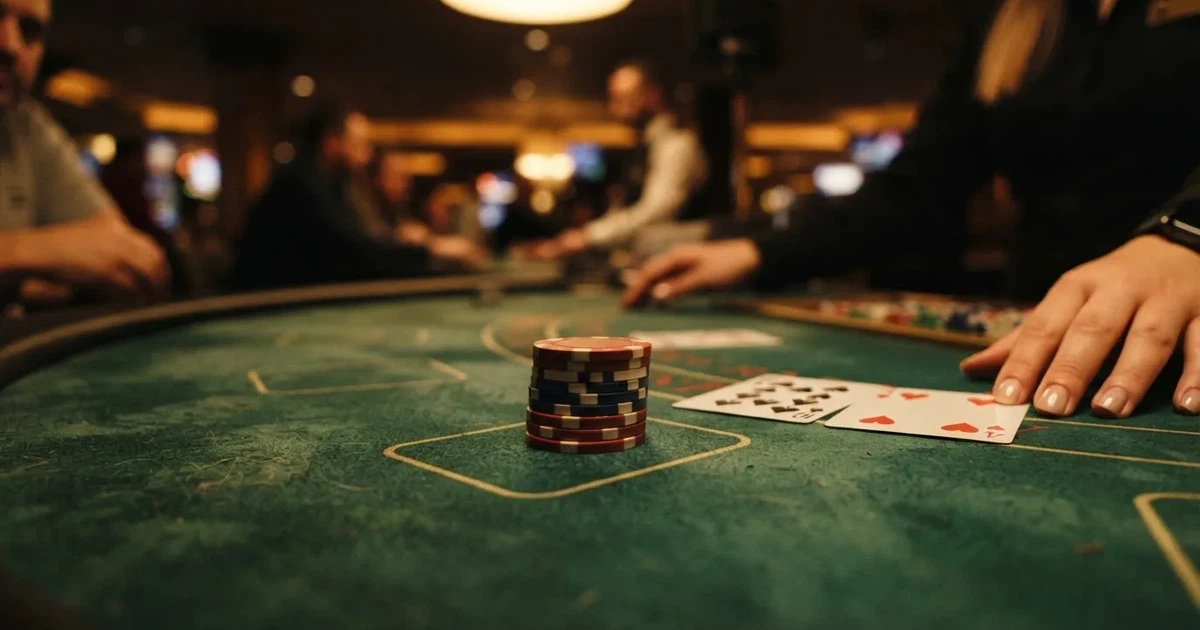
Table of Contents
- What a live dealer game actually is
- The baccarat table
- The blackjack table
- The roulette and craps tables
- The Australian legal frame
- What the ACMA has actually done
- What is actually legal for an Australian player
- The blocking-rate calculation
- Bonuses, wagering and what they cost
- Crypto, anonymity and the payment-method shelf
- Responsible gambling and the limits an offshore site does not honour
- The full shortlist, side by side
- The market’s own terms
- Frequently asked questions
What a live dealer game actually is
A live dealer casino streams real-time action from a studio or a land-based casino floor to a player’s screen. Cards are dealt, dice are rolled or a roulette wheel is spun in front of cameras. Optical camera recognition converts what the dealer does into the data the software needs to settle the bet, so what reaches the player is not a simulation but the same game as the one playing out across the table. The core catalogue across the industry is baccarat, blackjack and roulette, with a long tail of game-show variants and regional tables running behind them.
The live side of an online casino is also where the marketing is loudest. Operators brand studios in Riga and Malta, dress dealers in company colours, and stream from flagships that exist more for the camera than for the floor. Behind every one of those sets is a supplier, and one supplier dominates. Evolution, founded in Stockholm in 2006 by Jens von Bahr and Fredrik Österberg, opened a Riga studio that reached 100 live tables in 2013, then the largest single-site casino operation in Europe, with a Malta studio following a year later. It completed the takeover of NetEnt on 1 December 2020 and now owns NetEnt, Red Tiger, Big Time Gaming, Nolimit City and Ezugi as game-studio brands. The company itself states that more than 700 gambling platforms worldwide offer its live casino games, streamed around the clock.

What that means for the reader is practical. When an offshore site offers “live dealer”, the table is almost always an Evolution table, or an Ezugi table, or a Pragmatic Play Live table running on the same rails. The studio is in Europe, the dealer is in Europe, and the licence the site displays is the one it bought from the regulator nearest the studio. None of that gives an Australian player any of the protections an Australian licence would.
The baccarat table
Baccarat is the game most readers of this page have seen on a screen without necessarily knowing its name. It is also the game whose house edge is the smallest of the three standard live tables, which is why the high-limit rooms of every studio are baccarat rooms. The rules are simple: two hands are dealt, the Player and the Banker, and the player wagers on which one will finish closer to nine. Cards two through nine count at face value, tens and face cards count as zero, and aces count as one, with totals taken modulo ten. The casino banks the game at all times and plays out both hands by fixed drawing rules.
The figure that matters when comparing baccarat to other live tables is the house edge. On the Banker bet it is 1.06%, on the Player bet 1.24%, and on the Tie 14.36%. The Tie bet is the one a marketing paragraph sometimes singles out for its payout; it is also the one that costs the player more than fourteen cents in every dollar over time, which is why no serious player takes it. Punto banco, the variant most casinos stream, was developed in Havana during the 1940s, and the shoe from which it is dealt holds six or eight decks.
The game has a longer history than its look suggests. Some accounts place it in nineteenth-century France; others say it was introduced from Italy at the end of the fifteenth century during the reign of King Charles VIII. Writer David Parlett considers the game Macao its immediate precursor. Chemin de fer, French for “railway,” emerged as a faster two-player variant in the late nineteenth century, and is the form the early films and the Bond novels reach for. None of that history changes the house edge, but it explains why the table is in every studio and why the rules rarely change.
The blackjack table
Blackjack is the second of the three standard live tables, and the one most Australian readers will have sat at in a land-based casino. The dealer must keep drawing cards until reaching a total of seventeen or higher, with the soft-seventeen rule varying by table. Number cards count at their number, jack/queen/king count as ten, and an ace counts as one or eleven. A starting two-card total of twenty-one is a “blackjack” or “natural” and beats any other hand.
With optimal play under liberal Las Vegas Strip rules — dealer stands on soft 17, double on any two cards, double after split, resplit aces, late surrender — the house edge sits at about 0.28%. Under Atlantic City rules it is about 0.43%. That is the gap between blackjack and baccarat: a basic-strategy player at a well-run blackjack table gives the house less than a third of one percent per hand, against the 1.06% a Banker bet costs in baccarat. The game rewards a player who knows the chart and penalises one who does not, more so than any other live table.
Blackjack’s modern name came in around 1899, with prospectors during the Klondike Gold Rush of 1896-99 credited with handing it down. The English game vingt-un was its immediate predecessor, and a related game called veintiuno appeared in Miguel de Cervantes’ Rinconete y Cortadillo, written around 1601-1602, with formal rules published in Britain in 1800. The variants an Australian player is most likely to meet in a live lobby are Spanish 21 (played without tens but with liberal player-favourable rules), Double Exposure (both dealer cards face up), Blackjack Switch (swap cards between two hands) and Super Fun 21 (up to four splits).
The roulette and craps tables
Roulette is the third of the standard live tables, and the simplest to read on a screen. The wheel spins, the ball drops, and the layout settles bets by where it lands. The figure that matters is the house edge: 2.70% on a single-zero European wheel, 5.26% on a double-zero American wheel. A live studio running both is rare; most studios run European wheels as standard, with American wheels reserved for VIP rooms that ask for them.
Craps is the outlier of the live catalogue. Most studios run it as a token table rather than a marquee product, because the game asks for floor space and a crew and the Australian market for it is small. The figures that matter are still the house edges: Pass/Come at 1.41%, Don’t Pass/Don’t Come at 1.36%, Any Craps at 11.11%. The come-out roll wins on seven or eleven, loses on two, three or twelve, and any other number becomes “the point” the shooter must roll again before a seven. For most readers, a single visit to a craps table on a screen is enough to decide whether it is the game for them.
The game a player ends up at is usually a question of house edge tolerance. Baccarat’s Banker bet is the cheapest game in the building. Blackjack with a printed strategy chart in front of the player is cheaper still. Roulette is the most expensive of the three at standard rules. The marketing language around a live dealer casino rarely admits any of this; it talks about atmosphere, dealers, studio branding, and the feel of the table, none of which changes the percentage the house keeps.
The Australian legal frame
The Interactive Gambling Act 2001 (IGA), strengthened by the Interactive Gambling Amendment Act 2017, makes it an offence for an operator to provide an interactive casino-style gambling service — including online blackjack, roulette and other live-casino-style games — to a person in Australia. The IGA targets the provider, not the player. The Australian Communications and Media Authority (ACMA) investigates, issues formal warnings, and can direct Australian internet service providers to block sites. The minimum age to gamble on a licensed Australian service is 18.
What is licensable in Australia is narrower than most readers assume. Wagering on races and sport placed before the event, lotteries and keno are licensable. In-play betting on a sporting event after it has started is not, and no form of online casino game or online pokie is licensed in any state or territory. The Northern Territory Racing and Wagering Commission (NTRWC) regulates 52 of Australia’s online bookmakers, including Sportsbet, Bet365 and Ladbrokes, which are licensed in the Territory for tax reasons. The commission has no full-time staff and meets once a month in Darwin. The point is structural: the body that holds the most online wagering licences in Australia runs on a part-time board meeting monthly, and online casino has no equivalent regulator at all.
The Interactive Gambling Amendment (Gambling Reform) Bill 2026 passed Parliament on 19 August 2026. Its advertising and inducement measures commence 1 January 2027, which is to say it is law with a start date and not yet in force on a 2026 page. The bill tightens what an Australian-licensed operator can say in advertising and what inducements it can offer, and is the most consequential update to the IGA since 2017. It does not legalise online casino.
What the ACMA has actually done
The ACMA’s enforcement record is the closest thing Australia has to a shortlist of offshore live dealer operators that target Australians. The list below is not a ranking and not a recommendation. Each brand is on it because the regulator itself issued a formal warning over it for offering prohibited services to Australians. No bonus terms accompany the entries, because the only sources for those terms were affiliate marketing pages whose figures the regulator’s record does not corroborate.
The wider picture is that the ACMA has asked Australian ISPs to block 1,751 illegal gambling and affiliate marketing websites since the first blocking request in November 2019, with more than 230 unlicensed gambling services leaving the Australian market since enforcement was strengthened in 2017. In a single round reported on 26 June 2026 the regulator asked for twelve more to be blocked: 7Signs, ChromaBet, Donbet, Duospin, Freshbet, Slots Gem, Jacks Club, Lucky Start, Pointsbetz.com, Spinrise, Vinyl Casino and Wildsino. The arithmetic that matters is the running total of blocked sites against the years since the first blocking request, which is the closest a regulator publishes to a measure of how often an offshore operator is forced offline in Australia. The blocking-rate calculation that follows sits in the section on the regulator’s record.
The blocklist at a glance
| Brand | ACMA action and date | Operator named by the ACMA | Subject support |
|---|---|---|---|
| RocketPlay | March 2026 (Pulsup Ltd); May 2022 (Dama N.V.) | Pulsup Ltd; earlier Dama N.V. | — |
| Level Up Casino | May 2022 | Dama N.V. | listings-only (Bgaming.com) |
| Woo Casino | March 2025 | Dama N.V. | — |
| Spirit Casino | May 2025 | Dama N.V. | — |
| National Casino | July 2025 | Consolutetish S.R.L. | listings-only (en.wikipedia.org) |
| Bizzo Casino | July 2025 (Consolutetish S.R.L.); 2022 (TechSolutions) | Consolutetish S.R.L.; earlier TechSolutions (CY) Group Limited and TechSolutions Group N.V. | — |
| Ignition Casino | July 2025 | Bamboo Media | — |
| Instant Casino | February 2025 | EOD Code SRL | — |
| Jackbit | April 2026 | Ryker B.V. | — |
| Casino Intense | April 2025 | Sterplay Holding Ltd | listings-only (Abc.net.au, acma.gov.au, Crownmelbourne.com.au) |
| Sky Crown | September 2022 | Hollycorn N.V. | — |
The pattern the table carries is that Dama N.V. appears four times across the list, Hollycorn and TechSolutions once each in earlier rounds, and a long tail of single-brand operators whose corporate parents are smaller. That is the regulator’s own taxonomy: a handful of Curaçao-registered groups run the offshore casino market that targets Australia, and they rotate brand names faster than the ACMA can warn them.
RocketPlay
RocketPlay is the most recently named operator. The regulator issued a formal warning to Pulsup Ltd over Rocketplay.com.au in March 2026; the brand had earlier been the subject of a May 2022 warning to Dama N.V. across six brands. The site operates offshore, displaying a licence bought from the regulator nearest its studio. An Australian player has no recourse through a local complaints body if a withdrawal stalls. A balance held with the operator can sit frozen the day the ACMA asks ISPs to block the site, leaving the player with no Australian channel to recover it. For a reader comparing options, this is the closest case to a current block.
Level Up Casino
Level Up Casino was named in the May 2022 warning to Dama N.V. alongside RocketPlay, Bambet, Dazard, Wild Tornado and Cobra Casinos. It is one of six the regulator acted against in a single round, a common shape for an enforcement action: a corporate group running a portfolio of skins gets a warning naming every skin at once. The site offers live dealer tables from Evolution or a peer supplier. For an Australian reader, Level Up is a brand name appearing on official warnings, with the typical risks of an offshore site.
Woo Casino
Woo Casino is one of two Dama N.V. brands named by the ACMA in 2025. The regulator issued a formal warning to Dama N.V. over Woo Casino in March 2025, with Spirit Casino following in May 2025. The pattern is that the regulator returns to the operator with a fresh warning each time the group rotates a brand into Australian-facing marketing. For a reader, the practical reading is that “Woo Casino” the brand and “Dama N.V.” the corporate parent are both noted, and the absence of an Australian licence has not changed. A live dealer session on the site is the same product the rest of the industry offers.
Spirit Casino
Spirit Casino sits beside Woo Casino on the 2025 record. The regulator issued a formal warning to Dama N.V. over Spirit Casino in May 2025. The two warnings signal that Dama N.V. continues to operate Australian-facing brands, and the new warnings are the consequence. The site content is the same supplier roster as the rest of the Dama portfolio. For a reader, the status is clear: a brand warned by the regulator, lacking an Australian licence and any local redress.
National Casino
National Casino is one of two brands Consolutetish S.R.L. had named against it in July 2025, alongside Bizzo Casino. The two warnings were issued in the same round, signalling the operator runs a portfolio. The tables are the standard Evolution-and-peer roster used across the industry. The Australian player has no recourse through a local regulator if a withdrawal is refused or a balance sits through a blocking round.
Bizzo Casino
Bizzo Casino carries the longest record. The regulator issued a formal warning to Consolutetish S.R.L. over Bizzo Casino in July 2025, but the brand had been subject to a 2022 warning to TechSolutions (CY) Group Limited and TechSolutions Group N.V. A brand changing hands between corporate groups, with a warning following it, is the record of how the offshore market works: the licence changes, the marketing rotates, the brand stays. For a reader, Bizzo is the case where the warning record is long enough to question whether the marketing has changed with it.
Ignition Casino
Ignition Casino was named in the July 2025 warning to Bamboo Media, alongside National Casino and Bizzo Casino. The brand operates offshore and offers the same Evolution-and-peer live dealer roster as the rest of the list. The position is unchanged: a balance held with the operator can be frozen by a blocking round, and there is no Australian complaints body to approach. The brand remains noted by the regulator.
Instant Casino
Instant Casino is one of the shortest-tenured entries. The regulator issued a formal warning to EOD Code SRL over Instant Casino in February 2025. The site content is the supplier roster the rest of the industry uses. For a reader, the verdict is standard: a brand on the regulator’s record, no Australian licence, and no local channel if a withdrawal is refused.
Jackbit
Jackbit, subject to an April 2026 warning to Ryker B.V., has historically marketed itself to Australian-facing traffic as a cryptocurrency casino. The position is similar to the rest of the list — a formal warning, no Australian licence. The crypto angle adds a payment-method caveat: the operator accepts a route the Australian rules have closed for licensed operators, leaving the player with no Australian complaints body.
Casino Intense
Casino Intense is one of the more narrowly named brands. The regulator issued a formal warning to Sterplay Holding Ltd over Casino Intense in April 2025. The brand operates offshore and offers the same Evolution-and-peer roster used across the industry. The Australian player’s position is unchanged from the rest of the list.
Sky Crown
Sky Crown is the longest-running brand on the list. The regulator issued a formal warning to Hollycorn N.V. over Sky Crown and Blue Leo casino services in September 2022. Sky Crown has been on the regulator’s record longer than any other brand on this page, and the warning names two services in a single round. The site operates offshore; the live dealer content is the same European-studio roster used industry-wide. For a reader, Sky Crown is the case where the warning record is the longest and the absence of an Australian licence is well-established.
What is actually legal for an Australian player
The legal alternative to an offshore live dealer casino is not another offshore site. It is the licensed Australian wagering market, which is what the IGA permits, plus the licensed Australian casino and pokie venues, which sit under state and territory law. Crown Melbourne offers three baccarat variants — Traditional Baccarat, Crown Baccarat and 2 to 1 Baccarat — as approved table games regulated by the Victorian Gambling and Casino Control Commission (VGCCC), which replaced the VCGLR as Victoria’s casino regulator on 1 July 2022. The VGCCC’s public log of approved changes to Crown Melbourne’s blackjack variants includes renaming the “Perfect Pairs” side bet to “Crown Pairs” on 23 December 2024 and introducing a “Free Bet” option with a new “Pot of Gold” side bet on 25 March 2024.
In New South Wales, section 66 of the Casino Control Act 1992 requires that a casino operator must not permit a game such as baccarat to be played unless the game and its rules are approved by the regulator, and the operator must make a copy of the approved rules available to patrons on request. The two pieces of legislation run in parallel: Crown Melbourne under the VGCCC, the Sydney casino under Liquor & Gaming NSW, and every other state and territory casino under its own regulator. The common thread is that no Australian regulator approves online casino games, and the games that are approved are approved for play on the floor of the licensed casino.
For a reader who wants the closest online equivalent, the Australian wagering market offers sports and racing on licensed bookmakers, with bets placed before the event. In-play betting on a sporting event after it has started is prohibited under the IGA, and no online casino-style game is licensed in Australia. The licensed wagering market is what an Australian-licensed operator can offer, and the list of those operators is shorter and more regulated than the offshore shortlist most pages on this subject hand over.
The blocking-rate calculation
The closest a regulator publishes to a measure of how often an offshore operator is forced offline in Australia is the running total of blocked sites against the years since the first blocking request. The ACMA reported in June 2026 that 1,751 illegal gambling and affiliate marketing websites had been blocked since the first blocking request in November 2019. The arithmetic is the cumulative block count divided by the months elapsed since the first request. November 2019 to June 2026 is roughly 79 months, which puts the blocking rate in the band of roughly 22 blocks per month, or around 265 per year, with the actual figure varying as the regulator runs larger and smaller rounds.
The figure to read is a band rather than a single number, because the ACMA runs blocking requests in rounds and the rounds are uneven. A round reported on 26 June 2026 asked for twelve more sites to be blocked, but other rounds have been smaller and others have asked for more. The band that comes out of the calculation is approximately 20-25 blocks per month across the period since November 2019, with the underlying assumption that the regulator’s record is current as of the report cited and the months are counted inclusive. The number is high enough to read as enforcement, not as a token gesture, and it is the rate at which the offshore shortlist most pages on this subject publish is being edited out from under it.
Bonuses, wagering and what they cost
The bonuses an offshore live dealer casino markets to Australian players are built on the same structure as the rest of the offshore market: a deposit match with a wagering multiple attached, a free-spin package on selected slots, and a maximum-cashout cap that limits what a player can walk away with after meeting the requirements. The Australian-licensed wagering market, by contrast, has had its advertising and inducement regime tightened by the Interactive Gambling Amendment (Gambling Reform) Bill 2026, which passed Parliament on 19 August 2026 and commences its advertising and inducement measures on 1 January 2027. The bill is law with a start date and not yet in force on a 2026 page, which is to say an Australian-licensed operator will not be able to offer the inducements an offshore site offers by the time the bill commences.
The marketing language around an offshore welcome bonus is the place on the page where the gap between the headline and the offer is widest. A “200% match up to A$1,000” reads at face value as a thousand-dollar gift; it is a thousand dollars of bonus money that must be wagered before it converts to cash, at a multiple typically between 35x and 50x the bonus amount, on a catalogue that does not include live dealer tables at full weight, with a maximum cashout cap that limits what the player can withdraw even after meeting the requirements. The cost of clearing a A$200 bonus at a 40x multiple is A$8,000 of wagering, with a house edge averaging somewhere between 1% and 5% across the games that count toward it. The expected loss over the clearing period, in the band where the games are baccarat and roulette, is on the order of A$80 to A$400. That is the figure a reader who reads only the headline does not see.
The arithmetic is a statistical estimate, not a guaranteed outcome for any single player. A bonus that costs the player less than the bonus amount in expected loss is a generous offer; a bonus that costs the player more than the bonus amount is the casino keeping the player on the hook through the wagering requirement. Most live dealer welcome bonuses sit closer to the second case than the first. The maximum-cashout cap is the other figure the marketing rarely prints: even after meeting the wagering requirement, a player may be limited to withdrawing a multiple of the bonus amount rather than the full balance, which turns a “win” into a partial win.
Crypto, anonymity and the payment-method shelf
A site asking an Australian player for a cryptocurrency deposit is operating outside the Australian rules. Credit cards, credit-related products and digital currency are banned as payment for licensed online wagering since 11 June 2024, with penalties up to A$247,500 for operators that take them. Legal deposit routes for a licensed Australian wagering account are debit card, bank transfer, PayID/Osko and BPAY. A crypto deposit on an offshore live dealer site is therefore not just unregulated: it is on a payment route the Australian rules have explicitly closed for licensed operators, which leaves the offshore site with no Australian counterpart to compare against.
Jackbit, on the ACMA’s April 2026 warning list, is one of the brands that has historically marketed itself to Australian-facing traffic as a cryptocurrency casino. The brand’s position on the regulator’s record is the same as the rest of the list — a formal warning, no Australian licence — and the crypto angle adds a payment-method caveat on top: the operator accepts a deposit route the Australian rules have closed for licensed operators, and the player has no Australian complaints body to approach if the deposit is not returned.
The wider shelf of this page is the reader who typed “live dealer bitcoin casino” or “bitcoin live dealer casino” into a search. The honest answer for that reader is the same as for any other reader on this page: an Australian-licensed live dealer casino does not exist, and the offshore alternatives on the regulator’s record accept a deposit route the Australian rules have closed. Bitcoin is not a way around the IGA; it is a payment method on the wrong side of it.
Responsible gambling and the limits an offshore site does not honour
BetStop, the National Self-Exclusion Register, has been live since August 2023. The register binds Australian-licensed online and phone wagering services — an offshore casino is not connected to it. A player who has registered with BetStop is excluded from every Australian-licensed wagering service, and the exclusion is enforced by the licensed operator; an offshore site that takes Australian players is not in the register’s reach, which is to say a self-exclusion registered through BetStop does not stop an offshore live dealer site from accepting a deposit.
The Australian National Gambling Helpline is 1800 858 858, free, twenty-four hours a day, with chat support available at Gambling Help Online. The helpline is the channel that reaches a problem gambler in Australia regardless of whether the operator is licensed. For a reader who is reading this page because they or someone they know is at the edge of a gambling problem, the helpline is the number to keep.
The wider picture is that the Australian rules around player protection assume an Australian-licensed operator. The credit-card ban, the inducement regime, the self-exclusion register, the regulator’s complaints process — all of these assume a counterparty the IGA permits. An offshore site offers none of them. The protections an Australian player has on a licensed wagering account do not transfer to an offshore live dealer casino, and the gaps an offshore site leaves in their absence are the gaps the regulator’s record on this page is built around.
The full shortlist, side by side
The table below is not a ranking and not a recommendation. It is the same eleven brands in the same order as the section above, with the ACMA action, the corporate parent named by the ACMA, the date of the formal warning, and the figure the page can carry on whether the brand is supported by a supplier listing for live dealer play. The supplier-listing column carries the article-language no-data marker — an em dash — where the research did not surface a listing, and a named source where it did. The brands without a listing are not unlisted because they are smaller: they are unlisted because the research did not surface a supplier-side reference, and that is information the reader can act on.
| Brand | ACMA action and date | Operator named by the ACMA | Subject support |
|---|---|---|---|
| RocketPlay | March 2026 (Pulsup Ltd); May 2022 (Dama N.V.) | Pulsup Ltd; earlier Dama N.V. | — |
| Level Up Casino | May 2022 | Dama N.V. | listings-only (Bgaming.com) |
| Woo Casino | March 2025 | Dama N.V. | — |
| Spirit Casino | May 2025 | Dama N.V. | — |
| National Casino | July 2025 | Consolutetish S.R.L. | listings-only (en.wikipedia.org) |
| Bizzo Casino | July 2025 (Consolutetish S.R.L.); 2022 (TechSolutions) | Consolutetish S.R.L.; earlier TechSolutions (CY) Group Limited and TechSolutions Group N.V. | — |
| Ignition Casino | July 2025 | Bamboo Media | — |
| Instant Casino | February 2025 | EOD Code SRL | — |
| Jackbit | April 2026 | Ryker B.V. | — |
| Casino Intense | April 2025 | Sterplay Holding Ltd | listings-only (Abc.net.au, acma.gov.au, Crownmelbourne.com.au) |
| Sky Crown | September 2022 | Hollycorn N.V. | — |
The pattern the table carries is the same one the operator write-ups above carry: a handful of Curaçao-registered corporate groups running portfolios of brands, the ACMA returning to the same operator as the group rotates a new skin into Australian-facing marketing, and a long tail of single-brand operators whose parent is smaller and less exposed. The reader comparing options is not comparing eleven independent sites; the reader is comparing the same handful of operators under different brand names, and the regulator’s record is the closest Australian source for which brand belongs to which parent.
The market’s own terms
The Australian English on this page is the register readers will recognise. “Pokies” is the term for slot machines; “punter” is the term for a bettor; “ACMA” is the Australian Communications and Media Authority; “BetStop” is the National Self-Exclusion Register. The Interactive Gambling Act 2001 is the statute the regulator enforces. The minimum age for any Australian-licensed gambling service is eighteen. Currency is written as A$ before the number, dates as 11 June 2024. Gambling winnings of a recreational player are not assessable income (section 6-5 ITAA 1997) and losses are not deductible, unless the person carries on a business of gambling — model only, “check with the ATO”.
H2 Gambling Capital’s 2025 report estimates that Australians lose about A$3.9 billion a year to illegal gambling sites, and that the share of gambling going through legal channels fell from 74% in 2021 to 64%. That is the wider frame the regulator’s record sits inside: A$3.9 billion a year flowing out of Australia through sites the IGA prohibits, and the legal share shrinking over the same period. The offshore shortlist most pages on this subject hand over is the front end of that flow. The Australian-licensed alternatives — wagering on sports and racing, lotteries and keno, the licensed casino floors, BetStop, the Gambling Help Online channel at 1800 858 858 — are the back end of it, and they are what an Australian reader actually has.
Frequently asked questions
How many live tables did Evolution operate from its Riga studios by 2013?
Evolution reached 100 live tables at its Riga studios in 2013, which at the time made it the largest single-site casino operation in Europe. The company opened a Malta studio the following year and now operates across multiple studios worldwide, with the Evolution Group also owning the NetEnt, Red Tiger, Big Time Gaming, Nolimit City and Ezugi game-studio brands.
Does a live dealer casino accept cryptocurrency deposits?
Some do — Jackbit, on the ACMA’s April 2026 warning list, is one of the brands that has historically marketed itself to Australian-facing traffic as a cryptocurrency casino. Credit cards, credit-related products and digital currency are banned as payment for licensed Australian online wagering since 11 June 2024, which means a crypto deposit on an offshore live dealer site is on a payment route the Australian rules have explicitly closed for licensed operators.
Is it legal for a live dealer casino to accept Australian players?
No. Under the Interactive Gambling Act 2001, providing an interactive casino-style gambling service — including online blackjack, roulette and other live-casino-style games — to a person in Australia is a prohibited interactive gambling service. No state or territory licenses online casino games, and the ACMA enforces the prohibition by issuing formal warnings and directing ISPs to block sites.
What responsible-gambling tools should a live dealer casino site provide?
An Australian-licensed wagering site is connected to BetStop, the National Self-Exclusion Register, and is bound by the credit-card ban and the inducement regime tightened by the Interactive Gambling Amendment (Gambling Reform) Bill 2026. An offshore live dealer casino is not connected to any of these. The National Gambling Helpline is 1800 858 858, free, twenty-four hours a day, with chat at Gambling Help Online.
What is usually attached to a live dealer casino welcome bonus?
A deposit match with a wagering multiple — typically between 35x and 50x the bonus amount — a maximum-cashout cap, and a games-weighting structure that does not include live dealer tables at full weight. The marketing language rarely prints the cap or the weighting, both of which determine what the player can actually withdraw after meeting the requirements. The cost of clearing the bonus, on a baccarat-and-roulette catalogue with a house edge between 1% and 5%, is on the order of A$80 to A$400 in expected loss for every A$200 of bonus.
Can Australians find a shortlist of licensed live table games anywhere other than online?
Yes — Crown Melbourne offers three baccarat variants (Traditional Baccarat, Crown Baccarat and 2 to 1 Baccarat) and a blackjack floor approved by the Victorian Gambling and Casino Control Commission, and other state and territory casinos offer comparable licensed table games under their own regulators. In New South Wales, section 66 of the Casino Control Act 1992 requires that a casino operator must not permit a game such as baccarat to be played unless the game and its rules are approved by the regulator, and the operator must make a copy of the approved rules available to patrons on request.