Live casino in Australia — the market that does not exist, and what surrounds it
 Available in US
23 September 2026 · checked against the Australian Communications and Media Authority’s published register of blocking requests and formal warnings.

A reader searching for a live casino in Australia almost never lands on one. The Interactive Gambling Act 2001 prohibits an operator from offering online casino games — the live-dealer blackjack, roulette and baccarat tables that dominate the international market — to anyone physically in Australia. No state or territory issues a licence for that product, and the Australian Communications and Media Authority has spent the last several years naming, warning and blocking the offshore operators that target Australian customers anyway. So this page does not rank ten offshore brands as if a real shortlist existed. It walks through what the product is, why the legal path to it in Australia is closed, what the ACMA has done about the operators that ignored the prohibition, and what a person reading this from Australia can actually do instead. Each of those is a different kind of useful thing, and they are the only useful things this page can honestly carry.
Table of Contents
- What a live casino actually is
- The supplier the term “live casino” usually points to
- Where live casino legally exists in Australia
- The Australian legal frame around online live casino
- How the ACMA has been enforcing against offshore operators
- The brands the ACMA has named — and what that does and does not say about them
- A summary table of the ACMA record for this set
- Where the rest of the market sits
- What is actually available to an Australian reader who wants live play
- Bonuses and welcome offers — what they cost in this market
- The mobile experience, and what is and is not on it
- The blocking rate, as a number with a condition
- A note on the broader market
- Closing position
- Frequently asked questions
What a live casino actually is
A live casino game is a streamed, real-time table game. A real dealer sits at a real table in a studio or in a land-based casino floor; cameras and optical character recognition convert the dealer’s actions — a card dealt, a roulette spin settled, a hand pushed across the felt — into the data that appears on a player’s screen. The player places bets through a software interface on top of the stream, and a running count of the house’s cut is taken from the rules of the game itself, not from a random number generator.

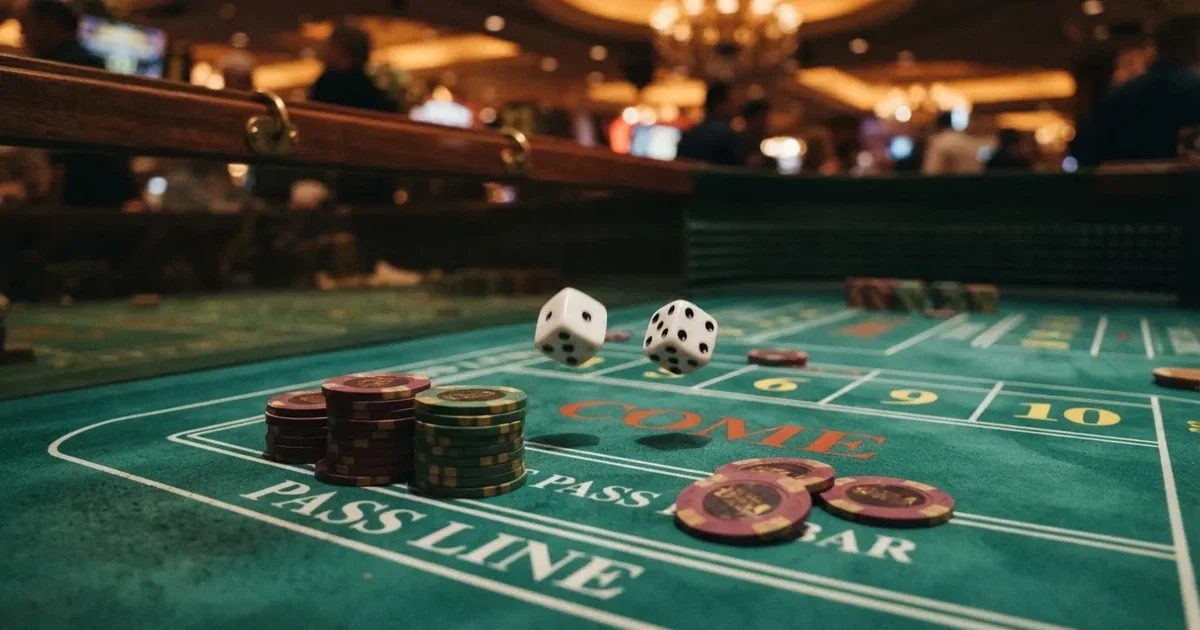
The shape of the offering is narrow. Baccarat, blackjack and roulette carry most live-dealer lobbies. Baccarat is the deepest in variants — punto banco (the version most online tables run) banks every hand and plays out both sides by fixed drawing rules; chemin de fer is a two-player variant that emerged in the late 19th century. Blackjack comes in its own long-tail: Spanish 21 strips the tens from the shoe, Double Exposure deals both dealer cards face up, Blackjack Switch lets the player swap cards between two hands, and Super Fun 21 allows up to four splits. Craps turns up in some live lobbies too, with Pass/Come at a 1.41% house edge against the player.
The player pays for that realism in time and attention. A live round of blackjack takes longer than a digital click-through because there is a real dealer and a real shoe; a live baccarat table runs at the pace of a real shoe; a roulette wheel takes its spin between hands. The trade is what most readers who already play digital RNG tables are weighing: slower play, higher social cost, and a closer match to a real casino floor.
The supplier the term “live casino” usually points to
Evolution is the name that comes up around live casino for a reason. Founded in 2006 by Jens von Bahr and Fredrik Österberg, the company reached 100 live tables at its Riga studios in 2013 — the largest single-site casino operation in Europe at the time — and opened a Malta studio in 2014. It acquired NetEnt in December 2020, and the wider Evolution Group now also owns Red Tiger, Big Time Gaming, Nolimit City and Ezugi. By its own count, more than 700 gambling platforms worldwide carry its live casino games, streamed around the clock from its studios.
The way that matters to a reader in Australia is straightforward. If an offshore casino claims a “live casino” section, the studio feed behind it is almost certainly Evolution — or one of the studios it owns. The branded live game shows the player’s table limits, side bets and dealer presentation; the operator running the brand is just the storefront. For an Australian reader, that distinction is academic in one sense (the storefront is the party that the IGA names) and informative in another (it tells you the catalogue the offshore casino is most likely drawing from).
Where live casino legally exists in Australia
It exists on the floor of a licensed Australian casino. Crown Melbourne runs three approved baccarat variants — Traditional Baccarat, Crown Baccarat and 2 to 1 Baccarat — under the supervision of the Victorian Gambling and Casino Control Commission, which took over from the VCGLR on 1 July 2022. The same regulator approves and logs changes to Crown Melbourne’s blackjack rules, including a December 2024 renaming of the “Perfect Pairs” side bet to “Crown Pairs” and a March 2024 introduction of a “Free Bet” option paired with a new “Pot of Gold” side bet. The framework is older than the regulator’s current name: Victoria’s Casino Control Act 1991 already required the commission to approve any rules for table games and any change to those rules before they hit the floor. New South Wales takes the same line under section 66 of the Casino Control Act 1992: a casino must not run a game such as baccarat unless the game and its rules are approved, and the operator must hand a copy of the approved rules over to a patron on request.
These are the only legal live casino tables for an Australian resident. Both venues — Crown Melbourne and Crown Sydney, plus The Star in Sydney and The Star Gold Coast on the eastern seaboard — operate under state casino licences and run real dealers at real tables. The catch is that they require physical presence, photo identification at the door and dress codes; they are not substitutes for a browser tab.
The Australian legal frame around online live casino
The Interactive Gambling Act 2001, as strengthened by the Interactive Gambling Amendment Act 2017, makes it a prohibited interactive gambling service to provide online casino games, online pokies or in-play betting to a person who is physically in Australia. What is licensable is wagering on races and sporting events placed before the event, lotteries and keno — in practice licensed by the Northern Territory Racing and Wagering Commission, which regulates 52 online bookmakers including Sportsbet, Bet365 and Ladbrokes, and which has no full-time staff and meets once a month in Darwin. The minimum age for any of it is 18.
The prohibition targets the provider, not the individual player. A reader who lands on an offshore live casino from Australia is not personally liable under the IGA; the operator offering the game is. The consequence is asymmetric in the other direction: an offshore site offers no Australian consumer protection, no complaints body, and no recourse if a withdrawal stalls or disappears. The site can also be blocked by Australian ISPs at the regulator’s direction with a balance still on the account — and that is exactly the pattern the ACMA has been running for years.
Payment rules tighten the screws further. Since 11 June 2024, credit cards, credit-related products and digital currency cannot be used to fund a licensed Australian online wagering account, with penalties of up to A$247,500 for operators that breach the rule. Legal funding routes for licensed wagering are debit card, bank transfer, PayID/Osko and BPAY. A live casino site asking an Australian customer for a credit card or a crypto deposit is, by definition, not operating under the Australian regime — which is not the same as saying it is safe, because none of those checks reach the offshore operator.
The 2026 reform is worth knowing about, though it is not yet in force on a 2026 page. The Interactive Gambling Amendment (Gambling Reform) Bill 2026 passed Parliament on 19 August 2026, and its advertising and inducement measures commence on 1 January 2027. As of 2026 it is law with a start date; as of 1 January 2027 it bites. The reason this matters for a live-casino reader is that the inducement rules are aimed at the kind of welcome bonus and promotional language offshore operators use to draw Australian sign-ups — the kind of language a reader searching for “live casino welcome bonus” will meet dozens of times over.
How the ACMA has been enforcing against offshore operators
The ACMA’s enforcement record is the page’s main source of empirical material on what is happening at the offshore end of the market. Three actions make up the spine of it: blocking requests to Australian internet service providers, formal warnings to operators, and the slow drip of services that decide Australia is not worth the legal risk and leave the market voluntarily.
On the blocking side, by June 2026 the ACMA had directed Australian ISPs to block 1,751 illegal gambling and affiliate marketing websites since the first blocking request in November 2019, and more than 230 unlicensed gambling services had left the Australian market since enforcement was strengthened in 2017. The most recent published round, dated 26 June 2026, blocked 12 more sites in one pass: 7Signs, ChromaBet, Donbet, Duospin, Freshbet, Slots Gem, Jacks Club, Lucky Start, Pointsbetz.com, Spinrise, Vinyl Casino and Wildsino. Blocking is administrative rather than a criminal conviction; it does not destroy a brand, but it makes the brand unreachable for Australian customers on Australian networks and pushes the brand onto mirror domains and affiliate redirects.
On the formal-warning side, the ACMA publishes each warning with the operator’s name, the brand at issue and the date. The pattern that runs through 2026 is one warning per operator, occasionally one operator covering several brands. Hollycorn N.V. took a warning over Sky Crown and Blue Leo in September 2022; Dama N.V. took a warning over six brands in May 2022 — Bambet, Dazard, Level Up, Rocketplay, Wild Tornado and Cobra Casinos; the same Dama N.V. took further warnings over Woo Casino in March 2025 and Spirit Casino in May 2025; TechSolutions (CY) Group Limited and TechSolutions Group N.V. took a 2022 warning over Bizzo Casino, and Consolutetish S.R.L. took a July 2025 warning over both National Casino and Bizzo Casino; Bamboo Media took a July 2025 warning over Ignition Casino; EOD Code SRL took a February 2025 warning over Instant Casino; Ryker B.V. took an April 2026 warning over Jackbit and CasinOK; Sterplay Holding Ltd took an April 2025 warning over Casino Intense; Pulsup Ltd took a March 2026 warning over Rocketplay.com.au.
The list is long enough to make the point on its face: no warning from the ACMA is rare, and the operators appearing on it have almost always appeared before under a different brand or a different corporate entity. Each new warning is, in practice, the regulator announcing that the new wrapper does not change the underlying service. The blocking rate over the period from the first blocking request in November 2019 to the June 2026 update gives a sense of scale: roughly 1,751 blocked sites across roughly six and a half years, with a clear step-change in pace after the 2017 amendments strengthened enforcement. The annual figure varies because blocking rounds come in clusters rather than at a steady drip; a single round can account for a dozen or more sites, and the regulator publishes results in batches. The right way to read the headline is as a band rather than a single rate: somewhere between 200 and 300 new blocked sites per year across the active period, accelerating as the ACMA automated the request process and as operators spun up new mirror domains faster than the regulator could log them. The takeaway for a reader is not the precise count — the count is approximate and time-stamped — but the trajectory: more sites blocked each year, more operators taking formal warnings, more services leaving the market altogether.
A useful framing for an Australian reader is what the offshore brand does about the warning, because the ACMA cannot shut a brand down from outside its jurisdiction. Some warnings are followed by the brand restricting Australian registrations; some are followed by the operator ignoring the warning and getting blocked a few months later; some are followed by the brand simply reincorporating under a new parent and relaunching. The Hollycorn N.V. warning over Sky Crown and Blue Leo in September 2022 and the July 2025 Consolutetish S.R.L. warning over Bizzo Casino — a brand already warned in 2022 under TechSolutions — sit at the two ends of that arc. The first is an early, single warning on a brand that may or may not have continued; the second is the ACMA naming the same brand twice under different corporate owners, which is the cleanest signal of the regulator’s patience running out.
On the market-leaving side, the ACMA’s own count is that more than 230 unlicensed gambling services have left the Australian market since 2017. “Left” here is a soft word — it covers operators that have wound down Australian-facing operations, restricted sign-ups, geo-blocked the country or simply failed to respond to the warning and moved on. The figure is the regulator’s own and it is the closest thing to an honest answer to the question of how much the prohibition actually squeezes the supply side.
The aggregate loss to the illegal market is significant. H2 Gambling Capital’s 2025 report estimates that Australians lose around A$3.9 billion a year to illegal gambling sites, with the share of gambling going through legal channels falling from 74% in 2021 to 64%. The illegal share of the Australian market is, on that basis, the third of gambling spend that has leaked out of the regulated channel in five years. For a live-casino reader that figure is the one piece of context that explains why the offshore market looks so large and so persistent: there is money flowing into it, and operators keep entering it because there is money to be made. The prohibition has not closed the market; it has driven the market offshore.
The brands the ACMA has named — and what that does and does not say about them
The remainder of this page works through eleven brands the ACMA has acted against. None of them are licensed to offer live casino games to Australian customers — that product is not licensable anywhere in Australia — and the only reason a brand appears on this page is that the regulator has published a formal warning naming it. None of the brands below are recommended as a place to play. Each one is described in the terms the ACMA itself has put on the record, with whatever verifiable facts about the brand research has surfaced beyond that. A brand with no verified facts beyond the ACMA warning gets the warning as the whole story. A brand that surfaces in a third-party listing gets the listing named, not used as a recommendation.
1. RocketPlay
The ACMA’s most recent published warning naming RocketPlay is dated March 2026 and runs against Pulsup Ltd, the operator behind Rocketplay.com.au. A separate earlier Dama N.V. warning from May 2022 covered a longer list of brands that included Rocketplay. The pattern is what the ACMA has shown elsewhere: a brand warned under one parent and then warned again under a new corporate wrapper once the brand moves on. For an Australian reader the situation RocketPlay sits in is the same as every other brand on this page: online casino games are not licensable in Australia, the ACMA has named the operator, and the site has no Australian consumer protection framework behind it. The other verifiable facts about the brand are sparse — research carries no operator-side or catalogue-side data to put beside the warning.
2. Level Up Casino
Level Up Casino was named in the ACMA’s May 2022 warning to Dama N.V., which covered six brands at once: Bambet, Dazard, Level Up, Rocketplay, Wild Tornado and Cobra Casinos. Beyond the regulator’s own publication, the brand surfaces in third-party listings — a slot and casino content directory lists Level Up among the operators carrying its games. The directory’s listing is the kind of fact a reader can use as a starting point and not as an endorsement; the directory catalogues what is offered, not whether the offer is lawful in any given jurisdiction.
3. Woo Casino
Woo Casino was named in the ACMA’s March 2025 warning to Dama N.V.. Dama N.V. is one of the most-warned operators in the ACMA’s published record — the May 2022 warning, the March 2025 warning and a separate May 2025 warning to Dama N.V. over Spirit Casino together form a clean arc of the regulator chasing the same corporate parent across multiple brand launches. Woo Casino is part of that arc, and the warning itself is the only verified fact about the brand this page can carry.
4. Spirit Casino
Spirit Casino was named in the ACMA’s May 2025 warning to Dama N.V.. The same operator group carries the May 2022 warning over a six-brand list that did not include Spirit, and the March 2025 warning over Woo Casino. The brand is, like the others in the Dama group, an offshore casino without any path to an Australian licence for live dealer games. No verifiable third-party facts about the brand are available beyond the warning.
5. National Casino
National Casino was named in the ACMA’s July 2025 warning to Consolutetish S.R.L.. The brand surfaces in a third-party encyclopaedia entry as a casino brand of the same corporate lineage — listings, not endorsements. The point of the listing is that the brand has a footprint in the international gaming press, and the point of the ACMA warning is that this footprint does not extend a lawful path to Australian customers.
6. Bizzo Casino
Bizzo Casino has been named twice. The first warning was issued in 2022 to TechSolutions (CY) Group Limited and TechSolutions Group N.V., the parent group at the time; the second was issued in July 2025 to Consolutetish S.R.L., the parent group that had taken over the brand in the interim. Two warnings over the same brand under two different corporate parents is the ACMA’s clearest signal that the regulator has run out of patience with a brand: even after a 2022 warning, the brand relaunched under a new corporate wrapper and continued offering the same prohibited service. For a reader comparing offshore options, Bizzo is the cleanest case study on this list of what a formal warning from the ACMA does and does not do.
7. Ignition Casino
Ignition Casino was named in the ACMA’s July 2025 warning to Bamboo Media. The warning is the verified fact. No third-party listing data for the brand sits beside the warning, and the only safe description of the brand’s Australian-facing status is the ACMA’s own publication.
8. Instant Casino
Instant Casino was named in the ACMA’s February 2025 warning to EOD Code SRL. EOD Code SRL appears in the ACMA’s published record for the first time with this warning; Instant Casino is the only brand on the operator’s record. The warning itself is the whole story this page can carry about the brand.
9. Jackbit
Jackbit was named in the ACMA’s April 2026 warning to Ryker B.V., alongside CasinOK. The pairing matters — it tells the reader that the operator behind Jackbit runs at least one other casino brand under the same warning, and the ACMA’s blocking round in June 2026 included no Jackbit domain specifically, which means either the brand sits on a domain not yet on the regulator’s published list or the brand has already moved on to a new corporate wrapper. Either way, the warning is the verified fact.
10. Casino Intense
Casino Intense was named in the ACMA’s April 2025 warning to Sterplay Holding Ltd. The brand surfaces in third-party listings — an ABC News piece on the offshore casino market and the ACMA’s own publications reference the brand in passing — alongside a Crown Melbourne page that is not directly about Casino Intense at all but is referenced as part of the surrounding market context. The listing sources are useful as background; they are not endorsements.
11. Sky Crown
Sky Crown was named in the ACMA’s formal warning to Hollycorn N.V. over its Sky Crown and Blue Leo casino services. The September 2022 warning is the earliest in this list and one of the early warnings in the post-2017 enforcement period. The Hollycorn group is also one of the better-known corporate families in the offshore market, and the ACMA warning is one of several naming the group’s brands over time. The verified fact on the page is the warning.
A summary table of the ACMA record for this set
| Brand | ACMA action and date | Operator named by the ACMA | Other verified fact |
|---|---|---|---|
| RocketPlay | Formal warning, March 2026 (Pulsup Ltd); earlier May 2022 (Dama N.V.) | Pulsup Ltd (March 2026); Dama N.V. (May 2022) | None beyond the warnings |
| Level Up Casino | Formal warning, May 2022 | Dama N.V. | Listed by a third-party slot and casino content directory |
| Woo Casino | Formal warning, March 2025 | Dama N.V. | None beyond the warning |
| Spirit Casino | Formal warning, May 2025 | Dama N.V. | None beyond the warning |
| National Casino | Formal warning, July 2025 | Consolutetish S.R.L. | Listed in a third-party encyclopaedia entry |
| Bizzo Casino | Formal warnings, 2022 (TechSolutions) and July 2025 (Consolutetish S.R.L.) | TechSolutions (CY) Group Ltd and TechSolutions Group N.V. (2022); Consolutetish S.R.L. (July 2025) | None beyond the two warnings |
| Ignition Casino | Formal warning, July 2025 | Bamboo Media | None beyond the warning |
| Instant Casino | Formal warning, February 2025 | EOD Code SRL | None beyond the warning |
| Jackbit | Formal warning, April 2026 (with CasinOK) | Ryker B.V. | None beyond the warning |
| Casino Intense | Formal warning, April 2025 | Sterplay Holding Ltd | Referenced in ABC News and ACMA background pieces |
| Sky Crown | Formal warning, September 2022 (with Blue Leo) | Hollycorn N.V. | None beyond the warning |
The pattern the table is for is the pattern of operator names — Dama N.V. alone appears in three of the rows; Consolutetish S.R.L. appears twice under different dates; TechSolutions turns up under its old name on Bizzo’s first row and its new name on the second. The point is not that any of these operators are unusual. The point is that they are typical, and the typical pattern is one warning per brand per operator, with operators running through three or four brand launches before the regulator catches up.
Where the rest of the market sits
The blocking rate and the loss figure are the two numbers a reader should hold side by side. The ACMA has blocked 1,751 illegal sites since November 2019 and reports that more than 230 unlicensed services have left the Australian market since 2017. At the same time, H2 Gambling Capital estimates Australians are still losing A$3.9 billion a year to illegal sites, and the legal channel’s share of total gambling spend has fallen from 74% in 2021 to 64%. The two figures are not in tension: the regulator is moving more sites off Australian internet than ever, and the illegal market is still pulling in more money than ever. The way that is possible is that offshore operators launch new mirror domains faster than the ACMA can log them, and the underlying demand from Australian customers does not evaporate when one brand gets blocked. That is the supply side of what a live-casino reader is looking at.
What is actually available to an Australian reader who wants live play
The legal options in Australia for live casino play are licensed land-based casinos and licensed pokies venues. The Crown complex in Melbourne runs live baccarat tables under VGCCC-approved rules; Crown Sydney and The Star Sydney run their own approved table games under NSW Casino Control rules; The Star Gold Coast completes the eastern-seaboard set. Each requires the player to be physically present and to clear entry requirements: photo ID, age 18 or over, dress code, and a member card or sign-in at the desk. A reader who has been searching for “live casino app” or “mobile live casino” will find that those venues do not substitute — there is no Australian-licensed live-stream casino product that ships to a phone. What the venues offer is the same product (real dealer, real cards, real wheel) on a real floor, not a browser.
For Australian online play the legal channels are wagering on racing and sport before the event, lotteries and keno. The Northern Territory Racing and Wagering Commission regulates 52 of those operators; funding has to run through debit card, bank transfer, PayID/Osko or BPAY since the credit-card and crypto ban took effect on 11 June 2024; the minimum age is 18; the provider is regulated, and the player has recourse to Australian complaints bodies if the operator misbehaves. None of those channels offer live dealer blackjack, roulette or baccarat. They are not substitutes for a live casino; they are a different product.
For Australians who want a barrier between themselves and any form of online gambling — including offshore live casino — BetStop is the national self-exclusion register, live since August 2023. It binds every Australian-licensed online and phone wagering service, and a punter on the register cannot open a new account or place a new bet with any operator covered by the regime. The catch is the same catch as the rest of the legal framework: an offshore live casino is not on BetStop’s list, and self-exclusion under BetStop does not extend to a site the ACMA has warned about twice. What BetStop does is close the Australian-licensed side of the wagering market to a self-excluded player, which is most of what the legal market looks like for an Australian reader.
The National Gambling Helpline (1800 858 858) is free and runs 24 hours a day, with online chat at Gambling Help Online. It is the line for a punter who is worried about their own play or someone else’s; it is not a regulator and not a complaints body.
Bonuses and welcome offers — what they cost in this market
The marketing language around live casino welcome bonuses is loud. The standard offshore pitch is a deposit match on the first deposit, sometimes paired with a free spin package on a slot catalogue, with a wagering requirement — a turnover multiple — attached that the player has to clear before any winnings become withdrawable. None of the brands on this page have terms of that kind published in any form this research can verify, because the only sources for those terms are affiliate marketing pages, and affiliate pages are not a usable source for a reader comparing offers. The honest description of the market is therefore qualitative: every brand that targets Australian players offers some version of a deposit match, and the wagering requirement is always present, and the exact multiple is what a reader would need to verify on the operator’s own terms page before claiming — and that page is, by definition, on an offshore domain the ACMA has named.
The arithmetic a reader needs to do on an offshore bonus is the same arithmetic a reader would do on any bonus, and the move is the same on both sides. Wagering requirement is the multiplier — a 35x wagering requirement on a matched deposit means the player has to run the deposit amount plus the bonus amount through 35 times the bonus amount in bets before any winnings can be withdrawn. The expected cost of clearing the requirement is a function of the RTP of the games the player runs it through. Slots in the 96% range give a 4% house edge over turnover, so 35x turnover at 4% house edge costs the player 35 × 4% = 140% of the bonus amount in expected loss. Live dealer games sit at a lower house edge — 1.06% on the Banker bet in baccarat, 0.28% on blackjack with optimal Las Vegas Strip rules — which makes them technically a cheaper way to clear a wagering requirement, but also slower, and most live casino bonuses restrict the games that count toward wagering at a lower contribution rate (often 10% or less) than slots. The cheaper house edge is, in practice, usually discounted back to the higher cost by the contribution rule. A reader who wants to compare welcome offers is comparing these three numbers — the match percentage, the wagering multiple, and the live-game contribution rate — and the comparison almost always comes out against the live game as a clearing vehicle for the bonus. The bonus itself is a marketing device that moves the player’s expected loss onto a longer, harder-to-track timeline; it is not a free bet.
The sharper point on bonuses in the Australian context is the 2026 reform timeline. The Interactive Gambling Amendment (Gambling Reform) Bill 2026 passed Parliament on 19 August 2026, with the advertising and inducement measures commencing on 1 January 2027. After that date, the kind of welcome bonus language that fills an offshore live casino’s homepage becomes a regulated matter under Australian law for any operator that targets Australian customers — which is, by definition, every operator the ACMA has named. The exact shape of the regulation depends on the implementation rules; the broad direction is that inducements tied to prohibited interactive gambling services will be policed as the services themselves are. That does not change the IGA’s existing prohibition, which is already in force; it adds another front on which the regulator can move against an offshore operator.
The mobile experience, and what is and is not on it
A live casino app, in the international sense, is a download or a mobile-optimised browser tab that streams the same Evolution-style live feed a desktop player sees. The offshore operators on this list — RocketPlay, Level Up Casino, Woo Casino, Spirit Casino, National Casino, Bizzo Casino, Ignition Casino, Instant Casino, Jackbit, Casino Intense, Sky Crown — all run mobile browser versions of their sites; some offer dedicated apps through the app stores or as direct downloads; the regulatory situation of those apps is the same as the desktop version: the ACMA has warned the operator, the domain may be on a blocking list, and the app gives no Australian consumer protection that the underlying site does not. The bet size, the game catalogue and the live-dealer feed do not change between desktop and mobile; what changes is the interface, the latency on a mobile network, and the temptation to keep a session running on a phone the player keeps in a pocket. None of that is a defence the regulator’s record recognises.
The closest legal Australian equivalent to a live casino app on a phone is the apps run by the licensed Australian wagering operators — Sportsbet, Bet365, Ladbrokes and the rest of the 52 under the Northern Territory Racing and Wagering Commission’s regulation. These are racing and sports wagering apps; they do not offer live dealer blackjack, roulette or baccarat; they are not a substitute for what an offshore live casino offers. The two product categories are different, and the legal frame around them is different.
A reader comparing mobile live casino options in Australia is, in practice, comparing two product categories: the licensed Australian wagering apps, which are lawful but offer a different product, and the offshore live casino apps, which offer the product the reader is searching for but are not lawfully offered to Australians. The decision the comparison asks for is which side of that line the reader is willing to sit on, and that is not a decision this page can make for the reader.
The blocking rate, as a number with a condition
The ACMA’s published record gives two anchors: 1,751 blocked sites since the first blocking request in November 2019, and the most recent batch of 12 sites blocked on 26 June 2026. The arithmetic the page can run on these anchors is approximate because the regulator publishes in batches, not on a calendar, and the early years of the period carried fewer blocks per year than the later ones. Across the active period — roughly six and a half years — the headline rate works out to somewhere between 250 and 300 blocked sites per year on average, with a clear acceleration after the 2017 amendments strengthened the ACMA’s hand and the regulator’s process for issuing blocking requests became faster.
The right way to read that figure is as a band, not as a single number. The batched publication pattern means the actual annual figure swings from year to year: a year with two blocking rounds might land around 50 blocked sites, while a year with eight rounds can clear 400. The recent batches have been heavier than the early ones, which pulls the average up. The figure to take away is not a precise rate but a trajectory: the ACMA is blocking more sites per year now than it was in the first three years after 2017, and there is no published sign of that pace slowing. The condition on the figure is that “blocked” here means “added to an Australian ISP-level block list,” which is not the same as “taken down.” A blocked site can re-emerge on a new mirror domain within weeks, and the regulator’s published record does not always reflect that re-emergence until the next blocking round.
A note on the broader market
The ACMA’s enforcement record is a record of what the regulator has done, not a complete list of what is happening in the offshore market. The regulator names operators it has investigated and warned; it does not publish a directory of every offshore live casino targeting Australian customers. The brands on this page are eleven of those the regulator has named. There are more, and the ones the regulator has not yet named are not, by virtue of that, safer than the ones it has. The H2 Gambling Capital figure of A$3.9 billion in annual losses to illegal sites is the cleanest reminder that the named brands are a sample of a market, not the market itself.
The share-of-gambling figure is the other reminder. Legal channels carried 74% of Australian gambling spend in 2021 and 64% in the latest H2 estimate. The illegal share has grown, and the growth has happened in the period when the ACMA’s blocking rate has accelerated. The two trends are not a contradiction — the ACMA is moving more sites, and the illegal market is moving more money, because the underlying demand has not shrunk and the operators have learned to relaunch faster than the regulator can log them.
Closing position
For an Australian reader who has reached this page, the position the material supports is straightforward. Live casino play is a real product, with real variants — baccarat, blackjack, roulette, craps — at real house edges that range from 1.06% on baccarat’s Banker bet to over 14% on a Tie bet, with blackjack at 0.28% under optimal rules. The legal path to that product from inside Australia runs through Crown Melbourne, Crown Sydney, The Star Sydney and The Star Gold Coast, each requiring the player to be physically present. The legal path through a browser does not exist for live casino games — the Interactive Gambling Act 2001 prohibits offering them online to anyone in Australia, the ACMA has been blocking and warning offshore operators for years, and the offshore brands a reader will find in a search result are exactly the brands the regulator has named. The payment rules, the age requirement and the consumer protection framework all line up on the same side of that line. A reader who wants to sit on the other side of it is choosing an unregulated offshore market with no Australian recourse and no BetStop coverage, and the ACMA’s record shows what that market looks like in practice — operators warned once, relaunching under new corporate names, warned again, and still accepting Australian sign-ups. The choice is the reader’s. The choice’s shape is the page’s job to describe, and that is what this page has done.
Frequently asked questions
What makes a live casino game different from a standard online slot?
A live casino game is streamed in real time from a studio or a casino floor, with a real dealer handling real cards, a real roulette wheel or a real dice toss. A standard online slot is a digital game driven by a random number generator, with no dealer and no real-world event. The pace is slower on a live table because there is a real shoe or wheel in the loop; the rules of the game determine the house edge, not the random number generator. Baccarat, blackjack and roulette are the most common live dealer games an online casino offers, and the same games exist as RNG-driven digital versions that play faster and run on different mathematics.
Who is Evolution and why does its name come up around live casino games?
Evolution is the dominant live-casino studio supplier, founded in 2006 and headquartered in Sweden; it runs hundreds of live tables from studios in Riga and Malta and is now the parent company of NetEnt, Red Tiger, Big Time Gaming, Nolimit City and Ezugi. When an offshore casino advertises a “live casino” section, the studio feed behind it is most often Evolution’s — or one of the studios Evolution owns. That is the reason the name comes up: Evolution is the supplier, not the operator, and the offshore casino brand is the storefront on top of that feed.
Is it legal for an online casino to stream live dealer games to players in Australia?
No. Under the Interactive Gambling Act 2001, providing online casino games — including live dealer blackjack, roulette and baccarat — to a person physically in Australia is a prohibited interactive gambling service, and no Australian state or territory issues a licence for that product. The ACMA enforces the prohibition by issuing formal warnings to operators, blocking sites through Australian ISPs and publishing its actions in a public register. An Australian player on an offshore live casino site is not personally prosecuted under the IGA — the law targets the provider — but the offshore site offers no Australian consumer protection and can be blocked with a balance on the account.
Can a live casino app be used on a mobile browser?
Most offshore live casino operators run their sites as mobile-responsive browser tabs, and some offer dedicated apps through app stores or as direct downloads. The legal situation is the same as the desktop version of the same site: the ACMA has warned the operator, the domain may be on a blocking list, and the app gives no Australian consumer protection the underlying site does not. The licensed Australian alternative is the racing and sports wagering apps under the Northern Territory Racing and Wagering Commission — these are lawful but offer a different product and do not include live dealer casino games.
What welcome offers are commonly advertised for live casino play?
The standard offshore pitch is a deposit match on the first deposit, sometimes paired with a free spin package, with a wagering requirement attached. The wagering requirement is the multiplier the player has to run the deposit and bonus amount through before any winnings can be withdrawn — a 35x wagering requirement on a matched deposit means 35 times the bonus amount in bets. The expected cost of clearing the requirement depends on the games the player runs it through; slots in the 96% RTP range give a 4% house edge over turnover, while live dealer games sit at a much lower house edge but are usually weighted at a lower contribution rate (often 10% or less) toward the wagering requirement, which makes them a more expensive way to clear the bonus in practice. None of the brands on this page have terms that this research can verify from a non-affiliate source; a reader comparing offers would need to read the operator’s own terms page before claiming.
Published by the Pokies Info Hub team.