
Tether casinos in Australia: where a stablecoin deposit still meets a prohibited service
A Tether casino, for an Australian resident, is the same activity as any offshore online casino — only the rail the deposit travels on has changed. The Interactive Gambling Act 2001 does not police the token, it polices the service, and what it polices is offering online casino games or in-play betting to a person physically in Australia. Every brand below has received a formal ACMA warning over exactly that, on a named operator and a named date. What this page is for is laying the whole picture out — the on-chain mechanics, the legal frame, the responsible-gaming reality, and the warning record — so a reader who is going to make the decision can see what they are actually deciding between. The data in this guide is current as of 29 October 2026, checked against the ACMA’s own register of formal warnings and blocking requests. Tether casinos in Australia — More on this topic at pokies info .
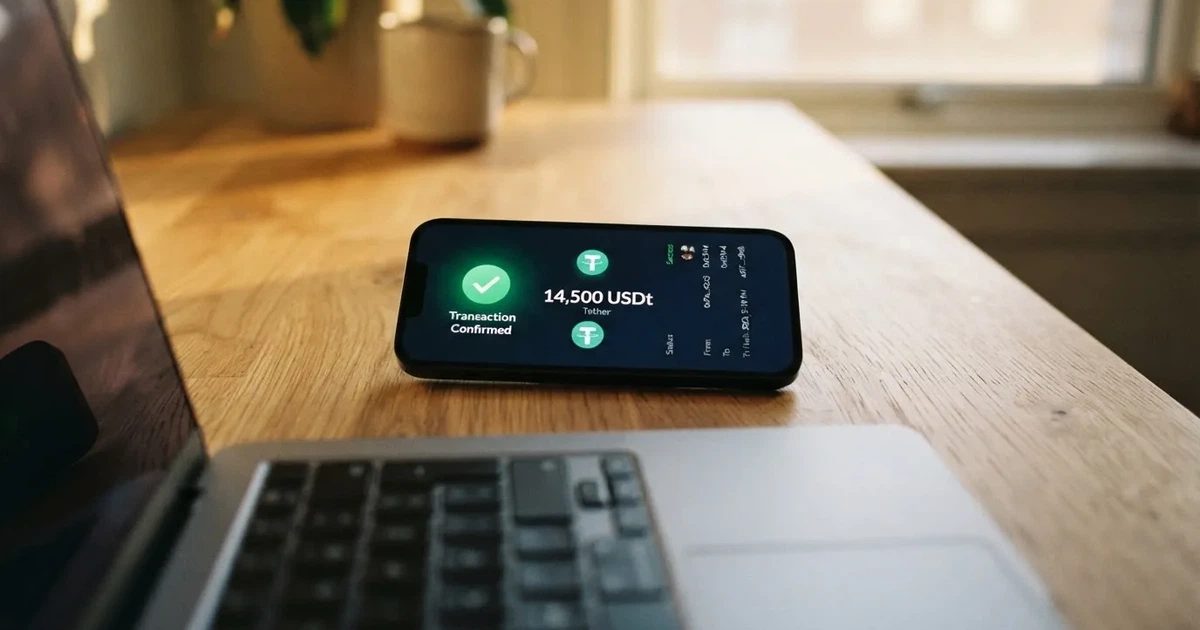
Table of Contents
- Responsible gaming on a stablecoin account
- How a USDT deposit actually settles at an offshore casino
- Legality of a Tether casino in Australia
- What the ACMA warning list looks like across 2026
- A note on the blocking rate, since 2026 began
- Tether’s own history, briefly
- The eleven brands, in order
- What this all means for a reader
- Frequently asked questions
Responsible gaming on a stablecoin account
The first thing a Tether deposit does is remove one specific kind of loss: the kind that comes from the coin moving while it sits in your wallet waiting to be sent. A$1,000 in USDT today is, in nominal terms, A$1,000 tomorrow — that is the contract Tether markets, and it is the reason a player who is thinking about gambling in crypto reaches for it rather than Bitcoin or Ether. Removing that volatility, though, does nothing to remove the gambling loss that is the reason the deposit is being made in the first place. The house still has its edge. A budget that was tight at the moment the player pressed confirm is the same budget when the balance lands at the casino, and tighter still when the first losing session is over.
A responsible approach on a Tether account looks much the same as it does on any other payment rail, with two wrinkles. First, the speed at which a new deposit can be funded is much higher than it would be on a bank transfer — a player who has a wallet open can move stablecoins in minutes — which means a player who has decided to stop for the night has more chances to talk themselves out of that decision. Second, Tether deposits are not visible to any Australian tool: BetStop, the National Self-Exclusion Register, binds only operators licensed in Australia, and an offshore casino is not on it. A self-exclusion that the player has registered does not extend across the border, and the only thing stopping the next deposit is the player’s own decision at the moment they are about to make it. The National Gambling Helpline is 1800 858 858, free, 24 hours, with chat at Gambling Help Online; that line works regardless of which rail the deposit runs on.

A Tether account also sits outside any Australian complaints body. If a withdrawal is refused, the only recourse is the casino’s own internal review, then whatever regulator issued the licence the casino displays — Curaçao, Anjouan, Costa Rica — none of which has a meaningful Australian-facing dispute path. A balance sitting on an offshore site is a balance that the ACMA can have blocked out from under it by directing Australian ISPs to take the site offline, as it has done to 1,751 domains since November 2019. That is the regulatory reality of the rail, and it is the frame every section that follows sits inside.
How a USDT deposit actually settles at an offshore casino
The mechanics of a Tether deposit are worth understanding clearly, because they are what gives the rail its appeal and what gives it its own risk. Tether launched in 2014 — initially under the name Realcoin, issued that October on the Bitcoin blockchain via the Omni/Mastercoin protocol — and was rebranded to Tether in November of the same year. The token is pegged to fiat currencies, most commonly the US dollar, and as of January 2024 the tokens operate across fourteen blockchain protocols, including Ethereum, Tron, Solana, Polygon, Avalanche, Algorand, EOS, Celo, Near, Liquid Network, Bitcoin Cash, Statemint, Tezos and Bitcoin itself via Omni. That matters at the cashier screen, because the casino is going to ask which network the deposit is arriving on, and a token sent on the wrong one is generally a token that cannot be recovered.
The path a USDT deposit takes has three steps. The player initiates a transfer from their wallet to the address the casino provides. That transaction is broadcast to the network chosen, where it waits for inclusion in a block — on a proof-of-work chain like Bitcoin the average block time is around ten minutes, on Tron and Solana it is closer to seconds, but the figure is always an average, never a guarantee. Once the block is mined, the casino’s wallet software registers the confirmation count. Most casinos credit after one or two confirmations for fast networks and three or more for slower ones, but the deposit only becomes withdrawable after whatever additional confirmation floor the cashier sets. The transaction is publicly visible on the chain from the moment it is broadcast; the player’s name is not attached to it, but the wallet address is, and that address is permanently linked to every transaction it has ever touched.
A Tether deposit sent on the wrong network is, in most cases, a deposit lost. The Omni tether (on Bitcoin) cannot be retrieved by an Ethereum-address cashier, an ERC-20 USDT sent to a TRC-20 address will not register at the casino, and the tokens effectively sit in a contract address that no one at the casino can sign for. Some operators will try to recover stranded deposits manually, but the time that takes is measured in weeks and the outcome is uncertain; a player who sends USDT should double-check the network dropdown before signing the transfer. It is the most common concrete way a stablecoin deposit fails, and it is not a problem that exists on a bank transfer.
Legality of a Tether casino in Australia
There is no such thing as a licensed Tether casino serving Australian residents, because there is no such thing as a licensed online casino serving Australian residents. The Interactive Gambling Act 2001, as tightened by the Interactive Gambling Amendment Act 2017, makes it an offence to provide online casino games, online pokies or in-play betting to a person in Australia. State and territory regulators do not license those products. The only products that are licensed, in practice by the Northern Territory Racing and Wagering Commission (NTRWC) for most of the 52 licensed Australian bookmakers — Sportsbet, Bet365, Ladbrokes among them — are wagering on races and sport placed before the event, lotteries and keno. A casino displaying a Curaçao or Anjouan licence is licensed somewhere, just not anywhere that counts for an Australian player.
The regulator that enforces this is the ACMA — the Australian Communications and Media Authority. The ACMA investigates, issues formal warnings, and can direct Australian internet service providers to block illegal services. According to the ACMA as reported in June 2026, a total of 1,751 illegal gambling and affiliate marketing websites had been blocked since the first blocking request in November 2019, and more than 230 unlicensed gambling services had left the Australian market since enforcement was strengthened in 2017. In a single round reported on 26 June 2026 the ACMA asked Australian ISPs to block another twelve sites: 7Signs, ChromaBet, Donbet, Duospin, Freshbet, Slots Gem, Jacks Club, Lucky Start, Pointsbetz, Spinrise, Vinyl Casino and Wildsino. The pace has not slowed; the list has grown by dozens every quarter.
What the ACMA’s actions do not do is prosecute the individual player. The IGA targets the provider, not the punter. A player who deposits Tether at an offshore site is not personally at risk of an Australian criminal penalty. What the player does not get, either, is the protection an Australian licence would have offered: no Australian complaints body, no recourse if a withdrawal is refused, no BetStop coverage, no guarantee the site will be reachable tomorrow. H2 Gambling Capital’s 2025 report estimates that Australians lose about A$3.9 billion a year to illegal gambling sites, and that the share of gambling going through legal channels fell from 74% in 2021 to 64% — a slide of ten percentage points in four years, with the difference almost entirely absorbed by offshore operators.
A second layer applies specifically to the rail. From 11 June 2024, Australian online wagering service providers have been banned by law from accepting cryptocurrency such as Tether, credit cards, or credit-linked digital wallets as payment, a requirement enforced by ACMA with penalties of up to $247,500 for non-compliance. The legal deposit routes for a licensed Australian wagering operator are debit card, bank transfer, PayID/Osko and BPAY. A site asking an Australian player for a USDT deposit is, by definition, operating outside the Australian rules — that one fact settles both the activity and the rail.
On the tax side, the ATO classifies crypto assets as property, not money or foreign currency, so most disposals — selling for AUD, swapping for another crypto, or spending it — are capital gains tax events. A gambling loss that is funded by a stablecoin deposit and the stablecoin itself comes from a wallet that already holds a CGT-bearing asset, and a player who closes the wallet out to fiat will have a CGT event on the disposal. Recreational gambling winnings are not assessable income and losses are not deductible unless the person is carrying on a business of gambling; the ATO’s own language on this is “check with the ATO” for individual situations.
What the ACMA warning list looks like across 2026
The brands in the comparison below are not a ranking. They are the brands the ACMA itself has issued a formal warning over for offering prohibited services to Australians, on a named operator and a named date, and they are in the order the ACMA’s own register gives them. None of the licences displayed on these sites — Curaçao, Anjouan, Costa Rica — authorises the service as far as an Australian player is concerned; what the licence does is tell the player who they would need to complain to if the operator refused a withdrawal. The table is the page’s single comparison block, and the prose below it is what the columns cannot say.
| Brand | ACMA action and date | Operator named by the ACMA | Subject support (USDT) |
|---|---|---|---|
| RocketPlay | Formal warning, March 2026 | Pulsup Ltd | — |
| Level Up Casino | Formal warning, May 2022 | Dama N.V. | — |
| Woo Casino | Formal warning, March 2025 | Dama N.V. | Listings note USDT; figure not stated |
| Spirit Casino | Formal warning, May 2025 | Dama N.V. | — |
| National Casino | Formal warning, July 2025 | Consolutetish S.R.L. | Listings note USDT; figure not stated |
| Bizzo Casino | Formal warning, July 2025; earlier 2022 | Consolutetish S.R.L.; earlier TechSolutions | — |
| Ignition Casino | Formal warning, July 2025 | Bamboo Media | — |
| Instant Casino | Formal warning, February 2025 | EOD Code SRL | — |
| Jackbit | Formal warning, April 2026 | Ryker B.V. | — |
| Casino Intense | Formal warning, April 2025 | Sterplay Holding Ltd | — |
| Sky Crown | Formal warning, September 2022 | Hollycorn N.V. | — |
What the table shows, before anything else, is that the ACMA warning record is not concentrated in one operator group. Eleven brands, eight different operator entities — Pulsup Ltd, Dama N.V. (twice in 2022, again for Woo and Spirit in 2025), Consolutetish S.R.L., TechSolutions, Bamboo Media, EOD Code SRL, Ryker B.V., Sterplay Holding Ltd, Hollycorn N.V. The Dama N.V. cluster is the thickest: a single operator entity surfaced in three separate ACMA actions in four years, covering Level Up, Woo Casino and Spirit Casino, with the May 2022 warning also covering Bambet, Dazard, Rocketplay (under a different operator at that point), Wild Tornado and Cobra Casinos. A player looking at a brand from any of these groups is not looking at an outlier — they are looking at a brand on a regulator’s published list, named individually.
The “Subject support” column is the emptiest part of the table by design. Research found USDT mentioned in third-party listings for two of the eleven brands — Woo Casino and National Casino — and in both cases it was the kind of mention an affiliate aggregator page makes, with no terms, no minimum, no confirmation that the casino actually honours a USDT deposit at the cashier. None of the eleven brands has a published, verifiable USDT deposit term that research could carry onto this page, and that absence is the point: a “Tether casino” in affiliate listings is, in most cases, a casino whose listing page mentions a logo, not a casino whose cashier supports a stablecoin on a verified chain. The brands with no USDT-specific data are listed anyway, because the warning record is the same and the rail is the same.
The cumulative effect of the warnings is the second thing the table makes visible. April 2026, on Jackbit, comes two months after a March 2026 warning on RocketPlay; the ACMA is not slowing down, and a brand that has not yet been warned is not necessarily safer — it is just not yet on a published list. The §1 fact — 1,751 sites blocked since November 2019, more than 230 services having left the market since 2017 — is the same pattern in aggregate: every brand on this page is the visible tip of a much larger enforcement record.
A note on the blocking rate, since 2026 began
The arithmetic the page has room for sits on the ACMA’s own numbers. Since the first blocking request in November 2019, the ACMA has asked Australian ISPs to block 1,751 illegal gambling and affiliate marketing websites. From the first blocking request in November 2019 to the snapshot reported in June 2026 is roughly 79 months. That puts the long-run rate at somewhere between twenty and twenty-three sites blocked per month, on average, over the whole enforcement period — a band rather than a single figure because the ACMA’s rounds vary in size and the cumulative total has accelerated as the regime has matured. What the band tells a reader is that this is not a sporadic regulator: it is a routine, monthly-grade output. The most recent round, the twelve sites reported on 26 June 2026 alone, sits inside the band. The blocking rate is what makes the comparison below less of a static list and more of a moving frontier — a brand on the warning list today was probably still reachable last year, and the same is true in reverse for the brands already on the blocking list.
Tether’s own history, briefly
The token itself has its own record that a player should know about before they decide to hold it for any length of time. In October 2021 the US Commodity Futures Trading Commission fined Tether $41.6 million for falsely claiming that its USDT stablecoin was fully backed by fiat currency reserves at all times, when in fact only 74% was cash-backed at the time. In February 2021, Tether and Bitfinex settled an investigation by the New York Attorney General for $18.5 million, without admitting wrongdoing. The peg has held through both events and the token remains the largest stablecoin by circulation, but the regulatory record is part of the picture for a player who is going to hold USDT across more than one session at an offshore casino.
On the Australian side, AUSTRAC — the Australian Transaction Reports and Analysis Centre — requires any business providing digital currency exchange services to Australian customers, including crypto-to-fiat exchange, to register as a Digital Currency Exchange provider; operating unregistered is a criminal offence. From 31 March 2026, AUSTRAC’s DCE registration requirement was expanded beyond crypto-to-fiat exchange to also cover crypto-to-crypto exchange platforms, digital asset transferors, digital asset custody providers, and stablecoin issuers and distributors. A player who is buying USDT from an Australian-facing exchange is, in nearly every case, dealing with a DCE-registered counterparty; a player moving USDT from a wallet to an offshore casino is not — that transfer sits outside the DCE regime and is the player’s own responsibility on the chain.
The eleven brands, in order
The eleven write-ups below are individual assessments, not endorsements. The verdict on each is the page’s own judgement of what the brand offers, in the frame the ACMA record sets. The subject of the page is a rail — Tether — and the subject of each write-up is the brand itself, on the same terms: licence line, operating-company line, what the warning date tells a reader about how long the brand has been operating in the Australian market.
RocketPlay
RocketPlay received a formal ACMA warning in March 2026, naming Pulsup Ltd. It previously appeared on a May 2022 warning for Dama N.V., which also included Bambet and Wild Tornado. The operator change is a critical detail. For a player, the verdict is clear: this is a brand with recent enforcement action, making it a high-risk choice for Tether deposits.
Level Up Casino
Level Up Casino was one of six brands covered by the ACMA’s May 2022 warning to Dama N.V. Dama N.V. also surfaced for Woo Casino and Spirit Casino later, positioning Level Up at the start of a multi-year enforcement cluster. The warning is dated, yet the operator pattern remains consistent, which is the most reliable predictor of future regulatory trouble.
Woo Casino
Woo Casino appeared on a formal ACMA warning in March 2025 (Dama N.V.). It shares the operator cluster with Level Up and Spirit Casino. While some third-party sites mention USDT, none offer verifiable terms or deposit figures. The warning is recent and the operator is heavily flagged, suggesting that the rail itself—Tether—does not mitigate the underlying regulatory risk.
Spirit Casino
Spirit Casino was warned in May 2025, naming Dama N.V. It completes the Dama N.V. triplet alongside Level Up and Woo Casino. With a warning pattern spanning three years, this brand is part of a systemic enforcement problem. Avoiding one brand in this cluster while choosing another is ineffective, as the regulator treats the entire group as a single enforcement target.
National Casino
National Casino was warned in July 2025, naming Consolutetish S.R.L. Bizzo Casino was covered by the same action, with Bizzo also having an earlier 2022 warning under TechSolutions. Some aggregators list USDT for National Casino, but these lack verifiable deposit details. The two-brand cluster with Bizzo makes the enforcement record the defining characteristic of the operator.
Bizzo Casino
Bizzo Casino was covered by the July 2025 ACMA warning to Consolutetish S.R.L., following an earlier 2022 formal warning to TechSolutions (CY) Group Limited and TechSolutions Group N.V. This double-warning record is unique on this list. A player evaluating Bizzo is dealing with a brand that regulators have returned to repeatedly under different corporate identities, which is a significant red flag for long-term stability.
Ignition Casino
Ignition Casino was warned in July 2025, naming Bamboo Media. It appeared alongside National Casino and Bizzo, part of a wide July round. There is no Tether-specific data here, meaning the warning record is the only relevant information available. Ignition functions as part of a broader July 2025 cluster, offering no distinct regulatory safety compared to its peers.
Instant Casino
Instant Casino received its warning in February 2025, naming EOD Code SRL. As a standalone warning against a unique operator, it lacks the cluster characteristics of brands like Dama N.V. or Consolutetish. The February date precedes the 2025 cluster, and the lack of a broader operator history makes this a specific, single-point regulatory failure.
Jackbit
Jackbit was warned in April 2026, naming Ryker B.V. CasinOK was included in the same action. Being a recent warning, this brand is part of the 2026 enforcement push. With only two brands in this operator cluster, Jackbit is a newer addition to the ACMA’s published list, confirming that enforcement continues unabated this calendar year.
Casino Intense
Casino Intense was warned in April 2025, naming Sterplay Holding Ltd. It represents a single-operator, single-brand action. Falling in the middle of the 2025 warning timeline, its record is isolated from the Dama N.V. or Consolutetish patterns. Without a wider cluster, the warning itself remains the primary piece of evidence for a player to consider.
Sky Crown
Sky Crown was named in a September 2022 warning against Hollycorn N.V., alongside Blue Leo. As one of the oldest warnings on this page, it demonstrates the ACMA’s long-term focus on these brands. For a player, the age of the warning indicates a brand that has persisted on the regulator’s list for years, marking it as a clear legacy risk.
What this all means for a reader
The picture the eleven brands and the regulatory frame together draw is consistent across the page. The rail — Tether, USDT, on any of fourteen blockchain networks — is a fast, on-chain deposit mechanism that removes the volatility of holding another cryptocurrency while the player waits to fund an account. It does not change the legal status of the activity the deposit is funding. The Interactive Gambling Act 2001 prohibits the service; the ACMA enforces it; the 1,751 blocked sites and the 230-plus services that have left the market are the visible result. The eleven brands above are the named operators behind that enforcement record; what they share is the warning, what they differ on is the operator entity and the date.
For a reader who has decided to deposit at one of these brands anyway, three things are worth carrying into the decision. First, the rail itself: USDT sent on the wrong network is, in most cases, unrecoverable, and the casino cashier’s network dropdown is the only place that decision is made. Second, the regulatory position: AUSTRAC’s expanded DCE registration from 31 March 2026 covers stablecoin issuers and distributors, and a player buying USDT from an Australian exchange is now inside that regime in a way they were not before; an offshore casino is not. Third, the responsible-gaming frame: BetStop does not bind offshore sites, the National Gambling Helpline at 1800 858 858 does, and a budget set before the deposit is the only budget that will hold once the first losing session is over.
Frequently asked questions
Is it legal for a casino site to accept Tether (USDT) from a player in Australia?
No, and the reason is the activity rather than the rail. The Interactive Gambling Act 2001 prohibits the provision of online casino games and in-play betting to a person in Australia; no Australian licence exists for online casino games. From 11 June 2024 the same Act also banned licensed wagering operators from accepting cryptocurrency such as USDT, so a site taking a USDT deposit is operating outside the Australian rules on both axes.
Why would someone deposit Tether instead of Bitcoin at an offshore casino?
The reason is the peg. Tether tokens are pegged to fiat currencies — most commonly the US dollar — and marketed as avoiding the volatility of other cryptocurrencies, so a player funding an account does not see the deposit shrink between the moment it leaves the wallet and the moment it lands at the casino. The peg has held through Tether’s own regulatory record, including a 2021 CFTC fine for reserve claims, but the coin-level volatility is the part the rail removes for the player.
Does Tether’s value change the way a casino calculates deposits and withdrawals?
The casino displays balances in a currency of its choice — typically US dollars or euros — and the Tether deposit converts to that balance at the rate the cashier applies at the moment of the deposit. The peg means the rate is close to one, but the player is still exposed to whatever spread the cashier takes and to any fees the player’s wallet or exchange charges on the way in or out.
Which blockchain does a casino usually expect a Tether deposit to arrive on?
Tether tokens operate across fourteen blockchain protocols, including Ethereum (ERC-20), Tron (TRC-20), Solana, Polygon, Avalanche, Algorand, EOS, Celo, Near, Liquid Network, Bitcoin Cash, Statemint, Tezos and Bitcoin via the older Omni protocol. The casino specifies one of these at the cashier, and a USDT deposit sent on a different network is generally unrecoverable; the network dropdown is the part of the deposit the player most often gets wrong.
Are Tether withdrawals subject to the same identity checks as a card withdrawal?
An offshore casino’s withdrawal checks are its own, not Australian. A player who has been verified on deposit — a KYC pass at signup or on first withdrawal — will typically withdraw USDT to the wallet address that funded the account, and the casino’s own review is the only gate. A player who has not been verified faces the casino’s own withdrawal rules, and there is no Australian consumer protection body to escalate a refusal to. See also Solana casinos in Australia .
Can a Tether deposit sent on the wrong network still be credited to a casino account?
In nearly every case, no. The tokens sit in a contract address the casino cannot sign for, and a manual recovery — where the operator is willing to attempt one — typically takes weeks with an uncertain outcome. The deposit is recoverable only if the casino recognises it and has a process for stranded deposits, which most do not. Double-checking the network before signing the transfer is the only practical safeguard.