
Big Red-Style Pokies Online from Australia
Big Red is one of the most recognisable pokies themes on an Australian club floor: red dirt, a wedge-tailed eagle, kangaroos and dingoes across a five-reel layout, with the gamble feature that has been a fixture of Aristocrat’s licensed cabinets since the late 1990s. The version of the question this page answers is whether any of that translates to a real-money game a person sitting in Australia can legally play online today. It does not, and the reasons sit inside a single federal statute and the regulator that enforces it. What offshore sites offer under the Big Red name is the theme dressed up for an Australian IP, not the licensed Aristocrat game, and the consequences of that distinction show up at the withdrawal screen, the complaints body and the consumer-protection desk.
Current as of 29 October 2026 · checked against the ACMA register of formal warnings and blocking requests.
Table of Contents
- Where the Safety Net Stops
- The Big Red Paytable, the Reels, and the Theme
- The Landscape of Warnings the ACMA Has Issued
- Jurisdictional Comparison
- The Fundamentals of Pokies in Australia
- The Prohibition, the Enforcement, and the Reform
- Eleven Brands the ACMA Has Warned
- How Fast the Blocklist Is Growing
- Frequently Asked Questions
Where the Safety Net Stops
Anyone comparing real money pokies sites in Australia, even if only to decide that offshore play is not worth the risk, should know where the safety net sits and where it stops. Two of the country’s main supports are the National Self-Exclusion Register, known as BetStop, and the National Gambling Helpline on 1800 858 858.
BetStop has been live since August 2023. It binds every Australian-licensed online and phone wagering service to honour a registered exclusion. Once a person registers, no licensed bookmaker will accept their bets, open an account or send marketing, for the period they select. The catch is the word “licensed”. An offshore casino is not connected to BetStop at all. Excluding yourself, then opening an account with one of the brands discussed later on this page, undoes the exclusion in practical terms. There is no Australian mechanism that will stop that account from being opened.
The National Gambling Helpline is free, available 24/7 on 1800 858 858, with web chat through Gambling Help Online. Both are run by qualified counsellors and are not affiliated with any operator. They work for legal or illegal play alike, because counsellors do not check whether the caller’s last spin was on a licensed platform.
What neither service can do is recover money already sent offshore. If an account at a warned site refuses a withdrawal, freezes a balance or simply stops answering email, the only realistic routes are the operator’s own complaints address and any ADR body the operator has signed up to. Offshore operators typically have not signed up to one. That is the practical version of the prohibition discussed later in this page, and it is the reason this page treats the offshore landscape as a risk landscape rather than a comparison.
The second consequence is the timing. The help line and the chat service are 24/7, but the moment a punter decides to self-exclude is rarely the moment the help line is open in their head. The earlier in the cycle those services are used, the smaller the eventual bill. A punter who has already lost their bankroll on an offshore site and then rings 1800 858 858 is paying the cost of decisions the helpline would have helped them avoid.
The third consequence is jurisdictional. State-based self-exclusion schemes exist alongside BetStop, and Victoria, New South Wales, Western Australia and the other states run their own venue-level registers. They apply to the licensed machine you sit down at, not to the offshore casino you open in a browser tab. Excluding yourself from Crown Melbourne does nothing to stop you opening an account at a brand on the ACMA’s warning list. The two systems do not talk to each other, and a punter who assumes they do is the punter who will discover the gap the hard way.
If the question is whether the safety net catches an offshore casino, the honest answer is that it does not. The safety net catches a licensed venue, a licensed bookmaker and a self-aware player. What it does not catch is a brand that the ACMA has just warned, sitting on a server outside Australia, with no incentive to honour an Australian exclusion request. The help line catches the punter who has already had the bad night. The register catches the punter who has not yet had it. Neither catches the punter who walks past both and into an offshore lobby.
The fourth consequence, and the one that tends to surface the latest, is the tax dimension. A punter who treats gambling winnings as income and files a return claiming them without declaring a business of gambling has a problem that is entirely of their own making. That problem sits one tax return away from the offshore casino experience, and it is the kind of consequence that does not show up on the day a punter clicks “deposit.” It shows up twelve months later, in a letter from the Australian Taxation Office, asking why a casual player’s return shows five-figure winnings from an unnamed operator.
The Big Red Paytable, the Reels, and the Theme
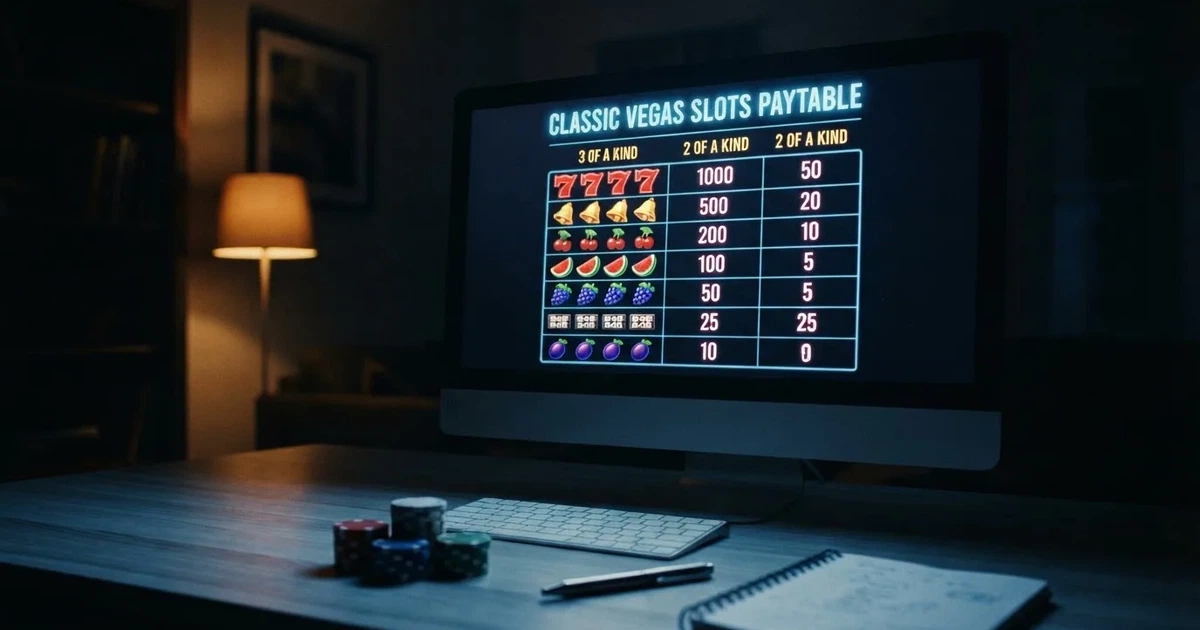
The name “Big Red” on a pokie machine most often points to Aristocrat Leisure’s licensed outback-themed game: red dirt, a wedge-tailed eagle overhead, kangaroos, dingoes, warthogs and a station dog, with playing-card royals filling out the lower pays. The layout is a five-reel, twenty-five payline format that has been a staple on Australian club floors since the late 1990s. A gamble feature rounds the spin off. Pick red or black to try to double the win, or pick the suit to try to quadruple it, and the gamble can usually be taken several times in a row.
What an Australian punter sees when an offshore site claims to host Big Red online is the theme, not the game. The licensed Aristocrat version of Big Red has not been released for real-money online play in any jurisdiction, and Aristocrat’s interactive arm has historically kept the most distinctive Australian titles for the local club floor. The symbols and the reels on those offshore sites are echoes of the theme, dressed up in HTML5 and pointed at an Australian IP by an offshore operator that has bought or licensed a knock-off reel set rather than the original paytable.
That matters for the return-to-player discussion. The Big Red theme, in its licensed Australian form, runs at the figure the relevant state or territory sets as the legal minimum: 85% in NSW, the Northern Territory, Queensland and (generally) Victoria, 87% at Crown Melbourne, 87% in the ACT and Tasmania, 87.5% in South Australia and 90% in Western Australia, where the only legal machines are the roughly 2,500 inside Crown Perth. A Big Red clone on an offshore site does not have to honour any of those minimums. An unlicensed pokie can be set to any figure the operator likes, and the player has no way of reading the math from the screen.
Volatility is the other half of the picture, and one reason the theme has endured on club floors is its high-volatility profile. Long quiet stretches punctuated by bigger hits, the kind of swing pattern that older players often describe as “pokies that bite.” Newer video slots tend to dial that volatility back, leaning instead on frequent small wins and complex bonus rounds. The original Big Red sits at the harder end of that spectrum, and the swing pattern is part of what the theme sells to a regular club-goer: the next spin could be the one that pays for the round.
The symbols on the licensed Big Red are arranged across fifteen fixed positions, three rows on each of five reels, and the wild is the tree, which substitutes for every symbol except the scatter. The scatter is the eagle, which triggers free games when three or more land anywhere on the reels. The kangaroo is the top-paying regular symbol, paying out on combinations of two, three, four or five from left to right on an active payline. The warthog and the dog are the mid-tier pays, and the playing-card royals round out the lower end. The gamble feature is the most distinctive single element of the game, and it is the part of the experience that is most often diluted on offshore knock-offs, where the suit guess is sometimes removed entirely or capped at a single double-up.
The licensed game has never had a published volatility class in Aristocrat’s marketing material, but the paytable density is the structural giveaway. Small line wins on the playing-card royals, larger wins on the animal symbols, and a single bonus trigger that can pay back many times the triggering bet — that is the structure of a high-volatility machine. A punter who treats it like a low-volatility video slot is going to find the spin cycle longer and the variance higher than they expected. The marketing word for that, in the licensed-floor context, is “entertainment value.” The honest word for it is risk.
If a punter in Australia wants to sit at a real Big Red machine, the path is the path it has always been: a licensed pub or club. New South Wales alone has 87,298 machines outside casinos across 2,195 venues, with another 21,122 in Queensland clubs and 26,380 outside Crown in Victoria. Western Australia is the exception that proves the rule, with pub and club machines banned since Crown Perth opened in 1985.
The honest description of the offshore knock-off is harder to pin down, because the operator does not publish a paytable. What the punter sees on the screen is a slot whose theme is recognisable and whose math is opaque. That opacity is the consequence. Without a published paytable, the only way to read the math of the game is to play enough spins for the variance to settle, which is the most expensive way to learn a lesson an Australian punter did not need to learn.
The Landscape of Warnings the ACMA Has Issued
Any list claiming to rank Big Red pokies sites for Australian players is, on the evidence above, a list of services the regulator has already had cause to address. The eleven brands catalogued below are not ranked. They are ordered by the date the ACMA has put them on its formal-warning register, because that is the only consistent ordering the source material supports. The table is the landscape, not a leaderboard.
| Brand | ACMA action and date | Operator named by the ACMA | Subject support | Repeated offender |
|---|---|---|---|---|
| RocketPlay | Formal warning, March 2026 | Pulsup Ltd | — | Yes — earlier Dama N.V. warning, May 2022 |
| Level Up Casino | Formal warning, May 2022 | Dama N.V. | bgaming catalog | Yes — operator named over three more brands |
| Woo Casino | Formal warning, March 2025 | Dama N.V. | — | Yes — same operator as Level Up |
| Spirit Casino | Formal warning, May 2025 | Dama N.V. | — | Yes — same operator |
| National Casino | Formal warning, July 2025 | Consolutetish S.R.L. | Wikipedia entry | No |
| Bizzo Casino | Formal warning, July 2025 | Consolutetish S.R.L. | — | Yes — earlier TechSolutions warning, 2022 |
| Ignition Casino | Formal warning, July 2025 | Bamboo Media | — | No |
| Instant Casino | Formal warning, February 2025 | EOD Code SRL | — | No |
| Jackbit | Formal warning, April 2026 | Ryker B.V. | — | No |
| Casino Intense | Formal warning, April 2025 | Sterplay Holding Ltd | ABC, ACMA and Crown Melbourne listings | No |
| Sky Crown | Formal warning, September 2022 | Hollycorn N.V. | — | No |
Jurisdictional Comparison
| Jurisdiction | Legal Status | Minimum RTP |
|---|---|---|
| New South Wales | Legal (pub/club) | 85% |
| Queensland | Legal (pub/club) | 85% |
| Victoria | Legal (pub/club) | 85% |
| South Australia | Legal (pub/club) | 87.5% |
| Western Australia | Prohibited (pub/club) | 90% |
The pattern the table shows is a small number of operators responsible for a large share of the warnings. Dama N.V., the operator behind Level Up Casino, Woo Casino and Spirit Casino, accounts for three entries on the list, and adds a fourth once RocketPlay’s earlier Dama-era warning in May 2022 is counted. TechSolutions Group, warned over Bizzo Casino in 2022, reappears in 2025 when the same brand is named again under Consolutetish S.R.L. The repeated-offender column is the visual capture of that pattern, and it is the most useful single piece of information the table carries: a warning is more likely to land on a brand whose operator has been warned before.
What the table does not show is the consequence of being on it. A formal warning does not, on its own, take a site offline. The ACMA’s next tool is a written direction to an Australian internet service provider to geo-block the service, and the regulator maintains a running tally of those requests. The most recent round, reported on 26 June 2026, took in twelve new sites: 7Signs, ChromaBet, Donbet, Duospin, Freshbet, Slots Gem, Jacks Club, Lucky Start, Pointsbetz, Spinrise, Vinyl Casino and Wildsino. The running total of blocked services and affiliate pages passed 1,750 in that same round, with the cumulative figure at 1,751 since the first blocking request in November 2019. More than 230 unlicensed services have left the Australian market entirely since 2017.
The “left the market” figure is the soft consequence. The hard consequence is what happens to a balance at a site that gets blocked. A punter who has a withdrawal pending when the ACMA’s blocking direction lands has, in practical terms, lost access to their funds until the operator reappears under a new domain, and even then the new domain is not legally obliged to honour the old balance. There is no Australian complaints body that will chase the missing money. There is no Australian bank that will reverse a crypto deposit. There is no Australian court that will issue a default judgement against an offshore operator that has no Australian presence. That is the consequence the table catalogues, and it is the reason the eleven brands below are presented as warnings rather than as options.
The Fundamentals of Pokies in Australia
Australia has roughly three per cent of the world’s pub and club poker machines and about 0.3 per cent of its population. That ratio is a useful starting figure for any discussion of how the market is regulated, because it tells the reader that the country is unusually dense in machines relative to its size. The machines have been legal in clubs since 1956, when New South Wales registered clubs put them on the floor, and they are now an everyday feature of licensed venues in every state and territory except, in practical terms, Western Australia.

The volume is hard to overstate. Australians bet almost A$150 billion through gaming machines in 2020-21 and lost A$12.18 billion on them. New South Wales alone had 87,298 machines outside casinos in 2,195 venues as of June 2023, with player losses of A$8.18 billion in 2022-23. Queensland ran 21,122 machines in 351 venues in October 2023, and Victoria had 26,380 outside Crown in 488 venues in 2021-22, sitting under a state-wide cap of 30,000. Western Australia is the outlier: the machines were banned in pubs and clubs when Crown Perth opened in 1985, and the casino’s own count has since grown from about 200 in 1985 to roughly 2,500, all approved by the state’s Gaming and Wagering Commission.
The legal minimum return-to-player varies by jurisdiction. New South Wales, the Northern Territory, Queensland and (generally) Victoria require 85%. Crown Melbourne is set at 87%. The ACT and Tasmania at 87%. South Australia at 87.5%. Western Australia at 90% inside Crown Perth. Those figures are floors, not targets. A licensed machine can sit above them, but it cannot legally sit below. None of this applies to an offshore site, which is the entire point of the licensed floor as a concept: it is the place where the math has to be honest.
The most recent structural shift is in Tasmania. Federal Group held a monopoly licence over every poker machine in the state from 1968, until legislation passed in November 2021 ended that monopoly and moved oversight to the Tasmanian Liquor and Gaming Commission. The same reform package planned nation-leading mandatory pre-commitment cards, requiring a player to set a budget before sitting down, but implementation has been delayed until late 2025. The cards are the first jurisdiction-level attempt in Australia to bind a player’s spend at the cabinet, rather than after the fact, and the delay is the first signal that the political appetite for that kind of binding is thinner than the reform package assumed.
What all of this sets up is the second half of the picture. Even with the density of legal machines, Australians are still sending meaningful sums offshore. H2 Gambling Capital’s 2025 estimate puts losses to illegal gambling sites at about A$3.9 billion a year, and the share of gambling going through legal channels fell from 74% in 2021 to 64%. That gap is what the ACMA’s enforcement effort is aimed at closing, and it is the reason a Big Red-style pokie on an offshore site is more than a technical curiosity. It is part of a measurable shift away from the licensed floor, and the regulator’s own numbers show the shift has been running in one direction for half a decade.
The licensed floor itself is shifting. Tasmania’s mandatory pre-commitment cards are the highest-profile reform, but the more common change is incremental: the New South Wales club industry’s voluntary A$100 cash-feed limit, the state-by-state tightening of advertising around sport and racing, and the slow rollout of facial-recognition technology at high-volume venues. None of these reforms is the kind of headline-grabbing ban that closes an offshore site. All of them make the licensed floor a harder place to lose more than a punter can afford, and the cumulative effect is to push the unregulated spend offshore rather than to suppress it.
The third consequence, and the one that is hardest to see from the outside, is that the licensed floor is not one market. NSW, Victoria, Queensland, Tasmania, South Australia, the ACT, the Northern Territory and Western Australia each set their own rules, and what is permitted at Crown Melbourne is not necessarily permitted at a Queensland RSL. A punter who knows the rules in their home state is not automatically knowledgeable about the rules in the next one over. The licensed floor looks uniform from the outside. Inside, it is eight different regulatory regimes sharing one federal prohibition on the online version, and that is the structure the prohibition is built to plug the gap on.
The fourth consequence is the only one the regulator publishes a number for. Since 2017, more than 230 unlicensed gambling services have left the Australian market entirely. Some left because of blocking action. Some left because the operator decided the Australian audience was no longer worth the regulatory cost. A few left and came back under a new name. The net figure is the most useful single measure of how the licensed floor has held its ground against the offshore alternative, and the answer is “less than the public conversation implies, but more than nothing.”
The Prohibition, the Enforcement, and the Reform
The federal prohibition on offering online casino games to people in Australia sits inside the Interactive Gambling Act 2001, tightened by the Interactive Gambling Amendment Act 2017. The 2017 amendments made it an offence to provide online casino games, online pokies or in-play betting to a person physically in Australia. Wagering on races and sporting events placed before the event, lotteries and keno can still be licensed. In practice, online wagering is licensed by the Northern Territory, which regulates Sportsbet, Bet365 and Ladbrokes among others through the Northern Territory Racing and Wagering Commission. The commission is, on its own admission, a body that has no full-time staff and meets once a month in Darwin. The minimum age for any of it is 18.
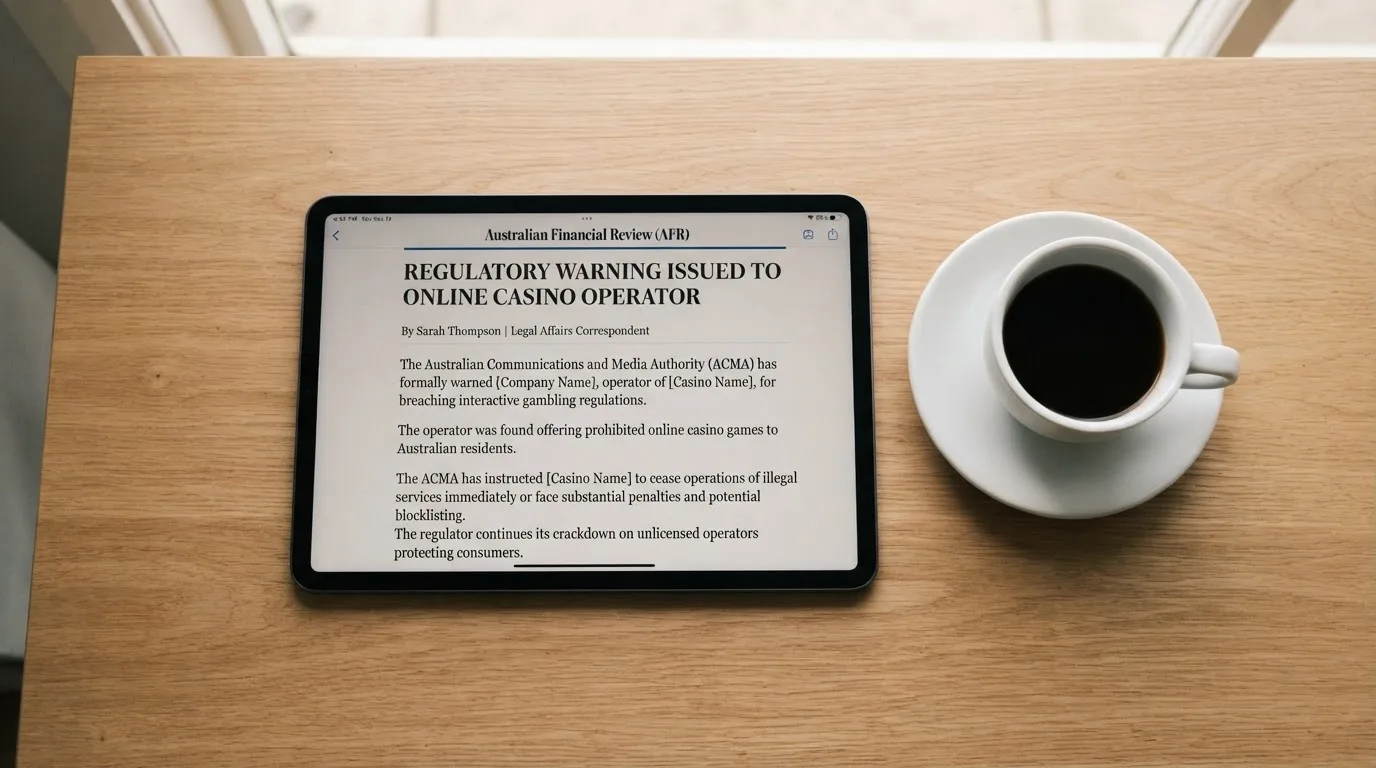
The consequence that follows, and the consequence this section is built around, is that no state or territory in Australia issues a licence to host online pokies. A “Curacao licence” or a “Costa Rica licence” displayed on an offshore site is a licence to operate in that jurisdiction, not a permission to take Australian customers. The site is offering an unlicensed service to Australian IP addresses, and the Interactive Gambling Act is the law that makes that offering illegal. The licence badge on the footer of the site is a piece of marketing, not a piece of compliance.
Enforcement is run by the Australian Communications and Media Authority. The ACMA investigates complaints, issues formal warnings, and can direct Australian internet service providers to geo-block illegal services. Since the first blocking request in November 2019, the regulator has directed ISPs to block 1,751 illegal gambling and affiliate marketing websites. In the round reported on 26 June 2026 alone, the ACMA asked providers to block twelve new sites. The list of names — 7Signs, ChromaBet, Donbet, Duospin, Freshbet, Slots Gem, Jacks Club, Lucky Start, Pointsbetz, Spinrise, Vinyl Casino and Wildsino — is the most recent snapshot of the operator population the regulator is trying to shrink.
The individual player is not prosecuted. The Interactive Gambling Act targets the provider, not the punter. That is sometimes read as a green light. It is not one. An offshore site gives no Australian consumer protection, no local complaints body, no external dispute resolution and no recourse if a withdrawal is refused. The site can be geo-blocked while a balance is still on it, and the player has no Australian mechanism that will recover that balance. The regulator’s silence on the punter is not the regulator’s endorsement of the punter’s choice.
The practical consequence shows up in the absence of legal remedies. A punter who deposits A$200 with an offshore operator and is refused a withdrawal has, in practical terms, three routes: the operator’s own complaints email, any ADR body the operator has signed up to (most have not), and the small claims track of a state court. The first two routes depend on the operator’s cooperation. The third depends on the operator having an Australian presence to serve papers on. None of the three is a fast or certain path to a refund, and a punter who needs the money back this week is not going to get it back this week through any of them.
Payment rules are the second consequence. Since 11 June 2024, credit cards, credit-related products and digital currency have been banned as a means of paying for any licensed online wagering in Australia, with penalties of up to A$247,500 for operators who take them. Legal deposit routes for licensed wagering are debit card, bank transfer, PayID/Osko and BPAY. An offshore casino asking an Australian customer for a credit card or a crypto deposit is, on the same date, operating outside the Australian rules, and the Australian bank or wallet that processes the transaction has no Australian reason to reverse it on the customer’s behalf. The licensed operators cannot legally take a credit card deposit. The offshore operators can, which is the practical shape of the difference.
The reform in train is the Interactive Gambling Amendment (Gambling Reform) Bill 2026, which passed Parliament on 19 August 2026. Its advertising and inducement measures commence on 1 January 2027. As of 2026 that start date has not yet arrived, so the new advertising rules are law with a date, not yet binding on anyone. Anyone reading this page in late 2026 should treat them as forward-looking; anyone reading it after 1 January 2027 should treat them as in force. The new rules tighten what licensed wagering operators can advertise and how, and they extend advertising restrictions to a wider set of inducements. They do not change the offshore calculus for the brands in the section that follows. An offshore operator is already outside the Interactive Gambling Act, and tightening the rules on Australian-licensed operators does not reach them.
Tax is the last piece. Gambling winnings of a recreational player are not assessable income under section 6-5 of the Income Tax Assessment Act 1997, and losses are not deductible. That flips only if the person carries on a business of gambling, which most players do not. The ATO’s position is the model here, and for anything more specific, the ATO’s own guidance is the place to check. A punter who treats gambling as income and files a return claiming winnings without declaring the business has a problem that is entirely of their own making, but it is a problem worth flagging because it sits one tax return away from the offshore casino experience.
Eleven Brands the ACMA Has Warned
The brands below are the services the ACMA has issued formal warnings to, in the order they appear on the regulator’s published register. Each block is structured around the action the regulator took, the operator the regulator named, and what the consequence has been for the brand. None of these services is licensed to offer online casino games to Australians, and none of them is recommended here.
RocketPlay — Same Brand, Two Operators, Two Warnings
RocketPlay was first named by the ACMA in May 2022, when Dama N.V. was warned over it alongside five other brands. In March 2026 the same brand appeared on a new warning, this time under Pulsup Ltd, with the regulator addressing Rocketplay specifically. The brand has outlived two operators and re-emerged on the warning register each time.
The consequence of that history is that the brand itself is the durable object, not the operator. A punter who reads the Dama-era warning and assumes the brand is closed finds a new domain a year later, under a new corporate vehicle, with the same theme. The ACMA’s response has been to issue a fresh warning each time, and the cumulative effect is a paper trail that shows the regulator has noticed both warnings but has not yet stopped the brand from reappearing.
The verdict for an Australian punter is that RocketPlay is the cleanest illustration on this page of why a single warning is not the end of the story. A brand that has been warned twice in four years under two different operators is a brand the regulator is unlikely to leave alone, but it is also a brand that has shown the operational resilience to keep coming back. The punter’s risk is not that the brand will close. The punter’s risk is that it will not.
Level Up Casino — A Provider’s Catalog Is Not the Operator’s Licence
Level Up Casino was named by the ACMA in May 2022 under Dama N.V. The same operator was warned over three other brands on this list — Woo Casino, Spirit Casino and, in the earlier round, RocketPlay. Level Up is the senior of those entries in warning-list terms, and the regulator’s repeated engagement with the operator vehicle is the most useful single fact about the brand.
Bgaming, one of the providers whose games are listed on Level Up’s lobby, publishes a catalog that includes outback-themed slot titles in the same family as the Big Red theme. That listing is on bgaming’s own catalog pages, not on Level Up’s marketing, and it does not change the legal status of the brand. An outback-themed title from bgaming is one of many licensed slot games, and it is not the licensed Aristocrat Big Red.
The verdict for an Australian punter is that the only verifiable fact about Level Up is the warning, and the rest is catalog noise. The provider list is what the operator wants the punter to read; the ACMA register is what the punter should read. The catalog tells the punter what is on the reels. The register tells the punter what is on the regulator’s mind. The two answers are not the same question.
Woo Casino — One of Three Dama N.V. Warnings in 2025
Woo Casino was named by the ACMA in March 2025 under Dama N.V., in the same regulatory round that addressed RocketPlay’s Dama-era warning history. This was its debut on the warning register, distinguishing it from repeat offenders. The March 2025 warning is the regulator’s first action over the brand.
The consequence of being a fresh Dama N.V. warning is that the brand is part of a wider pattern. Dama N.V. has now been warned over four brands on this page, and the regulator’s repeated engagement with the operator is the through-line. A punter who lands on Woo Casino’s site is reading the same operator’s terms as a punter who lands on Level Up’s site, even though the brands look distinct.
The verdict for an Australian punter is that Woo Casino is a familiar shape under a new name. The interface is different, the lobby is different, the marketing is different. The operator is the same, and the operator’s regulatory history is the single fact the marketing pages do not put at the top.
Spirit Casino — Two Months After Woo
Spirit Casino was named by the ACMA in May 2025, two months after Woo Casino, under the same Dama N.V. vehicle. The timing is the most useful single fact about the brand: Dama N.V. was warned twice in 2025 over two distinct brands within sixty days of each other, which suggests the regulator is treating the operator as a continuing compliance problem rather than as a series of one-off issues.
The consequence of that framing is that a future warning is more likely than not, and a future blocking direction is a realistic possibility. A punter who opens an account with Spirit Casino in the months after the warning has done so on a service that has been publicly named, and the regulator’s next move is harder to predict than the punter’s exposure.
The verdict for an Australian punter is that Spirit Casino is the third Dama N.V. brand in less than a year, and the regulator’s repeated warnings read like a series of attempts to bring the operator into compliance. None of those attempts has been signalled as successful, and the brand’s exposure is the gap between the warning and the next blocking round.
National Casino — A Wikipedia Entry and a Regulatory Warning
National Casino was named by the ACMA in July 2025 under Consolutetish S.R.L., in the same round that addressed Bizzo Casino under the same operator vehicle. Wikipedia, the encyclopedia, has an entry on the brand, and that entry is the most visible listing the brand carries online outside its own marketing.
A Wikipedia entry is not a regulatory clearance. It is not a payment processor’s endorsement. It is a community-edited encyclopedia article, and the only thing its existence proves is that someone has bothered to write one. The ACMA’s July 2025 warning sits in the same calendar month as the Wikipedia entry’s editorial history. Neither has caused the other to be retracted.
The verdict for an Australian punter is that the brand’s online footprint is real, and its regulatory footprint is the thing the punter should read first. The Wikipedia entry does not contradict the warning; it simply sits beside it. The encyclopedia records that the brand exists. The regulator records that the brand is offering something it should not be offering to Australian customers. Both records are accurate.
Bizzo Casino — Twice Warned, Once by TechSolutions, Once by Consolutetish
Bizzo Casino was first named by the ACMA in 2022, when TechSolutions Group N.V. was warned over it. In July 2025 the same brand appeared on a fresh warning, this time under Consolutetish S.R.L. The pattern is identical to RocketPlay’s: a brand that has outlived its original operator vehicle and re-emerged under a new one, with a fresh warning each time.
The consequence of that history is that the brand itself is the durable object. A punter who reads the TechSolutions-era warning and assumes the brand is closed finds a new domain a year or two later, under a new corporate vehicle, with the same theme and the same lobby. The regulator’s response has been to issue a fresh warning each time, which makes the cumulative paper trail longer but does not yet appear to have stopped the brand from reappearing.
The verdict for an Australian punter is that Bizzo Casino is, alongside RocketPlay, the cleanest illustration on this page of why a single warning is not the end of the story. The brand has been named twice under two different operators, and the pattern is unlikely to change without a blocking direction. The punter’s exposure is the same shape as RocketPlay’s: a service the regulator has noticed twice and the regulator has not yet removed.
Ignition Casino — A July 2025 Entry Under Bamboo Media
Ignition Casino was named by the ACMA in July 2025 under Bamboo Media, in the same round that addressed National Casino and Bizzo Casino under Consolutetish S.R.L. It was the brand’s first appearance on the regulator’s list. The July 2025 warning is the regulator’s first action over the brand.
The consequence of being a fresh entry under a relatively unknown operator is that the brand does not have the regulator’s repeated-engagement history that the Dama N.V. brands carry. That is not a clearance: it is simply a thinner paper trail. The regulator has noticed the brand once, has named the operator, and has logged the action.
The verdict for an Australian punter is that Ignition Casino is a single warning on a single brand, with no prior history on the register. The shape of the consequence is the same as the rest of the page: no Australian licence, no Australian recourse, no Australian payment rule that the operator is bound by. A punter who treats the brand as a clean entry should also treat it as a thin record, and the next move is the operator’s to make.
Instant Casino — The First Brand Named in 2025
Instant Casino was named by the ACMA in February 2025 under EOD Code SRL. The brand made its first appearance on the warning list that year. The February 2025 warning predates the July 2025 round by five months, which gives Instant Casino the longest post-warning exposure of the brands on the page that were first named in 2025.
The consequence of being first is that the brand has had more time to either come into compliance or to keep operating outside the regulator’s expectations. A punter who opens an account with Instant Casino in 2026 is reading the brand against a warning that is now more than a year old, and the regulator’s silence since is not evidence of compliance. The regulator does not publish a “compliance achieved” notice.
The verdict for an Australian punter is that Instant Casino is the brand with the longest exposure on the register without a follow-up warning, and the absence of a follow-up is the only thing the absence proves. The next round of blocking requests is the next opportunity for the regulator to act, and a punter who treats the warning as a closed file is the punter who will be surprised when the site stops loading.
Jackbit — The Most Recent Brand on the Register
Jackbit was named by the ACMA in April 2026 under Ryker B.V. It arrived on the list as a new entry. The April 2026 warning is the regulator’s first action over the brand, and it sits three months before the June 2026 blocking round.
The consequence of being the most recent entry is that the brand has the thinnest paper trail on the register. A punter who reads the warning has read the only thing the regulator has published about the brand. The next move belongs to either the operator or the regulator, and neither has published one.
The verdict for an Australian punter is that Jackbit is the freshest example on the register, and the freshest warnings are usually the ones where the regulator is most likely to issue a follow-up. A punter who reads the April 2026 warning has read a regulator that has noticed the brand recently, and that is the most useful single fact about the brand. Freshness is not a clearance. It is a signal that the next round is the round that matters.
Casino Intense — A Warning Mirrored in the News Cycle
Casino Intense was named by the ACMA in April 2025 under Sterplay Holding Ltd. The brand’s regulatory action has been mirrored in three independent sources. The ABC has covered the brand in its reporting on the ACMA’s enforcement round, the ACMA itself has published the formal warning, and Crown Melbourne’s site surfaces Casino Intense in search alongside Australian gambling content. None of those sources clears the warning, and none of them contradicts it.
The consequence of being a regulator-mirrored brand is that the warning is not a one-off document. It is referenced in the ABC’s coverage of the ACMA’s enforcement activity, and that coverage outlives the formal warning as a piece of public record. A punter who searches the brand after a warning has been issued will find the ABC’s coverage sitting alongside the regulator’s own page.
The verdict for an Australian punter is that Casino Intense is the brand where the news coverage most clearly trails the regulator’s action. The two are not in conflict; they simply both exist, and both point to the same conclusion. The coverage is the public face of the warning, and the warning is the regulatory substance underneath the coverage.
Sky Crown — One of Two Hollycorn N.V. Brands on the Register
Sky Crown was named by the ACMA in September 2022 under Hollycorn N.V., in the same regulatory round that addressed Blue Leo. Hollycorn N.V. is the operator of both brands, and the regulator’s action is the most useful single fact about Sky Crown: the brand is one of two Hollycorn N.V. brands on the warning register, and the operator is the same vehicle behind both.
The consequence of being one of two brands under a single operator is that the operator is the regulatory unit, not the brand. A punter who reads the Sky Crown warning and assumes Hollycorn N.V. is the regulator’s only concern has missed that the operator has been named over Blue Leo as well, in the same regulatory round. The two warnings together describe an operator-level problem, not a brand-level one.
The verdict for an Australian punter is that Sky Crown’s value as a warning is the same shape as the rest of the page, with the additional fact that the operator has been warned twice in the same round. The brand is durable. The regulator’s attention to the operator is durable too, and the next round is more likely than not to carry a third Hollycorn N.V. brand alongside it.
How Fast the Blocklist Is Growing
The arithmetic behind the blocklist answers a question the table above raises but does not answer: how quickly are new illegal services appearing? Since the first blocking request in November 2019, the ACMA has directed Australian ISPs to block 1,751 illegal gambling and affiliate marketing websites. The most recent round, reported on 26 June 2026, took in twelve new sites.
From November 2019 to June 2026 is 79 months. 1,751 divided by 79 gives a long-run average of about 22 sites a month, or roughly 266 sites a year. The honest way to state that figure is a band, not a single number: somewhere in the high teens to mid-twenties per month, depending on whether the early, lighter rounds of 2019-20 and the heavier rounds of 2023-26 are weighted equally. None of these are forecasts. They are an average over a regulatory period that is still being written, and the next round will either pull the average up or let it settle, depending on how many new sites the ACMA names.
The point of the rate is not the number itself. It is the direction. More than 230 unlicensed services have left the Australian market since 2017, and the blocking rate has not slowed. When the ACMA blocks a service, the operator can reappear under a new name, a new domain or a new corporate vehicle. RocketPlay, for instance, has surfaced under both Dama N.V. in May 2022 and Pulsup Ltd in March 2026, six months apart on the calendar and a different warning each time. Bizzo Casino has done the same under TechSolutions Group N.V. and Consolutetish S.R.L. The blocking rate captures the input to that game of whack-a-mole; it does not capture the output. A punter who treats the blocking rate as a measure of regulator success is reading the wrong end of the count.
The second consequence is the affiliate dimension. The 1,751 figure covers illegal gambling websites and affiliate marketing websites, and the inclusion of affiliates is the part of the count most often missed in summaries. An affiliate site does not take bets; it sends traffic to a brand that does. Blocking the affiliate site cuts one of the routes by which an Australian punter finds the operator, but it does not block the operator itself. The ACMA’s blocklist is therefore a count of two different kinds of removal, operator sites and affiliate paths, and the ratio between the two is not published. A punter who has been clicking through an affiliate link to reach a brand is one of the people the affiliate-blocking side of the count is meant to catch, and the success of that side is harder to read than the operator side.
The third consequence is the cumulative exposure. A punter who has played at any of the 1,751 blocked services over the seven-year period has, in principle, used a service that no longer exists at the address they originally used. Some of those services re-emerged at new addresses, and the punter’s balance at the original address does not automatically transfer. Some did not, and the balance is gone. None of this is recoverable through an Australian complaints body, because the addresses themselves are not Australian. The blocklist is a count of removals, and each removal is a small write-down for someone with money still attached to it.
The fourth consequence is the timeline. The first blocking request was November 2019. The 1,751 figure covers 79 months of regulator activity. The June 2026 round is the most recent data point, and the next round is the regulator’s next opportunity to move the average. A punter who reads the rate as a forecast is reading the wrong statistic; it is a backward-looking average over a period that has included both lighter and heavier rounds, and the next round will fall somewhere inside the band regardless of which way the regulator pushes. The honest read is that the regulator is removing services faster than the market is generating them, and the gap between those two rates is what the licensed floor is fighting to widen.
Frequently Asked Questions
What kind of theme does “Big Red” usually refer to on a pokies machine?
The name usually points to Aristocrat Leisure’s classic outback-themed pokie: red dirt, kangaroos, wedge-tailed eagles, dingoes and station dogs across a five-reel, twenty-five payline layout. It has been a staple of Australian club floors since the late 1990s, with a gamble feature that lets the player try to double or quadruple a win on red-or-black or a suit guess.
Is there any legal way to play a Big Red-style pokie online from Australia?
No. The Interactive Gambling Act 2001, strengthened by the 2017 amendments, makes it an offence to provide online casino games or online pokies to a person in Australia. No state or territory issues such a licence, so any Big Red-style game offered to an Australian IP is unlicensed by definition, and the only legal place to sit at a real Big Red cabinet is on a licensed pub or club floor.
Are classic Australian-themed pokies still common on licensed pub and club floors?
Yes. New South Wales alone runs 87,298 gaming machines across 2,195 venues (June 2023), Queensland 21,122 in 351 venues (October 2023), and Victoria 26,380 outside Crown in 488 venues (2021-22). Western Australia is the exception, with pub and club machines banned since 1985 and the only legal machines inside Crown Perth.
Why do offshore casino sites keep promoting Big Red-style pokies to Australian players?
Australian IPs represent a market that is large (about A$3.9 billion in estimated annual losses to illegal sites), unregulated by Australian consumer law, and not yet fully reached by ISP-level blocking. Offshore operators can reappear under new names once a domain is blocked, and the economics of re-entry keep the advertising running long after a single warning.
How does the volatility of a classic Big Red-style machine compare with newer video slots?
The original Big Red theme sits toward the high-volatility end of the spectrum, with long quiet runs punctuated by larger hits and a gamble feature that lets the player try to double a win on red-or-black. Newer video slots typically dial volatility back in favour of frequent small wins and complex bonus rounds, and a punter who treats a high-volatility machine like a low-volatility one is going to find the spin cycle longer and the variance higher than expected.