
Casinos that accept Visa from Australian players: the IGA, the ACMA record, and the bank-side block
29 October 2026 · ACMA formal-warning register and the Interactive Gambling Act 2001 (as amended in 2017 and 2023), checked against the published notices.
A Visa card sits in most Australian wallets, which is why every offshore pokies-style casino lists it in its cashier. That fact collides with a quieter one. Under the Interactive Gambling Act 2001, no online casino may lawfully serve a person in Australia — whether it takes Visa or not — and the eleven brands examined below all sit on the ACMA’s formal-warning register. The marketing line and the law do not match, and the consequence is that the bank, not the casino, is where the friction actually shows up.
Table of Contents
- Settlements: bank-side blocks, app-level switches and where player protection actually sits
- How Visa moves at offshore casinos: deposits, settlements and the long tail of withdrawals
- Landscape of operator warnings
- What ‘accepts Visa’ actually means at an offshore casino
- Prohibition under the Interactive Gambling Act
- Fundamentals of enforcement: blocking requests, formal warnings and the tally
- RocketPlay — the most recent formal warning the ACMA has issued
- Level Up Casino — one of six Dama N.V. brands warned in a single 2022 notice
- Woo Casino — Dama N.V.’s March 2025 notice
- Spirit Casino — Dama N.V.’s May 2025 notice, two months after Woo
- National Casino — Consolutetish S.R.L.’s first appearance in the register
- Bizzo Casino — the only brand the ACMA has formally warned twice
- Ignition Casino — the lone Bamboo Media brand in the set
- Instant Casino — EOD Code SRL’s February 2025 notice
- Jackbit — Ryker B.V.’s April 2026 notice alongside CasinOK
- Casino Intense — Sterplay Holding’s April 2025 notice
- Sky Crown — Hollycorn N.V.’s earliest casino service in the set
- Frequently asked questions
Settlements: bank-side blocks, app-level switches and where player protection actually sits
| Bank | Block Method | Digital Wallet Coverage |
|---|---|---|
| Westpac | Online Banking / Card Services | Covered |
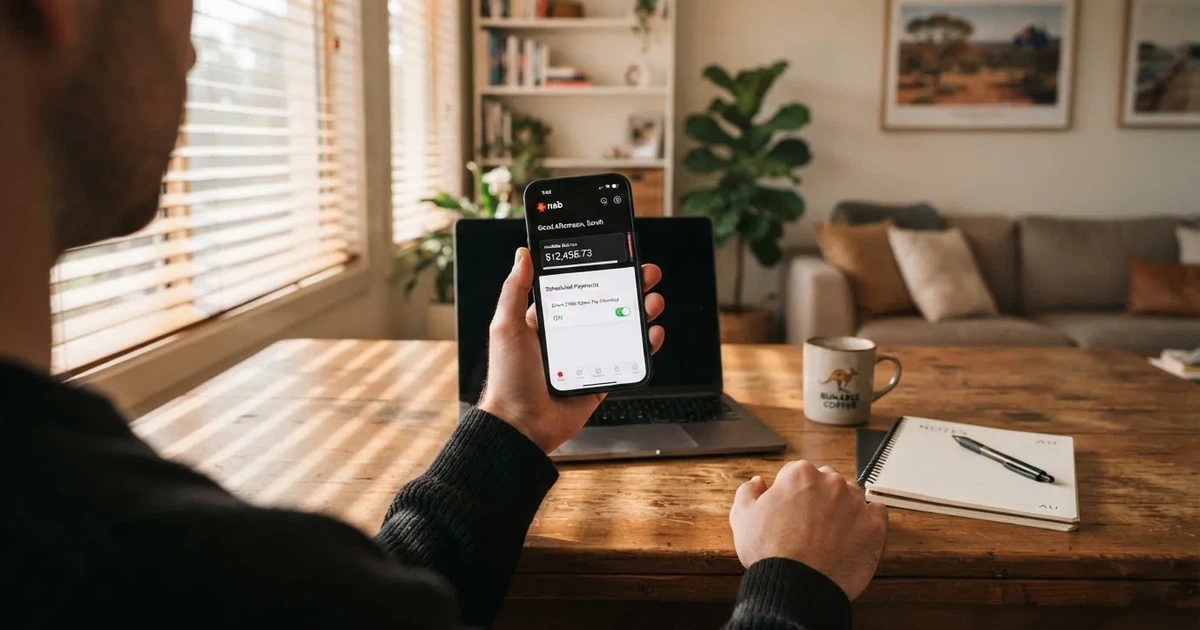
| NAB | NAB App | Covered |
| ANZ | ANZ App | Covered |
Westpac’s gambling block refuses authorisation of any transaction registered under the merchant category code ‘Betting/Casino Gambling’ on eligible personal credit and debit cards. The category is the one a Visa or Mastercard payment at a gambling site is coded under, so the block operates at the network layer rather than against a brand list. A Westpac customer switches it on in Online Banking under Card Services, or by calling 132 032 between 8am and 8pm Sydney time seven days a week, and the block stays on until the customer decides otherwise. The bank does not require a problem to be declared, a register to be joined, or the casino to be contacted.
NAB applies the same kind of block to credit and debit cards, including through the NAB app, and the bank lets primary and additional cardholders — and people holding a power of attorney — request one. ANZ goes further in one direction and tighter in another: the ANZ app applies the block to an eligible card without calling or visiting the bank, and the block also catches gambling transactions routed through a digital wallet such as Apple Pay on that card. ANZ does warn that some non-gambling transactions might be blocked in error, and once the block is on the customer has to wait 48 hours before the bank will remove it again. That 48-hour cooling period is the second consequence worth understanding: it is built into the design on purpose, so an impulse to undo the block at midnight meets a delay by design.
Three constraints matter for an Australian player specifically. The first is that the IGA’s 2023 amendments banned credit cards and credit-related products for licensed online wagering, and that restriction also constrains gambling use of linked digital wallets such as Apple Pay. The second is that ANZ explicitly warns the block catches Apple Pay gambling transactions made through an eligible card, not only the physical card — switching the funding instrument does not switch off the block. The third is that mobile-wallet transactions now account for around 45% of all card payments in Australia by number, which means a player who thinks they are paying through “Apple Pay” is in most cases paying through the underlying Visa card the wallet is funded by, and the block reads the funding card, not the wallet.
What the bank-side layer does not cover is the offshore casino’s own player-protection regime, and that is the part of the safety net the player is most likely to assume works. BetStop, the National Self-Exclusion Register, has been live since August 2023, but it binds only Australian-licensed online and phone wagering services. An offshore casino is not connected to BetStop at all, so registering with BetStop does not stop a self-excluded player from depositing at any of the eleven brands below. The National Gambling Helpline (1800 858 858) is free, runs 24/7, and offers chat at Gambling Help Online; it is the only part of the safety net that reaches the offshore market, and only if the player calls.
How Visa moves at offshore casinos: deposits, settlements and the long tail of withdrawals
The mechanics on the casino side have not changed in years. A player enters a 16-digit card number, an expiry date and a CVV in the cashier; the casino routes the payment through its acquiring bank; the acquiring bank passes it to the Visa network; VisaNet delivers it to the cardholder’s bank; the cardholder’s bank either approves or declines. The whole round trip completes in seconds when it works, and a minimum of A$10 covers the floor at most of these sites — the $10 deposit threshold is what the bulk of offshore pokies-style casinos pitch to Australian players.
The deposit is the simple part. The withdrawal is where time accumulates, and the accumulation happens on the casino side, not the network side. A Visa withdrawal request still has to clear the casino’s own manual checks before settlement lands back in the Australian account, and those checks are why “instant withdrawals” on a casino’s marketing page rarely match what an Australian customer actually experiences. The casino’s anti-fraud review runs first, then source-of-funds checks on the first cash-out, then KYC document verification — all on the casino’s clock. Once the casino approves, Visa credit-push settlement is fast; the wait is at the cashier, not the network.
Three alternatives reshape the picture for an Australian player who decides not to use a card. PayID’s near-instant transfers between more than 100 Australian banks (under a minute, 24/7, including weekends) travel through the New Payments Platform, which became accessible to the public on 13 February 2018 and is owned by New Payments Platform Australia Ltd — a non-profit whose 13 shareholders include the Reserve Bank and the country’s major banks. The platform participants have to keep monthly outages to no more than two minutes, and by April 2025 more than 25 million PayID identifiers had been registered on it. The catch with PayID at an offshore casino is that the merchant code is no longer ‘Betting/Casino Gambling’ once the transfer travels through the NPP — the bank block is bypassed, because the code the block looks for is no longer the one the transaction carries. PayID’s own page warns that being asked to transfer money to a PayID on an illegal gambling site almost certainly means a scam site, because paying to a PayID shows the account holder’s name before the transfer is sent.
Apple Pay’s role inside this is worth spelling out. Apple does not charge consumers a fee for using Apple Pay in stores, online or in apps — any surcharge comes from the merchant’s own card-processing fees, not from Apple — and Apple does not set the per-transaction limit or PIN requirement; the card issuer or merchant does. For an Australian cardholder, the practical question is which instrument the underlying transaction runs through. Where the funding card is the one the bank block sits on, Apple Pay does not bypass it. Where the funding card is a clean debit card on an account without a block, Apple Pay will go through if the casino accepts it, and most do. The Visa network itself does not know whether the transaction arrived through Apple Pay — it sees only the card.
What this picture adds up to is a chain in which three links sit outside the casino’s control: the cardholder’s bank, the network, and the merchant-code decision. The casino’s only choices are at its own end of the chain, which is where the marketing line lives. The two clocks — the network clock, which is fast, and the casino clock, which is not — are the ones that determine when an Australian player’s deposit and withdrawal actually settle.
Landscape of operator warnings
Every brand below has been the subject of a formal warning from the Australian Communications and Media Authority under the Interactive Gambling Act 2001 for offering prohibited online casino services to Australian residents. The list is not a recommendation and not a ranking. It is the ACMA’s own record of the operators it has acted against, ordered by the date of the most recent formal warning (most recent first). Several of these sites keep listing Visa in their cashier while sitting on this register, which is the only honest reason to put them in one place.
The table columns are the four facts that matter for an Australian player: the brand as it appears on the casino’s site, the ACMA action and date as published, the operator entity the ACMA named in its notice, and the strength of the evidence that the brand supports Visa as a payment method. Two of those evidence cells are taken from external listings rather than from anything the operator has confirmed, and seven rows have no data at all — the table reflects what the sources actually attest to, not what a casino’s own marketing page claims.
| Brand | ACMA action and date | Operator named by the ACMA | Subject support |
|---|---|---|---|
| RocketPlay | Formal warning, March 2026 (second warning since May 2022) | Pulsup Ltd | — |
| Jackbit | Formal warning, April 2026 | Ryker B.V. | — |
| Spirit Casino | Formal warning, May 2025 | Dama N.V. | — |
| Woo Casino | Formal warning, March 2025 | Dama N.V. | — |
| Casino Intense | Formal warning, April 2025 | Sterplay Holding Ltd | Listings reference the brand on AUSTRAC, ITNews and NAB pages |
| Ignition Casino | Formal warning, July 2025 | Bamboo Media | — |
| National Casino | Formal warning, July 2025 | Consolutetish S.R.L. | Listings reference the brand on AUSTRAC and Wikipedia pages |
| Bizzo Casino | Formal warning, July 2025 (second warning since 2022) | Consolutetish S.R.L. | — |
| Instant Casino | Formal warning, February 2025 | EOD Code SRL | Listings reference the brand on EcoPayz and PayID pages |
| Sky Crown | Formal warning, September 2022 | Hollycorn N.V. | — |
| Level Up Casino | Formal warning, May 2022 | Dama N.V. | Westpac’s gambling-block reference page lists the brand |
Two things stand out from this set. First, three operator entities account for more than half of the warnings: Dama N.V. (Woo Casino, Spirit Casino, Level Up Casino), Consolutetish S.R.L. (National Casino, Bizzo Casino), and the cross-entity pair of Pulsup Ltd and TechSolutions Group that account for the RocketPlay and first-Bizzo entries. Re-warning an entity already on the register does not change the IGA’s force behind the notice — the law treats each as a fresh infringement — but it tells the reader that the operator entity was already on notice when the second warning went out. The 2022-then-2026 gap at RocketPlay, and the 2022-then-2025 gap at Bizzo, are the two cases where the ACMA has formally warned the same brand twice.
Second, the subject-support column is mostly empty. The page could fill that column with claims drawn from affiliate marketing pages, but those sources recycle marketing copy, and a casino’s own cashier does not count as independent evidence. Where the column carries a listing, it names the source so the reader can decide what weight to give it; where the column is empty, it is because no independent listing in the sources consulted attests to the brand’s payment-method support. The four brands with listings (Level Up, National Casino, Instant Casino, Casino Intense) have at least one external page that references them; the seven brands without listings have only their own cashier to point to. That distinction is the one the column is designed to make visible.
What ‘accepts Visa’ actually means at an offshore casino
‘Accepts Visa’ is a marketing line, not a guarantee. It says the operator’s payment processor has been configured to take a Visa-branded card number, expiry date and CVV through its acquiring bank, and it says nothing about whether the merchant code is the one a bank block looks for. That is the operational truth sitting under the cashier button, and it is the part an Australian player meets first when a deposit fails.
Visa’s own corporate structure makes this clearer than the casino’s marketing page does. Visa does not issue cards, extend credit, or set consumer rates and fees itself; it provides Visa-branded payment products to financial institutions, which issue the actual cards, and operates the VisaNet processing network. The network handled 257.5 billion transactions worth US$14.2 trillion in 2025, and every one of those transactions reaches the cardholder’s bank through the same four-party model: cardholder, card-issuing bank, acquiring bank, and merchant. The block on the cardholder’s side reads the merchant code, not the casino’s name, so the operator can rename itself three times in a year without changing whether the block fires.
Visa traces back to Bank of America’s BankAmericard credit card program, launched on 18 September 1958 in Fresno, California. Bank of America gave up control in June 1970, and in 1976 BankAmericard, Barclaycard, Carte Bleue, Chargex, Sumitomo Card and other licensees united under the name Visa. None of that history changes what the card does at an offshore cashier today, but it does explain why Visa is the network it is: a four-party scheme in which the bank sits between the cardholder and the merchant, with the network providing the rails and the issuing bank providing the card.
The four-party model contrasts with American Express’s three-party scheme, in which Amex both issues cards and processes transactions. The Reserve Bank of Australia’s July 2025 review proposed removing surcharges on eftpos, Mastercard and Visa card transactions and lowering the cap on interchange fees — changes estimated to save businesses and consumers roughly $1.2 billion a year. The consultation ran to 26 August 2025, with final conclusions expected by the end of 2025. The proposed surcharge ban leaves American Express outside its scope. None of that touches the bank-side gambling block; the RBA’s review is about merchant surcharging, not merchant codes, and the two systems address different parts of the transaction stack.
The Visa card in an Australian wallet is, mechanically, a relationship between the cardholder’s bank and the card network, with the casino sitting at the far end of the chain. Whatever the casino chooses to write in its cashier about minimum deposit, payout speed, or “instant withdrawals”, the only links in the chain it actually controls are the ones at its end. The card-issuer link, the network link, and the merchant-code decision all sit upstream of it, and those are the links the consequences flow from.
Prohibition under the Interactive Gambling Act
The IGA, strengthened by the Interactive Gambling Amendment Act 2017, makes it an offence to provide online casino games, online pokies or in-play betting to a person in Australia, and no state or territory licenses them. What is licensable is wagering on races and sport placed before the event, lotteries and keno — in practice licensed by the Northern Territory Racing and Wagering Commission, which regulates 52 of Australia’s online bookmakers including Sportsbet, Bet365 and Ladbrokes. The NTRWC has no full-time staff and meets once a month in Darwin, which is itself a fact about how thinly the licensed end of the Australian market is overseen.
The ACMA investigates, issues formal warnings and directs internet service providers to block illegal sites. The individual player is not prosecuted — the IGA targets the provider — but an offshore site gives no Australian consumer protection, no complaints body and no recourse if a withdrawal is refused, and it can be blocked with a balance still on it. BetStop, the National Self-Exclusion Register, binds only Australian-licensed online and phone wagering services, so an offshore casino is not connected to it. The National Gambling Helpline (1800 858 858), free, 24/7, with chat at Gambling Help Online, is the only part of the safety net that reaches the offshore market.
The IGA’s 2023 amendments banned credit cards and credit-related products for licensed online wagering, with penalties of up to $247,500 for operators, effective from 11 June 2024. Legal deposit routes for licensed wagering are debit card, bank transfer, PayID/Osko and BPAY. A site asking an Australian for a credit card or a crypto deposit is operating outside the Australian rules. That is the part of the prohibition an Australian player meets in the cashier, and it is the part most likely to be quietly ignored by an offshore site that has decided to keep accepting the methods the IGA bans.
The 2026 reform pipeline is narrow. The Interactive Gambling Amendment (Gambling Reform) Bill 2026 passed Parliament on 19 August 2026, and its advertising and inducement measures commence 1 January 2027 — law with a start date, not yet in force on a 2026 page. The Bill’s centre of gravity is advertising and inducements rather than payment-method restrictions, so the credit-card ban and the merchant-code regime described earlier continue to be the parts of the framework an Australian player feels directly.
On the tax side, gambling winnings of a recreational player are not assessable income under section 6-5 ITAA 1997, and losses are not deductible — unless the person carries on a business of gambling. That rule is the same whether the site is licensed or offshore, and it is the reason an offshore payout to an Australian account does not by itself create a tax event for the player. The tax model is a recreational one; check with the ATO if the activity is anything other than occasional.
Fundamentals of enforcement: blocking requests, formal warnings and the tally
How fast does the ACMA move? The June 2026 reporting shows 1,751 illegal gambling and affiliate marketing websites blocked since the first blocking request in November 2019, and more than 230 unlicensed gambling services have left the Australian market since enforcement was strengthened in 2017. The 26 June 2026 round alone added 12 sites to the block list: 7Signs, ChromaBet, Donbet, Duospin, Freshbet, Slots Gem, Jacks Club, Lucky Start, Pointsbetz, Spinrise, Vinyl Casino and Wildsino.
The blocking rate, taken across the full period since November 2019, lands between roughly 20 and 24 new sites blocked per month — about 250 to 275 a year on average — depending on exactly when in June 2026 the 1,751 figure is dated. The band matters because the rate is not smooth: most months add a handful of sites at a time, and the rate spikes only when the ACMA issues a fresh batch. Read at the year scale, the cumulative picture is roughly 1,750 sites blocked over 80 months, and the rate that gives is an average, not a forecast of any single month’s haul. H2 Gambling Capital’s 2025 report sets out the economic shape on the side the ACMA is trying to shift: Australians lose about A$3.9 billion a year to illegal gambling sites, and the share of gambling going through legal channels fell from 74% in 2021 to 64%.
The warning register follows a different cadence and a different list. The 11 brands in the table above are the result of formal warnings that started with Hollycorn N.V. in September 2022 and continued through Ryker B.V. in April 2026. The warnings are issued under the IGA, not under a separate enforcement regime, and they target operator entities — Dama N.V., Consolutetish S.R.L., Bamboo Media, EOD Code SRL, Sterplay Holding Ltd, Pulsup Ltd, Ryker B.V., Hollycorn N.V. — not individual brand names. The same operator can move brands onto and off the register as it spins up new skins; the entity-level warning does not retire when the brand does. The dual-warning case at RocketPlay and Bizzo is the clearest evidence that an entity-level notice does not stop an operator from continuing to target Australian residents under a new corporate name or a re-skinned brand.
What this enforcement ground does not do is protect a balance already sitting with an offshore operator. The ACMA can block the site; it cannot move the money back. An Australian player whose withdrawal request is refused at one of the brands below has no Australian complaints body to write to and no Australian court that can compel payment. The bank’s merchant-code block is the layer that prevents further deposits; the ACMA’s blocking regime is the layer that prevents further access; neither one undoes a refused withdrawal. That is the part of the consequence the bank’s block and the ACMA’s tally together cannot reach.
RocketPlay — the most recent formal warning the ACMA has issued
The ACMA’s March 2026 notice names Pulsup Ltd as the operator of RocketPlay, marking the second time a RocketPlay skin has appeared on the formal-warning register — the May 2022 notice covered the brand under Dama N.V., alongside Bambet, Dazard, Level Up, Wild Tornado and Cobra Casinos. The four-year gap between the two notices is the part that should give an Australian player pause, because it tells them that rebranding the front skin does not reset the operator’s standing under the IGA.
The Visa angle for RocketPlay carries no independent confirmation in the sources consulted: there is no listing that attests to Visa support at the brand beyond the casino’s own cashier, and a cashier claim is the weakest kind of evidence because the operator controls both the claim and the cashier. The brand’s most recent ACMA action is the relevant fact here, and the relevant consequence is that the entity behind the brand was already on notice when the second warning went out. For an Australian player, that is the operationally important thing — not what the cashier says it accepts, but what the regulator has already said about the entity behind it.
Level Up Casino — one of six Dama N.V. brands warned in a single 2022 notice
The ACMA’s May 2022 notice covered six brands in a single warning: Bambet, Dazard, Level Up, Rocketplay, Wild Tornado and Cobra Casinos. Level Up is the only one of the six to have stayed on the operator’s portfolio in the years since, and Westpac’s gambling-block reference page lists the brand. That listing means a Level Up deposit attempt from a Westpac card with the block on will decline at the merchant-code layer, not at the casino — the player never sees the cashier’s “deposit accepted” message, because the transaction never reaches the cashier.
The Visa question for Level Up is one the casino’s own cashier answers but the external listings do not: Westpac’s reference page does not attest to payment-method support, it attests to the merchant code the casino runs under. The casino remains the only source for its own payment-method claim, and the casino sits on the ACMA’s warning register for offering prohibited services to Australian residents. The 2022 fact has not been retired.
Woo Casino — Dama N.V.’s March 2025 notice
Dama N.V. picked up a second round of ACMA attention in March 2025 with a formal warning over Woo Casino, the first of the entity’s two 2025 notices. Three years separate this from the May 2022 round, and the gap is the part of the story that lands: the 2022 warning did not stop Dama N.V. from operating brands targeting Australian residents, and the 2025 notice is the regulator’s response.
The casino’s own cashier is the only place a Visa support claim appears, and the cashier’s claim is unanchored. The operator entity has now received two formal warnings under the IGA, and the merchant-code block remains the primary protection for the player when the regulatory follow-through has not been enough on its own.
Spirit Casino — Dama N.V.’s May 2025 notice, two months after Woo
The May 2025 formal warning over Spirit Casino is the second Dama N.V. notice of 2025, issued two months after the Woo Casino warning. Issuing two notices against the same operator entity over two different brands in a single quarter is the ACMA’s way of saying the 2022 round did not change behaviour — and the consequence for an Australian player is that any new Dama N.V. brand that appears on the cashier should be read as a likely candidate for the next formal warning, not as a fresh operator with a clean record.
The Visa angle for Spirit Casino has no independent confirmation in the sources consulted. The casino’s cashier is the only source for its own payment-method claim, and the cashier sits on an operator that the ACMA has now warned twice in 2025 alone. For an Australian player, the brand’s standing under the IGA is the relevant fact, and the cashier’s payment-method claim is not.
National Casino — Consolutetish S.R.L.’s first appearance in the register
The ACMA’s July 2025 notice names Consolutetish S.R.L. as the operator of National Casino, the first of the entity’s two July 2025 notices. The second notice (covered below under Bizzo Casino) is the part that gives the operator entity its weight on the register: two warnings in a single round is the regulator’s way of saying the entity is operating a portfolio of brands targeting Australian residents, not a single misconfigured site.
External listings at AUSTRAC and on Wikipedia reference the brand, but neither listing attests to Visa support at National Casino specifically — the listings are general references to the brand’s presence, not payment-method attestations. The brand sits on the ACMA register with two notices against it.
Bizzo Casino — the only brand the ACMA has formally warned twice
Bizzo Casino is the one brand in this set where the ACMA’s record shows two formal warnings over the same brand, four years apart. The 2022 warning named TechSolutions (CY) Group Limited and TechSolutions Group N.V. as the operators; the July 2025 warning names Consolutetish S.R.L. That is not the same operator entity re-rebranding — TechSolutions and Consolutetish S.R.L. are different corporate names — but the brand has been the subject of ACMA action under both, and the player who recognises the brand name will not necessarily recognise the operator behind it.
Bizzo is the only brand the ACMA has now formally warned twice, and the operator behind the brand has changed names between warnings without changing behaviour.
Ignition Casino — the lone Bamboo Media brand in the set
Ignition Casino is the only brand in the table whose named operator (Bamboo Media) has not appeared elsewhere in the formal-warning register in the sources consulted. The July 2025 notice is the entity’s first appearance, and that makes the brand’s record the lightest of the 11 — but “first appearance” is not “lowest priority”, and the IGA treats each formal warning as a fresh infringement regardless of the entity’s history. The bank-side block fires at the merchant-code layer, not at the entity layer, so the distinction does not change the deposit outcome for an Australian player.
The July 2025 notice stands as the brand’s record, and the merchant-code block will decline a Visa deposit at the cashier regardless of which operator entity sits behind the brand.
Instant Casino — EOD Code SRL’s February 2025 notice
The ACMA’s February 2025 formal warning named EOD Code SRL as the operator of Instant Casino, and the brand appears in external listings at EcoPayz and PayID. The brand has been on the formal-warning register for over a year without the operator entity taking the warning as a reason to stop offering prohibited services.
Jackbit — Ryker B.V.’s April 2026 notice alongside CasinOK
Ryker B.V. picked up an ACMA formal warning in April 2026 covering Jackbit and CasinOK, and Jackbit is the only one of the two brands on the table above. Issuing a notice over two brands at once is the regulator’s way of signalling an operator entity running a portfolio rather than a single site, and the consequence for an Australian player is the same as for any other entity with a fresh notice: the merchant-code block is the layer still working in the player’s favour.
The April 2026 notice is the most recent enforcement action on the register. Jackbit and the rest of the Ryker B.V. portfolio are not the kind of brands an Australian player should be relying on the cashier to vet.
Casino Intense — Sterplay Holding’s April 2025 notice
The ACMA’s April 2025 formal warning named Sterplay Holding Ltd as the operator of Casino Intense, and the brand appears in external listings at AUSTRAC, ITNews and NAB. The NAB listing in particular is worth flagging: NAB is one of the Australian banks that applies a gambling block at the merchant-code level, and the bank’s pages reference Casino Intense in the context of the block. The brand has been on the register for over a year.
Sky Crown — Hollycorn N.V.’s earliest casino service in the set
Sky Crown is the earliest brand in the table on the ACMA’s record, with the formal warning issued in September 2022 under Hollycorn N.V. The same notice also covered Blue Leo, and Hollycorn N.V. has not reappeared in the formal-warning register since. “Earliest” is not “cleared” — the warning is permanent until the operator stops offering prohibited services — and the consequence for an Australian player is that the merchant-code block is the layer still working in the player’s favour regardless of how long the brand has been on the register.
The September 2022 warning stands, and the operator entity has not had to take a second notice — but neither has it cleared the first one.
Frequently asked questions
Can an online casino legally take a Visa payment from someone in Australia?
No. The Interactive Gambling Act 2001 makes it an offence for an operator to provide online casino games or pokies to a person in Australia, and the 2023 amendments banned credit cards for licensed wagering. The IGA targets the provider, not the player — but the player gets no Australian consumer protection and no recourse if a withdrawal is refused.
What is the typical minimum deposit at a Visa-accepting casino site?
Most offshore pokies-style casinos pitch a minimum of A$10 for a Visa deposit, which is the entry-level figure across the cluster. Some sites raise the floor for bonuses or particular payment methods, and the cashier will display the actual minimum for the instrument a player chooses.
Are Visa withdrawals faster than other card withdrawals at these sites?
No — the card network is the fast part. The time accumulates at the casino end, where anti-fraud review, source-of-funds checks on the first cash-out and KYC document verification all run on the operator’s clock. Once the casino approves, Visa credit-push settlement is fast; the wait an Australian customer sees is the casino’s own queue.
Does depositing with Visa add a fee at these casino sites?
That depends on the casino. Some absorb the processing fee; others surcharge. The Reserve Bank’s 2025 review proposed removing surcharges on eftpos, Mastercard and Visa, with conclusions expected by end-2025 — until those rules come into force, the cashier line is the casino’s call.
What can a player do if a Visa deposit doesn’t show in their casino account?
First, check whether the cardholder’s bank has the gambling block on — a Westpac, NAB or ANZ block will decline the transaction at the merchant-code layer, and the deposit will never reach the casino. If the block is off and the deposit still has not landed, the next step is the casino’s own support, not the bank: the transaction may be sitting in the casino’s pending queue while the operator’s KYC checks run.