
Understanding “Trusted” in Australian Casino Reviews
Current as of 29 October 2026. Licence claims and ACMA enforcement history verified against the ACMA’s formal warning register and the H2 Gambling Capital 2025 report.

The word trusted does a lot of work in casino marketing. It sits on homepages, in review headlines, on affiliate lists ranking the “most trusted online casino Australia” — and it carries almost no defined meaning in Australian law. No offshore casino can lawfully serve an Australian resident. The Interactive Gambling Act 2001, strengthened in 2017, makes it an offence to provide online casino games or pokies to a person physically in Australia. What the law does license — sports and race wagering before the event, lotteries, keno — is a separate category that almost no “most trusted online casino” list ever names as what it actually sells.
That gap between how the word is used and what it legally covers is the whole subject of this page. A ranking built from player reviews, payout testimonials and a glossy footer logo does not turn an offshore site into a lawful option for an Australian. The trust signal a reader sees — a Curaçao number, a Kahnawake badge, an “established since 2015” line — describes where the operator chose to register, not whether Australia recognises that registration. Both things matter, and conflating them is how the marketing works.
Table of Contents
- The Australian landscape splits cleanly into two categories, as shown in the comparison below:
- What a foreign casino licence actually covers
- How the ACMA actually enforces
- The eleven brands the ACMA has named
- What the formal warning actually does
- Where player reviews come from — and what they cover
- What a regulated Australian wagering service looks like, for contrast
- The tax position, briefly
- The 2026 reform, and what it does and does not change
- The table — ACMA enforcement across the eleven brands
- What a reader actually decides
- What the ACMA’s record shows, in summary
- The trust signal, restated
- Frequently asked questions
The Australian landscape splits cleanly into two categories, as shown in the comparison below:
| Feature | Licensed Australian Wagering | Offshore Illegal Casinos |
|---|---|---|
| Regulation | NTRWC / State & Territory | None (Unlicensed) |
| BetStop | Yes | No |
| Credit Payments | Prohibited | Often Accepted |
| ACMA Blocking | No | Yes |
The first holds licensed wagering: bookmakers authorised under state and territory law to take bets on races and sport before the event. The Northern Territory Racing and Wagering Commission (NTRWC) regulates 52 of these bookmakers — Sportsbet, Bet365, Ladbrokes among them — licensed in the Territory for tax reasons rather than any claim that Darwin is the natural seat of Australian gambling. The commission has no full-time staff and meets once a month. It is, as a recent ABC report noted, a de facto national regulator running part-time from a small office.

The second column holds everything else: the online casino games, the online pokies, the live-dealer tables, the in-play betting products. None of these is licensable anywhere in Australia. The IGA targets the provider, not the player, which is why individual Australians are not prosecuted for signing up. It is also why the offshore site gives no Australian consumer protection, no complaints body and no recourse if a withdrawal is refused. The site can be blocked by the ACMA with a balance still sitting on it.
H2 Gambling Capital’s 2025 estimate puts Australians’ annual losses to illegal offshore gambling sites at around A$3.9 billion, with the share of gambling going through legal Australian channels falling from 74% in 2021 to 64%. The legal channel is shrinking because the illegal channel is growing, not because Australians have stopped gambling.
What a foreign casino licence actually covers
A Curaçao, Kahnawake or Malta Gaming Authority licence is real. It binds the operator to whatever its home regulator requires — KYC checks, segregation of player funds, dispute procedures. It does not extend to Australia. The licence authorises the operator to run a casino from Curaçao (or Kahnawake, or Malta) for customers in jurisdictions that accept that regulator’s oversight. Australia is not one of those jurisdictions. The badge in the footer is a statement about where the company is registered, not a passport into a market it cannot lawfully enter.
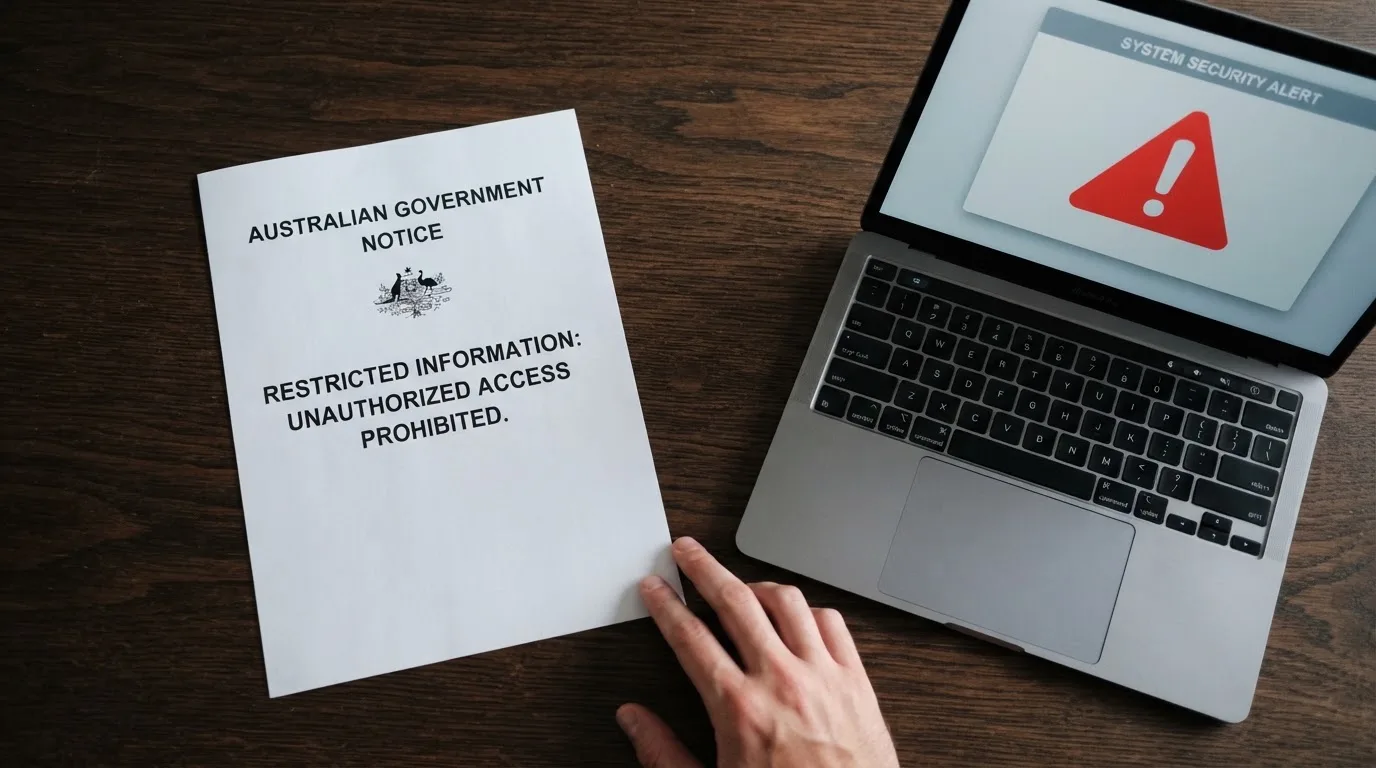
This is the single most repeated error in “trusted casino” rankings. A site is described as licensed, regulated, audited — and then ranked as though the licence were a positive answer to the question “can I play here from Melbourne?”. It is not. It is a positive answer to “is this company overseen somewhere, anywhere, by anyone”. Two different questions. The same badge answers one and not the other.
Player reviews, payout-speed testimonials and the length of time a brand has been operating are the inputs the rankings actually use. They are inputs that say something real about service quality and nothing about Australian legality. A site can be well-run, pay winners promptly, run a fair random number generator, and still be unlawful for an Australian resident to use.
How the ACMA actually enforces
The Australian Communications and Media Authority investigates complaints, issues formal warnings to offshore operators, and asks Australian internet service providers to block illegal sites. According to the ACMA as reported in June 2026, a total of 1,751 illegal gambling and affiliate marketing websites had been blocked since the first blocking request in November 2019, and more than 230 unlicensed gambling services had left the Australian market since enforcement was strengthened in 2017.
That is the running total, and the pace has not slowed. In the June 2026 round alone, the ACMA asked ISPs to block 12 more sites: 7Signs, ChromaBet, Donbet, Duospin, Freshbet, Slots Gem, Jacks Club, Lucky Start, Pointsbetz, Spinrise, Vinyl Casino and Wildsino. Blocking is the blunt end of the regime. A formal warning is the prior step — a written record that the operator was told, in the ACMA’s own words, that the service it offers Australians is prohibited.
The cumulative blocking rate the ACMA has run since November 2019 serves as an indicator of enforcement activity. From the first blocking request in November 2019 to the June 2026 figure of 1,751 blocked sites, the agency has added roughly 260–270 blocked sites per year on average across the six-and-a-bit-year window — with the early years substantially slower and the post-2017 strengthening period substantially faster. The headline is not one number but a band: the annual pace sits well above 200 and has been rising, and the June 2026 round alone moved the total by 12 in one announcement. The point is that enforcement is steady, mechanical, and has not plateaued.
For a brand on the ACMA’s formal warning list, the consequence is concrete. A warning is published on the regulator’s website with the operator’s company name and the brand name attached. A second warning is a regulatory record that the operator was told once, told again, and continued anyway. A third puts the brand inside the same enforcement track that has already driven 230 services out of the Australian market altogether.
The eleven brands the ACMA has named
The list below is not a ranking. Each brand is included because the ACMA itself issued a formal warning over it for offering prohibited services to Australians. The page describes each brand on the regulator’s record, not on marketing claims, and the order is the ACMA’s own sequence of action.
RocketPlay
The ACMA’s most recent action over RocketPlay is a March 2026 formal warning to Pulsup Ltd over the RocketPlay site. The brand sits inside an earlier regulatory history: Dama N.V. received a May 2022 formal warning covering six casino properties, RocketPlay among them. A site carrying two regulator warnings across four years is not an outlier in the offshore market — it is the pattern the ACMA’s enforcement has produced, and the brand continues to operate under a fresh corporate wrapper rather than a changed business model.
Level Up Casino
Level Up Casino was named in the same May 2022 Dama N.V. warning that covered RocketPlay. The brand sits on the regulator’s record as part of a six-property portfolio action — a single enforcement step that took in Bambet, Dazard, Level Up, Rocketplay, Wild Tornado and Cobra Casinos in one announcement. The “Dazard, Level Up” shape of these roll-ups is what an offshore operator with multiple brands looks like under Australian scrutiny: one corporate name, several front doors.
Woo Casino
Woo Casino is the first half of a Dama N.V. pattern that became visible in 2025. In March 2025 the ACMA formally warned Dama N.V. over Woo Casino, then warned the same operator again in May 2025 over Spirit Casino. Two warnings, two months apart, same corporate holder. The May 2022 warning was the earlier signal; the 2025 pair is what followed.
Spirit Casino
Spirit Casino is the second half of the Dama N.V. 2025 pattern. The May 2025 formal warning follows the Woo Casino warning by two months. The same operator, the same regulator, two brands — and a reader looking at the offshore market has no signal that one of these front doors is treated differently from another.
National Casino
In July 2025 the ACMA issued a formal warning to Consolutetish S.R.L. over National Casino and Bizzo Casino in the same enforcement step. National Casino is the first of the two names attached to that warning. Consolutetish S.R.L. is the operator, and the brand sits on the regulator’s record alongside the second property in the same announcement.
Bizzo Casino
Bizzo Casino carries a longer record than most of the offshore names on this page. The July 2025 Consolutetish S.R.L. warning is the second formal warning tied to Bizzo Casino since 2022 — the earlier one was issued to TechSolutions (CY) Group Limited and TechSolutions Group N.V. A brand that has cycled through two operator names and received two regulator warnings across three years is a clear case study of how the offshore market treats an Australian warning: the corporate wrapper changes, the brand persists.
Ignition Casino
The ACMA’s July 2025 enforcement round also named Ignition Casino, with Bamboo Media as the operator on the warning. Ignition sits on a separate corporate track from the Consolutetish S.R.L. pair — different operator, same month of action, same regulator reasoning.
Instant Casino
In February 2025 the ACMA issued a formal warning to EOD Code SRL over Instant Casino. The brand sits inside the regulator’s record with a single warning, earlier in 2025 than the July cluster. EOD Code SRL is the operator named; Instant Casino is the brand the warning was directed at.
Jackbit
In April 2026 the ACMA issued a formal warning to Ryker B.V. over Jackbit and CasinOK. Jackbit is the first of the two properties named in that action. The April 2026 warning puts Jackbit inside the most recent cluster of regulator activity — the same general enforcement window as the March 2026 RocketPlay warning to Pulsup Ltd.
Casino Intense
In April 2025 the ACMA issued a formal warning to Sterplay Holding Ltd over Casino Intense. The brand sits alone on that warning — a single operator, a single property, and a regulator record that predates the July 2025 cluster by three months.
Sky Crown
The ACMA issued a formal warning to Hollycorn N.V. over its Sky Crown and Blue Leo casino services, published in September 2022. Sky Crown is the older end of the regulator’s warning history on this page — a brand that has been on the ACMA’s published list since 2022, and that the H2 Gambling Capital data describes as part of the wider A$3.9 billion annual flow to illegal offshore gambling from Australia.
What the formal warning actually does
A formal warning is not a fine and not a prosecution. It is a published record that the regulator told the operator, in writing, that the service offered to Australians is prohibited. The operator is named. The brand is named. The date is named. The warning sits on the ACMA’s website as a permanent entry, and any subsequent enforcement step can refer back to it.
The mechanism is escalation, not punishment. A first warning is a statement that the regulator knows the brand is operating and has chosen the warning route. A second warning on the same operator or the same brand is a regulatory record that the warning was ignored. A third, in practice, has tended to mean either a blocking request to ISPs or the operator leaving the Australian-facing market altogether — the 230 services that have exited since 2017 cover that route.
For a player in Australia, the warning is information in a different sense. It tells you which corporate name sits behind a brand name, which is what an offshore operator often does not volunteer. A site showing “Curaçao licence #8048” in the footer rarely names the holding company in plain prose. The ACMA warning names the holding company, the brand and the date.
Where player reviews come from — and what they cover
“Most trusted” rankings are usually built from review aggregator scores, payout-speed testimonials and player forum threads. The inputs are real, the methodology is consistent within each list, and the ranking output is what it says it is: a comparison of brands on service quality, complaint volume and player satisfaction.
What the methodology does not cover is whether any of the brands can lawfully accept an Australian resident. The aggregator does not test that. The review does not test that. The affiliate list ranking the “top 11 most trusted online casinos Australia” does not test that. A site can have a 9.4 out of 10 player rating, a fast payout record, and a clean complaints history, and still be unlawful for a person sitting in Sydney to use. The rating does not change the law.
This is the editorial position of this page: the trust signal a player review measures is service quality, and service quality is not legality. Both are real. Both matter. They are not the same thing, and any ranking that conflates them is one a reader cannot use without already knowing the answer.
What a regulated Australian wagering service looks like, for contrast
A licensed Australian online bookmaker — the kind the NTRWC regulates in Darwin — operates inside the Australian consumer protection regime. It cannot accept credit card or credit-related products as payment, a restriction that took effect on 11 June 2024 and that constrains the use of linked digital wallets like Apple Pay. Legal deposit routes are debit card, bank transfer, PayID/Osko and BPAY. A site asking for a credit card or a crypto deposit from an Australian is operating outside the Australian rules.
The licensed wagering service is also connected to BetStop, the National Self-Exclusion Register, which has been live since August 2023. A player who has self-excluded is bound across every Australian-licensed online and phone wagering service. An offshore casino is not connected to BetStop. A self-exclusion made through BetStop does not extend to an offshore site, and an offshore site has no obligation to honour a BetStop registration.
Player protection on a licensed wagering service runs through Australian complaints bodies. The National Gambling Helpline (1800 858 858) is free and 24/7, with chat at Gambling Help Online. The helpline is available regardless of whether the gambling is on a licensed or an offshore site — the help is not conditional on the operator. But the recourse if a withdrawal is refused, the complaint is ignored, or the site disappears is what an offshore operation does not provide.
The tax position, briefly
Gambling winnings of a recreational player are not assessable income in Australia, and losses are not deductible, unless the person carries on a business of gambling. The position comes from section 6-5 of the ITAA 1997 and applies whether the gambling is on a licensed Australian bookmaker or an offshore casino. A recreational punter’s win is a windfall; the ATO does not tax it. A professional gambler’s win is income; the ATO does tax it. The line between the two is a fact-specific test the ATO applies case by case, and the right move on a specific situation is to check with the ATO directly.
The offshore status of the operator does not change the tax position. A win from an offshore casino is still not assessable income for a recreational player. A loss to an offshore casino is still not deductible. The thing the offshore status changes is the protection regime around the win — not the tax treatment of it.
The 2026 reform, and what it does and does not change
The Interactive Gambling Amendment (Gambling Reform) Bill 2026 passed Parliament on 19 August 2026. Its advertising and inducement measures commence on 1 January 2027. This is law with a start date, not law in force on a 2026 page. The measures target the marketing that surrounds online gambling — the kind of affiliate headline this page is itself a counterweight to — and they apply to Australian-licensed services.
For an offshore casino offering to an Australian, the 2026 reform does not change the underlying prohibition. The IGA’s core offence — providing online casino games or pokies to a person in Australia — remains in force, and the ACMA’s blocking and warning regime continues to operate against it. What the reform adds is pressure on the marketing layer above the offshore site, where Australian-facing affiliate content and inducement messaging live. The start date is what makes the distinction: a measure not yet in force on a 2026 page is not a current obligation, even though it is now enacted law.
The table — ACMA enforcement across the eleven brands
The columns below are the matters the ACMA’s own record covers. The order is reverse chronological by ACMA action — the most recent warnings first, the older ones last — so a reader scanning down the table moves from the freshest regulator action to the longest-standing.
| Brand | ACMA action and date | Operator named by the ACMA | Subject support |
|---|---|---|---|
| Jackbit | Formal warning, April 2026 | Ryker B.V. | — |
| RocketPlay | Formal warning, March 2026 | Pulsup Ltd | listings only (Gambling Insider) |
| National Casino | Formal warning, July 2025 | Consolutetish S.R.L. | listings only (acma.gov.au; austrac.gov.au; betstop.gov.au) |
| Bizzo Casino | Formal warning, July 2025 (second warning; 2022 first) | Consolutetish S.R.L. (2025); TechSolutions (2022) | listings only (Gambling Insider) |
| Ignition Casino | Formal warning, July 2025 | Bamboo Media | — |
| Spirit Casino | Formal warning, May 2025 | Dama N.V. | — |
| Instant Casino | Formal warning, February 2025 | EOD Code SRL | listings only (EcoPayz; PayID) |
| Woo Casino | Formal warning, March 2025 | Dama N.V. | — |
| Casino Intense | Formal warning, April 2025 | Sterplay Holding Ltd | listings only (austrac.gov.au; betstop.gov.au; Gamblinginsider.com) |
| Level Up Casino | Formal warning, May 2022 | Dama N.V. | listings only (Westpac) |
| Sky Crown | Formal warning, September 2022 | Hollycorn N.V. | — |
The “Subject support” column is what other industry listings report about each brand — review aggregator presence, payment-method coverage, regulatory citations — without confirming anything about the brand’s legal standing in Australia. Where the column carries an em dash, the research inputs did not surface coverage on the named listings. Where it lists a source, the entry describes what that listing reports, not what the operator itself claims.
The operator column is the column a player cannot reconstruct from the brand’s own homepage. RocketPlay, Woo Casino and Spirit Casino are three different front doors; the operator column shows that all three have, at different times, sat under Dama N.V. or Pulsup Ltd. National Casino and Bizzo Casino share Consolutetish S.R.L. as the operator on the 2025 warning, and Bizzo also sits under TechSolutions for the 2022 warning. Two operators, two brands each, the same regulator reasoning. The pattern is the data point.
What a reader actually decides
A reader who lands on this page from a “most trusted online casino Australia” search has three honest options.
The first is to treat the offshore ranking as a service-quality comparison and play on a licensed Australian wagering service for anything the law covers — sports and race wagering before the event. That choice stays inside the Australian consumer protection regime, with BetStop available, with the credit card ban enforced, with the ACMA’s complaints framework behind it.
The second is to play on an offshore casino knowing it is unlawful to do so from Australia, knowing the ACMA has acted against the brand or its operator on a published record, knowing there is no Australian complaints body and no recourse if a withdrawal stalls. The ranking tells the reader something real about service quality. The IGA tells the reader something real about legality. Both are facts; they sit beside each other.
The third is to read the offshore ranking, decide it does not match the situation, and look elsewhere — to a sports or race wagering service licensed in Australia, to a lottery, to nothing. The ranking is information; it is not a recommendation, and it is not the only path through the question.
The page does not promote any of these choices over another. What it does is refuse to blur the line between service quality and legality, because a reader who walks away with the wrong impression has been told something untrue.
What the ACMA’s record shows, in summary
Eleven brands, eleven operator names, eleven warnings. Six of the eleven brands share their operator with another brand on the same warning — Dama N.V. with six, Consolutetish S.R.L. with two, Hollycorn N.V. with one other, Ryker B.V. with one other. The “brand” is a marketing wrapper. The “operator” is what the regulator named. The wrapper changes; the operator does not always.
Four of the eleven brands have a second warning on file — Woo Casino, Spirit Casino, Bizzo Casino and RocketPlay (under Dama N.V.) carry earlier Dama or TechSolutions warnings. The pattern is consistent: a first warning, a brand continuation, a second warning on the same operator or the same brand. The ACMA’s enforcement is not a single-shot mechanism. It is an accumulation.
The cumulative pace from November 2019 to the June 2026 total of 1,751 blocked sites is the macro point. The pace has not slowed. The brand-by-brand warnings above are the micro point: the same operators, the same regulator, the same prohibited service, three or four years apart. The enforcement is steady and the offshore market has not adjusted to it.
The trust signal, restated
Trust, as a casino marketing word, points at service quality, payout reliability and longevity. Trust, as an Australian legal concept, points at a licensed wagering service operating under the IGA, the NTRWC and state and territory regulators, with BetStop available and the credit card ban enforced. The two meanings do not overlap on offshore casino sites.
A reader who wants the trust signal of the second kind has one option: the licensed wagering market. The licensed market does not include online casino games or online pokies, and no trust ranking can put them there. A reader who wants the trust signal of the first kind — service quality on an offshore site — has many options, each unlawful to use from Australia, each on the ACMA’s enforcement record or at risk of joining it. The page’s job is to keep both meanings on the table, each labelled, neither collapsed into the other.
Frequently asked questions
Does being called a trusted online casino mean it is legal for a player in Australia to use?
No. “Trusted” in casino marketing describes service quality and reputation, not Australian legality. The Interactive Gambling Act 2001 makes it an offence to provide online casino games or pokies to a person in Australia, and no offshore licence — Curaçao, Kahnawake, Malta — changes that. A trust ranking built from player reviews does not test Australian legality because the question sits outside the methodology.
What does a casino’s overseas gambling authorisation actually cover, and where?
A Curaçao, Kahnawake or Malta Gaming Authority licence binds the operator to its home regulator’s KYC, fund-segregation and dispute rules, and authorises the operator to run a casino from that jurisdiction for customers in markets that accept the regulator’s oversight. Australia does not. The licence is a statement about where the company is registered, not a passport into the Australian market.
How are most trusted online casino rankings usually put together?
Most rankings draw on review aggregator scores, payout-speed testimonials, player forum threads and the length of time a brand has operated. The methodology compares brands on service quality and complaint volume. It does not, and is not designed to, test whether any brand on the list can lawfully accept an Australian resident — the question sits outside the inputs the methodology uses.
Can a casino’s reputation for trustworthiness change without a player noticing?
Yes. The ACMA’s enforcement record is the clearest signal: a brand that sits on the warning list in 2022 can continue operating under a different operator name in 2025 and receive a second warning. The “brand” is a marketing wrapper; the operator behind it is what the regulator names. A player who watches the brand may miss the corporate change, and a payout-speed review will not surface it.
What separates a genuinely regulated operator from one that just claims trust on its own website?
A regulated operator in the Australian sense holds a wagering licence from a state or territory regulator — in practice the NTRWC for most online bookmakers — and operates inside the IGA’s consumer protection regime: no credit card payments, BetStop binding, Australian complaints bodies available. A site that claims “regulated” with an offshore licence is describing a different relationship: regulated somewhere, not in Australia, and not within the Australian framework.
Why might an online casino ranking for Australia still include unregulated offshore sites?
Because the inputs the ranking uses — player reviews, payout history, complaint volume — measure service quality and do not test legality. A ranking that genuinely excluded unregulated offshore sites from an Australian list would, in practice, list no sites at all, since no offshore casino can lawfully accept an Australian resident. The choice to include them is methodological: the ranking measures trust as service quality and reports it as such, and the Australian legal question is one the reader is expected to bring themselves.