
Where Wazdan slots meet the Australian market, and what an Australian reader can actually do with them
29 October 2026 — data current against the ACMA register of formal warnings and the published blocking-round notices.
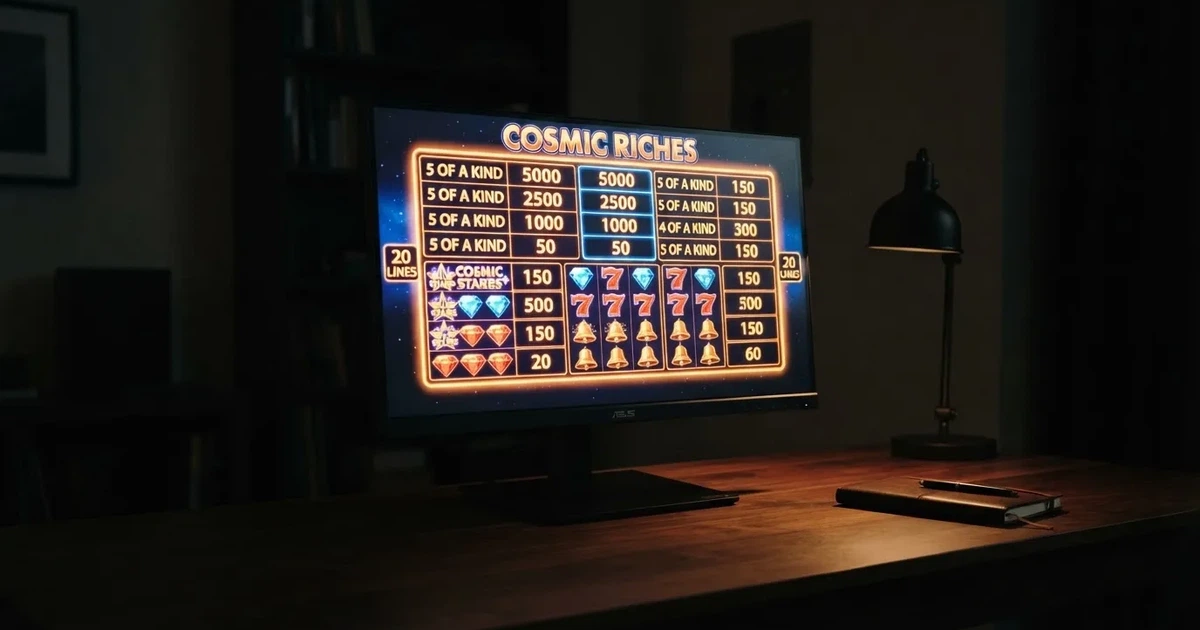
The phrase “best Wazdan online casino” sounds like a comparison. In Australia it is something else. Wazdan is a real slot studio with a real catalogue, and the studios’ titles do appear on real casino sites — but every site that markets those titles to a person physically in Australia is operating against the Interactive Gambling Act 2001, and the ACMA has spent the last several years issuing formal warnings to the operators behind them and asking Australian ISPs to block the URLs. A reader who came here to choose between options is being asked, instead, to understand what those options are and what is actually being chosen when one is picked.
That is the substance of this page. It walks through what Wazdan makes, how offshore sites turn those games into inducements, what the ACMA has done about it, and the eleven brands that have ended up on a formal-warning list in the last few years. It is not a ranking of where to play — that comparison collapses the moment “play from Australia” enters the picture — and it is not a recommendation. It is what the available facts let a reader do.
Table of Contents
- Bonuses and free spins attached to Wazdan titles
- Mobile play and the Wazdan catalogue on a phone
- What Wazdan actually makes, and how the catalogue is built
- The eleven brands the ACMA has acted against, and how the comparison works without ranking them
- The fundamentals of how offshore Wazdan sites operate in Australia
- The legal frame around offering online casino games in Australia
- What responsible gambling looks like in Australia, and what an offshore site does not connect to
- How deposits and withdrawals actually flow through an offshore Wazdan site
- The blocking rate the ACMA’s enforcement has produced
- The Australian-licensed routes that do exist
- Frequently asked questions
Bonuses and free spins attached to Wazdan titles
Bonus offers around Wazdan slots are the first thing any offshore site puts on its landing page, and the first thing a reader who searched for this topic will see. They are also the first thing an Australian should understand as inducement rather than gift.
A welcome package on an offshore Wazdan site typically pairs a percentage match on the first deposit with a bundle of free spins locked to a specific Wazdan title — 9 Coins, Power of Gods, Sun of Fortune, the Hold the Jackpot series. The percentage sits in the 100% to 200% band, the free-spin count in the fifty-to-two-hundred band, and the headline number looks generous. The conditions behind it are where the package becomes something else. A wagering requirement in the 35x to 45x range applied to the bonus amount, a free-spin win cap, a maximum-bet rule while the bonus is active, a list of Wazdan titles that count at a reduced rate or not at all, and a withdrawal ceiling on winnings from the free spins are all standard terms in this market. None of them are printed on the landing page.
What makes those conditions matter in Australia is that the casino offering them is not licensed here. A player in Australia cannot escalate a complaint about a voided bonus to an Australian body, because no Australian body has jurisdiction. The site is held together by whatever licence the operator has chosen to display — a Curaçao certificate, an Anjouan number — and that licence does not bind the operator to a complaint process a player in Australia can use. A bonus that reads as value on the way in becomes, on the way out, the place where the operator’s discretion sits.
A free-spin package deserves the same reading. Free spins on a Wazdan title pay the line wins of the title they are locked to, at the stake the operator names, and the resulting balance is bonus money until the wagering requirement is cleared. A 96.06% return-to-player figure on the underlying game — the figure Wazdan publishes for 9 Coins — describes long-run average behaviour across many spins, not what a fifty-spin free bundle pays to any one player. The headline “50 free spins on 9 Coins” and the resulting real payout are two different numbers.
For a reader who arrived here looking for the “best Wazdan bonus,” the editorial answer is that the question itself does not travel to Australia. The bonuses exist, they are aggressive by global standards, and every one of them is being offered by a brand that the ACMA has warned or a site that has been blocked. The comparison the reader was about to make is a comparison between inducements to use an unlicensed service.
Mobile play and the Wazdan catalogue on a phone
Wazdan’s catalogue is built in HTML5 and runs in any modern mobile browser. There is no separate Wazdan app — the studio does not publish one to players — and there is no casino app connected to a brand on this page that an Australian can install and use legally. What exists is the mobile browser, the casino’s responsive site, and a Wazdan slot rendered inside it. That is the entire mobile offering for this topic.
The mobile experience inside an offshore casino’s site is competent. Wazdan titles resize cleanly to a phone screen, the spin control moves to where a thumb sits, and the studio’s signature features — adjustable volatility, the Hold the Jackpot bonus, the Collect to Infinity mechanic — all behave the same way they do on a desktop browser. A player who already had an account with one of the brands below would not struggle to use it on a phone.
The competence is not the point. The point is that the site itself is one the ACMA has acted against, and the mobile browser is just the doorway. A “Wazdan mobile casino” recommendation in this market is a recommendation to use a browser to reach a service Australia prohibits, and a reader who arrived with that question in mind has reached the wrong page.
For readers who want a Wazdan-class experience on a phone inside Australian law, the route is land-based. Aristocrat’s electronic gaming machines run in clubs and casinos in every state and territory under state-level regulation, and several Wazdan-style mechanics — adjustable denomination, a hold-and-respin bonus, configurable volatility through bet sizing — are built into those machines by their manufacturers. The phone does not deliver them. The pub does.
What Wazdan actually makes, and how the catalogue is built
Wazdan is a slot studio founded in 2010 and registered in Malta, with a Malta Gaming Authority B2B licence and a UK Gambling Commission account. The studio reports more than 300 titles in its catalogue, more than 40 new releases a year, and a footprint across 2,500 casinos in 20-plus markets. It is licensed or certified in more than 30 jurisdictions — New Jersey, Michigan, West Virginia, Ontario, Sweden, Romania, Greece, Denmark among them — and the catalogue is therefore heavily weighted toward the markets where online casino is legal and regulated.
The mechanics the studio leans on are its own. Volatility Levels, introduced in 2018, lets the player pick low, medium or high volatility in-game for any given title, and the rest of the maths adjusts. Hold the Jackpot is the studio’s bonus-game series, a hold-and-respin format in which coins and jackpot symbols lock to the reels while the player collects. Collect to Infinity extends that mechanic so a single coin can keep collecting without a fixed cap, and Cash Infinity sits behind it as a sticky-cash variant. Together these are the studio’s signature, and they show up across the catalogue in different skins — 9 Coins, Power of Gods, Sun of Fortune, Sizzling Eggs, Larry the Leprechaun, Hot Slot, Coin Volcano, Magic Spins.
9 Coins is the flagship. It pays no prizes in the base game and concentrates the entire return in the Hold the Jackpot bonus round, where the cash and jackpot symbols that land during the feature combine into the payout. The published return-to-player sits at 96.06%, the volatility is medium-high, and the maximum win is 500x the bet. None of those figures is a guarantee for any given session; they are the long-run parameters the maths runs on.
A reader who came here to compare Wazdan titles should know that the comparison that matters is between Wazdan and the studios it sits beside — Pragmatic Play, Betsoft, 1spin4win, the Aristocrat Interactive real-money arm. Betsoft, founded in 2006, has more than 200 RNG games across slots, table games and video poker, with titles such as Good Girl Bad Girl 2 (96.22% RTP, “Very High” volatility, 5 reels and 20 paylines) carrying published specifications on the studio’s own site. 1spin4win, founded in 2021, has more than 190 slots built in HTML5 for low-bandwidth connections and operates from Curaçao. Aristocrat Interactive, formed in April 2024 by combining Aristocrat’s Anaxi unit with the acquired NeoGames group, is the only one of those four studios whose real-money products are designed to operate in regulated US and European markets. The comparison is a comparison of studios — not a comparison of where an Australian can play them.
The eleven brands the ACMA has acted against, and how the comparison works without ranking them
The brands below are not a ranking. They are the brands the ACMA itself has named in formal warnings issued under the Interactive Gambling Act 2001 for offering prohibited interactive gambling services to people in Australia. Each row carries the operator behind the brand as the ACMA named it, the date of the warning, and what the public record shows about the brand’s Wazdan offering — where it shows anything. No row carries a recommendation. The table exists so a reader can see, at a glance, what the public record actually contains and what it does not.
| Brand | ACMA action and date | Operator named by the ACMA | Subject support |
|---|---|---|---|
| RocketPlay | Formal warning, March 2026 (Pulsup Ltd); earlier Dama N.V., May 2022 | Pulsup Ltd | — |
| Level Up Casino | Formal warning, May 2022 | Dama N.V. | Wazdan listings |
| Woo Casino | Formal warning, March 2025 | Dama N.V. | — |
| Spirit Casino | Formal warning, May 2025 | Dama N.V. | — |
| National Casino | Formal warning, July 2025 | Consolutetish S.R.L. | Betsoft, Pragmatic Play listings |
| Bizzo Casino | Formal warning, July 2025; earlier TechSolutions, 2022 | Consolutetish S.R.L. | — |
| Ignition Casino | Formal warning, July 2025 | Bamboo Media | — |
| Instant Casino | Formal warning, February 2025 | EOD Code SRL | — |
| Jackbit | Formal warning, April 2026 | Ryker B.V. | — |
| Casino Intense | Formal warning, April 2025 | Sterplay Holding Ltd | 1spin4win, plus general listings |
| Sky Crown | Formal warning, September 2022 | Hollycorn N.V. | — |
A reader who scans the third column will notice how often it reads as a dash. The dashes are not a formatting choice; they reflect what the public record actually carries. Where Wazdan’s own site or a comparable studio listing names a brand as carrying Wazdan content, that fact is recorded. Where the public record is silent, the cell stays empty. Marketing pages on the brands themselves were not used as sources for this table, because their presence on those pages is the very conduct the ACMA has acted against.
What the table shows in aggregate is also worth saying. Eleven brands. Three operators — Dama N.V., Consolutetish S.R.L., Hollycorn N.V. — account for six of those warnings, with Dama N.V. alone holding four. The warnings span 2022 to 2026 and they continue. The brand list the ACMA has warned against and the brand list an Australian might find through an offshore comparison site are not the same length, but the overlap is substantial, and the ACMA’s list is the one backed by the regulator’s own action.
RocketPlay — same brand, two warnings, no licence in Australia
RocketPlay was first named in the May 2022 warning to Dama N.V. and then again in the March 2026 warning to Pulsup Ltd, after the brand changed hands. The pattern is the one the table shows across most of its rows: the brand persists, the operating company changes, the warning lands again. There is no record that any of the operators behind the brand held an Australian licence at any point, because online casino games cannot be licensed in Australia under the Interactive Gambling Act. A reader who already has an account on RocketPlay should read the operator changes as evidence that nothing about the underlying prohibition has been resolved by a rebrand.
Level Up Casino — the Wazdan listing that the ACMA warning makes a different kind of fact
Level Up Casino is named on Wazdan’s own listings as a Wazdan-carrying brand, which means the connection between brand and studio is on the public record at both ends — and the ACMA’s May 2022 warning to Dama N.V. names Level Up Casino by name as one of six brands in the action. The two facts, taken together, are what an Australian reader is being asked to weigh: the studio’s own page lists the brand as a partner, and the regulator has warned the operator behind the brand for offering prohibited services in Australia. The contradiction does not unwind.
Woo Casino and Spirit Casino — the 2025 wave of Dama N.V. warnings
Dama N.V. picked up two further warnings in 2025 — Woo Casino in March, Spirit Casino in May — on top of the original 2022 action. The 2022 action covered Bambet, Dazard, Level Up, Rocketplay, Wild Tornado and Cobra Casinos, and the 2025 wave added Woo Casino and Spirit Casino to the same operator’s record. The pattern is the same one the table shows across most of its rows: a single operator runs several brands, the ACMA acts on each in turn, and the warnings stack.
National Casino and Bizzo Casino — one operator, two brands, one prior action
Both brands sit with Consolutetish S.R.L. and were named in the same July 2025 warning. Bizzo Casino had already been the subject of an earlier 2022 formal warning to TechSolutions (CY) Group Limited and TechSolutions Group N.V., so the brand carries two warnings across two operators. National Casino’s listings show Betsoft and Pragmatic Play content rather than Wazdan specifically, which is what the third column carries.
Ignition Casino — the brand that landed with a different operator
Ignition Casino was named in the July 2025 warning to Bamboo Media, which sits the brand alongside a different operator than most of the other Dama N.V. or Consolutetish S.R.L. entries. The brand carries no Wazdan listing in the public record the table could draw from, which is why the cell reads as a dash.
Instant Casino — the EOD Code SRL warning
Instant Casino sits with EOD Code SRL after the February 2025 warning. The brand has been the subject of significant offshore marketing through affiliate pages in the period since, and the warning itself predates most of that marketing push. A reader who has seen the brand advertised heavily in 2026 is looking at the same brand the regulator warned about in 2025.
Jackbit and CasinOK — the most recent Ryker B.V. warning
Ryker B.V. picked up the April 2026 warning naming Jackbit and CasinOK. Both brands sit with the same operator, and the warning is the most recent action on the table. The brands do not appear on the Wazdan listings the public record surfaces, but the operator behind them is on the ACMA’s record for offering prohibited services in Australia.
Casino Intense — the Sterplay Holding Ltd warning
Casino Intense is named in the April 2025 warning to Sterplay Holding Ltd. The brand’s own listings include 1spin4win content among the providers visible on its site, which is what the third column records; Wazdan itself does not surface Casino Intense on its own listings page.
Sky Crown — the Hollycorn N.V. warning
Hollycorn N.V. was the subject of the ACMA’s formal warning over Sky Crown and Blue Leo, both of its casino brands at the time. The warning is the oldest formal action on the table. The brand’s Wazdan listing is not on the public record, which is why the cell reads as a dash.
The fundamentals of how offshore Wazdan sites operate in Australia
The shape of every brand on the table above is the same, even where the operators and the dates differ. The site holds an offshore licence — Curaçao is the most common, Anjouan the next — and uses that licence to satisfy the regulatory display boxes the operators’ own payment partners and software providers look for. The site accepts Australian players in practice; it does not advertise to them in jurisdictions where its licence would be at risk. The result is that the site is reachable from Australia and is marketed to Australians through affiliate channels, search results, and comparison pages, but no Australian regulator has any authority over it.

What the offshore licence does and does not do matters because readers arrive with assumptions about it. It does allow the site to operate in jurisdictions where online casino is legal. It does not give the site any standing in Australia, because the Interactive Gambling Act is structured around the provider of the service — the operator of the site — and not around the player. An Australian who opens an account on one of these sites, deposits, plays a Wazdan slot, and tries to withdraw is dealing with an operator that has no obligation to an Australian regulator and no complaints body the player can reach.
The balance side of the equation matters in its own way. The ACMA’s enforcement runs through formal warnings, civil penalties, and ISP blocking of the site’s URLs. The first round of blocking requests went out in November 2019, and the ACMA reported in June 2026 that 1,751 illegal gambling and affiliate marketing websites had been blocked since that date, with more than 230 unlicensed services having left the Australian market since 2017. The blocking round reported on 26 June 2026 added 12 more sites to the block list — 7Signs, ChromaBet, Donbet, Duospin, Freshbet, Slots Gem, Jacks Club, Lucky Start, Pointsbetz, Spinrise, Vinyl Casino and Wildsino. The numbers describe an ongoing campaign, not a single action, and the campaign’s trajectory is the relevant fact about the offshore market a reader is weighing.
The economic context for that campaign is the H2 Gambling Capital 2025 estimate: about A$3.9 billion a year leaves Australia through illegal gambling sites, and the share of gambling going through legal channels fell from 74% in 2021 to 64%. The offshore sites are not a marginal phenomenon; they are a sizeable flow of Australian money into services the regulator is actively trying to choke off.
The legal frame around offering online casino games in Australia
The Interactive Gambling Act 2001, as strengthened by the Interactive Gambling Amendment Act 2017, makes it an offence to provide online casino games, online pokies and in-play betting to a person in Australia. No state or territory issues a licence for any of those products. What is licensed — wagering on races and sport placed before the event, lotteries, keno — is licensed by state and territory bodies, with the Northern Territory Racing and Wagering Commission holding 52 of the country’s online bookmakers (Sportsbet, Bet365, Ladbrokes among them) for tax reasons. The NTRWC has no full-time staff and meets once a month in Darwin, a detail worth knowing because it explains why the licensed wagering market in Australia is so heavily Northern Territory-based.
The ACMA is the enforcement body. It investigates, issues formal warnings, and can direct Australian ISPs to block URLs. The individual player is not the target of the IGA; the Act runs against the provider. An Australian who plays on one of the sites above is not personally at risk of prosecution. The risk runs the other way — no Australian consumer protection, no complaints body, no recourse if a withdrawal is refused, and a real chance the site is blocked while a balance is still on it.
Two further pieces of the legal frame govern what an Australian can pay with. Since 11 June 2024, credit cards, credit-related products and digital currency are banned as payment for licensed online wagering in Australia, with penalties up to A$247,500 for operators that breach the rule. The legal deposit routes for a licensed Australian wagering service are debit card, bank transfer, PayID/Osko and BPAY. A site that asks an Australian for a credit card or a crypto deposit is one that is not operating inside the Australian rules. The 2026 reform — the Interactive Gambling Amendment (Gambling Reform) Bill 2026 — passed Parliament on 19 August 2026 and its advertising and inducement measures commence 1 January 2027, which makes it law with a start date rather than law in force on a 2026 page.
On tax, the Australian Taxation Office’s position is that winnings of a recreational player are not assessable income under section 6-5 of the ITAA 1997 and losses are not deductible, unless the player carries on a business of gambling. The position is a model only, and the standard caveat — check with the ATO — applies.
What responsible gambling looks like in Australia, and what an offshore site does not connect to
Australian responsible-gambling infrastructure is built around licensed wagering services, and the architecture does not extend to offshore casinos. BetStop, the National Self-Exclusion Register, has been live since August 2023 and binds Australian-licensed online and phone wagering services. An offshore casino is not connected to BetStop, and an Australian who has registered with BetStop can still reach an offshore casino’s site if the URL has not been blocked. The registration is not a wall around offshore play; it is a wall around the legal half of the market.
The other end of the support architecture is the National Gambling Helpline on 1800 858 858 — free, 24/7, with chat at Gambling Help Online. State and territory bodies also run their own self-exclusion and monitoring registers (New South Wales, Victoria, Queensland, Western Australia, South Australia and the rest), with the details varying by jurisdiction. A reader who needs the support is reaching it through one of those channels, and the channels do not depend on whether the gambling that prompted the call happened through a licensed service or an offshore one.
For readers weighing the offshore sites on this page against the Australian licensed market, the responsible-gambling point reads as follows. The licensed wagering market — sports, racing, the pre-event bet — has a complaints body, has a self-exclusion register that actually binds the operator, has a payment framework that does not include credit cards or crypto, and has an advertising regime that the 2026 reform is going to tighten. The offshore casino market has none of those.
How deposits and withdrawals actually flow through an offshore Wazdan site
The mechanics of an offshore casino are familiar from the global market. A player opens an account, deposits through one of the methods the site accepts, plays Wazdan titles in the lobby, and tries to withdraw through the same payment rail. The deposit side is fast — typically instant on cards and e-wallets, faster on crypto where the site accepts it. The withdrawal side is the place the experience diverges from what the site advertises.
A typical offshore site advertises a “fast payout” or “instant withdrawal” headline, with the actual time depending on the payment method and the site’s verification process. E-wallet withdrawals are usually quoted in the 0-24 hour range after the verification step completes. Card withdrawals run 1-5 business days. Bank transfers run 3-7 business days. Crypto, where the site supports it, is quoted in minutes to a few hours once the site’s internal approval has happened. None of those ranges apply if the player has not completed the site’s know-your-customer verification, and offshore sites frequently trigger verification on the first withdrawal rather than at sign-up, which means a player can deposit and play for weeks before being asked for documents they cannot easily supply.
What complicates those ranges in the Australian context is the payment-method side. A site that offers crypto deposits is not offering a method an Australian can use legally for licensed wagering. An Australian using credit on an offshore site is using a method that is banned at licensed Australian operators. The offshore site’s payment page is therefore a faster version of a route that the licensed Australian market has been deliberately narrowed, and the speed is part of why the site attracts Australian customers in the first place.
For a reader comparing withdrawal times across the brands above, the only honest comparison is that none of the brands sit within the Australian consumer-protection framework that governs withdrawal disputes. A payout that takes 24 hours at one site and 72 hours at another is fast at both, and disputed at neither if the operator decides to void the bonus or close the account.
The blocking rate the ACMA’s enforcement has produced
The arithmetic that belongs on this page is the rate at which the ACMA’s blocking regime has cleared illegal sites since the first round went out in November 2019. The 1,751 sites blocked as of June 2026, against the seven years and roughly seven months the regime has been running, sits in a band rather than at one figure. The endpoints of that band are shaped by the enforcement’s real cadence — quiet stretches followed by large monthly rounds — rather than by a steady monthly average. A reader who wants the rate should read it as a steady upward count against a backdrop of single rounds that sometimes add twelve or more sites in one notice, sometimes fewer.
What the band shows is that the campaign has been running long enough that the running total dwarfs the size of any single round, and that the round-by-round rate has been enough to push the total into four figures without saturating the supply of new sites coming online. The June 2026 round’s twelve additions brought the total to 1,751; the equivalent round a year earlier added a smaller number; the trajectory through the year is a steady count up rather than a sudden jump. The figure the band sits against — 1,751 sites blocked across seven years — is a regime that has been working continuously, that has not yet reached a saturation point, and that is being joined by more than 230 services that have left the Australian market entirely since enforcement was strengthened in 2017. The two numbers together describe an enforcement picture that has been working as designed.
For an Australian reader comparing the brands on the table above, the blocking rate is what gives the regulator’s warnings their teeth. A formal warning is a step. A blocked URL is a consequence. The brands that have ended up on the formal-warning list have a higher prior probability of being on the next blocking list than the brands that have not, and the campaign’s running total is the empirical record of how often that prior has been borne out.
The Australian-licensed routes that do exist
A reader who arrived at this page looking for a Wazdan experience is owed an honest description of the routes the law does permit, because the routes are narrow and they are not what the topic suggested.
The licensed Australian online wagering market is wagering — sports, racing, the pre-event bet — operated by bookmakers licensed in the Northern Territory or in a state that issues its own wagering licences. None of those bookmakers offers a Wazdan slot or any other online casino game, because online casino games cannot be licensed in Australia. The licensed wagering market does not carry the catalogue the subject named, and a comparison across the brands above that points the reader back toward the licensed wagering market is a comparison that points at a different product entirely.
The land-based market is the other side. Australia has a large and well-regulated electronic gaming machine market, with Aristocrat as the largest domestic manufacturer and the second-largest slot manufacturer worldwide behind International Game Technology. Aristocrat Leisure — founded in 1953 by Leonard Ainsworth, listed on the ASX in 1996 under the ticker ALL — reported 2025 revenue of A$6.30 billion, normalised net profit after tax and amortisation of A$1.55 billion, and 7,400 employees. Its administrative and research headquarters are in North Ryde, with offices in South Africa, Russia and the United States, and the company’s online arms are Product Madness (social games) and Aristocrat Interactive (regulated real-money). The 2014 acquisition of Video Gaming Technologies for US$1.3 billion, the 2017 acquisitions of Plarium (US$500 million) and Big Fish Games (US$990 million), the April 2024 completion of the NeoGames acquisition at roughly US$1 billion, and the rejected 2021 bid for Playtech at US$3.7 billion are the corporate shape behind the machines Australians have been playing for decades.
A Wazdan-class experience on a regulated machine in a regulated venue is the closest Australian legal approximation to what the request asked for. The catalogue is not Wazdan’s, and the player is sitting at a machine in a club or a casino rather than at a phone in their home, but the regulatory frame is the one a reader comparing options is supposed to be weighing. The trade-off is the trade-off the topic has been trying to avoid: Australian law, Australian regulation, no offshore operator, and no Wazdan-branded title.
Frequently asked questions
Is Wazdan legally available to players in Australia?
Wazdan’s titles are licensed in more than 30 jurisdictions, including several US states and most of the regulated European market, but Australia is not one of them. Online casino games and online pokies cannot be licensed in Australia under the Interactive Gambling Act 2001, and every site that markets Wazdan titles to a person in Australia is operating against the Act. The ACMA has issued formal warnings to several of those operators and has asked Australian ISPs to block more than 1,750 illegal sites since November 2019.
What kinds of games does Wazdan make?
Wazdan is a slot studio with more than 300 titles in its catalogue and more than 40 new releases a year, founded in 2010 and registered in Malta. The studio’s signature mechanics are its Volatility Levels feature (which lets a player pick low, medium or high volatility in-game), the Hold the Jackpot bonus-game series, and the Collect to Infinity / Cash Infinity mechanic. The flagship title 9 Coins pays no prizes in the base game and concentrates all wins in its Hold the Jackpot round, with a published RTP of 96.06%, medium-high volatility and a 500x-bet max win.
Are Wazdan games offered at land-based venues in Australia?
No Wazdan-branded machine sits in an Australian venue. The closest equivalent is the Aristocrat electronic gaming machine market, which is regulated at state and territory level, runs in clubs and casinos across the country, and is the largest gambling-machine market in Australia by domestic manufacturer share. Aristocrat Leisure is the second-largest slot-machine manufacturer worldwide behind International Game Technology, with 2025 revenue of A$6.30 billion and 7,400 employees.
How can Australians check whether a Wazdan title is fair before ever considering play?
Wazdan’s titles are independently tested by the regulators in the markets where the studio is licensed — the Malta Gaming Authority, the UK Gambling Commission, and the regulators in Ontario, New Jersey, Michigan, West Virginia, Sweden, Romania, Greece and Denmark, among others. Those regulators publish the test certificates and the return-to-player figures for the titles they have approved. None of those regulators has authority over a site offering Wazdan titles to Australians, because no Australian regulator licenses the offering.
Why do offshore sites keep advertising Wazdan games to Australian visitors?
The H2 Gambling Capital 2025 estimate puts Australian losses to illegal gambling sites at about A$3.9 billion a year, with the share of gambling going through legal channels falling from 74% in 2021 to 64%. The offshore sites are a sizeable flow of money, and the inducements — large welcome bonuses, free-spin bundles, “instant payout” headlines — are designed to capture it. The ACMA’s enforcement campaign is the regulatory response, and the campaign has been running continuously since November 2019.
What should an Australian do if they see a Wazdan game promoted by an unlicensed site?
The Australian Communications and Media Authority accepts reports of illegal online gambling through its website. The National Gambling Helpline on 1800 858 858 is free, runs 24/7, and offers chat at Gambling Help Online. BetStop, the National Self-Exclusion Register, has been live since August 2023 and binds Australian-licensed wagering services; it does not bind offshore casinos, but a registration with BetStop is a meaningful step inside the legal half of the market. State and territory bodies run their own self-exclusion and monitoring registers for land-based venues.