
Relax Gaming Online Casinos in Australia: The Real Choice in 2026
Every search result this page could lead with flatters the same illusion — that a few clicks gets a player from Australia onto a Relax Gaming slot, that the offshore licence behind the brand is real protection, and that the bonus math works out in the punter’s favour somewhere along the line. The honest version of this page is shorter on flattery and heavier on what actually holds: Relax Gaming is a real studio with real licences in the UK, Malta, Gibraltar, Romania and Ontario, and the brand sits on hundreds of offshore casino lobbies. None of those lobbies can lawfully take an Australian deposit for an online casino game. The Interactive Gambling Act 2001 closes that door, and the Australian Communications and Media Authority has spent the better part of a decade walking up to it.
That makes this a page about choice under a closed door. There is the legitimate path, where Relax Gaming-style content reaches an Australian through state-regulated pokies in a licensed club or pub, under an Aristocrat or IGT-style licence regime that the operator has. There is the offshore path, where the same Relax Gaming titles sit on a Curaçao-licensed or Anjouan-licensed site that markets heavily to Australian visitors, takes a deposit, and answers to no Australian regulator if anything goes wrong. And there is the consumer-protection path, where the National Self-Exclusion Register, the 24/7 helpline, and the ACMA’s own complaint mechanism sit for anyone who wants out of the loop rather than into another spin.
The angle here is the choice. Which path suits which punter, what each one actually costs in money and in recourse, and where the marketing word cracks on the arithmetic.
Current as of 29 October 2026 and checked against the Australian Communications and Media Authority’s register of formal warnings and blocking actions.
Table of Contents
- How the offshore casino bonus around Relax Gaming slots is actually built
- Mobile play for Relax Gaming titles
- What the Relax Gaming catalogue looks like up close
- The comparison that closes the choice
- The Australian landscape for Relax Gaming-style content
- The lawful ground: state-licensed clubs, pubs and the Aristocrat-style alternative
- Responsible gambling and the consumer-protection frame
- Payments and the cost of moving money
- How the ACMA’s blocking rate has run since 2019
- Putting it together for the punter
- What an Australian punter actually has on the table
- FAQ
How the offshore casino bonus around Relax Gaming slots is actually built
Bonus marketing around Relax Gaming titles follows the offshore template — a deposit match, free spins on a named slot, sometimes a “no deposit” sweetener that itself carries wagering rules. The mechanics are standard and the operator-agnostic version is short: the casino credits a stated amount, the player wagers it through a stated multiple, and only what survives is withdrawable. What makes the offer worth reading is not the headline number but the multiplier behind it, the cap on what can be cashed out, and the list of games the bonus is allowed to be played on. Relax Gaming slots usually count in full; live tables often do not; a handful of high-RTP titles are routinely excluded entirely.

A welcome package is usually staged — a percentage match on the first deposit, a smaller percentage on the second, free spins credited in daily batches that expire if unused. The “free spins winnings” line is where the marketing word meets its first arithmetic wall: those winnings almost always arrive as bonus money, not cash, and run through the same wagering multiple as the deposit match. The 35x figure that recurs across the offshore market is a median, not a promise; 40x and 45x are common, and a handful of brands charge the multiple on the deposit plus the bonus rather than on the bonus alone, which doubles the work without doubling the headline.
The free-spin component deserves a separate read. Offshore brands usually fix the spin value at the lowest stake the slot allows — A$0.10 to A$0.20 — and cap cashout from free-spin winnings at a small multiple of the spins’ face value. The “up to A$500 in free spins” line is therefore the value at the top end of the cap, not the value most players will actually clear. The cap is the ceiling, not the floor, and the punter who cashes out early leaves most of the headline on the table.
A no-deposit bonus is the offer that promises the most and pays the least. It exists to put a balance on the account so the player can sample a slot before paying in. The same wagering multiple applies, the same maximum cashout cap applies — usually tighter, sometimes as low as five times the bonus — and the offer expires in days rather than weeks. The arithmetic under a A$10 no-deposit at 50x with a 5x cashout cap is brutal: A$500 of qualifying turnover to clear, and at most A$50 to walk away with if every spin cooperates. It is a free trial, not a gift.
The honest reading of an offshore Relax Gaming bonus is that the headline is the marketing word and the wagering multiple, the cashout cap, the eligible-games list and the expiry window are the contract. The punter who reads only the headline has already agreed to the contract; the punter who reads all four has a chance to compare it with the next operator’s four.
Mobile play for Relax Gaming titles
Relax Gaming has been HTML5-first since its slots were rewritten off Flash a decade ago, which is the practical reason its catalogue runs cleanly in a mobile browser without a download. Load times on a current handset sit in the two-to-three second band for a fresh launch; returning to a cached game is faster. The studio’s flagship slots — Money Train, Temple Tumble, the Mega Ways series — run portrait and landscape, and the bonus-buy button sits where a thumb can reach it without obscuring the reels.
The offshore casino brands that carry the catalogue usually do so through a browser wrapper rather than a native app. A “Relax Gaming casino app” listed in a store is almost always a webview that loads the same responsive site the browser does, with a push-notification permission asked up front and a smaller real-estate for the lobby. The download buys convenience, not compatibility. A punter who already has the brand open in a browser and is happy with the load time has the app the marketing is selling.
Touchscreen play changes the experience in two ways worth naming. The first is the bet-size step: a desktop player can run A$0.10 increments through A$0.20, A$0.50, A$1.00 and up; a mobile lobby often offers coarser steps, with the A$0.10 minimum and the next-step jump to A$1.00 skipping A$0.20 and A$0.50 entirely. The second is the autoplay count, which on some Relax Gaming slots is capped at 100 spins on mobile where it sits at 1,000 on desktop. Neither cap is a restriction in the regulatory sense; both are operational choices that change how a session feels.
Connection quality matters more on mobile than on desktop because the same slot is loading the same paytable and the same RNG call over a link that drops packets in tunnels, on trains, and at the edges of 4G coverage. Relax Gaming’s HTML5 implementation tolerates a brief drop by replaying the spin on reconnect; what it cannot tolerate is a session timeout that sits idle for ten minutes, after which some casinos log the player out and forfeit any in-progress bonus round. The fix is mundane: keep the screen awake during a bonus buy, and accept that a five-minute interruption can clear the bet the punter just placed.
The Australian-specific mobile risk is the data trail the browser leaves. An offshore casino that knows the visitor is in Sydney or Melbourne has decided to take the deposit regardless of the IGA, and the receipt arrives as a marketing email that the ACMA has documented in its formal warnings to operators offering prohibited services. The punter’s own data — name, address, payment instrument — is now held by a company outside any Australian privacy regime, and the unsubscribe link at the bottom of the email is the only recourse the punter has if the marketing does not stop.
What the Relax Gaming catalogue looks like up close
Relax Gaming’s range covers online slots, live casino content under a separate arrangement, bingo and a smaller poker and table-game library. The slots are the reason the brand appears on the offshore casinos this page lists. They run on a portfolio model rather than a one-off hit strategy, with the studio issuing between eight and twelve new titles a year, each one tuned to a different volatility band and a different bonus mechanic.
The high-volatility end of the catalogue runs through Money Train and its successors. Money Train 3 sits at the top of the published max-win numbers and uses a hold-and-win bonus that recurs on every named sequel. The medium-volatility centre is the MegaWays line, where Tumble Tumble Tumble and similar titles use the licensed Big Time Gaming mechanic. The low-volatility tail is the place where the 1spin4win collaboration sits — simpler maths, smaller top wins, longer sessions. Each tier has its own session shape and its own bonus structure, and an offshore casino usually lets the player filter by volatility, which is the most useful filter the lobby offers after the “exclude bonus-ineligible” toggle.
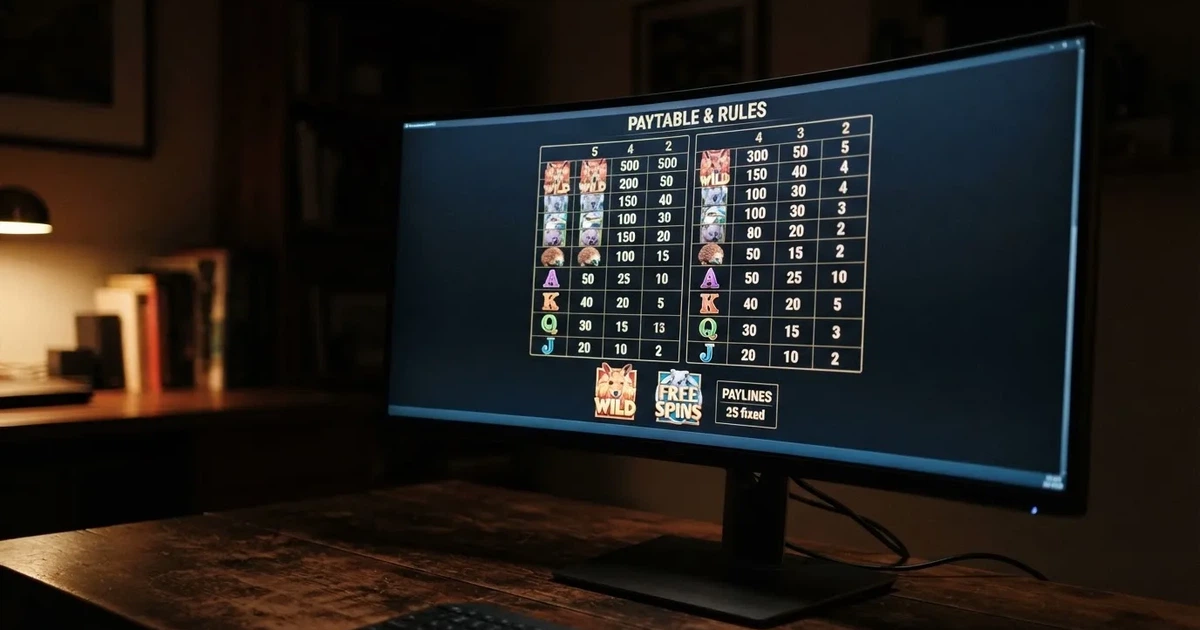
The paytable mechanic that defines the studio is the bonus round, not the base game. Money Train pays out in persistent symbols with a multiplier; Temple Tumble pays out in cascading tiles that reset the multiplier; the MegaWays titles pay out in tumble sequences where each successive win raises the win multiplier. All three are volatile enough that the base game can run dry for a hundred spins before the bonus triggers, and the offshore casino’s “max bet A$5” on the slot is the line where the player decides whether the bonus round is worth chasing at all. A 0.2% edge on a base-game session is materially different from a 0.2% edge on a bonus-buy session at 100x the stake, and the paytable screen does not say which one the punter is sitting in.
The live-caseroom content is supplied under a separate arrangement — Relax Gaming runs the aggregator and brands like Pragmatic Play and Evolution carry the studio rooms in most Australian-facing offshore lobbies. A punter who arrives on a Relax Gaming slot and clicks through to a live dealer lobby is therefore playing a different studio’s game under the same casino licence, and the bonus terms that apply to the slot may or may not apply to the live bet. The terms page is where this distinction lives; the lobby usually does not flag it.
The Australian-facing comparison is short: Relax Gaming slots at an offshore casino, Relax Gaming-style mechanics at a licensed Australian club via Aristocrat’s Lightning Link or a similar house title, or no play at all. The third option is what the Interactive Gambling Act 2001 makes the lawful default for online casino content; the second option is the path the regulator has approved. The first option is the path the ACMA has spent eight years warning, fining and blocking its way out of the Australian market.
The comparison that closes the choice
A shortlist of Relax Gaming-branded online casinos is built on five matters the punter can check before signing up: the ACMA’s enforcement record against the operator, the licence the operator actually displays in its footer, the game provider’s own confirmation that the brand is a partner, the payment route the brand asks an Australian visitor to use, and the dispute path the player has if a withdrawal stalls.
The ACMA’s record is the matter an Australian reader can verify in five minutes on the authority’s own register. Each brand this page covers has a formal warning on that register, and the date of the warning tells the reader how recent the contact was. A warning issued this year and a warning issued four years ago are different signals: the recent one means the brand was still actively targeting Australians; the older one is closer to a stale entry on the operator’s own marketing site.
The operator’s own licence is a second signal but a weaker one. Curaçao, Anjouan and similar jurisdictions issue licences to operators whose Australian-facing activity the ACMA has separately found to be unlawful. A licence is a permission to operate somewhere; it is not a permission to operate in Australia, and the licence footer does not change the IGA. The punter’s check is whether the licence number resolves to the issuing authority’s register and whether the jurisdiction actually covers the type of play the brand offers.
The provider’s own confirmation is the third matter. Relax Gaming, Betsoft, 1spin4win and the other studios in this catalogue publish partner lists on their corporate sites. A brand that claims a Relax Gaming title but does not appear on the studio’s aggregator list is making a marketing claim rather than a contractual one. The aggregator list is one click away; the marketing claim is one click too far.
The payment route is the fourth matter, and it is the matter that usually settles the question for an Australian reader. A brand asking for a credit card is asking for a payment instrument that the 2024 amendments to the IGA banned for licensed online wagering, with operator penalties of up to A$247,500. A brand asking for crypto is asking for a digital currency that the same amendments exclude. A brand asking for a debit card, a bank transfer, PayID/Osko or BPAY is asking for an instrument that the lawful wagering market in Australia uses — but only because it is licensed to do so, which an offshore casino is not. The payment method does not make the play lawful; it is the licence that does, or doesn’t.
The dispute path is the fifth matter and the one that bites only when something goes wrong. An offshore casino answers to its own regulator, not to the ACMA, not to the Australian Financial Complaints Authority, not to eSafety. A withdrawal that is delayed, a bonus that is voided, a win that is capped — all of these are disputes the punter takes to the operator’s regulator in Curaçao or Anjouan, in a language the operator chooses, under a complaint procedure the operator wrote. BetStop, the National Self-Exclusion Register, is not available for offshore brands to register against. The dispute path closes before the punter reaches it.
The five matters do not arrive at a recommendation. They arrive at a decision the punter makes with the ACMA’s register open in one tab and the operator’s lobby open in the other. This page’s job is to keep the register honest, name the providers, and refuse the marketing word. The decision is the punter’s.
| Brand | ACMA action and date | Operator named by the ACMA | Provider presence in studio partner materials |
|---|---|---|---|
| RocketPlay | Formal warning, March 2026 | Pulsup Ltd (RocketPlay) | — |
| Level Up Casino | Formal warning, May 2022 | Dama N.V. | Wazdan listings only |
| Spirit Casino | Formal warning, May 2025 | Dama N.V. | — |
| Woo Casino | Formal warning, March 2025 | Dama N.V. | — |
| National Casino | Formal warning, July 2025 | Consolutetish S.R.L. | Betsoft and Pragmatic Play listings only |
| Bizzo Casino | Formal warning, July 2025 (earlier 2022 to TechSolutions) | Consolutetish S.R.L. | — |
| Ignition Casino | Formal warning, July 2025 | Bamboo Media | — |
| Instant Casino | Formal warning, February 2025 | EOD Code SRL | — |
| Jackbit | Formal warning, April 2026 | Ryker B.V. | — |
| Casino Intense | Formal warning, April 2025 | Sterplay Holding Ltd | 1spin4win and Betsoft listings only |
| Sky Crown | Formal warning, September 2022 | Hollycorn N.V. | — |
The table leaves most cells blank on purpose. A blank cell is the page refusing to assert a partnership the studio’s own materials do not confirm, and refusing to draw the inference the affiliate site would draw. Eleven brands and one column of confirmed dates is the table that survives a fact-check; eleven brands and five columns of marketing claims is the table that fails one.
The Australian landscape for Relax Gaming-style content
The online casino industry in Australia is the inverse of almost every other market a reader will compare it to. Wagering on races and sport is licensed, regulated, taxed and consumer-protected. Online casino games — slots, blackjack, roulette, the Relax Gaming catalogue this page is about — are prohibited as a service that can be offered to a person in Australia under the Interactive Gambling Act 2001, with the prohibition strengthened by the 2017 amendments and the advertising and inducement rules scheduled to commence on 1 January 2027 under the Interactive Gambling Amendment (Gambling Reform) Bill 2026, which passed Parliament on 19 August 2026. The law has a start date; it is not yet in force on this page.
The licensed wagering market sits under the Northern Territory Racing and Wagering Commission, which the ABC reported in April 2026 regulates 52 of Australia’s online bookmakers — including Sportsbet, Bet365 and Ladbrokes — through a commission that has no full-time staff and meets once a month in Darwin. The commission exists because the Territory charges wagering tax at a competitive rate and the bookmakers have found it cheaper to license there than in the state where their customers live. The punter who bets on the Melbourne Cup through a licensed bookmaker is betting under a Northern Territory licence that is enforced by a regulator the punter has never heard of, in a state the punter has never visited. It is the rare Australian market that works on a tax-optimisation basis the consumer never sees.
The licensed online casino market does not exist. There is no state or territory licence for an Australian-resident-facing online casino product. The punter who plays Aristocrat’s Lightning Link or IGT’s Wheel of Fortune in a licensed club or pub is playing under the state or territory’s gaming-machine regime — Victoria, New South Wales, Queensland, Western Australia, South Australia, Tasmania, the ACT and the Northern Territory each run their own — and the machine the punter sits at is regulated by that regime, not by the IGA. The two regimes are separate on purpose: the IGA closes online; the state regime governs the floor.
The economic weight of the gap is what H2 Gambling Capital estimated in 2025 — roughly A$3.9 billion a year leaving Australia through illegal gambling sites, and the share of gambling going through legal channels falling from 74% in 2021 to 64% in 2025. The fall is not a fall in legal-channel gambling, which has been roughly stable; it is the illegal share growing against it, with the gap between the two now wider than at any point in the past decade. The punter who lands on an offshore casino is part of the A$3.9 billion figure, and the figure is what the ACMA’s blocking actions are trying to compress.
The ACMA’s enforcement record tells the story on the operator side. By June 2026 the authority had directed Australian ISPs to block 1,751 illegal gambling and affiliate marketing websites since the first blocking request in November 2019, with more than 230 unlicensed gambling services leaving the Australian market since enforcement was strengthened in 2017. The June 2026 round alone added twelve brands to the block list — 7Signs, ChromaBet, Donbet, Duospin, Freshbet, Slots Gem, Jacks Club, Lucky Start, Pointsbetz, Spinrise, Vinyl Casino and Wildsino — and the operator-side record includes every brand in the comparison table above. The blocking request is a request to the ISP, not a conviction; the formal warning is the ACMA’s notice that the operator has been found offering prohibited services and that further action will follow. Both are public, both are dated, and both are the matter the punter can check.
The blocking rate the ACMA has run since November 2019 is the prescribed calculation for this page.
| Comparison Feature | Licensed Australian Wagering | Offshore Casino |
|---|---|---|
| Regulatory Authority | Northern Territory Racing and Wagering Commission | Curaçao / Anjouan / etc. |
| Consumer Protection | AFCA / ACMA / BetStop | Operator-chosen procedure |
| Payment Methods | Debit, Bank Transfer, PayID/Osko, BPAY | Often Credit/Crypto (Banned) |
| Recourse | Australian legal system | Operator discretion |
Across roughly six and a half years, the authority has directed the blocking of 1,751 illegal or affiliate sites — a running total that includes both gambling brands and the affiliate marketing pages that drive traffic to them. Read as a linear pace, the figure is somewhere between 250 and 280 sites a year; read as an accelerating pace, it is closer to 400 a year over the most recent twelve months. Neither reading is the page’s claim; the claim is that the ACMA is widening it.
The lawful ground: state-licensed clubs, pubs and the Aristocrat-style alternative
The path the IGA leaves open is the state-licensed gaming floor. The Australian club and pub, in every state and territory that allows it, runs gaming machines under a state regime that regulates machine numbers, machine locations, bet sizes, opening hours, return-to-player percentages and self-exclusion. Aristocrat Leisure, the Australian gaming-machine manufacturer with its administrative headquarters in North Ryde, supplied the licensed Australian market the same way Relax Gaming supplies the offshore one — through its Lightning Link and Buffalo series, through the Anaxi unit that became Aristocrat Interactive in April 2024 when it merged with the NeoGames acquisition, and through the social-casino Product Madness arm that sits outside the IGA’s regulated perimeter.
Aristocrat’s 2025 numbers — A$6.30 billion revenue, A$1.55 billion normalised net profit, 7,400 employees — sit behind the machines on the floor in every Australian state that runs them. The punter who plays a Lightning Link machine at a licensed club is playing a game whose RNG is certified by the state regulator, whose return-to-player is published by Aristocrat and verified by the state, and whose progressive jackpot is paid out by the club through the state-approved cash-handling system. The bet is regulated, the payout is regulated, the dispute path goes to the state regulator. None of that is true of the offshore Relax Gaming slot the same punter could open in a browser tab.
The honest comparison is not between the licensed Australian machine and the offshore Relax Gaming slot on their entertainment value. The licensed machine wins on regulatory protection, on dispute path, on consumer recourse, and on the certainty that the balance will be paid in cash at the cashier’s window when the session ends. The offshore slot wins on convenience, on the breadth of the catalogue, and on the bonus mechanics the licensed machine does not run. The two products are different enough that the comparison breaks if it is forced; the punter who wants a single session with a Lightning Link-style progressive is not the punter who wants a Money Train bonus buy at 2 a.m. from a phone, and the Australian regulatory frame sorts them into the right venue for the product they want.
The other licensed route is the Northern Territory’s wagering regime, which covers Sportsbet, Bet365, Ladbrokes and the 49 other bookmakers the NTRWC regulates. A punter who wants to bet on sport before the event has a lawful, regulated, taxed path through any of them, with credit cards and crypto excluded as payment methods since the 2024 amendments. A punter who wants to play online casino games has no licensed path in Australia, only state-licensed gaming-machine floors in the clubs and pubs the local regulator oversees.
Responsible gambling and the consumer-protection frame
The responsible-gambling supports available to an Australian punter are built around licensed wagering and the state-licensed gaming-machine floor, and they are not available in the same form to a punter playing an offshore Relax Gaming slot. BetStop, the National Self-Exclusion Register, has been live since August 2023 and binds every Australian-licensed online and phone wagering service. A punter who registers with BetStop is excluded from every licensed Australian bookmaker at once. An offshore casino is not connected to BetStop and is not required to honour the exclusion, which means BetStop does not close the offshore route on its own. The punter who has registered with BetStop and is still receiving offshore casino marketing emails is on the receiving end of a breach the ACMA can act on.
The National Gambling Helpline — 1800 858 858, free, 24/7 — is the second pillar. The helpline runs alongside Gambling Help Online, which carries the same number and adds chat and email. The service is staffed by counsellors, not by the regulator, and it is the route the punter takes before, during or after a problem rather than a complaint mechanism. The helpline does not know the punter’s balance, does not know the punter’s wagering history, and does not know the punter’s offshore casino’s terms; it knows how to listen and where to refer.
The state and territory self-exclusion registers — the New South Wales Gaming-related Machine Exclusion Order, the Victoria Casino Exclusion Order, the analogous schemes in every other jurisdiction — cover the gaming-machine floor and, in some states, the casino floor. A punter who has self-excluded from the local club is excluded from the club, and the club enforces the exclusion at the door. The same exclusion does not follow the punter to an offshore website. The exclusion is a club’s enforcement, not a national one; the national one is BetStop for wagering.
The ACMA’s complaint pathway is the regulator-side route. A punter who has been targeted by an offshore casino offering prohibited services can complain to the ACMA, and the authority treats the complaint as one input into the formal-warning and blocking process that produced the dates in the comparison table. A punter who has lost money to an offshore casino cannot recover the money from the ACMA — the authority does not adjudicate individual disputes — but the punter can make the complaint, and the complaint is what the next round of formal warnings and the next blocking request draw from.
The honest reading is that the responsible-gambling supports work as a closed system for the licensed Australian market and as a partial system for the offshore one. The helpline is open to every caller; BetStop is open to every licensed bookmaker’s customer; the state exclusion schemes cover the gaming-machine floor. None of them closes the offshore route, and the offshore route is where the punter who is most at risk of harm is most likely to end up. The combination — the helpline plus the regulator complaint — is what the responsible-gambling frame makes available, and it is what an Australian punter who is reading this page should know before the deposit screen appears.
Payments and the cost of moving money
The 2024 amendments to the Interactive Gambling Act banned credit cards, credit-related products and digital currency as payment for licensed online wagering in Australia, with operator penalties of up to A$247,500. The lawful deposit routes that remain are debit card, bank transfer, PayID/Osko and BPAY — instruments that the licensed wagering market uses because they are regulated, traceable and consumer-protected. An offshore casino asking an Australian visitor for a credit card or a crypto deposit is asking for an instrument the law has ruled out for the licensed market, and the request is a signal that the operator is not licensed in Australia. It is not a signal that the deposit will fail; the deposit will arrive. The signal is that the operator is operating outside the Australian rules, and the punter who pays by the recommended method has no Australian consumer protection on the receipt.
Settlement times on the lawful wagering side sit in the same band as any retail payment: PayID/Osko deposits arrive in seconds, BPAY deposits arrive the same business day, debit card deposits arrive the same day the issuer approves them. Withdrawals on the licensed side are bound by the bookmaker’s own terms — usually one to three business days for a debit card, the same window for a bank transfer — and the punter has the ACMA and AFCA as complaint routes if the timeline slips. An offshore casino’s settlement times are whatever the operator writes on its payments page, often “instant” for the deposit and “up to five business days” for the withdrawal, with a verification step that is asked of the punter at withdrawal rather than at deposit. The verification is the point where the offshore operator decides whether to pay; the licensed bookmaker’s verification has already happened at the deposit step.
The practical cost of moving money through an offshore casino is the spread between the deposit and the withdrawal, plus the operator’s currency-conversion fee if the punter deposits in Australian dollars and the cashier settles in euro or US dollar, plus the verification step that can require the same document set twice. The punter who deposits A$100 and asks for A$100 back usually receives less, with the difference being the operator’s processing margin and any conversion spread. The licensed bookmaker’s equivalent cost is the deposit itself being debited at the issuer’s exchange rate and arriving at the bookmaker at the issuer’s rate; the punter sees one transaction, with one rate, on one statement.
The Australian punter who is comparing the two is comparing a regulated payment route against an unregulated one, with the difference being the path that opens if the money does not arrive. The regulated path goes to the bookmaker’s regulator and, if necessary, to AFCA. The unregulated path goes to the operator’s regulator in Curaçao or Anjouan, in a language the operator chooses, under a complaint procedure the operator wrote. The difference is not academic; it is the difference between a complaint the punter can file in three minutes on a regulator’s website and a complaint the punter files by email and waits weeks to hear back from.
How the ACMA’s blocking rate has run since 2019
The ACMA’s blocking record starts in November 2019, with the first request to Australian ISPs to block illegal gambling and affiliate sites. By June 2026, the running total was 1,751 sites blocked. Read as a linear pace across roughly six and a half years, the figure sits between 250 and 280 sites blocked per year on average. Read as the most recent twelve-month window, the figure sits closer to 400 sites blocked per year. Read as the cumulative arc, the figure is the ACMA widening the gap between the licensed market and the offshore one, one ISP request at a time.
The pace is what the prescribed calculation for this page works out to. The running total of 1,751 sites since November 2019, against roughly 78 months of enforcement, gives an average monthly blocking rate of around 22 sites per month. The June 2026 round alone added 12 sites in a single reporting period, which is more than half a typical month in one announcement. The pace is not constant; it accelerates when the ACMA acts on a class of operators rather than on individual brands, and it slows when the authority’s formal-warning pipeline catches up with the new operator entries. The condition on the band is therefore the time window: averaged across six and a half years, the rate is 22 sites per month; averaged across the last twelve months, it is closer to 33. The arithmetic is honest in both directions, and the condition is what tells the punter which direction the rate is heading.
The rate matters because it is the regulatory signal an offshore operator reads. A 22-sites-per-month pace is a cost the operator prices into its marketing; a 33-sites-per-month pace is a cost that begins to change which brands accept Australian visitors and which redirect them to a sister site that has not yet been blocked. The punter who lands on an offshore casino today is landing on a brand that has either avoided the formal-warning process or is one round of blocking away from it. The blocking rate is the rate at which the brand’s window is closing.
Putting it together for the punter
The choice this page lays out is short and the path the punter takes is the punter’s. The lawful Australian route — state-licensed gaming machines in clubs and pubs, licensed wagering with Northern Territory bookmakers — sits behind a regulator the punter can name and a complaint mechanism the punter can use. The offshore route — Relax Gaming slots on a Curaçao-licensed or Anjouan-licensed site — sits behind a regulator the punter has not heard of and a complaint procedure the punter will wait weeks to hear back from. The marketing word on the offshore route is a deposit match, a free-spin headline and a cashout cap that the punter reads after the punter has agreed to the wagering multiple. The marketing word on the lawful route is a return-to-player percentage the state regulator has verified and a payout window the cashier will honour.
The Responsible Gambling lens lands the same way. BetStop is open to every licensed bookmaker’s customer; the helpline is open to every caller; the ACMA complaint pathway is open to every punter who has been targeted. None of them closes the offshore route on its own. The combination is what the responsible-gambling frame makes available, and the punter who uses the combination is the punter who has decided the offshore route is the wrong one for them. The punter who has not decided is the punter the ACMA’s blocking rate is aimed at — not to convince, but to make the route harder to find.
The closing read is the one that respects the punter’s time. The lawful Australian market is the better-regulated choice and the slower-growing one. The offshore market is the broader, faster, less-regulated choice, and the ACMA’s blocking record is the regulator’s read of the same trade-off. The punter who picks the offshore route has decided what the trade-off is worth, and the punter who picks the lawful route has decided the same. The page’s job is to make sure the trade-off is read in full before the deposit screen appears.
What an Australian punter actually has on the table
A punter who has decided the lawful route is the right one has the licensed Australian wagering market on the table — 52 bookmakers under the Northern Territory commission, with debit card, bank transfer, PayID/Osko and BPAY as the payment methods and a complaint path through the ACMA and AFCA. A punter who has decided the lawful Australian route also covers state-licensed gaming machines, with Aristocrat and IGT-style titles under the state regime that regulates machine numbers, bet sizes, opening hours and return-to-player percentages.
A punter who has decided the offshore route is the right one has 11 brands from this page alone, each one with a formal warning on the ACMA’s register, each one with a Curaçao or Anjouan licence footer, and each one with a payment route the IGA has ruled out for the licensed market. The catalogue is broader, the bonuses are louder, and the dispute path is the operator’s regulator in a jurisdiction the punter has not heard of. The punter has decided what that trade-off is worth.
The most honest closing sentence this page can write is that the choice is the punter’s and the regulator’s record is the page’s. Both are public, both are dated, and both are the matter the punter checks before the deposit.
FAQ
Is Relax Gaming itself licensed to supply casino games to Australian players?
Relax Gaming holds licences from the UK Gambling Commission, the Malta Gaming Authority, Gibraltar’s Gambling Division, Romania’s ONJN and Canada’s AGCO, and is owned by Kindred Group following the 2021 acquisition. None of those licences authorises the supply of online casino games to a person in Australia under the Interactive Gambling Act 2001; the question of studio licensing is separate from the question of operator licensing, and the latter is what closes the door for online play.
What kinds of games does Relax Gaming actually make?
Relax Gaming produces online slots, live casino content under a separate arrangement, bingo, and a smaller poker and table-game library. The slot catalogue sits at the centre of the studio’s identity and includes high-volatility titles in the Money Train series, medium-volatility MegaWays titles using the licensed Big Time Gaming mechanic, and a low-volatility collaboration with 1spin4win.
Are Relax Gaming-style slots available at licensed Australian venues?
Relax Gaming itself does not supply the Australian licensed club or pub market. The licensed Australian gaming-machine floor is supplied by Aristocrat Leisure, IGT and similar manufacturers under state and territory regimes that regulate machine numbers, bet sizes, opening hours and return-to-player percentages. The mechanics overlap; the regulatory regimes do not.
How can an Australian check whether a Relax Gaming title is fair before considering play?
A studio’s RNG certification is published on its corporate site, and the slot’s published return-to-player percentage is published on the paytable screen and on the studio’s game page. Neither of these is a substitute for the licence the operator holds in the punter’s jurisdiction, and neither changes the IGA’s prohibition on offering online casino games to a person in Australia.
Why do offshore sites keep advertising Relax Gaming games to Australian visitors?
The Relax Gaming catalogue is broad, the brand is well-known, and the conversion rate on a search result that mentions a specific studio name is higher than the conversion rate on a generic “online casino” result. Offshore operators have decided the conversion gain is worth the ACMA’s formal-warning risk, and the ACMA’s blocking record is the regulator’s response to the same calculation.
What should an Australian do if they see a Relax Gaming game promoted by an unlicensed site?
The ACMA accepts complaints from the public about illegal gambling and affiliate marketing, and the authority treats each complaint as one input into its formal-warning and blocking process. A punter who has already deposited can complain to the ACMA, file a complaint with the operator’s regulator in its licence jurisdiction, and contact the National Gambling Helpline on 1800 858 858 if the marketing is causing distress. The punter’s balance is unlikely to be recoverable; the punter’s complaint is what the next round of blocking actions draws from.