The honest answer to searching for an international casino from Australia
 Available in US
An Australian who searches for “international casinos” is usually looking for a shortlist of online casinos willing to take them. The short answer is uncomfortable: no online casino is lawfully able to serve someone in Australia, and every brand marketed as an “international casino” for Australians is, by definition, one the Australian Communications and Media Authority has acted against or could act against tomorrow. This page lays out that gap plainly and points to what is actually available — licensed wagering, land-based venues and BetStop — rather than pretending a prohibited product is a recommendation.
A reader who came here for a ranked top-10 of offshore casinos will not find one, because that list cannot be honestly assembled. They will find the legal ground, the ACMA enforcement record, the operators the regulator has formally warned, and the payment and self-exclusion tools that actually apply inside Australia.
Current as of 23 September 2026. Verified against the ACMA register and the Interactive Gambling Act 2001 as published.
Table of Contents
- The shape of the Australian market for online casino games
- Why the prohibition matters in practice
- How ACMA enforcement actually works
- Responsible gambling tools that actually reach an Australian reader
- What the ACMA’s formal-warning record looks like in practice
- What an Australian reader is actually choosing between
- A note on what this page is not
- Frequently asked questions
The shape of the Australian market for online casino games
Australia runs an unusual arrangement: it prohibits online casino games outright while permitting online sports and racing wagering through licensed providers. The Interactive Gambling Act 2001, sharpened by amendments in 2017, makes it an offence to provide online casino games, online pokies or in-play betting to a person physically in Australia. No state or territory issues a licence for it. The prohibition runs at the provider, not at the player: an Australian who opens an account on an offshore site is not committing an offence under the IGA, but the site itself is.

What sits on the licensed side is wagering on races and sport placed before the event, plus lotteries and keno. In practice, that wagering is licensed in the Northern Territory — the Northern Territory Racing and Wagering Commission (NTRWC) oversees 52 online bookmakers including Sportsbet, Bet365 and Ladbrokes, which set up there for tax reasons. The commission has no full-time staff and meets once a month in Darwin, a detail that matters because it shows how thin the Australian regulator is on a per-headcount basis for the wagering it does licence. Online casino it does not licence at all.
The phrase “international casino” is, in an Australian search context, a way of saying offshore casino. It is not a jurisdiction, and it is not a quality mark. It is a marketing label for a product that the IGA prohibits being offered here, which is the central fact the rest of this page is built on.
Why the prohibition matters in practice
A reader weighing the choice between a licensed Australian bookmaker and an offshore casino is not comparing two legal products. They are choosing between a regulated wagering service and an unregulated casino. The practical difference lands in four places.

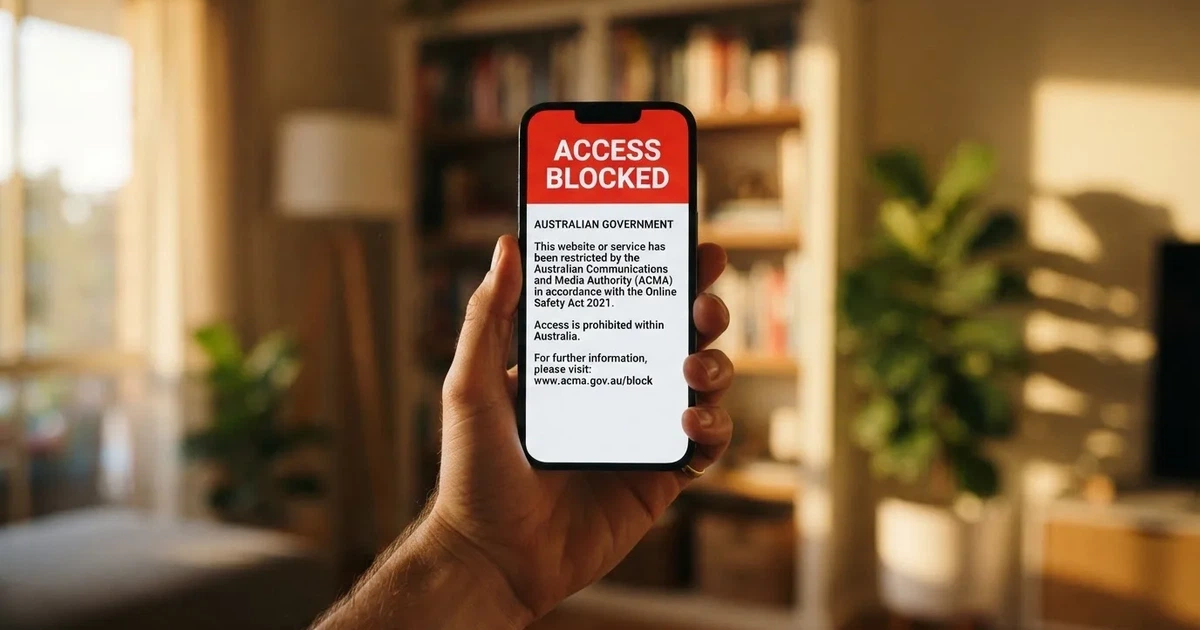
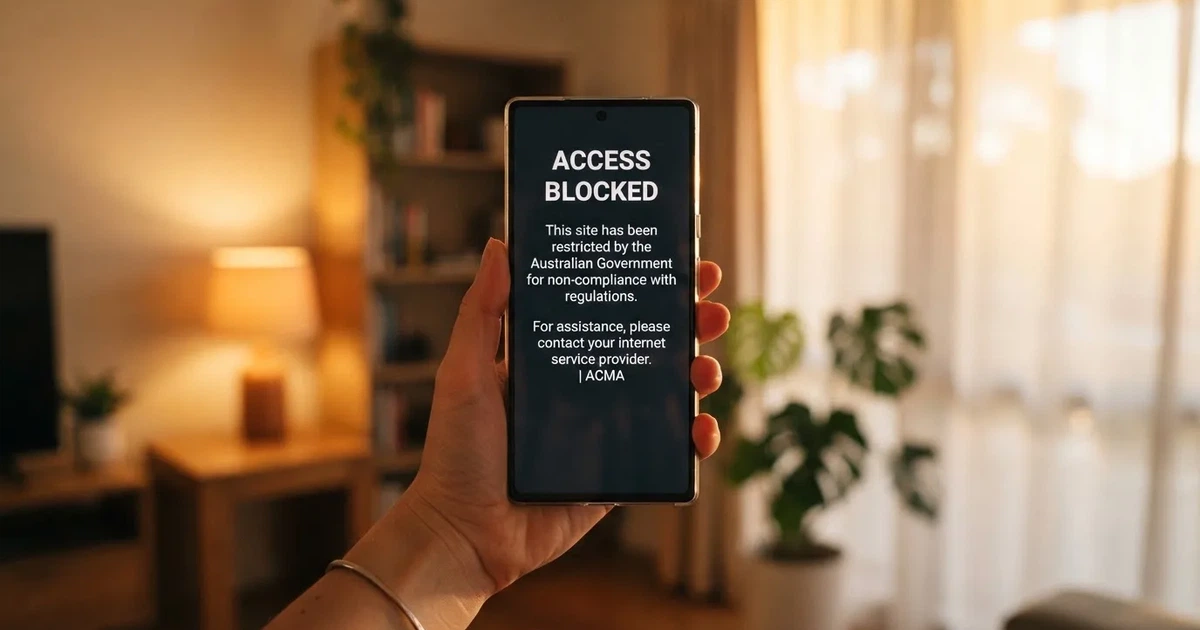
The first is enforcement risk for the operator. The ACMA can ask Australian internet service providers to block an illegal site. According to figures reported in June 2026, 1,751 illegal gambling and affiliate marketing websites had been blocked since the first blocking request in November 2019, and more than 230 unlicensed gambling services had left the Australian market since enforcement was strengthened in 2017. A site that is here today can be unreachable tomorrow, with player balances sitting on it.
The second is recourse. An offshore site gives no Australian consumer protection, no local complaints body, and no working avenue if a withdrawal is refused. The reader’s last practical line of defence is the payment provider, which is one of the reasons Australian banks have built gambling blocks at the card level (Westpac refuses transactions under the merchant category code for betting and casino gambling on eligible cards; ANZ’s block covers digital wallet transactions on an eligible card, not just the physical card). Once a balance is stuck offshore, the bank is the only party that may be able to do anything, and even then only by blocking future transactions.
The third is the loss scale. H2 Gambling Capital’s 2025 estimates put Australian losses to illegal gambling sites at around A$3.9 billion a year, with the share of gambling going through legal channels falling from 74% in 2021 to 64%. The illegal market is not a fringe: it is large enough to move the overall legal-channel share by ten points in four years.
The fourth is the payment landscape, which is structured so that the legal routes are narrow. Since 11 June 2024, credit cards, credit-related products and digital currency cannot be used for licensed online wagering, with penalties up to A$247,500 for operators who breach the rule. Legal deposit routes are debit card, bank transfer, PayID/Osko and BPAY. An offshore casino asking for a credit card or a crypto deposit is signalling plainly that it is not operating under Australian rules.
How ACMA enforcement actually works
The ACMA’s tools sit on a spectrum. The lightest is a formal warning — a published notice that names the operator behind a prohibited service and puts the brand on the regulator’s record. Heavier steps include asking ISPs to block a site, and referring matters for civil penalty proceedings. The June 2026 blocking round named twelve sites for ISPs to block: 7Signs, ChromaBet, Donbet, Duospin, Freshbet, Slots Gem, Jacks Club, Lucky Start, Pointsbetz, Spinrise, Vinyl Casino and Wildsino. That is one round; the cumulative count is the larger figure cited above.
The formal-warning record is the most useful trail for an Australian reader because it carries the operator name and the date in plain language. The 2025 record alone includes warnings over Woo Casino and Spirit Casino (both Dama N.V., March and May 2025), Ignition Casino (Bamboo Media, July 2025), National Casino and Bizzo Casino (Consolutetish S.R.L., July 2025), Instant Casino (EOD Code SRL, February 2025), and Casino Intense (Sterplay Holding Ltd, April 2025). The 2026 record so far includes RocketPlay (Pulsup Ltd, March 2026) and Jackbit and CasinOK (Ryker B.V., April 2026). Earlier warnings still stand: Dama N.V. was warned in May 2022 over six brands, Hollycorn N.V. was warned over Sky Crown and Blue Leo, and Bizzo Casino had already been warned in 2022 against TechSolutions before being warned again in 2025 against a different operator entity.
The pattern matters more than any one brand. The ACMA is not catching a single rogue operator; it is catching the same corporate vehicles again under different brand names, and catching the same brand names again under different corporate vehicles. A reader who sees a fresh-looking casino site is looking at a small variation on a name already on the register.
Blocking rate as a measure of the gap
The arithmetic that frames this market is the blocking rate: how fast the ACMA is taking sites out compared with how long the prohibition has been enforced. The first blocking request went out in November 2019; by June 2026 the cumulative count of blocked sites and affiliate marketing pages was 1,751. That works out to roughly 263 sites per year on average, or close to 22 per month — though the monthly pace is uneven, with named rounds of a dozen or more at a time and quieter stretches between.
The way to read that figure is as a band rather than a single number: between November 2019 and June 2026 the regulator averaged roughly one blocked site every 33 hours, and the pace has not slowed. The condition that holds the figure together is the assumption that the ACMA continues to issue blocking requests at the cadence shown since 2017, and that affiliate marketing pages continue to be swept up alongside the operator sites. A reader who interprets the band as a forecast — “the regulator will block another 250-plus sites this year” — is reading it the way it is meant to be read. A reader who treats any single offshore casino as a stable address is reading past the data.
Responsible gambling tools that actually reach an Australian reader
The Australian responsible-gambling layer sits on licensed wagering and on retail venues. It does not reach offshore casinos. BetStop — the National Self-Exclusion Register, live since August 2023 — binds Australian-licensed online and phone wagering services. An offshore casino is not connected to it. Registering with BetStop will not stop an offshore site from accepting a deposit; it will stop a licensed Australian bookmaker from doing so, which is real protection but a narrower one than the brand name suggests.
For readers who do want help that covers offshore play, the National Gambling Helpline is 1800 858 858, free and available 24/7, with web chat at Gambling Help Online. The helpline does not need the caller to be using a licensed product; it works for anyone harmed by gambling, including harm done by an offshore site. Bank-level gambling blocks — Westpac’s card-level block on the betting/casino merchant category, ANZ’s app-activated block covering digital wallet transactions on eligible cards, Commonwealth Bank’s gambling lock via the CommBank app — are another layer that works regardless of whether the site is licensed, because they run on the payment side.
A practical note on those bank blocks: Westpac’s block is automatic once turned on, ANZ’s block can be removed but requires a 48-hour waiting period (and ANZ warns that not all gambling transactions will be blocked and some non-gambling transactions may be blocked in error), and CommBank’s lock works on eligible cards but the bank explicitly does not guarantee every gambling-related purchase will be stopped. Each tool narrows the channel; none of them closes it completely.
Why payment choices quietly shape the question
The payment system is the part of the Australian rulebook that does the most day-to-day work. Debit cards, bank transfer, PayID/Osko and BPAY are the legal routes for licensed wagering. PayID, which links a BSB and account number to a recognisable identifier like a phone number or email, has a useful safety property: paying to a PayID shows the account holder’s name before the transfer is sent, and Australian Payments Plus warns that being asked to transfer money to a PayID on an illegal gambling site almost certainly means a scam site. Osko by the same operator settles a bank transfer between participating Australian banks in under a minute, 24/7, including weekends. By April 2025 more than 25 million PayID identifiers were registered on the New Payments Platform, and over 100 Australian financial institutions offer PayID-based instant transfers.
BPAY runs in parallel: available in the online banking of over 140 banks and financial institutions, used by over 95,000 businesses, owned jointly by the four major banks via Cardlink Services Limited, and operated since 1997 by what is now Australian Payments Plus. None of this changes the offshore casino question directly, but it sets the floor for what a regulated Australian deposit experience looks like, and explains why the licensed wagering market has converged on a small set of payment methods.
Credit cards are out for licensed wagering as of 11 June 2024. American Express sits slightly outside the standard interchange rules — the Reserve Bank of Australia’s July 2025 review proposes removing surcharges on eftpos, Mastercard and Visa transactions, leaving Amex explicitly outside the proposed ban. That is a surcharge story rather than a gambling-credit story, but it matters because a reader who tries to fund an offshore casino with a credit card is layering two rule breaches at once: the offshore site accepting prohibited Australian play, and the credit-card funding that licensed operators are already barred from.
Mobile wallets (Apple Pay, Google Pay, Samsung Pay) collectively accounted for around 45% of all card payments in Australia by number at the end of 2025, and the same restrictions that apply to physical cards apply to wallet-funded transactions on eligible cards: ANZ’s gambling block covers wallet payments on the blocked card, and Apple Pay itself imposes no consumer fees (Apple does not charge fees for Apple Pay in stores, online or in apps — any surcharge is the merchant’s, not Apple’s). Transaction limits and PIN requirements for Apple Pay are set by the card issuer or merchant, not by Apple.
AUSTRAC’s threshold-transaction-report rule, which requires reporting of transfers of A$10,000 or more, applies only to physical cash. Ordinary electronic bank transfers are not subject to that per-transaction reporting requirement regardless of the amount sent, which is one reason large PayID transfers do not automatically trigger paperwork the way A$10,000 in cash would.
What the ACMA’s formal-warning record looks like in practice
The table below sets out the brands the ACMA has formally warned, the operator entity named on the warning, the date, and the standing of the brand against the broader Australian rules. The point of the table is not to rank these casinos — ranking them would imply a recommendation, which the law forbids — but to show what the regulator’s record looks like in one place, so a reader can see the names together and decide for themselves what the pattern is.
| Brand | ACMA action and date | Operator named by the ACMA | Subject support |
|---|---|---|---|
| RocketPlay | Formal warning, March 2026; earlier Dama N.V., May 2022 | Pulsup Ltd (RocketPlay) | — |
| Level Up Casino | Formal warning, May 2022 | Dama N.V. | — |
| Woo Casino | Formal warning, March 2025 | Dama N.V. | — |
| Spirit Casino | Formal warning, May 2025 | Dama N.V. | — |
| National Casino | Formal warning, July 2025 | Consolutetish S.R.L. | — |
| Bizzo Casino | Formal warning, July 2025 (earlier 2022 against TechSolutions) | Consolutetish S.R.L. | — |
| Ignition Casino | Formal warning, July 2025 | Bamboo Media | — |
| Instant Casino | Formal warning, February 2025 | EOD Code SRL | — |
| Jackbit | Formal warning, April 2026 | Ryker B.V. | — |
| Casino Intense | Formal warning, April 2025 | Sterplay Holding Ltd | — |
| Sky Crown | Formal warning, September 2022 | Hollycorn N.V. | — |
A reader looking at that table will see two things at once. The first is that the same operator names (Dama N.V. four times, Consolutetish S.R.L. twice, Hollycorn N.V. once) appear behind multiple brands — the operator-entity column is doing more work than the brand column. The second is that the dates span from 2022 to April 2026, so a “new” casino on this market is rarely new to the regulator; it is more often a fresh brand on an existing corporate vehicle.
RocketPlay — Pulsup Ltd, March 2026; Dama N.V., May 2022
RocketPlay’s ACMA trail has two layers: a 2026 warning to Pulsup Ltd over RocketPlay, and an earlier May 2022 warning to Dama N.V. that included Rocketplay among six brands named at the time. The brand’s own licence claim, whatever it displays, sits on top of an Australian regulator’s published view that the service is prohibited. The verdict here is the one the rest of the set shares: there is no version of this product that an Australian can lawfully be sold, and the corporate-entity churn on the warning record makes it harder, not easier, to trust any new address the brand might move to.
Level Up Casino — Dama N.V., May 2022
Level Up was one of the six brands Dama N.V. was warned over in May 2022, alongside Bambet, Dazard, Rocketplay, Wild Tornado and Cobra Casino. The warning is approaching four years old, which is long enough that some readers will assume the matter is closed. It is not: the IGA prohibition has no expiry, and the brand is still on the ACMA’s published list. The verdict is the same: an Australian reader has no lawful route to this product, and the brand’s continued operation offshore does not constitute permission.
Woo Casino — Dama N.V., March 2025
Woo Casino’s warning is newer and came in the same wave of Dama N.V. activity that produced the March 2025 formal warning over Woo Casino and the May 2025 warning over Spirit Casino. The pair of warnings, three months apart, suggests an operator that has not stopped offering prohibited services in Australia despite already being on the record. The verdict repeats the structural point: the operator-entity column matters more than the brand, and an Australian reader who arrives at Woo Casino has arrived at a service the ACMA has named.
Spirit Casino — Dama N.V., May 2025
Spirit Casino sits in the same Dama N.V. cluster as Woo Casino, two months later. The fresh date is the most useful piece of information: a brand warned over in May 2025 was actively offering prohibited services to Australians in 2025, which is a stronger signal than an older warning that an operator has changed behaviour. The verdict: no reason to read this brand as distinct from Woo Casino in regulatory terms; the same corporate vehicle, the same prohibition, the same lack of Australian consumer protection.
National Casino — Consolutetish S.R.L., July 2025
National Casino was named in the July 2025 warning to Consolutetish S.R.L. alongside Bizzo Casino. Consolutetish S.R.L. is a separate operator entity from Dama N.V., which is the point: the ACMA is not chasing one rogue company but a market of them. The July 2025 warning is recent, the brand is still operating offshore, and an Australian reader has no consumer protection. Verdict: another entry in the same ledger, distinct operator name, identical legal standing.
Bizzo Casino — Consolutetish S.R.L., July 2025; TechSolutions, 2022
Bizzo Casino is the most striking entry on the table because the brand itself has been warned twice, against two different operator entities: TechSolutions (CY) Group Limited and TechSolutions Group N.V. in 2022, and Consolutetish S.R.L. in July 2025. The brand survived the first round, changed hands (or changed corporate wrappers), and was warned again. For a reader, that is the clearest demonstration on the register that a brand-level warning does not deter re-entry under a new operator. Verdict: the brand’s history on the ACMA record is itself the most useful fact about it.
Ignition Casino — Bamboo Media, July 2025
Ignition Casino’s July 2025 warning was issued to Bamboo Media, not to Dama N.V. or Consolutetish S.R.L., which keeps the table honest as a picture of the wider market rather than a story about one or two operators. The brand name “Ignition Casino” is recognisable from offshore poker and casino marketing; the operator name on the ACMA record is the one an Australian reader is meant to look at. Verdict: separate operator, identical prohibition, identical absence of Australian consumer protection.
Instant Casino — EOD Code SRL, February 2025
Instant Casino was warned over in February 2025, making it one of the earlier entries in the 2025 cluster. The brand has been visible in offshore marketing, and the warning is recent enough that an Australian reader landing on the site today is landing on a service that has been on the ACMA’s record for over a year. Verdict: the regulator’s view of this brand is current, and the brand’s continued availability does not change it.
Jackbit — Ryker B.V., April 2026
Jackbit is the freshest entry on the table, warned over alongside CasinOK in April 2026. The pair is a reminder that the ACMA’s enforcement is ongoing, not historical: the most recent warning on the register is from this year. Verdict: a brand being warned against in April 2026 is a brand that was offering prohibited services to Australians in 2026; a reader landing on Jackbit today is landing on exactly that.
Casino Intense — Sterplay Holding Ltd, April 2025
Casino Intense sits in the April 2025 warning cluster, which also marks the start of a denser 2025 enforcement pace. Sterplay Holding Ltd is yet another operator entity, reinforcing the breadth of the ACMA’s reach. Verdict: same prohibition, different wrapper, no Australian consumer protection.
Sky Crown — Hollycorn N.V., September 2022
Sky Crown is the oldest entry on the table — the Hollycorn N.V. warning was published in September 2022 and covered Sky Crown and Blue Leo together. The age of the warning is not the same as its expiry. A reader who lands on Sky Crown today is still landing on a brand the ACMA has named, and the IGA prohibition has no statute-of-limitations carve-out. Verdict: the oldest warning on the table and the same prohibition as the newest.
What an Australian reader is actually choosing between
A reader who arrived at this page looking for a shortlist of international casinos has reached the limit of what such a list can honestly say. The choice that is on the table is between regulated Australian wagering (licensed by the NTRWC in the Northern Territory for racing and sport, plus lotteries and keno where available) and offshore casino sites that are prohibited from being offered here in the first place.
The licensed side has the protections: Australian consumer law, an Australian regulator, an Australian complaints path, BetStop, the National Gambling Helpline, and a payment system that constrains what can be charged to a card. The offshore side has none of those, and the ACMA’s enforcement record is the proof of it: 1,751 blocked sites since November 2019, twelve more sites named in the June 2026 blocking round alone, and a formal-warning list that names the same operators repeatedly under different brand names.
A reader who still chooses an offshore site is making a decision with their eyes open about the prohibition. They have no Australian consumer protection, no recourse if a withdrawal is refused, and a real risk that the site is blocked while a balance sits on it. They have access to the bank-level gambling blocks (Westpac’s card-level block, ANZ’s app-activated block covering wallet transactions, CommBank’s lock on eligible cards) as the only layer of Australian-infrastructure protection that reaches offshore play, and to the National Gambling Helpline (1800 858 858) and Gambling Help Online if harm is already showing up.
A reader who would rather stay on the licensed side has sports and racing wagering through the 52 NTRWC-licensed bookmakers, plus lotteries and keno where the local jurisdiction offers them. The 2026 reform package — the Interactive Gambling Amendment (Gambling Reform) Bill 2026, which passed Parliament on 19 August 2026 with advertising and inducement measures commencing 1 January 2027 — does not change what is lawful today, but it does tighten the licensed side’s marketing rules once those provisions commence.
The tax position is straightforward: gambling winnings of a recreational player are not assessable income under section 6-5 of the ITAA 1997, and losses are not deductible unless the person carries on a business of gambling. A reader who is unsure where their own situation sits should check with the ATO.
A note on what this page is not
This page is not a review aggregator. It carries no bonus terms for the brands it names, because the only sources for those terms were affiliate marketing pages, and the regulatory position in Australia is that the products themselves are prohibited. A reader who arrived here wanting a comparison of welcome bonuses has been directed, by the shape of the Australian market, to a comparison they cannot lawfully be sold. The closest lawful comparison is between licensed Australian bookmakers on wagering markets, which is a different product and a different page.
It is also not a directory of “safe” offshore casinos. There is no version of an offshore casino that is safe in the Australian sense, because the IGA prohibition targets the provider, not the player, and the Australian consumer protections that exist do not reach offshore sites. A reader who sees an offshore casino marketed as “licensed in Curacao” or “licensed in Anjouan” is reading a licence that is real in its own jurisdiction but irrelevant under the IGA.
Frequently asked questions
What does “international casino” mean compared with an Australian-licensed one?
In an Australian search context, “international casino” means an offshore casino — a site licensed somewhere other than Australia, serving players from many countries including, where it chooses, Australia. There is no Australian-licensed online casino, because online casino games cannot be licensed in Australia under the Interactive Gambling Act 2001. What is licensed is online wagering on racing and sport (in practice through the Northern Territory), plus lotteries and keno.
Can an international online casino legally accept players located in Australia?
No. The Interactive Gambling Act 2001 prohibits providing online casino games, online pokies or in-play betting to a person in Australia. The offence sits with the provider, not the player, which is why the ACMA’s enforcement targets the operator behind the site. The brand’s own offshore licence does not change the Australian position; an offshore licence is a permission in its own jurisdiction, not in Australia.
Does an overseas gambling licence carry any weight for an Australian player?
An overseas licence is real in the country that issued it and irrelevant under the IGA. An Australian player dealing with an offshore-licensed casino has no Australian consumer protection, no local complaints body, and no working recourse if a withdrawal is refused. The regulator in the offshore jurisdiction may have its own dispute path, but an Australian player is not its constituent and cannot rely on it.
What protections, if any, apply to an Australian using an international casino site?
Very few. BetStop, the National Self-Exclusion Register, binds only Australian-licensed wagering services and does not reach offshore casinos. Australian consumer law does not reach offshore providers in any practical sense. The protections that do reach the reader are the bank-level gambling blocks — Westpac’s card-level block, ANZ’s app block that covers digital wallet transactions on an eligible card, CommBank’s lock on eligible cards — and the National Gambling Helpline (1800 858 858) and Gambling Help Online.
Are international land-based casino resorts different from the international online sites people search for?
Yes. Land-based casino resorts in other countries are a different product entirely, governed by the laws of the country the resort sits in and by the travel and consumer law that applies to the visitor. They are not the subject of the IGA, and an Australian visiting one is not using a “service provided to a person in Australia” for IGA purposes. The phrase “international casino” in an Australian search context is almost always about online offshore sites, not land-based resorts, but the two should not be confused.
Who can an Australian contact if an international casino site will not pay out?
The first line of contact is the site’s own customer support, which is often the only path the site offers. Beyond that, the offshore regulator that issued the site’s licence may have a complaint process, though an Australian player is not its constituent and may not have standing. The Australian bank’s gambling block can be turned on to prevent further deposits, and the bank can sometimes advise on a chargeback for an unsuccessful card transaction. For harm related to gambling, the National Gambling Helpline is 1800 858 858, free and 24/7, with chat at Gambling Help Online.
Prepared by the Pokies Info Hub editorial staff.