
What an instant PayID withdrawal of real money in Australia actually settles — and what the ACMA record says about the brands offering it
A real-money PayID withdrawal is the moment a cleared casino balance, paid in Australian dollars, lands in a bank account the player already owns. It is built on the New Payments Platform and moves through Osko; in the right conditions it arrives in under a minute, twenty-four hours a day, including weekends. The speed is real. The constraint, in the Australian market, sits one level above the rail: the Interactive Gambling Act 2001 prohibits online casino games and online pokies from being supplied to anyone in Australia, so the sites promising this fast settlement are the same sites the Australian Communications and Media Authority has been formally warning and ordering blocked for years. This page reads that gap between rail and regulation carefully, and follows it into what an Australian reader can actually expect from a real-money PayID withdrawal at one of the named brands.
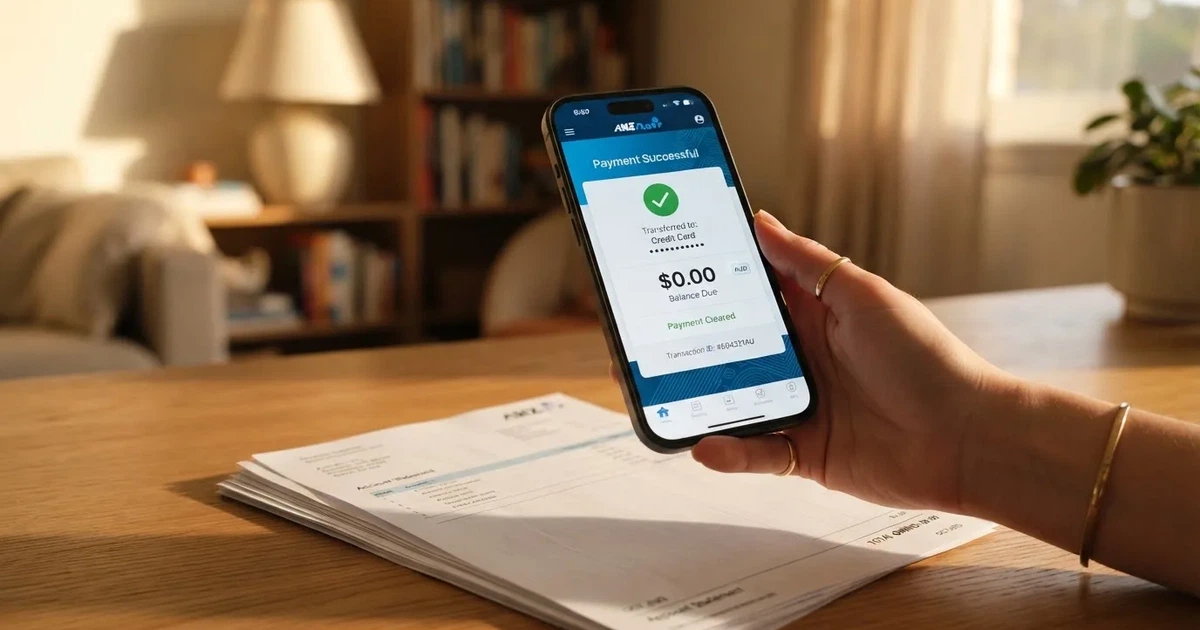
Data current as of 29 October 2026. Licence claims, blocking rounds and operator identities cross-checked against the ACMA’s published register and the RBA’s payments pages.
Table of Contents
- Responsible gaming sits upstream of the withdrawal
- PayID, Osko and the rails the withdrawal rides on
- Eleven brands the ACMA has acted against — and what PayID support looks like at each
- What the ACMA blocking record looks like as a running total
- Legality: the Interactive Gambling Act 2001 and what it covers
- Reading the brands against the law, side by side
- What the ACMA record looks like under the surface
- Where this leaves a real-money PayID withdrawal in Australia
- Frequently asked questions
Responsible gaming sits upstream of the withdrawal
Chasing a withdrawal is the most expensive reflex a casino bonus creates. A no-deposit bonus is a free turn at the games, paid out as bonus credit with a wagering multiple attached; until that multiple is cleared, the balance belongs to the site, not to the player. Once it is cleared and the balance is converted, the same amount is no longer promotional money — it is the player’s own cash, and only then does a real-money PayID withdrawal become possible. The marketing of those two states tends to blur them. A “withdrawal” button on a balance that is still bonus credit will return the bonus, not cash.
The arithmetic that turns one into the other is what makes the chase. A wagering multiple of forty times the bonus on a small A$10 free play turns into A$400 of required turnover; at an ordinary stake size that is several thousand spins, and the house edge eats a slice of every one of them. The discipline is to fix a budget for the bonus round before claiming it — a fixed amount the player is prepared to lose on the playthrough — and to stop the moment that budget is gone. The withdrawal question never gets asked, because the player did not chase one.
Two safeguards sit alongside that discipline. BetStop, the National Self-Exclusion Register, has been live since August 2023; it binds Australian-licensed online and phone wagering services, which means the offshore casino offering the PayID withdrawal is not connected to it. BetStop covers the legal side of the Australian market; it does not cover the sites this page is about. The National Gambling Helpline on 1800 858 858 is free, runs twenty-four hours a day and offers chat through Gambling Help Online. Neither path requires the player to be on a licensed site to use it. Anyone who finds themselves scrolling toward a PayID withdrawal at four in the morning on a balance funded by a bonus round they did not budget for is the person these services exist for.
The wider market makes the stakes concrete. H2 Gambling Capital’s 2025 report estimates that Australians lose about A$3.9 billion a year to illegal gambling sites, and the share of gambling going through legal channels has fallen from 74% in 2021 to 64%. The same year, A$3.9 billion leaked past the regulator to offshore operators. A withdrawal that arrives in under a minute is a fast way to recover a small win. It is also the same rail a much larger loss was deposited through, in the opposite direction, hours earlier.
PayID, Osko and the rails the withdrawal rides on
PayID is an identifier — a mobile number, an email address, an ABN or an Organisation Identifier — linked to an Australian bank account, run by Australian Payments Plus. It sits on top of the New Payments Platform that the Reserve Bank of Australia oversees, with the Fast Settlement Service settling each transaction individually in close to real time, twenty-four hours a day. As of April 2025, more than 25 million PayIDs were registered in Australia. The identifier is offered by more than 100 Australian financial institutions and is already built into their online banking — a player who banks online already has it, whether or not they have ever used it.
When a payer sends money to a PayID, the payer’s banking app shows the name of the account holder before the transfer is sent. That name-check is the protection that makes a mistyped identifier a recoverable error rather than a lost deposit, and it is the same protection that flags the PayID on an illegal gambling site as a payment to a stranger. AP+ has said it directly: if a player is asked to transfer funds to a PayID on an illegal gambling site, the site is almost certainly what the industry calls a “scambling” site — slang for an illegal online gambling platform advertised on social media and messaging apps that tricks people into gambling on a scam website. The advice from AP+ to anyone who thinks they have been scambled is to contact their financial institution. PayID itself will never contact a customer directly, and any email or text message claiming to be from PayID is a scam; PayID never asks anyone to send money in order to receive money, or to “upgrade” an account.
Osko is the brand under which a PayID transfer arrives in under a minute, twenty-four hours a day, including weekends. Whether the payment is addressed to a BSB and account number or to a PayID, the result at the receiving bank is the same: a real-time credit, settled individually rather than in batches. A PayID-based instant transfer is therefore not a special product the casino offers. It is what every participating Australian bank already does for any transfer addressed this way, and the casino either lets the player withdraw to a PayID or it does not.
Identity verification is the reason a first PayID withdrawal is slow
The instant in instant PayID withdrawal applies from the second withdrawal onward. The first one is gated by the casino’s know-your-customer checks, and those checks happen on the casino’s side, not on the rail. The standard set, on the sites that publish it, is a government-issued photo ID, a proof of address dated within the last three months and, in some cases, a screenshot or read-only PDF of the bank account that will receive the PayID. The casino checks these documents against the name and date of birth on the account; mismatches trigger a re-submission and another wait.
The slow first withdrawal is not a failure of PayID. It is the casino deciding whether the PayID actually belongs to the person who registered, and it is the same gate every regulated payment institution runs. Once the check is done it is kept on file, and the second withdrawal, addressed to the same PayID from the same account, clears in under a minute. A player who has been told their first withdrawal is “pending verification” is at the gate, not on the rail.
A small number of casinos carry this further. Some apply source-of-funds checks on withdrawals above a threshold — usually the same threshold over which the casino’s own anti-money-laundering obligations kick in — and ask for payslips, bank statements or proof of the deposit method. None of these checks are visible to the player before the first withdrawal is requested. A player who learns about them for the first time when their A$4,000 win is held pending source-of-funds has not been misled by the casino; they have been misled by the marketing, which advertises the second withdrawal’s speed and skips the first one.
Why a bonus-funded withdrawal can be faster than the real-money one that follows it
The bonus-funded PayID withdrawal is, in practice, often the fastest. The bonus amount is small; the verification check is light; the PayID settles in under a minute. The real-money withdrawal that follows — a deposit paid in, a win accumulated and a balance cleared at a much larger figure — runs into every check the bonus skipped. That is the design: a fast small withdrawal proves the rail works, and the player assumes the next one will be just as fast. The next one is rarely just as fast, because the amount is larger, the source-of-funds check may apply and the casino’s payment team handles withdrawals in a queue rather than as they arrive.
This is the single most important expectation to reset before claiming a bonus. A player who treats the bonus-funded PayID withdrawal as a preview of every future cash-out is being primed to deposit more than they meant to, on the assumption that the same rail will clear it.
Eleven brands the ACMA has acted against — and what PayID support looks like at each
The eleven sites below are not ranked, not recommended and not listed as a place to play. They are listed because the Australian Communications and Media Authority has, in each case, issued a formal warning to the operator under the Interactive Gambling Act 2001 for offering prohibited online casino services to Australians. A formal warning is one step on the regulator’s escalation ladder; the next step is a formal request to Australian internet service providers to block the site at the DNS level. A player who holds a balance at a blocked site has no Australian consumer protection to recover it.
Each card carries the brand, the operator the ACMA named in its warning, the date of that warning, and the subject support the research turned up — meaning, the evidence the research actually found of the brand accepting PayID or any equivalent instant bank transfer. Where the evidence is “no-data”, the card says so and stops; the brand is presented on its other fields only.
RocketPlay
The ACMA issued a formal warning to Pulsup Ltd over RocketPlay in March 2026, and an earlier one to Dama N.V. covering six casino brands in May 2022, of which RocketPlay was one. The same operator, the same brand, two formal warnings four years apart. Subject support: no-data. The research found no listing that places RocketPlay on a PayID or instant-bank-rail roster; that is the entire entry on this column, and it sits beside the regulator’s record without contradiction. The verdict is that the ACMA record on RocketPlay is heavier than on most of this list, and the gap between two formal warnings to related operators over the same brand is the kind of pattern that suggests the warning did not change the operator’s behaviour. A player weighing the brand against this page’s subject — an instant PayID withdrawal — is being asked to weigh a rail the research cannot confirm against a regulator that has come back twice.
Level Up Casino
Dama N.V., May 2022 — a formal warning that covered six brands at once, of which Level Up Casino was one. The same May 2022 warning covered Bambet, Dazard, Rocketplay, Wild Tornado and Cobra Casinos, and Dama N.V. has been back before the ACMA twice since: Woo Casino in March 2025 and Spirit Casino in May 2025. The June 2026 blocking round asked ISPs to block Woo Casino, Spirit Casino and a longer list of brands; the ACMA’s pattern with this operator is escalation rather than resolution. Subject support: listings-only, drawn from Westpac’s gambling-block merchant category code register, where Level Up appears as a merchant whose transactions the bank’s card-level gambling block refuses to authorise. That is not the same as PayID support. It is the bank’s own record that Level Up has, at some point, accepted transactions routed through Australian card rails, which is the rail a PayID withdrawal would sit beside rather than on. The verdict on Level Up is that the brand sits inside the Dama N.V. cluster the ACMA has been warning since 2022, and a player using PayID at the brand is using a rail the regulator has been blocking at the site level for years.
Woo Casino
Dama N.V., March 2025 — a formal warning the ACMA published alongside its Spirit Casino warning two months later. Both warnings belong to the same operator, and both appear in the ACMA’s escalation record after the 2022 warning that covered six other brands. The pattern across Dama N.V. is one operator, multiple brands, formal warnings at intervals rather than a single one with no follow-up. Subject support: no-data. The verdict on Woo Casino is that the ACMA’s record carries the warning, the research carries no PayID or instant-rail listing, and the operator has continued to surface under different brand names despite the 2022 warning — a fact the regulator’s continued action makes plain.
Spirit Casino
Dama N.V., May 2025 — the second of the two 2025 Dama N.V. warnings, two months after the Woo Casino warning and three years after the original six-brand warning in May 2022. Subject support: no-data. The verdict on Spirit Casino is that it sits at the freshest end of an operator pattern the ACMA has been writing into its formal-warning register since 2022. It is another name on a list that the regulator has been steadily extending, and the timing of the warning makes it a clear part of that trend.
National Casino
Consolutetish S.R.L., July 2025. Subject support: listings-only, drawn from AUSTRAC’s reporting entity register and from a Wikipedia entry on the operator group. The presence on those listings is administrative rather than transactional: AUSTRAC’s register records entities with reporting obligations under the Anti-Money Laundering and Counter-Terrorism Financing Act, and a Wikipedia entry records a brand’s existence. Neither is a PayID rail, and neither is confirmation that National Casino settles withdrawals through PayID. The verdict on National Casino is that the ACMA’s July 2025 warning sits alongside a separate 2022 warning the regulator issued to TechSolutions (CY) Group Limited and TechSolutions Group N.V. over the same brand’s sister site Bizzo Casino — two operators, one brand family, two warnings, three years apart.
Bizzo Casino
Consolutetish S.R.L., July 2025; earlier TechSolutions (CY) Group Limited and TechSolutions Group N.V., 2022. Two operators, two warnings, the same brand. Subject support: no-data. The verdict on Bizzo Casino is that the regulator’s record on this brand is one of the longer ones on the list, and the warning has been transferred between operators without ever being lifted. A player evaluating a PayID withdrawal at Bizzo is evaluating a brand whose operator identity the ACMA has had to rewrite mid-record.
Ignition Casino
Bamboo Media, July 2025. Subject support: no-data. The verdict on Ignition Casino is that the warning was published alongside the National Casino and Bizzo Casino warnings in the same July 2025 ACMA batch — three brands, two operators, one regulator’s monthly record. A player who arrived at the brand through a PayID promotion is being routed to a site whose operator has just entered the formal-warning register.
Instant Casino
EOD Code SRL, February 2025. Subject support: listings-only, drawn from PayID’s own pages and from EcoPayz’s merchant materials, where Instant Casino appears as a brand that has, at some point, transacted through PayID and through EcoPayz’s instant-payment layer. This is the closest the research turns up to direct evidence of PayID support at one of these brands. The verdict on Instant Casino is that the brand is the most PayID-adjacent name on this list, by the research’s own measure, and the ACMA’s February 2025 warning sits exactly on the kind of brand a PayID-friendly player is most likely to have heard of. That is not an endorsement; it is the shape of the trap. The brand the rail leads to is the brand the regulator has named.
Jackbit
Ryker B.V., April 2026 — the second of the two 2026 ACMA warnings in this list, alongside the March 2026 Rocketplay warning to Pulsup Ltd. Both warnings are this year’s. Subject support: no-data. The verdict on Jackbit is that the regulator’s record on this brand is fresh, the operator’s name has not appeared in earlier ACMA batches, and the warning is the first entry on this operator in the register. A player who arrived at Jackbit through a PayID promotion has arrived at a brand the regulator named within the last twelve months.
Casino Intense
Sterplay Holding Ltd, April 2025. Subject support: listings-only, drawn from AUSTRAC’s reporting entity register, an ITNews article on the operator group and NAB’s gambling-block merchant category code list. The ITNews article carries the brand into Australian tech press; the AUSTRAC register is administrative; the NAB list is the bank’s own record that Casino Intense has accepted card transactions that the bank’s gambling block refuses. Subject support is, again, evidence of card-rail adjacency rather than PayID support. The verdict on Casino Intense is that the ACMA’s April 2025 warning sits beside a record of the brand appearing on Australian bank registers as a gambling merchant — the same kind of adjacency that, in the wrong direction, is what PayID settlement looks like at scale.
Sky Crown
Hollycorn N.V., September 2022 — the earliest ACMA formal warning on this list, published alongside the Blue Leo warning, also to Hollycorn N.V. The brand and its sister were named at the same time. Subject support: no-data. The verdict on Sky Crown is that it sits at the back end of the ACMA’s escalation record, and a PayID withdrawal at a brand the regulator warned almost four years ago is a PayID withdrawal at a brand that has had the longest unbroken period of this list to either come into compliance or to be blocked.
What the ACMA blocking record looks like as a running total
This arithmetic is the core information this page provides, mapping the rate at which the ACMA’s blocking list has grown since the first blocking request in November 2019. As of June 2026, the ACMA reports a running total of 1,751 illegal gambling and affiliate marketing websites blocked since that first request — almost seven years of blocking rounds, one operator at a time, with the regulator asking Australian internet service providers to block each site at the DNS level. In the round reported on 26 June 2026 alone, twelve more sites were added: 7Signs, ChromaBet, Donbet, Duospin, Freshbet, Slots Gem, Jacks Club, Lucky Start, Pointsbetz, Spinrise, Vinyl Casino and Wildsino. Of those twelve, none overlap with the eleven names on the list above. The blocking list and the formal-warning list are not the same document; a brand can sit on one without sitting on the other, and the ACMA’s escalation runs warning first, blocking later.
Two numbers carry the running total: 1,751 sites blocked since November 2019, and the date of the first request that set the count off. From November 2019 to June 2026 is roughly 79 months, which gives a blocking rate in the order of 22 sites per month over the full period — though the early years were slower, and the round-by-round pace has picked up as the ACMA’s enforcement has hardened. The 26 June 2026 round alone added twelve. The point of the arithmetic is not the exact figure; the point is the trajectory. A reader who arrived at this market in 2020 saw a much shorter blocking list than a reader who arrives in 2026, and the rate at which the list is growing is itself the shape of the market. A real-money PayID withdrawal at one of the eleven brands above is a withdrawal at a brand whose operator sits somewhere on a list that has grown by roughly twenty sites a month for the past seven years.
Legality: the Interactive Gambling Act 2001 and what it covers
Online casino games and online pokies cannot be licensed anywhere in Australia. The Interactive Gambling Act 2001, strengthened by the Interactive Gambling Amendment Act 2017, makes it an offence to provide those services to a person in Australia; no state or territory issues a licence for them. What is licensable is wagering on races and sport placed before the event, lotteries and keno — in practice licensed by the Northern Territory Racing and Wagering Commission, which regulates 52 of Australia’s online bookmakers, including Sportsbet, Bet365 and Ladbrokes, for tax reasons. The commission has no full-time staff and meets once a month in Darwin. The minimum age for any of those services is 18.
The individual player is not prosecuted. The Interactive Gambling Act targets the provider, not the customer, and the ACMA’s enforcement actions — formal warnings, blocking requests, civil penalty proceedings — run against the operator. That asymmetry is what makes the Australian market look the way it does: an Australian resident can reach an offshore casino’s website through a search result or a referral link without facing any Australian legal consequence for doing so, while the operator faces the regulator’s escalating record. The same asymmetry is what makes an offshore casino’s withdrawal queue so exposed: when the ACMA asks ISPs to block the brand, the player’s balance sits behind the block, and the operator has no Australian complaints body to answer it.
The Interactive Gambling Amendment (Gambling Reform) Bill 2026 passed Parliament on 19 August 2026. Its advertising and inducement measures commence on 1 January 2027, which means the law is on the books as of this page’s date but its advertising provisions are not yet in force. A reader who searches for an instant PayID withdrawal at an offshore casino in the period between the bill’s passage and its commencement is reading this page in the gap; the inducement rules will apply from January 2027.
What the law says about payment rails
The Interactive Gambling Act 2001 as amended in 2023 prohibits Australian-licensed online wagering services from accepting credit cards or other credit-related products as payment. That prohibition does not extend to debit cards, bank transfers, PayID/Osko or BPAY; those are the legal deposit routes for a licensed wagering service. A site that asks an Australian customer for a credit card or a cryptocurrency deposit is operating outside the Australian rules; PayID, by contrast, sits inside them. The constraint on the rail, for the licensed market, is therefore the credit prohibition. The constraint on the rail, for the offshore market this page is about, is the Interactive Gambling Act itself.
Westpac’s gambling block works at card level: it refuses authorisation of transactions registered under the merchant category code “Betting/Casino Gambling” on eligible personal credit and debit cards. ANZ’s gambling transaction block, activated in the ANZ app, blocks gambling transactions made through a digital wallet such as Apple Pay on an eligible card as well as on the physical card; once the block is on, removing it requires a 48-hour waiting period, and the bank warns that not all gambling transactions will be blocked and that some non-gambling transactions might be blocked in error. By the end of 2025, Apple Pay, Google Pay and Samsung Pay transactions collectively accounted for around 45% of all card payments in Australia by number, which is the scale at which the digital-wallet surface sits inside the credit-card prohibition.
What the law says about winnings
Gambling winnings of a recreational player are not assessable income under section 6-5 of the Income Tax Assessment Act 1997, and losses are not deductible. A player who withdraws A$10,000 in winnings from an offshore casino through PayID has no Australian tax liability on that amount, because the player is a recreational player and not in the business of gambling. A player who is in the business of gambling — a professional punter, in the ATO’s own framing — is taxed differently, and the model above does not apply. The honest version of the rule is the ATO’s: check with the ATO.
Reading the brands against the law, side by side
The table below is not a recommendation and not a ranking. It places each brand against the ACMA’s record on it, and against what the research turned up on subject support. Two columns — the operator the ACMA named and the date the warning was published — come straight from the regulator’s register. The subject support column carries what the research found, which on most rows is no-data: the research did not surface a listing that places the brand on a PayID or instant-bank-rail roster, and a row that says so is a row that says what the research actually holds, not what the marketing claims.
| Brand | ACMA action and date | Operator named by the ACMA | Subject support |
|---|---|---|---|
| RocketPlay | Formal warning, March 2026 | Pulsup Ltd (RocketPlay); earlier Dama N.V., May 2022 | — |
| Level Up Casino | Formal warning, May 2022 | Dama N.V. | Westpac merchant category code register |
| Woo Casino | Formal warning, March 2025 | Dama N.V. | — |
| Spirit Casino | Formal warning, May 2025 | Dama N.V. | — |
| National Casino | Formal warning, July 2025 | Consolutetish S.R.L. | AUSTRAC register; operator’s Wikipedia entry |
| Bizzo Casino | Formal warning, July 2025; earlier 2022 | Consolutetish S.R.L.; earlier TechSolutions | — |
| Ignition Casino | Formal warning, July 2025 | Bamboo Media | — |
| Instant Casino | Formal warning, February 2025 | EOD Code SRL | PayID and EcoPayz merchant materials |
| Jackbit | Formal warning, April 2026 | Ryker B.V. | — |
| Casino Intense | Formal warning, April 2025 | Sterplay Holding Ltd | AUSTRAC register; ITNews; NAB gambling block list |
| Sky Crown | Formal warning, September 2022 | Hollycorn N.V. | — |
The columns the table cannot carry are the ones the prose has to. A row where the operator named by the ACMA has been the subject of an earlier warning — RocketPlay’s 2022 Dama N.V. warning followed by a 2026 Pulsup Ltd warning; Bizzo Casino’s 2022 TechSolutions warning followed by a 2025 Consolutetish warning — is a row where the regulator’s record on the brand is heavier than a single date suggests. A row where the ACMA has named multiple brands under one operator — Dama N.V. across Level Up, Woo Casino and Spirit Casino — is a row that sits inside an operator-wide pattern. The subject support column carries what the research did and did not find; it does not carry whether the brand accepts PayID today, because the research did not establish that for any row except Instant Casino, where the listing is from PayID’s own pages rather than from the casino’s own payment page.
What the ACMA record looks like under the surface
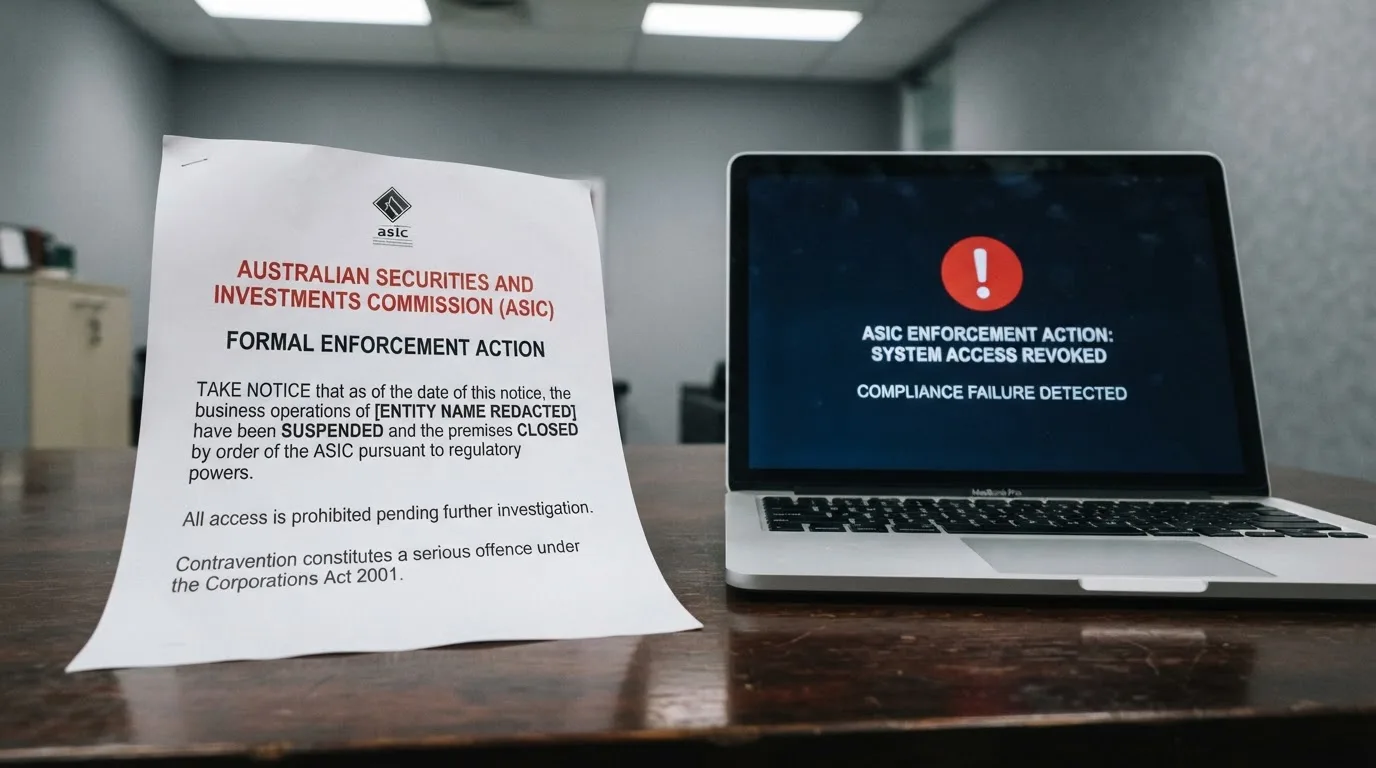
The 1,751 blocked sites figure is the headline. The pattern underneath it is what an Australian reader actually faces. The ACMA has been issuing formal warnings since at least 2022 — the Hollycorn N.V. warning over Sky Crown and Blue Leo is the earliest date on this list — and the warnings have continued at a steady pace through 2025 and into 2026. Each warning is the regulator’s first step; the second step is the blocking request to ISPs; the third is civil penalty proceedings. The June 2026 blocking round asked ISPs to block twelve sites at once. None of those twelve are on the eleven-brand list above, which is the operational difference between the ACMA’s two registers: a site can be blocked without ever having received a formal warning, and a site can be formally warned without yet being blocked.
The NTRWC’s regulatory footprint is the contrast. Fifty-two of Australia’s online bookmakers are licensed in the Northern Territory for tax reasons, and the commission has no full-time staff; it meets once a month in Darwin. The structural reason offshore casinos are not on that list is that the IGA does not allow them to be licensed for online casino games at all. The bookmakers on the NTRWC’s register are licensed for wagering — racing and sport, pre-event — which is a different licence class with different rules and a different regulator footprint. A reader who conflates the two reads the NTRWC’s 52 as covering the offshore casino market; it does not.
What the offshore market looks like in dollar terms
H2 Gambling Capital’s 2025 report estimates Australians lose about A$3.9 billion a year to illegal gambling sites, and that the share of gambling going through legal channels fell from 74% in 2021 to 64%. The A$3.9 billion figure is the leakage — the spend that does not pass through the licensed bookmakers, lotteries and keno operators. It is the spend that flows through PayID and Osko to the eleven brands above and to the wider offshore market. Each PayID withdrawal in the opposite direction is one of those dollars coming back, at the end of a session, in under a minute. The legal-channel share fell five percentage points over four years; the offshore market grew by the difference.
What the credit-card prohibition actually changed
The 2023 amendment to the Interactive Gambling Act banned credit cards and credit-related products as payment for Australian-licensed online wagering. The penalty for operators that breach the rule is up to A$247,500. PayID, as a debit-side rail linked to a bank account, sits outside the prohibition. The prohibition’s effect on the licensed market was to remove one funding route; its effect on the offshore market was to leave the rail open, because the offshore operator is not bound by the prohibition in the first place. A reader who hears “credit cards are banned for online gambling in Australia” and assumes that covers PayID has heard half the rule.
What 2026 reform changes, and when
The Interactive Gambling Amendment (Gambling Reform) Bill 2026 passed Parliament on 19 August 2026. Its advertising and inducement measures commence on 1 January 2027. Inducements — bonus offers, “free spin” promotions, no-deposit packages — are the marketing surface that brings an Australian reader to an offshore casino’s site in the first place. The bill’s inducement provisions are not in force on the date of this page; they will be from January 2027. A reader who arrives at an offshore brand through an inducement offer between August 2026 and December 2026 is arriving in the gap between the bill’s passage and its commencement.
Where this leaves a real-money PayID withdrawal in Australia
A PayID withdrawal is a transfer from one Australian bank account to another through the New Payments Platform. The rail is real, the speed is real and the name-check on the receiving PayID is real. What the rail does not do is lift the offshore casino out of the Interactive Gambling Act 2001’s prohibition. The eleven brands above are brands the ACMA has formally warned; the wider blocking list has grown to 1,751 sites as of June 2026; the legal-channel share of Australian gambling has fallen from 74% to 64% over four years. The PayID rail sits inside that picture, not outside it. A real-money PayID withdrawal at one of these brands is a fast settlement of a balance the regulator has said the operator should not be holding in the first place, and the speed of the rail does not change the legal status of the balance.
The withdrawal that arrives in under a minute is the rail working as designed. The blocking notice that lands the next morning is the regulator working as designed. A reader who separates the two — who treats the rail as a neutral pipe and the regulator as a separate fact — has the picture the marketing does not draw. A reader who treats the rail and the regulator as the same fact has the picture this page is trying to draw.
Frequently asked questions
Is it legal for an online casino to pay out real money through PayID to a player in Australia?
No online casino may lawfully offer real-money games to a person in Australia under the Interactive Gambling Act 2001; the prohibition covers online casino games, online pokies and in-play betting. PayID is a payment rail, not a licence. A fast PayID withdrawal does not change the operator’s legal status, and the ACMA’s formal warnings over the eleven brands above show the regulator treats the rail as a payment method, not as a compliance step.
What is the difference between withdrawing bonus credit and withdrawing real money through PayID?
Bonus credit is the casino’s money until the wagering multiple is cleared; a withdrawal of bonus credit returns the bonus, not the player’s cash. Real money is the player’s own balance after the bonus has converted and any deposit-funded play has settled. The PayID rail is the same in both cases, but the casino releases only what the player’s account actually owns in cleared funds, and that distinction is what makes a “withdrawal” button behave differently on a bonus balance than on a real-money balance.
Does a no-deposit bonus balance need to be converted before a real-money PayID withdrawal is possible?
Yes. A no-deposit bonus balance is bonus credit, and it must clear the wagering multiple before it converts to real money. Until it converts, a PayID withdrawal request will return the bonus or sit pending while the wagering is checked. The conversion is the casino’s own step, not a PayID step, and the time it takes is set by the casino’s bonus terms rather than by the rail.
What identity documents are usually required before a first real-money PayID withdrawal?
A government-issued photo ID, a proof of address dated within the last three months, and — at some casinos — a screenshot or read-only PDF of the bank account that will receive the PayID. These are the casino’s know-your-customer checks, and they happen on the casino’s side, not on the rail. A first PayID withdrawal is therefore slower than later ones because the verification step runs once and is then kept on file.
Is there a minimum real-money balance needed before a PayID withdrawal can be requested?
Most casinos set a minimum withdrawal amount, and below that threshold the PayID option is either unavailable or uneconomic. The minimum varies by brand and is set by the casino’s own cashier rules rather than by PayID; PayID itself does not impose a minimum, but the casino does, and a player who tries to withdraw below it is told the amount is too small rather than told the rail cannot settle it.
Why might a real-money PayID withdrawal take longer than an earlier bonus-funded one?
The bonus-funded withdrawal is small and lightly checked; the real-money withdrawal is larger and runs the full verification queue. A first real-money PayID withdrawal is the casino’s know-your-customer check, and a withdrawal above the casino’s source-of-funds threshold can trigger a payslip or bank-statement request on top. The rail is the same in both cases; the casino’s checks are not.