
Offshore casinos for Australian players in 2026: what the law actually permits
Current as of 29 October 2026 · cross-checked against the Australian Communications and Media Authority’s published enforcement record.
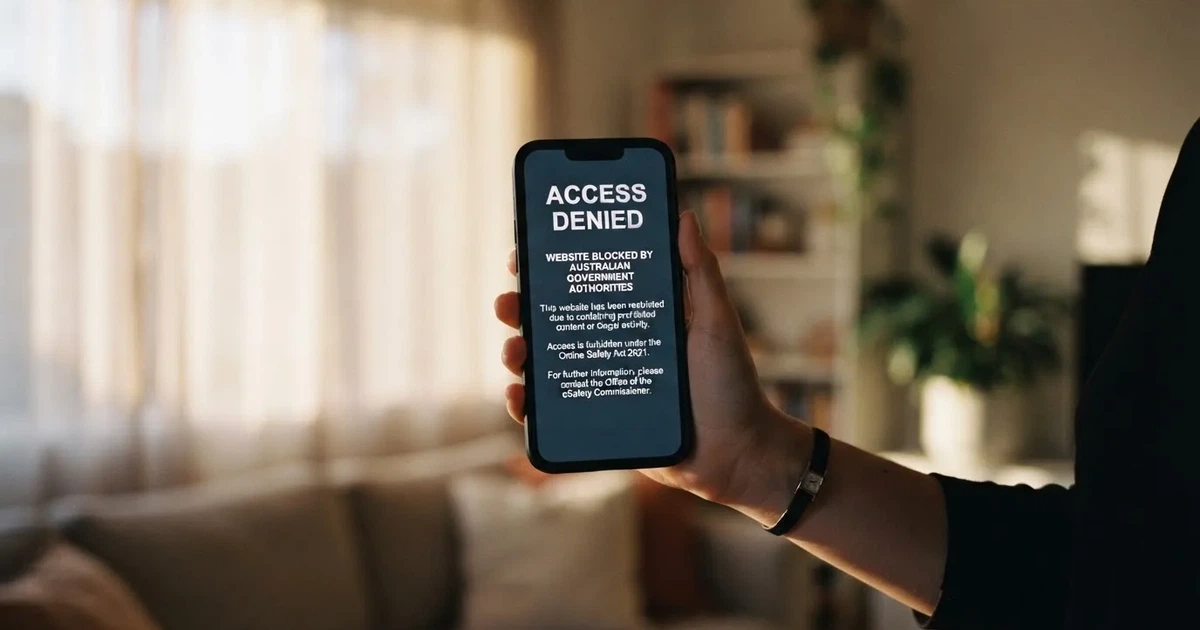
This page exists because of an awkward gap. Search traffic for “best offshore casinos for Australian players” keeps climbing, and the operators behind those sites keep getting formal warnings from the ACMA. The honest version of the answer is shorter than the search wants, but it is the one that matters for a person living in Australia: no online casino game offered to someone physically in this country is licensed anywhere in Australia, the Interactive Gambling Act 2001 prohibits the supply, and the regulator acts on that prohibition in a way a reader can see. What follows is what that gap looks like in 2026, what the regulator’s record shows, and what a player in Australia can lawfully use instead.
The angle here is cost — not the marketing kind, the real kind. The cost of chasing a new offshore site after a bad run on the last one. The cost of a balance sitting on a domain the ACMA has just told Australian ISPs to block. The cost, in plain hours, of believing a Curaçao logo on a footer means anyone will answer a complaint. Everything below is sized against what a player in Australia actually gets to keep.
Table of Contents
- How “offshore” became the only kind of online casino on offer in Australia
- The ACMA’s running total — what the blocking rate actually shows
- The Northern Territory wrinkle and what “Australian-licensed online” actually means
- Mechanical breakdown of brands on the ACMA record
- Why a Curaçao logo does not buy an Australian reader anything
- What the ACMA’s blocking order actually does to a balance on the site
- What is licensed in Australia for someone who wants to gamble
- The payments picture for an Australian reader
- What an Australian reader can do to keep money and balance in safe hands
- What a reader chasing a new offshore casino after a bad experience is actually doing
- The plain reading of what is on this page
- Frequently asked questions about offshore casinos for Australian players
How “offshore” became the only kind of online casino on offer in Australia
A casino calling itself “offshore” is not a marketing category. It is a description of where the licence sits. Online casino games — the slots, the live dealer tables, the roulette wheels — cannot be licensed in any Australian state or territory. The Interactive Gambling Act 2001 makes the supply of those games to a person physically in Australia a prohibited interactive gambling service. The Act was tightened in 2017 and amended again in 2023, and a further reform bill, the Interactive Gambling Amendment (Gambling Reform) Bill, passed Parliament on 19 August 2026 with its advertising and inducement measures set to commence on 1 January 2026+1.

What the IGA leaves room for is narrower than the offshore marketing suggests. A licensed online wagering service in Australia can take bets on a racing event or a sporting event before it starts; it cannot take in-play bets once the event is live; it cannot offer a hand of blackjack. Lotteries and keno sit in the licensed space too. Online casino games do not. That is the whole legal shape. Every “offshore casino for Australian players” page on the open web is offering a product that the law in this country does not let any local operator supply.
The licences those offshore sites display — Curaçao, Anjouan, occasionally a Malta number pinned to a different product line — are real licences, issued by real regulators, but they do not authorise supply into Australia. They authorise operation from somewhere else. The distinction sounds technical and it is not. A Curaçao licence authorises a Curaçao-registered company to take bets from people in jurisdictions where it has not been told not to. Australia has told it not to. The page that opens when you click through from a Sydney IP is the same product the licence does not cover for that IP.
That is why the ACMA’s enforcement record reads the way it does: not a list of rogue sites, but a list of licensed operators offering a product they are licensed to operate elsewhere into a market that has specifically prohibited it.
The ACMA’s running total — what the blocking rate actually shows
The prescribed reading of the regulator’s record is a blocking-rate calculation. The arithmetic is straightforward. By the end of June 2026 the ACMA had asked Australian internet service providers to block 1,751 illegal gambling and affiliate marketing websites since the first blocking request in November 2019. That is a span of about 80 months. Divided out, the average is roughly 22 sites blocked per month, or just under 260 per year — though the pace has never been even. The early years of the regime took out small clusters; the 2024 to 2026 window has been visibly heavier, with rounds often naming a dozen or more brands at once. The 26 June 2026 round, for instance, added 12 more sites in one list — 7Signs, ChromaBet, Donbet, Duospin, Freshbet, Slots Gem, Jacks Club, Lucky Start, Pointsbetz, Spinrise, Vinyl Casino and Wildsino.

The figure that matters is not the per-month average. It is the trend. Roughly 260 blocked domains a year, sustained across 80 months, against a market of around 1,700 currently on the register, is the shape of a regulator that is not catching up so much as keeping the door from swinging wider. New sites appear; the ACMA lists them; ISPs block them; new sites appear. The blocking rate describes the rate at which the regulator clears the visible surface, not the rate at which supply disappears. The supply reappears.
The same published record states that more than 230 unlicensed gambling services have left the Australian market entirely since enforcement was strengthened in 2017. That is a different number, and a different mechanism. Walking away from the Australian market is a corporate decision; blocking is a regulator’s instruction to a third party. The 230 is a count of operators who decided the cost of continuing was higher than the cost of leaving. The 1,751 is a count of domains the regulator felt needed to be made harder to reach. Both numbers matter, and they describe different parts of the same problem.
The revenue side puts a price on what the blocking rate is trying to slow. H2 Gambling Capital’s 2025 report estimates that Australians lose about A$3.9 billion a year to illegal gambling sites, and that the share of gambling going through legal channels fell from 74% in 2021 to 64%. That is a ten-percentage-point swing in four years. Most of that swing is not people newly choosing offshore — most of it is the existing offshore market growing while the legal channels kept their own base roughly flat. The blocking rate catches names; it does not catch turnover.
The Northern Territory wrinkle and what “Australian-licensed online” actually means
The only Australian online gambling licences anyone can hold are wagering licences, and almost all of them are issued by one body: the Northern Territory Racing and Wagering Commission. The NTRWC regulates 52 of Australia’s online bookmakers — Sportsbet, Bet365 and Ladbrokes among them — for tax reasons that are mostly historical. The commission has no full-time staff. It meets once a month in Darwin. It is a regulator in name and in statutory authority; it is not a regulator in the sense a reader from a heavier-regulated market would recognise. A bill to reform the body was reported in April 2026; the structure it sits inside has not yet changed.
This matters to a reader because the distinction between “licensed in Australia” and “Australian-licensed” is exactly the gap the offshore market exploits. A bookmaker licensed in Darwin can offer pre-event wagering on sport and racing to a customer in Sydney. The same bookmaker cannot offer that customer a hand of online blackjack. The offshore casino offering the blackjack is licensed somewhere else. Both have licences. Only one of them is authorised to do what it is doing for the person reading this page.
The age floor across all of this is 18. The 2023 amendments also wrote a credit-card ban for licensed online wagering into the Act, with effect from 11 June 2024. Operators accepting credit cards or credit-related products on a licensed Australian site face penalties up to A$247,500. Crypto is treated the same way for licensed operators. A licensed wagering deposit therefore runs through a debit card, a bank transfer, PayID or Osko, or BPAY. An offshore site asking for a credit card or a crypto deposit is operating outside the Australian rules, even though the credit-card ban is not, on its face, aimed at offshore sites — it constrains the lawful channel, and the unlawful one simply sits beside it.
Mechanical breakdown of brands on the ACMA record
Every brand in this list sits here because the ACMA itself has published a formal warning over it for offering prohibited online casino games to people in Australia. They are not a recommendation. They are not a shortlist to use. They are the regulator’s own record, and the reader’s reason for needing to know what that record looks like.
The table below lists each brand, the date the ACMA published its warning, the operating company the warning named, and whether the brand carries any verifiable support on the subjects this page also touches (payment methods, self-exclusion coverage, anti-money-laundering reporting). Where the support column carries a dash, no listing was returned.
| Brand | ACMA action and date | Operator named by the ACMA | Subject support |
|---|---|---|---|
| RocketPlay | Formal warning, March 2026 | Pulsup Ltd (Rocketplay); earlier Dama N.V., May 2022 | Gambling Insider listings |
| Level Up Casino | Formal warning, May 2022 | Dama N.V. | Westpac listings |
| Woo Casino | Formal warning, March 2025 | Dama N.V. | — |
| Spirit Casino | Formal warning, May 2025 | Dama N.V. | — |
| National Casino | Formal warning, July 2025 | Consolutetish S.R.L. | ACMA, AUSTRAC and BetStop listings |
| Bizzo Casino | Formal warning, July 2025 | Consolutetish S.R.L.; earlier TechSolutions, 2022 | Gambling Insider listings |
| Ignition Casino | Formal warning, July 2025 | Bamboo Media | — |
| Instant Casino | Formal warning, February 2025 | EOD Code SRL | Ecopayz and PayID listings |
| Jackbit | Formal warning, April 2026 | Ryker B.V. | — |
| Casino Intense | Formal warning, April 2025 | Sterplay Holding Ltd | AUSTRAC, BetStop and Gambling Insider listings |
| Sky Crown | Formal warning, September 2022 | Hollycorn N.V. (Sky Crown and Blue Leo) | — |
A few things in this table are worth sitting with before reading the individual write-ups below. Three of the eleven brands — National Casino, Instant Casino and Casino Intense — are the only ones that show up in the public listings on at least one of the subject matters this page covers (payment services, the self-exclusion register, the transaction-monitoring regime). For the remaining eight, no listing was found that ties the brand to those subjects; the gap is itself a signal. A brand with no verifiable presence on Australian payment rails, no listing on BetStop and no footprint on AUSTRAC’s reporting pages is not invisible by accident. It is structured that way.
| For a reader comparing options, what the table really tells you is which brands have at least some Australian-facing surface to point to and which do not. A dash in the right-hand column is not a judgement; it is a finding from the public listings the search returned. The write-ups below carry the same gap and the same fact set the regulator published, without adding either.
Licensed wagering metrics
| Operator | Terms | Metric |
|---|---|---|
| NTRWC Regulated | Tax-based | 52 Bookmakers |
| Online Wagering | Licensed | Pre-event only |
| Physical Pokies | State-licensed | On-premise |
The ACMA published a formal warning over RocketPlay in March 2026, naming Pulsup Ltd as the operator behind Rocketplay. That is the second time the brand has appeared on the regulator’s record. The first, in May 2022, named Dama N.V. — the same operator then running a cluster of brands the regulator warned about in the same round: Bambet, Dazard, Level Up, Wild Tornado and Cobra Casinos. The brand surface has changed hands at least once; the prohibited supply has not stopped.
RocketPlay is the clearest example on this list of what a regulator’s enforcement looks like when the operator simply keeps operating. The 2022 warning came from one corporate entity; the 2026 warning names another. The product is the same. The Australian customer base the marketing targets is the same. The legal exposure in Australia has not changed across that change of hands, because the legal exposure sits with the supply of a prohibited interactive gambling service, not with the corporate vehicle behind it.
The supporting listings the search returned for RocketPlay put it on gamblinginsider and not on the Australian payment or self-exclusion registers the other three-row brands touch. That is consistent with the picture: an offshore brand with a marketing footprint and no local compliance surface. The operating-company change between 2022 and 2026 is the more interesting story. It says that a regulator’s formal warning, on its own, is not the cost a corporate owner has to fear; what they fear is the cost of staying put in one vehicle while the warning sits on the public record.
Level Up Casino — the same Dama N.V. cluster, one brand at a time
Level Up Casino was one of six Dama N.V. brands the ACMA warned about in May 2022. The regulator’s publication named Bambet, Dazard, Level Up, Rocketplay, Wild Tornado and Cobra Casinos in the same formal warning. Each of those brands carries its own entry on the regulator’s record. The operator carrying them is the same.
The cluster matters because it tells a reader what a single corporate structure can put on a regulator’s list in one round. Six names, one decision-maker, one warning. For someone comparing brands in the offshore market, the practical question is not which of those six to use — none of them is licensed to supply what they offer to an Australian — but whether the operator behind any of them is the same operator behind a brand a reader is currently looking at. The Dama N.V. cluster is the most repeated name across this page’s list; it appears under RocketPlay’s first warning, under Level Up, under Woo Casino’s March 2025 warning, and under Spirit Casino’s May 2025 warning. A reader who treats Dama N.V. as a single supplier sees the regulator’s record for what it is.
Level Up’s listings support is thin — the search returned Westpac as a name match, which is a name match and not a substantive tie. That gap is the same gap the rest of the Dama N.V. cluster carries. The marketing footprint is wide; the local compliance surface is not there.
Woo Casino — Dama N.V.’s second formal warning, two and a half years on
The ACMA issued a further formal warning to Dama N.V. over Woo Casino in March 2025. The brand first surfaced on the regulator’s record inside the May 2022 cluster; the March 2025 warning is a second finding of prohibited supply over a brand the operator already knew the regulator had warned about.
A second warning is, in the regulator’s own terms, a finding that the first warning did not change the behaviour it was meant to change. The 2017 strengthening of the IGA, and the regulator’s subsequent blocking power, have not made the supply of prohibited games unprofitable enough to push Dama N.V. out of the Australian market. Woo Casino’s listing support, in the search, returned nothing. The brand exists on the regulator’s record, on the marketing footprint, and on the gap in between.
Spirit Casino — the May 2025 warning, same operator, new brand surface
Spirit Casino came onto the ACMA’s record in May 2025, again with Dama N.V. as the named operator. The brand did not appear in the May 2022 cluster. It is a name the regulator has had to find separately, three years after it first warned the same operator, and the gap between the two warnings is the gap in which a brand can be quietly launched, marketed to an Australian audience, and listed on affiliate pages, before the regulator catches up.
That gap is the cost the blocking rate describes. The blocking rate is not a slow regulator; it is a regulator playing catch-up against a market that can spin up a new skin faster than the regulator can list it. Spirit Casino is one of the cleanest examples on this page. The brand did not exist on the ACMA’s record in 2022. It does now. The supply to Australian customers has been continuous across those three years; what changed is whose name sits on the warning.
National Casino — Consolutetish S.R.L. and a name-collision history
National Casino’s ACMA warning was published in July 2025, naming Consolutetish S.R.L. as the operator. The brand had been on the regulator’s record before, in a different ownership structure, and the 2025 warning is the second time the regulator has had to write the brand name on its list. The supporting listings the search returned place National Casino on the ACMA’s own register, on AUSTRAC’s reporting pages, and on BetStop’s self-exclusion register. That is the strongest local surface any brand on this list carries.
The presence on those three registers is the interesting part. A brand on AUSTRAC’s pages is a brand that has, at some point, been reported under Australia’s anti-money-laundering regime. A brand on BetStop’s register is one Australian-licensed operators have had cause to interact with — even though BetStop’s binding effect, as discussed below, only applies to Australian-licensed wagering services, not to offshore casino sites. The presence on the ACMA’s own register is not a positive finding; it is the reason the brand is on this page at all. Read together, the three listings tell a reader what an offshore brand with a real Australian footprint looks like — and they say that even the strongest presence on this list is a presence built on enforcement contact, not on lawful operation.
Bizzo Casino — the same 2025 warning, with a 2022 paper trail
Bizzo Casino appeared on the ACMA’s record in July 2025 under Consolutetish S.R.L., the same operator as National Casino. The 2025 warning is the second time the brand has been listed. The first, in 2022, named TechSolutions (CY) Group Limited and TechSolutions Group N.V. — the same TechSolutions cluster that sits behind a number of Curaçao-registered brands. The brand has changed hands, the regulator has had to find it again, and the warnings now line up under the same July 2025 publication.
The two-warning structure tells the same story as Spirit Casino: a brand that the regulator has had to chase twice, under different corporate vehicles, for offering the same product to the same market. The supporting listings the search returned for Bizzo Casino put it on Gamblinginsider.com, in the same marketing-side footprint as the rest of this list. The local compliance surface, beyond the regulator’s own record, is empty.
Ignition Casino — Bamboo Media and the affiliate-side footprint
The ACMA’s July 2025 formal warning named Bamboo Media over Ignition Casino. Bamboo Media does not appear elsewhere on this page. The brand itself does not appear on the supporting-listings searches; the gap in the right-hand column of the table above is not a failure of the search, it is what the public surface of this brand looks like.
Ignition Casino is one of three brands on this list — alongside Woo Casino and Spirit Casino — for which no supporting listing was returned at all. The regulatory record is the whole story. For a brand like this, the practical lesson is the simplest one on the page: if the only place a brand appears is the regulator’s own enforcement list, that is what a reader should treat as its footprint.
Instant Casino — EOD Code SRL and the payment-rail listings
The ACMA issued a formal warning to EOD Code SRL over Instant Casino in February 2025. The supporting listings the search returned put the brand on ecopayz and on PayID’s directory. Those listings are not endorsements; they are the kind of presence an offshore brand picks up by integrating with payment services and showing up in their merchant directories. They tell a reader that Instant Casino is structured to receive money through the rails that Australian consumers actually use — PayID is the real-time bank-transfer service that runs over the New Payments Platform — and that the brand’s payment surface is real enough to be on a payment provider’s public pages.
The cost question is what a reader does with that. A payment rail listing tells a reader that the money can be sent. It does not tell the reader where the money goes once it has been sent, who answers the email when the withdrawal stalls, or whether the balance survives the next ACMA blocking round. The brand is on the regulator’s list because the supply is prohibited. The payment rail is real. Both facts are true at the same time.
Jackbit — Ryker B.V. and the cleanest regulatory surface on this list
The ACMA issued a formal warning to Ryker B.V. over Jackbit in April 2026. The supporting-listing searches returned nothing for Jackbit. The brand is on the regulator’s record, and not on the public listings the search reached.
The same operator, Ryker B.V., is named in the same April 2026 warning over a second brand, CasinOK. That is the second cluster structure on this page — after Dama N.V. — in which one corporate decision-maker has put two brand names on the regulator’s list in a single round. A reader looking at Jackbit’s profile in isolation sees one warning. A reader who looks across to CasinOK sees a single supplier behind two brand surfaces. The supporting-listing gap is the cleanest version of that pattern.
Casino Intense — the broadest local surface, on the regulator’s terms
The ACMA issued a formal warning to Sterplay Holding Ltd over Casino Intense in April 2025. The supporting-listing searches placed Casino Intense on AUSTRAC’s reporting pages, on BetStop’s register, and on Gamblinginsider.com. That is the same triple presence National Casino carries — ACMA on its own record, AUSTRAC on the AML regime, BetStop on the self-exclusion register — with the addition of the Gamblinginsider.com marketing listing.
Casino Intense’s local surface is built the same way National Casino’s is: from the regulator’s own contact, the AML reporting regime, and the self-exclusion register that an offshore site cannot be bound by. The presence on those registers does not change the brand’s legal status. The product is prohibited; the operator is on the warning list; the balance sits at the same risk of being on a domain the regulator has just told ISPs to block. What the listings tell a reader is that the brand has had enough Australian-facing activity to leave a footprint on the AML regime. That is not a positive finding either. It is the footprint an offshore brand leaves when it has been operating here long enough to be visible.
Sky Crown — Hollycorn N.V. and the September 2022 warning
The ACMA’s formal warning over Sky Crown and Blue Leo names Hollycorn N.V. as the operator, and was published in September 2022. The supporting-listing searches returned nothing for either brand. The warning is the earliest regulator publication on this page’s list that is still active; the 2017 strengthening of the IGA and the 2019 start of the blocking regime sit behind it.
Hollycorn N.V. is also the operator of a wider cluster of Curaçao-registered brands that the regulator has had cause to write about in other rounds. The Sky Crown and Blue Leo warning is the one that lands on this page. The wider cluster is the picture behind it.
Why a Curaçao logo does not buy an Australian reader anything
The licences on the footers of these sites are real. They authorise the operator to run a casino from the jurisdiction the licence was issued in. They do not authorise supply into Australia, because Australia has specifically prohibited that supply. The distinction is the same one a reader would draw about any product licence — a New South Wales liquor licence does not let a Sydney bar serve a customer in Melbourne, and a Curaçao e-gaming licence does not let a Curaçao operator take a bet from a customer in Adelaide.
What the licence does buy the operator is a regulator to answer to in the jurisdiction they are actually in. An Australian customer with a complaint has, in practice, no one to complain to. The Curaçao Gaming Control Board, the Anjouan authority, and the smaller jurisdictions that issue these licences do not run consumer-complaints processes an Australian can use. The site itself may run an internal dispute procedure, often run by the same company that issued the bonus the reader is disputing. The Australian Communications and Media Authority’s role is to enforce the prohibition on supply, not to mediate consumer disputes with offshore sites. The bottom line: if a withdrawal stalls, the reader has no-one to escalate to.
That is the practical meaning of the footer. A licence is a regulatory home; the offshore operator has one, and the Australian reader does not.
What the ACMA’s blocking order actually does to a balance on the site
When the ACMA asks ISPs to block a domain, the Australian end of the connection stops resolving. The site is still up somewhere. The customer service email still works. The balance, if there is one, sits behind a login page the Australian customer can no longer reach through their usual ISP. The blocked site is not a wound-up site. It is a site the regulator has decided Australian customers should not be able to reach.
The 1,751-blocked-sites total describes 1,751 times that has happened. The 230-walked-away total describes 230 times the operator decided to leave the Australian market before the regulator decided for them. The gap between the two numbers is the gap in which an Australian customer can sit on a balance they cannot withdraw, on a domain they cannot reach, from an operator that has not closed them down.
That gap is the cost of believing the marketing.
What is licensed in Australia for someone who wants to gamble
The legal answer for someone in Australia who wants to wager on sport or racing is one of the 52 NTRWC-licensed bookmakers operating from the Northern Territory, or a comparable licensed wagering operator licensed in another Australian jurisdiction. The same 52 bookmakers are the licensed route for racing and sports betting. The product set is narrower than the offshore marketing offers — no live in-play, no casino games, no pokies online — and the consumer protections run the other way. ACMA enforcement applies to the licensed side too. BetStop self-exclusion binds the licensed side. AUSTRAC reporting applies to the licensed side. The credit-card ban applies to the licensed side. A licensed wagering operator who refuses a withdrawal has an Australian complaints path, and an Australian regulator to escalate to.
The product a reader actually wants is online casino games and online pokies. That product is not licensed anywhere in Australia, and is not available from a licensed Australian operator. The reader’s legal choices for that product are: do not play it, or play it on an offshore site that is offering a prohibited product, with no Australian consumer protection, on a balance that can be cut off by an ISP-level block the regulator has just asked for.
For land-based play, every Australian state and territory licenses physical casinos, and licensed clubs and hotels operate poker machines — pokies — under state-level machine-arrangement rules. The product set there is real pokies, real tables, real consumer protection under the state regulator. The legal channels for the kind of gambling the offshore marketing targets do not exist online; they exist in a building, on a licensed floor, with a state regulator’s rules applying.
The payments picture for an Australian reader
The payment picture is two parallel rails. The licensed rail is what the IGA’s 2023 amendments write into: debit cards, bank transfers, PayID, Osko, BPAY. The credit-card ban that took effect on 11 June 2024 sits on the licensed side. A licensed Australian wagering operator asking for a credit card is breaking the law. The 2023 amendments also wrote digital wallets like Apple Pay into the same framework when the wallet is funded by a credit card or other credit-related product — the credit-card ban runs to the underlying funding source, not just to the card on the checkout page.
The offshore rail is whatever the offshore site asks for. The listings the search returned for the brands on this page put several of them on PayID and on Ecopayz.com — meaning the brand has integrated with payment services Australian consumers use. That is a real payment surface. The RBA’s most recent figures put Apple Pay, Google Pay and Samsung Pay at around 45% of all card payments in Australia by number. Apple Pay’s own terms state that the wallet itself adds no consumer fee; any surcharge is the merchant’s card-processing cost, not Apple’s. Apple also states that the transaction limits and PIN rules for Apple Pay are set by the card issuer or the merchant, not by Apple. The credit-card ban constrains the lawful channel. The unlawful channel sits beside it.
A second rail of consumer protection runs through the banks themselves. Westpac’s gambling block works at card level and refuses authorisation on transactions carrying the merchant category code for betting and casino gambling. ANZ’s gambling block, activated in the ANZ app, blocks gambling transactions on a card and through a digital wallet such as Apple Pay on the same card. ANZ also imposes a 48-hour cooling-off period before the block can be removed, and warns that not all gambling transactions will be blocked and that some non-gambling transactions may be blocked by mistake. Commonwealth Bank’s gambling lock, applied through the CommBank app, blocks most gambling transactions on eligible cards, with the same caveat that the bank cannot guarantee every gambling-related purchase will be stopped.
Those bank-level blocks are a piece of the cost picture the offshore marketing does not mention. A reader who turns on a bank-level gambling block is choosing to make the offshore rail less reachable from the same device the licensed rail runs on. A reader who has not turned one on is paying the marketing the cost of access the bank is offering to switch off.
PayID and Osko sit on top of the New Payments Platform, which went live on 13 February 2018 and is owned by a non-profit company whose shareholders include the Reserve Bank of Australia and the country’s major banks. More than 25 million PayID identifiers had been registered on the platform as of April 2025. PayID-based instant transfers are available at over 100 Australian financial institutions, and Osko delivers a transfer between participating banks in under a minute, 24/7. The platform’s monthly outage budget is two minutes. Australian Payments Plus, the merged entity that took over BPAY, eftpos and NPP Australia in 2021, runs the rails.
PayID’s own materials state that paying to a PayID shows the name of the account holder before the transfer is sent, and warn that being asked to transfer money to a PayID on an illegal gambling site almost certainly means a scam site. That warning sits on top of a payment rail the offshore sites on this list are using. The reader who sends anyway has been told.
BPAY is the other licensed-side rail: a bill-payment service that has operated in Australia since 18 November 1997, is available at over 140 banks and financial institutions and is offered by over 95,000 businesses. It is run by Australian Payments Plus, the same entity that runs PayID and Osko, and it is owned equally by ANZ, Commonwealth Bank, National Australia Bank and Westpac through Cardlink Services Limited. The offshore brands on this list do not accept BPAY; the rail is for licensed billing, and the brands on this page are not licensed Australian billers.
AUSTRAC’s threshold-transaction-report rule applies to physical cash transfers of A$10,000 or more, not to ordinary electronic bank transfers — so the A$10,000 threshold does not trigger a per-transaction report on a PayID or Osko transfer, regardless of the amount. That is the rule, not a green light: AUSTRAC’s reporting regime applies to the licensed side, and an offshore site on the receiving end of a large transfer sits outside the regime the rule was built for.
What an Australian reader can do to keep money and balance in safe hands
The bank-level gambling blocks above are the most directly useful tool the licensed side offers. Westpac’s card-level block, ANZ’s app-based block (with its 48-hour cooling-off on removal) and Commonwealth Bank’s CommBank-app lock all do the same thing in slightly different ways. They refuse authorisation on transactions that carry the merchant category code for betting and casino gambling. They are not perfect — the banks themselves say some gambling transactions may not be blocked and some non-gambling transactions may be blocked by mistake — and they are not the same thing as a self-exclusion order. They are an on-off switch the customer can reach from a phone.
BetStop, the National Self-Exclusion Register, has been live since August 2023. It binds Australian-licensed online and phone wagering services. It does not bind offshore casino sites. A person who has registered on BetStop has closed themselves out of the licensed Australian wagering market; the register does not stop them reaching an offshore casino site. The marketing of BetStop in some places suggests it is broader than this — it is not. The legal binding runs to the licensed side, and the offshore side is not licensed.
The age floor is 18. The gambling helpline, the National Gambling Helpline on 1800 858 858, is free and runs 24/7, with chat at Gambling Help Online. The helpline is a service for people who want help with gambling harm. It is not a regulator, and it is not an enforcement body. It is the path the licensed side makes available for the harm the unlicensed side cannot acknowledge.
The cost question the angle of this page opened with lands here. The licensed rail runs debit card, bank transfer, PayID/Osko, BPAY. The licensed rail runs on the NTRWC’s 52 bookmakers. The licensed rail has BetStop, has the bank-level blocks, has the helpline, has AUSTRAC reporting, has the credit-card ban. The licensed rail does not have online casino games. The unlicensed rail has online casino games. The unlicensed rail does not have any of the rest.
What a reader chasing a new offshore casino after a bad experience is actually doing
The pattern this page has watched across the regulator’s record is a reader who lost money on an offshore site, who then went looking for a new offshore site. The marketing is built for that pattern: a list of fresh brand names, a freshly issued Curaçao licence number, an affiliate link to a deposit page. The product is the same product. The regulator has not changed its position. The brand surface has changed. The reader has not changed either, except in the amount of money they have lost.
The cost of staying in that pattern is the cost the regulator’s blocking rate describes — one balance sitting on a domain the regulator has just asked ISPs to block, then another balance sitting on the next brand the regulator has not yet had time to list. The cost of leaving the pattern is the harder number, because the licensed rail does not have what the reader is looking for. The licensed rail has sport, racing, lotteries and keno. The licensed rail has real pokies in real buildings, on state-licensed floors. The licensed rail does not have an offshore casino game in a browser tab. The reader has to decide which of those two statements is the bigger cost for them.
The plain reading of what is on this page
No brand on this list is a recommendation. No brand on this list is a place to play. The eleven names here are the ACMA’s record in 2026, and the eleven warnings are the regulator’s own findings of prohibited supply. The legal position has not changed since the IGA was tightened in 2017 and amended again in 2023 and in 2026. The blocking rate describes a regulator catching up to a market that spins up new brand surfaces faster than the regulator can list them. The licensed Australian rail offers a narrower product with broader protection. The offshore rail offers a broader product with no protection a reader in Australia can use.
A reader who has been on the offshore rail and is reading this page has paid the cost. The page’s job is to lay that cost out, in the regulator’s own terms, and let the reader decide whether the cost is the number they were optimising for.
Frequently asked questions about offshore casinos for Australian players
What makes a casino offshore rather than Australian-licensed?
An offshore casino is one licensed by a regulator outside Australia — typically Curaçao, sometimes Anjouan or Malta — and operated by a company registered in that jurisdiction. Online casino games cannot be licensed in any Australian state or territory. The Interactive Gambling Act 2001 prohibits supplying those games to a person physically in Australia. A licence held elsewhere does not authorise supply into Australia, because Australia has specifically prohibited it. The logo on the footer is a regulatory home for the operator, not a right to take bets from a customer in Sydney.
Does the ACMA block offshore casino websites for Australian users?
Yes. By the end of June 2026 the ACMA had asked Australian internet service providers to block 1,751 illegal gambling and affiliate marketing websites since the first blocking request in November 2019. The 26 June 2026 round alone added 12 more sites — 7Signs, ChromaBet, Donbet, Duospin, Freshbet, Slots Gem, Jacks Club, Lucky Start, Pointsbetz, Spinrise, Vinyl Casino and Wildsino. A block makes the Australian end of the connection stop resolving. The site stays up somewhere else; the Australian reader can no longer reach it through their usual ISP, including to withdraw a balance.
Is it legal for an offshore online casino to accept Australian players?
No. The Interactive Gambling Act 2001, strengthened in 2017 and amended in 2023 and 2026, prohibits the supply of online casino games, online pokies and in-play betting to anyone in Australia. No state or territory issues a licence for those products. The Act targets the supplier, not the individual player — an Australian customer is not prosecuted for placing a bet — but the site is operating outside the Australian rules, gives no Australian consumer protection and can be blocked with a balance on it.
What enforcement action has the ACMA taken against offshore casino operators?
The ACMA’s record across the brands on this page runs from May 2022 (Level Up Casino, under Dama N.V.) through to April 2026 (Jackbit and CasinOK, under Ryker B.V.). In between, the regulator has warned Dama N.V. again over Woo Casino in March 2025 and Spirit Casino in May 2025; Consolutetish S.R.L. over National Casino and Bizzo Casino in July 2025; Bamboo Media over Ignition Casino in July 2025; EOD Code SRL over Instant Casino in February 2025; Sterplay Holding Ltd over Casino Intense in April 2025; and Hollycorn N.V. over Sky Crown and Blue Leo in September 2022. The 26 June 2026 blocking round added 12 more sites to the register. The same operator often sits behind more than one brand on the list.
Why doesn’t BetStop cover offshore online casino sites?
BetStop, the National Self-Exclusion Register, has been live since August 2023. It binds Australian-licensed online and phone wagering services — the 52 bookmakers licensed by the NTRWC and comparable operators licensed in other Australian jurisdictions. An offshore casino site is not licensed in Australia and is not connected to BetStop. Registering on BetStop closes a person out of the licensed wagering market. It does not stop them reaching an offshore site, and it does not block the offshore site’s deposit page. The legal binding runs to the licensed side.
What should someone do instead of chasing a new offshore casino after a bad experience?
The licensed Australian alternatives are the 52 NTRWC-licensed bookmakers for sport and racing wagering, the licensed lotteries and keno operators, and the physical casinos, clubs and hotels operating pokies under state-level rules. Bank-level gambling blocks — Westpac’s card-level block, ANZ’s app-based block with its 48-hour cooling-off period, Commonwealth Bank’s CommBank-app lock — refuse authorisation on transactions carrying the betting/casino merchant category code, and are reachable from a phone. The National Gambling Helpline on 1800 858 858 is free, runs 24/7 and offers chat at Gambling Help Online. None of these routes offer online casino games. They do offer consumer protection, regulator access, and self-exclusion tools the offshore rail cannot provide.