
Real money online pokies from Australia: the legal shape of the search
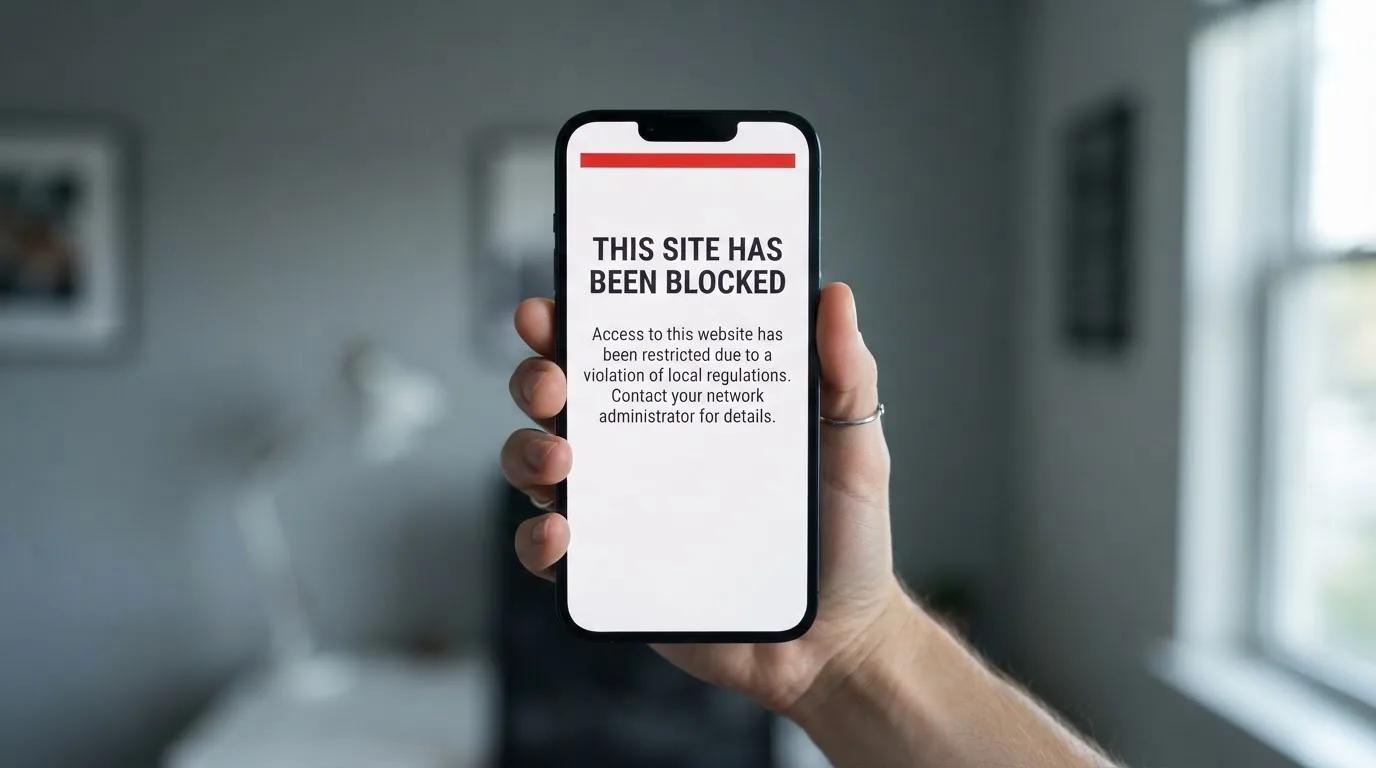
The phrase “real money online pokies” describes a product the Interactive Gambling Act 2001 makes it an offence to offer to anyone physically in Australia. No state or territory issues a licence for it, and the ACMA’s blocking list has grown past 1,750 sites since the first blocking request in November 2019. A page that hands readers a ranked shortlist of offshore casinos would be handing them a shortlist of services the regulator is actively taking offline. What follows instead is the shape of that gap: how the prohibition works, who has been warned, how money is supposed to move under Australian rules, and what the lawful alternatives look like for a punter who wants to play pokies.
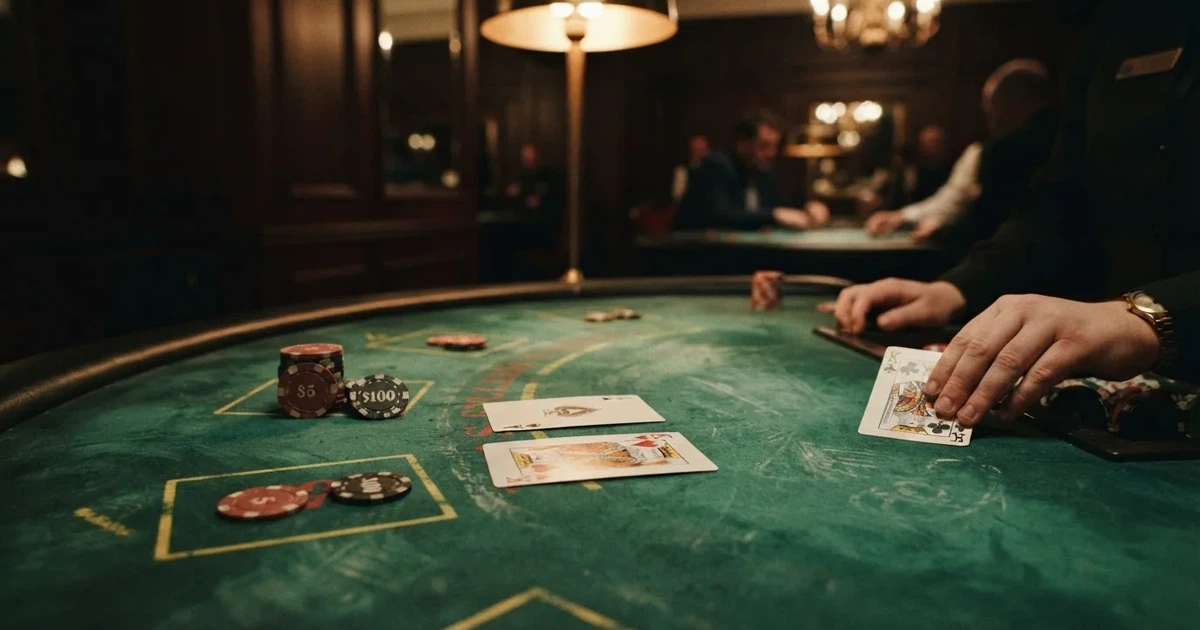
Current as of 29 October 2026 and cross-checked against the ACMA’s formal warning register and the Interactive Gambling Act 2001 as published on the Federal Register of Legislation.
Table of Contents
- Pokies in Australia: the legal floor
- How the ACMA has been enforcing the prohibition
- Brands the ACMA has acted against
- The table games a reader might be redirected toward
- Paying for play under Australian rules
- Mobile and apps: what the phone screen changes
- Responsible gambling: the safeguards that bind licensed operators
- What the search actually points at, for an Australian punter
- The closing calculation
- Frequently asked questions
Pokies in Australia: the legal floor
A product prohibited online, regulated state by state on the ground
Electronic gaming machines, called “pokies” in Australian English, operate in every state and territory, and each jurisdiction sets its own rules on the machines’ design and operation. New South Wales alone had 87,298 gaming machines outside casinos across 2,195 venues as of June 2023, with player losses of A$8.18 billion in 2022-23. Queensland runs 21,122 machines across 351 venues (October 2023), and Victoria operates 26,380 outside Crown Casino in 488 venues under a 30,000-machine statewide limit (2021-22). Western Australia took the opposite path in 1985, banning poker machines in pubs and clubs when Crown Perth opened; Crown Perth’s own machine count has since grown from roughly 200 in 1985 to around 2,500, all approved by the state’s Gaming and Wagering Commission. Registered clubs operated Australia’s first legal poker machines from 1956, in New South Wales.

The online version of the same product sits in a different legal space. The Interactive Gambling Act 2001, tightened by the Interactive Gambling Amendment Act 2017, makes it an offence to provide online casino games, online pokies or in-play betting to a person in Australia. No Australian jurisdiction licenses those services. What the licensing system does cover is wagering on races and sport placed before the event, lotteries and keno; in practice that wagering is licensed through the Northern Territory Racing and Wagering Commission, which regulates 52 of Australia’s online bookmakers, including Sportsbet, Bet365 and Ladbrokes, for tax reasons. The commission has no full-time staff and meets once a month in Darwin.
Why the prohibition is provider-facing, not player-facing
The Act targets the operator, not the individual player. The ACMA investigates, issues formal warnings and directs Australian internet service providers to block illegal sites. An Australian who opens an offshore account is not the person the regulator prosecutes, but the offshore site gives no Australian consumer protection, no complaints body and no recourse if a withdrawal is refused. The site can also be blocked while a balance is still sitting on it. That is the practical cost of the gap between “not illegal for me” and “protected if something goes wrong”.
What the minimum return-to-player looks like across jurisdictions
The legal minimum return-to-player for poker machines varies state by state: 85% in New South Wales, the Northern Territory, Queensland and (generally) Victoria, where Crown Melbourne sits at 87%; 87% in the Australian Capital Territory and Tasmania; 87.5% in South Australia; 90% in Western Australia. These are floors on the machine’s design, not returns a player will actually see in a session, but they are the published benchmark the licensed venues operate against. Tasmania planned nation-leading mandatory pre-commitment cards for its poker machines; the reform was delayed until late 2025 after passing in November 2021. The Federal Group had held a monopoly licence over all of Tasmania’s poker machines from 1968 until that legislation ended it and moved oversight to the Tasmanian Liquor and Gaming Commission.
How the ACMA has been enforcing the prohibition
The blocking record, in numbers
According to the ACMA as reported in June 2026, a total of 1,751 illegal gambling and affiliate marketing websites had been blocked since the first blocking request in November 2019, and more than 230 unlicensed gambling services had left the Australian market since enforcement was strengthened in 2017. In a round reported on 26 June 2026, the ACMA asked Australian internet service providers to block 12 more illegal gambling websites: 7Signs, ChromaBet, Donbet, Duospin, Freshbet, Slots Gem, Jacks Club, Lucky Start, Pointsbetz.com, Spinrise, Vinyl Casino and Wildsino. The pace has not slowed.
What the blocking rate works out to
Between the first blocking request in November 2019 and the 1,751-site total reported in June 2026 is roughly 79 months. That puts the running average near 22 blocked sites per month, though the work is not paced evenly: the regulator files requests in batches, and the number of sites that have left the market entirely sits on top of the blocking count. Read as a band rather than a single figure: somewhere between one and two dozen sites taken offline or formally warned every month, with bursts higher when a particular operator’s network is named in a single round. The arithmetic belongs to a record the ACMA publishes in batches, so the precise number for any given month shifts; what does not shift is that the pipeline has not closed.
Where the money flows, by H2 Gambling Capital’s 2025 estimate
H2 Gambling Capital’s 2025 report estimates that Australians lose about A$3.9 billion a year to illegal gambling sites, and that the share of gambling going through legal channels fell from 74% in 2021 to 64%. The prohibition is doing what it does; it is not yet doing enough to redirect the spend.
The recent warning record, by operator
The ACMA’s formal warning register tells the same story from a different angle. In March 2026 the ACMA warned Pulsup Ltd over Rocketplay.com.au. In May 2022 the ACMA warned Dama N.V. across six brands: Bambet, Dazard, Level Up, Rocketplay, Wild Tornado and Cobra Casinos. The ACMA issued further formal warnings in March 2025 over Woo Casino and in May 2025 over Spirit Casino, both operated by Dama N.V. In July 2025 the ACMA warned Bamboo Media over Ignition Casino and Consolutetish S.R.L. over National Casino and Bizzo Casino, the latter first warned back in 2022. In February 2025 the ACMA issued a formal warning to EOD Code SRL over Instant Casino. In April 2026 the ACMA warned Ryker B.V. over Jackbit and CasinOK. In April 2025 the ACMA issued a formal warning to Sterplay Holding Ltd over Casino Intense. The ACMA also issued a formal warning to Hollycorn N.V. over its Sky Crown and Blue Leo casino services in September 2022.
What the list shows is not a crackdown but a steady drumbeat: the regulator names the operator behind the brand, the date of the warning is published, and the next round usually lands within weeks.
Brands the ACMA has acted against
This is not a ranking and not a recommendation. Each brand below is listed because the ACMA itself issued a formal warning over it for offering prohibited services to Australians. The order reflects the regulator’s recent activity, not a quality verdict. Bonus terms are not reproduced here: the only sources for them were affiliate marketing pages, and an offer attached to a prohibited product is not something the page is in a position to weigh up.
RocketPlay
The ACMA named Pulsup Ltd in a warning over Rocketplay.com.au in March 2026. The Dama N.V. operator behind an earlier version of the brand was already the subject of a May 2022 formal warning across six properties. Services like these are not licensed by any Australian authority, regardless of any offshore credentials they may claim.
Level Up Casino
The ACMA named Dama N.V. in a warning over Level Up Casino in May 2022, in the same six-brand batch that covered Bambet, Dazard, Rocketplay, Wild Tornado and Cobra Casinos. Such operations lack legal standing for Australian residents.
Woo Casino
The ACMA named Dama N.V. in a warning over Woo Casino in March 2025, more than two years after the operator’s first appearance on the warning register. It operates without any local licence.
Spirit Casino
The ACMA named Dama N.V. in a warning over Spirit Casino in May 2025, two months after the Woo Casino warning and to the same operator. This service remains prohibited in this country.
National Casino
The ACMA named Consolutetish S.R.L. in a warning over National Casino in July 2025. It falls outside the scope of authorised gambling services.
Bizzo Casino
The ACMA named Consolutetish S.R.L. in a warning over Bizzo Casino in July 2025; the same brand had already been the subject of a 2022 formal warning to TechSolutions (CY) Group Limited and TechSolutions Group N.V. Two operators, two warnings, one brand. It is an unrecognised operator.
Ignition Casino
The ACMA named Bamboo Media in a warning over Ignition Casino in July 2025. Accessing this site for real money games is prohibited.
Instant Casino
The ACMA named EOD Code SRL in a warning over Instant Casino in February 2025. It is not a permitted service in Australia.
Jackbit
The ACMA issued a formal warning under the Interactive Gambling Act 2001 naming Ryker B.V. over Jackbit and CasinOK in April 2026, with both brands named in the same action. Online casino games cannot be licensed anywhere in Australia, whatever licence the site displays.
Casino Intense
The ACMA issued a formal warning under the Interactive Gambling Act 2001 naming Sterplay Holding Ltd over Casino Intense in April 2025. Online casino games cannot be licensed anywhere in Australia, whatever licence the site displays.
Sky Crown
The ACMA issued a formal warning under the Interactive Gambling Act 2001 naming Hollycorn N.V. over its Sky Crown and Blue Leo casino services in September 2022. Online casino games cannot be licensed anywhere in Australia, whatever licence the site displays.
| Brand | ACMA action and date | Operator named by the ACMA | Subject support |
|---|---|---|---|
| RocketPlay | Formal warning, March 2026 | Pulsup Ltd | — |
| Level Up Casino | Formal warning, May 2022 | Dama N.V. | Bgaming.com listing |
| Woo Casino | Formal warning, March 2025 | Dama N.V. | — |
| Spirit Casino | Formal warning, May 2025 | Dama N.V. | — |
| National Casino | Formal warning, July 2025 | Consolutetish S.R.L. | Wikipedia listing |
| Bizzo Casino | Formal warning, July 2025 (earlier 2022) | Consolutetish S.R.L.; TechSolutions | — |
| Ignition Casino | Formal warning, July 2025 | Bamboo Media | — |
| Instant Casino | Formal warning, February 2025 | EOD Code SRL | — |
| Jackbit | Formal warning, April 2026 | Ryker B.V. | — |
| Casino Intense | Formal warning, April 2025 | Sterplay Holding Ltd | ABC and ACMA coverage |
| Sky Crown | Formal warning, September 2022 | Hollycorn N.V. | — |
The table games a reader might be redirected toward
If the prohibited casino product sits behind a block, the reader is more usefully pointed at what is actually approved and on the floor of every Australian casino: baccarat and blackjack.
Baccarat: where the house edge sits
The house edge in baccarat is 1.06% on the Banker bet, 1.24% on the Player bet and 14.36% on the Tie. Punto banco, the variant most played today, was developed in Havana during the 1940s; the casino banks the game at all times and plays out both hands by fixed drawing rules, unlike variants where players choose. Chemin de fer, French for “railway,” is a two-player baccarat variant that emerged from baccarat banque in the late 19th century and is named for being quicker to play than the original. Cards 2-9 count at face value, 10/J/Q/K count as zero and aces count as one, with hand totals taken modulo 10; punto banco is dealt from a shoe of 6 or 8 decks. Crown Melbourne offers three baccarat variants, Traditional Baccarat, Crown Baccarat and 2 to 1 Baccarat, as approved table games regulated by the Victorian Gambling and Casino Control Commission, which replaced the VCGLR as Victoria’s casino regulator on 1 July 2022. Under section 66 of the NSW Casino Control Act 1992, a casino operator must not permit a game such as baccarat to be played unless the game and its rules are approved by the regulator, and the operator must make a copy of the approved rules available to patrons on request.
Blackjack: a tighter edge, more rules to learn
With optimal strategy, blackjack’s house edge is about 0.28% under liberal Las Vegas Strip rules, where the dealer stands on soft 17, doubles are allowed on any two cards, double after split is allowed, aces can be resplit and late surrender is permitted, and about 0.43% under Atlantic City rules. The game’s immediate predecessor was the English game vingt-un; a related game called veintiuno was described in Miguel de Cervantes’ Rinconete y Cortadillo, written around 1601-1602, and formal rules for the game were published in Britain in 1800. The game was renamed “blackjack” around 1899, with prospectors during the Klondike Gold Rush of 1896-99 credited with giving it its modern name. Number cards count as their number, jack/queen/king count as 10, and an ace counts as 1 or 11; a starting two-card total of 21 is called a “blackjack” or “natural” and is the strongest hand; the dealer must keep drawing cards until reaching a total of 17 or higher, and some rule sets require the dealer to also hit on a “soft 17”. Established casino variants include Spanish 21, played without 10s but with liberal player-favourable rules, Double Exposure Blackjack where both of the dealer’s cards are dealt face-up, Blackjack Switch where players can swap cards between two hands, and Super Fun 21 which allows up to four splits.
These are the games the licensed venues offer the punter who walks in. The reason the edge figures matter on a page about online pokies is that the contrast is the argument: a prohibited online product offers no published edge, no regulator-tested rules, and no recourse if a withdrawal stalls. The legal alternative gives the player a number to read before they sit down.
Paying for play under Australian rules
What a licensed operator can take from you
Credit cards, credit-related products and digital currency are banned as payment for licensed online wagering since 11 June 2024. Penalties for operators run up to $247,500. Legal deposit routes for licensed wagering are debit card, bank transfer, PayID/Osko and BPAY. A site asking an Australian for a credit card or a crypto deposit is operating outside the Australian rules, regardless of the licence it displays.
PayID and what it actually changes
PayID is the real-time overlay on the New Payments Platform that lets a transfer settle in seconds using a mobile number, email or ABN instead of a BSB and account number. For an Australian punter using a licensed wagering service, PayID and Osko are the fastest deposit route the rules permit; money lands before the bet is placed, not after a delay that the punter has to argue with. The same plumbing does not, however, make an offshore casino lawful. PayID is a payment rail; the prohibition sits on the offer of the product. An offshore site asking for a PayID transfer is asking an Australian player to use a domestic real-time rail to fund a prohibited service. The transfer may well succeed; the service it funds is still the one the ACMA is blocking.
What the offshore alternative actually costs
An offshore site gives no Australian consumer protection. There is no local complaints body, no local regulator to escalate to, and no enforceable Australian right if a withdrawal is refused. The balance can be stranded by a block. The advertised “instant withdrawal” lives or dies on the operator’s house rules, and an Australian punter with a complaint has, in practice, no one to take it to. The speed of the deposit is rarely the bottleneck in a complaint; the speed of getting money back is, and that is where the offshore model falls down.
Mobile and apps: what the phone screen changes
The licensed mobile product
For licensed wagering, the phone-screen experience is functionally the same product as the desktop browser: a Sportsbet or a Ladbrokes account, sized for the screen, with the same deposit rails and the same BetStop controls. What changes is convenience. A punter who wants to place a pre-event bet on the tram can do it, and the bet settles under Australian rules. That product is licensed.
The offshore mobile product
The same cannot be said for an offshore casino app marketed to Australians. The product sits behind the prohibition regardless of whether it loads in a browser tab, a downloaded APK from a third-party store or a PWA shortcut on the home screen. The Apple App Store and Google Play do not carry real-money casino apps for Australian accounts; the apps an Australian punter reaches through a search result are downloaded outside those stores, and the licence the app displays is to a regulator that has no jurisdiction in Australia. The phone screen does not move the legal ground.
What mobile does to player protection
The licensed phone-screen product inherits the same protections as the desktop site: BetStop, the deposit limits, the cooling-off periods, the complaints body. The offshore app inherits none of them. The smaller screen, the faster path to “deposit and play”, and the smoother fingerprint login all push toward the offshore product at the moment a punter most wants the friction to be lower. That is the design; the law says the product is the prohibited one.
Responsible gambling: the safeguards that bind licensed operators
BetStop and what it actually covers
BetStop, the National Self-Exclusion Register, has been live since August 2023. It binds every Australian-licensed online and phone wagering service. A punter who registers with BetStop is excluded from placing new bets with any of them, and the licensed operators are required to take reasonable steps to keep the registered person out. The register does not bind an offshore casino; an offshore operator has no integration with BetStop and no obligation to honour an Australian self-exclusion. A punter who has registered with BetStop and then opens an offshore account is on the wrong side of both the law and their own exclusion.
What the rest of the safety net looks like
The National Gambling Helpline is 1800 858 858, free, 24/7, with chat at Gambling Help Online. State and territory bodies run their own counselling and financial counselling services, and the licensed venues and online operators are required to publish the helpline prominently. Tasmania’s mandatory pre-commitment cards were planned to be nation-leading; the reform was delayed until late 2025 after passing in November 2021. The licensed product carries the safety net as part of the price of being licensed; the offshore product does not, and that is again the trade the punter is being asked to make.
What the search actually points at, for an Australian punter
The lawful alternatives
For an Australian punter who wants to play pokies, the lawful options are the licensed venues: pubs and clubs in every state and territory except Western Australia’s pubs and clubs, the casino floors in Melbourne, Sydney, Perth, Brisbane, Adelaide, Hobart, Darwin and Canberra, and the licensed online wagering services for the products the IGA does allow, which is pre-event betting on sport and races, lotteries and keno. The minimum return-to-player floors the licensed venues meet range from 85% to 90% depending on jurisdiction. Crown Melbourne’s machines sit at 87%, the Tasmanian Liquor and Gaming Commission’s oversight is recent, and Crown Perth’s machines are the only ones in Western Australia approved by the state’s Gaming and Wagering Commission.
The tax position a recreational punter should know
Gambling winnings of a recreational player are not assessable income under section 6-5 of the Income Tax Assessment Act 1997, and losses are not deductible, unless the person carries on a business of gambling. The model sits in a single line of the tax law; the only honest generalisation is that the recreational punter’s net win is not taxable and their net loss is not recoverable. Anyone running the books on gambling as a profession should check with the ATO.
The 2026 reform that is law but not yet in force
The Interactive Gambling Amendment (Gambling Reform) Bill 2026 passed Parliament on 19 August 2026. Its advertising and inducement measures commence on 1 January 2027. For the rest of 2026 the prohibition is the same prohibition the ACMA has been enforcing since 2017, with the same blocking pipeline and the same warning register; the new measures are law with a start date, not yet in force.
The closing calculation
The ACMA’s blocking list has grown from zero at the first blocking request in November 2019 to 1,751 sites as reported in June 2026, with more than 230 unlicensed services having left the market entirely since enforcement was strengthened in 2017. The pace sits in a band of roughly one to two dozen sites taken offline or formally warned each month, with the published numbers running in batches rather than as a smooth line. The arithmetic shows the prohibition in action: the offshore shortlist is a moving target, and a punter comparing options is looking at services the regulator is actively dismantling.
Frequently asked questions
What is the difference between a free-play pokie and a real money one?
A free-play pokie lets a player spin without staking cash, usually as a demo version on the developer’s site or a licensed venue’s promotional page. A real money pokie is the same machine with a stake attached, and the stake is what brings the licensed venue’s regulations into play: minimum return-to-player floors, approved rules, and the consumer protections that go with a licensed operator. The game engine is similar; the legal frame around it is not.
Can real money online pokies be played using PayID in Australia?
PayID is a real-time payment rail that works under the New Payments Platform, and licensed wagering services can take PayID and Osko deposits. That does not make an offshore casino lawful. Online casino games are prohibited under the Interactive Gambling Act 2001 regardless of the deposit method, and a site asking an Australian punter for a PayID transfer is funding a prohibited service. The transfer may succeed; the offer is still the one the ACMA is blocking.
Is it legal for an online casino to offer real money pokies to Australians?
No. The Interactive Gambling Act 2001, strengthened by the Interactive Gambling Amendment Act 2017, makes it an offence to provide online casino games, online pokies or in-play betting to a person in Australia. No state or territory licenses the offer. The ACMA enforces the prohibition by directing Australian internet service providers to block illegal sites and by issuing formal warnings to the operators behind them. The individual player is not prosecuted; the operator is.
Is there a dedicated real money pokies app for Australian players?
There is no licensed Australian real money pokies app. The Apple App Store and Google Play do not carry real-money casino apps for Australian accounts, and the apps an Australian punter reaches through a search result are downloaded outside the official stores. The product they offer sits behind the Interactive Gambling Act 2001 regardless of how it is delivered. A licensed wagering app, for the products the IGA does allow, is a different product and a different legal frame.
How much did Australians wager on gaming machines in 2020-21?
In 2020-21 Australians bet almost A$150 billion through gaming machines and lost A$12.18 billion on them. Australia has about 3% of the world’s pub and club poker machines with 0.3% of the global population. New South Wales alone had 87,298 gaming machines outside casinos across 2,195 venues as of June 2023, with player losses of A$8.18 billion in 2022-23. Queensland runs 21,122 machines across 351 venues, and Victoria operates 26,380 outside Crown Casino under a 30,000-machine statewide cap.