Aristocrat online pokies in Australia, 2026: what the page is for, what it isn’t, and what changes once you know it
 Available in US
The Australian Communications and Media Authority’s blocking list has grown to 1,751 illegal gambling and affiliate marketing websites since November 2019, with more than 230 unlicensed gambling services having left the Australian market since enforcement was strengthened in 2017. Verified against the ACMA register as of 23 September 2026. Of the brands a search for “Aristocrat online pokies Australia” actually returns, the great majority now sit on that register with a formal warning attached.
This page is not a how-to-play guide. There is no Australian site that can legally offer Aristocrat-branded online pokies for real money. The Interactive Gambling Act 2001 closes that door, and Aristocrat Leisure — the company whose name keeps appearing in the search results — does not run a casino for Australians. What this page does is set out, plainly and with the relevant figures, what an Australian punter is actually looking at when they type that phrase: a licensed manufacturer of land-based machines on one side, a prohibited offshore product on the other, and an enforcement picture that has moved faster than most readers realise.
Table of Contents
- The paytable question: what Aristocrat-branded online pokies claim to offer
- The fundamentals the landscape rests on: Aristocrat the company, and what it actually does
- The prohibitions an Australian player is sitting under
- The responsible-gaming floor under any online offer
- The comparison the ACMA has actually built: 11 brands the regulator has named
- The blocking rate: how fast the ACMA is removing illegal sites, and what that pace means
- What a player can actually do, and where the law puts the load
- What the search result is actually offering, and how to read it
- The page’s own conclusion
- Frequently asked questions
The paytable question: what Aristocrat-branded online pokies claim to offer
Search the term and the first thing that surfaces is the language of the slot floor: paytable, reels, scatters, hold percentage, return to player. That language is correct, and it is the language an Australian player would use to describe a real Aristocrat machine sitting in a licensed pub or club in NSW or Victoria. It is also the language an offshore site copies to dress up an unlicensed product.
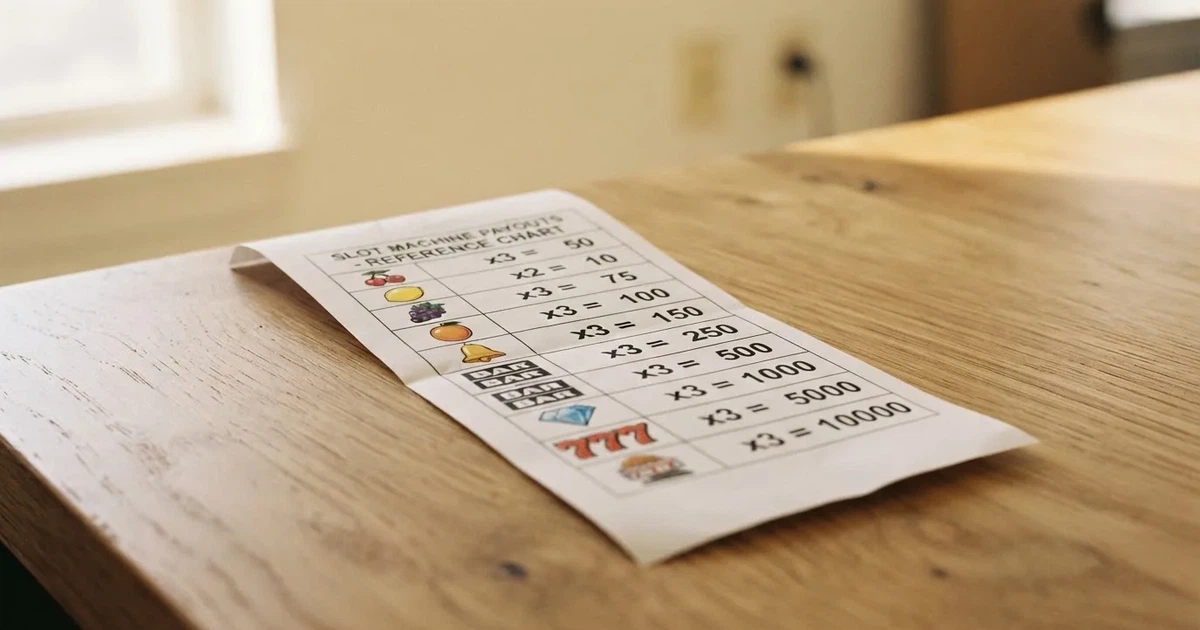
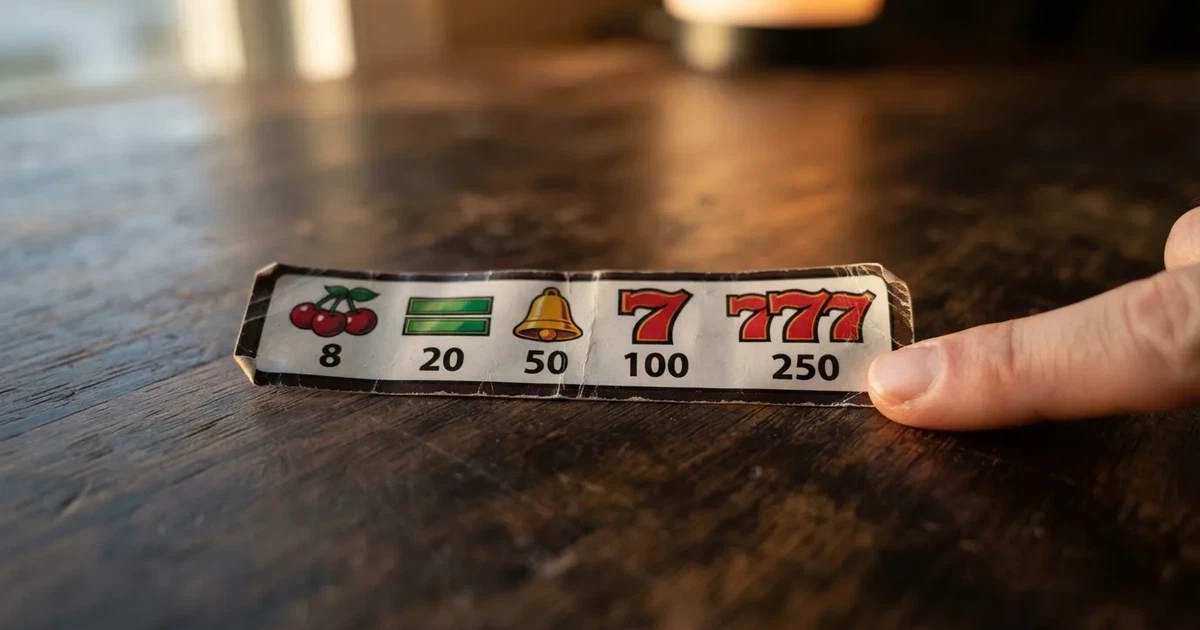
A paytable is the printed table on a slot cabinet — sometimes a digital one on screen — that lists every symbol, the line payout for each combination, the rules for bonus features and the credit value of the highest fixed jackpot. In a venue, the same machine the punter is leaning against carries the same paytable the operator is required by state gaming law to display; the cabinet’s return-to-player percentage and volatility band are part of the same disclosure. None of this language is borrowed or invented. It is the everyday vocabulary of the Australian club floor.
What changes once the same game moves online is not the math of the paytable. It is the legal wrapper around it. Aristocrat Leisure’s regulated online real-money business — the part the company calls Aristocrat Interactive, formed in April 2024 by folding Anaxi and the newly acquired NeoGames group together — is licensed and operational, but it is licensed in jurisdictions other than Australia. Aristocrat Interactive supplies B2B technology and content; it does not operate a casino front end aimed at Australian residents. The pub cabinet and the offshore browser tab are two different products, sold under one trade name, to two different audiences, and only one of them is legal in this country.
The figures the offshore pages quote — RTP, volatility, hit rate — are usually lifted from generic slot-review pages. Some are accurate for the title as Aristocrat ships it; many are not. Aristocrat’s own land-based titles carry a state-by-state return setting that varies with the venue; an “online” version claiming a 96% return is rarely drawing on a verified per-title publication, because no Australian regulator has verified one. The honest version of that paytable is the one a punter can read on the cabinet in front of them.
The fundamentals the landscape rests on: Aristocrat the company, and what it actually does
Aristocrat Leisure Limited is an Australian gambling-machine maker with its administrative and research headquarters in North Ryde, a Sydney suburb, and marketing and development offices in South Africa, Russia and the United States. It is described as the largest gambling-machine manufacturer in Australia and the second-largest slot-machine manufacturer in the world behind International Game Technology. The company was founded in 1953 by Leonard Ainsworth and has been listed on the Australian Securities Exchange under the ticker ALL since 1996.

| Provider | Established | Primary Jurisdiction |
|---|---|---|
| 1spin4win | 2021 | Curaçao |
| Betsoft | 2006 | Not stated (Europe/Global) |
| BGaming | 2018 | Malta |
| Booming Games | 2018 | Malta |
That is the foundation. What it does today is broader than the cabinet in the local pub. Aristocrat develops electronic gambling machines, casino management systems, online real-money gambling technology, iLottery products and social casino games. Its 2025 revenue was A$6.30 billion on a normalised net profit after tax and amortisation of A$1.55 billion, with 7,400 employees on the books. The growth side is digital. Product Madness runs the social games business; Aristocrat Interactive runs the regulated real-money-gambling business, formed in April 2024 from the Anaxi unit and the NeoGames group acquired in the same year for roughly US$1 billion. Earlier acquisitions — Video Gaming Technologies in 2014 for about US$1.3 billion, Plarium in 2017 for US$500 million, Big Fish Games in 2017 for US$990 million — built the digital footprint a casual observer is most likely to mistake for an Australian-facing casino offering.
The mistake is reasonable, because the company’s name keeps appearing on offshore platforms that are not Aristocrat’s. The company has itself been a bidder for parts of that market: a US$3.7 billion bid for Playtech was rejected by Playtech shareholders in 2021. None of this changes the position under Australian law. Aristocrat is a real company, with a real Sydney head office, listed on the ASX, making real machines for licensed venues. None of that is the same as the offshore site a punter lands on through a search ad.
The prohibitions an Australian player is sitting under
The Interactive Gambling Act 2001, tightened by the Interactive Gambling Amendment Act 2017, makes it an offence to provide online casino games, online pokies or in-play betting services to a person physically in Australia. No state or territory issues a licence for those products. What is licensable is wagering on races and sporting events placed before the event, lotteries, and keno — in practice licensed by the Northern Territory Racing and Wagering Commission, which regulates 52 of Australia’s online bookmakers including Sportsbet, Bet365 and Ladbrokes, runs with no full-time staff and meets once a month in Darwin.
The minimum age for any gambling product in Australia is 18. An offer to an under-18 punter is its own offence under the Act. For the offshore sites named in the formal-warning round that follows, age is checked in whatever fashion the operator chooses; the ACMA’s brief is the supply side, not the player side. The individual Australian player is not prosecuted under the IGA. The Act targets the provider.
Two consequences follow from this that an Australian reader should hold in mind at the same time. The first is consumer protection. An offshore site that takes a deposit from a person in Australia gives that person no Australian consumer protection, no Australian complaints body and no recourse if a withdrawal is refused or stalled. The second is operational. The ACMA directs Australian internet service providers to block illegal services; a balance held by a player at the time of a block is not returned by any Australian authority. The block is not a refund programme.
H2 Gambling Capital’s 2025 report estimates that Australians lose about A$3.9 billion a year to illegal gambling sites, and that the share of gambling going through legal channels fell from 74% in 2021 to 64%. The scale is the point. This is not a fringe activity that the regulator occasionally notices; it is a measurable drain on Australian households, sitting in plain view, addressed by the ACMA one block request at a time.
The responsible-gaming floor under any online offer
If thinking about any kind of online gambling starts to feel compulsive or stressful — whether the offer on screen is legal Australian wagering or an offshore casino page — free confidential help is available around the clock through Gambling Help Online (chat, web) and the National Gambling Helpline on 1800 858 858. Both services are free of charge, run 24/7, and are not connected to any operator or regulator.
BetStop, the National Self-Exclusion Register, has been live since August 2023. It binds Australian-licensed online and phone wagering services — the bookmakers and the lottery products that hold an Australian licence. It does not bind an offshore casino. A punter who self-excludes through BetStop and then opens an account with an offshore site has taken a step the register cannot enforce. The fact that an offshore site appears to offer its own self-exclusion feature is not a substitute: it is enforced at the operator’s discretion, with no Australian backstop.
Payments offer the cleanest signal of where a site actually sits. Credit cards, credit-related products and digital currency are banned as payment for licensed online wagering in Australia since 11 June 2024, with penalties up to A$247,500 for operators that accept them. Legal deposit routes for licensed wagering are debit card, bank transfer, PayID/Osko and BPAY. An offshore site that accepts a credit card or a crypto deposit from an Australian is operating outside the Australian rules by definition; the same is true of any site accepting POLi, which has been wound down for Australian customers. Payment choice on a casino page is, in practice, a quick read on which side of the IGA the operator sits.
Tax is the last housekeeping point a recreational punter usually wants to think about. Gambling winnings of a recreational player are not assessable income under section 6-5 of the Income Tax Assessment Act 1997, and losses are not deductible. The exception is a person who carries on a business of gambling; that is a different question and one the Australian Taxation Office answers case by case.
The comparison the ACMA has actually built: 11 brands the regulator has named
This is not a ranking. It is not a recommendation. It is a list of brands the ACMA has issued formal warnings against, ordered the way the regulator itself published the warnings — with the most recent first. The reason to look at them in this order is that the comparison the page is asking the reader to make is not “which is best” but “which have been told to stop, by whom, and when”. The verbs matter. A formal warning is the ACMA’s first formal step under the IGA; it precedes, and often provokes, the block request. Some of the brands below also have provider connections recorded on industry listings pages; the comparison notes those where the research carries them.
The columns that follow are brand, the ACMA action and its date, the operator the ACMA named in the warning, and any verifiable subject support — a provider or game listing carrying the brand in passing. No bonus, promotion or voucher code is reproduced. Offshore sites are heavy on signup offers; reproducing one is out of scope for a page whose subject is the law, not the offer.
| Brand | ACMA action and date | Operator named by the ACMA | Subject support |
|---|---|---|---|
| RocketPlay | Formal warning, March 2026; earlier Dama N.V. warning, May 2022 | Pulsup Ltd | — |
| Jackbit | Formal warning, April 2026 | Ryker B.V. | — |
| Level Up Casino | Formal warning, May 2022 | Dama N.V. | listings-only — appears on a third-party provider’s platform list |
| Woo Casino | Formal warning, March 2025 | Dama N.V. | — |
| Spirit Casino | Formal warning, May 2025 | Dama N.V. | — |
| National Casino | Formal warning, July 2025 | Consolutetish S.R.L. | listings-only — appears on provider platform pages for several studios |
| Bizzo Casino | Formal warning, July 2025; earlier TechSolutions warning, 2022 | Consolutetish S.R.L. | — |
| Ignition Casino | Formal warning, July 2025 | Bamboo Media | — |
| Instant Casino | Formal warning, February 2025 | EOD Code SRL | — |
| Casino Intense | Formal warning, April 2025 | Sterplay Holding Ltd | listings-only — appears on a provider’s partner list |
| Sky Crown | Formal warning, September 2022 | Hollycorn N.V. | — |
The pattern the table lays out is the answer to the question of how the ACMA’s enforcement is landing. Eleven formal warnings, eleven different operators behind them, with two brands (RocketPlay and Bizzo Casino) appearing twice because the ACMA issued a fresh warning to a new corporate vehicle behind the same customer-facing name. A single warning is a polite letter. Two warnings to two different companies behind one customer-facing brand is closer to a chase.
RocketPlay
The most recent ACMA action against RocketPlay was a formal warning to Pulsup Ltd in March 2026, with the regulator naming the Rocketplay.com.au domain directly. The same brand had been the subject of an earlier warning to Dama N.V. in May 2022, when Dama was running six casino brands simultaneously: Bambet, Dazard, Level Up, Rocketplay, Wild Tornado and Cobra Casinos. Two different corporate owners, one customer-facing name, one product: prohibited interactive gambling services supplied to Australians. The brand does not appear in any third-party provider or aggregator catalogues.
The verdict a reader has to draw from RocketPlay is not subtle. A brand whose corporate ownership has changed at least twice while under ACMA pressure is a brand whose operator has chosen to keep running, not to stop. The legal status has not changed; the warning has only been reissued to a new defendant.
Jackbit
The ACMA named Ryker B.V. in a formal warning over Jackbit in April 2026, alongside a parallel warning over CasinOK. The two brands sit on the same enforcement action, which is the ACMA’s way of signalling that an operator running multiple brands under one holding company is treated as one enforcement problem, not many. Research does not show this brand linked to any third-party slot providers.
For a reader comparing options, Jackbit sits at the freshest end of the warning list. The more useful comparison is between Jackbit and Casino Intense — both relatively recent, both small operators, both without the years-long Dama N.V. pattern of corporate-vehicle swapping behind them. The verdict is the date. April 2026 is closer to “this month” than any other warning on the list.
Level Up Casino
Dama N.V. took a formal warning over Level Up Casino in May 2022, as part of the same six-brand action that named Rocketplay. A third-party provider’s platform list carries Level Up among the venues where its games appear — a listings-only reference that says nothing about whether the brand is currently operating, accepting Australian customers, or paying out. It says only that a studio has, at some point, integrated with the platform.
Level Up’s verdict for a reader sits inside the broader Dama pattern. The corporate vehicle here is the same one that runs RocketPlay; the comparison between the two on the table is therefore a comparison between two customer-facing names sitting on the same holding-company problem. The ACMA did not need to issue two warnings to two different operators to chase one set of players.
Woo Casino
Dama N.V. also took a formal warning over Woo Casino in March 2025, two and a half years after the original six-brand warning. The fresh warning is the ACMA’s signal that the May 2022 letter did not stop the supply. There is no record of this brand appearing on any third-party provider lists.
The verdict is the gap. Twenty-two months passed between the 2022 warning and the 2025 follow-up. The reader who lands on Woo Casino today is looking at a brand whose regulator has already tried, in writing, to get it to stop.
Spirit Casino
Dama N.V. took the fifth brand in its stable into a fresh formal warning in May 2025 — Spirit Casino, two months after the Woo Casino warning. The pairing tells its own story: a holding company running at least five casino brands from Curaçao, told in 2022 to stop supplying prohibited services to Australians, told again in 2025 over two of those brands after the first round of warnings did not produce a stop. The research file contains no verifiable subject-support data for Spirit Casino.
Spirit Casino’s verdict for a reader is the same shape as Woo Casino’s: a fresh warning on top of an old one. The reader’s job here is to read the dates together, not separately.
National Casino
Consolutetish S.R.L. took a formal warning over National Casino in July 2025. National Casino is one of the more heavily cross-listed brands in the table: third-party provider pages for several studios — including studios whose own licensing profiles are detailed elsewhere in the research — carry National Casino among the platforms on which their games appear. That is a listings-only fact: it tells the reader the brand has integrated with multiple studios, not that those studios endorse the brand’s suitability for any specific market.
National Casino’s verdict is therefore a study in what a listings-only attachment does and does not say. A brand that appears across several studio catalogues has had no difficulty signing supply deals. That fact is consistent with the brand being well-run; it is also consistent with the brand being well-distributed while remaining unlawful for the market the searcher is sitting in.
Bizzo Casino
Consolutetish S.R.L. took a formal warning over Bizzo Casino in July 2025 — the same enforcement action as National Casino, indicating a single operator behind both brands. Bizzo had already been the subject of a 2022 formal warning to TechSolutions (CY) Group Limited and TechSolutions Group N.V., making it the third brand on the table to carry two formal warnings under two different corporate owners. This brand lacks any recorded connection to third-party slot catalogues.
The verdict on Bizzo reads as a number. Two operators, two warnings, ten years or so between the brand’s launch and the second warning. The pattern that fits is the same one RocketPlay shows: a brand whose operator has chosen to keep running rather than to stop.
Ignition Casino
Bamboo Media took a formal warning over Ignition Casino in July 2025, the same month as the Consolutetish action over National Casino and Bizzo. The two-enforcement-actions-in-one-month pair is the ACMA’s way of signalling a coordinated push against a set of offshore operators supplying Australians in the same period. No third-party listing in research attaches a verified subject-support line to Ignition Casino.
Ignition’s verdict is therefore the freshness of the warning without the corporate-vehicle-swapping pattern behind it. A reader comparing Ignition to, say, RocketPlay is comparing one fresh warning to two.
Instant Casino
EOD Code SRL took a formal warning over Instant Casino in February 2025 — the earliest of the 2025 warnings on the table. No third-party listing in research attaches a verified subject-support line to Instant Casino. The position in the table is therefore the most useful comparison a reader can make: Instant Casino sits at the front end of the 2025 enforcement cluster, three months ahead of the Woo Casino warning and three months ahead of the Casino Intense warning.
The verdict on Instant Casino is that it is the marker for when the 2025 wave of formal warnings began. The ACMA’s actions in the months after February 2025 — Woo Casino in March, Casino Intense in April, Dama’s Spirit Casino in May, the July cluster of three — were not isolated letters. They were a rolling action.
Casino Intense
Sterplay Holding Ltd took a formal warning over Casino Intense in April 2025. A third-party provider’s partner list — a studio with a verifiable licensing profile of its own — carries Casino Intense among the brands the studio has integrated with. The listings-only attachment is the closest the table gets to a documented supply relationship.
The verdict on Casino Intense is that it is the cleanest example on the table of a brand whose third-party integration is documented at provider level. The reader’s job here is to notice what that fact does not say: integration with a licensed studio is not the same thing as a licence to supply Australian customers. The supply chain can be clean and the destination market can still be unlawful.
Sky Crown
Hollycorn N.V. took a formal warning over Sky Crown — alongside its sister brand Blue Leo — in September 2022. Sky Crown sits at the back end of the table because its warning is the oldest on it, predating the entire 2025 cluster by more than two years. No third-party listing in research attaches a verified subject-support line to Sky Crown.
The verdict is the age of the warning. A 2022 warning followed by no documented fresh action is not the same as a warning followed by a 2025 fresh action, because the regulator’s patience can run in either direction. A reader treating Sky Crown as “old news” is reading the table wrong; what the table actually says is that the ACMA’s record on Sky Crown stops in September 2022.
The blocking rate: how fast the ACMA is removing illegal sites, and what that pace means
The ACMA’s blocking record is the figure that does the work of the page. As of June 2026, the regulator had asked Australian internet service providers to block 1,751 illegal gambling and affiliate marketing websites since the first blocking request in November 2019. More than 230 unlicensed gambling services had left the Australian market since enforcement was strengthened in 2017. In the round reported on 26 June 2026 alone, the ACMA asked ISPs to block 12 more illegal gambling websites: 7Signs, ChromaBet, Donbet, Duospin, Freshbet, Slots Gem, Jacks Club, Lucky Start, Pointsbetz.com, Spinrise, Vinyl Casino and Wildsino.
The arithmetic a reader can take from those numbers is straightforward and worth setting out plainly. From November 2019 to June 2026 is roughly 79 months. Across that span, the ACMA moved from a standing start to 1,751 blocked sites, an average of roughly 22 blocked sites per month — a band that sits closer to 20 than to 30 when the slow first year and the recent faster rounds are both allowed to count. The pace is not constant. The early rounds cleared the obvious targets at single-digit-per-month rates; the 2024–2026 rounds have moved into double digits per round, with the June 2026 round alone taking out a dozen sites. The current pace, if the recent rounds hold, is closer to one to two hundred block requests per year. The condition on the band is the condition on the enforcement regime itself: it depends on the ACMA continuing to receive complaints, on the regulator continuing to investigate, and on ISPs continuing to act on the block requests once they are made. None of those is automatic.
The figure that sits beside the blocking rate is the one H2 Gambling Capital reported for 2025: Australians lose about A$3.9 billion a year to illegal gambling sites, with the share of gambling going through legal channels falling from 74% in 2021 to 64%. The blocking rate and the loss figure are not measuring the same thing. The blocking rate measures what the regulator has removed; the loss figure measures what is still getting through. The two together are the picture: roughly 1,751 sites taken out, A$3.9 billion a year still flowing past the regulator’s net.
The Interactive Gambling Amendment (Gambling Reform) Bill 2026 passed Parliament on 19 August 2026, with its advertising and inducement measures to commence on 1 January 2027. That is law with a future start date, not a current enforcement power. A reader looking at the page in the second half of 2026 is reading about a regime that has the 2026 reform in its sights but not yet in its hands.
What a player can actually do, and where the law puts the load
The legal load sits on the supplier, not the player. The IGA targets the offshore operator, not the Australian punter who opened the account. A reader who has already deposited with one of the brands on the table has, in practice, three options — and the order matters. The first is to request a withdrawal from the operator and see whether it arrives. The second, if the operator does not respond or refuses, is to consider whether the time spent chasing a refund from an offshore company is worth what it costs in fees and frustration. The third is to stop funding the account. None of those is a legal remedy; the IGA does not provide one.
What the law does provide is the block. When a site the ACMA has named is blocked by Australian ISPs, the player does not get their balance back. The block is a regulatory action against the operator, not a refund programme for customers. That is the operational consequence an Australian punter should hold in mind at the moment of deposit, not at the moment of block.
The credit-card and crypto ban that took effect on 11 June 2024 is the one consumer-side protection that does run in the player’s favour — but it runs only on Australian-licensed wagering. An offshore site accepting a credit card from an Australian is not breaking the credit-card ban; it is breaking the IGA. The deposit goes through; the protection does not.
For a punter who wants to stay inside Australian law, the choices are the licensed ones: pre-event wagering with a Northern Territory-licensed bookmaker (Sportsbet, Bet365, Ladbrokes and the other 49 NTRWC licensees), a state lottery, keno, or a poker machine in a licensed pub or club. The age threshold is 18 across every product. Self-exclusion through BetStop binds the licensed operators, not the offshore shelf. The 1800 858 858 helpline is free, 24/7, and not connected to any operator.
What the search result is actually offering, and how to read it
The phrase “Aristocrat online pokies Australia” pulls a predictable set of results. The first page is dominated by offshore casino pages, by comparison sites that earn a commission on referred deposits, and by the second-tier Australian outlets that report on which sites the ACMA has just blocked. Aristocrat Leisure’s own investor pages do not appear in that first page. The company has no Australian-facing online casino to send a reader to.
A reader who treats the search results as a recommendation is treating them as something they are not. The marketing language on an offshore casino page is built to convert a search into a deposit. The legal status of that conversion is unchanged by the language. The ACMA’s formal warnings, named in the table above, are the regulator’s answer to the marketing claim, in the regulator’s own words.
What the page gives a reader is the comparison the regulator has already done. Eleven brands, eleven formal warnings, two of them warned twice, with one supplier cluster (Dama N.V., five brands) accounting for almost half the warnings on the table. The 2025–2026 enforcement rounds have moved faster than the 2022 rounds, and the 2026 reform bill — when it commences in January 2027 — will add advertising and inducement measures to the regulatory toolkit. The legal floor under the search term has not moved; what has moved is the activity on top of it.
The page’s own conclusion
Aristocrat Leisure is a real Australian company making real machines for licensed Australian venues. The online version of those machines, offered to Australians for real money, is not licensed here and cannot be: the Interactive Gambling Act 2001 closes that product to Australian-licensed supply, and no state or territory issues a licence for it. What a search for “Aristocrat online pokies Australia” actually returns is the offshore shelf — a set of brands the ACMA has, in the main, already named. Eleven of them sit on this page. Two of them have been warned twice. The blocking rate — 1,751 sites since November 2019 — is the figure the regulator publishes; the A$3.9 billion a year that H2 Gambling Capital estimates Australians lose to illegal sites is the figure the regulator’s enforcement has not yet reached. The two figures together are the picture: an active enforcement regime, an active illegal market, and an Australian punter sitting between them with no consumer protection on the offshore side.
The honest position this page reaches is that the search term asks a question whose legal answer is short, whose offshore answer is long, and whose comparison ends in the same place whichever way the reader approaches it. The legal answer is “no”. The offshore answer is “eleven formal warnings, more coming, no Australian recourse”. The 2026 reform is law waiting on its start date. The punter’s best move is the one that does not need a refund programme to make sense.
Frequently asked questions
Are the Aristocrat poker machines in pubs the same games an offshore site offers as “Aristocrat online pokies”?
No. The Aristocrat machines in Australian pubs, clubs and casinos are real Aristocrat Leisure products, manufactured at the company’s North Ryde headquarters and shipped with state-by-state return settings that vary by venue. Offshore sites claiming to offer “Aristocrat online pokies” are not authorised by Aristocrat to use the Aristocrat name for an online Australian-facing product, and the titles they list are typically generic slot content dressed up with brand association. The pub cabinet and the offshore browser tab are two different products under one trade name.
Is Aristocrat an Australian company, and where is it listed?
Yes. Aristocrat Leisure Limited is an Australian company, founded in 1953 by Leonard Ainsworth, with its administrative and research headquarters in North Ryde, Sydney, and marketing and development offices in South Africa, Russia and the United States. The company has been listed on the Australian Securities Exchange since 1996 under the ticker ALL. It reported 2025 revenue of A$6.30 billion and a normalised net profit after tax and amortisation of A$1.55 billion, with 7,400 employees.
Can Aristocrat-branded pokies be played for real money online from Australia legally?
No. The Interactive Gambling Act 2001, tightened by the Interactive Gambling Amendment Act 2017, prohibits the supply of online casino games and online pokies to anyone in Australia, and no state or territory issues a licence for them. Aristocrat Interactive — the company’s regulated online real-money-gambling business, formed in April 2024 — is licensed in jurisdictions other than Australia and supplies B2B technology and content; it does not operate a casino front end for Australian residents. Any Australian-facing site offering Aristocrat-branded online pokies for real money is operating outside Australian law.
What is the practical difference between an Aristocrat machine in a venue and an Aristocrat-style online slot?
The Aristocrat machine in a venue carries a cabinet paytable, a state-verified return setting, and an Australian consumer-protection regime. The Aristocrat-style online slot offered by an offshore site carries the same vocabulary — paytable, RTP, volatility — without the same verification, without the same consumer protection, and without any recourse for an Australian player whose withdrawal is refused. The legal wrapper is what changes. The math may look similar; the regulatory frame does not.
Does Aristocrat itself operate any online casino sites for Australian players?
No. Aristocrat Leisure’s regulated online real-money business is Aristocrat Interactive, formed in April 2024 by combining Aristocrat’s Anaxi unit with the NeoGames group (which includes Aspire Global, BtoBet and Pariplay), and operates through B2B supply to licensed operators outside Australia. The company does not run a casino front end for Australian residents, and there is no Australian-licensed Aristocrat casino site. Any Australian-facing site claiming Aristocrat backing is making a claim the company’s investor materials do not support.
Is it legal for an offshore casino to advertise Aristocrat-style titles to Australians?
No. The Interactive Gambling Act 2001 prohibits the supply of online casino games and online pokies to anyone in Australia, and the prohibition covers both the supply of the games and the advertising directed at Australians. The ACMA issues formal warnings, directs Australian ISPs to block illegal services and, under the Interactive Gambling Amendment (Gambling Reform) Bill 2026 passed on 19 August 2026, will gain additional advertising and inducement measures from 1 January 2027. An offshore casino advertising Aristocrat-style titles to Australian residents is breaking Australian law in the act of the advertisement itself, separate from the underlying supply offence.
Created by the ”Pokies Info Hub” editorial team.