
Best Instant Payout Online Casino Australia 2026: Why the Shortlist Is a Different Shape Than You Were Expecting
The phrase “instant payout online casino” promises a speed — money out, money in, within minutes. The promise is real on the underlying rails. Australia’s New Payments Platform, Osko by extension, and PayID move bank transfers in under sixty seconds across more than one hundred Australian financial institutions. What does not exist is an Australian-licensed online casino to pay out instantly, because the Interactive Gambling Act 2001 prohibits offering online casino games to anyone physically in Australia, and no state or territory issues the licence that would let one. Best Instant Payout Online Casino Australia 2026 — More on this topic at pokies info .

Data current as of 29 October 2026; verified against the Australian Communications and Media Authority’s formal-warning register and the Reserve Bank of Australia’s published card and payments reviews.
That tension sits at the centre of this page. The right reader guide for “best instant payout online casino australia 2026” is not a list of offshore brands with the fastest withdrawal tick — that list is a list of brands the ACMA has already acted against for offering precisely this product. The honest guide explains the gap, sets out what the law actually permits, walks through how fast an Australian bank transfer really moves, and points a reader who has landed here from Australia toward the lawful product and the responsible-gambling tools that come with it.
Table of Contents
- The Shape of the Market in 2026
- How Instant an Australian Bank Transfer Actually Is
- What “Instant Payout” Means at an Online Casino
- Card Networks and Digital Wallets at an Australian Bank
- The Cryptocurrency Lane
- What an Australian Reader Can Actually Use
- Responsible Gambling: The Tools an Offshore Site Will Not Connect to
- The Brands the ACMA Has Acted Against
- How Many Sites the ACMA Has Actually Blocked
- Where the Off-Shore Brand Loses to the Australian-Licensed Operator
- Reform Already on the Statute Book
- Money, Tax, and the Payout That Lands
- Frequently Asked Questions
The Shape of the Market in 2026
Australia’s online gambling market runs in two parallel lanes. The licensable lane carries wagering on sport and racing before the event, lotteries and keno. The Northern Territory Racing and Wagering Commission regulates fifty-two online bookmakers — Sportsbet, Bet365, Ladbrokes among them — under a Territory licence that exists primarily for tax purposes. The commission has no full-time staff and meets once a month in Darwin, which says more about how much day-to-day supervision an Australian-licensed wagering operator receives than any policy document does. The prohibited lane carries online casino games, online pokies and in-play betting, and has been unlawful to provide to Australians since the Interactive Gambling Act 2001 was amended in 2017.

The demand on the prohibited lane is not small. H2 Gambling Capital’s 2025 report estimates that Australians lose roughly A$3.9 billion a year to illegal gambling sites, and the share of gambling flowing through legal channels fell from 74 per cent in 2021 to 64 per cent. That is a six-year slide in the legal channel’s share of spend, against a market that grew in absolute terms.
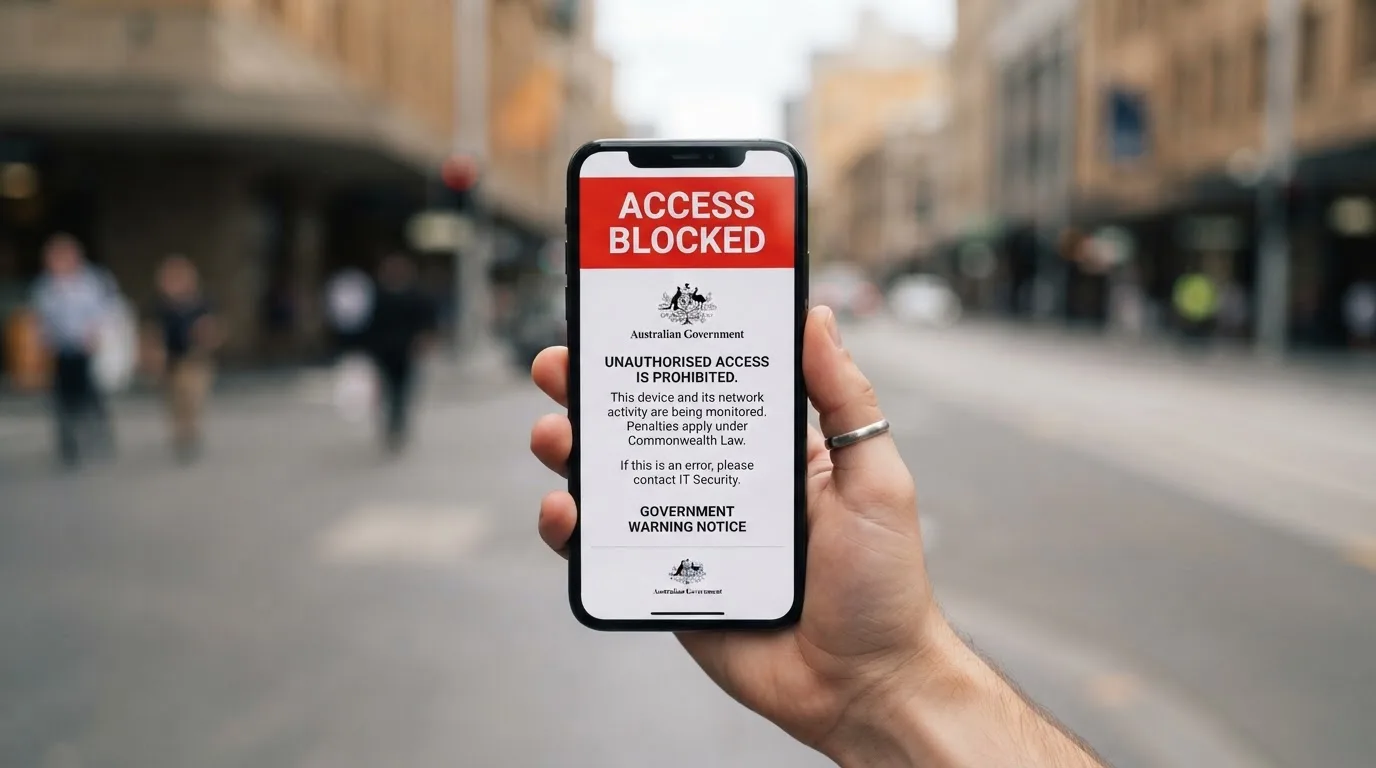
The supply side is what gets policed. The ACMA investigates, issues formal warnings and asks Australian internet service providers to block illegal sites. As reported in June 2026, the authority’s running total stood at 1,751 illegal gambling and affiliate-marketing websites blocked since the first blocking request in November 2019, with more than 230 unlicensed gambling services having left the Australian market since 2017. The single round reported that month added twelve more domains — 7Signs, ChromaBet, Donbet, Duospin, Freshbet, Slots Gem, Jacks Club, Lucky Start, Pointsbetz, Spinrise, Vinyl Casino and Wildsino — to the list. A site an Australian reader can load today can be on the block list tomorrow, and a balance still sits on it.
What the ACMA’s enforcement does not touch is the individual player. The Act targets the provider; the punter using an offshore site commits no offence. What the punter does lose is every protection that flows from an Australian licence: no Australian complaints body, no Australian-licensed dispute resolution, no Australian recourse if a withdrawal is refused, and no guarantee the site is still reachable on Monday.
How Instant an Australian Bank Transfer Actually Is
The “instant” part of the question has a clean answer on the rails.
Osko is the instant-transfer overlay on Australia’s New Payments Platform. A bank transfer between participating Australian banks arrives in under a minute, twenty-four hours a day, including weekends and public holidays, whether it is addressed to a BSB and account number or to a PayID. The platform’s monthly outage budget is two minutes; in 2021 the ACCC authorised merging NPP Australia with BPAY and eftpos into Australian Payments Plus. More than 25 million PayID identifiers had been registered by April 2025.
PayID adds a thin but useful layer of safety on top of that speed. The payer sees the registered name of the account holder before the transfer is sent. Australian Payments Plus warns that being asked to send money to a PayID on an illegal gambling site almost certainly means a scam site. The mechanism is what an Australian reader should look for in any transfer, gambling or otherwise: the name on the destination account has to match the entity the reader believes they are paying.
BPAY is the older bill-payment service, available through the online banking of more than one hundred and forty Australian financial institutions and offered by over 95,000 businesses. It launched on 18 November 1997 and is jointly owned, via Cardlink Services Limited, by ANZ, Commonwealth Bank, National Australia Bank and Westpac. It works on a Biller Code and Customer Reference Number, not on speed. A BPAY payment settles when the biller picks it up — often the next business day. It is not the rail an “instant payout” promise runs on, and an Australian reader who needs speed is using PayID/Osko or a card.
So the rail exists, and it is genuinely fast, and that fact is the strongest piece of evidence on the page for the technical feasibility of an instant casino payout. The other half of the question — who receives the transfer at the casino end — is where the legal problem sits.
What “Instant Payout” Means at an Online Casino
Marketing for offshore casinos tends to use “instant” to mean any of three different things, and the difference matters at withdrawal time.
The first is “instant in the cashier”. The casino credits the player’s casino balance the moment it receives the request, which on a crypto withdrawal can be the time it takes to push the transaction to the network. The casino-side ledger updates inside seconds; the funds are not yet the player’s. The transaction is still propagating, still waiting for confirmations, and still exposed to whatever confirmation threshold the casino demands before it lets the player move the funds onward.
The second is “instant on the rail”. A PayID/Osko transfer between Australian banks lands inside a minute. Card payouts are typically a few hours for Visa Fast Funds and Mastercard Send, slower for older rails. A crypto payout is “instant” only when the network’s own confirmation rules are short — and even then the casino, not the network, chooses how many confirmations to wait for.
The third is “instant, with no verification pulled forward”. Verification is what makes a payout stall. A first withdrawal at a casino routinely triggers a Know Your Customer check: photo ID, proof of address, proof of payment method. The casino does not start processing the withdrawal until the documents are in and approved. Marketing material that promises a payout “in minutes” almost always assumes the verification step is already behind the player, which it is, until the player’s first withdrawal from that site is the moment it isn’t.
The Australian rails can do the second of these in seconds. The verification question belongs to the casino, not to the rail, and that is the part the marketing copy tends to bury.
Card Networks and Digital Wallets at an Australian Bank
Card rails matter to this question because they are what most offshore casinos accept as deposit, and what most Australian banks have started to monitor on the way out.
American Express is the odd one out. It was established in 1850 as a freight-forwarding company and launched its first charge card on 1 October 1958; unlike Visa and Mastercard, Amex traditionally issues cards and processes transactions itself as a three-party scheme. The Reserve Bank of Australia’s July 2025 review on card surcharging proposes removing surcharges only on eftpos, Mastercard and Visa transactions, explicitly leaving American Express outside the proposed ban. For a punter, what this means is that an Amex-funded deposit at a casino that accepts Amex is also the rail least likely to be protected from surcharge, and the rail a regulated Australian merchant — a wagering operator licensed here — would not necessarily accept at all.
Digital wallets sit on top of those cards. Apple Pay does not charge fees to consumers for using it in stores, online or in apps; any surcharge is the merchant’s own card-processing fees. Apple states that transaction limits and PIN requirements for Apple Pay are set by the card issuer or merchant, not by Apple. By the end of 2025, Apple Pay, Google Pay and Samsung Pay collectively accounted for around 45 per cent of all card payments in Australia by number, which is the share of card volume that flows through tokenised wallets rather than the plastic itself.
The banks, not Apple, decide whether the underlying card can be used for gambling. ANZ’s gambling transaction block, activated in the ANZ app, blocks gambling transactions made through a digital wallet such as Apple Pay on an eligible card, not just the physical card. Once turned on, removing the block again requires a 48-hour waiting period, and the bank warns that not all gambling transactions will be blocked and that some non-gambling transactions might be blocked in error. Commonwealth Bank lets customers apply a gambling lock to eligible cards via the CommBank app, which automatically blocks most gambling transactions, though the bank states it cannot guarantee all gambling-related purchases will be stopped. Westpac’s gambling block works at the card level: it refuses authorisation of transactions registered under the merchant category code “Betting/Casino Gambling” on eligible personal credit and debit cards.
What that adds up to is a layer of bank-side friction that an Australian reader will not see on an offshore casino’s marketing page. An AU-licensed wagering service cannot legally accept a credit card or other credit-related product under the Interactive Gambling Act 2001 as amended in 2023; that restriction also constrains gambling use of linked digital wallets like Apple Pay. The offshore casino does not have that constraint, and the Australian bank on the other end of the card does. A blocked debit card at the cashier is not a marketing problem; it is a personal one.
The Cryptocurrency Lane
“Best bitcoin casino instant payout” and its near-twins — instant payout crypto casino, crypto casino instant payout — describe a separate lane from the bank rail. The marketing word “instant” is closest to being literally true here. A Bitcoin or stablecoin transfer settles on its own network in minutes to tens of minutes, and the casino can credit the casino balance in real time on receipt. That is the part of the marketing claim with the most honest mechanism behind it.
The legal frame is the harder part. Under the Interactive Gambling Act 2001 as amended in 2023, Australian-licensed online wagering services cannot accept payment by credit card, by other credit-related products, or by digital currency — the ban took effect on 11 June 2024, with penalties up to A$247,500 for operators. Legal deposit routes for licensed wagering are debit card, bank transfer, PayID/Osko and BPAY. A site asking an Australian reader for a crypto deposit is, by definition, not an Australian-licensed site.
The Australian reader using crypto is not committing an offence — the Act targets the provider — but the reader is also outside the small set of protections that follow from an Australian licence, and inside the much larger set of things that can go wrong on an offshore site. The crypto withdrawal does not pass through an Australian bank, does not trigger AUSTRAC’s threshold-transaction-report rule (which applies only to physical cash), and does not earn the card-block friction a bank might apply. What it also does not earn is recourse.
AUSTRAC’s reporting rule is worth naming in full because it is one of those things Australian readers hear and misapply: the threshold-transaction-report rule requires reporting of transfers of A$10,000 or more, and applies only to physical cash. Ordinary electronic bank transfers are not subject to that per-transaction reporting requirement, regardless of the amount sent. A reader transferring A$50,000 in a single PayID transaction does not file a threshold transaction report. The reporting obligations that apply at higher amounts are different — the suspicious-matter reporting and international transfer rules — but the A$10,000 threshold the lay reader carries in their head is the cash threshold, not the digital one.
What an Australian Reader Can Actually Use
The lawful products available to an Australian reader are narrower than the marketing suggests, and the instant-payout question applies to them in a specific way.
Sport and racing betting before the event is licensable, generally via a Northern Territory-licensed online bookmaker. A withdrawal from a licensed bookmaker to an Australian bank account via PayID/Osko will land in under a minute on the bank side, subject to the bookmaker’s own internal processing window. The reader gets the rail speed and the Australian licence; the rail speed is the part the marketing copy does not need to oversell, because it is already true.
Lotteries and keno are licensable in each state and territory, typically through a state-owned operator or a licensed private operator. Withdrawals and payouts work inside the operator’s terms and the rail it supports.
Pokies remain a land-based product in Australia. A reader who wants pokies plays them at a licensed venue or a licensed club, with whatever payout timetable the venue and the regulator set. There is no online version of this product that is legal to offer to an Australian.
The Australian-licensed product gives the reader three things the offshore product does not: an Australian-licensed complaints body if something goes wrong, a connection to BetStop and the other responsible-gambling tools, and a payout that cannot be blocked by the ACMA mid-session.
Responsible Gambling: The Tools an Offshore Site Will Not Connect to
BetStop — the National Self-Exclusion Register — has been live since August 2023. A person registered with BetStop is excluded from every Australian-licensed online and phone wagering service. The exclusion is the strongest single safeguard the Australian system offers, and it is also the safeguard that an offshore casino cannot honour, because the offshore casino is not connected to the register.
What BetStop does not cover is the offshore casino. A reader registered with BetStop who then visits an offshore casino has removed a layer of friction for themselves at every Australian-licensed operator they could otherwise have used, and has not removed any friction at the offshore site they are now on. The reverse is also true: a reader who wants to self-exclude from offshore sites has no single register that does the job. The tools available are bank-side: Westpac’s card-level gambling block, ANZ’s gambling block in the ANZ app, and the Commonwealth Bank gambling lock via the CommBank app. None of these is a substitute for BetStop; all of them are partial.
The National Gambling Helpline is 1800 858 858 — free, twenty-four hours a day — with chat at Gambling Help Online. The number is the right one for a person in Australia reading this page and finding the gambling has become a problem, regardless of where the gambling is happening. Gambling Help Online is the chat equivalent. Neither is tied to a particular operator.
The Brands the ACMA Has Acted Against
The shortlist that “best instant payout online casino australia 2026” usually returns is short for a reason the marketing pages do not mention: every brand on it is offering a product the ACMA has already ruled against. What follows is a plain, ordered list of eleven brands the ACMA has issued a formal warning over, with the operator the ACMA named and the date. The list is what the ACMA has acted against; it is not a recommendation, and it is not the lawful alternative the next section points at.
| Brand | ACMA action and date | Operator named by the ACMA | Subject support |
|---|---|---|---|
| RocketPlay | Formal warning under the IGA, March 2026; an earlier warning to Dama N.V., May 2022 | Pulsup Ltd (RocketPlay) | listings-only (Gambling Insider) |
| Level Up Casino | Formal warning under the IGA, May 2022 | Dama N.V. | listings-only (Westpac) |
| Woo Casino | Formal warning under the IGA, March 2025 | Dama N.V. | no-data |
| Spirit Casino | Formal warning under the IGA, May 2025 | Dama N.V. | no-data |
| National Casino | Formal warning under the IGA, July 2025 | Consolutetish S.R.L. | listings-only (ACMA, AUSTRAC, BetStop) |
| Bizzo Casino | Formal warning under the IGA, July 2025; an earlier warning to TechSolutions, 2022 | Consolutetish S.R.L. | listings-only (Gambling Insider) |
| Ignition Casino | Formal warning under the IGA, July 2025 | Bamboo Media | no-data |
| Instant Casino | Formal warning under the IGA, February 2025 | EOD Code SRL | listings-only (ecoPayz, PayID) |
| Jackbit | Formal warning under the IGA, April 2026 | Ryker B.V. | no-data |
| Casino Intense | Formal warning under the IGA, April 2025 | Sterplay Holding Ltd | listings-only (AUSTRAC, BetStop, Gambling Insider) |
| Sky Crown | Formal warning under the IGA, as published by the ACMA | Hollycorn N.V. | no-data |
Eleven brands, eight different operators behind them, a series of warnings running from 2022 to 2026. The licences the offshore sites display — Curaçao, Anjouan, Kahnawake, the Costa Rica trade licence that some use as a legal address — do not change the Australian status. The Interactive Gambling Act 2001 targets the act of offering a prohibited interactive gambling service to a person in Australia; the location of the licence does not move the offer outside the prohibition.
Two patterns are visible in the table. The first is a small number of operators carrying a large number of brands: Dama N.V. carries RocketPlay, Level Up, Woo and Spirit between May 2022 and May 2025, and the ACMA has had to re-warn some of them. The second is the same brand picking up a new warning under a new operator after the previous operator has moved on: Bizzo Casino was warned as TechSolutions in 2022 and as Consolutetish S.R.L. in July 2025. Neither pattern makes the brand lawful in Australia; both patterns make the “new operator, same brand” line a misleading one. A reader seeing “now under new management” on a brand on this list is reading a marketing sentence, not a change in the Australian status.
Brand-by-brand reading
A reader who has arrived here having already seen one of these brands’ marketing should know what the ACMA’s record on that brand is.
RocketPlay — the ACMA named Pulsup Ltd in March 2026 over RocketPlay; an earlier warning ran against Dama N.V. in May 2022. The brand has been on the wrong side of the IGA twice, under two operators, within four years. Gambling Insider has a listing for it.
Level Up Casino — named in the ACMA’s May 2022 warning to Dama N.V. alongside Bambet, Dazard, Rocketplay, Wild Tornado and Cobra Casinos. Westpac’s gambling-block reference page lists it among the merchants the block targets, which is one of the small handful of places an Australian reader’s name for it appears outside marketing pages.
Woo Casino — Dama N.V., March 2025. The ACMA’s record is silent on most product specifics because there is no Australian-side data on which to base one; the brand’s Australian status is what the warning itself states.
Spirit Casino — Dama N.V., May 2025. Same operator, two months after Woo. No Australian-side product data; same Australian status.
National Casino — Consolutetish S.R.L., July 2025. The ACMA, AUSTRAC and BetStop all carry listings on it; that is the unusual three-way overlap on this list.
Bizzo Casino — Consolutetish S.R.L., July 2025, with a 2022 warning to TechSolutions still on the brand’s record. Gambling Insider lists it. Two warnings across two operators.
Ignition Casino — Bamboo Media, July 2025. No Australian-side product data; the warning is the data.
Instant Casino — EOD Code SRL, February 2025. ecoPayz and PayID both have listings on it; the brand’s name has been a fixture of offshore “instant payout” marketing for some years.
Jackbit — Ryker B.V., April 2026. The most recent brand on the list; no Australian-side product data.
Casino Intense — Sterplay Holding Ltd, April 2025. AUSTRAC, BetStop and Gambling Insider all carry listings on it, the second three-way overlap on this list.
Sky Crown — Hollycorn N.V., as published by the ACMA. No Australian-side product data.
The verdict on each is the same: the product the brand offers is unlawful to provide to a person in Australia, regardless of the licence it displays. A reader who nonetheless chooses to use one is on a site the ACMA has formally warned, on a brand that may already be on the next blocking round, on a balance the ACMA cannot return if the site goes dark.
How Many Sites the ACMA Has Actually Blocked
The figures here show the scale of the trend. The running total as of June 2026 stands at 1,751 illegal gambling and affiliate-marketing websites blocked since the first blocking request in November 2019. That is roughly six and a half years of enforcement, on a base of zero at November 2019. A simple blocking-rate band is therefore between 250 and 290 sites blocked per year on average across that period, with the obvious spread that some years the ACMA has run multi-site rounds and other years it has focused on larger operators.
A site a reader can load today sits inside a population the regulator blocks at a sustained pace. The pace is the point: the ACMA’s enforcement is not a one-off; it is a continuing programme. A reader who treats the ACMA’s record as background is treating a continuing programme as background.
Where the Off-Shore Brand Loses to the Australian-Licensed Operator
A reader who lands on this page from Australia and decides they want to play with the speed the rails offer will not get it from the brands on this list. The thing they get from those brands is risk that the Australian operator already removed.
An Australian-licensed bookmaker can offer instant-withdrawal to an Australian bank account because the rail exists on both ends. The licensed operator’s withdrawal processing window is the only delay, and the rail speed is on the player’s side of it. The complaint body, the self-exclusion register and the bank-side gambling blocks are all built around the licensed operator. None of them is built around the offshore casino.
An offshore casino offers an Australian reader three things the licensed operator does not: casino games and online pokies (which are the prohibited product); a wider bonus catalogue than an Australian-licensed operator can legally offer; and the absence of the credit-card and digital-currency bans an Australian-licensed operator lives under. The first of these is the very prohibition the IGA enforces. The second is a marketing expense an Australian-licensed operator is restricted from running under the advertising and inducement measures in the Interactive Gambling Amendment (Gambling Reform) Bill 2026, which passed Parliament on 19 August 2026 and commences on 1 January 2027 — law with a start date, not yet in force on a 2026 page. The third is the part that costs the reader the consumer protections every other part of the Australian system is designed to deliver.
A reader weighing speed against the Australian licence is weighing one operational detail against the entire local system. The operational detail is real; the system is what pays out when something goes wrong.
Reform Already on the Statute Book
The Interactive Gambling Amendment (Gambling Reform) Bill 2026 passed both houses of Parliament on 19 August 2026. Its advertising and inducement measures commence on 1 January 2027. The provisions in force on a 2026 page are the ones already operative under the 2001 Act and its 2017 amendments; the 2026 reforms are law, but their operative start date sits in 2027. A reader who wants to know what is currently enforceable against an offshore casino reads the existing IGA. A reader who wants to know what the offshore casino’s marketing will look like in 2027 reads the 2026 amendments.
What neither set of provisions changes is the status of the prohibited product. Online casino games and online pokies were prohibited before the 2026 reforms and remain prohibited after them. The 2026 reform tightens the marketing environment around wagering services; it does not create a new Australian-licensed online casino.
Money, Tax, and the Payout That Lands
A gambling win by a recreational player in Australia is not assessable income under section 6-5 of the Income Tax Assessment Act 1997, and losses are not deductible, unless the person carries on a business of gambling. That treatment is the same regardless of whether the wager is placed with an Australian-licensed operator or an offshore casino; the ATO’s interest is in the business-of-gambling case, not the casual punter.
The practical complication at payout time is that an offshore casino pays into an Australian bank account under the recipient’s own name, and the bank may query the source of funds. A withdrawal of a large sum that has no obvious source on the recipient’s account can trigger a routine source-of-funds check, and the explanation the bank will accept is whatever the casino can produce — a withdrawal confirmation, transaction history, a winnings statement. An offshore casino that has refused to send the player their winnings leaves the player with no document the bank will accept, which is the moment the absence of an Australian complaints body becomes the absence of a withdrawal.
An Australian-licensed bookmaker’s withdrawal lands the same way and answers the bank’s questions inside the same regulator’s frame. The licensed operator is bound to pay out winnings; the offshore operator is bound by nothing the Australian regulator can enforce.
Frequently Asked Questions
Does “instant payout” mean the money is truly available immediately?
The rail is genuinely fast — PayID and Osko settle an Australian bank transfer in under a minute, and card payouts via Visa Fast Funds or Mastercard Send typically land within a few hours. What “instant” usually does not include is the casino’s own verification step, which runs on the player’s first withdrawal from the site and is the part that stalls most “instant” promises in practice.
Which Australian payment rail is built for near-instant transfers?
Osko by Australian Payments Plus, sitting on the New Payments Platform, with PayID as the addressing layer. A transfer between participating banks lands in under a minute, twenty-four hours a day, including weekends and public holidays, and is available at more than one hundred Australian financial institutions. The platform’s monthly outage budget is two minutes.
Is it legal for an online casino to advertise instant payouts to Australians?
No. The Interactive Gambling Act 2001 prohibits offering online casino games to anyone in Australia, regardless of where the operator is licensed. The ACMA enforces the prohibition through formal warnings and blocking requests to Australian ISPs. An advertisement targeted at an Australian reader is itself within the prohibition the ACMA acts against.
Can a cryptocurrency withdrawal really be instant?
It can be the fastest part of the process. A Bitcoin or stablecoin transfer settles on its own network in minutes, and the casino can credit the casino balance in real time. It is also the part of the market where the Australian consumer protections are weakest — digital currency is banned as a payment method for Australian-licensed wagering, so a crypto deposit is, by definition, with an operator the Australian regime does not cover.
What verification steps can delay an otherwise instant payout?
First-time withdrawals at most casinos trigger a Know Your Customer check — photo ID, proof of address and proof of payment method. The casino does not start processing the withdrawal until the documents are in and approved, which is where the gap between “instant in the cashier” and “instant on the rail” opens up. Subsequent withdrawals at the same casino usually clear faster because the verification has already been done. See also Instant withdrawal casinos in Australia .
Should a claimed instant payout change how much someone trusts a site?
It should change how carefully a reader reads the small print, not how much they trust the site. The marketing claim is usually about the second-half of the withdrawal — the bank-side or network-side settlement — and not about the first-half, which is the casino’s own processing and verification window. A site that promises instant payouts without naming its verification rules is promising the half of the journey it does not control.