
The casino sign-up bonus market in Australia is not a market at all
An Australian reader looking for the “best casino sign up bonus” lands on a search result, then on another, and on most of them nothing useful happens. The reason is not a shortage of offers. It is that the Interactive Gambling Act 2001 prohibits the supply of online casino games, online pokies and in-play betting to anyone in Australia, and no state or territory issues a licence for any of it. The affiliate sites that rank offshore casinos as if they were a normal consumer choice are themselves part of the problem the Australian Communications and Media Authority has been blocking since 2019. A guide that pretends otherwise hands the reader a recommendation they cannot lawfully take up. This one does not. The casino sign-up bonus market in Australia is not a market at all — More on this topic at pokies info .

Current as of 29 October 2026 against the ACMA register of formal warnings and blocking actions.
Table of Contents
- What a casino sign-up bonus actually is, before the legal question
- The legal landscape for online casino in Australia
- The enforcement record against specific operators
- Responsible gambling tools that actually bind in Australia
- Crypto and the sign-up bonus question
- Payments and payout speed for any gambling an Australian punter can lawfully make
- The shortlist the ACMA itself has built
- What an Australian reader can lawfully do instead
- What the ACMA enforcement record means in practice
- Frequently asked questions
What a casino sign-up bonus actually is, before the legal question
A sign-up bonus is the inducement a casino offers a new account on first deposit — matched funds, free spins, or both, with strings attached. The mechanics are worth understanding because they are exactly what the offshore operators pitching to Australian readers are selling, and exactly what the Australian law says they cannot sell here.

A matched deposit bonus works like this: deposit A$100, the casino credits an additional A$100 in bonus funds, and the combined A$200 then has to be wagered a stated multiple of times before any of it can be withdrawn. A 35x turnover on a A$100 bonus means A$3,500 of bets placed before the bonus portion becomes withdrawable cash. Free spins are bolted on as a separate tally, usually on one named pokie, with any winnings carrying their own wagering requirement. A no-deposit bonus removes the deposit step entirely — a small credit or a handful of free spins just for registering — but keeps the wagering and usually caps the amount that can be cashed out from it.
The marketing word “free” does a lot of work in this category and the arithmetic punishes it. Every bonus the page describes below is funded by expected losses from the wagering requirement, because the house edge on pokies and table games is built into every spin and every hand. A 35x turnover on a bonus credited at industry-standard return-to-player figures eats most of the bonus before the requirement clears. The reader’s question is not “which bonus is biggest” but “which bonus’s requirement costs the least against the credit it returns”, and only a handful of the bonuses in this market survive that question honestly.
The other mechanic to know about is the max-bet cap. Almost every sign-up bonus carries a clause that the wagering requirement can only be cleared at stakes below a stated ceiling — A$5 or A$10 per spin is typical — and breaching it voids the bonus and the winnings. The reason for the cap is the casino’s own protection against a punter running a low-edge game like blackjack at table-maximum size and grinding out the requirement. The effect on the player is that the wagering requirement is cleared more slowly, which means more time exposed to the house edge, which means the bonus costs more than its headline figure suggests. This is the same shape of trade dressed up in different branding across the offshore market: inducement first, friction second, and the friction is what the bonus really costs.
The legal landscape for online casino in Australia
Australia’s online gambling regime draws its line cleanly between wagering and casino gaming. Wagering on races and sporting events placed before the event, lotteries and keno are licensable products. Online casino games, online pokies, and in-play betting are not. The Interactive Gambling Act 2001, strengthened by the Interactive Gambling Amendment Act 2017, makes the supply of those prohibited services to anyone in Australia an offence. The penalty sits with the provider, not the punter, but the practical consequence is that no Australian-licensed operator can offer a casino sign-up bonus at all, because no Australian-licensed operator can offer online casino games in the first place.
The only place online wagering operators are licensed is the Northern Territory, where the Racing and Wagering Commission regulates 52 online bookmakers — Sportsbet, Bet365 and Ladbrokes among them — licensed in the Territory for tax reasons rather than because the Territory is the natural home of the business. The commission runs without full-time staff and meets monthly in Darwin. The arrangement is functional and well-worn; what it is not is a route by which an online casino could ever be licensed in Australia, because the IGA sits above it.
How the ACMA enforces the prohibition
The ACMA has two practical levers. The first is the formal warning, which is a written notice to the operator named on a site that the ACMA considers the service to be a prohibited interactive gambling service under the IGA. The second is a blocking request to Australian internet service providers, directing them to make the offending domains unreachable from Australian IP addresses. The two work in sequence — warnings establish a paper trail, and sites that ignore the warnings get added to the blocking list.
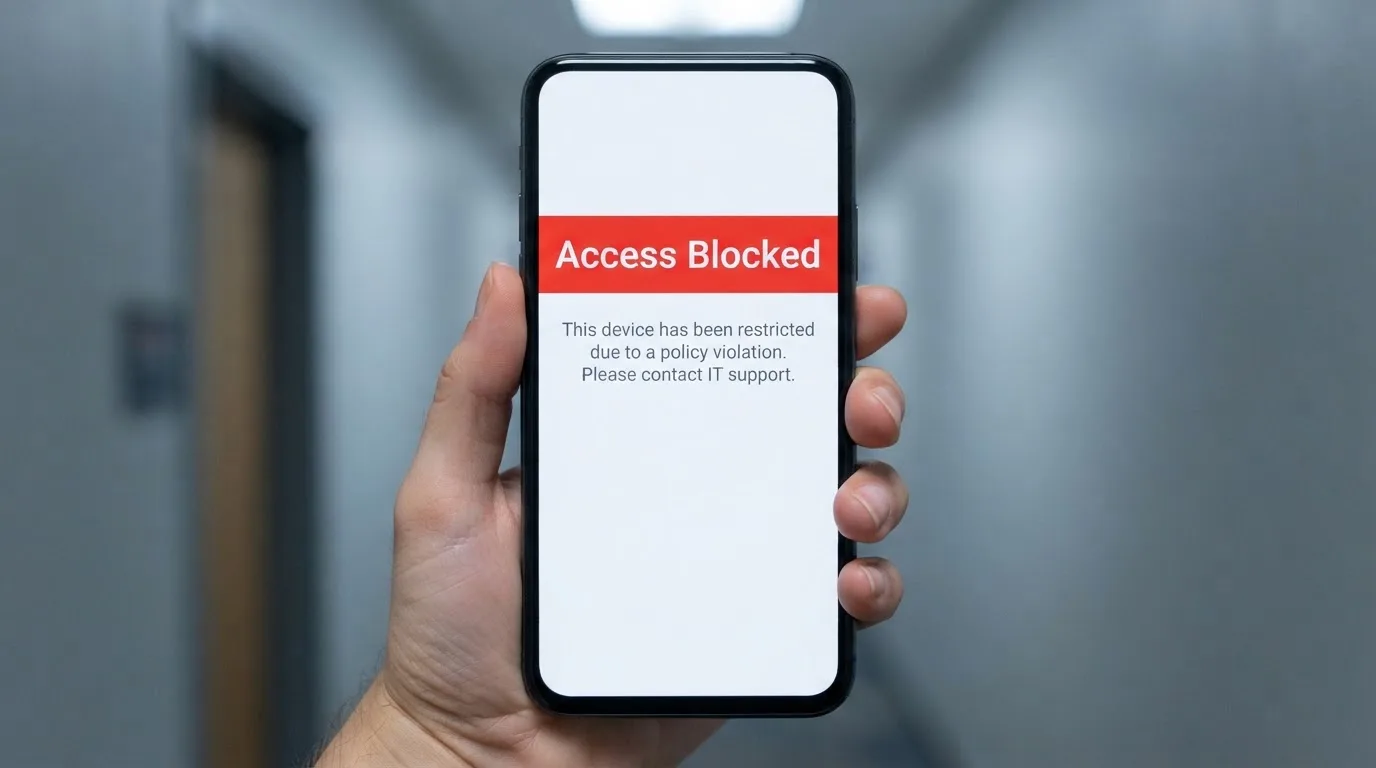
The cumulative numbers since the regime began are the cleanest measure of how seriously this is enforced. The first blocking request went out in November 2019; by mid-2026 the ACMA reported a total of 1,751 illegal gambling and affiliate marketing websites blocked since that date, with more than 230 unlicensed services having left the Australian market entirely since enforcement was strengthened in 2017. In a single round reported on 26 June 2026 the ACMA asked ISPs to block another 12 sites: 7Signs, ChromaBet, Donbet, Duospin, Freshbet, Slots Gem, Jacks Club, Lucky Start, Pointsbetz, Spinrise, Vinyl Casino and Wildsino. That is one round, in one month, and it is not exceptional in scale.
The 2026 reform sitting on the horizon
The Interactive Gambling Amendment (Gambling Reform) Bill 2026 passed Parliament on 19 August 2026, and its advertising and inducement measures commence on 1 January 2027. The clause that matters here is the inducement prohibition — the new provisions target the kind of sign-up offers this page is nominally about, with the effect of cutting off Australian-facing affiliate marketing for offshore casinos at the source. As of mid-2026 the law is enacted but not yet in force; from the start of 2027 it is. Any reader using this guide through that transition should treat the inducement landscape as live and tightening, not as a settled shape.
The enforcement record against specific operators
The ACMA’s formal-warning register is the cleanest public record of which operators have been told, in writing, that their service is prohibited for Australian customers. It does not list every offshore casino that targets Australians — only those the ACMA has investigated and acted on — but it lists enough to make the point that the warnings are not theoretical.
The warnings run across a handful of operating companies that own multiple brands. Dama N.V. alone has been warned over multiple casino brands — Bambet, Dazard, Level Up, Rocketplay, Wild Tornado and Cobra Casinos in May 2022, then Woo Casino in March 2025 and Spirit Casino in May 2025. Consolutetish S.R.L. was warned in July 2025 over National Casino and Bizzo Casino; Bizzo had already been the subject of a 2022 warning to TechSolutions Group. Bamboo Media was warned in July 2025 over Ignition Casino. EOD Code SRL was warned in February 2025 over Instant Casino. Ryker B.V. was warned in April 2026 over Jackbit and CasinOK. Sterplay Holding Ltd was warned in April 2025 over Casino Intense. Hollycorn N.V. was warned over Sky Crown and Blue Leo. In March 2026 the ACMA warned Pulsup Ltd over Rocketplay.
The pattern is worth noticing. The same operators tend to rebrand and re-enter the market under a new front company, which is why a single warning cycle can read like a who’s-who of the same dozen brands under different names. The warnings do not produce instant withdrawals, because offshore operators are not subject to Australian jurisdiction; what they produce, over time, is the blocking list.
The blocking rate since 2019
The arithmetic of how fast the ACMA has been closing sites off is the cleanest single number on this page, and it is worth working through once. The first blocking request was issued in November 2019; by the end of the round reported on 26 June 2026 the cumulative count stood at 1,751 blocked domains. That works out at roughly 250–260 domains per year across the period, with the rate accelerating in the more recent enforcement rounds as the ACMA has automated its investigations and tightened its referral process with ISPs. The current pace is the relevant pace — readers using the guide now are looking at several new blocking actions every month, not the slower early years of the regime. The total is the ACMA’s own published figure; the rate is the page’s calculation against that figure and the 2019 starting point.
The scale of the illegal market the regime is working against
H2 Gambling Capital’s 2025 estimate puts Australian losses to illegal gambling sites at around A$3.9 billion per year, and reports the share of gambling going through legal channels falling from 74% in 2021 to 64%. The second figure is the more striking of the two — the legal channel is losing ground, not gaining it. The takeaway is not that enforcement is failing but that the inducements are working: the affiliate marketing machine that ranks offshore casinos is moving a measurable share of the country’s gambling spend out of the regulated system and into the offshore one, which is exactly the dynamic the 2027 inducement provisions are designed to arrest.
Responsible gambling tools that actually bind in Australia
The protections an Australian reader can rely on are tied to Australian-licensed services. The most consequential is BetStop, the National Self-Exclusion Register, which has been live since August 2023. A punter who registers with BetStop is excluded from every Australian-licensed online and phone wagering service, and the exclusion periods run from a minimum of three months up to a permanent exclusion. The crucial caveat is the word “licensed”: BetStop binds Australian-licensed operators, and an offshore casino is not bound by it. Self-excluding through BetStop does not stop a determined punter from opening an account at an offshore site the ACMA has not yet blocked, which is why the responsible-gambling advice is layered — BetStop for the regulated channels, and bank-level gambling blocks for the unregulated ones.
The National Gambling Helpline on 1800 858 858 is free, runs 24/7 and has a chat counterpart at Gambling Help Online. Both are funded for the Australian market and reach services that understand the local landscape — licensed venues, financial counsellors, the state-based problem-gambling programs. For an Australian reader in trouble with offshore gambling, the helpline is the right first call; for a reader who has not yet started gambling, the bank-level tools below are the right first setup.
Bank-level gambling blocks
The major Australian banks all offer card-level gambling blocks that work at the merchant category code level — the same code that flags a transaction as a betting or casino gambling purchase. Commonwealth Bank’s gambling lock is applied through the CommBank app on eligible cards, with the bank flagging that not every gambling transaction is guaranteed to be blocked. ANZ’s equivalent block, also activated in the ANZ app, blocks gambling transactions made through a digital wallet like Apple Pay on an eligible card, not just the physical card; once switched on, removing the block again requires a 48-hour cooling-off period, and ANZ warns that some non-gambling transactions can be caught by mistake. Westpac’s gambling block refuses authorisation at the card level for transactions registered under the merchant category code ‘Betting/Casino Gambling’ on eligible personal credit and debit cards.
These are blunt instruments. They will not catch an offshore casino that processes payments through a non-gambling merchant code, and they will block some transactions that are not gambling at all. They are nevertheless the most practical day-to-day defence an Australian punter has against a sign-up offer that was already illegal at the point of supply, because they cut off the funding path before the account is even opened.
Crypto and the sign-up bonus question
Cryptocurrency deposits are a distinct question here because the legal position is unusually clear. Under the Interactive Gambling Act 2001 as amended in 2023, Australian-licensed online wagering services cannot accept payment by credit card or other credit-related products, and the restriction explicitly extends to digital currency — the ban covers crypto just as it covers a credit card. The same amendments took effect on 11 June 2024, with penalties for licensed operators that breach them reaching A$247,500.
The practical consequence for an Australian punter is that a site accepting Bitcoin, Ethereum or USDT for a sign-up bonus is operating outside Australian rules by definition, because no Australian-licensed operator can take that payment. The crypto route is therefore not a workaround to the IGA — it is a clearer marker that the operator is unlicensed for this market, with all the consumer-protection gaps that follow. AUSTRAC’s threshold-transaction-report rule, which requires reporting of transfers of A$10,000 or more, applies only to physical cash; ordinary electronic bank transfers, including crypto on-ramps through Australian exchanges, are not subject to that per-transaction reporting requirement regardless of the amount sent. The reporting layer is therefore not a backstop either.
The crypto-specific bonus question — “is there a crypto casino no-deposit sign-up bonus?” — collapses into the same answer as the fiat one. The bonus structure exists at offshore operators; the operators are prohibited from offering it to Australian residents; and the payment method is the surest sign the operator is not bound by Australian consumer protection. A reader who wants to use crypto for online gambling in Australia has no lawful path; a reader who wants to use crypto at all in Australia for any purpose should be using a registered Australian exchange, which is its own compliance question.
Payments and payout speed for any gambling an Australian punter can lawfully make
The deposit routes that are lawful for Australian-licensed wagering are debit card, bank transfer, PayID/Osko and BPAY. Credit cards, credit-related products and crypto are out for any licensed service. The mechanics of these payment routes matter because they shape what the punter actually experiences at the cashier, and several of them have consumer-protection features an offshore operator cannot replicate.
PayID is the address-book-style payment identifier sitting on top of Australia’s New Payments Platform. By April 2025 more than 25 million PayID identifiers had been registered, with the service available at over 100 Australian financial institutions. Paying to a PayID shows the name of the account holder before the transfer is sent, which is the relevant feature here: Australian Payments Plus warns explicitly that being asked to transfer money to a PayID on an illegal gambling site almost certainly means a scam site. That warning is the operational form of the IGA — the moment the punter is asked for a PayID payment to an offshore casino, the alarm is ringing at the payment-rail level, not just at the regulator’s.
Osko is the instant-transfer service that rides on the New Payments Platform: a bank transfer between participating Australian banks arrives in under a minute, 24/7 including weekends, addressed either to a BSB and account number or to a PayID. The NPP itself became publicly accessible on 13 February 2018 and is owned by New Payments Platform Australia Ltd, a non-profit whose 13 shareholders include the Reserve Bank of Australia and the major banks; in 2021 the ACCC authorised the merger of NPP Australia with BPAY and eftpos into a single company, Australian Payments Plus. Participants in the platform must keep its monthly outages to no more than two minutes, which is the operational floor that makes the Osko promise meaningful.
BPAY is the bill-payment service embedded in online banking since 1997: the payer enters the Biller Code and the Customer Reference Number printed on a bill, and the payment is debited from the payer’s account and credited to the biller. BPAY is available in the online banking of over 140 Australian banks and financial institutions and is offered by over 95,000 businesses. It is run by Australian Payments Plus alongside PayID and Osko, and is owned equally via Cardlink Services Limited by ANZ, Commonwealth Bank, National Australia Bank and Westpac. The relevant feature for the punter is that BPAY was designed for bill payment to a registered biller — there is no way to BPAY an offshore casino, because no offshore casino is a registered Australian biller. The mechanic is the law in technical form.
Digital wallets add a layer that is worth being specific about. By the end of 2025, Apple Pay, Google Pay and Samsung Pay transactions accounted for around 45% of all card payments in Australia by number. Apple does not charge fees to consumers for using Apple Pay in stores, online or in apps, and transaction limits and PIN requirements are set by the card issuer or merchant rather than by Apple itself. The legal layer is what determines whether the wallet can be used for gambling: because the IGA ban covers credit-related products and extends to digital wallets linked to them, a wallet transaction follows the underlying card’s eligibility. ANZ’s gambling block catches Apple Pay transactions on an eligible card, not just the physical card; Westpac’s block operates at the merchant code on the card. The Reserve Bank of Australia’s July 2025 review proposes removing surcharges only on eftpos, Mastercard and Visa transactions, explicitly leaving American Express outside the scope of the proposed surcharge ban — a reminder that the card-surcharge debate is one piece of a much larger payments landscape.
The credit-card ban interacts with Apple Pay in a way readers often miss. American Express has been a three-party card scheme since its first charge card launched on 1 October 1958, processing transactions itself rather than running a four-party network like Visa or Mastercard. For an Australian punter, the practical question is whether the card behind the wallet is a credit card or a debit card, because the IGA ban applies to credit and credit-related products only. Debit-funding through Apple Pay is the legitimate path; credit-funding is not, and an offshore casino accepting credit-card-funded Apple Pay deposits is operating outside Australian rules on the payment side as well as on the supply side.
The shortlist the ACMA itself has built
A shortlist of offshore casinos for an Australian reader is the wrong product, because the supply itself is prohibited. The list below is not a ranking of best offers; it is the ACMA’s own published record of formal warnings over operators that have marketed sign-up bonuses to Australian residents. The table covers the brands named in the ACMA register, the operator company the warning was issued to, and the date of the warning. Where the operator has been warned more than once, the most recent date is shown. The “Subject support” column reflects what public listings carry about each brand for the subjects the page covers (payment methods, withdrawal speed) — where a subject is marked no-data, the page does not attach that subject to that brand at all.
| Brand | ACMA action and date | Operator named by the ACMA | Subject support |
|---|---|---|---|
| RocketPlay | Formal warning, March 2026 | Pulsup Ltd | Listings carry payment methods only |
| Level Up Casino | Formal warning, May 2022 | Dama N.V. | Listings carry payment methods only |
| Woo Casino | Formal warning, March 2025 | Dama N.V. | No data on payment methods or withdrawal speed |
| Spirit Casino | Formal warning, May 2025 | Dama N.V. | No data on payment methods or withdrawal speed |
| National Casino | Formal warning, July 2025 | Consolutetish S.R.L. | Listings carry payment methods only |
| Bizzo Casino | Formal warning, July 2025 (and 2022 to TechSolutions) | Consolutetish S.R.L. | Listings carry payment methods only |
| Ignition Casino | Formal warning, July 2025 | Bamboo Media | No data on payment methods or withdrawal speed |
| Instant Casino | Formal warning, February 2025 | EOD Code SRL | Listings carry payment methods only |
| Jackbit | Formal warning, April 2026 | Ryker B.V. | No data on payment methods or withdrawal speed |
| Casino Intense | Formal warning, April 2025 | Sterplay Holding Ltd | Listings carry payment methods only |
| Sky Crown | Formal warning (2022 publication) | Hollycorn N.V. | No data on payment methods or withdrawal speed |
The table is a snapshot of the ACMA register rather than a buyer’s guide. Every brand listed has been told in writing by the Australian regulator that its service is prohibited for Australian customers. The fact that the same operator company — Dama N.V. alone — sits behind four of the eleven brands is the substantive point: a warning to one brand in the family does not stop the others from continuing to target Australia under different names, which is why the cumulative blocking count keeps rising even as the warnings do their work on paper.
Reading the table
The leftmost column names the brand as it appears in the ACMA’s register; the second column names the operator company the warning was issued to and the date the warning was published. Where the operator has been warned more than once for the same brand — RocketPlay, Bizzo Casino — both events are recorded in the prose above the table, with the table showing the most recent. The fourth column reflects what public listings carry about the brand for the subjects the page covers; where that column is empty, the page does not attach those subjects to the brand at all, neither affirmed nor denied.
A reader looking for a withdrawal speed figure or a payment-method list for one of these brands will not find one here, and that is deliberate. The only public sources for those figures are affiliate marketing pages whose business model depends on the reader clicking through and depositing, which is exactly the behaviour the IGA, the ACMA register and the 2027 inducement provisions are all working against. A figure sourced from those pages cannot be relied on, and the page does not invent one in their place.
What an Australian reader can lawfully do instead
The honest answer to the search query behind this guide is that the offer the reader is looking for does not exist in any form they can take up. The lawful alternatives are different products, and they are worth setting out clearly because they are what an Australian punter actually has.
Licensed wagering on sport and racing
Australian-licensed bookmakers take bets on horse racing, harness racing, greyhound racing and sporting events, all placed before the event. Sign-up offers exist in this category — deposit-matched bonus bets, profit boosts on first wager, second-chance bets if the first loses — but the wagering mechanics are different from a casino sign-up bonus, and the inducement landscape is changing. The 2026 reform bill’s advertising and inducement measures take effect on 1 January 2027, which means the sign-up offer market for Australian-licensed wagering will look materially different from the start of next year. The 52 operators licensed by the NTRWC are the supply side of this market; the bank-level gambling blocks described above are the most effective consumer-side defence against over-indebtedness within it.
Licensed pokies venues and land-based casinos
Pokies in pubs and clubs, and casino games in land-based casinos, are licensed by state and territory regulators and are a lawful alternative for the reader who wants the casino experience. The minimum age is 18 across Australia. The RSL, pub and club networks operate in every state and territory, and the major land-based casinos — Crown Melbourne, Crown Perth, The Star Sydney, The Star Gold Coast, SkyCity Adelaide — are licensed venues with consumer-protection regimes attached. The bonus structures at these venues are loyalty-card based rather than sign-up-deposit-based, and the inducement prohibitions in the 2026 reform bill apply to the licensed wagering market rather than to land-based venues.
BetStop and self-exclusion
For the reader whose question is not “which bonus should I take” but “how do I stop”, BetStop is the cleanest answer. The register binds every Australian-licensed online and phone wagering service, and exclusion periods range from three months to permanent. For an Australian punter who has been responding to offshore sign-up offers despite the prohibition, BetStop will not reach those offers — but it will close off the lawful channels at the same time, which is often what the punter needs as a circuit-breaker. The National Gambling Helpline on 1800 858 858 is the right first call for anyone working through a self-exclusion decision with a counsellor rather than alone.
What the ACMA enforcement record means in practice
The warnings above are not paperwork. They are the regulator doing the part of its job that the IGA assigns it. The blocking count of 1,751 domains since November 2019, with a current pace of roughly a dozen new blocks per month, means that the affiliate link a reader was about to click may be unreachable by the time the deposit page loads. The 230-odd services that have left the Australian market since 2017 are the cumulative effect of warnings that were followed up by the operator deciding the Australian market was no longer worth the regulatory heat.
For the offshore operators that remain, the practical effect of an ACMA warning is small in the short term and meaningful over time. They continue to operate, accept deposits from Australian IP addresses where ISPs have not yet blocked them, and run sign-up bonus campaigns through affiliate networks that themselves can be on the blocking list. The reader’s working assumption should be that any sign-up bonus offer from an offshore casino is illegal at the point of supply, regardless of how professional the marketing looks or what licence badge the site displays — because no Australian jurisdiction issues those licences, and an offshore licence does not put the operator within reach of Australian consumer law.
The 2027 inducement ban is the policy answer to the affiliate pipeline that keeps the offshore market fed. The next twelve months are the window in which the inducement landscape is most unsettled, both for the offshore operators the ACMA is chasing and for the licensed wagering market whose advertising is about to be tightened. A reader using this guide through that transition should expect the search results behind queries like “best casino sign up bonus” to change shape materially as the year turns.
Frequently asked questions
What is the difference between a sign-up bonus and a no-deposit bonus?
A sign-up bonus is credited on first deposit, usually matched at a percentage of the deposit, with a turnover requirement. A no-deposit bonus is credited on registration alone — no deposit required — but carries a higher turnover multiple and usually a cap on the amount that can be cashed out from the bonus.
What does turnover, or wagering requirement, mean for a sign-up bonus?
Turnover is the total amount that must be wagered before bonus funds become withdrawable cash. A 35x turnover on a A$100 bonus means A$3,500 in qualifying bets must be placed, regardless of whether the bets win or lose, before any of the bonus can be withdrawn.
Is it legal for an online casino to offer a sign-up bonus to players in Australia?
No. The Interactive Gambling Act 2001 prohibits the supply of online casino games to anyone in Australia, and no Australian jurisdiction issues a licence for online casino games. An offshore casino offering a sign-up bonus to an Australian resident is operating outside Australian law and provides no Australian consumer protection.
Can a sign-up bonus be claimed using a cryptocurrency deposit?
Not at any Australian-licensed service — credit-related products including digital currency have been banned as payment for Australian-licensed online wagering since 11 June 2024. A crypto deposit at an offshore casino is itself a marker that the operator is not bound by Australian rules. See also Best first deposit bonus casino Australia in 2026 .
Why do sign-up bonus terms usually cap the maximum bet allowed?
The cap protects the casino from a punter running a low-edge game like blackjack at maximum stake to grind out the wagering requirement quickly. The effect on the player is slower clearance of the requirement and more time exposed to the house edge, which is why the cap materially raises the real cost of clearing a bonus.
What happens to an unused sign-up bonus if the wagering period expires?
The bonus and any winnings attributable to it are forfeited. Most sign-up bonus terms set the wagering period between 7 and 30 days from credit, after which unconverted bonus funds and any winnings tied to them are removed from the account.