
What an NDB casino offer looks like in Australia, and why the offer itself is the easy part
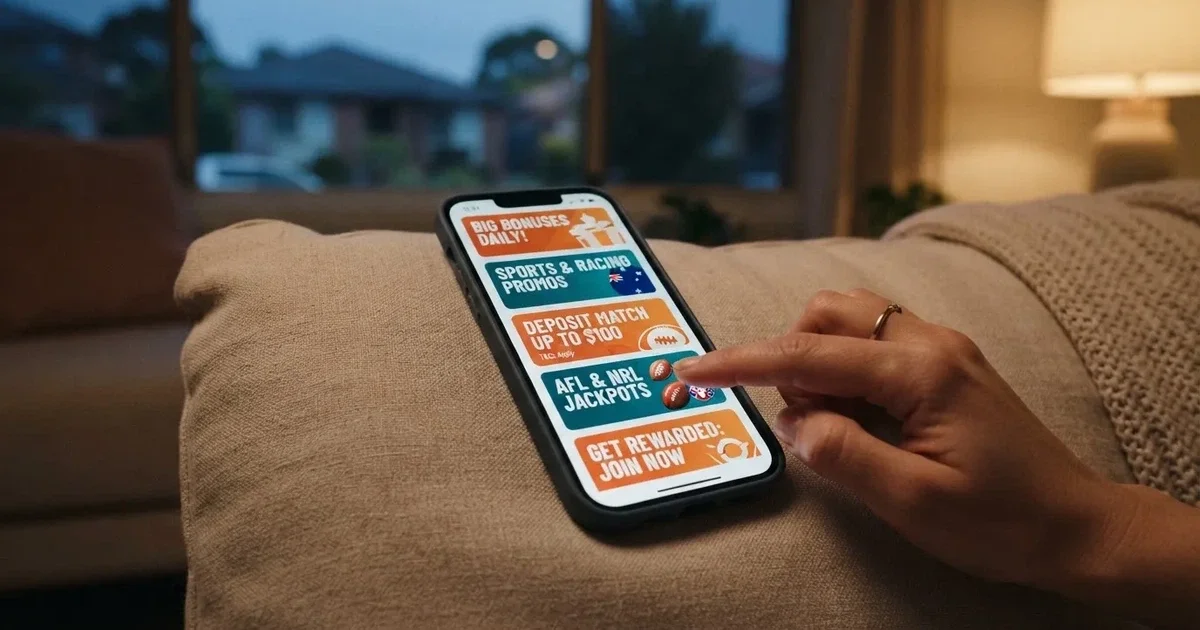
A no-deposit bonus, in the language of the offshore sites that advertise them, is a small credit or a bundle of free spins that the casino hands to a new account holder before any money changes hands. In practice it is a marketing device, the same shape as a free coffee at a new café: the value is small, the point is to move a curious searcher into a sign-up. The trouble in Australia is that the café is not licensed to operate here. Online casino games, online pokies and in-play betting are prohibited interactive gambling services under the Interactive Gambling Act 2001; no state or territory licenses them, and the ACMA enforces the prohibition through formal warnings and ISP blocking. The bonus is the bait; the prohibition is the cage it sits inside. What an NDB casino offer looks like in Australia, and why the offer… — More on this topic at pokies info .
Data current as of 29 October 2026, checked against the ACMA register and the official warnings page.
Table of Contents
- The shelf an NDB offer sits on, and why it has no Australian address
- Why Australian wagering licences are not what an NDB casino shows
- The H2 estimate of what the market is moving
- How the ACMA acts, and where each brand sits
- Where a “free” credit actually goes when it is claimed
- Bitcoin and other crypto: what changes, and what does not
- The payment rails an NDB site accepts, and what each one means
- What an Australian player actually has on the inside, and what they do not
- What the ACMA’s blocking rate actually tells a reader
- The reform that lands in 2026, and the start date that matters
- Responsible gambling, and what an NDB offer does to it
- The verification picture: what “ndb casino australia” and “ndb aus casino” actually mean
- The marketing words an NDB offer uses, and what each one costs the reader
- What this page is not for, and where the reader goes instead
- What the financial picture looks like for an Australian reader
- How this page was put together
- Frequently asked questions
The shelf an NDB offer sits on, and why it has no Australian address
An NDB casino offer is a single product inside a much larger pattern of offshore marketing aimed at Australian search terms. The ACMA reported in June 2026 that 1,751 illegal gambling and affiliate marketing websites had been blocked since the first blocking request in November 2019, and that more than 230 unlicensed gambling services had left the Australian market since enforcement was strengthened in 2017. Those numbers sit underneath every NDB tile a searcher scrolls past: each blocked domain is one site that ran the same pattern, and most of them ran some version of a no-deposit hook. In the June 2026 round alone the ACMA asked Australian ISPs to block 12 more: 7Signs, ChromaBet, Donbet, Duospin, Freshbet, Slots Gem, Jacks Club, Lucky Start, Pointsbetz, Spinrise, Vinyl Casino and Wildsino. None of them is licensed for an Australian player to use.

A reader comparing offers is therefore comparing marketing claims made by sites that the regulator has explicitly told ISPs to take offline. The offers exist; the licence that would make them legitimate in Australia does not.
Why Australian wagering licences are not what an NDB casino shows
Australia does license online gambling, but the licence is for wagering on sport and racing, not casino games. The Northern Territory Racing and Wagering Commission regulates 52 of Australia’s online bookmakers, including Sportsbet, Bet365 and Ladbrokes, and the commission does so with no full-time staff, meeting once a month in Darwin. That arrangement was criticised in an ABC report on 7 April 2026 calling for reform of what the headline described as a de facto gambling regulator. The shape matters because it explains the scope of what is licensed: wagering, not casino tables or pokies. An NDB offer for online pokies has no licence to point to, Australian or otherwise.
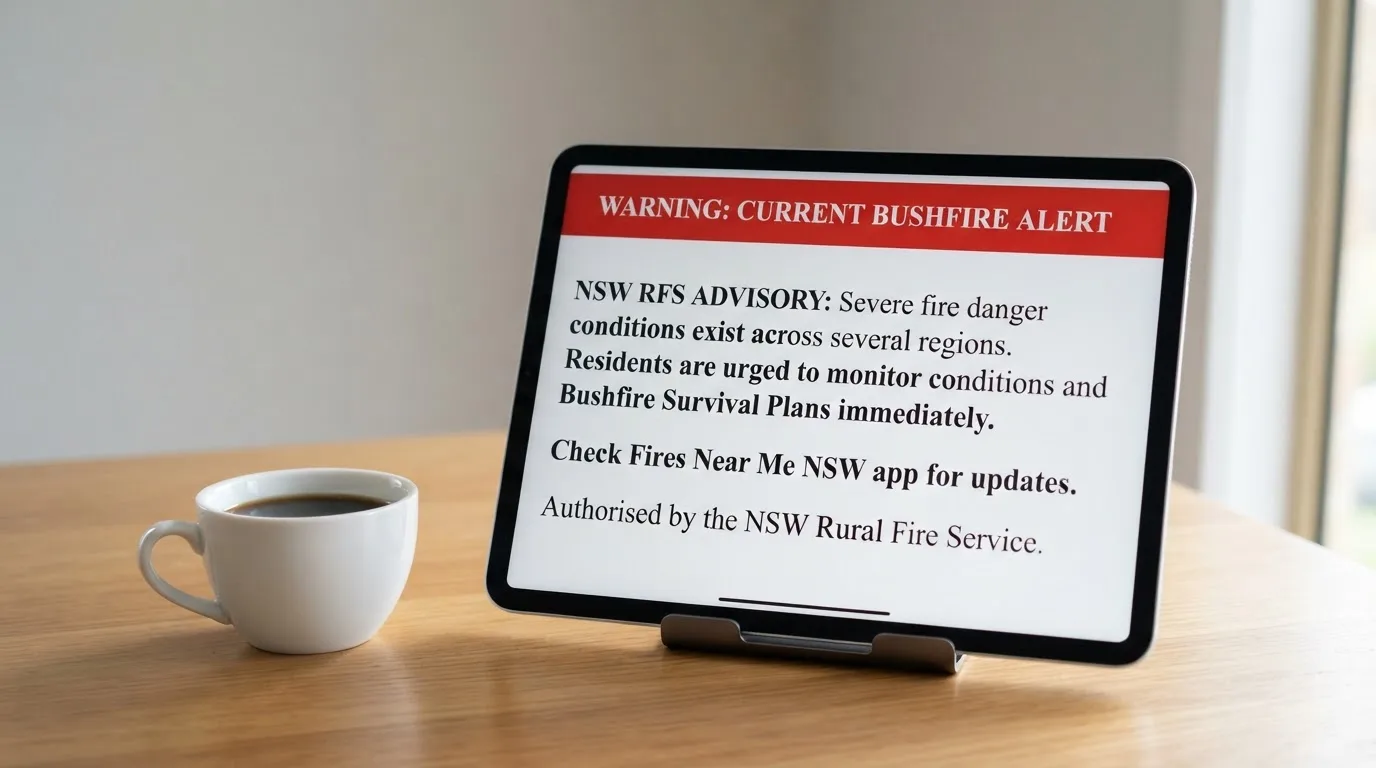
What is and is not licensed inside Australia:
- Licensed for Australians. Wagering on sport and racing placed before the event, lotteries, keno — under a state or territory wagering licence, with consumer protections and BetStop registration available.
- Not licensed for Australians. Online casino games, online pokies, in-play betting. No state or territory grants a licence for these. An offshore operator’s own Curaçao or Kahnawake registration is irrelevant to whether the IGA covers it.
The distinction is not a technicality. A licensed Australian wagering service cannot accept payment by credit card or credit-related products, must be connected to BetStop, and submits to consumer-protection regimes that allow complaints and dispute resolution. An offshore NDB casino accepts none of those constraints.
The H2 estimate of what the market is moving
H2 Gambling Capital’s 2025 report puts Australians’ losses to illegal gambling sites at about A$3.9 billion a year. The same report records the share of gambling going through legal channels falling from 74% in 2021 to 64%. Two figures, and a clear direction: legal channels are losing share at the same time the ACMA is blocking more domains. The two numbers are not a contradiction. Offshore sites that are still up and reachable from an Australian IP are picking up the players that the blocked ones used to serve; the prohibition holds, the volume does not. An NDB offer is one of the cheaper tools an offshore operator uses to convert a search into a deposit, which is why the offer keeps appearing in Australian search results despite the prohibition.
The reader-side consequence is simple. Money that would have been taxed and protected inside the licensed wagering market is moving to operators that pay no Australian tax, register no Australian complaint, and operate outside BetStop. The H2 figure is the size of that shift in one year, not the cumulative loss to date.
How the ACMA acts, and where each brand sits
The ACMA’s enforcement has two visible instruments. The first is the formal warning, a published notice naming the operator and the brand that is breaching the IGA. The second is the blocking request to Australian ISPs, which removes a site from the address bar for anyone on a participating provider. Both have a public record. The warnings list is the more searchable one: it names the operator behind the brand, the date of the notice, and the specific URL pattern that triggered it.
The brands listed in the table below are not a recommended shortlist. They are brands the ACMA itself acted against. The order matches the ACMA’s publication record; the dates are the dates on the warnings page.
| Brand | ACMA action and date | Operator named by the ACMA | Subject support |
|---|---|---|---|
| RocketPlay | Formal warning, March 2026 | Pulsup Ltd (Rocketplay); earlier Dama N.V., May 2022 | listings only (Gambling Insider) |
| Level Up Casino | Formal warning, May 2022 | Dama N.V. | listings only (Westpac.com.au) |
| Woo Casino | Formal warning, March 2025 | Dama N.V. | — |
| Spirit Casino | Formal warning, May 2025 | Dama N.V. | — |
| National Casino | Formal warning, July 2025 | Consolutetish S.R.L. | listings only (acma.gov.au, austrac.gov.au, betstop.gov.au) |
| Bizzo Casino | Formal warning, July 2025; earlier 2022 | Consolutetish S.R.L.; earlier TechSolutions (CY) Group Limited and TechSolutions Group N.V. | listings only (Gambling Insider) |
| Ignition Casino | Formal warning, July 2025 | Bamboo Media | — |
| Instant Casino | Formal warning, February 2025 | EOD Code SRL | listings only (Ecopayz.com, Payid.com.au) |
| Jackbit | Formal warning, April 2026 | Ryker B.V. | — |
| Casino Intense | Formal warning, April 2025 | Sterplay Holding Ltd | listings only (austrac.gov.au, betstop.gov.au, Gambling Insider) |
| Sky Crown | Formal warning, September 2022 | Hollycorn N.V. | — |
The repeated operator names are not a coincidence. Dama N.V. has appeared across five of the brands the ACMA has acted against, including a 2022 round covering Bambet, Dazard, Level Up, Rocketplay, Wild Tornado and Cobra Casinos, then separate warnings in March and May 2025 over Woo Casino and Spirit Casino. Consolutetish S.R.L. drew a 2025 warning for both National Casino and Bizzo Casino, with Bizzo already warned in 2022 under TechSolutions. The shape of the table is the shape of a small number of corporate shells running many of the brand façades an Australian searcher meets. A reader looking for the operator behind the next NDB tile they see is rarely looking at a new business; they are looking at a new brand on an existing operator.
Where a “free” credit actually goes when it is claimed
The arithmetic the marketing language hides is straightforward. An NDB is a credit of, typically, A$10 to A$50 in bonus funds or a small bundle of free spins. To withdraw anything won from it, the player must satisfy a wagering requirement — usually 35× to 50× the bonus amount — within a short window, often seven days. A$50 at 40× means A$2,000 of required turnover on games whose house edge is built into every spin. The “free” credit costs the player time and real bets. And because the offer is only available on an offshore site that the IGA already covers, the player also has no Australian recourse if the casino refuses the withdrawal on a wagering technicality or because the site has been blocked mid-play.
The reader-side reading is sharper than the marketing puts it. The promotional word — “free” — names only the deposit. The wagering requirement, the time limit, the game weighting and the max-cashout cap all sit below the headline. A reader who never reaches those lines has read the advertisement but not the offer.
Bitcoin and other crypto: what changes, and what does not
A “no-deposit bitcoin casino” sounds like a separate product. In legal terms it is the same product. The Interactive Gambling Act 2001 covers the supply of prohibited interactive gambling services to a person in Australia; the payment method is not in the test. Paying the wagering turnover in BTC, ETH or USDT rather than AUD does not move the site from offshore and prohibited to licensed and protected. It also does not move the player’s exposure: the wagering requirement still applies, the bonus terms still apply, and the operator is still outside the IGA’s jurisdiction.
Crypto does add two practical differences worth naming. The first is that a crypto deposit can sometimes move faster than a card or bank transfer, because it bypasses the gambling-block rails several Australian banks have built (Westpac’s card-level block works at the merchant category code ‘Betting/Casino Gambling’; ANZ’s block, which extends to digital-wallet transactions like Apple Pay on the same card, comes with a 48-hour waiting period before it can be turned off again). The second is that the same speed cuts both ways: a blocked offshore casino cannot freeze or reverse a crypto withdrawal in the way a card-issuer or bank might. The player has less protection on entry and more autonomy on exit, with the house edge sitting across every spin in between.
A reader weighing crypto against card or bank transfer for an NDB claim should weigh three things against each other: speed of the deposit (crypto is faster), reach of the bank block (card and digital-wallet blocks catch more transactions), and recourse if the withdrawal is refused (an Australian bank or card-issuer has more practical pull than a self-custody wallet). None of the three is decisive on its own.
The payment rails an NDB site accepts, and what each one means
Australian banks have not waited for the offshore sites to self-police. The 2023 amendment to the Interactive Gambling Act 2001 made it an offence for Australian-licensed online wagering services to accept credit cards or credit-related products; in practice that also constrains gambling use of linked digital wallets like Apple Pay. The four major banks have built gambling blocks that operate at card and digital-wallet level: Westpac refuses authorisation of transactions registered under the merchant category code for betting and casino gambling on eligible cards; ANZ’s block, activated through the ANZ app, extends to digital-wallet transactions such as Apple Pay on the same eligible card, and the bank warns that not every gambling transaction will be blocked and that some non-gambling transactions may be blocked in error; Commonwealth Bank’s gambling lock works through the CommBank app and similarly stops short of a guarantee that every gambling-related purchase will be blocked. Apple Pay itself charges no consumer fee and sets no transaction limit of its own, but the issuer or merchant sets the PIN and limit policy.
For deposits and withdrawals that are still possible, the practical Australian rails are:
- PayID and Osko. A bank transfer between participating Australian banks arrives in under a minute, 24/7, including weekends, addressed either to a BSB and account number or to a PayID. Paying to a PayID shows the name of the account holder before the transfer is sent; AP+ warns that being asked to transfer money to a PayID on an illegal gambling site almost certainly means a scam site. PayID-based instant transfers are available at over 100 Australian financial institutions, and more than 25 million PayID identifiers had been registered on Australia’s New Payments Platform by April 2025.
- BPAY. A bill-payment service in online banking, with over 140 banks and financial institutions participating and over 95,000 businesses on the biller side. Run by Australian Payments Plus alongside PayID and Osko. Less useful for an offshore casino than for a domestic biller, since most offshore operators do not publish a BPAY biller code.
- Card and digital wallet. Subject to the bank blocks above, and to the 2023 credit-card ban on licensed wagering. A debit card tied to a card-level gambling block will be refused; the same transaction through Apple Pay or Google Pay on that card can also be refused, depending on the bank.
- Crypto. Outside the bank rails and outside the IGA’s payment rules, but still inside the IGA’s prohibition on the service itself. AUSTRAC’s threshold-transaction-report rule applies only to physical cash; ordinary electronic bank transfers are not subject to that per-transaction reporting requirement, regardless of amount.
The combination is uneven. A licensed Australian wagering service can take PayID, Osko, BPAY and a debit card. An offshore casino can take all of those plus crypto and, in defiance of the credit-card ban, credit cards and digital wallets at the card-issuer’s discretion. The credit-card acceptance is itself a tell that the site is not operating under Australian rules.
What an Australian player actually has on the inside, and what they do not
The asymmetry between an Australian-licensed wagering service and an offshore NDB casino shows up in three places a reader can check before they sign up:
- BetStop. The National Self-Exclusion Register has been live since August 2023 and binds every Australian-licensed online and phone wagering service. An offshore casino is not connected to it. A self-excluded Australian can register with BetStop and find themselves unable to place a wager on a licensed bookmaker in the period they have chosen, and still able to deposit on an offshore site that does not see the register.
- Dispute resolution. A licensed Australian wagering service is subject to Australian consumer law and the operator’s own dispute process, with state-based complaints bodies as a backstop. An offshore casino offers whatever complaints process its own terms page sets out, which is usually internal and final.
- Withdrawal recourse. If an Australian-licensed operator refuses a withdrawal unfairly, the player has regulators and a court system within reach. If an offshore operator refuses a withdrawal, the player has whatever international card chargeback or banking complaint can still be made — and the ACMA’s blocking power, which can take the site offline before the complaint is resolved.
A reader weighing an NDB offer is not weighing a product like a product. They are weighing the offer against the absence of every protection an Australian licence would have provided.
What the ACMA’s blocking rate actually tells a reader
The arithmetic the page can run is the rate at which the ACMA has been blocking sites. The first blocking request was issued in November 2019. By June 2026 the ACMA’s published total reached 1,751 illegal gambling and affiliate marketing websites blocked since that first request. The window from November 2019 to June 2026 is roughly 79 months. A reader who wants a rough sense of pace can take that 79-month window against the 1,751 total, which yields a long-run average of roughly 22 blocked sites per month over the whole period.
The single round reported on 26 June 2026 alone added 12 more. That single round is therefore more than half the long-run monthly average, packed into one enforcement action. The variance matters: the ACMA does not block at a steady pace, it works in batches whose size reflects what the regulator finds at the time of investigation. A reader should treat the long-run average as a baseline and the individual rounds as the operating reality.
The direction the page can take from this is the reader-side one. The blocking rate has not slowed; the H2 figure shows the illegal market still attracts A$3.9 billion a year; and the ACMA’s published total keeps rising in batches. A reader who concludes that the prohibition is shrinking the market because more sites are being blocked is reading the wrong number. A reader who concludes the blocks are necessary because the market keeps producing new targets is reading it correctly.
The reform that lands in 2026, and the start date that matters
The Interactive Gambling Amendment (Gambling Reform) Bill 2026 passed Parliament on 19 August 2026. Its advertising and inducement measures commence 1 January 2027. The bill is law with a start date, not yet in force on this page. What that means in practice is that the advertising and inducement rules the bill sets out — including the tightening of how NDB-style offers are marketed to Australians — apply from 1 January 2027, not from the date the bill passed. Before that date, the rules the ACMA is enforcing remain the rules in this article. After that date, the inducement landscape narrows further. A reader comparing offers across the end of 2026 and the start of 2026 is comparing two different regulatory regimes, and the date of the comparison matters.
Responsible gambling, and what an NDB offer does to it
An NDB offer is the entry point. Once a player has an account and a balance, the operator’s marketing moves to reload bonuses, free spin bundles tied to specific game launches, and loyalty points. The Responsible Gambling section the reader needs is not the casino’s own. It is the Australian one: BetStop for self-exclusion, Gambling Help Online for chat support, and the National Gambling Helpline on 1800 858 858, free and 24/7. The helpline and the chat service are the ones the ACMA’s enforcement page points to; the offshore casino’s own “responsible gambling” page is part of the same marketing surface as the NDB offer.
For readers who have already deposited on an offshore site and want to stop, the practical order is:
- Register with BetStop if the licensed wagering channel is part of the picture; it does not bind the offshore site, but it stops the legal side.
- Contact Gambling Help Online or call 1800 858 858 for confidential advice and referrals, including financial counselling.
- Set a card-level gambling block with the issuing bank: Westpac, ANZ and Commonwealth Bank all offer card-level or digital-wallet-level blocks through their apps, with the bank’s own caveats about coverage.
- Request withdrawal of any balance from the offshore site before self-excluding from it; the offshore site has no obligation to honour the request, and the sooner it is in writing the better.
None of these reverses a loss. They do close the door behind it.
The verification picture: what “ndb casino australia” and “ndb aus casino” actually mean
Searches that look slightly different turn up largely the same set of sites. “Ndb casino australia”, “ndb aus casino”, “ndb australia casino” and similar search variants route to the same operator pool, the same corporate shells, and the same ACMA warnings. The brand name changes from search to search; the operator behind it rarely does. Dama N.V. operates across Level Up, Woo, Spirit and Rocketplay, among others; Consolutetish S.R.L. operates National Casino and Bizzo Casino; Hollycorn N.V. operates Sky Crown and Blue Leo. The pattern is not new; the pattern is the market.
A reader who sees two NDB offers from what looks like two different casinos is more often looking at two different brand façades on one operator. The offer terms and the wagering requirements tend to be drawn from the same template, with the numbers tweaked per brand. Reading one operator’s terms carefully is closer to reading the market than reading twelve brand pages in parallel.
The marketing words an NDB offer uses, and what each one costs the reader
An NDB offer has a small vocabulary, and each word is doing a job:
- “Free.” Refers to the deposit, not the wagering requirement. The bonus is free to claim; the wagering attached to it is not free to clear.
- “No deposit.” Names the trigger. The wagering requirement still applies to anything won from the bonus funds or from the free spins.
- “Cash bonus.” A credit of bonus funds that is withdrawable only after the wagering requirement is met. Different from a sticky bonus, which cannot be withdrawn even after wagering — the bonus is retained by the casino.
- “Free spins.” A bundle of spins at a fixed stake, on a named game or set of games, with the winnings either paid as bonus funds or as cash with a cap. The cap, when present, is the silent ceiling on the offer.
- “Max cashout.” The largest amount the player can withdraw from bonus-derived winnings. Where the bonus is A$50 and the max cashout is A$100, the offer’s real ceiling is A$100, not the bonus.
- “Wagering requirement.” The turnover required to convert bonus funds to withdrawable cash, expressed as a multiple of the bonus (e.g., 40×) and sometimes also of the deposit (less common on NDB offers, more common on deposit-gated packages).
- “Game weighting.” The contribution each game type makes to the wagering requirement. Pokies often count 100%; table games often count 10% or 0%. The wagering requirement that reads as 40× on the headline can be effectively 400× for a blackjack player.
The reader-side reading is that each of these words names a cost. The arithmetic the marketing hides is the multiplication of all of them: bonus × multiple × (1/game weighting) × (1/max cashout) is the realistic ceiling on what the offer returns. The same arithmetic on a licensed Australian wagering offer is much smaller because the offer is regulated.
What this page is not for, and where the reader goes instead
This page describes the NDB casino landscape as it exists in 2026 for an Australian reader, including the marketing mechanics, the regulator’s actions and the payment rails. It is not a list of recommended sites, because no site on the list is licensed to offer what it advertises to Australians, and a recommendation would imply the opposite. It is not a guide to claiming an NDB, because claiming an NDB on an offshore site that the ACMA has acted against is the act the regulator is trying to stop. It is not a guide to avoiding the bank-level gambling blocks, because those blocks are the Australian banks’ own consumer-protection work and routing around them is not in the reader’s interest.
The reader’s other options, if the comparison was the point of the search, are:
- Licensed Australian wagering. Wagering on sport and racing before the event, with deposit routes that the bank blocks will not refuse. The offer portfolio is smaller; the protections are larger.
- Lotteries and keno. Licensed in most states, with consumer protection under the relevant state regulator. Outside the NDB casino pattern.
- Self-exclusion. BetStop and the National Gambling Helpline, if the comparison was the prompt to look in the first place.
What the financial picture looks like for an Australian reader
Gambling winnings of a recreational player are not assessable income under section 6-5 ITAA 1997, and losses are not deductible. The only case where the ATO treats gambling as income is when the person carries on a business of gambling, which a recreational player does not. The tax framing is therefore not the reason to avoid an NDB offer; the IGA’s prohibition and the absence of Australian consumer protection are.
How this page was put together
The facts the page relies on are drawn from the ACMA register and the published ACMA warnings page, from the Reserve Bank of Australia’s July 2025 review of merchant card payment costs and surcharging, from Australian Payments Plus’s Osko and PayID pages, from the banks’ own gambling-block product pages, and from the cited media reporting on the ACMA blocking rounds and the NT wagering-regulator coverage. The figures used are the figures those sources publish. The arithmetic the page runs is the rate calculation against the ACMA’s blocking totals. Where a fact is not on the page, the page does not name it.
Frequently asked questions
What does “NDB” mean when an offshore casino advertises an NDB pokies bonus?
NDB stands for no-deposit bonus: a small credit or free-spin bundle given to a new account before any deposit, with a wagering requirement attached before any winning can be withdrawn. The “no deposit” refers to the entry point, not to the wagering requirement. The offer sits on an offshore site, because no Australian licence covers online pokies.
Is a no-deposit bitcoin casino offer any different from an ordinary NDB casino offer in Australia?
Legally, no. The Interactive Gambling Act 2001 covers the supply of prohibited interactive gambling services to a person in Australia, regardless of payment method. Paying in BTC rather than AUD does not move the site from offshore to licensed. The crypto rail changes the speed and the card-block coverage, not the legal status.
Why do offshore NDB casino sites keep advertising to Australian search terms if online casino play is banned here?
Because the ACMA’s blocking and formal-warning regime reduces the supply of accessible sites but not the demand: the H2 Gambling Capital 2025 estimate is A$3.9 billion a year going to illegal gambling sites, with the legal channel’s share falling from 74% in 2021 to 64%. The marketing targets that demand. Each blocked site tends to be replaced by a new one, often from the same operator shell.
How fast does a PayID or Osko transfer move compared with the crypto rails an NDB crypto casino relies on?
An Osko transfer between participating Australian banks arrives in under a minute, 24/7, including weekends, addressed either to a BSB and account number or to a PayID. A Bitcoin transfer settles on the next block, which in practice is minutes, but the casino’s own confirmation policy can add time. The relevant difference is what each rail bypasses: PayID/Osko sits inside the bank blocks; crypto bypasses them. See also Newest online casinos and their no-deposit bonus claims, examined for… .
What should someone check before trusting a site’s claimed NDB casino terms?
Check that the site is licensed to offer the service to an Australian player — and if the answer is that no Australian licence covers online casino games, then the offer is outside Australian law regardless of what licence the site displays elsewhere. Then check the wagering requirement, the max cashout, the game weighting, and whether the site is connected to BetStop. If the answer to the last question is no, the self-exclusion route is not available there.