
Fast payout online casinos and the Australian reader: the shape of the gap
The phrase “fast payout online casino” points at something real on the global market — sites whose marketing promises deposits cleared in minutes and withdrawals back to a bank account on the same day. In Australia that market does not exist as a licensed product. The Interactive Gambling Act 2001 prohibits offering online casino games to anyone physically in Australia, no state or territory issues a licence for it, and the Australian Communications and Media Authority has spent the years since 2017 systematically warning and blocking the offshore operators who fill the search results anyway. Fast payout online casinos and the Australian reader — More on this topic at pokies info .
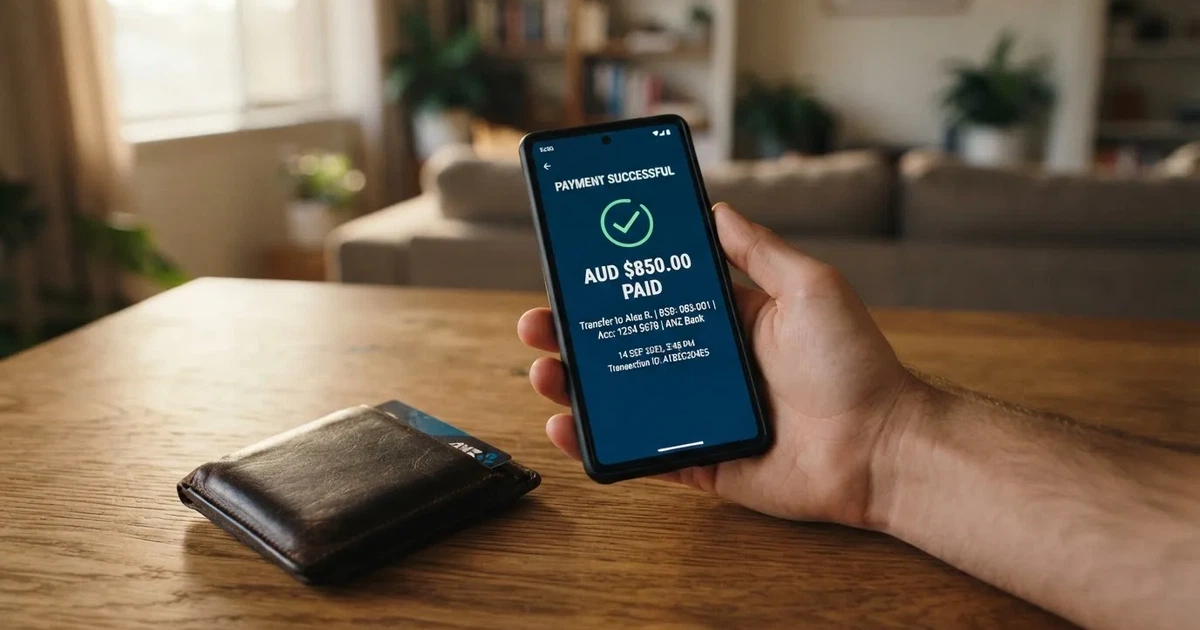
This page works through what that gap looks like in practice for an Australian reader. It sets out the law the ACMA enforces, the payments infrastructure that makes “fast” actually fast on the legal side, the self-exclusion tools that apply only inside Australia, and what the ACMA’s published enforcement record shows about the offshore brands that dominate the search results. None of those brands is recommended; each is named because the regulator itself named it, and the reader who searched the term will meet them either way.
Current as of 29 October 2026; cross-checked against the ACMA’s published formal warnings and notices register.
Table of Contents
- What the Interactive Gambling Act 2001 actually prohibits
- The enforcement record the ACMA has actually published
- How “fast” actually moves money inside Australia
- BetStop and the limits of self-exclusion for an Australian reader
- Crypto, anonymity and the offshore shortcut
- The named brands the ACMA has acted against
- Where the reader actually stands
- What a reader should walk away with
- Frequently asked questions
What the Interactive Gambling Act 2001 actually prohibits
The Interactive Gambling Act 2001, sharpened by the Interactive Gambling Amendment Act 2017, makes it a civil offence to supply certain gambling services to a person in Australia. The services that fall inside the prohibition are the ones that look most like a “fast payout online casino”: online casino games, online pokies and in-play betting on sport. Race wagering, sports betting placed before the event, lotteries and keno are licensable activities — and that licence, in practice, is almost always a Northern Territory one, since the territory’s Racing and Wagering Commission regulates 52 of Australia’s online bookmakers including Sportsbet, Bet365 and Ladbrokes for tax reasons alone. The commission has no full-time staff and meets once a month in Darwin, which is itself a piece of the picture worth holding on to.

The legal texture that matters for a reader is narrower than it first looks. The IGA does not prosecute the punter. The person placing a bet from a laptop in Sydney is not the target. The target is the offshore operator, and the practical tools the regulator has are three: formal warnings, civil penalties and directions to Australian internet service providers to block the offending domains. Since the first blocking request in November 2019, the ACMA has directed the blocking of 1,751 illegal gambling and affiliate marketing websites, and more than 230 unlicensed services have withdrawn from the Australian market since enforcement was strengthened in 2017.
The consequence for a reader is structural rather than criminal. A site outside the Australian regime gives the player no Australian consumer protection, no complaints body and no recourse if a withdrawal stalls, an account is closed or a balance is held. If the ACMA moves to block the site, the player’s balance can sit on the other side of the block. That is the gap the marketing does not name.
The enforcement record the ACMA has actually published
Formal warnings are public and dated, and the run of them across 2026 is the most concrete evidence of what the regulator is doing. In a single round reported on 26 June 2026 the ACMA asked Australian ISPs to block 12 more illegal gambling websites — 7Signs, ChromaBet, Donbet, Duospin, Freshbet, Slots Gem, Jacks Club, Lucky Start, Pointsbetz, Spinrise, Vinyl Casino and Wildsino — and the overall running total at that point stood at 1,751 blocked sites since November 2019, with more than 230 unlicensed services having left the Australian market since 2017.

The blocking record is broad enough to anchor a rate. Across the roughly six years and seven months from the first blocking request in November 2019 to the June 2026 round, the ACMA’s directed blocks average somewhere in the order of 22 sites a month, or roughly 260 a year — a band rather than a single figure, because the rounds vary in size and the regulator’s pace has shifted as the legislative tools have tightened. What the band tells a reader is that “blocked” is not an event, it is a process: any offshore brand that features prominently in the Australian search results is more likely than not to be on a queue somewhere in that pipeline.
The ACMA also publishes formal warnings before the blocking step. In March 2026 the regulator warned Pulsup Ltd over Rocketplay; in April 2026 it warned Ryker B.V. over Jackbit and CasinOK; in April 2025 it warned Sterplay Holding Ltd over Casino Intense; in February 2025 it warned EOD Code SRL over Instant Casino; in March 2025 and May 2025 it warned Dama N.V. over Woo Casino and Spirit Casino; in July 2025 it warned Bamboo Media over Ignition Casino and Consolutetish S.R.L. over National Casino and Bizzo Casino (Bizzo having been the subject of an earlier 2022 warning to TechSolutions); in May 2022 the same Dama N.V. was warned over six brands at once — Bambet, Dazard, Level Up, Rocketplay, Wild Tornado and Cobra Casinos; and Hollycorn N.V. was warned over Sky Crown and Blue Leo in 2022. The pattern is the point: the same operators keep returning under slightly different brand names, and the regulator keeps publishing the names.
How “fast” actually moves money inside Australia
The Australian payment rails make the term “fast payout” meaningful for a reason that has nothing to do with casinos. Osko, run by Australian Payments Plus, settles a bank transfer between participating Australian banks in under a minute, twenty-four hours a day, including weekends — whether the transfer is addressed to a BSB and account number or to a PayID. PayID, on the same platform, lets a payer confirm the recipient’s name before sending the money; the operator warns that being asked to send money to a PayID on an illegal gambling site almost certainly means a scam site. More than 25 million PayID identifiers had been registered on the New Payments Platform as of April 2025, and the platform’s monthly outages are required to stay under two minutes. It is, in plain terms, the fastest retail bank-transfer rail in the country.
BPAY is the slower bill-payment path, but it is also the older one — launched on 18 November 1997, jointly owned by ANZ, Commonwealth Bank, National Australia Bank and Westpac, available through the online banking of over 140 Australian institutions and offered by over 95,000 businesses. For gambling specifically, BPAY is a legal deposit route for Australian-licensed wagering services, alongside debit card, bank transfer and PayID/Osko. Credit cards and credit-related products are not, since the 2023 amendment to the Interactive Gambling Act took effect: the prohibition on credit cards and credit-related products for licensed online wagering came into force on 11 June 2024, with penalties of up to A$247,500 for operators that breach it. Digital currency is also off the list of legal deposit methods for licensed wagering.
The Apple Pay and Google Pay picture matters because so much of the card volume now sits there. By the end of 2025, Apple Pay, Google Pay and Samsung Pay together accounted for around 45 per cent of all card payments in Australia by number. Apple does not itself charge the consumer any fee for using the wallet — any surcharge is the merchant’s own processing fee, not Apple’s — and Apple sets no transaction limits or PIN requirements of its own, those being the card issuer’s or the merchant’s call. ANZ’s gambling block, once turned on, blocks gambling transactions made through a digital wallet on an eligible card as well as through the physical card, and it takes 48 hours to lift; Westpac’s block works at card level, refusing authorisations registered under the merchant category code “Betting/Casino Gambling” on eligible cards; Commonwealth Bank lets customers apply a gambling lock to eligible cards through the CommBank app, with the same caveat that not all gambling-related transactions can be guaranteed to be stopped.
The useful consequence for a reader is that the speed exists. The Osko rail can move money between Australian bank accounts inside a minute, twenty-four hours a day. The reason it is not a “fast payout online casino” feature is not that the technology is slow — it is that the casino end of the transfer is not licensed to be on the other side of it.
BetStop and the limits of self-exclusion for an Australian reader
BetStop, the National Self-Exclusion Register, has been live since August 2023 and is the centre of the Australian player-protection framework for online wagering. Its scope is the scope of the licence: it binds Australian-licensed online and phone wagering services, which is to say licensed bookmakers, and it works for online casino-style products only in the technical sense that no such product is licensed here to begin with. An offshore casino is not connected to BetStop, has not signed the register’s terms, and is under no obligation to honour an exclusion that a player has set up through an Australian channel.
The protection that does exist is the bank-level block and the wallet-level block — Westpac, ANZ and Commonwealth Bank all offer gambling blocks that work at card level or at wallet level, and the National Gambling Helpline at 1800 858 858 is free, twenty-four hours a day, with chat through Gambling Help Online. The gambling-block tools are imperfect by the banks’ own admission — ANZ explicitly warns that not all gambling transactions will be blocked and that some non-gambling transactions may be blocked in error — but they are the layer that catches what BetStop cannot.
The reason this is a hard edge for the “fast payout” topic is that “fast” is the marketing word an offshore operator uses to win the click, and the same marketing is silent on what happens to the balance when the site is blocked or the operator decides to keep it. The bank-level block is the cheapest way to take the click away from oneself in the first place.
Crypto, anonymity and the offshore shortcut
A meaningful slice of the search traffic around “fast payout casino” lands on the crypto variant — bitcoin casino fast payout, fast payout crypto casino — because crypto is the route around the credit-card ban and around the bank-level gambling blocks. The Bitcoin transaction settles, in principle, at the speed of the network rather than at the speed of the licensed Australian wagering rails; that is the speed the marketing is selling. The same characteristics — the absence of a chargeback route, the absence of a regulated intermediary and the absence of an Australian complaints body — are what make the offshore crypto path faster and weaker at the same time.
For an Australian reader the regulatory layer sits on top of all of it. The Interactive Gambling Act’s 2024 prohibition on credit cards and credit-related products for licensed wagering does not by itself ban crypto, but the licensed wagering services that Australian readers are legally allowed to use are not in a position to accept it: licensed deposit routes for Australian-licensed wagering are debit card, bank transfer, PayID/Osko and BPAY, and digital currency is excluded. An offshore operator will accept the deposit; the regulator’s response is the same warning, the same blocking direction and the same absence of Australian recourse if the withdrawal does not arrive.
The AUSTRAC threshold-transaction report rule, which applies to transfers of A$10,000 or more, applies only to physical cash and does not change the picture for an ordinary electronic transfer of any size; it is not a per-transaction reporting rule for bank transfers. The reporting framework that does apply to licensed wagering is the one inside which the legal bookmakers operate, not the one the offshore sites operate inside.
The named brands the ACMA has acted against
The brands below are the ones the regulator has named in formal warnings. Each is named because the ACMA itself named it, in the dates shown, for offering prohibited services to Australians. Online casino games cannot be licensed anywhere in Australia, whatever licence the site displays. This is not a ranking and not a recommendation; it is the visible top of the ACMA’s published enforcement record.
| Brand | ACMA action and date | Operator named by the ACMA | Subject support |
|---|---|---|---|
| RocketPlay | Formal warning, March 2026 (Pulsup Ltd); earlier May 2022 (Dama N.V.) | Pulsup Ltd; Dama N.V. | listings-only — Gamblinginsider lists the brand, no Australian-licence claim verified |
| Level Up Casino | Formal warning, May 2022 | Dama N.V. | listings-only — Westpac lists the brand in its gambling-block reference set, no Australian-licence claim verified |
| Woo Casino | Formal warning, March 2025 | Dama N.V. | no data — not referenced by the consulted Australian regulator or payments pages |
| Spirit Casino | Formal warning, May 2025 | Dama N.V. | no data |
| National Casino | Formal warning, July 2025 | Consolutetish S.R.L. | listings-only — acma.gov.au, austrac.gov.au and betstop.gov.au list the brand, no Australian-licence claim verified |
| Bizzo Casino | Formal warning, July 2025 (Consolutetish S.R.L.); earlier 2022 (TechSolutions) | Consolutetish S.R.L.; TechSolutions (CY) Group Limited; TechSolutions Group N.V. | listings-only — Gamblinginsider lists the brand, no Australian-licence claim verified |
| Ignition Casino | Formal warning, July 2025 | Bamboo Media | no data |
| Instant Casino | Formal warning, February 2025 | EOD Code SRL | listings-only — Ecopayz and Payid list the brand, no Australian-licence claim verified |
| Jackbit | Formal warning, April 2026 | Ryker B.V. | no data |
| Casino Intense | Formal warning, April 2025 | Sterplay Holding Ltd | listings-only — austrac.gov.au, betstop.gov.au and Gamblinginsider list the brand, no Australian-licence claim verified |
| Sky Crown | Formal warning, 2022 | Hollycorn N.V. | no data |
The pattern across the table is the same one the regulator’s name list keeps producing. Dama N.V. alone accounts for five of the eleven: RocketPlay, Level Up, Woo Casino, Spirit Casino and a sixth brand (Bambet, Dazard, Wild Tornado or Cobra Casinos) named in the May 2022 round. Consolutetish S.R.L. accounts for two: National Casino and Bizzo Casino. TechSolutions had Bizzo before Consolutetish did. The same operator returns under a new brand, the regulator names both, the cycle continues.
RocketPlay
The ACMA named Rocketplay in a March 2026 formal warning to Pulsup Ltd, and the same brand had already been named in May 2022 against Dama N.V. as part of a six-brand batch. The regulator’s record is the clearest thing on the page about this brand; the Gamblinginsider listing is what the consulted set carries for it, with no Australian-licence claim verified. For a reader, the consequence is that this is a brand the regulator has named twice under two different corporate names, which is the part of the record that survives any single licence display on the site itself.
Level Up Casino
Level Up was named in the May 2022 warning to Dama N.V. alongside Bambet, Dazard, Rocketplay, Wild Tornado and Cobra Casinos. The brand appears in Westpac’s gambling-block reference set — the consulted pages — but no Australian-licence claim is verified. The card-level gambling blocks at Westpac, ANZ and Commonwealth Bank are the technical mechanism by which a transaction at this brand can be declined at the issuer step before it leaves an Australian account.
Woo Casino
The ACMA’s March 2025 formal warning named Woo Casino under Dama N.V. The consulted Australian pages do not carry a reference to the brand, which means the only sourced record on the page is the regulator’s own warning. That is also the longest-running shape in this market: the regulator names the brand, the brand changes a label, the cycle repeats.
Spirit Casino
Spirit Casino was named in the May 2025 warning to Dama N.V. The brand is not mentioned in any of the consulted Australian regulatory or banking sources, reflecting the same offshore-market pattern seen with Woo Casino: the traffic for these sites sits entirely outside the reach of Australian regulatory oversight.
National Casino
The July 2025 warning named National Casino under Consolutetish S.R.L. The brand appears in the consulted listings at acma.gov.au, austrac.gov.au and betstop.gov.au — the regulator’s own pages and the self-exclusion register — with no Australian-licence claim verified. The brand’s appearance in the regulator’s own lists is the part that does not need a third-party source to carry weight.
Bizzo Casino
Bizzo was named in the July 2025 warning to Consolutetish S.R.L., and earlier in 2022 against TechSolutions (CY) Group Limited and TechSolutions Group N.V. Gamblinginsider lists the brand; no Australian-licence claim is verified. The regulator’s two-name history for a single brand is itself a piece of evidence about how the offshore market rebrands.
Ignition Casino
The July 2025 warning named Ignition Casino under Bamboo Media. No Australian-specific sources reference this brand. The licence shown on the site is not an Australian licence and cannot be, and the regulator’s action is the record that holds.
Instant Casino
The February 2025 warning named Instant Casino under EOD Code SRL. The brand appears in the consulted listings at Ecopayz and Payid — the payment-rail pages — with no Australian-licence claim verified. The PayID page’s own warning, that being asked to transfer money to a PayID on an illegal gambling site almost certainly means a scam site, applies in shape if not in name.
Jackbit
The April 2026 warning named Jackbit under Ryker B.V., alongside CasinOK. There is no mention of this brand in the consulted Australian sources. The regulator’s record is the only sourced line on the page.
Casino Intense
The April 2025 warning named Casino Intense under Sterplay Holding Ltd. The brand appears in the consulted listings at austrac.gov.au, betstop.gov.au and Gamblinginsider — the regulator, the self-exclusion register and a third-party listings page — with no Australian-licence claim verified. The listings are the consulted set; none of them confers an Australian licence.
Sky Crown
The 2022 warning named Sky Crown under Hollycorn N.V., alongside Blue Leo. This brand does not appear in any consulted Australian reference materials. The regulator’s record is the only sourced line on the page.
Where the reader actually stands
The arithmetic the page offers is the blocking rate itself. Across roughly six years and seven months from November 2019 to June 2026, the ACMA directed the blocking of 1,751 illegal gambling and affiliate marketing websites — a band of the order of 22 sites a month, or roughly 260 a year, with the per-round size varying as enforcement tightens and loosens. For a reader, the consequence is not that any one site is going to be blocked tomorrow; it is that the population of sites the regulator is willing to block grows by roughly a couple of dozen a month, and the marketing claim of “fast payout” sits inside that population more often than not.
The lawful Australian alternative is the licensed wagering and lottery channel: licensed bookmakers for sport and race, keno and lotteries in the states that offer them, and the licensed pokies venues and land-based casinos. H2 Gambling Capital’s 2025 estimate puts Australian losses to illegal gambling sites at about A$3.9 billion a year, with the share of gambling going through legal channels falling from 74 per cent in 2021 to 64 per cent. The 12-point drop is itself a measure of how much of the search traffic the offshore market is currently absorbing.
The Interactive Gambling Amendment (Gambling Reform) Bill 2026 passed Parliament on 19 August 2026 and brings advertising and inducement measures into force on 1 January 2027 — a law with a start date, not yet in force on a 2026 page. Its effect on the offshore end of the market is something only the months after commencement will show.
For a reader who has already deposited with one of the named brands, the practical layer is the bank. Westpac’s gambling block, ANZ’s gambling block (with its 48-hour removal cooling-off) and Commonwealth Bank’s gambling lock all work at card or wallet level; AUSTRAC’s reporting thresholds do not catch ordinary electronic transfers but the bank’s own block does. For a reader who has not yet deposited, the cheapest route is the block turned on before the search result is clicked.
What a reader should walk away with
The “fast payout online casino” is a real product on the global market and an unavailable one in Australia. The Australian payment rails — Osko, PayID, BPAY — make bank-to-bank transfer genuinely fast, and that speed is what licensed Australian wagering services already use for deposits and withdrawals. The offshore market sells the same speed with the Australian consumer protection removed. The ACMA’s enforcement record, the banks’ gambling blocks, the National Self-Exclusion Register at BetStop and the 2026 amendment to the Interactive Gambling Act are the four layers of the Australian response, and they sit on top of a market that has spent six and a half years being systematically warned, blocked and warned again.
The brand list the ACMA has published is the part of the page the reader is most likely to be looking for; the law, the payments layer and the self-exclusion tools are the part that determines what happens if one of those brands is used anyway. Both belong on the same page, and both will keep shifting as the 2026 reform takes effect.
Frequently asked questions
What counts as a fast payout time for a casino transaction?
A bank-to-bank transfer in Australia on the Osko rail, between participating banks, settles in under a minute at any hour of the day. That is the practical floor for “fast” inside Australia, and it is what the licensed wagering services use for deposits and withdrawals. Offshore casino marketing tends to use “instant” for a window that begins after the casino’s own internal approval queue, which can run from minutes to days.
How quickly does an Osko bank transfer arrive between Australian banks?
In under a minute, twenty-four hours a day including weekends, to either a BSB and account number or to a PayID. The transfer is run by Australian Payments Plus; the platform’s monthly outages are required to stay under two minutes, and more than 25 million PayID identifiers had been registered on it by April 2025.
Is it legal for an online casino to offer fast payouts to players in Australia?
No. The Interactive Gambling Act 2001, as amended in 2017 and 2023, prohibits offering online casino games to anyone in Australia; no state or territory licences them. What is licensed is wagering on races and sport placed before the event, lotteries and keno. The ACMA enforces the prohibition against the operator, not the player, but an offshore site offers no Australian consumer protection if a withdrawal fails.
Do faster payout claims make an offshore casino any safer to use?
No. The payout speed relates to the operator’s internal approval queue and the receiving rail, not to the regulatory status of the operator. The speed does not put the operator inside the Australian regime, does not connect the site to BetStop, and does not give the player an Australian complaints body to approach if a withdrawal is held or refused. The bank-level gambling blocks at Westpac, ANZ and Commonwealth Bank work regardless of how fast the offshore site claims to pay. See also Best Instant Payout Online Casino Australia 2026 .
What payment method typically settles quickest into an Australian bank account?
Osko, between participating Australian banks, settles in under a minute at any time of day; PayID on the same rail adds a recipient-name check before the transfer is sent. For licensed Australian wagering services these are the standard deposit and withdrawal routes; for offshore operators the receiving rail is the same but the operator’s approval queue is the variable the marketing usually hides.