
What an under-1-hour casino withdrawal really settles on in Australia in 2026
Casinos advertising withdrawals inside an hour are not licensed to take bets from Australians. The Interactive Gambling Act 2001, as the amendments of 2017 reinforced it, makes it an offence to supply online casino games, online pokies or in-play wagering to a person physically in Australia; no state or territory issues that licence. The sites that put an “instant payout” badge on their lobby do so from Curaçao, Anjouan or another offshore jurisdiction that has no agreement with any Australian regulator, and the timer on the withdrawal page is a marketing claim the operator writes about itself, not a contract an Australian can enforce. That is the first thing to settle, before the question of how long the bank leg takes.
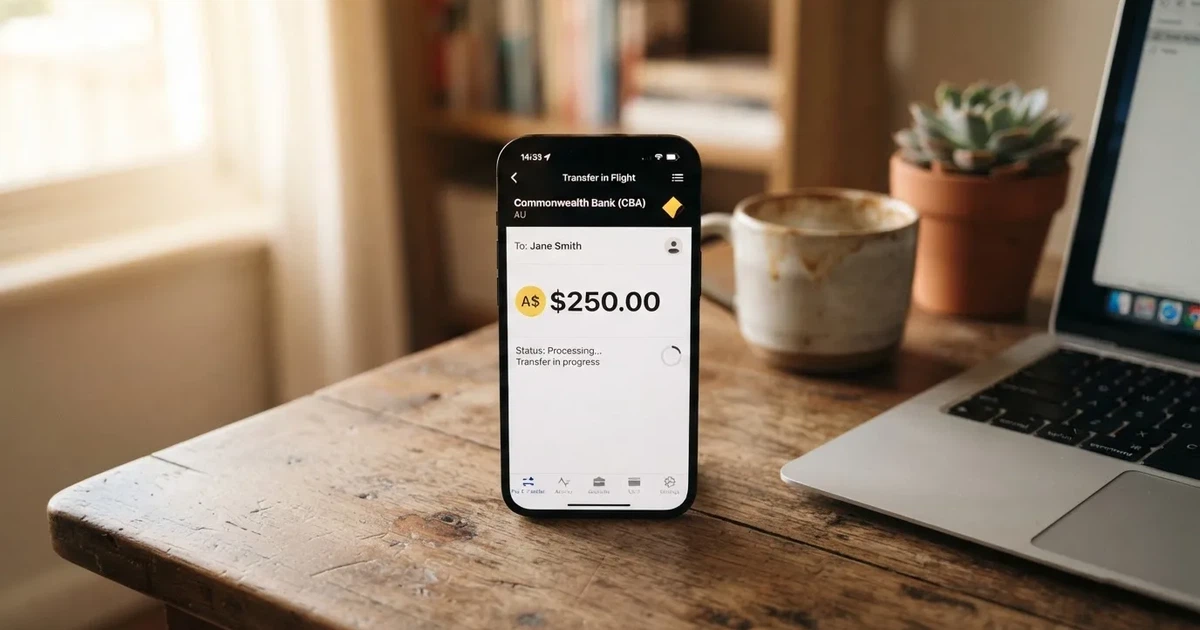
Data current as of 29 October 2026 and checked against the ACMA’s register of formal warnings and blocking actions.
Table of Contents
- Why an under-1-hour claim sits awkwardly inside Australian law
- The settlement rails Australians actually have
- What an under-1-hour claim really promises
- Where the timer breaks in practice
- What the law actually says to the player
- The cost to the player, when the math is run
- The eleven operators the ACMA has warned — a comparison
- How an Australian keeps their own position clean
- Where this leaves the under-1-hour claim
- Responsible gambling, for the player who needs it
- Frequently asked questions
Why an under-1-hour claim sits awkwardly inside Australian law
The clock on an offshore casino’s withdrawal page is built on a few rails the operator does not own. The first is the licence the site displays, which is not an Australian one. The second is the payment rail chosen by the player, which determines the bank’s leg. The third is the operator’s own internal queue — KYC checks, fraud review, anti-money-laundering screening — that runs in the middle and which the player never sees. When a site advertises “under 1 hour”, what is actually being promised is that the operator’s own middle layer finishes inside that window, and that the rail they default the player to is fast enough that the bank’s leg does not blow the budget. The bank’s leg, on Australian soil, has its own number: with Osko by BPAY, transfers between participating Australian banks are completed within seconds, 24/7 including weekends, whether addressed to a BSB and account number or to a PayID. That is faster than the marketing claim. The catch is upstream of it.

What the ACMA has actually done to the sites making the claim
The Australian Communications and Media Authority investigates, issues formal warnings and asks Australian internet service providers to block illegal services. As reported in June 2026, a total of 1,751 illegal gambling and affiliate marketing websites had been blocked since the first blocking request in November 2019, and more than 230 unlicensed gambling services had left the Australian market since enforcement was strengthened in 2017. In a round reported on 26 June 2026, the ACMA asked ISPs to block a further 12 sites: 7Signs, ChromaBet, Donbet, Duospin, Freshbet, Slots Gem, Jacks Club, Lucky Start, Pointsbetz.com, Spinrise, Vinyl Casino and Wildsino. The blocking request is the loudest tool; the formal warning is the quieter one that runs alongside.
The ACMA issued a formal warning over Casino Intense in April 2025.
What a blocking request actually does, at the rate the ACMA has been issuing them
Between November 2019 and June 2026 the ACMA moved from the first blocking request to 1,751 blocked sites — a running total covering 1,751 distinct illegal-gambling or affiliate-marketing URLs that Australian ISPs now refuse to resolve. Working from the running total (1,751 sites) and the date of the first blocking request (November 2019), the average pace over that stretch comes out at somewhere on the order of 250 to 300 blocking actions a year, with the rate visibly higher in recent rounds than in 2019 and 2020. The figure is a band rather than a single number because each ACMA round bundles several sites under one announcement and the rounds are unevenly spaced, but the order of magnitude is the point: at this rate, the cumulative tally moves by hundreds every twelve months, and any specific site on the list today can be expected to find its own blocking round within months rather than years. The figure says nothing about how long a particular site stays blocked once it is — the ACMA’s mechanism blocks the URL, and a determined operator moves to a new domain.
Why the licence the site displays does not help an Australian player
A Curaçao or Anjouan licence binds the operator to that jurisdiction’s regulator and to nobody else. An Australian player whose withdrawal stalls, whose bonus terms are rewritten in their own dispute, or whose account is closed with a balance still on it has no Australian complaints body to write to. The site being blocked by the ACMA does not void the balance; it freezes the player’s route back to the cashier. The combination is what the IGA produces: a prohibition aimed at the provider, and the consumer left holding the consequence.
The settlement rails Australians actually have
The clock on the page meets the clock at the bank. On Australian soil that gives the player a small, well-defined set of options.
Osko and PayID, where the under-1-hour figure is honest
With Osko by BPAY, a bank transfer between participating Australian banks arrives in under a minute, twenty-four hours a day including weekends. The figure applies whether the payment is addressed to a BSB and account number or to a PayID. Paying to a PayID shows the name of the account holder before the transfer is sent, which is one of the reasons the operator of the platform, Australian Payments Plus, warns that being asked to transfer money to a PayID on an illegal gambling site is almost certainly a scam signal. PayID-based instant transfers are available at over 100 Australian financial institutions, and more than 25 million PayID identifiers had been registered on Australia’s New Payments Platform as of April 2025. The platform itself went live on 13 February 2018, owned by New Payments Platform Australia Ltd, a non-profit whose thirteen shareholders include the Reserve Bank of Australia and the country’s major banks. Participants must keep the platform’s monthly outages to no more than two minutes, which is the kind of availability commitment an offshore casino’s payment page never offers its customers.
Card rails, where the operator’s middle layer is the bottleneck
Debit card withdrawals are where the operator’s promise is hardest to keep. The card scheme settles fast; the queue in front of it does not. The same applies to Apple Pay and Google Pay transactions linked to a debit card, which by the end of 2025 collectively accounted for around 45% of all card payments in Australia by number. Apple Pay itself charges the consumer nothing for use; any surcharge comes from the merchant’s card-processing fees, not from Apple. Apple also states that transaction limits and PIN requirements for Apple Pay purchases are set by the card issuer or merchant, not by Apple. Where the under-1-hour claim usually breaks is in the operator’s own queue, not on the rail.
Credit cards and credit-related products, which are off-limits
Under the Interactive Gambling Act 2001 as amended in 2023, Australian-licensed online wagering services cannot accept payment by credit card or other credit-related products, a restriction that also constrains gambling use of linked digital wallets. An offshore site that asks an Australian for a credit card is, by that request alone, operating outside the Australian rules. The Reserve Bank of Australia’s July 2025 review proposes removing surcharges only on eftpos, Mastercard and Visa card transactions, explicitly leaving American Express outside the scope of the proposed surcharge ban, which is the kind of detail that matters for what the player’s effective cost is on whichever network the operator routes them to.
BPAY, where the format is wrong for what a casino needs
BPAY is a bill-payment service in online banking: the payer enters the Biller Code and the Customer Reference Number printed on the bill. BPAY has operated in Australia since 1997, is available in the online banking of over 140 banks and financial institutions and is offered by over 95,000 businesses; the service is run by Australian Payments Plus, the same operator as PayID and Osko, and was launched on 18 November 1997. It is, by design, a payer-to-biller scheme, not a payer-to-payee one. A casino asking an Australian player to deposit or withdraw via BPAY is asking them to use a bill-payment rail as if it were a person-to-person one, which is the first sign that the cashier has been built by someone who does not know how Australians actually pay.
Bank blocks the player can switch on themselves
Several Australian banks let customers switch on a gambling transaction block in their own banking app, and the mechanism is worth knowing for what it tells the player about how the merchant category codes work. Westpac’s gambling block refuses authorisation of transactions registered under the merchant category code ‘Betting/Casino Gambling’ on eligible personal credit and debit cards. ANZ’s gambling transaction block, activated in the ANZ app, blocks gambling transactions made through a digital wallet such as Apple Pay on an eligible card as well, not just the physical card. Once a customer turns on ANZ’s gambling block, removing it again requires a 48-hour waiting period, and the bank warns that not all gambling transactions will be blocked and that some non-gambling transactions might be blocked in error. Commonwealth Bank lets customers apply a gambling lock to eligible cards via the CommBank app, which automatically blocks most gambling transactions, though the bank states it cannot guarantee all gambling-related purchases will be stopped.
What an under-1-hour claim really promises
Strip the marketing language off and three conditions have to hold simultaneously for a casino withdrawal to land inside an hour. The operator’s internal queue has to clear in that window. The payment rail the player is on has to be fast enough that the bank’s leg does not blow the budget. And the player has to have already passed every check the operator wants to run — KYC, source-of-funds, sanctions screening — because any one of those re-runs the moment a flag trips.
The operator’s middle layer, which is the variable the player cannot see
The marketing clock starts at “withdrawal requested” and stops at “funds dispatched by us”. What sits in between is the operator’s own queue, and that queue is the part the page never describes. A first withdrawal almost always runs longer than a repeat one, because the operator wants to see the documents. A withdrawal to a new method runs longer than one to a familiar one, because the operator wants to confirm the player owns the destination. A withdrawal that happens to land on a Saturday night runs longer than one on a weekday morning, because the operator’s payments team is smaller. The under-1-hour number is usually an internal “best case” measured on a repeat customer, midweek, going back to the same card or wallet they used to deposit — which is the case where the operator has already done most of its work.
The payment rail, which the player can choose
The bank’s leg is the part the player can actually move. Osko to an Australian bank account, addressed to a PayID, lands in under a minute on the receiving side, twenty-four hours a day including weekends, and that figure is published by Australian Payments Plus. A debit card withdrawal runs through the card scheme, which is fast on the scheme side and slow on the issuer side; the bank’s own authorisation queue is the variable, not the card network. Apple Pay and Google Pay linked to a debit card are still a card transaction underneath, so the queue is the same queue. A bank transfer to an offshore casino is a SWIFT message dressed up as a transfer, and the under-1-hour number simply cannot apply to it.
The preconditions, which the player has to have met before they ask
The fastest possible withdrawal only happens to a player who has already supplied every document the operator might want, who is withdrawing back to a method they have used to deposit, who is not changing device or IP, and whose account has not tripped any of the operator’s automated flags. None of these are negotiable. All of them are inside the operator’s own decision-making, not on any rail the player can see.
Where the timer breaks in practice
The under-1-hour number is rarely the number the player meets. The reasons it breaks are not mysterious.
First withdrawal
The first withdrawal almost always asks for KYC documents the deposit did not. The operator wants to see a government ID, a proof of address, and sometimes a proof of ownership of the payment method. That queue runs longer than an hour, and there is no version of an honest under-1-hour claim that survives it.
Bonus balance still unconverted
If the player has an active bonus, the withdrawal is held until the wagering requirement is met, and the marketing clock does not start until the bonus balance converts to real money. There is no version of an honest under-1-hour claim that survives an unconverted bonus.
Method mismatch
If the player is withdrawing to a method they did not deposit with, most operators put the withdrawal through additional review. The clock restarts.
Flagged transaction
If anything in the player’s account has tripped the operator’s automated flag — a change in deposit pattern, a device change, a flagged jurisdiction — the withdrawal goes into manual review. That queue is not on the marketing page.
The casino being blocked while the player has a balance on it
If the ACMA’s next blocking round catches the URL the player is on, the player’s route to the cashier is closed. The marketing clock has nothing left to time.
What the law actually says to the player
The Interactive Gambling Act 2001, as the 2017 amendments strengthened it, makes it an offence to provide online casino games, online pokies or in-play betting to a person physically in Australia. The IGA targets the provider, not the player; an Australian who opens an account at an offshore casino is not prosecuted for doing so. What the player does lose is the layer of protection a domestic licence would have given them. There is no Australian complaints body for an offshore dispute. There is no Australian regulator to write to if the operator closes the account with a balance on it. There is no Australian court with a straightforward path to an offshore operator’s books. The balance, when it does land, is the balance the operator decides to release.
What is licensable, and what is not
What is licensable in Australia is wagering on races and sport placed before the event, lotteries and keno — in practice licensed by the Northern Territory. The Northern Territory Racing and Wagering Commission regulates 52 of Australia’s online bookmakers — including Sportsbet, Bet365 and Ladbrokes — which are licensed in the Territory for tax reasons; the commission has no full-time staff and meets once a month in Darwin. Online casino games and online pokies are not in the licensable list. Any site offering them to an Australian is operating outside the regime.
Minimum age and consumer protection
The minimum age to gamble in Australia is 18. BetStop, the National Self-Exclusion Register, has been live since August 2023 and binds Australian-licensed online and phone wagering services — an offshore casino is not connected to it, so a BetStop registration does not stop an offshore site from accepting a deposit. The National Gambling Helpline is 1800 858 858, free, twenty-four hours a day, with chat at Gambling Help Online. That helpline and that chat are the support services that apply whether or not the site in question is licensed.
Payment rules that apply even offshore
Credit cards, credit-related products and digital currency are banned as payment for licensed online wagering since 11 June 2024, with penalties of up to A$247,500 for operators who breach the ban. Legal deposit routes for licensed wagering are debit card, bank transfer, PayID/Osko and BPAY. A site asking an Australian for a credit card or a crypto deposit is, by that request, operating outside the Australian rules, and the player is the one paying the operator that does not have to follow them.
What the 2026 reform changes, and what it does not
The Interactive Gambling Amendment (Gambling Reform) Bill 2026 passed Parliament on 19 August 2026. Its advertising and inducement measures commence on 1 January 2027 — law with a start date, not yet in force on a 2026 page. The Bill does not legalise online casino games; it tightens the regime around licensed wagering. An offshore site is unaffected by it on either side of the commencement date, because it is not in the regime on either side of it.
The cost to the player, when the math is run
The cost of playing at an offshore casino is the cost the marketing page does not put in front of the player. H2 Gambling Capital’s 2025 report estimates that Australians lose about A$3.9 billion a year to illegal gambling sites, and that the share of gambling going through legal channels fell from 74% in 2021 to 64%. The A$3.9 billion figure is an aggregate; it does not belong to any individual player. What belongs to the player is their own slice of it, plus the absence of any Australian recourse if the operator decides their slice is to be forfeited.
Tax position, for the player who wonders
Gambling winnings of a recreational player are not assessable income under section 6-5 of the ITAA 1997, and losses are not deductible, unless the person carries on a business of gambling. That is the model position only; the actual answer for any individual player depends on their own facts, and the ATO is the body to check with.
AUSTRAC reporting, for the player who is worried about the threshold
AUSTRAC’s threshold-transaction-report rule requires reporting of transfers of A$10,000 or more, and applies only to physical cash; ordinary electronic bank transfers are not subject to that per-transaction reporting requirement, regardless of the amount sent. A bank transfer to an offshore casino is an ordinary electronic bank transfer; it does not, on its own, trip a threshold report. The rule that does apply is the bank’s own monitoring of outbound international transfers, which the bank runs on its own schedule and its own triggers.
The eleven operators the ACMA has warned — a comparison
The brands below are not a ranking and not a recommendation. They are listed because the ACMA itself issued a formal warning over each one for offering prohibited services to Australians. The comparison is between the warnings, not between the operators as products.
| Brand | ACMA action and date | Operator named by the ACMA | Subject support |
|---|---|---|---|
| RocketPlay | Formal warning, March 2026; earlier formal warning to Dama N.V., May 2022 | Pulsup Ltd (Rocketplay.com.au) | listings-only (Gamblinginsider.com) |
| Level Up Casino | Formal warning, May 2022 | Dama N.V. | listings-only (Westpac.com.au) |
| Woo Casino | Formal warning, March 2025 | Dama N.V. | no-data |
| Spirit Casino | Formal warning, May 2025 | Dama N.V. | no-data |
| National Casino | Formal warning, July 2025 | Consolutetish S.R.L. | listings-only (acma.gov.au, austrac.gov.au, betstop.gov.au) |
| Bizzo Casino | Formal warning, July 2025; earlier formal warning to TechSolutions, 2022 | Consolutetish S.R.L. | listings-only (Gamblinginsider.com) |
| Ignition Casino | Formal warning, July 2025 | Bamboo Media | no-data |
| Instant Casino | Formal warning, February 2025 | EOD Code SRL | listings-only (Ecopayz.com, Payid.com.au) |
| Jackbit | Formal warning, April 2026 | Ryker B.V. | no-data |
| Casino Intense | Formal warning, April 2025 | Sterplay Holding Ltd | listings-only (austrac.gov.au, betstop.gov.au, Gamblinginsider.com) |
| Sky Crown | Formal warning, September 2022 | Hollycorn N.V. | no-data |
The table is the ACMA’s own register, transcribed: each row is a brand the regulator named, an operator the regulator named that brand against, and a date the regulator published. The “subject support” column reflects what the consulted sources actually carried; the no-data marker means the consulted set did not return a verifiable entry, not that the regulator took no action. None of these warnings legalises the brand, and none of them changes the underlying point: online casino games cannot be licensed anywhere in Australia, whatever licence the site displays.
RocketPlay
Pulsup Ltd, the operator behind Rocketplay.com.au, received a formal warning from the ACMA in March 2026, adding to an earlier warning Dama N.V. received for the brand in May 2022. The consulted source set returns only listings for the brand — Gamblinginsider.com — which is what is shown in the table and no more. The verdict on RocketPlay is that the regulator named it twice in four years, and the second naming has not produced a verifiable Australian-facing presence.
Level Up Casino
Dama N.V. faced a formal warning from the regulator for Level Up Casino in May 2022, a measure that also applied to five other brands in its cluster. The consulted source set carries only listings — Westpac.com.au surfaces in connection with the bank’s gambling transaction block, not as a product endorsement — and the entry in the table reflects that. The verdict on Level Up is that it sits inside a wider Dama N.V. cluster the ACMA has acted against, which is information for any player who sees the same operator name attached to a new domain.
Woo Casino
The regulator notified Dama N.V. again regarding Woo Casino in March 2025, two and a half years after the original May 2022 ACMA sweep. The consulted source set carries no verifiable Australian-facing entry for the brand beyond the warning itself. The verdict on Woo is the same shape as RocketPlay’s: a regulator that has named the operator more than once is naming it about a behaviour, not a one-off lapse.
Spirit Casino
Dama N.V. also received a formal warning for Spirit Casino in May 2025, two months after the Woo Casino notice and three years after the initial Dama N.V. round. The consulted source set carries no verifiable Australian-facing entry. The verdict on Spirit is that it is part of the same Dama N.V. cluster as Level Up and Woo, and the cluster’s repeated appearance in the ACMA’s register is the relevant fact.
National Casino
In July 2025, the regulator published a formal warning to Consolutetish S.R.L. regarding National Casino, alongside a warning over Bizzo Casino. The consulted source set carries entries from acma.gov.au, austrac.gov.au and betstop.gov.au — the regulator’s own register, the financial intelligence agency’s threshold-transaction-report rule, and the National Self-Exclusion Register, in that order. The verdict on National Casino is that its warnings are anchored in Australian institutional sources rather than in affiliate listings, which makes the regulatory record easier to verify than the brand’s own claims.
Bizzo Casino
Consolutetish S.R.L. was named in a formal ACMA warning regarding Bizzo Casino in July 2025; Bizzo had already been the subject of a 2022 formal warning to TechSolutions (CY) Group Limited and TechSolutions Group N.V. The consulted source set returns listings only — Gamblinginsider.com — which is reflected in the table. The verdict on Bizzo is the regulator’s two-decade record against the same brand under two different operators, which is one of the longer trails in the register.
Ignition Casino
The ACMA warned Bamboo Media about Ignition Casino in July 2025. Public records show no verifiable Australian-facing entry in the consulted set beyond the warning. The verdict on Ignition is the narrower one: a single formal warning, no listings carried by the consulted set, and the same underlying prohibition as the rest of the table.
Instant Casino
EOD Code SRL received an ACMA formal warning over Instant Casino in February 2025. The consulted source set carries listings from Ecopayz.com and Payid.com.au — the payment-rail side of the page, not the product side — which is reflected in the table. The verdict on Instant Casino is that the consulted sources describe the rails it asks Australians to use, not the operator itself.
Jackbit
Ryker B.V. was subject to a formal ACMA warning regarding Jackbit in April 2026, alongside a warning over CasinOK. The consulted source set carries no verifiable Australian-facing entry for the brand beyond the warning. The verdict on Jackbit is the most recent warning on the table, which is also the one the ACMA’s April 2026 announcement covered alongside its sister brand.
Casino Intense
Sterplay Holding Ltd received a formal ACMA warning concerning Casino Intense in April 2025. The consulted source set carries listings from austrac.gov.au, betstop.gov.au and Gamblinginsider.com — AUSTRAC’s threshold-transaction-report rule, the National Self-Exclusion Register and an affiliate directory, in that order. The verdict on Casino Intense is similar to National Casino’s: the regulatory record is anchored in Australian institutional sources, with the affiliate layer as a background listing only.
Sky Crown
Hollycorn N.V. was notified of a formal ACMA warning regarding its Sky Crown and Blue Leo casino services, as published in a PDF notice dated September 2022. The consulted set contains no publicly verifiable Australian-facing entry for the brand beyond the warning. The verdict on Sky Crown is the oldest warning on the table and one of the quietest in the consulted sources, which is information of a different kind from a fresh one.
How an Australian keeps their own position clean
What is actually under the player’s control, on Australian soil, is the small set of switches the banks and the regulator already expose.
Switching on a bank-level gambling block
Westpac, ANZ and Commonwealth Bank all let a customer switch on a gambling transaction block inside their banking app. The mechanism refuses authorisation on the merchant category code ‘Betting/Casino Gambling’ at the card level, which is why the block applies to digital-wallet transactions on a blocked card as well as to the physical card. ANZ’s block requires a 48-hour waiting period to remove once it is on, and the bank warns that not all gambling transactions will be blocked and that some non-gambling transactions might be blocked in error. The block is a switch the player can pull without telling the casino.
Registering with BetStop
BetStop, the National Self-Exclusion Register, has been live since August 2023 and binds Australian-licensed online and phone wagering services. An offshore casino is not connected to it, so a BetStop registration does not stop an offshore site from accepting a deposit. The registration is still worth making, because it covers the licensed side of the market, and the two together — BetStop plus a bank-level gambling block — close most of the legal routes the player might use.
Using PayID to check who they are paying
Paying to a PayID shows the name of the account holder before the transfer is sent. The operator of the platform, Australian Payments Plus, warns that being asked to transfer money to a PayID on an illegal gambling site almost certainly means a scam site. The check is one a player can do on their own screen, before the money moves.
Keeping payment rails on the Australian side
The fast Australian rails — Osko to a PayID, in sixty seconds around the clock — are the ones an offshore site cannot put on its own page, because it has no Australian bank account at the other end. A player who stays on the Australian side of the rails is on a rail they can see; a player who goes off it is on a rail the operator describes.
Where this leaves the under-1-hour claim
The claim is real on the Australian side of the bank leg: Osko lands in under a minute, PayID-to-PayID is the same rail, and the bank’s own queue is the only delay. The claim is fictional on the Australian side of the legal leg: no offshore casino offering online pokies or online casino games to an Australian is licensed to do so, and the operator’s marketing clock is not a contract an Australian can enforce. The two halves of the sentence do not cancel out. They are different kinds of speed — one measured in seconds by an Australian payments platform, the other measured in hours by an offshore operator’s own queue — and what an Australian player does with the gap between them is their own call.
Responsible gambling, for the player who needs it
The National Gambling Helpline is 1800 858 858, free, twenty-four hours a day, with chat at Gambling Help Online. BetStop, the National Self-Exclusion Register, is the formal mechanism for players who want licensed Australian wagering services to refuse their bets; the registration does not cover offshore sites, which is one reason the bank-level gambling block matters alongside it. The supports are Australian, the supports are free, and the supports are not connected to any operator on this page.
Frequently asked questions
What would actually have to happen behind the scenes for a casino withdrawal to clear in under an hour?
Three things have to happen at once: the operator’s internal queue — KYC, fraud and AML checks — has to clear inside the window; the payment rail the player is on has to be fast enough that the bank’s leg fits inside it; and the player has to have passed every check the operator wants to run, because any one of them re-runs the moment a flag trips. A first withdrawal almost never does.
Does an ‘under 1 hour’ withdrawal claim apply to every payment method a casino offers, or only some?
Only to the rail the operator defaults the player to. The marketing number is usually measured on a repeat customer going back to the same card or wallet they used to deposit, midweek, with all documents already on file. Switch the rail, change the device, deposit and withdraw on different methods, and the queue restarts.
Is a sub-one-hour withdrawal promise from an offshore casino something Australians can hold the site to?
No. Online casino games cannot be licensed anywhere in Australia, so the operator is outside the regime that would give the player a domestic complaints body or a regulator to write to. The marketing clock is the operator’s own description of its own queue, and the operator’s own queue is the variable the player cannot see.
How does an under-1-hour claim compare with the real settlement time Australian banks describe for Osko transfers?
Osko transfers between participating Australian banks arrive in under a minute, twenty-four hours a day including weekends, addressed to a BSB and account number or to a PayID. The bank’s leg is faster than the marketing claim. The gap is in the operator’s own middle layer, not in the rail.
What is the difference between an ‘under 1 hour withdrawal’ casino and a ‘same day payout’ casino, as claims?
An under-1-hour claim is an internal queue promise measured on the operator’s side, usually on a repeat customer and a familiar method. A same-day payout claim is the same promise widened to a working day. Neither claim touches the bank’s leg, and neither claim survives a first withdrawal, a bonus balance still being converted, or a flagged transaction.
What might still delay a withdrawal even at a site advertising under-1-hour processing?
A first withdrawal asking for KYC documents the deposit did not; an active bonus balance still being converted; a withdrawal to a method the player did not deposit with; a flagged transaction in the player’s account; and the URL being caught in the ACMA’s next blocking round while a balance is still on it. None of these are negotiable with the operator’s marketing clock.