
Live baccarat online casino in Australia 2026: what the table pays, what the law charges
The premise of this page is short and uncomfortable. A live baccarat table streamed to an Australian living room looks, on screen, like a baccarat table anywhere else in the world. The same eight decks, the same 1.06% edge on Banker, the same 14.36% edge on Tie, the same real hands dealt at the same pace. The thing that is not the same is the legal frame around it: under the Interactive Gambling Act 2001 (the IGA), no Australian licence exists for the product being streamed. Every name in this article is there because the Australian Communications and Media Authority, the ACMA, has formally warned the operator behind it for offering exactly that product to Australians. The comparison the page carries is therefore an unusual one, not between better and worse baccarat sites, but between sites the regulator has already acted against and the gap between what they advertise and what the law allows.
Current as of 29 October 2026 · data cross-checked against the ACMA’s published formal warning register and H2 Gambling Capital’s 2025 sector estimate.
Table of Contents
- How a live baccarat table actually works
- The legal frame: what Australia actually allows
- What offshore play actually costs: the calculation
- Bitcoin, PayID and the payment rail
- What the responsible-gambling frame actually delivers
- The paytable, in plain numbers
- The brands on the ACMA’s register
- Where this leaves a reader
- Frequently asked questions about live baccarat in Australia
How a live baccarat table actually works
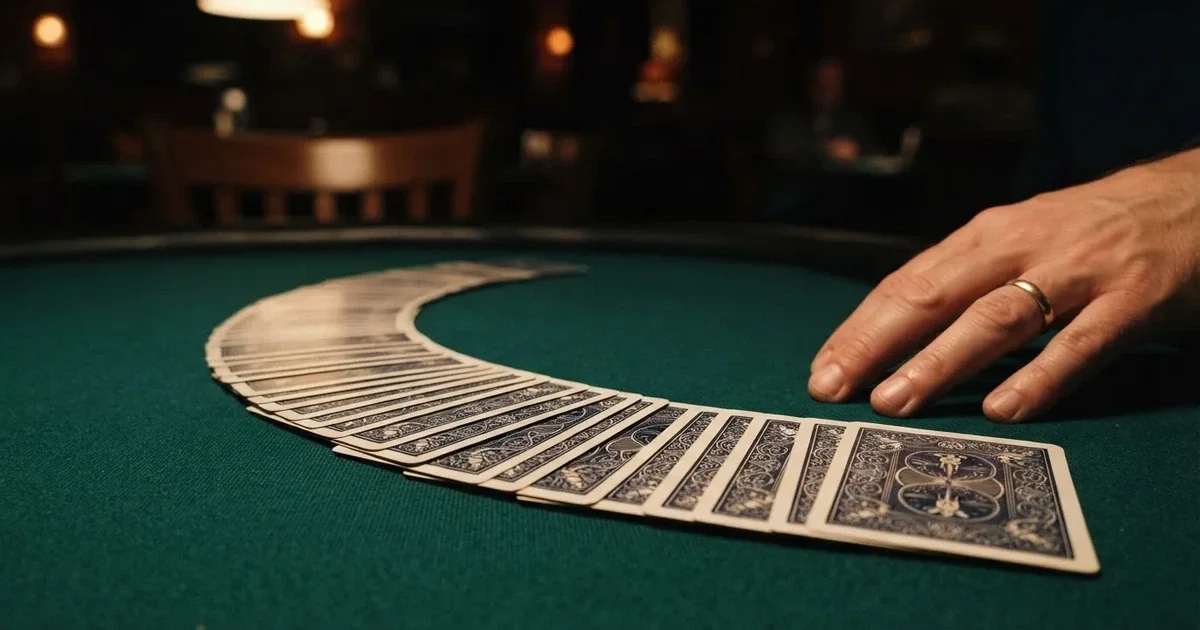
A live baccarat table runs on a simple rhythm. The dealer deals two cards face up to a hand called Player, two to a hand called Banker, and the players at the table — or in front of the stream, in the online version — bet on which of the two hands will finish closer to nine, or on the rarer outcome that they will tie. Tens, jacks, queens and kings count as zero. Nines through twos count at face value. Aces count as one. Hand totals run modulo ten, so a seven and a six makes three, not thirteen, and a king and a nine makes nine rather than nineteen. Punto banco, the variant played in nearly every online live room today, deals from a shoe of six or eight decks and plays out both hands by fixed rules — the player never chooses whether to draw a third card. The casino banks the game at all times.
That is the engine. Where online play changes the picture is at the edges. A live dealer studio streams the shoe, the cards and the dealer in real time, so the outcome of each hand is produced by a physical deck rather than a random number generator. The bets you can place, the payouts, and the edge on each bet, are the same as in a computer-generated version: 1.06% on Banker, 1.24% on Player, 14.36% on Tie, with Banker wins paying 0.95 to 1 because of the five-percent commission that funds the structural edge. The numbers are not negotiable — they sit on every reputable baccarat paytable in the world, and they were unchanged on the Wizard of Odds house edge reference on the day this page was written.
Why the live version reads differently from the RNG version
A computer-generated baccarat hand resolves in a fraction of a second and runs through a hundred hands in the time a live dealer would shuffle, deal and clear the felt. That is the only mechanical difference. The card values, the drawing rules, the payouts and the edges are identical. What a live table adds is theatre: the shoe, the squeeze, the dealer turning the corner card slowly, the chat between hands. None of that touches the math. A player who prefers live baccarat for the human element is paying for that preference in pace, not in edge — a single hand of live baccarat commonly runs twenty to thirty seconds from end to end once the bets are down, and the gap between hands is the space in which a session quietly lengthens.
Where the game came from, and why it spread
The history is disputed. Some accounts place the game’s origin in fifteenth-century Italy and say it was introduced to France at the end of that century during the reign of Charles VIII. David Parlett, the games historian, treats the older French game Macao as baccarat’s immediate precursor. Punto banco, the banking version that nearly every live dealer studio streams today, was developed in Havana during the 1940s and reached the United States via Cuban exile owners. The French variant chemin de fer — literally “railway” — emerged in the late nineteenth century as a quicker two-player game; it is named for the speed of play, not the mode of transport. None of this matters to the edge. It matters to a player who wants to recognise which version they have wandered into: punto banco is dealt from the shoe, both hands are played by fixed rules, and the player bets on outcomes rather than making decisions.
The legal frame: what Australia actually allows
The IGA has done one big piece of work since 2001 and a smaller piece in 2017. Together they make it an offence to supply online casino games — baccarat, blackjack, roulette, craps, slots, “pokies” — to a person physically in Australia. The offence is committed by the provider, not by the player. Individuals face penalties of up to A$220,000 a day and corporations up to A$1.1 million a day under the IGA. The point of those numbers is to show how seriously the statute treats the supply side, not to suggest that an Australian punter sits at risk of a fine. The Australian player does not get prosecuted. What the Australian player does not get, when playing with an offshore site, is any of the consumer protection the IGA was supposed to deliver — no Australian complaints body, no local recourse if a withdrawal stalls, no guarantee the site will still be reachable next week.

What can be licensed in Australia is wagering on races and sporting events placed before the event, lotteries, and keno. The Northern Territory Racing and Wagering Commission, the NTRWC, regulates 52 of Australia’s online bookmakers — Sportsbet, Bet365 and Ladbrokes among them — for tax reasons. The commission has no full-time staff and meets once a month in Darwin, a fact reported by the ABC in April 2026. None of those 52 licences covers a baccarat table. The closest thing in Australia to a licensed live baccarat experience is a physical casino floor. Crown Melbourne, for instance, offers Traditional Baccarat, Crown Baccarat and 2 to 1 Baccarat as approved table games regulated by the Victorian Gambling and Casino Control Commission, which replaced the VCGLR on 1 July 2022. Under section 66 of the NSW Casino Control Act 1992, a casino operator must not permit a game such as baccarat to be played unless the rules are approved by the regulator and a copy of those rules is available on request. Those two regimes govern live baccarat played on a physical felt. They do not extend to a felt streamed across the internet to a phone in Sydney.
What the ACMA has been doing about the offshore side
Enforcement is the part of the picture that moves. The ACMA investigates complaints, issues formal warnings to operators and, where warnings are ignored, asks Australian internet service providers to block the offending sites at the routing level. By June 2026 the ACMA had asked for 1,751 illegal gambling and affiliate marketing websites to be blocked since the first blocking request in November 2019, and more than 230 unlicensed services had withdrawn from the Australian market since enforcement was strengthened in 2017. The blocks are not theoretical — the affected sites stop resolving for Australian connections. Where the site also has an Australian-resident player balance, that balance becomes unreachable at the same moment. There is no transition period.
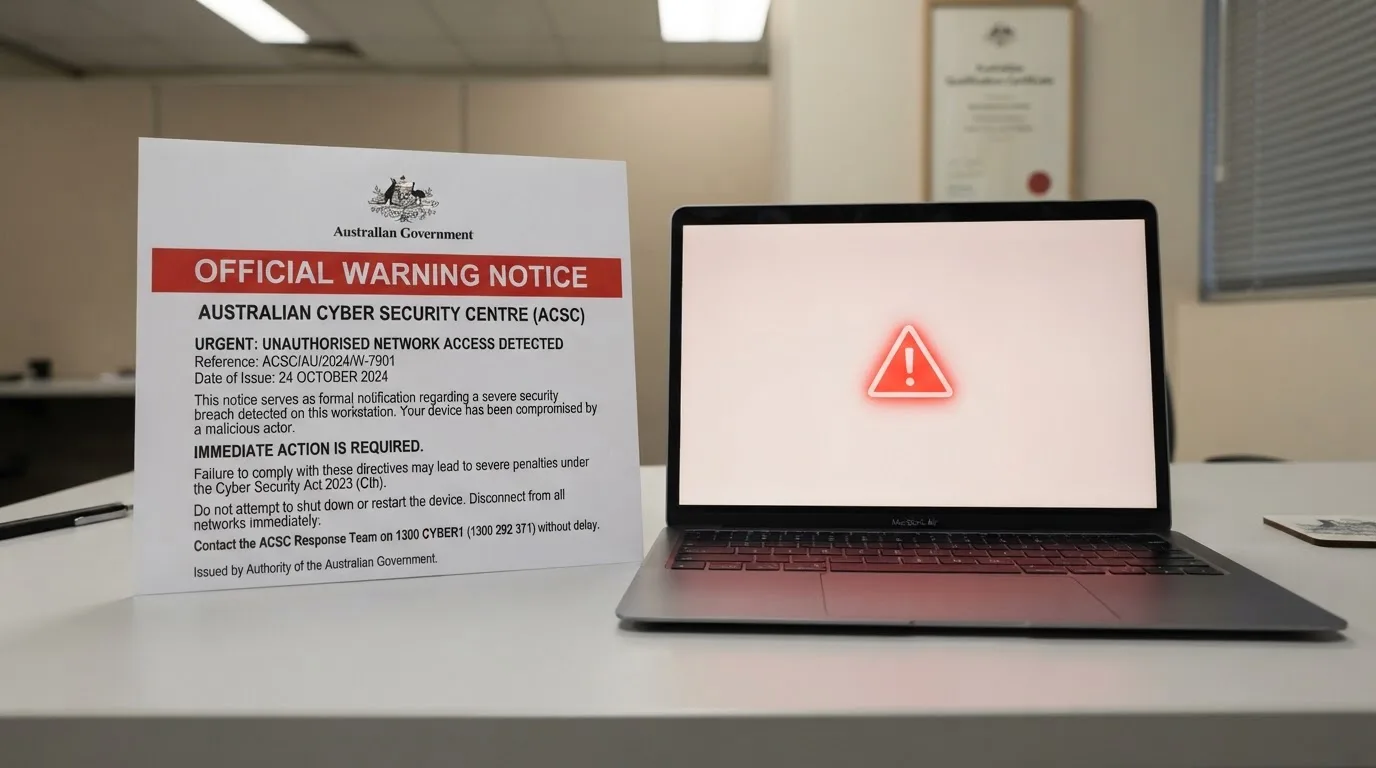
The ACMA also runs a parallel warning track. Formal warnings are published on the regulator’s website and are the public record of which brands have been told, by name, that their offering to Australians is illegal. The list on the ACMA’s register as of the date this page was checked includes the eleven brands covered further down: RocketPlay (Pulsup Ltd, March 2026); Woo Casino and Spirit Casino (both Dama N.V., March and May 2025); National Casino and Bizzo Casino (both Consolutetish S.R.L., July 2025, with Bizzo already warned in 2022 under earlier ownership); Ignition Casino (Bamboo Media, July 2025); Instant Casino (EOD Code SRL, February 2025); Jackbit and CasinOK (Ryker B.V., April 2026); Casino Intense (Sterplay Holding Ltd, April 2025); and Sky Crown and Blue Leo (Hollycorn N.V.). Dama N.V. itself has been named in three separate rounds — May 2022 across six brands, then Woo Casino in March 2025 and Spirit Casino in May 2025 — which makes it the most-visited operator on the register. None of these warnings has led to an Australian licence being issued. The warnings are not licences for the brands that received them; they are formal notices that the IGA has been breached.
The credit card and crypto payment ban
A second regulatory line touches the offshore baccarat question from a different angle. From 11 June 2024, licensed Australian online wagering operators are banned from accepting credit cards, credit-related products and digital currency as payment, with penalties up to A$247,500 for an operator that breaks the rule. The legal deposit routes for licensed wagering are debit card, bank transfer, PayID/Osko and BPAY. The rule does not bind an offshore site the way it binds a Sportsbet or a Ladbrokes — those operators’ Australian-licensed status is exactly what the ban is enforced through. What the rule tells an Australian player is that every reputable deposit route on a domestic wagering site deliberately routes around the credit card and the crypto wallet. An offshore baccarat site asking for a credit card or a bitcoin deposit is therefore not just outside the IGA; it is also operating outside the payment discipline the IGA was paired with. That is the visible difference between what an Australian rules-based system looks like and what an offshore operator looks like, sitting in the deposit form.
The reform that passed but has not yet started
A further reform sits in a peculiar half-state. The Interactive Gambling Amendment (Gambling Reform) Bill 2026 passed both chambers of Parliament on 19 August 2026. Its advertising and inducement measures commence on 1 January 2027. On a page written in 2026, the rule is law with a start date that has not yet been reached, and the practical consequences for offshore baccarat operators are not yet in force. The bill’s longer reach, once it starts, is on inducements aimed at Australians rather than on the underlying prohibition, which the IGA has covered since 2001. For now, the IGA is the law in force. For 2027, the same law will apply, with sharper teeth on the marketing side.
What offshore play actually costs: the calculation
The arithmetic on a live baccarat table is the same as on any other: the house edge on each bet is the percentage of every dollar wagered that the table keeps in expectation. On the Banker bet that is 1.06%, on the Player bet 1.24%, on the Tie bet 14.36%. Those edges are not negotiable and they are not changed by the live format, the dealing pace or the size of the bet. They are the only honest answer to the question “what does it cost to play?”
The blocking-rate calculation
The ACMA’s enforcement footprint gives a second number, and it is the one that decides whether the offshore site you opened last week will open next week. By June 2026 the regulator had asked for 1,751 websites blocked since the first blocking request in November 2019. That is a span of roughly six and a half years. Working from those two anchor points, the rate comes out at somewhere between 250 and 300 blocks per year, with the precise figure depending on how you treat the early part of the period before the 2017 strengthening and the longer enforcement record since. The exact annual figure is less interesting than the band. The takeaway is that the ACMA’s enforcement footprint is not a single high-profile action — it is a continuous drain. A site that is not blocked today is being looked at, and a site that has already been warned has one of two paths open to it: change its offering for Australians, or wait for the block.
What the edge does to a real bankroll
A bankroll of A$1,000 wagered entirely on Banker bets at A$25 a hand is 40 hands, with an expected loss of about A$10.60 — that is A$1,000 multiplied by 1.06%. The same A$1,000 wagered on Tie at the same stake is the same 40 hands, with an expected loss of A$143.60. The Tie bet is eleven times as expensive per dollar wagered, and the only difference between the two bets is which side of the felt the chips sit on. That is what the marketing word “excitement” is doing when it draws a player to a Tie: it is selling an elevenfold markup on the cost of playing. The edge is also the only reason the game is offered. There is no Australian-licensed online baccarat for the same reason — a product priced against the punter at those edges cannot pass the licensing test that applies to wagering, and the offshore operators who run it sit outside that test entirely.
Bitcoin, PayID and the payment rail
A bitcoin-funded live baccarat table runs the same dealt cards as a card-funded one. The shoe, the dealer, the drawing rules and the payouts are identical. What changes is the payment rail that gets the chips onto the felt. The two rails Australian readers will encounter most often are PayID, the near-instant bank-transfer system that sits alongside Osko, and bitcoin, which most offshore baccarat sites accept alongside a handful of other cryptocurrencies.
What PayID actually does
PayID is the Australian payments overlay that links a phone number, an email address or an ABN to a bank account, so that a transfer does not need a BSB and account number. Settled through the New Payments Platform, a PayID transfer usually clears within seconds and runs through the same consumer protections as any other bank transfer. It is one of the four legal deposit routes for licensed Australian wagering. An offshore baccarat site that offers PayID as a deposit method is asking an Australian to use a domestic payment rail against a service the Australian regime does not cover, which is a different situation from using PayID at a Sportsbet. The money clears. The consumer protection does not.
What bitcoin adds, and what it does not
A bitcoin-funded live baccarat table changes two things and only two things. The first is the deposit rail — funds move from the player’s wallet to the casino’s wallet on the bitcoin network, and the on-ramp from Australian dollars sits at whatever exchange rate the player negotiates with their chosen exchange. The second is the settlement of withdrawals, which is asymmetric: bitcoin can clear a withdrawal faster than a bank transfer, but the speed is only useful if the casino actually decides to release the funds. The game underneath is unchanged. The dealer still deals eight decks. The Banker bet still carries 1.06%. The Tie bet still carries 14.36%. Treating bitcoin as a way to change the odds is a category error — the odds sit on the felt, not on the payment rail.
What the responsible-gambling frame actually delivers
The fast pace of consecutive live baccarat hands is the operational risk the responsible-gambling literature keeps returning to. A live table deals a hand every thirty seconds or so, which is roughly 120 hands in an hour, which is roughly 120 betting decisions in an hour. There is no natural pause. The shoe goes on until it runs out or the dealer shuffles, and there is no signal from the table itself that an hour has passed. That is exactly the structure responsible-gambling counselling is built to interrupt.
Setting a session limit before the stream starts
The simplest practical move is to set a hard session budget and a hard session length before the first hand is dealt, and to stop on whichever one arrives first. A player who is honest about their budget usually sets the budget lower than the figure they would happily lose — a session that ends on a stop-loss rather than a balance is a session the table did not get to decide. A session timer on the phone, set for the planned length of the play, is the practical equivalent of a dealer’s shuffle break. A player who finishes a planned session and stops has spent an evening, not a career. A player who finishes a planned session and starts another has told the table something they did not mean to tell it.
The Australian safety net, and where it stops
The Australian safety net for problem gambling runs through BetStop, the National Self-Exclusion Register, which has been live since August 2023 and binds Australian-licensed online and phone wagering services. The Gambling Help Online chat and the National Gambling Helpline at 1800 858 858 are free, 24/7 and run without the user having to give a name. None of these tools reaches an offshore baccarat site. BetStop’s reach ends where Australian licensing ends, which is exactly where the offshore sites begin. A player who has registered with BetStop and who then opens an offshore baccarat account has not bypassed the safety net — they have walked outside it. The helpline still answers; the chat still opens; what does not happen is the offshore site checking against the register. That is the practical gap in the Australian framework, and it is the gap the offshore offering is sitting in.
The paytable, in plain numbers
The table below is the only set of numbers the page has not been forced to source elsewhere. The edges and the payouts are not negotiable and do not vary by operator or jurisdiction.
| Bet | Payout | House edge |
|---|---|---|
| Banker | 0.95 to 1 | 1.06% |
| Player | 1 to 1 | 1.24% |
| Tie | 8 to 1 | 14.36% |
The structural point on this paytable is the gap between Banker and Tie. A player who treats Banker as the default bet is paying roughly 1 cent per dollar wagered for the privilege of playing. A player who migrates to Tie on a hunch is paying roughly 14 cents per dollar wagered for the same privilege. The casino does not care which side the player picks. The casino cares, on average over many hands, that the difference is paid.
The brands on the ACMA’s register
The eleven brands below are the ones the ACMA has formally warned under the Interactive Gambling Act 2001. They are presented here as a record of what the regulator has actually done, not as a menu to choose from. Every entry carries the date of the formal warning, the operator entity named by the ACMA and the live baccarat status research could confirm. Where research carries nothing on a brand’s live baccarat offering, that gap is shown as an em dash rather than filled in from outside.
| Brand | ACMA action and date | Operator named by the ACMA | Live baccarat status |
|---|---|---|---|
| RocketPlay | Formal warning, March 2026 | Pulsup Ltd | — |
| Level Up Casino | Formal warning, May 2022 | Dama N.V. | Listed by BGaming’s provider catalogue |
| Woo Casino | Formal warning, March 2025 | Dama N.V. | — |
| Spirit Casino | Formal warning, May 2025 | Dama N.V. | — |
| National Casino | Formal warning, July 2025 | Consolutetish S.R.L. | Listed by Wikipedia’s coverage of the brand |
| Bizzo Casino | Formal warning, July 2025 (earlier 2022) | Consolutetish S.R.L. | — |
| Ignition Casino | Formal warning, July 2025 | Bamboo Media | — |
| Instant Casino | Formal warning, February 2025 | EOD Code SRL | — |
| Jackbit | Formal warning, April 2026 | Ryker B.V. | — |
| Casino Intense | Formal warning, April 2025 | Sterplay Holding Ltd | Listed by the ABC, the ACMA and Crown Melbourne’s coverage |
| Sky Crown | Formal warning, September 2022 | Hollycorn N.V. | — |
The shape of the table is the point. Of the eleven brands the regulator has acted against, only three appear in any third-party catalogue as offering live baccarat, and those three appearances are listings rather than confirmations. The rest of the field is silent on the product. None of the eleven is licensed for online casino in Australia, because no online casino licence exists for Australians to hold. What the warnings add up to is a record of who has tried, who has been told to stop, and who has carried on regardless.
RocketPlay
RocketPlay sits at the top of the table by date. The ACMA’s March 2026 warning names Pulsup Ltd as the operator of the RocketPlay service. The brand had already appeared in the regulator’s earlier record under Dama N.V.’s umbrella in May 2022, which means the brand has changed corporate ownership at least once without changing its offering to Australians. Live baccarat status is not confirmed in any source the research carried. The verdict is straightforward: a brand that has been warned under two different owners is a brand the regulator has had to tell twice, and the second warning is the one that precedes the block request.
Level Up Casino
Level Up Casino was one of six Dama N.V. brands named in the May 2022 warning, alongside Bambet, Dazard, Rocketplay, Wild Tornado and Cobra Casinos. The brand’s live baccarat offering is listed in BGaming’s provider catalogue, which records that the studio supplies games to the site rather than confirming a live table. The verdict here is structural: Dama N.V. has now been named in three rounds of warnings — 2022, March 2025, May 2025 — and the cluster of brands around it is the regulator’s longest-running enforcement target.
Woo Casino
Woo Casino received its own formal warning in March 2025, under Dama N.V.’s ownership. Live baccarat status is unconfirmed. The March 2025 warning was the second formal action against Dama N.V. after the 2022 cluster, and the regulator’s communication made clear that the operator’s earlier assurances had not changed the underlying offering. The verdict is the same as the last entry’s: a second formal warning is not a second chance — it is the documented basis for a future block request.
Spirit Casino
Spirit Casino was named in the May 2025 warning to Dama N.V., three months after Woo Casino’s warning. The cluster of Dama N.V. brands on the ACMA’s register now reads as a pattern: 2022 across six brands, March 2025 over Woo Casino, May 2025 over Spirit Casino. The pattern is the verdict — three rounds of formal warnings, against the same operator, over the same kind of offering, with no licence issued at any point.
National Casino
National Casino received a July 2025 warning under Consolutetish S.R.L. The brand is listed in Wikipedia’s coverage of the brand, which is a record of what third-party sources say about it rather than a confirmation of a live baccarat product. The verdict is that Consolutetish S.R.L.’s July 2025 warning covered two brands — National Casino and Bizzo Casino — and that warning was the first formal action against this particular operator entity, even though Bizzo had already been warned under earlier ownership in 2022.
Bizzo Casino
Bizzo Casino is the table’s most-revisited entry. It was warned in 2022 under TechSolutions (CY) Group Limited and TechSolutions Group N.V., and again in July 2025 under Consolutetish S.R.L. Two formal warnings against two different operator entities for the same brand is a near-textbook case of a corporate restructuring that has not changed the offering. Live baccarat status is unconfirmed. The verdict is that the operator has changed the wrapper without changing the content, and the regulator has noted the change of wrapper.
Ignition Casino
Ignition Casino received a July 2025 warning under Bamboo Media. Live baccarat status is unconfirmed. Ignition is one of two brands in the July 2025 round — the other being National Casino and Bizzo under Consolutetish S.R.L. The verdict is that this brand has had its formal warning most recently, and the ACMA’s pattern across the past four years suggests that a single warning is the prelude to a second rather than the close of the matter.
Instant Casino
Instant Casino received a February 2025 warning under EOD Code SRL. Live baccarat status is unconfirmed. The verdict is structural: this is the operator entity that owns Instant Casino and that received a single formal warning rather than a cluster. The pattern across the register is that operators with a single warning are the operators that may yet face a second.
Jackbit
Jackbit received an April 2026 warning under Ryker B.V., alongside CasinOK. Live baccarat status is unconfirmed. Jackbit is the most recent entry in the bitcoin-friendly segment of the market to land on the ACMA’s register. The verdict is that a brand whose product is bitcoin-funded and whose offering is to Australians is doing both things the Australian regime has separately moved against, and that combination makes the brand a more obvious target than either signal alone.
Casino Intense
Casino Intense received an April 2025 warning under Sterplay Holding Ltd. Live baccarat status appears in three third-party sources — the ABC, the ACMA itself, and Crown Melbourne’s coverage — though none of those is a confirmation of a live baccarat table. The verdict is that a brand that appears in three third-party sources for different reasons has had a long public footprint, and that a single formal warning has been the regulator’s response so far.
Sky Crown
Sky Crown received a September 2022 warning under Hollycorn N.V., alongside Blue Leo. Live baccarat status is unconfirmed. Hollycorn N.V. is one of the operators on the register that has not been named again, which on past form means either that the operator has stopped offering to Australians or that the next warning has not yet been issued. The verdict is that a brand sitting quietly on a 2022 warning is, four years on, the most likely candidate to either escalate or quietly withdraw.
Where this leaves a reader
The honest reading is that the live baccarat product on offer at the offshore sites in this comparison is the same product as a computer-generated baccarat game on the same site, with the same edges and the same payouts, and that the IGA prohibits the supply of that product to Australians across both formats. The ACMA’s register records who has tried and who has been told to stop. The payment ban from 11 June 2024 records how the licensed Australian wagering market has been deliberately built so that the credit card and the bitcoin wallet do not reach it. The reform bill passed on 19 August 2026 sharpens the inducement side from 1 January 2027.
What the page has not done, and cannot do honestly, is recommend any of the brands above as a place to play. The legal frame is the legal frame. A reader who wants to play live baccarat with Australian consumer protection is playing it at a Crown Melbourne felt under VGCCC-approved rules. A reader who wants to play live baccarat online from an Australian connection is doing so against a regulator that has formally warned every operator in the comparison and that has, across the past six and a half years, asked for the blocking of more than 1,750 websites running the same kind of offering.
Frequently asked questions about live baccarat in Australia
Is it legal to play live baccarat for real money at an online casino in Australia?
No. The Interactive Gambling Act 2001 makes it an offence for an operator to supply online casino games — baccarat included — to a person in Australia, and no Australian licence covers the product. The player is not prosecuted, but the offshore site gives no Australian consumer protection, and the ACMA can direct the site to be blocked at the ISP level with a balance still on it.
How does a live-dealer baccarat table differ from a computer-generated version?
Only in the production of the outcome. A live dealer streams a real shoe and deals real cards, while a computer-generated game uses a random number generator. The bets, the payouts, the drawing rules and the house edges are identical. A live hand is also slower — commonly twenty to thirty seconds — which lengthens a session in a way a faster RNG game does not.
Does a bitcoin-funded live baccarat table use a different card-dealing process?
No. The shoe, the cards and the dealer are the same. What is different is the payment rail — funds move from the player’s bitcoin wallet to the casino’s wallet rather than through a card or a bank. The odds on each bet are unchanged. Treating bitcoin as a way to alter the odds is a category error.
What is the difference between betting on Banker, Player and Tie in baccarat?
Banker pays 0.95 to 1 and carries a house edge of 1.06%, Player pays 1 to 1 and carries 1.24%, and Tie pays 8 to 1 and carries 14.36%. Banker is the cheapest bet per dollar wagered, Tie is the most expensive by a factor of more than ten, and the difference shows up in expectation rather than in the felt.
Can a live baccarat session be joined mid-shoe, or only at the start?
It can be joined mid-shoe. Punto banco, the variant played in nearly every live dealer studio, deals continuously from a six- or eight-deck shoe and accepts new bets between hands. The result of each hand is decided by fixed drawing rules, so the player does not need to be present from the start of the shoe.
How fast do consecutive hands typically run at a live baccarat table?
A single hand, once bets are down, commonly runs twenty to thirty seconds. A live table therefore deals roughly 120 hands an hour in continuous play, which is fast enough for a session to lengthen without the player noticing. Setting a hard time limit before the stream starts is the practical way to keep the pace from deciding the length of the evening.