
Live Blackjack at Online Casinos in Australia — What the Rule Means at the Table
Current as of 29 October 2026 · licence and enforcement data verified against the ACMA register and formal warning publications
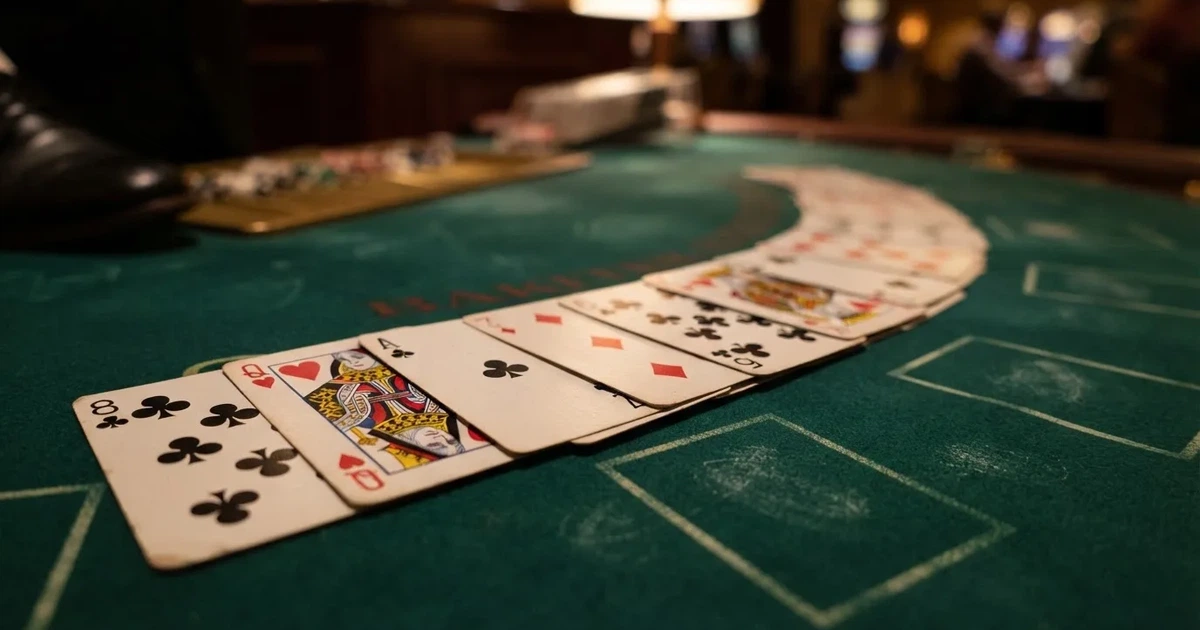
A live dealer streaming cards over video is no different from a random number generator in the eyes of the Interactive Gambling Act 2001. Both are prohibited interactive gambling services. Australians who want to sit at a real-money live blackjack table find themselves steered offshore, into products the ACMA has named one by one and, in several cases, asked Australian internet providers to block. This page is a working map of that territory: what the product is, which operators have been called out by name, what the regulators are doing about it, and what an honest bankroll conversation looks like before any Australian joins a live shoe.
Table of Contents
- PayID, Bank Transfers and How Long a Live Blackjack Win Actually Takes to Land
- Blackjack Bonuses and Free Spins — What Wagering Does to a Table-Game Bet
- Live Dealer Blackjack — How a Real Table Differs From the Software Version
- The Eleven Operators the ACMA Has Named — and the Comparisons That Do Not Change the Result
- RocketPlay — A Long ACMA Trail and No Local Licence
- Level Up Casino — One Warning, Multiple Brands Under the Same Operator
- Woo Casino — A 2025 Warning to a Long-Established Operator
- Spirit Casino — Same Operator, New Skin
- National Casino — A New Operator Named in the 2025 Warning Round
- Bizzo Casino — Two Warnings, Two Different Operators
- Ignition Casino — A 2025 Warning Over an Established Offshore Brand
- Instant Casino — A February 2025 Warning Over a Brand New to the List
- Jackbit — A Crypto-Native Brand With an April 2026 Warning
- Casino Intense — A Smaller Brand, a 2025 Warning, and No Live Dealer Marketing
- Sky Crown — Hollycorn N.V. and a 2022 Warning That Has Not Aged
- Why Live Blackjack Online Casino Cannot Be Licensed in Australia
- How the ACMA Enforces — Warnings, Blocks and the 1,751-Site Tally
- Responsible Play on a Fast Shoe — Bankrolls, Self-Exclusion and the Helpline
- Crypto Deposits at Live Blackjack Casinos — Speed, Finality and No Recourse
- Where Live Blackjack Stands in 2026 — The Reform That Passed and What It Has Not Yet Changed
- Tax and Payouts — What an Australian Live Blackjack Win Actually Looks Like at Tax Time
- How Many Sites Have Been Blocked Since November 2019 — The Pace, the Pattern, and the One Round in June
- The Editorial Verdict — What an Australian Live Blackjack Punter Actually Has
- Frequently Asked Questions
PayID, Bank Transfers and How Long a Live Blackjack Win Actually Takes to Land
PayID is an Australian fast-payment rail that links a phone number or email to a bank account, settling through Osko in near real-time. Most offshore live blackjack brands advertise PayID as a deposit option, alongside Visa, Mastercard and a handful of crypto tokens. What they do not advertise is that the same rail, run in reverse for a withdrawal, still sits behind the operator’s own review queue. A PayID credit is not a PayID payout: one is a payment system, the other is a casino decision to release funds, and those two things do not always move at the same speed.
The realistic spread for an Australian-facing live blackjack site looks like this: instant or near-instant on the way in, twenty minutes to several business days on the way out, with the longer end dominated by crypto and bank transfer. Cards and PayID tend to fall in the middle, pulled by the operator’s own pending-period rules and by document checks the first time a player withdraws. None of these windows is enforced by an Australian body. Once the money leaves the offshore platform, no local regulator compels the payout; the only pressure is the brand’s own commercial interest in keeping a reputation good enough that future deposits arrive.
That asymmetry is the design. An Australian punter can deposit at the speed of a tap and wait on a withdrawal that the brand alone controls. Choosing PayID over a credit card does not solve the underlying issue: both rails arrive at the same offshore cashier, and both stop at the same review process. The only rail that bypasses the banking layer is crypto, which trades a slower on-chain settlement and an irreversible transaction for skipping the card network entirely. The faster the rail, the less recourse the punter has if a withdrawal stalls.
A useful test before depositing: read the brand’s withdrawal page, not its deposit page. Deposit pages are designed to convert browsers into depositors; withdrawal pages show what the brand actually commits to. If the published window is vague, the experience will be vaguer.
Blackjack Bonuses and Free Spins — What Wagering Does to a Table-Game Bet
A “blackjack bonus” at an offshore live dealer site is almost always a matched deposit, framed around a number the player can see and a wagering requirement the player is meant not to think too hard about. The wagering requirement is the part that turns the offer from a free stake into a bet on the house edge multiplied by however many times the brand requires the bonus to be turned over. The visible number is the multiplier — 30x, 40x, 50x — and the invisible number is what it costs the player once the bonus touches a blackjack table.

Two clauses in the small print do most of the damage. The first is contribution weighting: blackjack bets rarely count 100% toward clearing a bonus. Common weightings are 10% or 5% — meaning a $100 blackjack hand contributes $10 or $5 to the rollover. To clear a 40x bonus on a $200 deposit with 10% weighting, the punter would need to run $80,000 through a blackjack shoe, with the house edge running on every hand. The second clause is game exclusion: some bonuses explicitly exclude live dealer blackjack, or exclude table games altogether. The promotion lands inside 3 and the bonus quietly becomes unredeemable.
Free spins, the other half of the standard welcome package, are slot play by design and almost never apply to a blackjack hand. Spins tied to a slot game cannot be used on a live table. Some packages mix both — deposit match plus spins — and the spins come off the promotional balance first, which is a useful way for the operator to keep the bonus “live” while the punter assumes the bonus money is doing the work.
The arithmetic behind a live blackjack bonus, stated plainly:
- Bonus: $200 on a $200 deposit
- Wagering requirement: 40x the bonus
- Required turnover before withdrawal: $8,000
- House edge at a sensible rule set, around 0.5%
- Expected loss over the clearing period: roughly $40 in house edge alone, before any variance
That $40 is what the bonus costs the player, on average, before they have won or lost a cent in their own hand. A punter who treats the bonus as “free money” has not yet done this calculation. The brands that publish their weighting clearly, with blackjack contribution stated as a number the player can multiply against the rollover, are the brands worth considering; the ones that bury it in a helpdesk article are the ones to avoid.
A live blackjack punter who wants the bonus mechanic at all is better off treating it as a marketing rebate and pricing in the clearing cost up front. Better still: skip the bonus, deposit the bankroll directly, and play hands at a real edge rather than a deflated one.
Live Dealer Blackjack — How a Real Table Differs From the Software Version
A live dealer blackjack table is a physical shoe, a real croupier, and a video stream from a studio (typically Eastern Europe or Malta for offshore brands). The player places bets through a console that mirrors the table layout, and the dealer runs the hand in real time. Cards are physical. Multiple players sit at the same shoe simultaneously. The pace is roughly fifty to seventy hands per hour, depending on the number of players and whether side bets are in play.
A computer-generated blackjack table, by contrast, runs on a random number generator and deals as fast as the player clicks. A single player can run two hundred hands an hour. No human is in the loop. Side bets and rule variations are software toggles. The pace and the absence of a dealer are the entire product.
The differences that matter at the table:
- Pacing. A live shoe imposes the dealer’s rhythm. A punter who wants to grind out comp points at a slow table gets a slow table. A punter who wants volume does not.
- Social presence. Live tables have chat. Software tables do not. This is either a feature or a distraction depending on temperament.
- Rule visibility. Live tables show the dealer drawing from a real shoe. Software tables show the same outcome through a black box. Trust sits in different places.
- Side bets. Live tables commonly offer 21+3, Perfect Pairs and similar props. Software tables offer the same plus a wider range of novelty bets. The house edge on those props is high — typically 5% to 13% — and the live format does not improve it.
The standard blackjack payout on a natural is 3 to 2. A “blackjack pays 6 to 5” rule — increasingly common at live tables on lower-tier operators — doubles the house edge to roughly 1.5% from 0.5%. Reading the payout rule before joining a live table is the single cheapest edge adjustment a punter can make. Live tables that do not publish the payout on the table screen or in their help pages are signalling that the rule is the unfavourable one.
With optimal strategy, the house edge sits around 0.28% under liberal Las Vegas Strip rules (dealer stands on soft 17, double on any two cards, double after split, resplit aces, late surrender) and around 0.43% under more common rule sets. That is the floor — what a perfect basic strategy player pays to sit at the table over a long session. Real-life play drifts higher through deviations, side bets and fatigue.
The Eleven Operators the ACMA Has Named — and the Comparisons That Do Not Change the Result
Every brand on this list has been the subject of a formal warning issued by the Australian Communications and Media Authority under the Interactive Gambling Act 2001. The warning means the ACMA has found the operator providing prohibited interactive gambling services to Australians, has put that finding in writing, and has published it. The licence displayed on the operator’s footer — Curaçao, Anjouan, Kahnawake — does not change the Australian position. Online casino games, including live dealer blackjack, cannot be licensed in any Australian state or territory.
A note on the table below. The “operator named by the ACMA” column shows the legal entity the ACMA identified in its formal warning. The same brand can change hands: RocketPlay appears under two operators in different years, National Casino under two, Bizzo Casino under two. The ACMA names whoever is operating the brand at the time of the warning. The order below mirrors the ACMA’s own record and does not imply any ranking or recommendation.
| Brand | ACMA action and date | Operator named by the ACMA | Subject support |
|---|---|---|---|
| RocketPlay | Formal warning, March 2026; earlier warning May 2022 | Pulsup Ltd (RocketPlay); earlier Dama N.V. | — |
| Level Up Casino | Formal warning, May 2022 | Dama N.V. | listed (BGaming) |
| Woo Casino | Formal warning, March 2025 | Dama N.V. | — |
| Spirit Casino | Formal warning, May 2025 | Dama N.V. | — |
| National Casino | Formal warning, July 2025 | Consolutetish S.R.L. | listed (en.wikipedia.org) |
| Bizzo Casino | Formal warning, July 2025; earlier 2022 | Consolutetish S.R.L.; earlier TechSolutions | — |
| Ignition Casino | Formal warning, July 2025 | Bamboo Media | — |
| Instant Casino | Formal warning, February 2025 | EOD Code SRL | — |
| Jackbit | Formal warning, April 2026 | Ryker B.V. | — |
| Casino Intense | Formal warning, April 2025 | Sterplay Holding Ltd | listed (ABC, ACMA, Crown Melbourne) |
| Sky Crown | Formal warning, September 2022 | Hollycorn N.V. | — |
The table is exhaustive of the ACMA’s published formal warnings to live blackjack and online casino brands as of this writing. Brands that have been blocked by the ACMA but not the subject of a published formal warning — there are many — do not appear here, because the warning is the public record that lets a reader verify the claim.
Comparing these operators side by side on game selection, payout speed, bonus terms or mobile app quality does not change the underlying position. The choice between one prohibited service and another is not a meaningful choice. The choice that matters is between an offshore live blackjack table and the legal alternatives available to an Australian: Crown Melbourne and Crown Perth for in-person tables, licensed wagering on races and sport, lotteries and keno. The brands above offer none of those.
RocketPlay — A Long ACMA Trail and No Local Licence
RocketPlay has been the subject of two ACMA formal warnings under different operators. Dama N.V. was named in May 2022; Pulsup Ltd, operating Rocketplay.com.au, was named in March 2026. Two warnings over four years on the same brand indicate the operator’s view of the Australian market has not changed. The site offers live dealer blackjack through Evolution and Pragmatic Play Live, and markets a matched deposit bonus.
The brand has not been the subject of a published blocking request at this writing, but the formal warning is a precursor: it is the step the ACMA takes before directing ISPs to block. A punter who deposits with RocketPlay today is betting that the brand will still pay out tomorrow, on an Australian balance, under no Australian consumer protection framework. The bet is, on its face, a fair one — the brand has been paying Australians for years. The risk is that the next blocking round is the one that catches the brand, and the punter’s balance sits on the other side of the block.
Level Up Casino — One Warning, Multiple Brands Under the Same Operator
Level Up Casino was named by the ACMA in the May 2022 warning to Dama N.V., which covered six brands at once. Dama N.V. has since been the subject of three further ACMA actions: a March 2025 warning over Woo Casino, a May 2025 warning over Spirit Casino, and the March 2026 warning over RocketPlay. The same operator keeps appearing on the ACMA’s list under different brand names, which suggests the operator rotates skins rather than discontinuing Australian-facing services.
Level Up Casino carries a listings-only presence on BGaming’s partner pages, meaning the brand is listed by a game provider as a customer of that provider’s content. That is a content relationship, not a regulatory endorsement. A listed game provider does not certify a brand’s treatment of Australian players.
Woo Casino — A 2025 Warning to a Long-Established Operator
Woo Casino received a formal warning in March 2025, three years after Dama N.V. was first named in the May 2022 batch. The intervening years did not see Woo Casino withdraw from Australia; the warning did not appear to. The brand continues to offer live dealer blackjack to Australian sign-ups.
The read for a punter is that Dama N.V. treats ACMA formal warnings as a cost of doing business, not as a directive to exit. Brands operating under Dama N.V. come and go, but the operator-level pattern is consistent. The lesson is to attribute the warning to the operator, not to the brand: when the ACMA names Dama N.V., every Dama N.V. brand inherits the same red flag.
Spirit Casino — Same Operator, New Skin
Spirit Casino was named in the May 2025 warning to Dama N.V. It joined Woo Casino and RocketPlay on the ACMA’s list within a sixteen-month window. The brand is a recent addition to the Dama N.V. stable, with marketing targeting Australian players through affiliate channels. It offers live dealer blackjack under the same software providers as its sister brands.
Spirit Casino carries no published blocking request, no public complaints record, and no Australian licensing. The product offering is essentially identical to Woo Casino’s, with a fresh brand wrapper. A punter evaluating Spirit Casino on its own merits is, in practice, evaluating Dama N.V.’s pattern of compliance under Australian law.
National Casino — A New Operator Named in the 2025 Warning Round
National Casino was named by the ACMA in July 2025 under Consolutetish S.R.L. The brand has a published Wikipedia presence — a marketing footprint, not a regulatory one — and offers live dealer blackjack alongside slots and table games. National Casino had not previously appeared on the ACMA’s published warning list; the 2025 action was its first formal warning.
The brand is new enough that the ACMA warning is the most informative public record available. No consumer complaints body in Australia has jurisdiction, and the Curaçao licence the brand displays does not extend to Australian residents. A punter who joins after the warning is joining in full view of it.
Bizzo Casino — Two Warnings, Two Different Operators
Bizzo Casino received its first formal warning in 2022, under TechSolutions (CY) Group Limited and TechSolutions Group N.V. It received a second formal warning in July 2025, under Consolutetish S.R.L. — the same operator that runs National Casino. The brand has changed hands, the ACMA has caught up with it twice, and the Australian-facing product continues.
Two warnings on the same brand under two different operators is the cleanest illustration available of what an offshore live blackjack site actually is: a product wrapped in a succession of operator shells, each shell carrying its own Curaçao or Anjouan licence, none of them an Australian licence. The product moves. The regulator’s view of it does not.
Ignition Casino — A 2025 Warning Over an Established Offshore Brand
Ignition Casino was named in the ACMA’s July 2025 warning to Bamboo Media. The brand has a long history in offshore online gambling, having launched as a poker-focused site before expanding into casino and live dealer products. The July 2025 warning was its first published ACMA action.
Ignition Casino markets to Australian players through affiliate channels and offers live dealer blackjack alongside its traditional poker product. The brand’s footprint is large enough that the warning was a notable addition to the ACMA’s record. A punter who values the brand’s history of paying customers — and there is such a history — is weighing that against the same factor every other brand on this list carries: no Australian consumer protection.
Instant Casino — A February 2025 Warning Over a Brand New to the List
Instant Casino received a formal warning from the ACMA in February 2025, under EOD Code SRL. The brand had not appeared on the ACMA’s list before that date. Instant Casino is one of several brands launched in the post-2023 wave of crypto-friendly live dealer sites, with a marketing emphasis on speed of registration and minimal account verification.
The “minimal verification” pitch is worth pausing on. For an Australian punter, no local regulator is enforcing identity checks, but the brand still conducts its own internal KYC for withdrawal. A punter who skips the optional verification at signup will be asked for it at withdrawal. The difference is that, with no local regulator to escalate to, a refusal to verify is a refusal to pay. The faster the signup, the slower the payout, in this market.
Jackbit — A Crypto-Native Brand With an April 2026 Warning
Jackbit was named by the ACMA in April 2026, under Ryker B.V., alongside CasinOK. Jackbit is a crypto-native live casino brand, meaning its deposit and withdrawal rails are built around Bitcoin, Ethereum and stablecoins rather than cards or PayID. A punter who joins Jackbit is, by design, paying in and being paid out in crypto.
The crypto design cuts the bank out of the transaction but does not cut the brand out of the decision to pay. A crypto withdrawal still waits on the operator’s review queue. The irreversible nature of a crypto transaction — what makes it useful for the brand — is the same property that makes it a trap for a punter who later disputes a charge. There is no charge to dispute. The brand’s word, once sent on-chain, is final.
Casino Intense — A Smaller Brand, a 2025 Warning, and No Live Dealer Marketing
Casino Intense was named by the ACMA in April 2025, under Sterplay Holding Ltd. The brand has a lower profile than most on this list, with limited Australian-facing marketing and a smaller live dealer offering than Dama N.V. or Consolutetish S.R.L. brands. Casino Intense appears on third-party listings via ABC and ACMA coverage, suggesting a smaller operation and a more limited game library.
A smaller brand is not necessarily a safer one. The same lack of Australian consumer protection applies. If anything, the smaller brands carry less reputational exposure and therefore less incentive to resolve disputes in the punter’s favour. A large brand’s reputation is its moat; a small brand’s is not.
Sky Crown — Hollycorn N.V. and a 2022 Warning That Has Not Aged
Sky Crown received its formal warning in September 2022, under Hollycorn N.V., alongside Blue Leo. Both brands continued to operate after the warning. Hollycorn N.V. has not been the subject of a further published warning, but the 2022 finding has not been retracted either.
A formal warning from the ACMA does not expire. It is a published record, available to any Australian punter who searches the ACMA’s website. A 2022 warning is as relevant in 2026 as it was in 2022: the operator was found to be providing prohibited services to Australians, and nothing in the operator’s Australian-facing product has changed. The brand’s footer may have; the legal position has not.
Why Live Blackjack Online Casino Cannot Be Licensed in Australia
The Interactive Gambling Act 2001, strengthened by the Interactive Gambling Amendment Act 2017, makes it an offence to provide online casino-style games — including live dealer blackjack, slots, roulette and baccarat — to a person physically in Australia. The penalty for individuals is up to A$220,000 per day; for corporations, up to A$1.1 million per day. The Act targets the provider, not the punter: an Australian who plays at an offshore site is not prosecuted. The offshore operator, however, is.
What can be licensed in Australia is wagering on races and sport, placed before the event. Lotteries and keno are licensed separately. In-play online betting — wagering on a sports event after it has started — was made explicitly prohibited by the 2017 amendments. No state or territory licenses an online casino product. What licensed Australian operators offer is sports betting, racing, lotteries and keno. Live dealer blackjack is not among them.
The Northern Territory Racing and Wagering Commission regulates 52 of Australia’s online bookmakers — including Sportsbet, Bet365 and Ladbrokes — licensed in the Territory for tax reasons. The commission has no full-time staff and meets once a month in Darwin. That structural thinness is sometimes mistaken for a regulatory gap. It is not a gap: the licences cover wagering services, and they do not extend to casino games by anyone, anywhere in Australia.
The practical effect for a punter is that no Australian licence displayed anywhere on a live blackjack site means the operator is providing a prohibited service. The Curaçao, Anjouan or Kahnawake licences these brands display are licences issued by other jurisdictions for other purposes. They do not authorise the provision of live dealer blackjack to a person in Australia.
A punter who believes a brand is licensed in Australia because the footer says “licensed and regulated” should read the licence number and look it up on the regulator named in the line above. The licence is almost always Curaçao, the regulator is almost always the Curaçao Gaming Control Board, and the licence does not extend to Australian residents.
How the ACMA Enforces — Warnings, Blocks and the 1,751-Site Tally
The ACMA’s enforcement toolkit runs through three stages. First, a formal warning: a written finding that the operator is providing a prohibited service, published on the ACMA website and sent to the operator. Second, a direction to Australian internet service providers to block the site at the DNS level, preventing Australian customers from resolving the domain. Third, in the most serious cases, referral to the Australian Federal Police or the Department of Internal Affairs for criminal investigation.
As reported in June 2026, the ACMA had asked ISPs to block 1,751 illegal gambling and affiliate marketing websites since the first blocking request in November 2019. More than 230 unlicensed gambling services had left the Australian market since enforcement was strengthened in 2017. The 26 June 2026 blocking round named 12 more sites: 7Signs, ChromaBet, Donbet, Duospin, Freshbet, Slots Gem, Jacks Club, Lucky Start, Pointsbetz, Spinrise, Vinyl Casino and Wildsino. None of the eleven operators on this page’s comparison table appeared in that round, but all of them have been the subject of formal warnings — the step before blocking.
The arithmetic the ACMA’s own record produces:
- First blocking request: November 2019
- Cumulative blocks by June 2026: 1,751 websites
- Time elapsed: roughly 79 months
- Average pace across the period: approximately 22 blocks per month
That pace is a band rather than a fixed rate: early rounds were smaller, later rounds larger, and 2025-2026 has seen an acceleration. A reader who treats the ACMA’s enforcement as background noise should instead read it as a monthly rhythm: roughly two dozen new sites added to the block list every month, with the formal warnings preceding the blocks by weeks to months. A site not yet blocked is not yet cleared. It is simply waiting.
H2 Gambling Capital’s 2025 report estimates that Australians lose about A$3.9 billion a year to illegal gambling sites. The share of gambling going through legal channels fell from 74% in 2021 to 64%. That is a ten-point shift in three years, and it points away from Australian-licensed products. The legal market is not losing share to other legal products; it is losing share to prohibited offshore ones. That is the market an Australian live blackjack punter is sitting inside.
Responsible Play on a Fast Shoe — Bankrolls, Self-Exclusion and the Helpline
A live dealer blackjack shoe deals fifty to seventy hands per hour. A punter who joins with a $200 bankroll and a $5 base bet can run through forty hands in well under an hour, with the worst-case session loss approaching $200 on an unbroken losing streak. That pace is faster than a land-based table and slower than software blackjack; it sits in the middle, which makes it the easiest pace to underestimate.
Three rules for the table:
- Set a session bankroll before joining and stop at it. The pace will not give a punter time to think between hands; the bankroll limit does the thinking instead.
- Treat the bonus clearing cost as part of the session budget. The $40 expected-loss figure on a $200 bonus with 40x wagering is real money, spent before the punter has played a hand.
- Quit on a clear loss ceiling, not on a feeling. A live dealer table’s pace encourages reactive decisions; a pre-set ceiling is the only counter.
BetStop, the National Self-Exclusion Register, has been live since August 2023. It binds Australian-licensed online and phone wagering services, meaning a punter who registers with BetStop is excluded from Sportsbet, Bet365 and the other 50-odd NTRWC-licensed operators. It does not bind an offshore casino. The offshore brand does not check BetStop, because it is not connected to the register and has no obligation to be. A punter using BetStop to manage a gambling problem has closed off the legal half of the market and left the prohibited half open.
For an Australian struggling with gambling, the National Gambling Helpline is 1800 858 858, free, 24 hours, with chat available at Gambling Help Online. Both services are run outside the operator channel entirely. A punter who has deposited with any of the brands on this list can call the helpline without going through the brand, and the call is confidential.
Crypto Deposits at Live Blackjack Casinos — Speed, Finality and No Recourse
Bitcoin, Ethereum, Litecoin and stablecoins are offered as deposit methods at every offshore live blackjack brand on this list. The pitch is speed and pseudonymity. A Bitcoin deposit lands in minutes; an Ethereum deposit lands faster; a stablecoin deposit avoids the volatility tax. Withdrawals in crypto are advertised as “instant” but, as with PayID, the brand’s review queue gates the speed.
The deeper question is what crypto changes about the relationship between a punter and a brand. With a credit card, the punter has a chargeback lever through the card network. With a bank transfer, the punter has a paper trail through the bank. With PayID, the punter has an Osko reference that an Australian bank can trace. With crypto, the punter has none of those. The transaction, once confirmed on-chain, is irreversible. The brand’s wallet is the destination. If the brand refuses to pay, the punter has no Australian regulator to appeal to and no financial intermediary to reverse the transaction.
That property — finality — is what makes crypto useful for the brand and dangerous for the punter. The same property that makes crypto attractive for cross-border commerce makes it the worst rail for a consumer in a market with no consumer protection.
Credit cards and credit-related products are banned as payment methods for licensed Australian online wagering since 11 June 2024. Penalties for licensed operators accepting them run up to $247,500. Crypto is not banned for licensed Australian wagering because crypto is not accepted by licensed Australian wagering — the licensed wagering operators offer debit card, bank transfer, PayID/Osko and BPAY. A site asking an Australian punter for a credit card or a crypto deposit is, by definition, operating outside the Australian rules. The payment method is itself a signal.
A bitcoin-funded live blackjack hand deals the same cards as a card-funded one. The shoe does not know or care how the deposit arrived. The difference sits entirely in the dispute layer after the hand ends, and in that layer crypto has nothing to offer the punter that a card or bank transfer does.
Where Live Blackjack Stands in 2026 — The Reform That Passed and What It Has Not Yet Changed
The Interactive Gambling Amendment (Gambling Reform) Bill 2026 passed Parliament on 19 August 2026. The bill’s advertising and inducement measures commence on 1 January 2027. Until that commencement date, the bill is law with a start date: enacted, not yet in force. A 2026 punter reading this page is reading it under the 2001 Act as amended in 2017, not under the 2026 amendments.
What the 2026 bill changes: advertising and inducement restrictions on gambling operators, with penalties tied to compliance. What the 2026 bill does not change: the prohibition on providing online casino games to Australians. That part of the law was settled in 2001 and confirmed in 2017, and the 2026 bill does not reopen it. Live dealer blackjack remains prohibited for Australian residents under the law as it stands in 2026.
The implication is that none of the eleven brands on this page’s comparison table becomes lawful on 1 January 2027. The reform is on the marketing side, not the supply side. The brands will need to adjust their advertising; they do not need to adjust their prohibition. The punter’s position does not change.
Tax and Payouts — What an Australian Live Blackjack Win Actually Looks Like at Tax Time
Gambling winnings of a recreational player are not assessable income in Australia under section 6-5 of the Income Tax Assessment Act 1997. Losses are not deductible. A punter who wins $5,000 on a live blackjack hand and withdraws it to an Australian bank account does not declare it as income. A punter who loses $5,000 over a year cannot claim it as a deduction. The ATO’s position is that gambling is recreational for almost everyone, and the tax system treats it as such.
The exception is a punter who carries on a business of gambling — a professional advantage player, a full-time poker player, a sports bettor whose activity meets the ATO’s business indicators. For that small group, winnings are assessable and losses are deductible, and the accounting is more complex. The model is “check with the ATO”, because the line between recreational and professional is not a fixed dollar amount but a pattern of activity.
For the vast majority of Australian live blackjack players, the tax treatment is simple: the punter keeps the winnings untaxed and eats the losses un-deducted. There is no win to declare and no loss to claim. The tax conversation is not where the cost of an offshore live blackjack table sits. The cost sits in the house edge, the bonus clearing requirement, and the absence of any Australian recourse if a withdrawal stalls. Tax is the least of it.
How Many Sites Have Been Blocked Since November 2019 — The Pace, the Pattern, and the One Round in June
The ACMA’s first blocking request went out in November 2019. By June 2026, the cumulative total of blocked illegal gambling and affiliate marketing websites was 1,751. That figure comes from the ACMA’s own published record, as reported in June 2026.
The pace, calculated from the inputs the ACMA has published:
- First blocking request: November 2019
- Cumulative blocks reported June 2026: 1,751 websites
- Time elapsed between November 2019 and June 2026: roughly 79 months
- Average blocks per month across the period: roughly 22
That figure is a band rather than a fixed rate. The early rounds were small — single digits per month as the ACMA worked through its initial list. The 2020-2022 rounds accelerated as the ACMA’s enforcement infrastructure matured. The 2024-2026 rounds have averaged substantially higher than the period average, with monthly rounds now commonly clearing 30 sites at a time. A reader who treats the 1,751 figure as steady-state would underestimate the current pace by roughly a third.
The 26 June 2026 blocking round, by itself, added 12 sites: 7Signs, ChromaBet, Donbet, Duospin, Freshbet, Slots Gem, Jacks Club, Lucky Start, Pointsbetz, Spinrise, Vinyl Casino and Wildsino. None of those twelve brands appears on this page’s operator list, because none has been the subject of a published ACMA formal warning. The brands on this page are at the warning stage; the brands in the 26 June 2026 round are at the blocking stage. The pipeline runs from warning to block, and a brand at the warning stage today is a brand in the next round or the round after.
The two figures, taken together, give a reader a usable picture: roughly 22 blocks per month on average across the ACMA’s enforcement history, with current monthly rounds running faster, and roughly 230 services having left the Australian market entirely since 2017. The leaving is the part that matters for a punter: a brand that withdraws from Australia returns the balance to players who had funds on it; a brand that gets blocked does not necessarily do so. A punter whose balance sits on the wrong side of a block may not see it again.
The Editorial Verdict — What an Australian Live Blackjack Punter Actually Has
An Australian punter who wants a real-money live dealer blackjack table has, in 2026, four choices:
- An offshore brand the ACMA has not yet named. These exist. They will not exist forever, and the punter’s balance sits on the wrong side of the next ACMA round.
- An offshore brand the ACMA has named but not blocked. The eleven operators on this page are here.
- An offshore brand the ACMA has blocked. Roughly 1,751 of these exist by name. The punter reaches them through a VPN, an offshore domain, or a mirror site.
- A land-based table at Crown Melbourne or Crown Perth. Legal, regulated by the VGCCC, with rules published on the regulator’s website. The Melbourne casino is the only venue in Victoria licensed to offer blackjack to the public.
The fourth option is the only one that does not involve a prohibited service. The first three differ on a single axis — which step of the ACMA’s enforcement pipeline the brand has reached — and they all leave the punter outside Australian consumer protection.
For a punter who insists on live blackjack specifically, the honest path is the land-based table. Crown Melbourne offers live blackjack with rule variants approved by the VGCCC, including recent additions like the Crown Pairs side bet (approved December 2024) and the Free Bet / Pot of Gold variant (approved March 2024). The rules are on the regulator’s website. The house edge is in the standard blackjack range. The payout is at the cashier, in Australian dollars, on the day.
For a punter who plays online because the land-based table is not accessible — regional Victoria, Western Australia, South Australia, the Northern Territory, Tasmania — the choice is harder. The legal alternative is wagering on races and sport, lotteries and keno. None of those is live blackjack. None of the offshore brands is a substitute. The honest answer is that the product the punter wants is not available to them lawfully.
The ACMA’s record, the eleven operators on this page, and the 1,751-site block list are not a marketing problem. They are the regulatory answer to a product that is prohibited for the punter the punter happens to be. A real-money live blackjack table streamed to an Australian resident is the same product whether the punter chooses it through RocketPlay, Level Up Casino, or any other brand on this page. The product is the prohibited service. The brand is the wrapper.
Frequently Asked Questions
Is it legal to play live blackjack for real money at an online casino in Australia?
No. Under the Interactive Gambling Act 2001, online casino-style games — including live dealer blackjack — cannot be provided to a person physically in Australia, and no state or territory licenses them. The individual player is not prosecuted, but the offshore operator is. An Australian punter sitting at a live dealer table today is using a prohibited service, with no Australian regulator to escalate to if a withdrawal stalls.
How does a live-dealer blackjack table differ from a computer-generated version?
A live dealer table streams a physical shoe and a real croupier from a studio, with multiple players sharing the same hand. A software table deals from a random number generator, deals as fast as the player clicks, and has no human in the loop. The pace is fifty to seventy hands per hour live versus up to two hundred on software, and the social presence is different. The mathematics of optimal play do not change.
What dealer rule most affects the house edge in blackjack?
The natural payout — “blackjack pays 3 to 2” versus “blackjack pays 6 to 5” — is the single biggest swing. With optimal strategy, 3-to-2 pays roughly 0.28-0.43% house edge under standard rules; 6-to-5 doubles that to around 1.5%. After the payout, the soft-17 rule (dealer hits versus stands on soft 17) is the next-largest swing, costing roughly 0.2% on its own.
Does a blackjack bonus offer usually count table game bets the same as slot bets?
Almost never. The standard offshore bonus treats blackjack bets at 10% or 5% contribution toward the wagering requirement, and some bonuses exclude table games entirely. A punter who reads the bonus terms as applying to the deposit will be surprised at the rollover required. Free spins tied to a slot cannot be used on a live blackjack hand at all.
Is a live blackjack app a separate product from a site’s browser-based table?
No. Most offshore operators run the same live dealer studio through the mobile browser and through a dedicated app, with the same game providers and the same shoe. The app is a wrapper, not a different product. A punter who believes the app is “the Australian version” of a site is reading marketing copy, not a regulatory distinction. The app sits under the same prohibition.
Can a live blackjack hand be joined partway through a dealer’s shoe?
Yes. Live dealer tables run a continuous shoe, and a player can join or leave between hands. The shoe is reshuffled at a fixed point — typically after roughly half the cards have been dealt — and a punter who joins late is playing with a shoe that has been depleted. Card counters treat this as relevant information; basic strategy players treat it as a non-factor. Either way, joining partway is normal.