
Live roulette in Australia with English-speaking dealers
29 October 2026 · verified against the ACMA’s published register of formal warnings and blocking actions
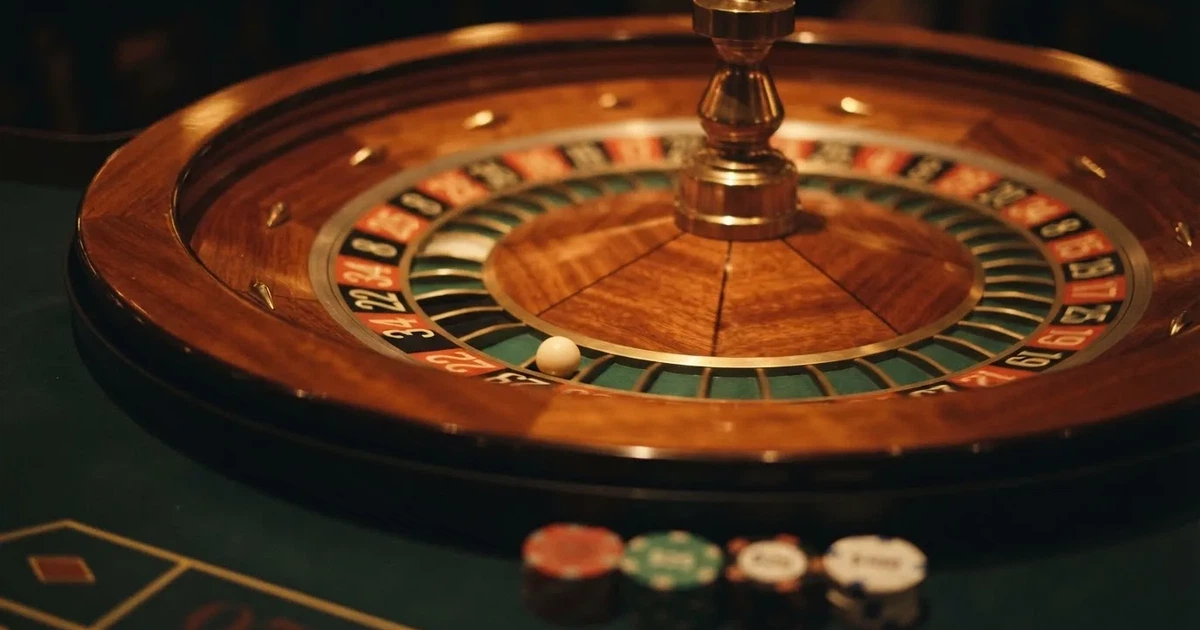
A spinning wheel, a real dealer, a stream — and a market where every offshore site streaming one is unlawful under the Interactive Gambling Act 2001. The English-speaking dealer is the smallest part of that picture. The wheel itself has variants worth knowing. The provider stack behind it does too. And the regulatory frame determines whether any of it is a legal proposition for a person sitting in Sydney, Perth, or Cairns.
This guide walks through that material in the order a reader needs it: the wheels first, then the operators a comparison would normally put up, then the legal frame around them, then responsible play, then crypto and PayID, then payout mechanics. Every operator named here is named because the Australian Communications and Media Authority itself issued a formal warning over it. That is the only reason any of them appears on the page.
Table of Contents
- The live-roulette landscape, and where the dealer fits in it
- A comparison of live-roulette sites the ACMA has acted against
- The legal frame, and why no offshore site is lawful for an Australian resident
- Responsible play, and what the protections are not
- Crypto and anonymity, and what they actually change
- Payout speed and what slows a withdrawal down
- How the block rate is changing
- What a reader comparing the operator set should actually compare
- A note on what this page does not do
- FAQ
The live-roulette landscape, and where the dealer fits in it
A live roulette table is a physical wheel in a studio somewhere in Europe, the Baltics, or occasionally Latin America, run by a human croupier and streamed over the internet to a player’s browser or app. Bets are placed against the studio, not against other players. The wheel is real. The spin is real. The paytable is software. That is the whole arrangement.

The “live” in live roulette matters for two reasons. First, it rules out the random number generator: the result is whatever the ball lands on, and there is no software to audit. Second, it puts a person on camera — the dealer, usually one or two further staff — and that is where the language question comes in. Studios in English-speaking countries (Pragmatic Play’s Bucharest operation, Evolution’s Malta and Riga floors, several smaller providers out of South Africa) default to English as the working language of the table. Studios elsewhere, particularly the many Asian-facing operations, run tables in Mandarin, Korean, Thai, and occasionally Vietnamese before any English option.
An “English-speaking dealer” table is, in practice, an English-default or English-available table. The studio rotates staff; the croupier at the table when a player joins is whoever is on shift. Players who specifically want English should treat the language tag at the table as a default, not a guarantee that the next dealer will speak it.
What the wheel itself does
The wheel is where the house edge lives. Three variants are in regular play across live studios.

Single-zero (European) roulette has 37 pockets: 1 through 36, plus a single 0. The house edge is 2.70% on every bet. This is the standard table at most European-licensed live studios.
Double-zero (American) roulette has 38 pockets: 1 through 36, plus 0 and 00. The extra zero adds 2.56 percentage points of house edge, taking the total to 5.26% on every bet. American tables exist in live studios; they are uncommon in European operations and more common in studios servicing the Americas.
Triple-zero roulette has 39 pockets (0, 00, 000, 1-36) and a house edge of 7.69%. Triple-zero tables are rare, but they exist — most prominently in some Las Vegas brick-and-mortar floors and a handful of online live studios servicing the US market. They are a worse game than either of the other two.
| Roulette Variant | Pockets | House Edge |
|---|---|---|
| Single-zero (European) | 37 | 2.70% |
| Double-zero (American) | 38 | 5.26% |
| Triple-zero | 39 | 7.69% |
Some single-zero tables run an en prison or la partage rule: an even-money outside bet (red, black, odd, even, high, low) that loses to a single zero is either imprisoned for one more spin or returned at half its value, cutting the effective house edge on those bets roughly in half. A table carrying la partage is, on the bets it covers, a meaningfully cheaper game than one without.
The odds of the wheel are not changed by anything the player does. The house edge is the house edge. The bet structure, the player’s choices, and the betting system attached to them do not touch it. That point matters more on a live table than on a slot, because the slow pace of a real spin gives time for a system to feel plausible.
What sits behind a live table
A live casino game is the product of a software platform (the betting interface, the result reconciliation, the chat layer), a studio (the cameras, the wheel, the dealer), and a licence. The platform-studio pair most readers will meet is one of these: Evolution, Pragmatic Play Live, Ezugi, Vivo Gaming, BetGames, Asia Gaming, SA Gaming, or the smaller Lucky Streak, XPG, and TVBET operations. Each runs tables in its own language mix, on its own wheel layouts, under its own licence.
The Australian reader meets these names on sites like the ones in the comparison below — none of them Australian-licensed, none of them lawful to be reached from Australia. The platform running the table is irrelevant to that fact. Whether the wheel is single-zero, whether the dealer is fluent, whether the chat is open — none of it converts the proposition to a lawful one.
Two background games worth knowing
The pages on live roulette in the same corner of the market usually include two games a comparison table needs to mention, since they appear at the same sites and on the same platforms.
Baccarat. Punto banco, the version in live studios, banks the game at all times and plays both hands by fixed drawing rules — the player makes one decision, the wager. Card values: 2-9 at face, 10/J/Q/K at zero, ace as one, totals taken modulo 10. House edge: 1.06% on Banker, 1.24% on Player, 14.36% on Tie. Tie is a worse bet than almost anything else in the casino. Crown Melbourne runs three approved variants — Traditional Baccarat, Crown Baccarat, 2 to 1 Baccarat — under the Victorian Gambling and Casino Control Commission, which took over from the VCGLR on 1 July 2022.
Blackjack. Number cards at face, J/Q/K at 10, ace as 1 or 11; a starting two-card 21 is a “natural” or “blackjack”, the strongest hand; the dealer keeps drawing to 17 or higher. With optimal play under liberal Las Vegas Strip rules (dealer stands on soft 17, double on any two, double after split, resplit aces, late surrender), the house edge is roughly 0.28% — close to a fair game, but not exactly one. Variants include Spanish 21 (no tens, player-favourable rules), Double Exposure (both dealer cards up), Blackjack Switch (swap cards between two hands), and Super Fun 21 (up to four splits).
Craps rounds out the table-game set. Pass/Come carries 1.41%, Don’t Pass/Don’t Come 1.36%, Any Craps 11.11%. Modern craps traces back to New Orleans around 1805, when Bernard Xavier Philippe de Marigny de Mandeville is credited with simplifying the older European dice game Hazard into the version still played today.
These are reference points for a comparison, not side bets on roulette. A reader comparing live roulette to other live games should know what their house edges look like — and these are the figures that anchor the comparison.
A comparison of live-roulette sites the ACMA has acted against
The comparison below lists eleven sites that have run, or are running, English-language live roulette tables. The reason each one is on this list is the same: the ACMA issued a formal warning over it for offering prohibited services to Australians under the Interactive Gambling Act 2001. No bonus terms appear — the only sources for them were affiliate marketing pages, and no bonus can be lawfully claimed by an Australian resident on any of these sites.
| Brand | ACMA action and date | Operator named by the ACMA |
|---|---|---|
| RocketPlay | Formal warning, March 2026 (Pulsup Ltd); earlier warning, May 2022 (Dama N.V.) | Pulsup Ltd |
| Level Up Casino | Formal warning, May 2022 | Dama N.V. |
| Woo Casino | Formal warning, March 2025 | Dama N.V. |
| Spirit Casino | Formal warning, May 2025 | Dama N.V. |
| National Casino | Formal warning, July 2025 | Consolutetish S.R.L. |
| Bizzo Casino | Formal warning, July 2025 (Consolutetish S.R.L.); earlier, 2022 (TechSolutions) | Consolutetish S.R.L. |
| Ignition Casino | Formal warning, July 2025 | Bamboo Media |
| Instant Casino | Formal warning, February 2025 | EOD Code SRL |
| Jackbit | Formal warning, April 2026 | Ryker B.V. |
| Casino Intense | Formal warning, April 2025 | Sterplay Holding Ltd |
| Sky Crown | Formal warning, September 2022 | Hollycorn N.V. |
The pattern in the table is what makes the column meaningful. Three operators — Dama N.V., Consolutetish S.R.L., and TechSolutions — appear under more than one brand name. Dama N.V. alone has been warned in May 2022 (covering six brands including Level Up and Cobra Casinos), then again in March 2025 over Woo Casino, and again in May 2025 over Spirit Casino. A reader who treats one warning as a single company’s lapse and another warning as evidence the warning means something will read this table differently. The trend is not a single bad actor getting caught once; it is a small group of operators working under several brand names, being warned, and continuing.
The Dama N.V. case in particular deserves the closer look. The May 2022 warning covered six casino brands: Bambet, Dazard, Level Up, Rocketplay, Wild Tornado, and Cobra Casinos. The ACMA then warned the same operator again over Woo Casino in March 2025 and over Spirit Casino in May 2025. A warning under the Interactive Gambling Act is not a prosecution, and the IGA’s enforcement teeth are limited against an offshore operator, but the trend is the data.
The same is true of the Woo Casino and Spirit Casino warnings themselves, and of the Casino Intense formal warning issued in April 2025 to Sterplay Holding Ltd. Each is a single instance in a longer pattern of the ACMA naming operators who continue offering prohibited services.
Hollycorn N.V.’s formal warning, published as a PDF in September 2022, covers Sky Crown and Blue Leo. Both have continued to operate; the warning is on the public record and is the only Australian-side data point on either.
What the absence of subject support means here
Each operator card in research carries a Subject support: token, which describes whether the operator’s own listings claim support for live roulette with English-speaking dealers. The token values for this set are mostly no-data — meaning the operator is on the page for the ACMA action, not because it confirmed anything about its own product. A reader who needs the operator’s own claim about wheel layouts, dealer languages, or table limits is reading a page that does not have that data, and the honest sentence to write is that the data is not on the page rather than guessing it.
Where listings-only (sources) appears, the operator’s presence in a directory or a regulator’s reference list was found, but no operator-confirmed claim is on the record. Level Up Casino appears in a BGaming directory listing. National Casino appears in an encyclopedia reference. Casino Intense appears across multiple reference sources including the ACMA itself, the ABC, and Crown Melbourne’s pages. Those listings are not endorsements and they are not operator claims — they are what the listings carry.
The legal frame, and why no offshore site is lawful for an Australian resident
The Interactive Gambling Act 2001 (IGA), strengthened by the Interactive Gambling Amendment Act 2017, makes it an offence to provide online casino games, online pokies, or in-play betting to a person physically in Australia. No Australian state or territory licences online casino games. What is licensable is wagering on races and sport placed before the event, lotteries, and keno — in practice licensed by the Northern Territory Racing and Wagering Commission.
The Northern Territory commission is worth a paragraph of its own. It regulates 52 of Australia’s online bookmakers — Sportsbet, Bet365, Ladbrokes among them — which are licensed in the Territory for tax reasons. The commission has no full-time staff and meets once a month in Darwin. That is the body that licences Australian wagering. It does not licence online casino games.
The IGA does not target the player. The individual punter sitting at a live roulette table is not the subject of the law. The subject is the offshore operator offering the prohibited service to Australians. The Australian-licensed bookmakers running race and sport markets operate under Territory licences and offer nothing else; the casino-style product — live roulette, slots, baccarat, blackjack, craps — sits entirely outside what any Australian licence covers.
What this means in practice is that any offshore site streaming a live roulette table to a person in Australia is offering a service the operator is not licensed to provide. The site’s own licence — typically Curaçao, occasionally Malta, occasionally Kahnawake — does not authorise the Australian end of the transaction. The English-speaking dealer, the single-zero wheel, the la partage rule, the live chat — none of those features move the proposition into lawful territory. They make it a polished unlawful proposition.
What the ACMA actually does
The Australian Communications and Media Authority enforces the IGA on the operator side. Its tools: investigation, formal warning, and directing Australian internet service providers to block illegal sites.
A formal warning is the ACMA’s first public step. It names the operator, the brand, and the legal basis, and it goes on the public register at acma.gov.au. The warning is not a court order and is not a prosecution — but it is a public record, and the ACMA’s stated practice is that a recipient who continues to offer the service after a warning escalates toward a civil penalty proceeding or a blocking request.
A blocking request is the heavier step. The ACMA asks Australian ISPs to block Australian residents from reaching the named domain. The June 2026 round of blocking requests, reported on 26 June 2026, named 12 sites: 7Signs, ChromaBet, Donbet, Duospin, Freshbet, Slots Gem, Jacks Club, Lucky Start, Pointsbetz, Spinrise, Vinyl Casino, and Wildsino. The cumulative running total: 1,751 illegal gambling and affiliate marketing websites blocked since the first blocking request in November 2019, with more than 230 unlicensed gambling services having left the Australian market since enforcement was strengthened in 2017.
What the running total tells a reader
The blocking rate, as a function of the running total and the time since the first blocking request, gives a sense of how the pace has shifted over the period.
The first blocking request was November 2019. By the end of June 2026, the running total stood at 1,751 websites. That is roughly 79 months of enforcement, which puts the average blocking rate at around 22 sites per month — though the rate has not been linear. Early rounds were smaller, later rounds have been larger, and the 2026 cadence has been a blocking request roughly every few weeks rather than every few months. The ACMA’s June 2026 round alone blocked 12 sites in one action.
The implication of the rate is that the ACMA is not running a one-off campaign that will wind down. It is running an ongoing programme of blocking actions at a steadier and, in 2026, faster cadence. A reader who treats the offshore site they reached last week as stable and reachable is reading a different market from the one the ACMA is operating in.
What 2026 reform changes
The Interactive Gambling Amendment (Gambling Reform) Bill 2026 passed Parliament on 19 August 2026. Its advertising and inducement measures commence 1 January 2027. Until 1 January 2027, the Bill is law with a start date — not in force. A 2026 reader will see new rules taking effect at the calendar turn rather than immediately, and the rules on advertising are aimed at licensed operators rather than offshore sites anyway. For an Australian-resident reader, the relevant fact is that the IGA framework is the active one, and it does not authorise offshore casino products.
The H2 Gambling Capital figure on losses
H2 Gambling Capital’s 2025 report estimates that Australians lose about A$3.9 billion a year to illegal gambling sites — a figure large enough to make clear the demand side exists, even with the IGA on the books. The same report notes that the share of gambling going through legal channels fell from 74% in 2021 to 64%. The decline is partly an artefact of the legal channel not offering casino products, and partly an indicator that the illegal channel is capturing more of the overall market. Either reading supports the same conclusion: the offshore sites are a substantial market, not a fringe one.
Responsible play, and what the protections are not
The IGA’s responsible-gambling framework is built around Australian-licensed wagering. Its keystone is BetStop, the National Self-Exclusion Register, live since August 2023. A punter who registers with BetStop is excluded from Australian-licensed online and phone wagering services — every licensed bookmaker, the lot.
BetStop does not bind offshore casinos. An Australian-resident punter who registers with BetStop and then opens an account at an offshore live-roulette site is not stopped by the register — the offshore site is not connected to it. That is a gap in the protection, not a choice by BetStop, and it is the single biggest practical difference between the legal and illegal channels for a punter trying to manage their own play.
The National Gambling Helpline — 1800 858 858 — is free, 24/7, and offers chat at Gambling Help Online. Both services operate regardless of where the gambling happened. They are the right first call for a punter who feels their play has moved beyond what they intended, including play at offshore sites.
A live roulette table has a specific responsible-play hazard worth naming. The wheel spins every 30 to 60 seconds. The dealer announces the result. The software logs it on the betting history strip. The next spin starts. A punter watching a long enough run will, by random variation alone, see streaks — reds, blacks, dozens, columns — and the betting history strip makes the streaks visible. The illusion that the streaks predict the next spin is one of the oldest cognitive biases in the casino. A fixed loss limit, decided before the session starts and not raised during it, is the only mechanism that reliably stops a session once streaks have done their work.
The house edge on every spin is unchanged by the streak. A punter betting on red after ten blacks has the same 2.70% house edge as a punter betting on red after ten reds. The mental cost of the losing streak is real; the mathematical cost of the next spin is the same either way.
Crypto and anonymity, and what they actually change
A bitcoin-funded live roulette table is the same table. The studio is the same. The wheel is the same. The dealer is the same. The only thing that changes is the payment rail — bitcoin in, bitcoin out — and the regulatory status of the rail under Australian law.
Under the 11 June 2024 credit-card ban, credit cards, credit-related products, and digital currency are banned as payment for licensed online wagering. Penalties for an Australian-licensed operator accepting them run up to A$247,500. The ban applies to Australian-licensed wagering services, which are the bookmakers and lotteries licensed in the Northern Territory and the like. Offshore casinos are not subject to the ban in the same way — they are outside Australian jurisdiction — but a crypto deposit to an offshore casino is still a deposit to an unlicensed operator offering a prohibited service.
Anonymity is the part the marketing tends to lean on. In practice, a bitcoin deposit to an offshore casino is pseudonymous, not anonymous: the transaction is on a public ledger, the casino knows the wallet address, and the casino’s own KYC processes for withdrawals typically demand ID before a payout clears. The punter who funded the account anonymously is asked for documents at withdrawal time. That is the standard pattern, and a punter who chose crypto specifically to avoid identity verification will meet it at cashout.
The second practical issue is exchange rate exposure. The deposit is in bitcoin; the bet is in dollars (or euro, or another fiat accounting unit at the casino); the payout, if requested in bitcoin, reconverts to bitcoin at the casino’s spot rate at payout time. A punter who deposits 0.1 BTC on a Monday and withdraws 0.1 BTC on a Friday has done so through a fiat conversion in between, and the bitcoin-amount of the payout is whatever that conversion says it is. This is not a fee the casino charges, exactly; it is the volatility of the asset between deposit and withdrawal, and it sits alongside the house edge rather than inside it.
What a PayID deposit does instead
PayID, the Australian real-time payments rail that runs over the New Payments Platform and connects to Osko, is the standard deposit route for Australian-licensed wagering. An Australian punter depositing at Sportsbet or Ladbrokes through PayID sends from their bank account to the bookmaker’s PayID — instant, traceable, in the bank record.
An offshore casino is unlikely to offer PayID. The few that claim to are not Australian-licensed and not connected to the Australian payments system in the way a licensed bookmaker is. A deposit to an offshore casino from an Australian bank account is, in practice, a card payment or a wire transfer routed through an intermediary, not a PayID transfer.
Payout speed and what slows a withdrawal down
A live roulette payout — the winnings off a successful spin, paid out as cash — waits on the same review process as any other casino withdrawal. The live-dealer aspect does not change the queue. The provider (Evolution, Pragmatic Play, the studio) does not handle the withdrawal; the casino handling the player’s account does.
The standard pipeline: the player requests a withdrawal from the cashier, the casino runs an internal review (anti-fraud, anti-money-laundering, bonus-abuse checks), and the casino then releases the funds through the chosen payment rail. The review window at a small offshore casino is commonly 24 to 72 hours; at a larger one, sometimes shorter. The rail portion is then a separate wait — bitcoin in an hour or two, card payouts three to seven business days, e-wallets within 24 hours once the casino has released the funds.
Two specific failure modes are worth knowing.
The first is the bonus clause. A casino that has issued a bonus will commonly tie the withdrawal to a wagering requirement. The live roulette table counts toward wagering, but slowly: most operators weight live roulette at 10-20% of the wagering requirement per A$1 staked, compared with 100% for slots. A punter trying to clear a bonus on roulette rather than slots will find the requirement is much higher in volume than the equivalent bonus cleared on slots.
The second is the verification request. A casino that does not verify identity on deposit will commonly verify on first withdrawal. The punter who funded with bitcoin to avoid the deposit check will meet the verification on the way out — passport, address, sometimes source-of-funds. A withdrawal held during verification can sit for the duration of the review, and an offshore casino has no Australian complaints body to escalate to if the review drags.
A live roulette payout that fails to arrive at all is an offshore problem with no onshore remedy. The ACMA can warn the operator; the ACMA cannot refund the player. That asymmetry — operator-side enforcement, no player-side recourse — is the structural fact of offshore play in Australia.
How the block rate is changing
The blocking rate derived from the cumulative ACMA data — 1,751 sites blocked from November 2019 through June 2026, with the 2026 rounds running faster than the early ones — gives a meaningful reading of the enforcement pace. The early rounds were small: a few sites per round, infrequent. The 2026 cadence is a blocking request roughly every few weeks, with 12 sites named in the single June 2026 round. The pattern is not a one-off crackdown but a steady programme of escalation.
The implication for a punter who treats a particular offshore site as a stable platform is that the platform’s Australian reach is contingent on the ACMA’s enforcement not yet having reached it. A site on the ACMA’s June 2026 list — 7Signs, ChromaBet, Donbet, Duospin, Freshbet, Slots Gem, Jacks Club, Lucky Start, Pointsbetz, Spinrise, Vinyl Casino, Wildsino — is, from the punter’s side, a site that was reachable last month and is not reachable now. The same is true of every site that has been blocked before it, and will be true of every site that will be blocked after it.
The block rate is not a forecast of any single site’s future; it is the cadence of the ACMA’s programme. A punter reading the rate as a forecast of their own site’s prospects is reading the data correctly.
What a reader comparing the operator set should actually compare
The comparison is unusual because every operator on it is unlawful for the Australian reader to use. The data to compare is not the bonus or the wheel layout — those are inaccessible, and the bonus terms on affiliate pages are not on the operator’s own page. The data is the ACMA’s pattern of enforcement.
Three things stand out in that pattern. First, Dama N.V.’s repeat appearances — May 2022, March 2025, May 2025 — show a single operator covering multiple brand names and continuing to offer prohibited services after formal warnings. Second, Consolutetish S.R.L.’s appearance under both National Casino and Bizzo Casino, and TechSolutions Group’s earlier appearance under Bizzo, show the same pattern with different operators. Third, the 2026 cadence — Rocketplay in March, Jackbit and CasinOK in April, the June blocking round — shows the ACMA’s pace is not slowing.
A reader who treats the comparison as a decision among eleven products is reading it wrong; there is no lawful product in the comparison. A reader who treats the comparison as a record of which operators the ACMA has named, and which it has named more than once, is reading it right. The decision is whether to play at any of them, and the comparison is the answer to that decision before it is asked.
A note on what this page does not do
This page does not recommend a place to play. The operator entries describe what the ACMA has done, not where a reader should send money. They are on the page because the ACMA itself named them — that is the only editorial basis for naming them at all.
This page does not print a bonus code or a promotion. The bonus data on these operators’ affiliate pages is the only source for it, and the affiliate relationship is not a neutral source. A reader who wants bonus terms on a particular site is reading a page that does not have them, and the honest sentence to write is that the page does not have them rather than reproducing marketing claims.
This page does not describe the live roulette tables at the licensed Australian venues — Crown Melbourne, Crown Perth, The Star Sydney — in any operational detail. Those venues are lawful, they offer live-dealer table games including roulette, and a reader who wants to play at a venue they can reach by tram or train has a different market to compare. That market is regulated by the VGCCC (in Victoria), Liquor & Gaming NSW (in New South Wales), and the Department of Local Government, Sport and Cultural Industries (in Western Australia), and the rules at those venues are not the rules at the offshore sites this page is about.
FAQ
Is it legal to play live roulette for real money at an online casino in Australia?
No. The Interactive Gambling Act 2001 makes it an offence to provide online casino games — including live-dealer roulette — to a person in Australia. No Australian state or territory licences online casino products. The English-speaking-dealer element does not change the law; what makes the proposition unlawful is the provision of the service to an Australian resident, and every offshore live-roulette studio does that.
What is the practical difference between a single-zero and a double-zero roulette wheel?
The single-zero wheel has 37 pockets (1-36 plus 0) and a house edge of 2.70% on every bet. The double-zero wheel has 38 pockets (1-36 plus 0 and 00) and a house edge of 5.26%. The extra zero on the double-zero wheel adds 2.56 percentage points to the house edge across all bets, including the even-money outside bets. Some single-zero tables also run en prison or la partage rules, which halve the effective house edge on even-money bets when zero hits.
Why might a live roulette table specifically advertise English-speaking dealers?
Studios in Bucharest, Malta, Riga, and South Africa default to English as the working language of the table, while studios in Asia typically run tables in Mandarin, Korean, Thai, or Vietnamese. A table tagged “English-speaking dealers” is signalling which of those defaults it operates under. The tag is a default, not a guarantee that the next dealer on shift speaks English — studios rotate staff, and the language at the table depends on who is on the floor when a player joins.
Does a bitcoin-funded live roulette table use a different wheel to a card-funded one?
No. The wheel is the same physical wheel in the same studio, regardless of the payment rail. The bitcoin deposit changes the funding route, not the game. The studio, the dealer, the wheel layout, and the paytable are identical between a bitcoin-funded and a card-funded session. The two material differences are the regulatory treatment of the deposit (crypto is banned for Australian-licensed wagering since 11 June 2024) and the verification step at withdrawal — a bitcoin-funded account that skipped KYC on deposit will commonly face the same KYC on cashout.
Can betting patterns based on previous spins improve the odds on a live roulette table?
No. The house edge on every spin is fixed by the wheel layout, and prior spins do not influence the next one. A punter betting on red after ten consecutive blacks faces the same 2.70% house edge as a punter betting on red after ten consecutive reds. Betting systems — Martingale, Fibonacci, Labouchère — manage the distribution of losses, not the expected loss per spin. The expected loss across any system over a long enough run converges on the house edge times the total amount wagered.
How is a live roulette payout processed compared with a slot machine payout?
The processing path is the same. Both go through the casino’s cashier, both wait on the casino’s internal review (anti-fraud, bonus-wagering check, KYC verification on first withdrawal), and both are then released through the chosen payment rail. The live-dealer aspect does not change the queue; the casino handling the account is what processes the payout, not the studio running the wheel. The difference in real-world experience comes from the rail itself — bitcoin in an hour or two, e-wallets within a day, card payouts three to seven business days — rather than from the game.