
How CashtoCode sits inside Australia’s offshore casino market in 2026
The offshore casinos that list CashtoCode at their cashier share a single trait that no payment-method column can capture: every one of them serves Australian customers in breach of the Interactive Gambling Act 2001. The Australian Communications and Media Authority has warned a long list of these brands by name. Some have been warned twice. Reading the cashier page of one of these sites is not the same exercise as reading it on a locally licensed bookmaker, and the rest of this page is built around that difference.

Data current as of 29 October 2026 and reconciled against the Australian Communications and Media Authority’s published register of formal warnings and blocking requests.
Table of Contents
- Responsible play when every cashier on the page sits offshore
- Payments and payout speed: what actually moves when the cashier says CashtoCode
- Top eleven: the brands the ACMA has warned by name
- Reading the brands individually
- What an offshore casino cannot give an Australian player
- Legality, enforcement and the shape of the offshore market
- How fast the regulator is moving, in numbers
- What changes when an Australian punter puts a CashtoCode code into a cashier
- Where the page stands on what an Australian player should do
- Frequently asked questions
Responsible play when every cashier on the page sits offshore
The fastest way to misread a CashtoCode-accepting casino is to look at the payment menu and stop there. A working deposit method does not make a site legal. Under the Interactive Gambling Act 2001, online casino games and online pokies cannot be licensed anywhere in Australia, regardless of who accepts what at the cashier. The site can be technically proficient, the cashier can be fast, the game library can be broad — none of it puts the operator inside Australian law.

That is the frame every other section on this page inherits. Responsible play, where offshore casinos are concerned, is not a sidebar. It is the subject.
The Australian framework for what is and is not a legal online bet
Australians can legally place a wager with an Australian-licensed operator on a sporting event or a horse race, on a lottery, or on keno. The Northern Territory Racing and Wagering Commission, the regulator in the territory where most online bookmakers are licensed for tax reasons, regulates fifty-two of them, including Sportsbet, Bet365 and Ladbrokes. The same act forbids the provision of online casino games and online pokies to anyone in Australia, an offence that has been on the statute book since 2001 and was strengthened in 2017. The minimum age for any wagering product is eighteen.
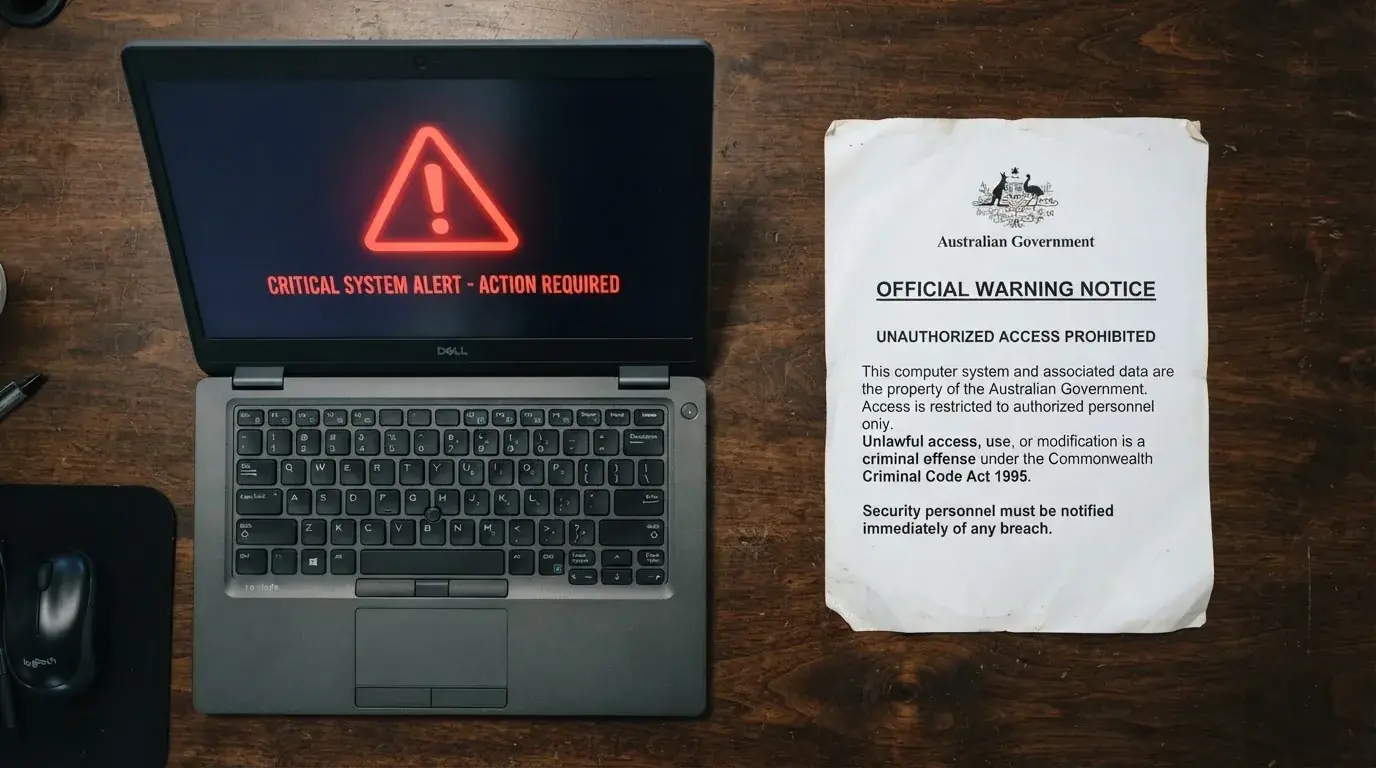
The legal channels are narrow on purpose. The prohibitions cover the games that ship in software form, sit at a casino cashier, and accept a credit card or a Paysafe-style voucher from an Australian without verifying that the customer is on a licensed wagering site.
The register that offshore casinos are not part of
BetStop, the National Self-Exclusion Register, has been live since August 2023. It binds every Australian-licensed online and phone wagering service, and a person who registers with it cannot place a bet with any of those operators while the exclusion is in force. Offshore casinos are not connected to it. Self-excluding on BetStop will not stop an account being opened at an offshore site that takes CashtoCode, because that site is outside the Australian framework that BetStop enforces.
The National Gambling Helpline at 1800 858 858 is free, runs around the clock, and offers web chat through Gambling Help Online. It is the support channel that works whether or not the offshore operator cooperates, because the help runs through Australian-funded counselling services, not through the casino.
What a banking-app gambling block actually catches
The banks have moved faster than the offshore industry on this. NAB, Commonwealth Bank, Westpac and St George all let a cardholder turn on a gambling transaction block from inside their banking app. The block works at merchant-category level: Westpac’s, for example, refuses authorisation on transactions coded Betting/Casino Gambling. ANZ’s block also catches transactions routed through a linked digital wallet such as Apple Pay, and the bank warns that lifting the block carries a 48-hour waiting period, and that the match is imperfect — some gambling transactions will slip through, some non-gambling ones will be refused in error.
This is the layer a CashtoCode deposit does not sit inside. CashtoCode is sold against cash at a reseller point; the bank never sees the casino as the merchant. The card block stops the card-funded path into the offshore site, not the cash-funded one. Players who want the block to cover both routes use it alongside a separate discipline on cash, because no merchant-level rule touches a 20-digit code bought over the counter.
Why a credit ban from 11 June 2024 only covers licensed wagering
From 11 June 2024, Australian-licensed online wagering services have been banned from accepting credit cards, credit-linked digital wallets and digital currencies as payment. The Australian Communications and Media Authority enforces the ban, with penalties up to A$247,500 per non-compliance. The ban is real and it has reshaped how the licensed bookmakers take deposits — debit card, bank transfer, PayID and Osko, BPAY — but the offshore casinos that list CashtoCode are not licensed wagering services and they do not fall under that rule. The offshore cashier still shows what it always showed.
A practical consequence: the credit-card block a player can put on at the bank interacts with the offshore cashier in a different way than it does with a local bookie. On the local site the block is the law; on the offshore site the block is the bank’s own choice, and CashtoCode bypasses it by design.
Payments and payout speed: what actually moves when the cashier says CashtoCode
CashtoCode is one of the cleaner cash-to-deposit instruments available to an Australian punter who has decided to use an offshore site. The mechanics of the deposit are short, and most of the slowness lives downstream — at the casino’s own pending queue, not at the voucher. Withdrawals are a separate conversation, because CashtoCode does not do withdrawals.
What a CashtoCode eVoucher is, mechanically
The eVoucher is a 20-digit code that needs no personal details to use, supports more than twenty-five currencies, and is sold by resellers ranging from convenience stores to online platforms. The product has been on the market since 2013, with the brand website held by Eightball Marketing Services LLC. The customer-facing terms are clean: no usage fees, no charge to buy, and any unused balance keeps its full value. It is deposit-only. The official site offers no withdrawal option, so a player who wants winnings back has to nominate a different rail at the casino.
CashtoCode’s own catalogue markets itself to gambling sites — the filters on the brand site list Pragmatic Play, Evolution, NetEnt and Playtech among the providers it serves — so the payment product and the offshore casino market were built for each other from the start.
What the casino side does after the code is entered
The casino cashier validates the 20-digit code against CashtoCode’s reseller network, the code clears, and the deposited amount lands in the casino balance, normally within seconds. The minimums vary by site, and the research did not surface a single dominant figure for the segment — most brands in the offshore market take deposits in the A$10 to A$30 band, which lines up with the broader low-deposit positioning these operators compete on.
The deposit half of the loop is therefore fast, anonymous in the sense that no card data is shared, and largely friction-free. The half the marketing does not describe is what happens next.
Withdrawals run through whatever the cashier accepts besides CashtoCode
Because CashtoCode is deposit-only, a withdrawal needs an alternative. The casino’s own pending window applies first — the internal review that most offshore operators run before they will release funds. Once the casino approves the payout, the speed of the settlement depends on the rail the player has chosen for cash-out: a bank transfer routed through Osko arrives in under a minute once the casino releases it, twenty-four hours a day including weekends, addressed to a BSB and account number or to a PayID; a card withdrawal runs the card scheme’s own clearing time, typically one to three business days. PayID has a useful safety property: the name of the account holder is shown before the transfer is sent, and the Australian Payments Plus operator warns that a request to send to a PayID on an illegal gambling site is almost certainly a scam.
CashtoCode’s own convenience is therefore a one-way convenience. It is fast going in and silent coming out, and the casino’s internal queue sets the ceiling on when winnings actually arrive.
Where the credit ban intersects with the deposit path
The credit ban from 11 June 2024 does not bind an offshore casino’s cashier, because the offshore operator is not an Australian-licensed wagering service. The banks’ own card-level gambling blocks do bind the card-funded route: Westpac’s refusal of merchant-category code ‘Betting/Casino Gambling’ will stop a Visa or a Mastercard from clearing, and ANZ’s block extends the same refusal to a card tokenised in Apple Pay. A CashtoCode deposit sidesteps both layers because it never touches a card instrument in the first place. The Australian banks have built the rail the licensed market sits on; the cash-to-code rail that an offshore casino also accepts runs under it.
AUSTRAC’s reporting threshold and what it does not do
A common concern with bank transfers to a casino is that a large transfer will trip a regulator’s report. The threshold-transaction-report rule under AUSTRAC applies only to physical cash, of A$10,000 or more. Ordinary electronic bank transfers are not subject to that per-transaction reporting requirement, regardless of the amount. The Osko and PayID rails do not generate a report on size alone. Whether the transfer is sensible is a separate question from whether it is reportable, and the second question is, for these instruments, almost never the issue.
Top eleven: the brands the ACMA has warned by name
The list below is not a ranking. The Australian Communications and Media Authority is the source for each entry, and the only feature that puts a brand on it is that the regulator named it in a formal warning under the Interactive Gambling Act 2001. Every brand listed is offshore, every one offers prohibited services to Australians, and every one sits outside Australian consumer-protection law. A formal warning is not a prosecution — it is the regulator putting an operator on notice that its offering to Australians is unlawful — but a brand that has been warned and continues to operate has chosen to keep doing so.
The columns here are deliberate: brand, regulator action and date, the operator entity the regulator named, and whether the brand’s own terms confirm it accepts CashtoCode. The fourth column is empty more often than it is filled, because most of these sites do not state their payment methods in any document the research could read, and the few that do list CashtoCode alongside other instruments without making it the headline rail.
| Brand | ACMA action and date | Operator named by the ACMA | CashtoCode support |
|---|---|---|---|
| RocketPlay | Formal warning, March 2026 (Pulsup Ltd); earlier Dama N.V., May 2022 | Pulsup Ltd | — |
| Level Up Casino | Formal warning, May 2022 | Dama N.V. | listings-only (Westpac) |
| Woo Casino | Formal warning, March 2025 | Dama N.V. | — |
| Spirit Casino | Formal warning, May 2025 | Dama N.V. | — |
| National Casino | Formal warning, July 2025 | Consolutetish S.R.L. | listings-only (AUSTRAC, Wikipedia) |
| Bizzo Casino | Formal warning, July 2025 (Consolutetish S.R.L.); earlier 2022 (TechSolutions) | Consolutetish S.R.L. | — |
| Ignition Casino | Formal warning, July 2025 | Bamboo Media | — |
| Instant Casino | Formal warning, February 2025 | EOD Code SRL | listings-only (ecopayz, PayID) |
| Jackbit | Formal warning, April 2026 | Ryker B.V. | — |
| Casino Intense | Formal warning, April 2025 | Sterplay Holding Ltd | listings-only (AUSTRAC, iTnews, NAB) |
| Sky Crown | Formal warning, 2022 | Hollycorn N.V. | — |
The 2026 picture inside that table is uneven in a way worth naming. Three brands on it — RocketPlay, National Casino and Bizzo Casino — have been the subject of two separate formal warnings, in different years and against different operator entities. Each time the regulator named a different company behind the same consumer-facing brand. The brand survives the warning cycle because the legal entity does not: when one Curaçao-registered company is named in a warning, a related company can hold the customer balance, the website, and the marketing a few months later.
What an ACMA formal warning actually does
A formal warning under the Interactive Gambling Act 2001 is the regulator’s stated view that the operator has provided, or is providing, a prohibited interactive gambling service to customers in Australia. The warning itself is published on the regulator’s website, naming the operator entity and the brand the entity runs. The next step, where the warning does not move the operator out of the market, is a blocking request to Australian internet service providers — the same mechanism that has taken 1,751 illegal gambling and affiliate marketing websites off Australian view since the first such request in November 2019, with twelve more sites added in a single round reported on 26 June 2026.
The round reported on 26 June 2026 named 7Signs, ChromaBet, Donbet, Duospin, Freshbet, Slots Gem, Jacks Club, Lucky Start, Pointsbetz.com, Spinrise, Vinyl Casino and Wildsino. None of those brands is on the table above, which is the point: the ACMA’s blocking list keeps growing past the brand list, and a player who picks a brand off this page because it is the one they recognise is not picking a brand that the regulator has cleared.
The shape of the operator side behind the brands
Every brand on the table is run by an offshore company. The Dama N.V. cluster alone accounted for six warnings in May 2022 — Bambet, Dazard, Level Up, Rocketplay, Wild Tornado and Cobra Casinos — and the same operator has been warned again since, over Woo Casino in March 2025 and Spirit Casino in May 2025. Hollycorn N.V. was warned in September 2022 over Sky Crown and Blue Leo. Consolutetish S.R.L. and TechSolutions (CY) Group Limited, both connected to Bizzo Casino, were warned in 2022 and again in 2025. The pattern is not one bad actor; it is one structural arrangement that recurs.
For a player, this matters because the operator entity is who would be on the other side of a dispute. A Curaçao-registered company that has been warned once and then reorganised under a new name gives the punter no continuity of recourse, and no Australian complaints body will hear a case against it.
Reading the brands individually
The order below follows the table. Each entry states the warning, names what the research could and could not verify about CashtoCode support, and ends on the one judgment the rest of the block earns. Nothing here recommends any of the brands as a place to play.
RocketPlay
RocketPlay is the freshest name on the table. In March 2026, the regulator named Pulsup Ltd in a formal warning over Rocketplay.com.au, marking the second time the brand has been targeted; Dama N.V. was cited in May 2022 for the same service. The CashtoCode column is empty for RocketPlay, and that is the honest reading: research found no document from the operator confirming CashtoCode as a deposit method, and an affiliate listing does not bind the brand. RocketPlay is the clearest case on the page of an operator that has been warned, kept the brand, and reorganised behind it.
Level Up Casino
Level Up was one of the six Dama N.V. brands named in the May 2022 warning. Research did not surface a CashtoCode-specific term from the operator, and the listing that mentions it is a Westpac page, which is a block notice rather than a payment-method statement. The honest reading is that a Westpac document listed Level Up in the kind of context where the bank warns the cardholder off, not where the casino confirms what it accepts. Level Up is the brand most likely to be conflated with a separate Dama N.V. property in punter memory, and the conflation is itself the risk.
Woo Casino
Dama N.V. received a formal notice from the regulator regarding Woo Casino in March 2025. Woo Casino sits inside the same Dama N.V. cluster as Level Up, Rocketplay, Spirit Casino, Bambet, Dazard, Wild Tornado and Cobra Casinos, and the cluster is the only reason the brand is on this page at all — the research did not surface a CashtoCode statement for Woo Casino. The verdict is the cluster’s verdict: a player who picks one Dama N.V. brand over another is not picking a safer operator, only a different front.
Spirit Casino
Spirit Casino is the third Dama N.V. brand to be warned in 2025, with the Australian Communications and Media Authority’s warning issued in May 2025. Like the other Dama N.V. properties, no document from the operator confirms CashtoCode as a deposit method. The position Spirit sits in is structural: a brand spun up after the 2022 warnings, named in a fresh warning less than three years later, with the same operator behind it. The gap between one warning and the next is the only signal that the regulator’s notice did not move the operator out of the Australian market.
National Casino
In July 2025, Consolutetish S.R.L. was the subject of a regulator warning concerning National Casino. Research did not find a CashtoCode statement from National Casino itself; the listings that touch on it are the regulator’s own page and a Wikipedia entry, neither of which is an operator confirmation. National Casino’s position in the table is its second formal warning under a different operator entity — TechSolutions (CY) Group Limited was named for the brand in 2022 — and that double warning is the closest thing the page has to a structural signal of repeated breach.
Bizzo Casino
Bizzo Casino sits next to National Casino in the same July 2025 warning to Consolutetish S.R.L. and shares with National Casino the 2022 warning to TechSolutions (CY) Group Limited and TechSolutions Group N.V. The brand is the one on the list most often named in punter discussion forums, which is itself why it is here twice. The operator does not publish a CashtoCode confirmation in any document the research could reach, and the two-warning history tells the regulatory story without help from a payment-method column. A brand on its second warning is a brand that has continued to offer the prohibited service after being told to stop.
Ignition Casino
The Australian Communications and Media Authority issued a formal warning to Bamboo Media over Ignition Casino in July 2025. Ignition is one of the brands most associated in Australian punter memory with offshore poker and casino products, which is why the regulator’s action is the most publicly legible. Research did not surface a CashtoCode statement from the operator. The honest reading for Ignition is that the brand has spent years operating in a grey zone around Australian online poker, and the 2025 warning makes the grey zone explicit.
Instant Casino
Instant Casino was the subject of a formal warning to EOD Code SRL in February 2025. The CashtoCode column carries two listings-only references — to ecoPayz and to PayID — neither of which is an operator statement about CashtoCode specifically. The brand’s name suggests speed, the regulator’s action names it in the slow process of formal warnings, and the gap between those two facts is the closest the page comes to a structural observation about how these brands position themselves.
Jackbit
The Australian Communications and Media Authority issued a formal warning to Ryker B.V. over Jackbit and CasinOK in April 2026. Jackbit is one of the two most recent warnings on the list, and the only one naming two brands in the same notice. Research did not find a CashtoCode statement from the operator. Jackbit is the brand the table puts down as a current-year entry without the cushion of an older warning — the regulator has acted once, in 2026, and there is no history of an earlier notice to soften or explain that one.
Casino Intense
The Australian Communications and Media Authority issued a formal warning to Sterplay Holding Ltd over Casino Intense in April 2025. Research surfaced three listings that touch on Casino Intense — AUSTRAC’s threshold-transaction-report guidance, an iTnews article, and a NAB page — none of which is an operator confirmation of CashtoCode as a deposit method. The honest reading is that the brand is mentioned in Australian financial-press and regulator-side documents, which puts it in punter memory through that lens, not through an Australian licence.
Sky Crown
Sky Crown is the brand on the list whose regulator action is the oldest in raw terms: Hollycorn N.V. was the subject of a formal warning covering Sky Crown and Blue Leo in September 2022. Research did not surface a CashtoCode statement from the operator. Sky Crown’s position in the table is the long-tail position — a brand whose regulatory record is older than most of the others, with no later warning to update the picture, and with the same operator entity still named.
What an offshore casino cannot give an Australian player
The thing that distinguishes an offshore casino from a locally licensed wagering service is not the payment menu. It is the absence of an Australian consumer-protection regime sitting behind it. A withdrawal that goes missing, a bonus that is recalculated after a win, an account that is closed with a balance still on it — every one of those disputes lands in a jurisdiction the player does not live in, against an operator entity the player has no easy way to sue, and with no Australian complaints body that will hear the case.
The Australian Communications and Media Authority can block the site, and has done so for 1,751 illegal gambling and affiliate marketing websites since the first blocking request in November 2019. A blocking request does not return the player’s balance. The offshore operator keeps the funds, the Australian customer loses access, and the regulator’s role is to remove the site from view for the next punter, not to compensate this one.
The same gap explains why the credit-card ban from 11 June 2024 binds licensed wagering but not the offshore market. The ban is enforced by the regulator against the licensed operator; the offshore operator is unlicensed, and the card scheme’s merchant-category refusal does the work where the cardholder has asked the bank to do it. A CashtoCode deposit sits one step further out — it never touches a card — so neither the law nor the bank block reaches it. The Australian framework has been built around licensed wagering, and the offshore market has been built around the gaps in that framework.
Legality, enforcement and the shape of the offshore market
The Interactive Gambling Act 2001 makes it an offence to provide online casino games, online pokies and in-play betting to a person in Australia. The Interactive Gambling Amendment Act 2017 strengthened the regime, and the Interactive Gambling Amendment (Gambling Reform) Bill 2026, passed by Parliament on 19 August 2026, adds advertising and inducement measures that commence on 1 January 2027. The new measures are law with a start date, not law in force. On a page that reads in 2026 that is the honest framing: a 2026 page describes the regime as it stands, and a page that reads after 1 January 2027 will describe a stricter one.
The regulator is the Australian Communications and Media Authority. The regulator investigates, issues formal warnings, and directs Australian internet service providers to block illegal sites. The individual player is not prosecuted under the Interactive Gambling Act 2001 — the offence is on the provider — and that fact is sometimes offered as a reassurance. The reassurance stops where the offshore operator does: an unlicensed site gives no Australian consumer protection, no complaints body, and no recourse if a withdrawal is refused, and the site can be blocked with a balance on it.
H2 Gambling Capital’s 2025 report estimates that Australians lose about A$3.9 billion a year to illegal gambling sites, and that the share of gambling going through legal channels fell from 74% in 2021 to 64%. The legal-channel share falling while the offshore market grows is the pattern the regulator’s enforcement numbers describe from the other side.
How fast the regulator is moving, in numbers
The regulator’s enforcement data tracks how much of the illegal market is removed over time. The first blocking request under the regime was issued in November 2019. The total number of illegal gambling and affiliate marketing websites the regulator has asked Australian internet service providers to block since then reached 1,751 as of the round reported on 26 June 2026. The number of unlicensed gambling services that have left the Australian market since enforcement was strengthened in 2017 is more than 230.
Treating the figures as a rate rather than a stock, and using the date of the first blocking request as the starting point:
- Blocking requests since November 2019: 1,751 sites over the period from November 2019 to 26 June 2026. That is an average of roughly 270 sites blocked per year, or about 5 sites blocked per week, with the rate varying sharply by round.
- Site withdrawals since 2017: more than 230 unlicensed services have left the Australian market over the same broad window, which is the regulator’s preferred framing of voluntary exit under pressure.
The honest reading of those two numbers is that the regulator is clearing sites off Australian view at a steady cadence and pushing operators out of the market at a slower one. A player deciding whether to use an offshore CashtoCode-accepting site is deciding to use a site inside a system that is actively removing sites from Australian view, and the removal mechanism does not return balances.
The single blocking round reported on 26 June 2026 — 7Signs, ChromaBet, Donbet, Duospin, Freshbet, Slots Gem, Jacks Club, Lucky Start, Pointsbetz.com, Spinrise, Vinyl Casino and Wildsino — is what a typical enforcement round looks like. None of the twelve sites on that round is on the table earlier in this article. The blocking list and the warning list are different lists, and the brands on each rotate independently.
What changes when an Australian punter puts a CashtoCode code into a cashier
The visible experience at an offshore cashier is short. The player opens the deposit page, picks CashtoCode from the list of payment methods, enters the amount they want to play with, and is given a 20-digit code to take to a reseller — a convenience store, a newsagent, an online reseller. The player pays cash, or pays by another method the reseller accepts, the code clears at CashtoCode’s network, and the casino balance updates, normally within seconds. The deposit is anonymous in the sense that no card data is shared with the casino; the player’s identity with the casino is whatever the casino’s own sign-up form has asked for.
The mechanics are clean. What they do not contain is the regulatory position. The casino is offering prohibited interactive gambling services to a person in Australia, and the Australian Communications and Media Authority has told it so in writing in most of the cases on this page. The deposit is the player’s first act inside that position. The casino’s pending window, its bonus terms, its withdrawal rules and its complaints process are all that the player has to fall back on, and they are all administered by an offshore operator that the regulator has already named.
The 20-digit code does its job. The casino does not.
Where the page stands on what an Australian player should do
A page on CashtoCode-accepting casinos that left the choice to the reader would not be doing the editor’s job. The honest read of the material above is that the offshore casinos on this page have been named by the Australian regulator for offering prohibited services, that several of them have been warned more than once under different operator entities, and that the credit-ban and the merchant-category gambling blocks the banks offer do not reach the cash-to-code rail CashtoCode runs on. The legal wagering channels in Australia are bookmakers on sport and racing, lotteries and keno, and they are the channels that have an Australian regulator behind them.
For a player who is set on using an offshore site, the minimum that follows from the material above is: read the Australian Communications and Media Authority’s register of formal warnings before signing up, treat any balance on an offshore site as funds the regulator could remove from Australian view at any round, and put a gambling block on at the bank to close the card-funded paths into the market. The cash-to-code path is closed by the player’s own discipline, because no merchant-level rule touches it.
For a player who is set on staying inside Australian law, the only online wagering available is with a locally licensed bookmaker on a sporting event or a race, a lottery, or keno. The cashier on those sites accepts debit card, bank transfer, PayID, Osko and BPAY. CashtoCode is not on the cashier, because the products on the cashier are licensed products, and CashtoCode serves the offshore market that the Interactive Gambling Act 2001 prohibits.
Frequently asked questions
Is it legal for an online casino to accept CashtoCode from a player in Australia?
No. Under the Interactive Gambling Act 2001, it is an offence to provide online casino games and online pokies to a person in Australia, and no Australian licence authorises that activity. The Australian Communications and Media Authority has issued formal warnings to a long list of offshore operators that do, and several have been warned twice under different company names. The legal wagering channels in Australia are bookmakers on sport and racing, lotteries and keno.
What is the smallest deposit a CashtoCode casino site usually asks for?
The research did not surface a single dominant minimum across the brands on this page. Most offshore operators that list CashtoCode accept deposits in the low-tens of Australian dollars, which lines up with the broader low-deposit positioning the segment competes on. The exact minimum varies by brand and is set by the operator, not by CashtoCode.
Does a CashtoCode withdrawal clear any faster than a card withdrawal at these sites?
CashtoCode does not offer withdrawals. The official CashtoCode site lists the eVoucher as deposit-only. Players who want winnings back have to nominate a different rail at the casino, and the speed depends on that rail: an Osko bank transfer routed to a PayID arrives in under a minute once the casino releases the funds, while a card refund runs one to three business days. The casino’s own pending window sits in front of either choice.
Can CashtoCode be used at every offshore pokies-style site, or only some of them?
CashtoCode markets itself to gambling sites and lists providers such as Pragmatic Play, Evolution, NetEnt and Playtech in its catalogue filters, so the payment product and the offshore casino market are aligned. Not every offshore site lists CashtoCode at the cashier, and the brands on this page that do confirm it in their own documents are the minority — most either do not state their payment methods or only appear in third-party listings. The brands on the table above that name a CashtoCode confirmation are listed as listings-only and rely on sources outside the operator’s own terms.
Does depositing with CashtoCode add an extra fee at these casino sites?
CashtoCode’s customer terms state the eVoucher is free to the customer with no usage fees, and any unused balance keeps its full value. Whether the casino charges its own deposit fee is a separate question and is set by the operator, not by CashtoCode. The brands on this page do not publish fee schedules in any document the research could read.
What should a player do if a CashtoCode deposit does not appear in a casino account?
The first check is at the casino’s cashier — whether the code cleared at CashtoCode’s network and whether the operator’s pending window is still open. Where the casino does not respond, the Australian Communications and Media Authority’s formal-warning register is the public record of which operators have been told they are offering prohibited services to Australians, and BetStop and the National Gambling Helpline at 1800 858 858 are the Australian-funded support channels that work independently of the offshore operator. None of those channels can return a balance that an offshore operator holds.