
Instant PayID withdrawal casinos in Australia: how the transfer actually clears, and what the speed leaves out
A PayID withdrawal looks instant on a casino’s cashier page. The bank balance updates within a minute of the operator pressing release. That part of the experience is real, and so is the rest of it: no offshore casino processing PayID transfers to Australian bank accounts may lawfully offer its product here, the Australian Communications and Media Authority has been blocking those sites since late 2019, and a balance can sit on a blocked domain with no Australian complaints body to chase. This page is written for someone who has already seen the marketing — “instant”, “no fees”, “fastest payouts in Australia” — and wants to know what the mechanism actually does, what the regulator has been doing about it, and what the speed of a PayID transfer can and cannot tell a player about the operator behind it.
Current as of 29 October 2026. Verified against the ACMA register of formal warnings and blocking requests.
Table of Contents
- What a PayID withdrawal actually moves — and what the speed leaves out
- Responsible gambling — what a fast withdrawal is not evidence of
- Payment mechanics — what makes PayID work, and what the rail does not do
- The ACMA’s blocking pace — consequence as arithmetic
- What the comparison actually compares
- Operator reviews
- Legality and what enforcement means for a player
- FAQ
What a PayID withdrawal actually moves — and what the speed leaves out
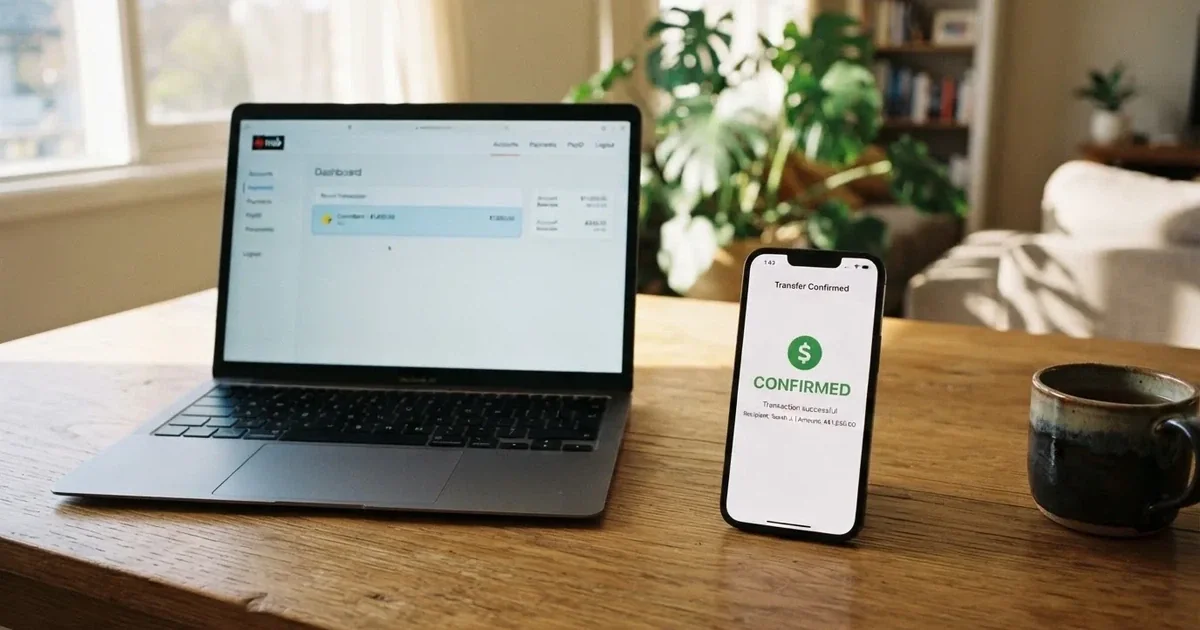
A PayID is an easy-to-remember label — a mobile number, an email address, an ABN or an Organisation Identifier — linked to an Australian bank account and operated by Australian Payments Plus. It is built into the online banking of more than 100 Australian financial institutions, and there are now more than 25 million registered PayIDs in the country. When a payer sends money to a PayID, the banking app shows the name registered to that identifier before the transfer is sent. That confirmation step is the protection against scams and mistaken payments, and it is the same machinery that delivers the speed an offshore casino markets.

The settlement side runs on the New Payments Platform, launched in February 2018 and overseen by the Reserve Bank of Australia. Transfers between participating banks — under the Osko brand — arrive in under a minute, 24 hours a day, seven days a week, whether addressed to a BSB-and-account-number combination or to a PayID. That is the rail. A withdrawal being “instant” in a casino’s marketing means the operator has released the funds to that rail; the rail does the rest.
Where the speed stops being about the rail
The minutes a player measures on a withdrawal timer measure two different things, and only one of them is the PayID network.

The first is the operator’s internal settlement review. A casino that advertises instant PayID withdrawals is advertising that, once a player requests a cash-out, the operator’s own payments team approves the transaction quickly. That review still happens, however fast the marketing reads. For a first withdrawal the review is necessarily heavier: the operator must confirm identity, confirm the PayID belongs to the account holder, confirm the bonus terms — if any — have been satisfied, and confirm no sanctions or duplicate-account flags are attached. None of those checks are visible to the player during the wait, and they are the part of “instant” that varies most between operators.
The second is the bank’s own handling of the incoming credit. Once a PayID transfer is released it lands on the NPP and is settled individually through the Reserve Bank’s Fast Settlement Service, close to real time, around the clock. That bit is uniform. A bank-imposed gambling block — at Westpac, at ANZ, on a card or a digital wallet — refuses the authorisation on the way in, not on the way out; it does not slow legitimate inbound transfers, but it does mean a deposit can fail where a withdrawal of the same form passes.
So the “instant” a cashier page advertises is the operator’s release decision plus the NPP’s settlement, with the operator’s piece doing most of the work and the NPP piece doing almost none. Two operators on the same day, both saying “instant PayID”, can sit at materially different points on that scale. A player who has measured one has measured one.
The check that makes the speed useful
PayID’s name-confirmation step is what stops a typo or a scam PayID from clearing. The payer — in this case the casino — sees the recipient’s name before sending, and the receiving bank matches the PayID to the account before crediting. For an Australian consumer this is a meaningful safeguard against a category AP+ calls “scambling”: illegal online gambling platforms advertised on social media and messaging apps that lead people into a scam website. AP+ warns directly that being asked to transfer funds to a PayID on an illegal gambling site is almost certainly a scambling site. Anyone who thinks they have been scambled is told to contact their financial institution.
A PayID withdrawal that clears in a minute is a PayID withdrawal that has passed that check at the receiving end. It says nothing about the casino’s licence, its complaints process, its bonus terms, or whether the site will be reachable next week. The transfer is honest about the transfer. The rest of the page is about the rest.
Responsible gambling — what a fast withdrawal is not evidence of
A withdrawal that lands in under a minute is evidence of how the operator moves money. It is not evidence of anything else: not of a licence, not of dispute resolution, not of a connection to the National Self-Exclusion Register, not of any responsible-gambling standard the operator happens to print in its footer.
The reason that matters in Australia is structural. Online casino games and online pokies cannot be licensed in this country. The Interactive Gambling Act 2001, strengthened by the Interactive Gambling Amendment Act 2017, makes it an offence to provide those products to a person physically in Australia. What is licensable is wagering on races and sport placed before the event, lotteries and keno — in practice licensed by the Northern Territory Racing and Wagering Commission, a body with no full-time staff that meets once a month in Darwin and supervises 52 of Australia’s online bookmakers for tax reasons. A casino licence displayed in the footer of an offshore site is not, and cannot be, an Australian casino licence. Reading it as one is a misreading the marketing relies on.
The protections a fast offshore site does not connect to
BetStop — the National Self-Exclusion Register, live since August 2023 — binds only Australian-licensed online and phone wagering services. A player who has registered with BetStop is excluded from licensed operators and nothing else. An offshore casino running PayID withdrawals is not connected to BetStop, cannot read a BetStop registration, and is not bound by a BetStop exclusion. The mechanism a player has used to limit themselves at the licensed end does not reach the unlicensed end.
Complaints work the same way. A licensed Australian wagering service sits inside a state or territory complaints pathway; an offshore casino does not. A withdrawal that the operator refuses to release — a bonus-term dispute, an alleged multi-account flag, a maximum-cashout ceiling on a promotion — has no Australian body to escalate to. The player has whatever recourse the operator’s own terms page grants, which is to say whatever the operator decided to grant.
The support line that does apply — independent of where the player is playing — is the National Gambling Helpline on 1800 858 858. It is free, available 24/7, with chat at Gambling Help Online. That line treats harm at the player end; it does not regulate the operator end.
Where the speed can read as a green light it is not
A withdrawal that lands inside a minute can feel like proof the operator is well-run. The temptation is to read speed as a proxy for trust. That reading is doing the marketing’s job for it.
The trust-bearing facts on an Australian-facing site are: whether the operator is licensed at all, whether the licence is in a jurisdiction that offers dispute resolution a player can reach, whether the operator is connected to BetStop, whether it publishes its own RTP figures and audits them, whether it has a real responsible-gambling team with a contactable address, and whether the regulator in its jurisdiction has any record on it. None of those facts move at the speed of a PayID transfer. Several of them are unavailable for the offshore casino segment because the operator is offshore, and the regulator that would record them is the Australian regulator, which records the operator as a target of enforcement rather than a subject of licensing.
Payment mechanics — what makes PayID work, and what the rail does not do
The mechanics behind a PayID withdrawal are visible to anyone who has used Osko or sent money to a mobile number through their banking app. They are also invisible to a player at a casino cashier, where the only thing shown is a timer. The rest of this section is the part behind the timer.
How a PayID transfer settles
A PayID is registered against an Australian bank account through that bank’s online banking or app. Once registered, anyone paying that account can use the PayID instead of the BSB and account number. The payer’s bank looks up the PayID through the New Payments Platform’s addressing layer, retrieves the destination account, displays the name registered to it, and — if the payer confirms — sends the funds. Where both banks participate in Osko, the transfer arrives in the destination account in under a minute, any time of day.
The settlement at the back of the NPP is handled by the Reserve Bank’s Fast Settlement Service, which settles NPP transactions individually and around the clock. The RBA does not operate PayID itself — Australian Payments Plus does — but it is the regulator and overseer of the platform PayID runs on, and it owns the settlement infrastructure underneath.
For a player, the practical upshot is that the speed of an inbound PayID transfer does not depend on the time of day. A withdrawal approved at 1am on a Sunday settles as quickly as one approved at 1pm on a Tuesday, because the rail is the same rail. A marketing claim that implies the speed is somehow conditional on the hour — “instant PayID withdrawals during business hours” — is making a distinction the network itself does not make. Where that distinction shows up in practice is at the operator’s end, where a payments team that only operates during business hours may queue withdrawals overnight.
What the bank does to a PayID it does not like
Australian banks impose their own blocks on gambling-related payments. Westpac’s gambling block works at card level: it refuses authorisation of transactions registered under the merchant category code “Betting/Casino Gambling” on eligible personal credit and debit cards. ANZ’s block is similar but goes further — once turned on in the ANZ app, it also blocks gambling transactions made through a digital wallet such as Apple Pay on an eligible card, not just the physical card. Removing ANZ’s block requires a 48-hour waiting period, and the bank warns that not all gambling transactions will be blocked and that some non-gambling transactions might be blocked in error.
Those blocks sit on the deposit side. A player who has turned on a bank’s gambling block and then tries to deposit at an offshore casino will have the deposit refused at the card authorisation step. The same player, withdrawing from the same operator to the same bank account by PayID, will see the PayID transfer clear — because PayID is not a card transaction, and the bank’s gambling block is keyed to card MCCs, not to bank-account references. That asymmetry is worth knowing: the same operator that cannot take a deposit may pay out a withdrawal to the same account, and the bank’s responsible-gambling tooling has nothing to say about it.
Digital wallets are a separate case. Apple Pay and Google Pay accounted for roughly 45% of all card payments in Australia by number at the end of 2025, and they sit on top of a card. A bank that blocks gambling on the underlying card also blocks gambling on the wallet on that card. ANZ documents this explicitly; the others follow the same logic. A PayID withdrawal is not a wallet transaction, so the wallet-level blocks do not apply to it.
What PayID will never do
PayID is a payments identifier, not a marketing channel. AP+ is explicit: PayID will never contact a customer directly, and emails or text messages claiming to be from PayID are a scam. PayID never asks anyone to send money in order to receive money, never asks anyone to “upgrade” an account, and never charges the recipient a fee to receive a transfer. Any of those asks arriving in a PayID-branded message is fraud.
For a player evaluating an offshore casino, the consequence is small but real: the operator’s withdrawal flow ends with a banking app showing a real PayID transfer, with the recipient’s name confirmed against the operator’s name on file. If anything in that flow asks the player to “verify” by sending money first, or to pay a release fee, or to install software, the rail has been left behind and what is left is a scam.
The ACMA’s blocking pace — consequence as arithmetic
The numbers in this section show how the regulator monitors this market: a player who already understands the speed of a transfer will still want to know how hard the regulator has been leaning on the segment, and at what pace. The data point is the running total of sites blocked since the ACMA’s first blocking request, and the date of that first request is what makes the pace visible.
What the numbers say
According to the ACMA, by the end of June 2026 a total of 1,751 illegal gambling and affiliate marketing websites had been blocked since the first blocking request in November 2019. That is roughly 265 blocking requests per year, or one every 33 hours on average across the six-and-a-half-year window — with the workload unevenly distributed across that window, because the ACMA strengthened enforcement in 2017 and the first blocking request did not follow until late 2019. In a single round reported on 26 June 2026 the ACMA asked Australian internet service providers to block 12 more illegal gambling websites: 7Signs, ChromaBet, Donbet, Duospin, Freshbet, Slots Gem, Jacks Club, Lucky Start, Pointsbet, Spinrise, Vinyl Casino and Wildsino. Twelve in one round is a representative number for recent rounds; it is not the maximum, and earlier rounds have run larger.
That pace, applied to the segment a player is shopping in, is the reason the cashier page of an offshore casino can go offline between one deposit and the next. The site is not necessarily being targeted specifically — the ACMA’s rounds typically bundle multiple operators — but the segment is being thinned at a rate of roughly one operator per day on average. The pace is what turns a list of available sites into a short list, and a short list into a stale one.
Why the pace does not let a player relax
A blocking request and a domain going offline are not the same thing, and they are not the same thing on a fixed schedule. A blocking request asks Australian ISPs to make the domain unreachable from Australian IP addresses; the operator can keep the domain live elsewhere, and a player outside Australia can keep reaching it. From inside Australia the URL may load a holding page, time out, or redirect, depending on the ISP and on the workarounds the operator puts in place. A player who has an account balance at the time of a blocking round has lost access to that balance until the operator — or a successor — restores the route, which may or may not happen.
The other pace the ACMA runs is the formal-warning pace. A formal warning does not block a site; it puts the operator on notice that the ACMA considers the service prohibited, and it usually precedes a blocking round over the same operator. The two paces interact: a brand that has received a formal warning this year is likelier than average to appear in a blocking round next year, and a brand that has appeared in a blocking round this year is likelier than average to have had a formal warning at some point in the preceding two years. For a player the takeaway is not that any one of those events will happen; it is that both of them are the routine shape of enforcement in this segment.
What the comparison actually compares
This page does not rank eleven offshore casinos by PayID withdrawal speed. Two reasons.
First, no PayID withdrawal speed is honest for a player who cannot legally use the site. A ranking that puts one operator at “30 seconds” and another at “2 minutes” is ranking two things the ACMA is actively trying to make unreachable. The comparison that matters — and the only one a player in Australia can act on — is the comparison of what the ACMA has said about each brand.
Second, the eleven operators below have been grouped by the ACMA itself. Each is an operator the ACMA has issued a formal warning to under the Interactive Gambling Act 2001 for offering prohibited services to Australians. Several have been warned twice. The comparison is a regulator’s, and the comparison tells a player what the regulator has already noticed.
| Brand | ACMA action and date | Operator named by the ACMA | Subject support |
|---|---|---|---|
| RocketPlay | Formal warning, March 2026; earlier Dama N.V., May 2022 | Pulsup Ltd (Rocketplay) | — |
| Level Up Casino | Formal warning, May 2022 | Dama N.V. | — |
| Woo Casino | Formal warning, March 2025 | Dama N.V. | — |
| Spirit Casino | Formal warning, May 2025 | Dama N.V. | — |
| National Casino | Formal warning, July 2025 | Consolutetish S.R.L. | — |
| Bizzo Casino | Formal warning, July 2025; earlier TechSolutions, 2022 | Consolutetish S.R.L. | — |
| Ignition Casino | Formal warning, July 2025 | Bamboo Media | — |
| Instant Casino | Formal warning, February 2025 | EOD Code SRL | — |
| Jackbit | Formal warning, April 2026 | Ryker B.V. | — |
| Casino Intense | Formal warning, April 2025 | Sterplay Holding Ltd | — |
| Sky Crown | Formal warning (publication date 2022) | Hollycorn N.V. | — |
How to read this table
Three things change as you read down it.
The first is recurrence. Dama N.V. appears three times in this table — over Level Up Casino, Woo Casino and Spirit Casino — covering warnings in 2022, 2025 and 2025 respectively. That is the same corporate entity behind three different brand fronts over four years. Consolutetish S.R.L. appears twice, over National Casino and Bizzo Casino in the same July 2025 warning. The brand is the consumer-facing label; the operator is the entity the ACMA has put on notice, and the entity is more stable than the brand it markets.
The second is the gap between warning and brand. Several of these brands — RocketPlay, Woo Casino, Spirit Casino, Bizzo Casino — were warned more than once. A second warning is rarely a fresh investigation; it usually means the first warning did not move the operator off the Australian market, and the regulator is putting the same entity on notice a second time. For a player, that is the regulator telling the operator twice that the product is prohibited here.
The third is the licensing claim in each operator’s footer. None of the licences those footers display — Curaçao, Anjouan, the various “autonomous” island frameworks — is a licence to take Australian casino play. Reading any of them as such is the misread the marketing relies on. Where the licence is genuine, it is a licence to operate from somewhere else; it is not a licence to target Australia.
What the table does not show
The table does not show withdrawal times. The research that built this page did not surface a measured, audited PayID withdrawal time for any of these eleven operators; the published figures all come from affiliate marketing pages, and the only consistent thing about them is that they are written to convert. For a player the right comparison is not “30 seconds vs. 2 minutes”; the right comparison is the ACMA record, and the only consistent reading of that record is that all eleven are operators the ACMA has put on notice for offering a product that is not licensable in Australia.
A player who nonetheless opens an account at any of these brands accepts the operator’s own terms page as the entire contract. A withdrawal that the operator chooses to delay can be delayed. A balance on an account at the time of a blocking round can be unreachable from Australia until the operator finds a route around the block. And the ACMA’s blocking pace, applied to the segment these eleven sit in, is roughly one operator per day on average across the period the running total covers.
Operator reviews
What follows is the ACMA’s own record for each of the eleven brands above. Each block names the regulator’s stated operator, the dates of the formal warnings, and the working out of what those warnings have meant for the brand’s presence in Australia. The blocks are arranged in the order the ACMA itself acted, not in any speed ranking.
RocketPlay — same brand, two warnings, two operators
The ACMA issued a formal warning to Pulsup Ltd over Rocketplay in March 2026. The same brand had already drawn a warning to Dama N.V. in May 2022, alongside five other Dama N.V. brands in the same letter. The 2026 warning is a fresh action against a fresh operator entity — the brand has changed hands at least once — but the same consumer-facing product at the same domain, and the same regulator’s view that the product is prohibited here. For a player evaluating the brand, what matters is the brand, not which corporate entity currently sits behind the URL.
Level Up Casino — one warning, six years ago, no follow-up
Level Up Casino was named in the May 2022 warning to Dama N.V. alongside five other brands in the same letter. The ACMA has not issued a fresh warning over the brand since, which is not the same as the brand having left the Australian market — Dama N.V.’s other brands have stayed — but it does mean the brand has been quieter in the regulator’s enforcement queue than its sibling labels.
Woo Casino — Dama N.V.’s first 2025 warning
The ACMA warned Dama N.V. over Woo Casino in March 2025, the first of two 2025 warnings to the same operator. The brand sits in the same corporate cluster as Level Up Casino and Spirit Casino, and the warnings have run in 2022, 2025 and 2025 respectively. For a player, the operational consequence is that the operator behind Woo Casino has had a working Australian-facing business through every warning it has received, and the working business has continued after each one.
Spirit Casino — Dama N.V.’s second 2025 warning
The ACMA warned Dama N.V. over Spirit Casino in May 2025, the second 2025 warning to Dama N.V. after Woo Casino two months earlier. Two warnings to the same operator in three months, in the same product category, over two different brand fronts, is the regulator’s clearest signal that the operator is treating formal warnings as costs of doing business rather than as instructions.
National Casino — Consolutetish S.R.L., July 2025
The ACMA warned Consolutetish S.R.L. over National Casino in July 2025, in the same letter that warned the same operator over Bizzo Casino. National Casino has not drawn a separate earlier warning under a previous operator, so the July 2025 action is the regulator’s first published move on this brand. The corporate sibling in the same letter has a longer record.
Bizzo Casino — the second formal warning since 2022
The ACMA warned Consolutetish S.R.L. over Bizzo Casino in July 2025, and the brand had already been the subject of a 2022 formal warning to TechSolutions (CY) Group Limited and TechSolutions Group N.V. A second formal warning to a brand that has already received one is, in the ACMA’s published practice, the regulator’s way of saying the first one did not change the operator’s behaviour.
Ignition Casino — Bamboo Media, July 2025
The ACMA warned Bamboo Media over Ignition Casino in July 2025, in the same round that produced the Consolutetish S.R.L. warnings. The brand’s Australian-facing operator was a different corporate entity from the National Casino and Bizzo Casino operator, which is the more general point of the segment: brand fronts cluster under a small number of operating companies, and the ACMA’s published record names each of them.
Instant Casino — EOD Code SRL, February 2025
The ACMA warned EOD Code SRL over Instant Casino in February 2025. The brand’s name plays on the speed that this entire page is about, and the regulator’s view on a brand using that name for an Australian-facing product is recorded in the warning. The marketing and the regulatory record run in opposite directions; the regulatory record is the one that matters for an Australian resident.
Jackbit — Ryker B.V., April 2026
The ACMA warned Ryker B.V. over Jackbit in April 2026, in the same letter that warned the same operator over CasinOK. Two brands, one operator, one warning letter, and the letter is recent — fresh enough that the operator’s response to the warning has not yet been tested by a blocking round.
Casino Intense — Sterplay Holding Ltd, April 2025
The ACMA warned Sterplay Holding Ltd over Casino Intense in April 2025. The brand had not previously appeared in a published warning under a different operator entity, so the April 2025 action is the regulator’s first published move on this brand.
Sky Crown — Hollycorn N.V., publication date 2022
The ACMA warned Hollycorn N.V. over Sky Crown and Blue Leo, in a formal warning published in September 2022. The operator has continued to market at least one of the brands — Sky Crown — under the same name to Australian-facing audiences, and the regulator’s earlier action has not been followed by a second published warning over the same brand. That is the quietest cell in the table, and it is still a cell.
Legality and what enforcement means for a player
The Interactive Gambling Act 2001 makes it an offence to provide online casino games, online pokies and in-play betting to a person in Australia. What is licensable is wagering on races and sport placed before the event, lotteries and keno, in practice licensed by the Northern Territory. The minimum age for any of those products is 18.
Enforcement runs through the ACMA, which investigates, issues formal warnings, and directs Australian internet service providers to block illegal sites. The blocking requests have been running since November 2019, and the cumulative count sits at 1,751 websites blocked by the end of June 2026. In addition, more than 230 unlicensed gambling services have left the Australian market since 2017, when enforcement was strengthened. That figure counts services that withdrew without a blocking round as well as those that did not. The H2 Gambling Capital 2025 report puts Australians’ losses to illegal gambling sites at around A$3.9 billion a year, and the share of gambling going through legal channels fell from 74% in 2021 to 64% — both of those figures count the same problem from two angles.
Where the individual player sits
The IGA targets the provider, not the player. There is no Australian offence in sitting at a casino site and clicking “withdraw”; the offence is on the operator offering the prohibited service to an Australian resident. The consequence for the player is consumer-protection-shaped, not criminal. An offshore site gives no Australian complaints body, no recourse if a withdrawal is refused, and no protection if the site is blocked with a balance still on it. None of those risks are theoretical at the ACMA’s blocking pace.
Where the offshore site sits on credit and on payments
The Interactive Gambling Act 2001, as amended in 2023, also makes it unlawful for an Australian-licensed online wagering service to accept credit cards or other credit-related products as payment — a ban that took effect for licensed operators on 11 June 2024, with penalties up to A$247,500 for non-compliance. The ban does not reach offshore casinos, because offshore casinos are not licensed in Australia; what it does is shape the payment methods an offshore casino will sometimes ask an Australian to use instead. A site that asks for a credit card or a crypto deposit from an Australian player is not operating inside the Australian rules at all. Legal deposit routes for licensed wagering — debit card, bank transfer, PayID/Osko and BPAY — are the only payment routes that the Australian framework is designed to support, and they are the routes a licensed operator uses.
BetStop, and what an offshore casino is not connected to
BetStop, the National Self-Exclusion Register, went live in August 2023 and binds Australian-licensed online and phone wagering services. A registration excludes the person from every Australian-licensed wagering operator. An offshore casino running PayID withdrawals is not connected to BetStop, cannot see a BetStop registration, and is not bound by one. The mechanism a player has used to limit themselves at the licensed end does not reach the unlicensed end, and the licensed end is the only end the register was built to cover.
The support line for the player end is the National Gambling Helpline on 1800 858 858 — free, 24/7, with chat at Gambling Help Online. That line is for the player; the operator’s regulator is for the operator.
The 2026 reform package
The Interactive Gambling Amendment (Gambling Reform) Bill 2026 passed Parliament on 19 August 2026. Its advertising and inducement measures commence on 1 January 2027, which means the bill is law with a start date — not yet in force on a page read in 2026. The substantive prohibitions on online casino games, online pokies and in-play betting to Australian residents do not change with the 2026 bill, because they were already in force under the 2001 Act and the 2017 amendments. What the bill adds is the framework around how Australian-facing marketing is allowed to run, and how inducements are treated.
Tax — the recreational-player rule
Gambling winnings of a recreational player in Australia are not assessable income, and losses are not deductible. The relevant provision is section 6-5 of the Income Tax Assessment Act 1997, and the rule holds unless the person carries on a business of gambling, which is a different tax position. For anyone unsure which side of the line they sit on, the Australian Taxation Office is the body to ask.
FAQ
Is it legal for an online casino to process a PayID withdrawal for a player in Australia?
No. Under the Interactive Gambling Act 2001 it is an offence to provide online casino games, online pokies and in-play betting to a person in Australia, and no state or territory licenses those products. A casino processing a PayID withdrawal for an Australian resident is operating outside Australian law whatever licence its footer displays. The player is not prosecuted; the operator is.
What steps does a casino usually complete before releasing an instant PayID withdrawal?
Identity verification, PayID ownership confirmation against the account holder, bonus-term compliance if a promotion is active, sanctions and duplicate-account screening, and the operator’s own payments-team approval. None of those steps are visible to the player during the wait, and they are the part of “instant” that varies most between operators — the PayID rail itself is uniform once the operator has released the funds.
Does a PayID withdrawal clear any faster outside normal banking hours?
No. Osko transfers between participating banks arrive in under a minute at any hour of any day, and PayID runs on the same rail through the New Payments Platform. Where the time of day matters is at the operator’s payments team, which may queue approvals overnight — but the rail does not sleep.
Is there a maximum amount that can be withdrawn instantly through PayID at once?
Operators set their own per-transaction ceilings, and those ceilings vary by brand and by account history. The PayID rail itself does not impose a single maximum, but the casino’s own cashier does, and a first withdrawal is usually capped lower than later ones until the operator’s review has cleared the account for higher limits.
What identity checks apply before a first PayID withdrawal is approved?
Standard KYC: government-issued ID, proof of address, and confirmation that the PayID belongs to the account holder. The checks sit before the operator’s release decision; until they pass, even a PayID transfer cannot be sent, because the operator needs a verified destination before it can move funds.
Can an instant PayID withdrawal be recalled once a casino has sent it?
Once a PayID transfer has been released into the New Payments Platform it generally cannot be reversed by the sender, because the recipient’s bank has already credited the account. A casino that has not yet released the funds can still cancel or queue the transaction. A casino that has released the funds and then attempts to claw them back has to ask the player, not the rail.