
The low volatility slot question, answered in the only way the law allows
Last checked against the ACMA’s published enforcement record on 29 October 2026: every online casino operating out of Curaçao, Cyprus or anywhere else cannot lawfully take a real-money bet from a person sitting in Australia. That is the shape of the market a reader typing “best low volatility slots australia 2026” runs into first, and it is the shape this page is built around. Low volatility is a game-design idea worth understanding on its own terms. The act of placing it inside an offshore casino from an Australian address is a different matter, and a page that skips that second part is a page that hands a reader a deposit button the regulator has asked to be removed.
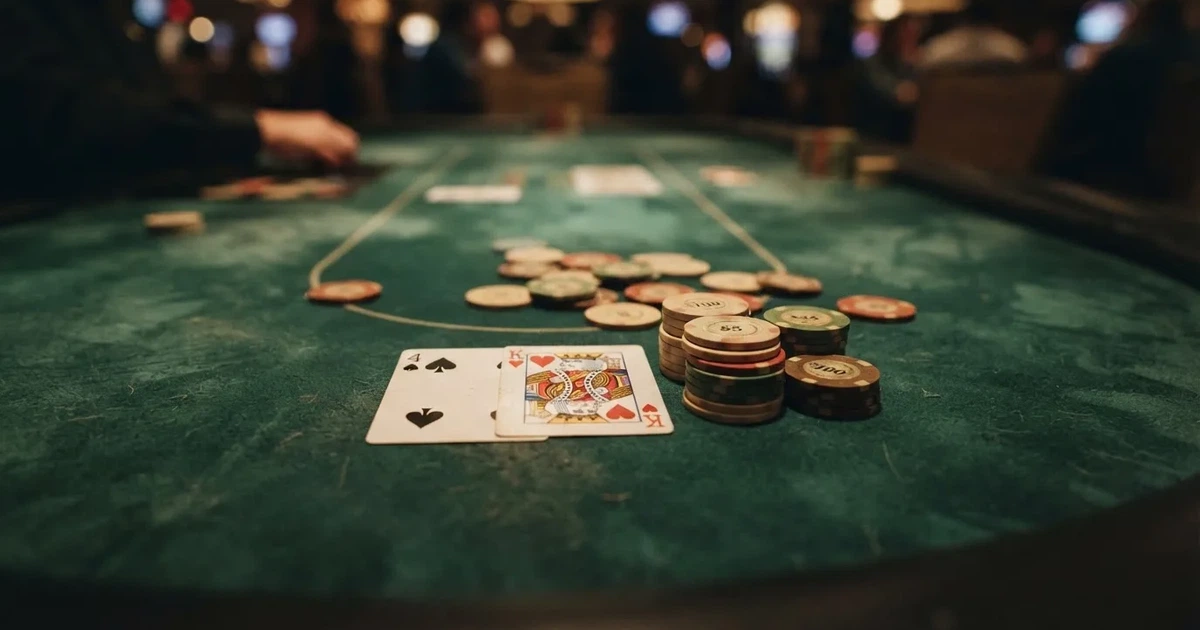
The slot mechanic itself sits in the middle: a tight, low-variance design that pays small amounts often, in contrast to the rarer, larger payouts of a high-variance title. That mechanic exists in licensed Australian venues — clubs, pubs, hotels and the two mainland casinos — in tens of thousands of machines. Online, the same mechanic appears inside brands the ACMA has, one by one, told to stop serving Australia. The job here is to set both halves side by side, name what is actually available, and let the reader decide.
A reader looking for offshore brand names to sign up with today has reached the end of what an honest page can offer. The names below are not a shortlist to join; they are a record of who the regulator has had to warn by name, in the order those warnings have come out.
Responsible play comes before the reels start spinning
Why a low volatility page needs a safety section first
Low volatility, by construction, reduces the swings. A stake of fifty cents returns something small most sessions. That is precisely what makes it appealing — and precisely what makes it the design that lets a quiet habit harden without the warning signs a high-variance game provides. The win that never comes is itself a signal; a low-variance session never sends that signal, because something always does. The reader who chose this page on purpose is the reader a safety section has to reach first.

BetStop, the National Self-Exclusion Register, has been live since August 2023 and is free to join. It binds every Australian-licensed online and phone wagering operator. Anyone who wants a hard break from licensed wagering can register once and be excluded across the field. It does not reach an offshore casino, because the offshore casino is not part of the Australian network — that is the same gap that lets the casino serve Australian players in the first place. BetStop is the right tool for the part of the market it covers, and it is silent on the part this page is about. A reader who needs exclusion from offshore sites needs to be told that, plainly, before they read any further.
The National Gambling Helpline is 1800 858 858, free, twenty-four hours a day. Gambling Help Online runs the same service over web chat for readers who do not want to use a phone. Both are run by funded Australian counselling services and exist for the situation a low-volatility session drifts into.
What a low volatility design does to the player experience
A low volatility title is built to return small wins often enough to keep the balance moving. The balance never climbs far, and it never empties fast. A high volatility title concentrates the math into rare, large outcomes — long stretches of nothing, then a payout that can be fifty or a hundred times the stake. Low volatility, in design terms, replaces those stretches with smaller, more frequent returns. The total amount returned across thousands of spins sits close to the same percentage either way; the path to that percentage is the thing that changes.

That path is the reason a low-volatility session is the harder session to walk away from. A reader who loses fifty dollars in fifteen minutes on a high-volatility title has lost visibly and tends to feel the loss. A reader who loses fifty dollars over three hours on a low-volatility title has watched the balance hover, been paid small wins often enough to feel active, and may not register the loss as a single event. The arithmetic on both sides is the arithmetic the house edge produces; the human side is not.
A wagering requirement on a bonus adds a second layer. The required turnover is large, the bonus is small, and the machine is calibrated to keep the balance in play long enough to clear it. Low volatility titles are the titles the bonus terms steer players toward — because they extend play without producing the large wins that would let the player cash out before turnover is complete.
Practical limits worth setting before a session starts
A session limit is a number the reader decides before they open a game. A time limit is a clock. Both work best when written down. The temptation to “just one more round” is structural, not personal, and it does not weaken with experience; it weakens when the limit is in place before the temptation arrives.
A loss limit that triggers at a fixed amount — say, fifty dollars — and ends the session regardless of the next spin is a more useful tool than a target balance. The balance target is itself a number the machine is engineered to nudge around; the loss limit is a number the reader sets in cold blood. Most Australian licensed wagering sites let a player set both; offshore sites, by contrast, are not subject to the Australian consumer-protection regime at all, and the limit-setting tools they advertise are not enforceable by any Australian body.
Games, providers and the gap between them
What a slot volatility rating actually describes
Volatility, also called variance, is the spread of outcomes around the average. A slot’s return-to-player percentage is the long-run average; volatility is the shape of the path to that average. The two are independent: a 96 per cent slot can be high volatility or low volatility, and the difference shows up in session experience, not in the long-run math.
A modern video slot uses five or more reels with fifty or more symbols per reel, producing odds against a top combination that can run into the hundreds of millions. A classic three-reel mechanical machine, by contrast, has roughly ten symbols per reel and around a thousand possible combinations. The volatility gap between the two is not a small design choice; it is the difference between a session that hands out something every few spins and a session that hands out almost nothing until a single outcome lands. Both can return the same percentage. Neither returns it on the player’s timetable.
Minimum payout percentages in regulated markets vary. Nevada requires seventy-five per cent, Mississippi eighty, New Jersey eighty-three. Australia does not impose a federal minimum on pokie-style machines; the rules sit with the state and territory regulators, and the registered numbers above show how a reader can check their own jurisdiction.
The mechanic behind the modern pokie
Charles Fey, working in San Francisco in the late nineteenth century, built the first automatic slot mechanism — three reels, five symbols (horseshoes, diamonds, spades, hearts and the Liberty Bell), with three bells in a row paying the top prize of ten nickels. Bally’s Money Honey, released in 1963, added a bottomless hopper that paid out up to five hundred coins without an attendant. The first video slot was the Fortune Coin machine, developed in 1976 in Kearny Mesa, California. The shape of the machine a reader sees today — five reels, animated bonus rounds, branded content, denominated stakes from a few cents — sits inside those three steps.
Australia legalised slot machines in New South Wales in 1956. By 2010 the country operated an estimated 97,103 gaming machines outside casinos — about five per capita for every one in the United States. The registered numbers by jurisdiction show where that figure sits now. New South Wales reported 87,298 pokies-style machines outside casinos in June 2023, Victoria 26,380 across 2021–22, Queensland 21,122 in October 2023, South Australia 11,672 in September 2023 and the ACT 3,587 in November 2023. The Northern Territory and Tasmania report smaller numbers through different mechanisms. A reader who wants to know what is in their own state starts with the state regulator’s published gaming-machine register.
Providers, catalogues and what the reader can verify
Provider catalogues are the layer most often presented as the deciding factor on an offshore site. A catalogue includes a few thousand titles from dozens of studios, with the studio’s name attached to each. The reader who goes looking for a low-volatility design has no shortage of titles to choose from, and no shortage of studios offering them. The verification step is what the offshore market does not give them.
A licensed Australian venue is governed by state law: in Victoria, the VGCCC approves any change to blackjack rules before it is introduced at the Melbourne casino, including the December 2024 renaming of “Perfect Pairs” to “Crown Pairs” and the March 2024 introduction of the “Free Bet” option with the “Pot of Gold” side bet. Under section 66 of the NSW Casino Control Act 1992, a casino operator must not permit a baccarat table to operate unless the rules are approved by the regulator, and a copy must be available to patrons on request. Crown Melbourne’s three baccarat variants are run under that approval regime. The audit trail is what gives the reader a place to complain, and what makes the rules on the felt the rules on the felt. The offshore site, by definition, has none of this.
Where baccarat, blackjack and craps sit in the same conversation
Baccarat, blackjack and craps are not the subject of this page, but they appear on the same casino floor — and the house-edge figures for them are the comparison a reader may want when weighing any casino game against a low volatility slot. The Wizard of Odds figures place baccarat at 1.06 per cent on the Banker bet, 1.24 per cent on the Player bet and 14.36 per cent on the Tie; blackjack at around 0.28 per cent under liberal Las Vegas Strip rules and around 0.43 per cent under Atlantic City rules; craps at 1.41 per cent on Pass and Come, 1.36 per cent on Don’t Pass and Don’t Come, and 11.11 per cent on Any Craps. A slot machine’s house edge varies by title, and is the long-run difference between 100 per cent and the published return-to-player. The point is not that table games are better — the point is that a low-volatility slot is one design choice among several, and a reader who has only ever played one type may not know what the others cost.
The eleven brands the ACMA has warned
What the warning list actually is
The eleven names below are not a shortlist to join. Each one is a brand the Australian Communications and Media Authority has, by name, told to stop offering prohibited interactive gambling services to Australians. The Interactive Gambling Act 2001 makes that offer an offence; the ACMA enforces it through formal warnings and through blocking requests to Australian internet service providers. The first blocking request went out in November 2019, and the running total of blocked sites reached 1,751 by June 2026, with more than 230 unlicensed gambling services having left the Australian market since enforcement was strengthened in 2017.
A reader who sees one of these brand names advertised in front of an Australian-facing bonus code is seeing a brand the regulator has already named. The table that follows sets them out, with the warning date and the operator the ACMA identified. Where research gave a second, earlier warning for the same brand, that earlier warning is noted in the prose, not the table.
The eleven brands, side by side
| Brand | ACMA action and date | Operator named by the ACMA | Subject support |
|---|---|---|---|
| RocketPlay | March 2026 | Pulsup Ltd | — |
| Level Up Casino | May 2022 | Dama N.V. | listings-only (BGaming) |
| Woo Casino | March 2025 | Dama N.V. | — |
| Spirit Casino | May 2025 | Dama N.V. | — |
| National Casino | July 2025 | Consolutetish S.R.L. | listings-only (en.wikipedia.org) |
| Bizzo Casino | July 2025 | Consolutetish S.R.L. | — |
| Ignition Casino | July 2025 | Bamboo Media | — |
| Instant Casino | February 2025 | EOD Code SRL | — |
| Jackbit | April 2026 | Ryker B.V. | — |
| Casino Intense | April 2025 | Sterplay Holding Ltd | listings-only (ABC, ACMA, Crown Melbourne) |
| Sky Crown | September 2022 | Hollycorn N.V. | — |
The Dama N.V. cluster sits in the middle of the table for a reason. Dama received a May 2022 warning covering six brands — Bambet, Dazard, Level Up, Rocketplay, Wild Tornado and Cobra Casinos — then received two further warnings in 2025, one for Woo Casino in March and one for Spirit Casino in May. The same operator being warned repeatedly is the pattern that emerges once a reader looks across the table rather than at a single row. The ACMA’s job is to warn; the operator’s response is what determines whether a third, fourth or fifth warning follows.
RocketPlay — the most recent warning
Pulsup Ltd received a formal warning in March 2026 over RocketPlay. An earlier warning had gone to Dama N.V. over the brand back in May 2022, when Dama’s six-brand batch was issued. Two warnings, four years apart, the same brand name. The .com.au domain suggests an Australian-facing layer was, at least at some point, in operation. Whatever licence RocketPlay displays at the foot of its homepage does not change that fact: no Australian jurisdiction issues a licence for online casino games.
Level Up Casino — the original Dama batch
Dama N.V.’s May 2022 warning covered six brands in one notice, and Level Up Casino was among them. BGaming’s own catalogue lists the brand. The earlier batch is the one that put the Dama cluster on the ACMA’s record.
Woo Casino — the second Dama warning
Woo Casino was the subject of a fresh formal warning to Dama N.V. in March 2025 — three years after the original batch. The brand had been operating continuously, and the ACMA returned to it by name.
Spirit Casino — the third Dama warning
Spirit Casino received the May 2025 warning, the second of the two follow-ups to Dama’s 2022 batch. The pattern across the three Dama rows is the pattern this table was built to expose.
National Casino — a 2025 Consolutetish warning
Consolutetish S.R.L. received a formal warning in July 2025 over National Casino. The same notice also covered Bizzo Casino. The Wikipedia article on gambling in Australia lists the brand.
Bizzo Casino — two warnings, two operators
Consolutetish S.R.L. received the July 2025 warning for Bizzo. The brand had already been the subject of a 2022 formal warning to TechSolutions (CY) Group Limited and TechSolutions Group N.V. — a different operator, four years earlier. A brand that has moved between operators and been warned under each is a brand that has had its access to Australian players closed twice.
Ignition Casino — the Bamboo Media warning
Bamboo Media received the July 2025 warning over Ignition Casino, alongside the Consolutetish notice for National Casino and Bizzo. The ACMA’s July 2025 round covered more than one operator and more than one brand.
Instant Casino — the February 2025 warning
EOD Code SRL received a formal warning in February 2025 over Instant Casino. The brand’s name — instant — is the marketing word the regulator’s record punctures.
Jackbit — the April 2026 Ryker notice
Ryker B.V. received a formal warning in April 2026 over both Jackbit and CasinOK. Two brands in one notice.
Casino Intense — the Sterplay warning
Sterplay Holding Ltd received a formal warning in April 2025 over Casino Intense. The brand’s appearance in ABC News reporting, in ACMA notices, and in Crown Melbourne’s published material is the listings trail research turned up; the warning itself is what the ACMA issued.
Sky Crown — the Hollycorn warning
Hollycorn N.V. received a formal warning over its Sky Crown and Blue Leo services, in a notice published in September 2022. Blue Leo sits alongside the brand in the same warning; the table shows only the Sky Crown row by name, because the plan asked for eleven.
What the table reads as a whole
The eleven warnings span September 2022 to April 2026, just over three and a half years. The operators named repeat: Dama N.V. appears three times across four brands, Consolutetish twice across two brands, and Hollycorn, Bamboo Media, EOD Code SRL, Sterplay Holding and Ryker B.V. each appear once. The pattern is not random. It is the ACMA working through a list, one operator at a time, in the order the evidence supports. A reader looking at the table sees the regulator’s record, not a marketing claim.
The subject-support column is empty for most rows. Research found listings for three brands — Level Up Casino, National Casino and Casino Intense — and the rest have nothing verifiable to attach. Where the column is empty, the brand is presented only on the strength of the warning itself; no claim is made about the games it runs.
Overview of the market a reader in Australia actually meets
The product the law treats as prohibited
The Interactive Gambling Act 2001, as amended by the Interactive Gambling Amendment Act 2017, makes it an offence to provide online casino games — slots, table games, live-dealer games — to a person in Australia. In-play betting on sport is in the same prohibition. What is licensable is wagering on races and sport placed before the event, lotteries and keno, and the regulatory frame around those is what the Northern Territory Racing and Wagering Commission operates in practice, holding fifty-two of Australia’s online bookmakers including Sportsbet, Bet365 and Ladbrokes. The NTRWC has no full-time staff and meets once a month in Darwin — the practical shape of the body that signs off on Australia’s licensed wagering.
The minimum age for any form of licensed gambling in Australia is eighteen. No state or territory licenses an online casino product, and an offshore site showing a Curaçao or Kahnawake licence at the foot of its homepage is not licensed to take an Australian bet. The licence it displays is real; it is not an Australian licence.
What enforcement looks like in 2026
The ACMA’s June 2026 round asked Australian internet service providers to block twelve more illegal gambling websites in a single action: 7Signs, ChromaBet, Donbet, Duospin, Freshbet, Slots Gem, Jacks Club, Lucky Start, Pointsbetz, Spinrise, Vinyl Casino and Wildsino. Each one is named in the published notice. The first blocking request went out in November 2019; by June 2026 the running total had reached 1,751 blocked sites, with more than 230 unlicensed services having left the Australian market since 2017. The blocking action is the visible edge of a wider enforcement effort; the formal warnings in the table above are the other edge, and the two are parts of the same machinery.
H2 Gambling Capital’s 2025 estimate placed Australian losses to illegal gambling sites at about A$3.9 billion a year. The share of gambling going through legal channels fell from 74 per cent in 2021 to 64 per cent by the time of the estimate. The shift in the channel share is what the enforcement effort has, in part, failed to reverse; it is also what the enforcement effort exists to address.
What a player is actually exposed to offshore
An individual player is not the target of the Interactive Gambling Act 2001. The Act targets the provider. A punter sitting in Sydney who signs up with a Curaçao-licensed site is not personally at risk of prosecution — the law does not work that way. What the punter is exposed to is the absence of every Australian protection that would otherwise apply. There is no Australian complaints body. There is no Australian dispute resolution. There is no enforced responsible-gambling regime, no BetStop coverage, no guarantee that a withdrawal will be paid, and no guarantee that the site will not be blocked mid-session with a balance on it.
That last point is the one most worth sitting with. The ACMA’s blocking requests are sent to Australian internet service providers. An Australian player who has deposited, accepted a bonus, and started turnover can find the site unreachable from an Australian IP address before the playthrough is complete. The bonus terms the player accepted were issued by an operator the ACMA has already told to stop serving Australians. The conflict is built into the situation, and it is the reason this page exists.
What lawful play looks like in Australia
The lawful alternatives are the licensed pokie venues — clubs, pubs and hotels — the land-based casinos in Melbourne and the Northern Territory, and the licensed online wagering operators the NTRWC and state regulators license. A reader who wants to play a low-volatility pokie design has access to roughly 200,000 machines outside casinos across the country, on the registered counts above. A reader who wants to place a sports or racing bet has the licensed bookmaker market. A reader who wants to play blackjack or baccarat against a live dealer has Crown Melbourne’s approved tables under VGCCC oversight.
The Interactive Gambling Amendment (Gambling Reform) Bill 2026 passed Parliament on 19 August 2026. Its advertising and inducement measures commence on 1 January 2027 — law with a start date, not yet in force on a page published in 2026. The 2026 page reads under the 2017 amendment; the 2027 page will read under the 2026 amendment.
What the payment rules do
Credit cards, credit-related products and digital currency have been banned as payment for licensed online wagering since 11 June 2024. The penalty for an operator that accepts them is up to A$247,500. Legal deposit routes for licensed wagering are debit card, bank transfer, PayID/Osko and BPAY. A site asking an Australian customer for a credit card or a crypto deposit is operating outside the Australian rules — which means, in the present regulatory environment, it is operating in the offshore category the ACMA’s enforcement record targets.
The tax frame a recreational player sits inside
Gambling winnings of a recreational player are not assessable income, under section 6-5 of the ITAA 1997. Losses are not deductible. The only exception is a person who carries on a business of gambling, which is a narrower category than the everyday punter sits in. The Australian Taxation Office treats the recreational case as the default; the ATO’s own guidance is what a reader with a non-standard situation checks against.
The blocking-rate calculation
The arithmetic, in plain language
The ACMA’s first blocking request went out in November 2019. By June 2026 the running total of blocked sites had reached 1,751. That is six years and seven months — roughly 79 months — of enforcement action, and 1,751 blocked sites across that period. The average works out to a band between twenty and twenty-five blocked sites a month, depending on whether the first month is counted in. The figure the page can stand behind is the band, not a single monthly average.
The same arithmetic with the 230 services that left the Australian market since 2017 produces a smaller monthly figure — somewhere in the range of three to four services a month, again as a band. The two figures are not the same measure: a blocked site is a service the ACMA has asked ISPs to remove from Australian access, while a service that has left the market is one that has withdrawn voluntarily, sometimes after a warning and sometimes after the blocking action.
What the band tells the reader
A reader looking at the band — twenty to twenty-five blocks a month, three to four voluntary exits a month — sees an enforcement pace rather than a finish line. The total grew in June 2026 by another twelve sites in a single round, and the page’s own record will look different twelve months from now. The arithmetic is the page’s own assessment on a question research could not answer with a single figure, and the band is the honest way to carry it. Anything sharper than the band would be a calculation that pretended to a precision the underlying numbers do not have.
Frequently asked questions
What does low volatility mean for a slot machine?
Low volatility is the design choice that returns small amounts often. A stake of fifty cents produces a win of a few cents most spins, with the balance drifting rather than swinging. The long-run return-to-player percentage can be identical to a high volatility title — the difference is the shape of the path, not the destination.
How does low volatility differ from high volatility in slot design?
A high volatility title concentrates the math into rare, large outcomes. A low volatility title spreads it into frequent, small ones. The total returned over thousands of spins is close on both sides; what changes is what the player feels in any given session.
Is it legal to play low volatility slots at an online casino from Australia?
No. The Interactive Gambling Act 2001 prohibits the offer of online casino games to anyone in Australia. No Australian jurisdiction licenses an offshore site. The individual player is not prosecuted — but the site, the balance and any bonus in play are outside the Australian protection regime, and the site can be blocked mid-session.
Are low volatility pokies-style machines common in Australian pubs and clubs?
Yes. The state-by-state registers show 87,298 machines in New South Wales, 26,380 in Victoria, 21,122 in Queensland, 11,672 in South Australia and 3,587 in the ACT at the dates research recorded. The licensed venue is where the design is widely available in Australia.
Where can someone see how many pokies machines operate in their state?
Each state and territory publishes a gaming-machine register through its regulator. The Wikipedia article on gambling in Australia, sourced to those registers, sets out the national picture. A reader looking for the local figure starts with their own jurisdiction’s gaming-machine register, not with an offshore brand list.
Does volatility affect how often a slot machine pays out, not just how much?
Yes. Volatility is the shape of the payout distribution — both how often the machine pays and how much it pays when it does. A high volatility slot may pay nothing for two hundred spins and then return fifty times the stake; a low volatility slot pays small amounts every few spins and never produces the rare, large outcome. Frequency and size move together.