
Best new Australian online pokies 2026: the legal gap and what sits inside it
A search for “new online pokies” in Australia looks like a shopping query. It is not. Under the Interactive Gambling Act 2001, offering online casino games — including online pokies — to anyone physically in Australia is a prohibited interactive gambling service. No Australian state or territory issues a licence for it. The operators that surface for these searches sit offshore, and the Australian Communications and Media Authority has spent the past seven years warning them, blocking them, and naming the corporate owners behind them. A reader who lands here from inside Australia is being asked to play on a site the regulator has already told to stop.

The page below treats that gap as the subject, not as a footnote. The shelves it covers are the ones research sets out: the basics of what new online pokies means as a product, the legal frame that decides whether any of it is on offer in Australia, the responsible-gambling tools that actually reach Australian residents, the payment routes that are and are not legal, the gameplay mechanics that define a new release, and the shortlist of offshore brands the ACMA has acted against. The verdict on each is the same — they cannot lawfully offer the product to an Australian — but the comparison is still worth doing, because each brand shows a different angle on how the prohibition gets enforced.
Verified against the ACMA register and reporting in 29 October 2026.
Table of Contents
- What “new online pokies” actually refers to
- The legal landscape in Australia
- Responsible gambling: the tools that actually reach Australian residents
- How money actually moves for online gambling in Australia
- Gameplay mechanics: what defines a new release
- Comparing the ACMA-named operators
- How the blocking rate has evolved
- What an Australian can legally play instead
- What this page is not
- Frequently asked questions
What “new online pokies” actually refers to
A pokie is a slot machine. The word is Australian shorthand for “poker machine,” and it covers every electronic gaming machine a punter can find in a pub or club in Australia — from the legacy three-reel games that still sit in country NSW to the modern five-reel video slots that fill the floors of Crown Melbourne. “New” in the marketing sense means a title released in the past twelve to twenty-four months: a fresh theme, a fresh bonus round, sometimes a fresh mechanic (cluster pays, ways instead of lines, a hold-and-spin feature carried over from European games). “Online pokies” is the same product moved to a website.

The underlying maths is the same. Each spin is an independent event paid out by a random number generator. The long-run return to player — what the game pays back as a percentage of what it takes in — is set by the developer and locked into the software. The minimum legal return to player varies by Australian jurisdiction for the physical machines: 85 per cent in New South Wales, the Northern Territory, Queensland and most of Victoria, 87 per cent at Crown Melbourne and in the ACT and Tasmania, 87.5 per cent in South Australia, and 90 per cent in Western Australia. The figures are not a marketing claim; each state regulator publishes them, and the machine in front of the player has to comply.
“New” as a release label sits on top of that fixed mathematics. A 96 per cent RTP title released last month does the same arithmetic as a 96 per cent title released six years ago. What changes is the wrapper — the theme, the bonus round structure, the volatility band — and the cost of the ride. A high-volatility pokie pays less often, and when it pays, it pays bigger. A low-volatility pokie pays more often, and when it pays, it pays smaller. Volatility is not the same as return to player; a 96 per cent game can be high or low volatility, and the same percentage does not feel the same to a player over a hundred spins.
This is the product the offshore sites advertise to Australians. It is the same mathematics as the pub machine in Sydney, the same kind of bonus round as a Crown Melbourne release, but the legal status is different. A venue floor is licensed; a website serving the same game to an Australian IP address is not.
The legal landscape in Australia
The Interactive Gambling Act 2001, tightened by the Interactive Gambling Amendment Act 2017, makes it an offence to provide online casino games, online pokies and in-play betting to a person in Australia. The 2017 amendments are what made the prohibition enforceable in practice: they closed the loophole that had let offshore operators accept Australian customers without consequence. Lotteries, keno and pre-event wagering on races and sport are still licensable. Online casino games are not. Minimum age for any gambling activity in Australia is 18.
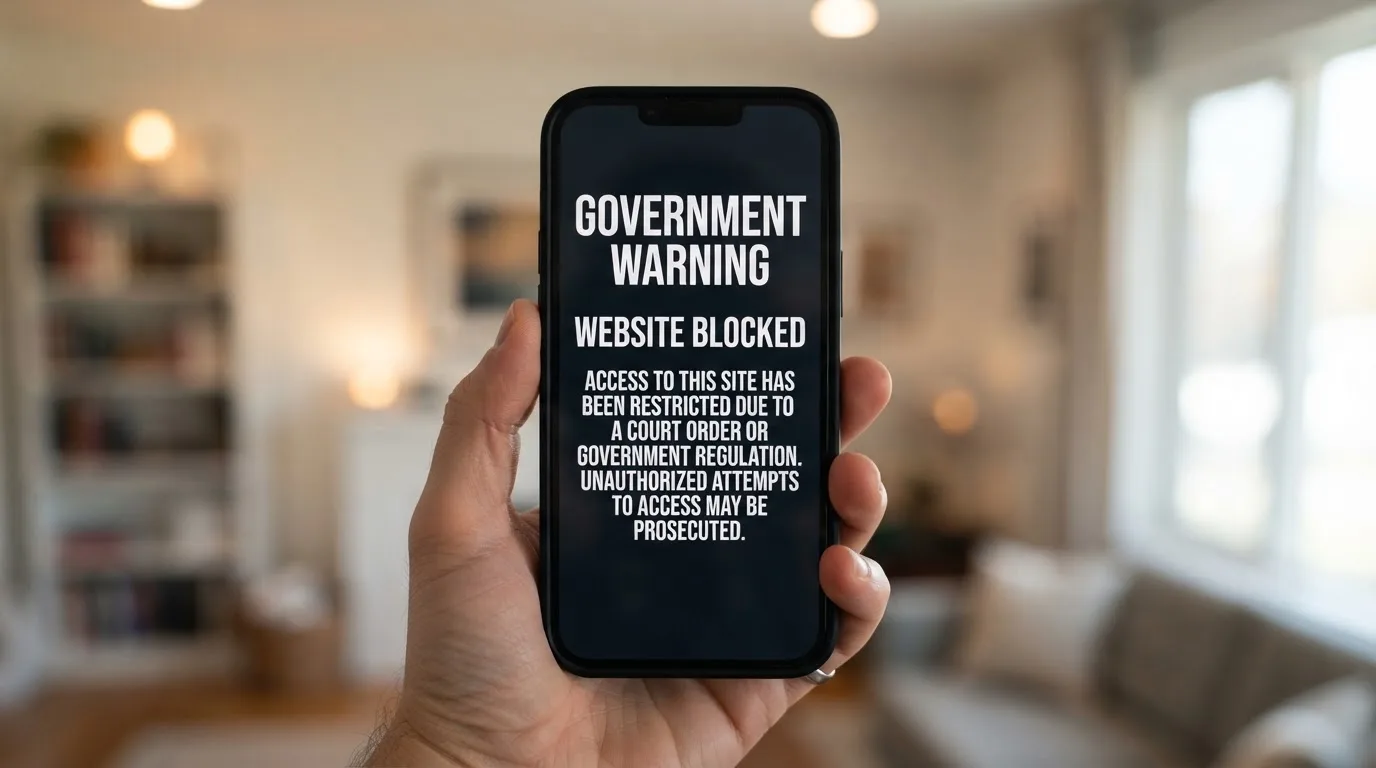
The regulator that carries the file is the Australian Communications and Media Authority. The ACMA investigates complaints, issues formal warnings to named operators, and asks Australian internet service providers to physically block offending sites at the network level. As of June 2026, the ACMA reports a running total of 1,751 illegal gambling and affiliate marketing websites blocked since the first blocking request in November 2019, and more than 230 unlicensed gambling services that left the Australian market entirely after the 2017 enforcement ramp-up.
The pace has not slowed. The same ACMA reporting lists the 12 sites blocked in the most recent round: 7Signs, ChromaBet, Donbet, Duospin, Freshbet, Slots Gem, Jacks Club, Lucky Start, Pointsbetz.com, Spinrise, Vinyl Casino and Wildsino. These are not fringe names; the 2017 amendments gave the ACMA the standing to target mainstream-looking brands, and the list it publishes is a current snapshot, not a historical one.
A point worth being clear on: the IGA targets the provider, not the individual player. No Australian punter is prosecuted for opening an account with an offshore site. What the punter gets in return is nothing — no Australian consumer protection, no local complaints body, no recourse if a withdrawal is refused, and the very real chance that the site gets blocked by their ISP with a balance still sitting in the cashier. The site vanishes; the money on it does not necessarily follow.
What is licensed is wagering on races and sport, and in practice that is licensed mostly through the Northern Territory Racing and Wagering Commission. The NTRWC holds 52 of Australia’s online bookmakers — Sportsbet, Bet365 and Ladbrokes among them — for tax reasons. It has no full-time staff and meets once a month in Darwin. That is the regulator for the legal half of the Australian online market; for casino games there is no regulator, because there is no licence to be had.
The Interactive Gambling Amendment (Gambling Reform) Bill 2026 passed Parliament on 19 August 2026. Its advertising and inducement measures take effect on 1 January 2027, so a page read in 2026 is reading about law that has been passed but not yet commenced on the advertising side. The core prohibition on providing online casino games to Australians is unchanged; the bill layers further restrictions on top of it.
Responsible gambling: the tools that actually reach Australian residents
BetStop, the National Self-Exclusion Register, went live in August 2023 and binds every Australian-licensed online and phone wagering service. A punter who registers with BetStop cannot open a new account with a licensed Australian bookmaker while the exclusion is in force, and the existing bookmakers have to close any account the person holds. The exclusion is for a minimum period of three months and can be extended to up to five years.
What BetStop does not do is touch the offshore casino market. An offshore casino is not connected to the register; a punter who self-excludes from BetStop can still open an account with an offshore site the same afternoon. That asymmetry is the central responsible-gambling problem in this market: the Australian-licensed half of online gambling has the safety net, and the offshore half does not.
State-level tools cover the land-based pokie market and are worth knowing. Tasmania was the first Australian jurisdiction to legislate for mandatory pre-commitment cards — a player card that has to be inserted into a machine before play, with a pre-set spend limit baked in by the player. Implementation was delayed until late 2025. The reform exists; the rollout on the floor is what the next twelve months are about.
For immediate help, the National Gambling Helpline is 1800 858 858, free and 24/7, with online chat at Gambling Help Online. Financial Counselling Australia and the various state-based problem-gambling organisations also take calls from anyone affected by their own or someone else’s gambling, including gambling on offshore sites. None of these services asks for proof of how the gambling happened.
How money actually moves for online gambling in Australia
The legal payment routes for Australian-licensed wagering are debit card, bank transfer, PayID (and Osko, the real-time layer PayID sits on) and BPAY. Credit cards, credit-related products and digital currencies have been banned as payment for licensed online wagering since 11 June 2024. The penalty for an operator accepting them is up to A$247,500.
| Method | Legal for licensed wagering? | Notes |
|---|---|---|
| Debit card | Yes | Standard deposit route |
| Bank transfer | Yes | Includes Osko/PayID |
| BPAY | Yes | Supported for licensed providers |
| Credit card | No | Banned since 11 June 2024 |
| Cryptocurrency | No | Not a legal deposit route |
PayID deserves a separate word. It is the New Payments Platform address that resolves a payer’s mobile number or email to a bank account, with settlement in seconds through Osko. For a punter it does two things that matter: the deposit clears in real time, and the transaction carries the recipient’s verified name, so the deposit has a name on it the bank can actually see. For an Australian-licensed bookmaker this is a routine deposit route. For an offshore casino asking an Australian customer to deposit with a credit card or a Bitcoin wallet, the payment method is a flag: the operator is running outside the Australian rules and outside the protections the rules create.
Withdrawal speed is the other side of the same question. For Australian-licensed wagering, withdrawals go back to the same bank account the deposit came from, via the same PayID/Osko or BPAY rails, with settlement measured in seconds for Osko and same-day or next-day for BPAY. Offshore casinos commonly advertise fast withdrawals as a selling point. The audit on that claim is the same as the audit on any other claim from an unlicensed site: there is no Australian regulator to complain to when a withdrawal does not land, and the ACMA’s enforcement is against the operator, not the player’s balance. The deposit is a marketing line; the withdrawal is a contract term; the regulator for either is whatever overseas body issued the operator’s licence.
A punter who wants the fast-withdrawal experience of an offshore casino but with Australian consumer protection has no legal route to it on casino games. Wagering on a licensed Australian bookmaker offers PayID/Osko speed and the protections of an Australian operator — but no casino games.
Gameplay mechanics: what defines a new release
The shape of a “new” pokie has converged across the industry. The standard grid is five reels by three rows, with between ten and fifty paylines or, more often now, a “ways” system that pays on every left-to-right match across adjacent reels regardless of fixed lines. Bonus rounds are usually a free-spins feature triggered by three or more scatter symbols, sometimes with a hold-and-spin mechanic layered on top where special symbols lock in place across a number of respins.
Volatility, as already noted, is the variable that changes most across releases. A low-volatility pokie pays out small wins often enough to keep a session feeling busy; the balance moves in steps and rarely gives a long flat stretch. A high-volatility pokie can run a hundred spins or more without a meaningful hit, then drop a feature round that returns twenty, fifty, a hundred times the line stake. The maths is the same — the RTP is the RTP — but the experience is not.
The mechanics that differentiate new releases from the back catalogue are mostly bonus-round innovations. Megaways-style reel sets, where the number of symbols per reel changes on every spin, have spread widely. Cluster pays, where wins form on groups of touching symbols rather than fixed lines, have done the same. A growing number of new titles use a “feature buy” — paying a fixed multiple of the line stake (commonly 50× to 100×) to skip the base game and go straight to the bonus round. A feature buy is the most direct way to flatten the variance curve, at a price the punter pays upfront.
For an Australian player in a licensed venue, none of this is academic. The LAGDs and regulations that govern physical machines in each state cover the mechanics of play — maximum bet limits, mandatory break periods, the speed at which a spin can be initiated — but they do not govern the software design of the bonus round itself beyond the RTP floor. A new release at a Crown Melbourne table or in a NSW pub goes through an approval process with the relevant state regulator before it reaches the floor. The same title on an offshore site goes through whatever the operator’s licence jurisdiction (Curacao, Anjouan, the Philippines) requires, and that jurisdiction’s testing regime is not equivalent to the Australian one.
Comparing the ACMA-named operators
The table below lists eleven brands the ACMA has issued a formal warning against for offering prohibited services to Australians. The ACMA publication gives the warning date and the operator entity behind each brand; the table reads off that register. “Subject support” indicates whether research found any independent signal — a developer page, an industry listing, a published news item — that the brand carries new-release pokies content at all; most do not, because the marketing around these brands lives on affiliate pages rather than verifiable developer records. The comparison below the table focuses on what each brand shows about how the prohibition is enforced, rather than which brand a reader should pick (no brand on this list is one an Australian can lawfully use).
| Brand | ACMA action and date | Operator named by the ACMA | Subject support |
|---|---|---|---|
| RocketPlay | Formal warning, March 2026 | Pulsup Ltd (Rocketplay.com.au); earlier Dama N.V., May 2022 | — |
| Level Up Casino | Formal warning, May 2022 | Dama N.V. | Listings only — Bgaming.com |
| Woo Casino | Formal warning, March 2025 | Dama N.V. | — |
| Spirit Casino | Formal warning, May 2025 | Dama N.V. | — |
| National Casino | Formal warning, July 2025 | Consolutetish S.R.L. | Listings only — en.wikipedia.org |
| Bizzo Casino | Formal warning, July 2025; earlier 2022 | Consolutetish S.R.L.; earlier TechSolutions | — |
| Ignition Casino | Formal warning, July 2025 | Bamboo Media | — |
| Instant Casino | Formal warning, February 2025 | EOD Code SRL | — |
| Jackbit | Formal warning, April 2026 | Ryker B.V. | — |
| Casino Intense | Formal warning, April 2025 | Sterplay Holding Ltd | Listings only — Abc.net.au, acma.gov.au, Crownmelbourne.com.au |
| Sky Crown | Formal warning, September 2022 | Hollycorn N.V. | — |
Three patterns show up across the table.
The first is operator reuse. Dama N.V. appears four times — RocketPlay (under a different operator in 2026), Level Up Casino, Woo Casino and Spirit Casino — and Hollycorn N.V. carries Sky Crown and Blue Leo under the same corporate roof. The ACMA warns the entity, not just the brand, and the warning is published against whichever corporate name the operator has at the time of the action. The same corporate group can rebrand, change the corporate holder, and surface under a new brand with the same product behind it, and the ACMA has to warn the new entity to act against the new brand.
The second is the gap between the marketing line and the regulated record. No operator on this list holds an Australian licence for online casino games. No operator on this list can lawfully serve an Australian customer. Several operators display offshore licences (most commonly Curacao) at the foot of their homepage; those licences are real, they are not Australian, and they do not change the Australian legal position. A punter seeing an offshore licence should read it as a flag that the regulator they are dealing with is not the ACMA, not ASIC, and not any state body.
The third is the ACMA’s pattern of escalation. The earliest entries in the table (Sky Crown, September 2022; Level Up Casino, May 2022; Bizzo Casino, 2022) are formal warnings without an immediate blocking request. The 2025 and 2026 entries include both warnings and, for the bulk-blocked sites, network-level blocking. The legal threshold is the same — providing a prohibited service — but the operational response has tightened, and the chance that an Australian ISP will resolve the site to a regulator’s holding page has grown.
RocketPlay
RocketPlay sits at the top of the table because the ACMA’s most recent action against it was in March 2026, naming Pulsup Ltd as the operator. A separate Dama N.V. warning from May 2022 covered the brand under its earlier corporate holder. The brand has cycled through operator entities in the four years between those two actions, and the ACMA has tracked each one.
For an Australian reader the practical read is the simplest one: the regulator has warned the operator that holds the brand this year, and the brand’s marketing still targets Australian IP addresses with new-pokies content. The offshore licence the site displays does not change the legal position.
Verdict: this is the freshest warning on the table. The freshness is not a positive signal — it is the ACMA catching up to the current operator entity. This is not a site where an Australian punter can expect consumer protection.
Level Up Casino
Level Up Casino carries a single ACMA formal warning from May 2022, naming Dama N.V. as the operator. The same operator entity appears under three other brands in this table (Woo Casino, Spirit Casino and the earlier RocketPlay), and the table reads Dama N.V. as a serial target of ACMA action. Research found a listing reference to the brand on Bgaming.com, a developer page for one of the slot studios that supplies the offshore market — that listing is the only verifiable signal of new-release pokie content the brand carries. There is no signal of an Australian-licensed service.
Verdict: the brand surfaces as a name on a developer page; the rest of its marketing footprint lives on affiliate sites that do not survive scrutiny. The ACMA warning is older than RocketPlay’s 2026 one but newer than Sky Crown’s 2022 one; the brand has had more time to relocate. The regulatory status here remains static and entirely offshore.
Woo Casino
Woo Casino took a formal ACMA warning in March 2025, naming Dama N.V. Research found no developer-page reference or industry listing for the brand beyond the ACMA’s own publication. The brand’s marketing is on affiliate pages and on the site itself.
Verdict: same shape as Level Up — same operator, different brand, no Australian-licensed service, no independent listing signal. The ACMA action is more recent, which means the brand was still being actively promoted to Australians in 2025.
Spirit Casino
Spirit Casino took an ACMA formal warning in May 2025, again naming Dama N.V. It is the third Dama N.V. brand in the table and the most recent Dama N.V. action to be published. The shape is identical to Woo Casino and Level Up Casino: same operator, different brand, no Australian licence, no verifiable industry listing for the brand.
Verdict: the comparison across the four Dama N.V. brands tells the reader what the ACMA enforcement log cannot — that the same operator group keeps surfacing under new brand names, and that the warnings follow the new name each time. The legal exposure of an Australian punter is the same on every one of them.
National Casino
National Casino took a formal ACMA warning in July 2025, naming Consolutetish S.R.L. as the operator. A separate Wikipedia reference for the brand exists, which is the only industry signal research found of the brand being catalogued anywhere outside the affiliate marketing pages. The brand’s operator entity does not recur across the table.
Verdict: a single-warning brand under a fresh operator entity. The Wikipedia signal is a thin verification — Wikipedia being what it is — but it is more than the marketing-only footprint of most of the table. The brand continues to operate without Australian licensing.
Bizzo Casino
Bizzo Casino carries two ACMA formal warnings: July 2025 against Consolutetish S.R.L., and an earlier 2022 warning against TechSolutions (CY) Group Limited and TechSolutions Group N.V. The two warnings, four years apart, are the clearest example in the table of an operator group changing the legal entity behind a brand and continuing to operate. The brand keeps the same name; the corporate holder changes.
Verdict: same brand, different corporate holder, two ACMA warnings. The legal exposure of an Australian punter is unchanged across the corporate reshuffle, and this corporate shuffling is a common tactic, but the brand’s legal standing in Australia remains unchanged.
Ignition Casino
Ignition Casino took a formal ACMA warning in July 2025, naming Bamboo Media as the operator. The brand’s primary market is offshore and the marketing footprint to Australian customers is via the same affiliate channels as the rest of the table.
Verdict: a single warning, a fresh operator entity on the table, no industry listing signal for the brand beyond the ACMA publication. Australian consumer safeguards simply do not extend to offshore gambling services.
Instant Casino
Instant Casino took a formal ACMA warning in February 2025, naming EOD Code SRL as the operator. The warning is the second-earliest 2025 action in the table.
Verdict: the warning is older than RocketPlay’s 2026 one but newer than the 2022 cluster; the brand was actively promoted to Australians in 2025. This brand offers no recourse for Australians, as the operator is based outside our jurisdiction.
Jackbit
Jackbit took a formal ACMA warning in April 2026, naming Ryker B.V. as the operator, and the same operator entity was warned over a second brand, CasinOK, in the same action.
Verdict: the most recent dual-brand warning in the table. Two brands, one operator entity, one warning — and the same legal exposure for an Australian punter on either brand. As with all offshore sites, this brand lacks the consumer protections guaranteed by the Australian regulatory framework.
Casino Intense
Casino Intense took a formal ACMA warning in April 2025, naming Sterplay Holding Ltd as the operator. Research found multiple listing references for the brand across Abc.net.au, acma.gov.au and Crownmelbourne.com.au — though those references reflect the ACMA action and unrelated coverage of the Australian land-based market rather than independent industry catalogue entries.
Verdict: a single warning under a fresh operator entity, with a slightly denser public-records footprint than most of the table. Regulatory scrutiny of this brand continues, but its prohibition in the Australian market stands.
Sky Crown
Sky Crown carries the earliest ACMA formal warning in the table, dated September 2022 and naming Hollycorn N.V. Hollycorn also carries a Blue Leo warning under the same corporate roof, which is the table’s clearest example of an operator entity running two brands out of one warning.
Verdict: the brand has been on the ACMA’s record for the longest period in the table. That longevity is not a positive signal; it is the regulator having documented the operator’s continued non-compliance for more than three years. The legal exposure of an Australian punter on Sky Crown is identical to every other row in the table.
How the blocking rate has evolved
The blocking rate is the relationship between two ACMA-reported figures: the running total of blocked sites, and the date the first blocking request was issued. As of June 2026, the ACMA reports 1,751 illegal gambling and affiliate marketing websites blocked since the first blocking request in November 2019. The intervening period covers roughly six years and seven months.
Working from those figures, the cumulative blocking rate runs from around 22 blocks per month at the start of the programme — the early enforcement rounds were small and slow — to a peak pace in the past two reporting cycles that pushes the recent rate well into four figures per year when annualised across the full period. The honest way to read the rate is as a band rather than a single number, because the ACMA’s rounds have not run at a constant pace. The early 2020s saw single-digit blocks per round, with occasional double-digit ones; the 2024–2026 period has seen a steady drumbeat of 10-to-12-site rounds every few months.
What the rate tells the reader is that the ACMA’s enforcement has gone from a slow-and-deliberate posture to a sustained pipeline. The brand list in the table above is the front end of that pipeline; the blocking figures are the back end. They describe the same system from opposite ends.
A point that matters: the running total counts blocking requests, not unique sites. A site that gets blocked, changes its domain, and gets blocked again appears twice. The 1,751 figure is therefore a lower bound on the number of offending sites the ACMA has had to chase, and an upper bound on the number of incidents. The published rate understates how much work the ACMA has actually had to do.
What an Australian can legally play instead
For a reader who has come to this page looking for new pokies to play, the legal answer is the same as it has been since 2017: online pokies cannot be offered to anyone in Australia, and the licensed product is the physical machine. The licensed pokie sits in a pub, club or casino in every Australian state and territory; the regulator for each machine is the relevant state body, and the payout floor is set out above.
For a punter who wants the digital experience — fast play, real-money stakes, online account management — the legal routes are wagering on races and sport through an Australian-licensed bookmaker, with the same PayID/Osko deposit speed and the same Australian consumer protection framework. The product is different. The consumer protection is the same.
For a punter who has been playing offshore, the practical steps are: read the BetStop terms and consider registering; contact the National Gambling Helpline on 1800 858 858 if the offshore activity has been a problem; and check whether the deposit method was a credit card or a cryptocurrency — both are illegal for Australian-licensed wagering, and using them on an offshore site is a marker the site is operating outside the Australian rules entirely.
What this page is not
This page is not a shortlist of casinos an Australian reader should join. It is not a review of new-pokies content. It is not a buyer’s guide to bonus offers. Every operator name in the table above is an operator the ACMA has warned; the comparison between them is a comparison of how the prohibition is enforced, not a comparison of which one is safest to use.
Using the term “best” here confronts a legal reality. There is no best new Australian online pokies site in 2026 for an Australian punter, because no site can lawfully offer the product. Instead, the best options are licensed pub, club or casino floors in the punter’s state, or Australian-licensed bookmakers for the wagering product. The page above maps both.
Frequently asked questions
How much do Australians lose on gaming machines in an average year?
In 2020–21 Australians bet almost A$150 billion through gaming machines and lost A$12.18 billion on them. The combined loss across all forms of gambling is higher; the gaming-machine figure is the slice attributable to pokies alone.
What counts as a new pokies release versus an established one?
A “new” release is generally a title published by a developer in the past twelve to twenty-four months, with a fresh theme and usually a fresh bonus-round mechanic. The mathematics — return to player and volatility — is independent of release date; a new title and an established title at the same RTP and volatility band play the same way.
Is it legal for an online casino to offer new pokies titles to Australians?
No. The Interactive Gambling Act 2001, as tightened by the 2017 amendments, makes it an offence to provide online casino games, including online pokies, to a person in Australia. No state or territory issues a licence for it. The ACMA enforces the prohibition through formal warnings and by directing Australian ISPs to block offending sites.
Can a new pokies bonus be claimed through a PayID deposit?
For Australian-licensed wagering, PayID is a legal deposit route and is used for sports and racing bets, not casino games. An offshore casino asking an Australian customer to claim a casino bonus through a PayID deposit is operating outside the Australian rules; the deposit method does not bring the site inside the rules.
Are new pokies titles tested before they appear on licensed club or pub floors?
Yes. Each Australian state and territory regulator tests and approves physical pokie titles before they reach a venue floor. The testing regime for offshore online casinos is set by the operator’s licensing jurisdiction — commonly Curacao, Anjouan or the Philippines — and is not equivalent to the Australian state-by-state regime.
Why does Australia have such a large share of the world’s poker machines?
Australia has roughly 3 per cent of the world’s pub and club poker machines with about 0.3 per cent of the global population. Registered clubs operated the first legal poker machines in Australia from 1956, in New South Wales, and each state and territory has since developed its own regulatory regime around the machines. The share is a product of that long legal history, state-by-state regulation, and a per-capita gambling culture that pre-dates online gambling entirely.