
Choosing a pokie machine in Australia: what’s worth knowing before you spin
Current as of 29 October 2026 · cross-checked against the ACMA’s published enforcement actions and the relevant state and territory gaming regulators.
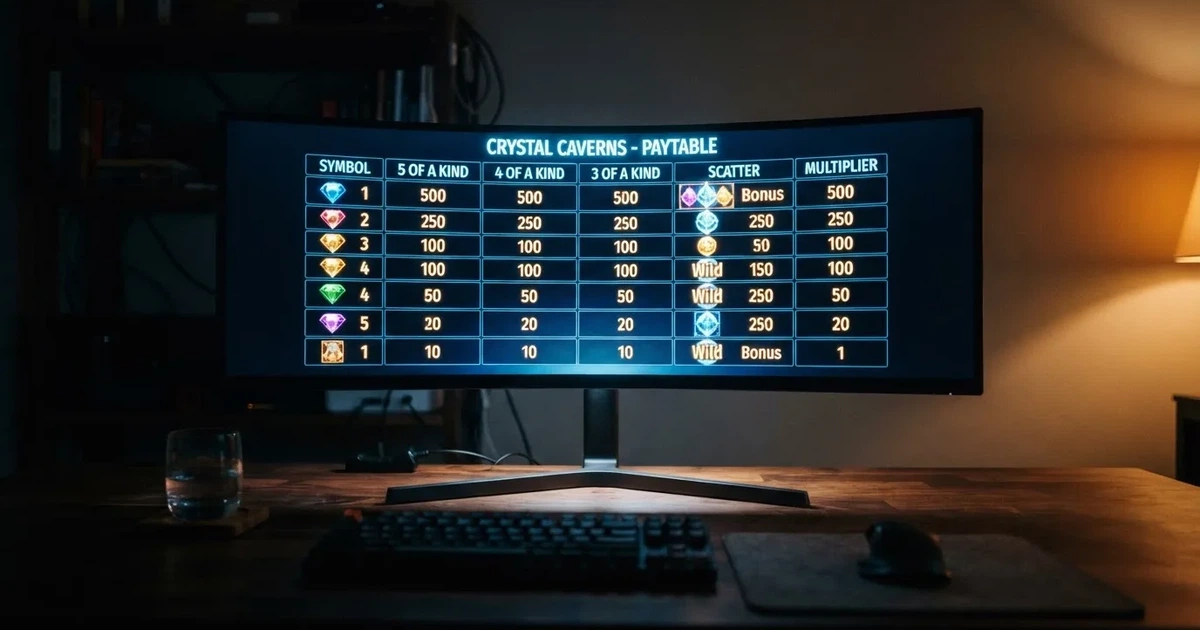
There’s no single “best” pokie machine, and pretending there is does the reader a disservice. What’s actually worth knowing before a person sits down at a poker machine in a pub or club in Australia — or loads what looks like one on a phone — is the handful of specifications that separate one machine from the next: the return-to-player, the volatility, the bet size, the number of lines, and whether the operator behind it is licensed to take your money at all. The rest is decoration. This page walks through each of those, what the law says about where you can play, what offshore sites are doing while you read, and how the responsible-gambling tools stack up around the act of choosing. The picture it draws is honest: the house always has an edge, the regulator in your state sets a floor on how much of that edge the operator is allowed to keep, and the offshore sites promising “real pokie machine apps” are not what they say they are.
Table of Contents
- Pokie machines themselves: paytable, RTP and volatility
- How to pick a pokie machine when you walk into a venue
- The Australian pokie landscape: what’s actually licensed, and where
- What offshore “pokie machine apps” actually are
- The ACMA’s recent enforcement record
- The eleven brands in the ACMA’s published record
- What offshore “best pokie machine” sites actually deliver to an Australian player
- Responsible gambling: the tools that actually reach an Australian player
- Payments, payout speed and the offshore exception
- Mobile play: apps, browsers and what each does
- What the block rate actually tells a player
- Picking, on the page, between the available paths
- Tax, winnings and the ATO
- What an Australian player actually decides
- Frequently asked questions
Pokie machines themselves: paytable, RTP and volatility
A pokie machine is, mechanically, a paytable sitting on top of a random number generator. The paytable tells you which symbol combinations pay what, how many lines the game uses, and which features (free spins, multipliers, bonus games) sit on top of the base spin. The return-to-player — RTP, written on every Australian machine’s help screen — tells you the long-run share of money wagered that the machine is required to return to players across its life. The volatility tells you how lumpy that return is: a low-volatility game pays out smaller amounts more often, a high-volatility game pays out larger amounts less often.

Those three numbers are the only specifications worth comparing, because the rest of what a machine offers is presentation. A bonus round that triggers every thirty spins on average is just a different shape of payout distribution. A “feature buy” that lets a player pay 100× the bet to skip straight to the free-spin game is a way of front-loading volatility. Australian machines, by law, have to publish their RTP somewhere a player can find it before they commit money; the help screen on every licensed gaming machine in the country carries it, and any venue worth playing in will point you at it if you ask. A player who walks up to a machine and does not know its RTP is playing blind, and the venue has not helped them out by making the figure hard to find.
Australian RTP floors by jurisdiction
| Jurisdiction | Minimum RTP |
|---|---|
| New South Wales | 85% |
| Northern Territory | 85% |
| Queensland | 85% |
| Victoria | 85% (87% at Crown Melbourne) |
| Australian Capital Territory | 87% |
| Tasmania | 87% |
| South Australia | 87.5% |
| Western Australia | 90% |
Each Australian state and territory sets its own legal minimum RTP for poker machines, and the figures cluster tightly enough that they read as a national range rather than eight separate regimes. None of these floors is a “best” figure: they are regulatory minimums, and the actual RTP of any given machine sits at or above its state’s floor, often significantly above for newer titles. The choice between an 87% game and a 92% game is, in the long run, the difference between losing $13 and losing $8 for every $100 wagered — which is what a player should be reading when they pick one machine over another in the same venue.

Volatility, bet size and what they actually change
Volatility and bet size are the two specifications most often misunderstood. Volatility does not change the RTP — a high-volatility game returns the same long-run percentage as a low-volatility game with the same RTP, just in fewer, larger hits. Bet size does not change the RTP either, on a percentage basis; doubling the bet doubles the dollar return and doubles the dollar loss in the same proportion, so a player who bets $2 per spin on a 90% game loses the same share as a player betting $1. What bet size does change is the rate at which a bankroll disappears, and what volatility changes is the variance around the long-run average — the experience of playing.
A player with $200 in their pocket for the night, sitting at a $1 spin game with low volatility, will see their bankroll slide steadily. The same player at a $1 spin high-volatility game will see the balance jump around — a hundred here, a hundred there, a long run of nothing in between. Both games, statistically, will return the same percentage. Neither is “better”; they are different shapes of the same expectation. The practical question is which shape the player can afford to sit with. A person who wants a long, even night picks a low-volatility game and a small bet. A person chasing a feature round and willing to ride a dry stretch picks a high-volatility game and a small bet. A person who picks a high-volatility game at a large bet is, in plain terms, paying extra variance for a longer expected loss.
Multi-line vs single-line: what the extra lines buy
Multi-line pokie machines do not pay out more often than single-line ones. They offer more chances to win on a single spin because each spin activates every line on the machine at once, but the cost of the spin goes up in proportion to the number of lines, and the long-run RTP stays where the game’s paytable puts it. A 25-line game at 1¢ per line costs 25¢ per spin and wins on 25 lines; a 1-line game at 25¢ per spin costs the same and wins on 1 line. The math is identical. What the extra lines do is convert a single 25¢ gamble into 25 simultaneous 1¢ gambles, and that conversion matters psychologically more than mathematically — players see more “wins” because every line that lands a symbol combination triggers a payout animation, even when the payout is smaller than the spin cost. The house always has the edge either way, and the edge is the same.
How to pick a pokie machine when you walk into a venue
There is no shortcut, only the discipline of checking three things before committing. First, the RTP: the help screen carries it, and any venue refusing to point a player at it is a venue to leave. Second, the volatility, if the venue’s information screen carries it — many Australian venues print it on the game information card next to the RTP, and online reviewers for the same game titles will state it. Third, the bet size: a player who would not normally bet $5 per spin should not bet $5 per spin because the machine happens to have a $5 minimum. The relationship between the bet size, the bankroll and the session length is the only thing that determines whether the night is affordable.
A useful rule of thumb for a recreational session: total bankroll divided by the bet-per-spin gives the number of spins the session lasts in the worst case, and that figure divided by 60 gives the rough number of minutes of play if the machine spins once every three seconds. A $200 bankroll at a $1 spin game is 200 spins, which is roughly an hour of play; the same $200 at a $5 spin game is 40 spins, which is roughly two minutes of play if nothing hits. That second number is the one most players do not run before they sit down. The arithmetic is not complicated. It is also not optional.
The Australian pokie landscape: what’s actually licensed, and where
Australia has about 3% of the world’s pub and club poker machines with 0.3% of the global population, and in 2020–21 the country bet almost A$150 billion through gaming machines and lost A$12.18 billion on them. New South Wales alone, the largest market, had 87,298 gaming machines outside casinos across 2,195 venues as of June 2023, with player losses of A$8.18 billion in 2022–23. Queensland had 21,122 gaming machines in 351 venues as of October 2023, and Victoria had 26,380 machines outside Crown Casino in 488 venues in 2021–22, sitting under a statewide cap of 30,000. Every Australian state and territory separately regulates the design and operation of these machines, which is why the RTP floors differ and why a venue in Sydney is not interchangeable with one in Perth.
Registered clubs operated Australia’s first legal poker machines from 1956, in New South Wales, and the country has run poker machines for almost seventy years. Western Australia took the opposite path when Crown Perth opened in 1985: poker machines were banned in pubs and clubs, and the casino’s roughly 2,500 machines remain the state’s entire stock, all approved by the Gaming and Wagering Commission. Tasmania’s stock of machines sat under a Federal Group monopoly from 1968 until November 2021, when legislation passed to end that monopoly and move oversight to the Tasmanian Liquor and Gaming Commission. Tasmania also planned nation-leading mandatory pre-commitment cards — a system that would let a player set hard limits on their own play before they sat down — but implementation was delayed until late 2025.
Table games alongside the machines
Pokie machines do not exist in a vacuum. Crown Melbourne offers three baccarat variants — Traditional Baccarat, Crown Baccarat and 2 to 1 Baccarat — as approved table games regulated by the Victorian Gambling and Casino Control Commission, which replaced the VCGLR as Victoria’s casino regulator on 1 July 2022. Under section 66 of the NSW Casino Control Act 1992, a casino operator in New South Wales must not permit a game such as baccarat to be played unless the game and its rules are approved by the regulator, and the operator must make a copy of the approved rules available to patrons on request. Baccarat itself carries a house edge of 1.06% on the Banker bet, 1.24% on the Player bet and 14.36% on the Tie — which is why the Tie bet exists for tourists and almost no one else. Blackjack, in comparison, has a house edge of about 0.28% under liberal Las Vegas Strip rules (dealer stands on soft 17, double on any two, double after split, resplit aces, late surrender) and about 0.43% under Atlantic City rules. None of this is “pokie machine” content in the strict sense, but a player who walks into a casino floor in Melbourne and chooses between a bank of machines and a baccarat table has a comparison worth making, and the percentages above are the comparison.
What offshore “pokie machine apps” actually are
Online pokies — the online version of the poker machines that sit in pubs and clubs — are prohibited for people in Australia. The Interactive Gambling Act 2001 (IGA), strengthened by the Interactive Gambling Amendment Act 2017, makes it an offence to provide online casino games, online pokies or in-play betting to a person in Australia, and no state or territory licenses them. What is licensable is wagering on races and sport placed before the event, lotteries and keno — in practice licensed by the Northern Territory Racing and Wagering Commission, which regulates 52 of Australia’s online bookmakers (including Sportsbet, Bet365 and Ladbrokes), holds no full-time staff, and meets once a month in Darwin.
A site that promises “real pokie machine apps” or “the best pokie machine app” to an Australian user is, by definition, an offshore site operating in breach of the IGA. The Australian Communications and Media Authority (ACMA) investigates, issues formal warnings, and directs Australian internet service providers to block illegal sites. As of June 2026, the ACMA reported that a total of 1,751 illegal gambling and affiliate marketing websites had been blocked since the first blocking request in November 2019, and more than 230 unlicensed gambling services had left the Australian market since enforcement was strengthened in 2017. In the most recent round, reported on 26 June 2026, the ACMA asked ISPs to block 12 more illegal gambling websites: 7Signs, ChromaBet, Donbet, Duospin, Freshbet, Slots Gem, Jacks Club, Lucky Start, PointsBetz, Spinrise, Vinyl Casino and Wildsino. The block list grows by a dozen roughly every quarter.
H2 Gambling Capital’s 2025 report estimates that Australians lose about A$3.9 billion a year to illegal gambling sites, and that the share of gambling going through legal channels fell from 74% in 2021 to 64%. The fall is what the IGA exists to reverse, and the enforcement record above is how it’s being reversed in practice.
A licence displayed offshore is not a licence to take Australian money
A licence displayed in the footer of an offshore casino site is a licence issued by the regulator named in that footer — Curaçao, Malta, the Isle of Man, occasionally Kahnawake — and it permits the operator to take bets from people in jurisdictions where that licence is recognised. Australia is not one of those jurisdictions for online casino games, and the IGA says so. The “licence” an offshore site displays is real, in the sense that a regulator really did issue it; it is irrelevant in the sense that it does not authorise the operator to take money from a person sitting in Sydney or Perth. A player who deposits with an offshore site is gambling under that operator’s house rules, with no Australian consumer protection, no Australian complaints body, and no recourse if a withdrawal is refused. If the site is then added to the ACMA’s block list — and the list above shows the rate at which that happens — the player’s balance is sitting behind a block they did not know was coming. The individual player is not prosecuted under the IGA; the law targets the provider. That does not make the player’s position safe. It makes the player’s position uncompensated.
The ACMA’s recent enforcement record
The ACMA’s enforcement does not stop at blocking requests. The authority issues formal warnings to the operators behind illegal services, and those warnings are published on the ACMA website. Each warning names the operator entity and the brand, and the publication itself is what makes the action useful — anyone considering the brand can find the warning in the ACMA’s list and read what was issued and when. The table below covers the warnings the research captured for the brands relevant to this page.
| Brand | ACMA action and date | Operator named by the ACMA | Subject support |
|---|---|---|---|
| RocketPlay | Formal warning, March 2026 (earlier May 2022 over a different operator entity) | Pulsup Ltd (March 2026); Dama N.V. (May 2022) | — |
| Level Up Casino | Formal warning, May 2022 | Dama N.V. | listings-only (BGaming) |
| Woo Casino | Formal warning, March 2025 | Dama N.V. | — |
| Spirit Casino | Formal warning, May 2025 | Dama N.V. | — |
| National Casino | Formal warning, July 2025 | Consolutetish S.R.L. | listings-only (en.wikipedia.org) |
| Bizzo Casino | Formal warning, July 2025 (earlier 2022 over a different operator entity) | Consolutetish S.R.L. (July 2025); TechSolutions (CY) Group Limited and TechSolutions Group N.V. (2022) | — |
| Ignition Casino | Formal warning, July 2025 | Bamboo Media | — |
| Instant Casino | Formal warning, February 2025 | EOD Code SRL | — |
| Jackbit | Formal warning, April 2026 | Ryker B.V. | — |
| Casino Intense | Formal warning, April 2025 | Sterplay Holding Ltd | listings-only (ABC News; ACMA; Crown Melbourne) |
| Sky Crown | Formal warning, September 2022 | Hollycorn N.V. | — |
The pattern matters more than any single row. Dama N.V. has been warned over more than one of its brands — Level Up Casino in 2022, Woo Casino in March 2025, Spirit Casino in May 2025, RocketPlay in 2022 — and the same operator entity keeps turning up under different skins. Consolutetish S.R.L. sits behind National Casino and Bizzo Casino. The rebrands are cheap; the warning history is not. A player who has seen one brand on the ACMA’s list and is being approached by another brand from the same operator has, in the warning history, the information they need to make the call.
The eleven brands in the ACMA’s published record
Each brand below is one the ACMA itself named in a formal warning for offering prohibited online casino services to people in Australia. None is recommended. The point of listing them is the same as the point of the table above: the warnings are public, and a player who has been approached by any of these brands can check the ACMA’s own publication rather than relying on a marketing email.
RocketPlay
Pulsup Ltd, the operator entity the ACMA named, received a formal warning in March 2026 over RocketPlay. The site had already drawn attention earlier — Dama N.V. was the operator entity named in a separate formal warning in May 2022 covering six brands, RocketPlay among them. The site offers online casino games and online pokies to Australian users, which the IGA prohibits, and the ACMA has now said so in writing twice under two different operator entities. A player who lands on RocketPlay from an Australian IP address is looking at a site the regulator has formally warned, twice, and that is the end of the inquiry the regulator can offer. Whatever the site claims in its footer about its licence, the licence does not cover Australia for online casino games, and the ACMA’s record is the public version of that fact.
Level Up Casino
Dama N.V. was named in the May 2022 formal warning that covered six of its casino brands, Level Up Casino among them. The brand shows up in third-party listings of games by provider BGaming — the listings are a record of which studios’ content the casino aggregates, not a sign the casino is licensed in Australia. The level of the brand’s offshore footprint, in other words, is the level a marketing department would expect from a casino with several years of trading; it is not, and cannot be, evidence that the brand is permitted to take bets from a person in Australia. The ACMA’s warning is the relevant document, and it says what it says.
Woo Casino
Dama N.V. drew a further formal warning in March 2025 over Woo Casino, sitting alongside the May 2022 warning over six other brands. The pattern — one operator entity, multiple brand skins, multiple ACMA warnings — is the pattern the ACMA’s enforcement record keeps producing, because rebranding is cheaper than re-licensing and the IGA’s prohibition does not depend on the brand name. A player who has decided against a Dama N.V. brand based on a 2022 warning has, as of March 2025, the same reason to decide against Woo Casino.
Spirit Casino
The May 2025 warning to Dama N.V. also named Spirit Casino, alongside Woo Casino. The same operator entity, the same prohibited product, the same regulator, the same outcome. Spirit Casino’s distinguishing feature in the ACMA’s record is that the warning against it is the most recent in the Dama N.V. cluster; a player who reads the ACMA’s warning list in chronological order reaches Spirit Casino last.
National Casino
Consolutetish S.R.L. received a formal warning in July 2025 over National Casino. The brand appears in third-party listings of the broader offshore casino market, which is consistent with what an unlicensed casino brand looks like in those listings: present, not Australian-licensed, and not claimable by the brand as Australian-licensable. The ACMA’s warning is the action the regulator took; the listing is the position the brand occupies in the market it actually serves, which is not Australia.
Bizzo Casino
Consolutetish S.R.L. drew the same July 2025 warning over Bizzo Casino as it did over National Casino, and Bizzo Casino had already been the subject of a 2022 formal warning to TechSolutions (CY) Group Limited and TechSolutions Group N.V. Two operator entities, two warnings, one brand — the same trajectory as RocketPlay, but under different operator names. A player who has encountered Bizzo Casino under either operator name has the regulator’s own record of why that encounter should not lead to a deposit.
Ignition Casino
Bamboo Media was named in the July 2025 formal warning covering Ignition Casino, in the same round that named National Casino and Bizzo Casino under Consolutetish S.R.L. The brand targets the Australian market by name — an “Ignition Casino” presented to an Australian user is presented in breach of the IGA, and the ACMA has now said so in writing. The site is part of a wave of offshore brands marketed directly at Australian IP addresses, and the warning is part of the regulator’s response.
Instant Casino
EOD Code SRL received a formal warning in February 2025 over Instant Casino. The brand had been operating long enough to establish an Australian-facing presence before the warning was issued, which is itself worth noting — a player who has been approached by Instant Casino has been approached during a period in which the brand was already the subject of the regulator’s attention, even if the formal warning had not yet been published.
Jackbit
Ryker B.V. received a formal warning in April 2026 over Jackbit and CasinOK together. Two brands, one operator entity, one warning — the same pattern as the rest of this list, and the same underlying legal point. April 2026 is recent enough that Jackbit is one of the brands a player is most likely to encounter today without yet having seen the warning, because the warning is not yet old enough to have been absorbed into the general background noise of offshore casino marketing. The ACMA’s publication is the place to check.
Casino Intense
Sterplay Holding Ltd received a formal warning in April 2025 over Casino Intense. The brand sits in third-party listings of the Australian casino market (a listing on the ABC’s reporting, the ACMA’s own enforcement record, and Crown Melbourne’s competing product offering are the reference points the listings draw on), which is the same shape of presence the other brands in this section have — present in the market a player might encounter, absent from any Australian licence register.
Sky Crown
Hollycorn N.V. received a formal warning over its Sky Crown and Blue Leo casino services. The ACMA’s “Formal Warning — Hollycorn N.V. (Sky Crown and Blue Leo)” was published in September 2022, which makes Sky Crown the longest-standing entry on this list. A player who has been seeing Sky Crown advertising for years is looking at a brand whose Australian-facing activity was already on the regulator’s record more than three years ago. The site’s continued availability behind various domains is not a sign the warning was minor; it is a sign the offshore casino business model absorbs regulatory friction in stride.
What offshore “best pokie machine” sites actually deliver to an Australian player
A player who lands on one of the offshore sites above and finds a “best pokie machine” page has reached a piece of marketing. The page ranks games by RTPs the operator does not publish independently, by volatility the operator does not verify, by “jackpot frequency” the operator cannot measure, and by game studio names — Pragmatic Play, BGaming, Hacksaw Gaming, Nolimit City — whose games do run on these sites, and whose presence on the sites is not in itself a quality claim, because the studio is paid to integrate and the casino is paid to host. The RTPs the offshore page quotes are real in the sense that the games they describe do carry those RTPs in their help files; they are irrelevant in the sense that they describe games on a site the player cannot legally use from Australia.
A player who wants to compare pokies by RTP and volatility does not need an offshore site to do it. The help screen on every licensed Australian gaming machine carries the RTP. The state’s regulator publishes the floor. The game studio’s own site, where it has one, carries the volatility classification for each title it distributes. The Australian player’s job is to walk up to the machine, look at the help screen, and read the figure that is actually printed on the machine they are about to play. The offshore page that ranks games they will never play from their own machine is not a shortcut to that information. It is a wall.
Responsible gambling: the tools that actually reach an Australian player
The responsible-gambling framework around Australian pokie play sits in two layers: state-based self-exclusion and harm-reduction schemes, and the national supports that work across all states and territories.
BetStop, the National Self-Exclusion Register, has been live since August 2023 and binds every Australian-licensed online and phone wagering service. A person who registers with BetStop is excluded from every licensed wagering provider in the country for the period they nominate. The catch is the same one that runs through the rest of the offshore-versus-onshore split: BetStop binds only Australian-licensed services, and an offshore casino is not connected to it. A player who has registered with BetStop and is gambling on an offshore casino has self-excluded from the Australian side of the market and is still exposed on the other side.
The National Gambling Helpline is 1800 858 858, free, 24/7, with web chat at Gambling Help Online. Both are run by service providers funded by state and territory governments, and they are the first call for a player who has decided the playing has gone past the point they want it to. State-based services sit on top of those — each state and territory has its own self-exclusion scheme and its own counselling services, which the Gambling Help Online site links to by postcode.
A useful distinction: pre-commitment is what Tasmania planned to make mandatory across its poker machines — a card a player would swipe on entering a venue that would track their play and enforce limits they set themselves. Implementation was delayed until late 2025. No other Australian jurisdiction has a mandatory pre-commitment system in place for poker machines. A player who wants the discipline of a hard limit has to set it themselves, before the session, and stick to it. The help screen and the bankroll arithmetic at the top of this page are a manual version of the same idea.
Payments, payout speed and the offshore exception
The payment rules for licensed Australian online wagering changed on 11 June 2024: credit cards, credit-related products and digital currency are banned as payment for licensed online wagering, with penalties of up to A$247,500 for operators that accept them. The legal deposit routes for licensed wagering are debit card, bank transfer, PayID/Osko and BPAY. A licensed Australian wagering site asking a customer for a credit card or a crypto deposit is, as of 11 June 2024, breaking the rules the licence binds it to.
Offshore sites do not have to follow those rules, and the offshore sites listed above generally do not. They accept credit cards, they accept crypto, they accept e-wallets that an Australian-licensed site would not touch. The convenience is the point. The risk is what the convenience costs: an offshore site that takes a crypto deposit and then refuses a withdrawal has the player’s money in a currency and through a channel the Australian regulator cannot reach. A player who needs the speed of an offshore payout has already accepted that the payout, when it comes, comes with no Australian recourse if it doesn’t.
For land-based play, the “payout” is the cash a player walks out of the venue with, and the speed is whatever the venue’s cashier takes to count the notes. There is no settlement time, no clearing window, no intermediary — the player puts money in the machine, the machine pays what it pays, and the player cashes out at the desk. That is the comparison an offshore site cannot offer, and the comparison a player considering offshore play is giving up.
Mobile play: apps, browsers and what each does
A licensed Australian gaming machine does not have an “app.” A player who wants to use one sits at the machine in the venue, plays it, and walks away. The mobile experience an Australian player is most likely to encounter is the venue’s own loyalty app — a club or pub app that tracks member play, issues reward points, and lets the player check their balance before they drive home. Those apps do not contain a pokie machine; they contain the loyalty system around the machine.
The “pokie machine app” an offshore site advertises is the offshore site’s product, presented as if it were the same thing. It is not. It is the offshore casino’s mobile site or downloadable client, running on the offshore casino’s licence (whatever that licence is), serving the offshore casino’s games to a phone in Australia. The IGA’s prohibition does not depend on whether the product is delivered through a browser tab or a downloaded app; what the IGA prohibits is the offering of online casino games to a person in Australia, and the offering does not change because the icon on the home screen does. The site is the same site, in app form. The ACMA’s block list covers the site’s domains; whether the block reaches the app depends on how the app is delivered, and the regulator’s posture on apps delivered from outside the Australian App Store is the same as its posture on the sites themselves.
For a player who wants to play a pokie machine on a phone in Australia, the honest answer is that the licensed product is the machine in the venue, and there is no app that delivers that product to a phone. The closest legitimate alternative is the demo modes some game studios publish on their own sites — playable without a deposit, with no real money at stake, useful for getting a feel for a game’s volatility and feature structure before the player walks into a venue and plays it for real. That is not “playing a pokie machine on a phone.” It is a way of learning what playing one looks like.
What the block rate actually tells a player
The arithmetic the ACMA’s record lets a reader run is straightforward. The first blocking request was in November 2019. By June 2026, the ACMA had asked ISPs to block 1,751 illegal gambling and affiliate marketing websites. Working from those two figures: the running total of 1,751 blocks divided by the roughly 79 months between November 2019 and June 2026 gives a band of roughly 22 blocked sites per month across the period, with the most recent rounds running larger and the earliest rounds running smaller. The exact per-month figure depends on which months the ACMA publishes its rounds in and how unevenly the rounds fall; the honest reading of the data is that the ACMA’s blocking pace has accelerated, and that a player who found an offshore site promising to take Australian money three months ago and did not check the ACMA’s list then should check it now, because the odds that the site has been added to the list in the intervening quarter are not negligible.
The running total of 1,751 blocks divided by the roughly 79 months between November 2019 and June 2026 shows that the ACMA’s blocking pace has accelerated, and a player who found an offshore site promising to take Australian money three months ago and did not check the ACMA’s list then should check it now, because the odds that the site has been added to the list in the intervening quarter are not negligible.
Picking, on the page, between the available paths
What a player can do, after reading the above, comes down to four options. Three are onshore; one is offshore and has a regulator’s published position against it.
The first is play the licensed machines in a pub or club in the player’s state, having read the RTP on the help screen and the volatility on the game information card, having chosen a bet size that fits the bankroll the player walked in with, and having set a time limit the player sticks to. This is the option the IGA, the state regulators and the responsible-gambling framework all point at. It is also the only one of the four with BetStop coverage, with a state ombudsman to complain to, and with the RTP and volatility on the machine in front of the player rather than on a marketing page in another tab.
The second is play the table games at the licensed casino in the player’s state — Crown Melbourne’s baccarat tables, the blackjack tables in Crown Sydney, the equivalent elsewhere. The house edges are lower than a poker machine’s on most bets, but the game is faster and the player has less control over the pace. A player who chooses this option chooses it because the lower house edge matters more to them than the slower pace of a pokie machine.
The third is not play at all, which is the option BetStop exists to support and which the National Gambling Helpline at 1800 858 858 is set up to talk through. A player reading this page because they want to pick a pokie machine is not the player this option is aimed at, but a player reading this page because they want to stop is the player the option exists for.
The fourth is the offshore path: deposit with one of the brands the ACMA has named, accept that the licence displayed is not an Australian licence, accept that there is no Australian recourse if the withdrawal is refused, accept that the site may be on the ACMA’s block list by the time the player wants to withdraw, and play the games the offshore site offers under whatever house rules the offshore site applies. This is the path the regulator’s published record points at, and the regulator’s published record is the answer to the question of whether the path is one the player should take.
Tax, winnings and the ATO
Gambling winnings of a recreational player in Australia are not assessable income under section 6-5 of the ITAA 1997, and losses are not deductible — unless the person carries on a business of gambling. The line between “recreational player” and “gambling business” is a line the ATO draws, and the ATO’s view depends on factors — frequency, system, level of organisation, whether the activity is conducted as a profit-making enterprise — that no checklist can settle. A recreational player who has had a lucky night at a pokie machine does not owe tax on the win. A player whose gambling activity is systematic, recorded and intended to produce a profit may be running a business in the ATO’s eyes, and the ATO’s guidance on that distinction is the place to check. The model is “recreational player, no tax,” and the check with the ATO is the place to confirm it for the player’s own position.
What an Australian player actually decides
The decision is not “which pokie machine is best.” No machine is best in a way that survives the question of who’s asking. The decision is: licensed machine in a venue, with a read of the help screen and a bet size the player can afford — or an offshore site the ACMA has warned against, with a licence that does not cover Australia and a regulator that cannot help. The choice has been a regulator’s published choice before the player makes it. The player’s job is to read what the regulator has published, pick the licensed option, and apply the arithmetic at the top of this page to the bankroll in their pocket before they sit down.
Frequently asked questions
What is the difference between a low-volatility and a high-volatility pokie machine?
Volatility describes how lumpy a game’s payouts are over the short run, not how generous it is in the long run. A low-volatility game returns a higher share of spins as small wins; a high-volatility game returns a smaller share of spins as larger wins. The return-to-player — the long-run percentage — is set independently and is the same for both. A low-volatility game is steadier to play; a high-volatility game is swingier.
Does bet size change the odds on a pokie machine?
No. Bet size does not change the return-to-player as a percentage. Doubling the bet doubles both the dollar return and the dollar loss in the same proportion, so the long-run edge is identical at any bet size within the machine’s range. What bet size changes is the rate at which the bankroll is consumed, which is why a player who bets $5 per spin on a $200 bankroll runs out forty times faster than one betting $1 per spin on the same bankroll.
Are mobile pokie-machine apps the same as the licensed machines in a pub or club?
No. The licensed machines in pubs and clubs are regulated state by state and carry a published return-to-player on the help screen. A mobile “pokie machine app” offered by an offshore casino is the offshore casino’s product, served to a phone, and is not licensed for Australian users under the Interactive Gambling Act 2001. The offshore site offering it is the kind of site the ACMA has been blocking and formally warning for years, and a player who lands on it from an Australian IP address is using it in breach of the prohibition the IGA imposes on the operator.
How can someone find the payout percentage of a specific pokie machine before playing?
On a licensed Australian gaming machine, the payout percentage is on the help screen of the machine itself, accessible before any money is committed. The game information card next to the machine, where the venue prints one, often also carries the volatility classification. A player who cannot find either of those on the machine they are about to play should ask venue staff; a venue that refuses to point a player at the figure is a venue to leave.
Are multi-line pokie machines more likely to pay out than single-line ones?
No. Multi-line machines offer more chances to win on each spin because each spin activates every line, but the cost of the spin goes up in proportion to the number of lines, and the long-run return-to-player is set by the game’s paytable, not by the line count. A 25-line game at 1¢ per line costs the same per spin as a 1-line game at 25¢ per line and has the same RTP. The extra lines convert one large gamble into many small ones; the house edge is unchanged.
Who audits pokie machines in licensed Australian venues?
Pokie machines in Australian venues are regulated state by state and territory by territory, with each jurisdiction setting its own minimum return-to-player and approving the games that may be deployed. The state and territory gaming regulators are the bodies responsible for the oversight, and the venue is required to keep the help-screen information available. Where the player has a complaint about a licensed machine, the state or territory regulator is the body to contact; BetStop and the National Gambling Helpline at 1800 858 858 are the bodies for the player who wants to step back from play altogether.