
Best video slots in Australia 2026: the choices that exist and the ones that don’t
Current as of 29 October 2026 — verified against the ACMA register of formal warnings and blocking requests.
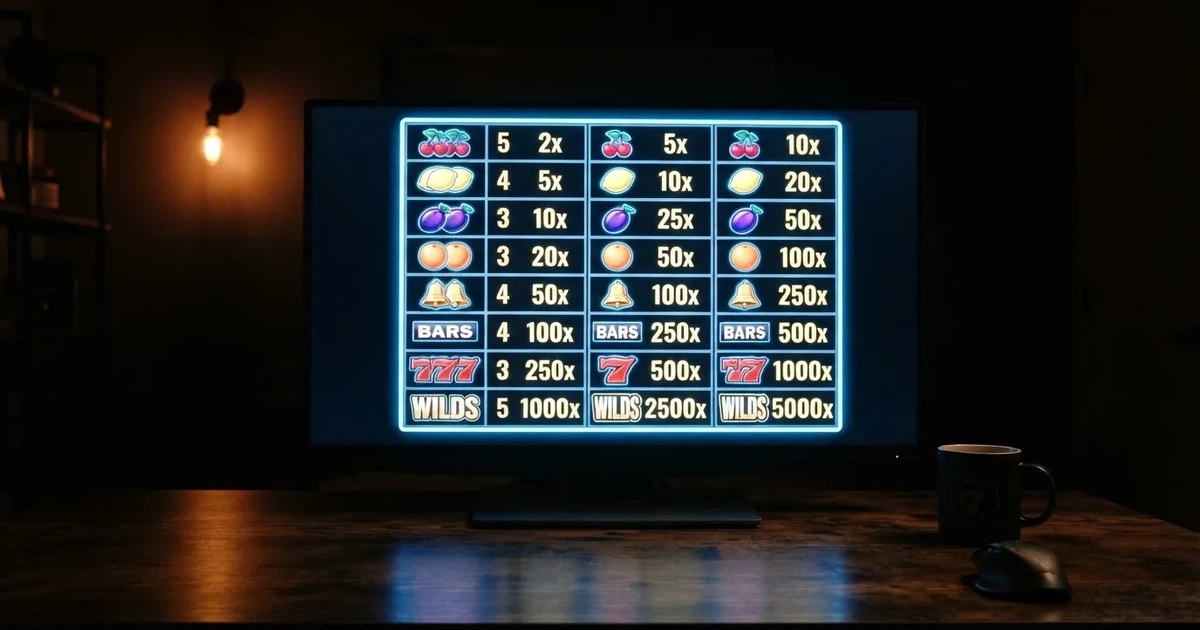
The phrase “best video slots Australia” pulls up two completely different kinds of result, and a reader who searches it deserves to know which one they are looking at before they look at anything else. A modern video slot is a five-reel, multi-payline game with bonus rounds, free-spin features and often a progressive jackpot — that part is settled. What is unsettled, and what makes the Australian market different from most, is who is allowed to offer that game to whom. Offshore casino sites that take Australian players are not a legal option in this country; the ACMA has been issuing formal warnings and asking ISPs to block them for years, and the list of brands it has named keeps growing. Inside Australia, the same kind of machine exists — the pokies that sit in pubs, clubs and casinos in every state — but it runs on a separate licensing regime with its own rules on return-to-player, bet sizes and where the money goes.
What follows is a practical walk through both sides of that divide. The mechanics of a video slot, the way paytables and volatility work, the bonus rounds and free-spin features that distinguish the format from the three-reel machines Charles Fey built in the 1890s. Then the law: what the Interactive Gambling Act 2001 actually prohibits, what the ACMA has done about it, and why offshore sites advertising to Australians are not a legitimate option even when they hold a Curaçao or Anjouan licence. Then the Australian-licensed product itself — the 87,298 machines in New South Wales pubs and clubs alone — and where a reader who wants to play a modern video slot on Australian soil actually goes to do it.
Table of Contents
- How modern video slots work, and how they differ from the machines that came before
- Paytables, RTP and volatility: the three numbers that decide what a video slot actually costs
- Bonus rounds, free spins and the marketing around them
- The legality of online video slots in Australia: what the Interactive Gambling Act prohibits
- How the ACMA has enforced the prohibition: blocking, warnings and the running count
- The blocking rate: how many sites the ACMA has cleared since the first round
- Responsible gambling around video slots: the tools that exist and the ones that don’t
- Mobile and app play: what the experience actually looks like
- The brands the ACMA has formally warned: what the regulator’s register shows
- What an Australian reader’s actual options look like
- What an Australian player should know before claiming any video slot bonus
- The legal protection available to an Australian player
- Frequently asked questions
How modern video slots work, and how they differ from the machines that came before
A video slot, in the sense the term is used in 2026, is a slot machine whose outcome is decided by a random number generator running on a computer rather than by the spin of physical reels. The first machine of that kind was developed by Fortune Coin Co. in Kearny Mesa, California in 1976. By the mid-1990s the format had largely displaced the mechanical three-reel machine in commercial venues, and it has kept evolving since — adding bonus rounds, free-spin features, cascading reels, Megaways-style variable paylines and progressive jackpots that pool stakes across a network of machines or sites.

The key mechanical differences from a classic three-reel machine:
- Reels and symbols. A classic mechanical slot has three reels with around ten symbols each, giving roughly a thousand possible combinations. A modern video slot has five or more reels, often with 50 or more virtual symbols per reel, which pushes the odds against hitting the top combination into the hundreds of millions to one.
- Paylines. A classic machine usually has one payline down the middle. A modern video slot typically has between 20 and 50 paylines, with some Megaways titles offering tens of thousands of ways to win on a single spin.
- Bonus rounds. Free-spin features, pick-a-prize bonus games, expanding wilds, cascading wins and progressive jackpots all live on top of the base game. The base spin still decides the outcome; the bonus rounds sit on top and change how much of the screen lights up when it does.
- Return to player. Australian state regulators set minimum return-to-player percentages for gaming machines in licensed venues. In the United States the equivalent floors vary by jurisdiction — Nevada requires at least 75 per cent, Mississippi at least 80 per cent, New Jersey at least 83 per cent — and the Australian figures are set higher in most categories.
None of this is hidden from the player in the way the marketing suggests. A video slot’s paytable is a public document, and reading it takes about thirty seconds. The harder work is reading it accurately — knowing which symbols pay for three of a kind versus four, knowing which bonus rounds trigger on which scatter combinations, knowing the difference between a game’s published RTP and what a single session actually returns. That work is what this page is set up to do.
Paytables, RTP and volatility: the three numbers that decide what a video slot actually costs
A paytable is the small chart on the machine or inside the game’s help menu that lists every symbol, every winning combination and what each one pays. On a modern video slot it runs several pages because the symbol set is larger and the combinations more numerous, but the structure is the same as it has been since the Liberty Bell. Three bells in a row paid the top prize of ten nickels on Charles Fey’s original machine in the 1890s; a modern equivalent pays a multiple of the line bet, scaled by how many matching symbols land on an active payline.
Two other numbers sit alongside the paytable and do most of the work of telling a player what a game actually costs them:
- Return to player (RTP) is the share of every dollar wagered that the game is programmed, over the long run, to return to players. A 96 per cent RTP means the game keeps four cents of every dollar on average. This is a statistical average over millions of spins; no individual session follows it, and a player who hits a bonus round on their first spin is not “due” a loss on their next one.
- Volatility (sometimes called variance) describes how the game distributes its returns over time. A low-volatility slot pays small amounts often; a high-volatility slot pays larger amounts rarely. Two games with the same 96 per cent RTP can feel completely different to play — one of them gives a long, fairly even session, the other gives mostly nothing with the occasional big hit.
Volatility varies within a single provider’s catalogue for a reason: it lets players pick the texture of session they want. A low-volatility game suits someone with a small bankroll who wants a long session; a high-volatility game suits someone chasing the bigger bonus-round payouts that the marketing tends to feature. The paytable shows the symbols and their values; the volatility is usually described in the game’s information screen, though not always with the precision a careful player would like.
In a licensed Australian venue, the gaming machine itself prints its RTP and volatility class on the help screen, and the state regulator’s rules determine the floor below which the RTP cannot fall. Offshore casino sites are under no such constraint, and the RTP they publish — when they publish one — has no external verification behind it.
Bonus rounds, free spins and the marketing around them
A bonus round is any feature on top of the base spin that gives the player something the base spin does not — a set of free spins, a pick-a-prize game, a wheel spin, a cascade of additional symbols. They are the single biggest difference between a modern video slot and a classic three-reel machine, and they are what most of the marketing language around video slots actually describes.
Free spins are the most common bonus feature: a set number of spins awarded when scatter symbols land in the right combination, usually with a multiplier attached or with extra wilds added to the reels for the duration of the feature. A free-spin bonus on a high-volatility game can pay out many times the stake that triggered it; on a low-volatility game it usually pays a smaller, steadier amount.
In the licensed Australian market, the bonus-round mechanics are part of the game’s design and the state regulator’s approval. Offshore, the same language is used to sell inducements — sign-up bonuses that look like free money, free-spin packages attached to a deposit, loyalty points that convert to bonus credit. The mechanics of those offers are usually unfavourable once the small print is read: a wagering requirement of 30 to 50 times the bonus amount is standard, time limits on meeting it are short, and many games are excluded from contributing to the wagering total. The math is not subtle. A$100 bonus with a 40x wagering requirement means A$4,000 of bets before the bonus can be withdrawn, and the house edge on those bets is whatever the game’s RTP implies.
The honest read is this: bonus rounds inside the game are part of what makes a video slot a video slot, and they are the part of the experience the player is paying for. Bonus offers attached to offshore casino sites are a separate thing — a marketing inducement, with conditions attached, on a product the player is not legally entitled to buy from that seller in the first place. The two get bundled together in the marketing; the player benefits from keeping them separate.
The legality of online video slots in Australia: what the Interactive Gambling Act prohibits
The Interactive Gambling Act 2001, strengthened by the Interactive Gambling Amendment Act 2017, makes it an offence to provide online casino games, online pokies and in-play betting services to a person in Australia. The law targets the provider, not the player — Australians are not prosecuted for placing bets on offshore sites — but the practical effect is that no Australian-licensed entity offers online casino games of any kind, and the ACMA has the power to issue formal warnings, refer matters for civil penalty proceedings and direct Australian internet service providers to block offending websites.
What is licensable under Australian law is wagering on racing and sport placed before the event, lotteries and keno. The Northern Territory Racing and Wagering Commission regulates 52 of Australia’s online bookmakers — Sportsbet, Bet365 and Ladbrokes among them — for tax reasons, and the commission itself has no full-time staff and meets once a month in Darwin. The product being licensed in those cases is the wagering service, not the casino-style content; bookmakers licensed by the NTRWC do not offer online pokies or table games.
Minimum age for any gambling product in Australia is 18. From 11 June 2024, credit cards, credit-related products and digital currency cannot be used to fund a licensed online wagering account, with penalties up to A$247,500 for operators that take them anyway. The legal deposit routes for a licensed Australian wagering account are debit card, bank transfer, PayID/Osko and BPAY. A site asking an Australian player for a credit card or a crypto deposit is, on those terms alone, operating outside the Australian rules.
The Interactive Gambling Amendment (Gambling Reform) Bill 2026 passed Parliament on 19 August 2026. Its advertising and inducement measures commence on 1 January 2027, so it is law with a start date rather than law in force on a 2026 page. Once those measures begin, the inducement language that offshore sites already use to target Australian customers will become a regulated matter in its own right, and the ACMA’s existing powers around blocking and formal warning will sit on top of stricter advertising rules.
How the ACMA has enforced the prohibition: blocking, warnings and the running count
The ACMA’s main enforcement tools are formal warnings and blocking requests to Australian internet service providers. A formal warning is published on the regulator’s website and names the operator and the brand; a blocking request goes to ISPs and results in the named domain becoming inaccessible to Australian customers without a VPN.

By the ACMA’s own reporting in June 2026, a total of 1,751 illegal gambling and affiliate marketing websites had been blocked since the first blocking request in November 2019, and more than 230 unlicensed gambling services had left the Australian market since enforcement was strengthened in 2017. In the round reported on 26 June 2026 alone, the ACMA asked ISPs to block 12 more sites: 7Signs, ChromaBet, Donbet, Duospin, Freshbet, Slots Gem, Jacks Club, Lucky Start, Pointsbetz, Spinrise, Vinyl Casino and Wildsino. The pace has not slowed down.
The published formal warnings name the operator, the date and the brand. The pattern is consistent: a single corporate entity often runs several brands, and successive warnings may cover different brands from the same group. Dama N.V., for example, received a formal warning in May 2022 covering Bambet, Dazard, Level Up, Rocketplay, Wild Tornado and Cobra Casinos, then further warnings over Woo Casino in March 2025 and Spirit Casino in May 2025. TechSolutions (CY) Group Limited and TechSolutions Group N.V. received a warning over Bizzo Casino in 2022; Consolutetish S.R.L. received a warning over National Casino and Bizzo Casino in July 2025, naming the same brand through a different corporate vehicle. The ACMA’s register of formal warnings is the cleanest single record of who has been told to stop, and it is the source the table further down this page is built from.
The player-side consequences of all this are practical, not theoretical. An offshore casino site has no Australian consumer protection behind it. If a withdrawal is refused, there is no Australian complaints body to appeal to. The site can be blocked with a balance still on the account. The site’s stated licence — usually Curaçao or Anjouan — is real but provides no recourse in Australia. The ACMA’s formal warning is the regulator telling the operator in writing that it is breaching Australian law; an Australian player who deposits on a warned site is dealing with an entity the regulator has already addressed.
The blocking rate: how many sites the ACMA has cleared since the first round
By the ACMA’s June 2026 update, 1,751 illegal gambling and affiliate marketing websites had been blocked since the first blocking request in November 2019. That works out to an average blocking rate of roughly 265 sites per year over the just-over-six-and-a-half-year window since enforcement began — a figure that becomes more useful read against the single round reported on 26 June 2026, in which the ACMA asked ISPs to block 12 more sites in one batch.
The running total is the headline number; the batch-by-batch rate is what tells the reader whether enforcement is accelerating or steady. A handful of the rounds reported on over the period have asked for 20 or more sites to be blocked at once; most are smaller, in the single digits or low teens. The June 2026 figure of 1,751 is consistent with a sustained, multi-year campaign rather than a one-off sweep, and the rate of new sites appearing to replace the blocked ones has not fallen to zero.
Responsible gambling around video slots: the tools that exist and the ones that don’t
The player-protection framework in Australia is built around licensed products. BetStop, the National Self-Exclusion Register, has been live since August 2023 and lets a person exclude themselves from every Australian-licensed online and phone wagering service with a single registration. It does not extend to offshore casino sites, which are not connected to the Australian regime at all. The National Gambling Helpline on 1800 858 858 is free, runs 24/7 and has a chat service at Gambling Help Online; it is the right first call for anyone whose play has moved from entertainment into something harder to manage.
State-level tools sit alongside the national framework. Each state and territory runs its own self-exclusion register for the gaming machines in pubs, clubs and casinos, and the rules vary by jurisdiction. New South Wales and Victoria in particular have detailed exclusion schemes that cover the licensed venue estate, with exclusion periods ranging from a minimum of six months to a permanent bar depending on the choice made at the time of registration.
The limitation of all this, for the reader of this page, is that none of it binds an offshore site. A self-exclusion registered with BetStop does not stop a deposit at an offshore casino; a deposit limit set with a licensed Australian bookmaker does not apply at an unlicensed site. The framework is built to protect Australians who use Australian-licensed products, and it works well within that scope. Outside that scope — which is where every brand on the operator list further down this page sits — the only protection is the player’s own discipline, which is a thin protection against products designed to be hard to walk away from.
Mobile and app play: what the experience actually looks like
Modern video slots are designed to be played on a phone. The same random number generator runs the game on a mobile browser as on a desktop browser, and the touch interface is usually a closer fit to the game than a mouse click — bonus rounds in particular, with their pick-a-prize screens and wheel spins, translate well to a tap.
The decision that matters for the player is between a dedicated app and a mobile browser. A dedicated casino app loads the game catalogue once and stores it locally, which makes subsequent session starts faster; a mobile browser opens the same games without taking up storage and without the operating-system permission prompts an app triggers. The trade-off is mostly one of personal preference: a frequent player benefits from the app’s faster session starts; an occasional player does better with the browser, which does not need updating every time the operator pushes a change.
On Australian-licensed sites — that is, licensed wagering services, not licensed casinos — there is no online casino product to play on a mobile browser in the first place. The mobile experience on a licensed Australian wagering site is a betting interface, not a slot machine. The 87,298 pokies in New South Wales pubs and clubs are physical machines, not apps; a player wanting the modern video slot experience on a phone in Australia is, in practice, looking at the offshore market that the ACMA is actively warning against.
The brands the ACMA has formally warned: what the regulator’s register shows
The list below is built from the ACMA’s published register of formal warnings. Each brand sits on it because the ACMA has issued a written warning to the corporate operator behind it, naming the brand, for offering prohibited interactive gambling services to people in Australia. The order follows the regulator’s record rather than any editorial ranking; there is no ranking here, because ranking prohibited services against each other is not information a reader can use.
A note on what “no-data” means in the table below. Where the ACMA’s warning is the only public record of the brand’s Australian-facing activity, there is nothing else to put in the cell: the brand does not appear in any Australian-licensed product, does not appear in any Australian regulator’s positive register, and the offer terms that affiliate marketing pages publish are not information a reader can rely on. Where the research did surface a listings-level reference to the brand — a games catalogue listing, a press reference — that is shown as “listings only” and credited to the listing.
| Brand | ACMA action and date | Operator named by the ACMA | Subject support |
|---|---|---|---|
| RocketPlay | Formal warning, March 2026; earlier warning May 2022 | Pulsup Ltd (Rocketplay); earlier Dama N.V. | No Australian-licensed channel |
| Level Up Casino | Formal warning, May 2022 | Dama N.V. | Listed by BGaming as a hosted title; no Australian licence |
| Woo Casino | Formal warning, March 2025 | Dama N.V. | No Australian-licensed channel |
| Spirit Casino | Formal warning, May 2025 | Dama N.V. | No Australian-licensed channel |
| National Casino | Formal warning, July 2025 | Consolutetish S.R.L. | Listed in published game catalogue references; no Australian licence |
| Bizzo Casino | Formal warning, July 2025; earlier warning 2022 | Consolutetish S.R.L.; earlier TechSolutions | No Australian-licensed channel |
| Ignition Casino | Formal warning, July 2025 | Bamboo Media | No Australian-licensed channel |
| Instant Casino | Formal warning, February 2025 | EOD Code SRL | No Australian-licensed channel |
| Jackbit | Formal warning, April 2026 | Ryker B.V. | No Australian-licensed channel |
| Casino Intense | Formal warning, April 2025 | Sterplay Holding Ltd | Listed in published industry references; no Australian licence |
| Sky Crown | Formal warning (September 2022 publication) | Hollycorn N.V. | No Australian-licensed channel |
The point of putting these in a single table is not to compare the brands against each other — they are all offshore, all unlicensed in Australia, all subject to ACMA enforcement — but to show the reader what the regulator’s record actually contains. Eleven brands, eleven formal warnings, several of them addressed to the same corporate operator under different brand names. The pattern is the signal: the same offshore groups cycle through new brand launches as older ones are blocked, and the ACMA’s enforcement follows.
What an Australian reader’s actual options look like
The options for a reader of this page in Australia come down to two routes, and they look very different.
The licensed route is the electronic gaming machines (EGMs) in pubs, clubs and casinos. As at mid-2023, New South Wales had 87,298 EGMs outside casinos; Victoria had 26,380 in 2021-22; Queensland 21,122 in October 2023; South Australia 11,672 in September 2023; and the ACT 3,587 in November 2023. These are the same kind of machines — modern video slots with bonus rounds, free spins, multiple paylines and progressive jackpots — running on a state-licensed basis, with the RTP, bet sizes and venue rules set by the state regulator. They are not accessible online. A player wanting the experience gets it by going to a venue.
The offshore route is the brands listed above, plus the several hundred others the ACMA has named since 2017. None of them is licensed to take Australian customers; the ACMA’s formal warnings are the regulator telling each one in writing that it is breaching Australian law. The bonus terms these sites advertise are written for a market where the inducement is the entire business model, and the conditions attached — the wagering multiples, the time limits, the game exclusions — are the part the marketing does not feature. The customer-protection side of the equation is empty: an offshore site has no Australian complaints body, no recourse if a withdrawal is refused, and can be blocked with a balance still on it.
For a reader who wants to play a modern video slot in Australia, the venue-based EGM is the lawful option; the offshore casino site is the option the ACMA has been telling operators to stop offering for the better part of a decade. The two are not equivalent, and the marketing language that tries to make them look equivalent is the thing this page is most explicitly not doing.
What an Australian player should know before claiming any video slot bonus
The bonus-and-free-spin language around modern video slots is built around inducement. Whether the offer sits on a licensed Australian venue (rare — venues run loyalty schemes rather than deposit bonuses) or on an offshore site (the bulk of the marketing), the structure of the offer is the same: something free on the front end, conditions on the back end.
Three checks that catch most of the misleading offers before the player signs up:
- The wagering requirement. A 30x to 50x multiplier on the bonus amount is standard in the offshore market. A$100 of bonus credit at 40x means A$4,000 of wagering before the bonus is withdrawable, and the house edge on those wagers is whatever the game’s RTP implies. The maths almost never favours the player once the requirement is read.
- The game contribution. Most bonus terms exclude a list of high-RTP games from contributing to the wagering total, or count them at a reduced rate. A bonus that cannot be cleared on the games a player actually wants to play is a bonus with no real value.
- The time limit. A 7-day or 14-day window to clear the wagering requirement is typical. A player with a normal session cadence cannot move enough turnover through to clear it, which means the bonus expires with the requirement unmet and the winnings attached to it forfeit.
On Australian-licensed products the same bonus language does not apply. Venue loyalty schemes reward play on the gaming machine with points or meals; there is no deposit bonus with a 40x wagering requirement because there is no online casino product to attach one to in the first place. The bonus vocabulary belongs to the offshore market; the licensed market does not use it.
The legal protection available to an Australian player
The protections that exist for an Australian player sit on the licensed side of the divide. BetStop, the National Self-Exclusion Register, binds Australian-licensed online and phone wagering services and is the right place to start for anyone whose gambling has become hard to manage. The National Gambling Helpline on 1800 858 858 is free, runs 24/7 and has a chat service at Gambling Help Online. State-level self-exclusion registers cover the gaming machines in pubs, clubs and casinos, with exclusion periods from six months to permanent.
On the offshore side, there is no equivalent framework. The site’s stated licence — Curaçao, Anjouan, occasionally Malta — is a real licence but provides no Australian recourse. The ACMA’s enforcement against the operator is the closest thing to a protection the player has, and it does not compensate a player who has already lost money.
A player who has used an offshore site and run into a withdrawal issue has limited options: a complaint to the site’s stated regulator (slow, often unresponsive), a chargeback through the card issuer (possible but not guaranteed, and unlikely to succeed against a deposit made by bank transfer or crypto), and a complaint to the ACMA itself (which can investigate and warn the operator but cannot order a payout). The licensed Australian framework is more complete because it is built to be enforced; the offshore framework is not, because it is built for a different jurisdiction.
Frequently asked questions
What makes a video slot different from a classic three-reel pokies machine?
A classic three-reel mechanical slot has around ten symbols per reel and roughly a thousand possible combinations, usually on a single payline. A modern video slot runs on a computer-driven random number generator with five or more reels, dozens of symbols per reel, multiple paylines and bonus features on top of the base spin. The first machine of the new kind was developed by Fortune Coin Co. in 1976.
Do video slots typically include bonus rounds that classic machines don’t have?
Yes. Free spins, pick-a-prize bonus games, expanding wilds, cascading reels and progressive jackpots are the features that distinguish a modern video slot from a classic machine. The base spin still decides the outcome; the bonus features change how that outcome is paid out and what the player experiences while it is happening. They are the part of the format the marketing language tends to focus on.
Are video slots on a mobile browser the same game as the desktop version?
The underlying game is the same, because the random number generator runs the same code regardless of the device. The interface is adapted to a touchscreen, with tap targets sized for a finger and the paytable typically accessible from a menu rather than a button on the machine front. The RTP, volatility and feature set are identical; only the player interface changes between desktop and mobile.
How many paylines does a typical modern video slot use?
Between 20 and 50 paylines is typical, with some Megaways titles offering tens of thousands of ways to win on a single spin. A classic three-reel machine almost always uses a single payline down the centre. The paylines are activated by the player’s bet size in most modern games, with a “ways to win” structure replacing fixed lines in some titles.
Why do video slots vary in volatility even within the same provider’s catalogue?
Volatility describes how a game distributes its returns: low-volatility games pay small amounts often, high-volatility games pay larger amounts rarely. Providers offer both because players want different session textures from the same kind of product. Two games with the same 96 per cent RTP can feel completely different to play depending on how that return is delivered.
Which Australian state has the most licensed gaming machines outside casinos?
New South Wales, by a wide margin. As at June 2023, NSW had 87,298 pokies-style gaming machines outside casinos. Victoria had 26,380 in 2021-22, Queensland 21,122 in October 2023, South Australia 11,672 in September 2023, and the ACT 3,587 in November 2023. The machines are the licensed land-based equivalent of the modern video slot that offshore sites advertise.