
Gambling Casino Sites Australia Slots in 2026: What an Australian Resident Is Actually Choosing
Last data refresh: 29 October 2026 · cross-checked against the ACMA register of formal warnings and the Interactive Gambling Act 2001.
The phrase “gambling casino sites Australia slots” sounds like a category that exists. It does not, not as a licensed product. What it names is a category that lands on offshore brands the regulator has already named in print, behind a payment wall the regulator has also closed. Australia runs the world’s densest network of legal pokies-style machines, but it licenses online wagering on races and sport only, not casino games or slots. That gap between the marketing and the law is the page, and the gap has consequences a reader discovers after depositing, not before.
Table of Contents
- The Shape of the Market
- What “Legal” Actually Means Here
- Responsible Play and Why “Trusted” Is a Marketing Word
- Crypto, Anonymity and What a Wallet Actually Changes
- What Actually Runs on These Sites
- Operators Named by the ACMA
- Summary of Recent ACMA Warnings
- Operator Landscape
- Blocking-Rate Band
- Frequently Asked Questions
The Shape of the Market
A slot is a game with reels and a random outcome. In Australia, the legal place to play one is overwhelmingly not online: by mid-2023 New South Wales hosted 87,298 pokies-style machines outside casinos, Victoria 26,380, Queensland 21,122, South Australia 11,672 and the ACT 3,587 — a stock of nearly 200,000 legal machines in venues, with no online equivalent the regulator licenses. The offshore sites that fill a search for “gambling casino sites Australia slots” are not picking up where that market leaves off. They are operating outside it.
How the offshore book reaches an Australian punter has been narrowing. The Interactive Gambling Act 2001, tightened in 2017, makes it an offence to provide online casino games or in-play betting to a person in Australia; the ACMA can direct internet providers to block those sites. By 26 June 2026 the cumulative count of blocked illegal gambling and affiliate-marketing websites stood at 1,751, the first blocking request having been issued in November 2019 — roughly 263 blocks a year on average across the seven-year stretch, with the most recent round alone adding twelve more: 7Signs, ChromaBet, Donbet, Duospin, Freshbet, Slots Gem, Jacks Club, Lucky Start, Pointsbetz, Spinrise, Vinyl Casino and Wildsino. More than 230 unlicensed services have left the Australian market since 2017. The exit and the blocks together describe a regulator that did not finish with one round and has not paused.
A consequence that arrives later is the one most readers miss. H2 Gambling Capital’s 2025 report puts Australian losses to illegal gambling sites at about A$3.9 billion a year, and tracks the legal share of total gambling spend down from 74% in 2021 to 64%. The slot-machine stock outside casinos has stayed roughly stable at around 200,000. What has shifted is the destination of the next dollar, not the existence of legal places to spend it. The search the reader ran is a market the offshore operators built, and the readers who arrive at it are not the only ones funding it.
What “Legal” Actually Means Here
Online casino is prohibited in Australia. That phrasing is the regulator’s, and it carries what an offshore licence does not. The Interactive Gambling Act 2001, reinforced by the Interactive Gambling Amendment Act 2017, criminalises the provision of online casino games, online pokies and in-play betting to a person physically located in Australia. No state or territory issues a casino-game licence for online supply. What does get licensed, and what an Australian can lawfully place online, is wagering on races and sport before the event, plus lotteries and keno — in practice almost always through a Northern Territory Racing and Wagering Commission licensee. The minimum age is 18. A Curaçao or Anjouan badge on a slot site does not soften any of that, because the operator is not in Australia, and the regulator’s jurisdiction runs against the operator, not the licence on the wall.
Enforcement runs through the ACMA, which investigates, issues formal warnings and orders ISPs to block. The individual player is not the target; the IGA goes after the provider. The practical upshot is that an Australian who signs up at an offshore casino has no Australian consumer protection, no local complaints body and no obvious route when a withdrawal stalls. The site can also be blocked mid-week, with a balance still on it, and the ACMA has done that to a long list of brands by now. The page that follows names those brands, but the framing matters: they are not ranked. They are the set the regulator has named in print, and that is the only reason any of them is on this page.
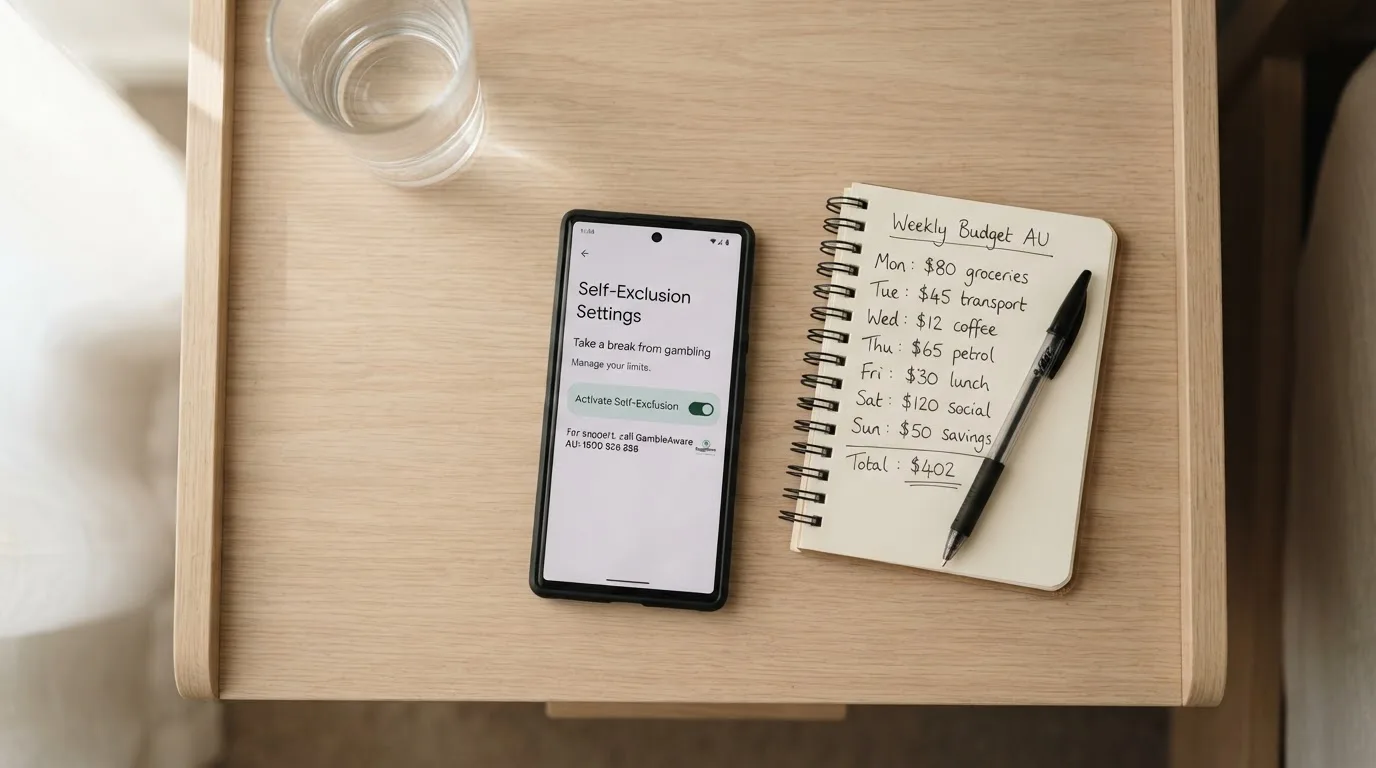
Player-protection tools are configured against that legal wagering network. BetStop, the National Self-Exclusion Register, has been live since August 2023 and binds every Australian-licensed online and phone wagering service — an offshore casino is not connected to it, so self-excluding through BetStop does not bar an offshore account. The National Gambling Helpline on 1800 858 858 is free, 24/7, and has chat at Gambling Help Online; both run regardless of where the play happens.
A related reform has just landed and not yet taken effect. The Interactive Gambling Amendment (Gambling Reform) Bill 2026 passed Parliament on 19 August 2026; its advertising and inducement measures commence on 1 January 2027. The law exists, but the date has not yet arrived on a 2026 page, so what changes after 1 January 2027 cannot be claimed now. Australia’s advertising rules around online gambling are about to get sharper, not because the substance was permissive, but because the IGA’s existing penalties covered providers, not the marketing around them. That distinction is the gap the reform closes.
Responsible Play and Why “Trusted” Is a Marketing Word
A site that brands itself “trusted” or “safe” is making a claim about itself. Independent checks come from elsewhere: from the ACMA register, from a state gambling regulator’s published list, and from a payment processor’s willingness to route funds. A badge at the bottom of a homepage is a self-assessment, and the cost of an unreliable one is borne by the punter.
Independent limits are what change the picture regardless of who is on the other end. A weekly deposit ceiling, a session-time reminder and a hard reality check at 60 or 90 minutes are the kind of guardrails a player can build without asking the operator for permission. BetStop is the nuclear option: a registered exclusion that blocks Australian-licensed wagering sites from accepting you, with a minimum exclusion period set at the point of registration. Outside that licensed ring, the same discipline has to be self-imposed: the offshore casino will not enforce it for you, because it has no obligation to.
Two consequences worth naming before any operator block. First, the offshore set does not honour Australian self-exclusion, which means an excluded punter can still register and deposit at the brands below — the consequence is to the player, not the operator. Second, “responsible gambling” widgets inside an offshore account are a UX feature, not a regulatory protection; if a withdrawal is refused, the same widget will not get it back. Wellbeing lives in what the player does before logging in, not in what the site offers once the session has started.
The helpline matters for a reason this page will not soften. Gambling harm in Australia runs above the OECD average, and offshore accessibility has widened the hours at which it can happen. 1800 858 858 is the line to call; Gambling Help Online is the place to chat. Neither requires the punter to close the account first.
Crypto, Anonymity and What a Wallet Actually Changes
Crypto gambling casinos take the same slot titles a card-funded site does and swap the deposit rail. The reels are unchanged: a five-reel video slot is still a five-reel video slot, with the same RNG and the same house edge whether the spin was paid for with a debit card or with a Bitcoin transfer from a self-custody wallet. What changes is the front door.
Three things change in practice. First, payment reachability: since 11 June 2024 credit cards, credit-related products and digital currency have been banned as payment for Australian-licensed online wagering, with operator penalties up to A$247,500. A licensed Australian bookmaker cannot accept your Bitcoin; an offshore casino is not licensed, so the ban does not bind it, and crypto deposits still land. Second, dispute resolution: a card chargeback has a paper trail and a card scheme behind it; an on-chain transfer to an unknown wallet does not. If the withdrawal stalls, the punter’s leverage drops sharply. Third, identity: a crypto-funded account is not anonymous, because the address is public, but it is loosely identified, which means the operator’s KYC threshold for a withdrawal can move. A small Bitcoin deposit can clear; a withdrawal of any size usually triggers the same passport-and-proof-of-address routine a card-funded account would.
Litecoin and other coins do the same job, just with different fees and confirmation times. The marketing layer around “anonymous gambling” tends to be louder than the legal layer around it: chain analytics firms trace most crypto flows, and the ACMA’s recent blocks have included crypto-native brands. The practical conclusion is that a wallet is a payment rail, not a pass.
What Actually Runs on These Sites
A spin on a video slot is decided by a random number generator (RNG), not by the reels on the screen. Modern video slot machines can run five or more reels with 50-plus symbols per reel, producing odds against a top combination as high as 300 million to one; a classic three-reel mechanical game with about ten symbols per reel offered roughly 1,000 possible combinations. That gap is what a bonus buy is buying: more combinations, lower per-hit probability, larger ceiling. The math is honest enough to be reproducible in a spreadsheet, which is part of why the marketing sits elsewhere.
Pokies-style machines in a venue are governed by state regulators, including the VGCCC in Victoria and Liquor & Gaming NSW in New South Wales. The 1963 Bally “Money Honey” was the first slot with a bottomless hopper and automatic payout of up to 500 coins without an attendant; the first video slot was developed by Fortune Coin Co. in 1976; Charles Fey’s late-19th-century three-reel Liberty Bell machine, with five symbols and a ten-nickel top prize, is where the form starts. The pub pokies machine a regular plays on Tuesday is a direct descendant of that lineage, and online slots carry the same mechanics one layer further into software.
A useful comparison is what happens elsewhere. State-level minimum payout percentages in the United States run from 75% in Nevada to 80% in Mississippi and 83% in New Jersey — Australia has no equivalent published minimum for the offshore sites a punter reaches, because the offshore site is not regulated here. House-edge figures for table games are public and stable: in baccarat the Banker bet is 1.06%, the Player bet 1.24%, and the Tie 14.36%; the Pass/Come line in craps carries 1.41%, with Don’t Pass/Don’t Come at 1.36% and Any Craps at 11.11%. Blackjack under liberal Las Vegas Strip rules comes in around 0.28% with optimal play, and 0.43% under Atlantic City rules. None of these numbers change at an offshore site — the edge is mathematical, not regulatory.
The land-based counterpoint is Australian. Crown Melbourne operates three baccarat variants — Traditional, Crown and 2 to 1 Baccarat — as approved table games regulated by the Victorian Gambling and Casino Control Commission, which replaced the VCGLR on 1 July 2022. Under section 66 of the NSW Casino Control Act 1992, a casino operator must not permit a game such as baccarat to be played unless the rules are approved by the regulator, and a copy of those approved rules must be made available on request. The Crown blackjack log shows the same approval discipline in action: the “Perfect Pairs” side bet was renamed “Crown Pairs” on 23 December 2024 and a “Free Bet” option with a “Pot of Gold” side bet was introduced on 25 March 2024, each change logged with the VGCCC. None of that runs at the brands below; what runs is whatever the offshore operator puts in front of the player.
Operators Named by the ACMA
The set that follows is not a recommendation. Each entry is a brand the ACMA has formally warned for offering prohibited online casino games to Australians — that warning is the only reason any of them is on this page. None of these operators is licensed in Australia for casino supply. The verdict at the end of each block is the page’s own reading of what the regulator’s action means for an Australian resident who lands on the site anyway.
RocketPlay
The ACMA issued a formal warning over RocketPlay to Pulsup Ltd in March 2026, and an earlier warning ran to Dama N.V. in May 2022 across six brands. The site is offshore, displays no Australian licence, and is not connected to BetStop. The verdict: the regulator has now named the operator twice across two corporate vehicles, which is a stronger signal than one warning and a stronger one than a marketing line about trust.
Level Up Casino
Level Up was named in the May 2022 formal warning to Dama N.V. The site lists titles from BGaming, which is the only verifiable support claim research attaches to it; the rest of its claims sit where marketing copy usually does. The verdict: a 2022 warning is now several regulator cycles old, and an Australian landing on it in 2026 is on a brand that has been on the ACMA’s published list for years.
Woo Casino
The ACMA warned Dama N.V. over Woo Casino in March 2025. The site continues to operate and accept Australian-facing traffic through mirror domains and affiliate channels; the regulatory position has not changed. The verdict: a 2025 warning is fresh, the operator behind it is the same operator behind several others on this list, and the cluster pattern matters more than any single line.
Spirit Casino
Spirit Casino drew its own formal warning to Dama N.V. in May 2025, two months after the Woo Casino warning to the same parent. The close timing across two brands is the relevant fact. The verdict: the ACMA is warning the operator repeatedly, not the brands in isolation, and an Australian resident on Spirit Casino is on the same Dama N.V. stack as Woo Casino and Level Up.
National Casino
The ACMA warned Consolutetish S.R.L. over National Casino in July 2025. Research attaches only the kind of support a listings site would carry; substantive verification is not on the public record. The verdict: the operator name is a recently incorporated entity, the warning is recent, and what an Australian sees on the homepage is not what the regulator’s file says.
Bizzo Casino
Bizzo Casino has been warned twice: once to TechSolutions in 2022, and again to Consolutetish S.R.L. in July 2025. Two warnings four years apart, to two different operators in the same chain, is an unusually clear regulator signal. The verdict: the brand has a documented history of ACMA attention, and the change of corporate vehicle between warnings is itself part of the story.
Ignition Casino
The ACMA warned Bamboo Media over Ignition Casino in July 2025. The brand has long been marketed to Australian-facing traffic despite the legal position. The verdict: the warning is current, the operator is not licensed here, and BetStop does not bind the account.
Instant Casino
EOD Code SRL drew the ACMA’s formal warning over Instant Casino in February 2025. The site operates across multiple mirror domains and routes deposits through crypto rails. The verdict: a 2025 warning predates the most recent ACMA round, but the site is unchanged in its posture toward Australian residents.
Jackbit
Ryker B.V. received a formal warning over Jackbit and CasinOK in April 2026. Jackbit is one of the more visible crypto-native brands marketed to Australian traffic. The verdict: a fresh warning to the same operator that runs CasinOK is the kind of pattern that travels down the brand list, not across it.
Casino Intense
The ACMA warned Sterplay Holding Ltd over Casino Intense in April 2025. Research attaches support claims only to the kind of listings-level sources that do not constitute verification. The verdict: the operator has been on the ACMA’s published list for over a year, and an Australian landing on the site in 2026 is on a brand the regulator has already named.
Sky Crown
Hollycorn N.V. drew a formal warning over its Sky Crown and Blue Leo casino services in September 2022 — the earliest warning on this list. Research attaches no independent support claims beyond the regulator’s own publication. The verdict: an Australian on Sky Crown is on the brand the ACMA named first, and the warning has aged rather than softened.
Summary of Recent ACMA Warnings
| Operator / Brand | Warning Year |
|---|---|
| Dama N.V. | 2022, 2025 |
| Bizzo Casino | 2022, 2025 |
| Ignition Casino | 2025 |
| Instant Casino | 2025 |
| Jackbit | 2026 |
| RocketPlay | 2022, 2026 |
Operator Landscape
The table below compares what research actually carries about these brands. Cells the research does not cover are left blank — an em dash in article language — because a guessed number is a worse tool for a punter than an empty cell.
| Brand | ACMA action and date | Operator named by the ACMA | Subject support |
|---|---|---|---|
| RocketPlay | March 2026 | Pulsup Ltd | — |
| Level Up Casino | May 2022 | Dama N.V. | listings only (BGaming) |
| Woo Casino | March 2025 | Dama N.V. | — |
| Spirit Casino | May 2025 | Dama N.V. | — |
| National Casino | July 2025 | Consolutetish S.R.L. | listings only (Wikipedia) |
| Bizzo Casino | July 2025; earlier 2022 | Consolutetish S.R.L.; earlier TechSolutions | — |
| Ignition Casino | July 2025 | Bamboo Media | — |
| Instant Casino | February 2025 | EOD Code SRL | — |
| Jackbit | April 2026 | Ryker B.V. | — |
| Casino Intense | April 2025 | Sterplay Holding Ltd | listings only (ABC, ACMA, Crown Melbourne) |
| Sky Crown | September 2022 | Hollycorn N.V. | — |
Two things the table does not show, but the prose beside it has to. First, every brand in the set has the same legal status under Australian law: prohibited interactive gambling service, with the ACMA’s enforcement powers already engaged. The differences are in the date of the warning and the corporate vehicle behind it, and neither of those alters the position of an Australian resident. Second, “subject support” in the right-hand column tracks only the research’s verifiable lead — most rows are blank because research did not record one, and a blank is more honest than a guessed provider name.
Blocking-Rate Band
The arithmetic belongs to this section because this section is where the blocking rate earns its weight. From the first ACMA blocking request in November 2019 to the published cumulative count of 1,751 blocked illegal gambling and affiliate-marketing websites by 26 June 2026, the running total grew across roughly six and a half years. That works out at a band of roughly 230 to 270 websites blocked per calendar year over the stretch, depending on how the year-count is measured — about 263 a year on a straight-line average from November 2019 to June 2026, with the pace uneven rather than constant. The December 2024 round added eleven, the May 2025 round added eighteen, and the most recent 26 June 2026 round added twelve. The condition that drives the band is the regulator’s own round cadence, not a market signal: a quieter quarter does not mean enforcement has paused, only that the next round is being prepared.
The consequence for a reader who has deposited at any of the brands named above is plain. Blocking lands without notice on the operator side, the balance is whatever was on the account at the cutover, and the ACMA does not hold a fund-segregation regime for offshore brands. A punter who wanted the brand to still be reachable in six months is pricing in a regulator’s round, not a casino’s roadmap.
Frequently Asked Questions
Is real-money online casino gambling legal for an Australian resident?
No. The Interactive Gambling Act 2001, tightened in 2017, makes it an offence to provide online casino games or in-play betting to a person in Australia. Wagering on races and sport before the event can be licensed, but no state or territory licenses online casino games. The individual player is not prosecuted; the offshore operator is the target, and the consequence for the player is the absence of any Australian consumer protection when a withdrawal stalls.
How does a slot machine’s random number generator decide the result of a spin?
Each spin is decided by a random number generator, not by the reels on the screen. The RNG produces a value for each reel position when the spin is initiated, and the symbols that land are a lookup of that value. Modern video slots can run five or more reels with 50-plus symbols per reel, producing odds against a top combination as high as 300 million to one. The math runs the same way online and in a pub.
Do crypto gambling casinos use the same slot software as card-funded sites?
Yes. The deposit rail — Bitcoin, Litecoin, stablecoin — is a payment rail, not a different game. A five-reel video slot running on the same provider’s RNG behaves identically whether the stake came from a debit card or a self-custody wallet. What changes is the dispute path, because a card chargeback has a paper trail and an on-chain transfer does not.
What is the difference between an online slot and a pub or club pokies machine?
The mechanism is the same and the regulation is not. Pub pokies in Australia are state-regulated, with rules and approved game variations set by state regulators including the VGCCC in Victoria and Liquor & Gaming NSW. Online slots at an offshore site carry no Australian regulatory approval. New South Wales alone hosted 87,298 pokies-style machines outside casinos by June 2023; offshore online slots sit outside that approved stock.
Does a site calling itself trusted or safe mean it has been independently checked?
No. The claim is the operator’s own. Independent verification comes from a regulator’s published register, a state gambling authority’s approval list and a payment processor’s routing — none of which a homepage badge replaces. BetStop binds Australian-licensed wagering services, which an offshore casino is not, and an ACMA formal warning is a stronger signal of operator behaviour than any trust seal on a marketing page.