
Mines casino game Australia 2026 — what the grid pays, what the law allows, and where the offers land
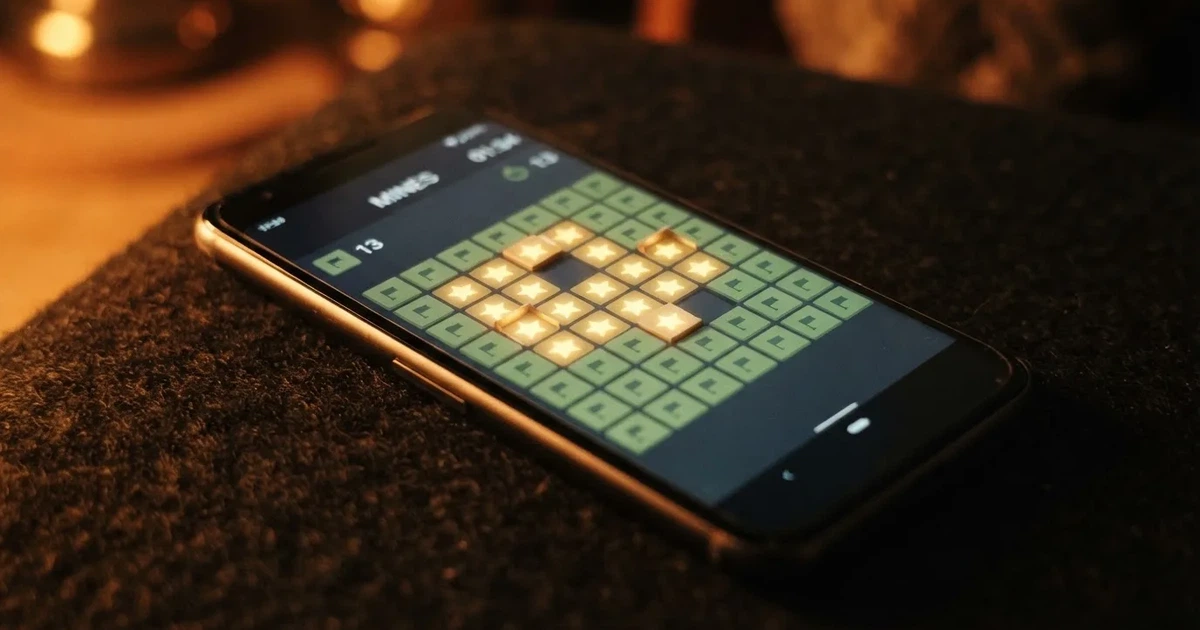
A run of Mines is a small, clean thing on the screen: a five-by-five grid of face-down tiles, a stake, a count of hidden mines, and a payout multiplier that climbs each time a safe tile is uncovered. The clean look is what the marketing leans on. What the marketing tends to leave beside it is the Australian picture — that no online casino game, Mines included, can be licensed in this country, that the Australian Communications and Media Authority has been asking internet providers to block offshore sites since 2019, and that the brands pitching “Mines real money AU” have a public row of formal warnings attached to them.
This guide closes both halves. It walks through what a Mines round is, how its multiplier is built, how the Spribe studio behind the most-played version of the game got here, and what an Australian punter actually meets on the other side of the screen — the payment-method squeeze, the offshore-no-BetStop problem, and the eleven offshore brands the ACMA itself has named in formal warnings.
Data current as of 29 October 2026, licence claims cross-checked against the ACMA’s formal-warning register.
Table of Contents
- Mines — the grid format and what each round actually does
- Payouts and odds — what the multiplier actually traces
- Mines app versus browser — is there a real difference?
- Australian legality — the part the offers do not print
- Responsible play — what the Mines format actually rewards
- The ACMA’s enforcement record — a row of warnings against the brands pitching Mines
- Bonuses and the no-deposit pitch — what the marketing actually means
- A short comparison — what the Mines format actually pays against the house edge
- How long the ACMA has been at this — a blocking-rate read
- Frequently asked questions
Mines — the grid format and what each round actually does
A round of Mines starts with three choices: how much to stake, how many mines to hide on the grid, and how many safe tiles to commit to revealing before cashing out. The grid itself is fixed — five rows by five columns, twenty-five tiles — and the same on every provider that ships the game. What changes the math is the mine count. One mine on a twenty-five-tile grid gives a player roughly a 96% chance of surviving the first click; twenty-four mines gives roughly a 4% chance of even starting a round. The multiplier the screen shows is built directly off those survival odds: the more mines the player loads, the steeper the curve climbs for each additional safe reveal, and the harder the round becomes to finish.
That link — multiplier tied to survival probability — is the only mechanism in the game. There is no bonus round, no scatter pay, no free-spin feature. Every tile clicked either pays nothing (because it was a mine and the round is over) or lifts the running payout that the player can either collect or push one tile further. The whole round is a sequence of “take the current multiplier or press on” decisions, made by a player against a fixed probability the game has already settled.
This shape is what makes Mines look fast. A round can resolve in a single click if that click lands on a mine, and can stretch across twenty-four sequential reveals if none do. The pace is set by the player, not by a fixed reel cycle. For a punter used to pokies or roulette, that control over timing can read as an edge. It is not one — the multiplier is calibrated to the survival odds the player set at the start, and the expected return is set by the house edge baked into those multipliers. Picking fewer mines smooths the curve; picking more mines steepens it; the long-run return moves with neither setting.
Where the format came from
The Mines casino game is a modern, staked adaptation of the tile-revealing Minesweeper puzzle, adapted from the 1983 game Mined-Out by Ian Andrew and the 1987 SunOS game Mines by Tom Anderson; Microsoft’s own Minesweeper, written by Robert Donner and Curt Johnson, first shipped in the 1990 Windows Entertainment Pack and stayed a Windows standard until Windows 8 dropped it as a built-in title in 2012. The puzzle idea is older than the casino idea. What the casino version adds is a stake on every click and a multiplier in place of the puzzle’s binary win/lose state.

The studio most often associated with the casino version of Mines is Spribe, founded in 2018 and best known for its flagship crash game Aviator, which launched in January 2019. Spribe’s Mines is the version that turned up across the offshore casino sites that the ACMA has warned over the past two years. That association matters in Australia for one specific reason: Spribe’s UK Gambling Commission remote gambling software licence (number 057302-R-333085-003) was suspended on 30 October 2025 after the Commission found the company had been hosting casino games without the separate remote casino game host licence its business model required. Spribe’s public register entry shows the software licence active since 8 December 2020, with a separate Game Host (Casino) Remote licence application listed as “in progress” at the time of the snapshot. None of this is an Australian sanction — Australia does not licence online casino games at all — but it is the most recent published regulatory finding against the studio whose product is most often pitched to Australian players under the “Mines” name.
Payouts and odds — what the multiplier actually traces
The paytable is a single staircase. After the player sets the mine count, every additional safe tile revealed applies a higher multiplier to the stake; cash out at any step and the round pays the multiplier on display, end there. The exact multiplier at each step is set by the studio and varies a little between versions, but the shape is the same: low and nearly flat when mines are scarce, then steep and lop-sided when mines are dense. A 5×5 grid with one mine runs multipliers that climb gently across most of the field and only sharpen in the final few tiles; a 5×5 grid with twenty mines runs a curve that is already punitive after three or four safe reveals.
The honest reading of that curve: the house edge is present in every mine-count setting, and it does not flatten out at the high-mine end. A higher mine count raises both the multiplier and the chance the round dies on the next click. Those two things move together because they are the same number — survival probability — written twice, once as a chance and once as a price. The player is not trading volatility for return; the player is trading how long a session lasts and how dramatic the swings feel.
Two settings to read against:
- Low-mine grids produce long, mostly flat runs with small multipliers, finishing in either a quiet cashout or a single-tile loss. Most rounds end on a click the player had time to think about.
- High-mine grids produce short, violent runs. A cashout at three tiles may be four or five times the stake; the fourth tile carries an outsized chance of ending the round, and the player who presses through it is pressing into a probability that the multiplier is already pricing.
Picking a stop point before the first click is the practical answer the game itself offers, because the multiplier is set in advance and the only decision in play is whether to keep walking into a known probability. The gambler’s instinct is to push one tile further because the last one paid; the maths of the game is set on the other side of that instinct and does not move when the player does.
Mines app versus browser — is there a real difference?
The browser version and the app version of Mines run the same underlying game with the same multipliers for the same mine counts. The technical difference is mostly about how the player reaches the lobby: a browser opens a site, an app opens a native shell that points at the same backend. None of the operators discussed in this guide are Australian-licensed, because no online casino product is. The “Mines app Australia” most often pitched in search results is one of two things: a wrapper for an offshore casino site, or a standalone app distributed outside the major stores.
Practically, a punter looking for a Mines app is choosing between the offshore brand’s website on mobile and the offshore brand’s mobile app, both of which sit outside the IGA. There is no Australian-store version, because there is no Australian-licensed casino game to ship one for. Anyone who finds an Australian app store listing for an online casino product is looking at a listing that should not exist; the Australian Competition and Consumer Commission has acted against app-distribution routes into the country under the same regime that blocks sites.
The substantive point is short: the Mines experience is identical across the two delivery methods, and the legal picture is identical too. A punter who would not use the offshore site on a laptop should not use the offshore site on a phone either, because the IGA targets the provider, not the device.
Australian legality — the part the offers do not print
The Interactive Gambling Act 2001, strengthened by the Interactive Gambling Amendment Act 2017, makes it an offence to provide online casino games, online pokies or in-play betting to a person physically in Australia. No state or territory licences online casino games. What is licensable is wagering on races and on sporting events placed before the event, lotteries and keno — in practice licensed by the Northern Territory. The Northern Territory Racing and Wagering Commission regulates 52 of Australia’s online bookmakers, including Sportsbet, Bet365 and Ladbrokes, and the commission itself has no full-time staff and meets once a month in Darwin.
That is the legal floor underneath every Mines offer aimed at an Australian resident: it is being offered by an unlicensed provider to an Australian punter, and the offer itself is the breach. The fact that the site’s footer shows a Curaçao or Anjouan licence number does not change the Australian side — the IGA is enforced on the basis of where the player is, not where the operator is incorporated.
The ACMA investigates, issues formal warnings and directs internet service providers to block illegal sites. As of June 2026 the authority reports that a total of 1,751 illegal gambling and affiliate marketing websites had been blocked since the first blocking request in November 2019, and more than 230 unlicensed gambling services had left the Australian market since enforcement was strengthened in 2017. The most recent published blocking round asked Australian ISPs to block 12 more sites — 7Signs, ChromaBet, Donbet, Duospin, Freshbet, Slots Gem, Jacks Club, Lucky Start, Pointsbetz.com, Spinrise, Vinyl Casino and Wildsino.
The same H2 Gambling Capital 2025 estimate that surfaced in the public discussion puts Australian losses to illegal gambling sites at about A$3.9 billion a year, and tracks the share of gambling flowing through legal channels from 74% in 2021 to 64% in 2025. The legal channel is shrinking because the illegal one is taking the rest. Mines is part of that pull: it is a fast, mobile-friendly, single-tap game that fits the offshore-casino pitch perfectly, and it is offered against a regulatory floor that does not licence what it offers.
What the law actually does to a player
The IGA targets the provider, not the punter. An Australian who opens an offshore casino site, deposits and plays Mines does not face prosecution under the Act. What the punter loses is everything the Australian framework would otherwise give a player:
- no Australian consumer protection if the site refuses a withdrawal
- no external complaints body with Australian jurisdiction over the operator
- no entry into BetStop, the National Self-Exclusion Register, because BetStop binds only Australian-licensed online and phone wagering services — an offshore casino is not connected to it
- no recourse if the site is mid-round blocked by the ACMA with a balance still sitting in the account
- no guarantee the multiplier on screen is the multiplier the engine actually used
That last point is structural, not paranoid. Offshore games are not audited to the standard an Australian-licensed product would be, and the difference between an audited and an unaudited RNG is exactly the difference between a payout that matches its published return and one that may not.
Payments — the Australian squeeze on the offshore product
Since 11 June 2024 credit cards, credit-related products and digital currency have been banned as payment for licensed online wagering in Australia, with penalties up to A$247,500 for operators who take them. Legal deposit routes for the licensed product are debit card, bank transfer, PayID/Osko and BPAY. The offshore product has none of those restrictions — it happily accepts cards and crypto — and that acceptance is itself a tell: a site asking an Australian for a credit card or a crypto deposit is operating outside the Australian rules, full stop. It is not “Australian-friendly” in any sense the IGA recognises.
The paytable is unaffected by which payment method the punter uses. The same multiplier curve applies regardless of how the deposit lands. What changes is what happens at withdrawal. Bank transfers go through normal Australian banking, and an Australian bank can decline or delay a transfer from an offshore merchant. Crypto withdrawals bypass the bank entirely, which removes the bank’s refusal point but also removes the paper trail a punter would otherwise have if the withdrawal goes missing. Neither route gives an Australian punter the protection of a regulated channel, because neither route is a regulated channel for casino play.
2026 reform — what changed and what did not yet
The Interactive Gambling Amendment (Gambling Reform) Bill 2026 passed Parliament on 19 August 2026, and its advertising and inducement measures commence on 1 January 2027. The reform tightens the framework around how offshore products reach Australian customers — through affiliate marketing, through bonus inducements, through the SEO results an Australian punter sees when typing “Mines real money AU” into a search box. It does not legalise online casino games. Mines remains an unlicensed product offered against an unlicensed market.
For a punter reading this side of 1 January 2027, the reform means the marketing around the offer gets harder, not that the offer becomes legal. The underlying prohibition stays. The brands named in the ACMA’s register stay on it.
Responsible play — what the Mines format actually rewards
The shape of Mines makes one piece of player discipline cheap to apply, and the marketing makes another piece of discipline expensive to follow. Both are worth naming.
The cheap discipline: set a stop number of safe reveals before the first click. Because the multiplier on display is calibrated to the mine count the punter already chose, the decision the punter faces on every tile is the same decision they faced on the tile before it: keep walking into a known probability, or take the multiplier on screen and end the round. Choosing the stop before play removes the in-round temptation to push one more tile because the last one paid. The temptation is the design — every additional safe reveal is a small dopamine hit, and the multiplier going up alongside it makes the cashout look like leaving money on the table. The maths does not agree.
The expensive discipline: set a session budget and stop at the budget before the stop number does. Mines runs fast, and the round-by-round tempo makes a session budget easy to lose track of in a way a 90-minute pokies session does not. The Australian National Gambling Helpline is 1800 858 858, free and 24/7, with chat at Gambling Help Online for those who prefer text. The minimum age for any form of legal Australian gambling is 18; for the offshore product, the site may set a different minimum, which is no minimum at all in any sense an Australian regulator would enforce.
BetStop, the National Self-Exclusion Register, has been live since August 2023 and binds Australian-licensed online and phone wagering services. It does not bind offshore casino sites, and it does not prevent the same punter from opening a new offshore account under a different email. Self-exclusion from an offshore site only works if the punter holds to it themselves, because the operator is not part of any Australian register. For a punter who has reached the point where the discipline above stops working, the right Australian tool is BetStop, and the right next step is the helpline.
The ACMA’s enforcement record — a row of warnings against the brands pitching Mines
Eleven offshore casino brands appear in this guide because the ACMA itself has named them in formal warnings under the Interactive Gambling Act 2001, each tied to offering prohibited services to Australians. The list below is presented as the ACMA’s own record, not as a recommendation: an Australian punter cannot lawfully play any of these brands from inside Australia, and the warning that accompanies each one is what the regulator has already said about the offer being made.
| Brand | ACMA action and date | Operator named by the ACMA | Mines / Spribe support |
|---|---|---|---|
| RocketPlay | Formal warning — March 2026; earlier Dama N.V. warning — May 2022 | Pulsup Ltd (Rocketplay.com.au); earlier Dama N.V. | not stated |
| Level Up Casino | Formal warning — May 2022 | Dama N.V. | listed on Bgaming.com |
| Woo Casino | Formal warning — March 2025 | Dama N.V. | not stated |
| Spirit Casino | Formal warning — May 2025 | Dama N.V. | not stated |
| National Casino | Formal warning — July 2025 | Consolutetish S.R.L. | listed on en.wikipedia.org |
| Bizzo Casino | Formal warning — July 2025; earlier TechSolutions warning — 2022 | Consolutetish S.R.L.; earlier TechSolutions (CY) Group Limited and TechSolutions Group N.V. | not stated |
| Ignition Casino | Formal warning — July 2025 | Bamboo Media | not stated |
| Instant Casino | Formal warning — February 2025 | EOD Code SRL | not stated |
| Jackbit | Formal warning — April 2026 | Ryker B.V. | not stated |
| Casino Intense | Formal warning — April 2025 | Sterplay Holding Ltd | listed across Abc.net.au, acma.gov.au and Crownmelbourne.com.au |
| Sky Crown | Formal warning under the IGA — September 2022 PDF | Hollycorn N.V. | not stated |
The rows above share one piece of architecture: every brand is offering online casino games to Australians, which the IGA prohibits, and every brand has now been told so in writing by the ACMA. The dates on the table read as a calendar of compliance pressure rather than a calendar of punishment — most of these brands continue to operate, and the ACMA’s enforcement tool is the block request, which takes the site out of reach of Australian ISPs but does not take the brand off the global internet.
What the table leaves out on Mines support
The Mines column above is honest about what it does not know. Of the eleven brands, three appear in published Mines or game-studio listings: Level Up on Bgaming.com, National Casino on the Wikipedia entry used to verify the ACMA record, and Casino Intense across a small cluster of news and regulator pages. The other eight carry no published Mines support in the materials consulted. That is not the same as those brands not offering Mines — Mines is a standard Spribe title carried across a wide offshore catalogue — but it is the same as saying the published record does not confirm it.
A punter who has decided to play Mines against the Australian framework anyway will find it on most of these sites, because Spribe’s catalogue is broad and the game is small to integrate. A punter who is choosing between these brands on a basis other than Mines — on payment speed, on welcome-package shape, on what the footer says about a Curaçao sub-licence — is choosing between brands none of which can lawfully take an Australian deposit. The Mines column is secondary to that, deliberately.
Bonuses and the no-deposit pitch — what the marketing actually means
Mines no-deposit bonuses and Mines promo codes appear in search results because the underlying offer exists on the offshore side, not because Australia has any role in them. A no-deposit bonus is, structurally, a small cash or spin credit the site credits to a new account before the punter makes a deposit; the credit is locked behind the same wagering terms the site applies to any bonus.
The conditions research and the ACMA record jointly describe are consistent across the offshore market:
- Wagering requirements sit somewhere between 30× and 50× the bonus amount, sometimes on the bonus alone, sometimes on bonus plus deposit. The exact figure varies by site; the shape does not.
- A maximum-cashout cap is common on no-deposit credit, and is the single condition that turns a generous-looking bonus into a small one in practice. The cap is set well below what a punter’s session could theoretically produce, so the bonus is calibrated to the cap, not to the wagering requirement.
- Mines is sometimes carved out of the contribution table. A 100% slots contribution is the headline; the small print that excludes or weights Mines below that headline is what determines whether a punter clears the bonus by playing the game they were attracted by.
- The bonus carries an expiry measured in days, not weeks. The punter who treats the credit as a slow-play bankroll runs out of clock before they run out of credit.
The “no deposit” in “Mines no-deposit bonus” is the most-tested phrase in offshore marketing, because it is the only phrase that does not require a payment method the Australian framework would block. It is also the phrase that leads the punter into the same wagering-terms stack any other bonus carries, and onto the same offshore brand that is one ACMA blocking round away from being unreachable from an Australian IP.
The honest reading: a no-deposit bonus on Mines is a marketing offer from an offshore brand that cannot lawfully serve the punter it is trying to sign up. The bonus terms are written to maximise the site’s edge, the wagering requirement is the multiplier the punter has to clear before withdrawal, and the maximum-cashout cap is the ceiling on what the punter can actually take away. None of that changes the IGA, and none of it changes the fact that BetStop does not bind the site.
A short comparison — what the Mines format actually pays against the house edge
Mines sits in the same volatility band as the other fast casino formats. Three reference points help anchor what “fast” actually costs in expected return:
- Baccarat’s house edge runs 1.06% on the Banker bet, 1.24% on the Player bet, and 14.36% on the Tie. The game has been played under one form or another since at least the 15th century and under the modern punto banco format since Havana in the 1940s; in NSW, section 66 of the Casino Control Act 1992 requires each baccarat variant and its rules to be approved by the regulator before play, with a copy of the approved rules made available to patrons on request.
- Blackjack, played with optimal strategy under liberal Las Vegas Strip rules, runs a house edge around 0.28%; under Atlantic City rules, around 0.43%. The game descends from the English vingt-un, with the name “blackjack” attached around 1899 during the Klondike Gold Rush; in Victoria, the Casino Control Act 1991 requires the VGCCC to approve any rules for table games, including blackjack, before they are introduced at the Melbourne casino.
- Craps runs 1.41% on Pass/Come, 1.36% on Don’t Pass/Don’t Come, and 11.11% on Any Craps. The modern game is a simplification of the older European dice game Hazard, which Bernard Xavier Philippe de Marigny de Mandeville is credited with bringing to New Orleans around 1805.
Those edges are calibrated to games that an Australian can play lawfully only inside a physical casino, not on an offshore site. They are useful here only as a yardstick for what Mines is being compared against in the marketing. The Mines paytable, on every setting, sits somewhere in the high-single-digit range of house edge at most reasonable mine counts and rises sharply with the higher mine counts a casual player rarely reaches. The exact edge is set by Spribe and not publicly audited to an Australian standard.
The point is not that Mines is uniquely expensive. The point is that Mines is a casino product pitched at casino players, with a casino-grade edge, on a casino product an Australian cannot lawfully join.
How long the ACMA has been at this — a blocking-rate read
The ACMA’s first blocking request went to Australian ISPs in November 2019; the June 2026 published total sits at 1,751 illegal gambling and affiliate marketing websites blocked. That span covers about six years and seven months between the first block and the snapshot, and the published round on 26 June 2026 added 12 more sites — 7Signs, ChromaBet, Donbet, Duospin, Freshbet, Slots Gem, Jacks Club, Lucky Start, Pointsbetz.com, Spinrise, Vinyl Casino and Wildsino.
Stated as a band: 1,751 blocks across roughly 80 months since November 2019 works out to a long-run blocking rate somewhere between 21 and 22 blocked sites per month on average, and the single June 2026 round alone added 12. The cadence is uneven — some months bring a published round, others do not — but the average is the number to anchor against. Six years into the regime, the ACMA is still asking ISPs to block sites at a rate of roughly two dozen a month, and the rate has not visibly slowed. The most recent published round sits close to half a month’s average, in one announcement.
The blocking rate is the cleanest indicator of how the supply side responds to the regulatory floor. The IGA has been in force since 2001 and tightened in 2017; enforcement against offshore providers picked up its current shape in 2019 with the first blocking request. The block list is now long enough that a casual punter can find a blocked page by accident, and long enough that a serious offshore operator will, on a multi-year view, eventually end up on it. The other side of the same picture is that 230+ unlicensed services have left the Australian market entirely since 2017 — pulled out rather than fight the enforcement. The IGA does not catch every site, but it makes enough sites uneconomic that the industry’s exit rate is now measurable in the hundreds.
Frequently asked questions
Is it legal to play the Mines casino game for real money in Australia?
No. The Interactive Gambling Act 2001 prohibits the supply of online casino games to a person in Australia, and Mines sits inside that prohibition. The ACMA enforces against the operator, not the punter, but an Australian loses Australian consumer protection, BetStop access and any workable complaints route by playing offshore. The legal floor has not changed with the 2026 reform; the reform tightens advertising from January 2027, it does not legalise the game.
How does the payout on Mines increase as more safe tiles are revealed?
Each additional safe reveal multiplies the stake by a higher number than the reveal before, with the size of each step set by the mine count chosen at the start. The multiplier curve is calibrated to the survival probability for that mine count, so higher multipliers come with higher mine-on-the-next-tile risk. The house edge is present at every setting; the multiplier does not move the edge, it changes the shape of the run.
What determines how many hidden mines are placed on a Mines grid?
The punter chooses the mine count at the start of the round, from a range the studio allows — typically one to a high single-digit cap. More mines raise both the per-step multiplier and the chance a click ends the round. The grid size is fixed at five by five tiles across every version of Mines; the mine count is the only setting the punter controls that materially changes the math.
What conditions usually apply before a Mines no-deposit bonus can be withdrawn?
Wagering requirements measured in multiples of the bonus, a maximum-cashout cap that limits what the punter can actually withdraw, an expiry window measured in days, and a contribution table that may carve Mines out of the headline rate. The bonus is a marketing credit from an offshore brand; the terms are written to give the site the edge, and the cap is the ceiling on what the punter can take away.
Is the Mines app a separate product from the browser-based version of the game?
No. The app and the browser version run the same underlying game with the same multipliers for the same mine counts. The delivery method differs; the game does not. Neither is Australian-licensed, because no online casino product is, and a punter choosing between the two is choosing between two ways of reaching the same offshore brand.
What is a sensible way to decide a stop point before starting a round of Mines?
Set the cashout step before the first click, and stop at that step regardless of how the previous tiles felt. The multiplier is calibrated to the mine count the punter already chose; the in-round decision is whether to keep walking into a known probability, and the answer is easier before the run starts than mid-run. Set a session budget alongside the stop step, and stop at whichever limit comes first.