
Pokies tips and tricks in 2026: where the maths stops and the marketing starts
The phrase “pokies tips and tricks” promises an edge that the machines themselves do not provide. Every reel spin on a regulated Australian poker machine is governed by an independent random number generator, so no pattern of bet size, button timing or game selection alters the long-run return. What Australian players can do is read the paytable, pick the higher-RTP title where two are on offer, set a hard ceiling before they sit down and understand which “tips” articles cross a legal line by pointing readers at unlicensed offshore casinos. This page works through each of those in turn, with the regulator’s own data beside it.
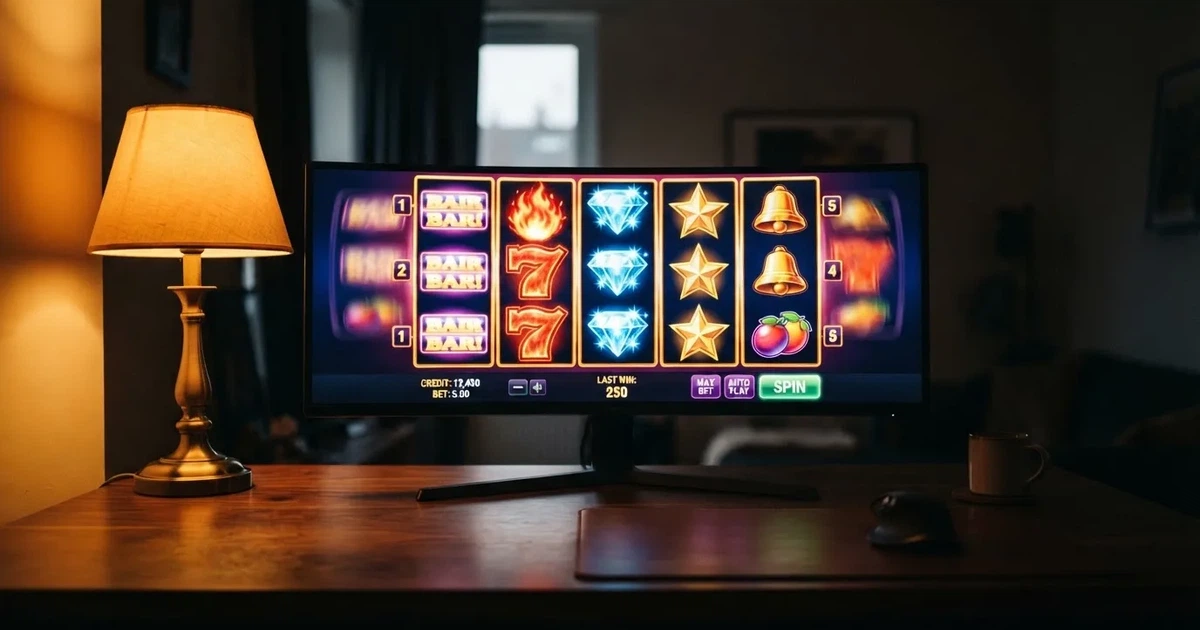
Data current as of 29 October 2026 and verified against the Australian Communications and Media Authority register and state gaming commissions.
Responsible gambling before any tip
Any article about pokies tips and tricks has to start with the only fact that does not depend on which machine you walk up to: in 2020–21 Australians wagered almost A$150 billion through gaming machines and lost A$12.18 billion on them. The country holds about 3% of the world’s pub and club poker machines with 0.3% of the global population, and the legal minimum return-to-player for those machines ranges from 85% in New South Wales, the Northern Territory and Queensland to 90% in Western Australia. The state-by-state floor is the only number a tip can sit on; every title that exists between that floor and 100% is, by construction, a machine programmed to take a slice of every dollar.
A “tip” that promises anything stronger than that — patterns to follow, near-misses to exploit, the right button to press — is not advice about a regulated game. The first thing any reader who has typed “pokies tips” into a search bar should do is separate the two regimes. A licensed club or pub machine in NSW, the ACT, Tasmania or Western Australia runs under state supervision and player-protection rules. An offshore online casino running the same branded game to an Australian IP runs under whatever rules the operator’s own licence jurisdiction imposes, and the Commonwealth’s Interactive Gambling Act 2001 treats those services as prohibited. A “trick” that works on one of those machines is not transferable to the other.
Where to get help before you need it
The National Gambling Helpline — 1800 858 858 — is free, runs 24/7 and offers web chat through Gambling Help Online. BetStop, the National Self-Exclusion Register, has been live since August 2023 and binds every Australian-licensed online and phone wagering service. It does not bind an offshore casino. A punter who has self-excluded through BetStop and then opens an account with an unlicensed offshore site has not closed the door; they have walked around it. That distinction is the practical version of the legal one elsewhere on this page, and it is why the helpline is the first number any reader who has searched for “tips to win pokies” should have in their phone.

What a tip is allowed to be
Once those services are noted, a useful tip fits on one hand: read the paytable before you insert a note, decide your session limit in time rather than in dollars because losses feel slower when measured in minutes, walk away when the machine is in front of you and not because it has “warmed up”, and never chase a loss by moving to a higher denomination. None of those changes the house edge. Each one reduces the number of decisions made on tilt, which is the only edge a player actually controls. Anything sold as more than that is either a marketing line or a description of a system that exists only in the article selling it.
Paytable mechanics and the specifics that matter
The shelf of specific games, providers and live tables sits behind a paytable. Every regulated Australian pokie carries an information screen that lists the symbol values, the wild and scatter rules, the bonus feature triggers and the return-to-player. A reader who has never pressed that button is operating on the title’s branding, which is the thinnest layer of the machine. The maths lives underneath.
Reading what is actually on the screen
The paytable is the only piece of paper the regulator requires the venue to show you. State rules mandate a minimum RTP, but they do not mandate a single RTP across all titles in a venue — pubs and clubs stock games ranging from the floor up toward the mid-90s, with the exact figure stamped into the help screen of each cabinet. Two cabinets sitting next to each other in the same venue can carry different RTPs, and a player who picks the higher one without changing stake size or bet frequency is making the only decision on the page that has a statistical effect on the long-run outcome.

The paytable also lists volatility, usually as a label or a small bar. A low-volatility title pays smaller amounts more often; a high-volatility title pays less often but with bigger hits. Neither is better than the other in return-to-player terms — that figure is fixed by the maths — but they suit different session budgets. A punter with a small bankroll and an hour to fill will have a more even ride on a low-volatility title; a punter with a longer horizon and tolerance for dry patches will see the same RTP expressed through bigger swings. The paytable is where the choice is made.
Why Dragon Link dominates the tips pages
Search any “pokies tips and tricks” page and Dragon Link comes up disproportionately often. The reason is not that the game behaves differently from any other title — it uses the same independent random number generator as every other regulated machine — but that Dragon Link’s hold-and-respin bonus is unusually visible. The bonus round holds certain symbols in place, spins the remaining reels and stacks prizes on the held symbols until a reset condition is met, and the on-screen progression makes the player feel they are influencing the outcome. They are not. The hold-and-respin mechanic is a presentation choice, and the bonus is triggered by an independent random event on the base-game spin that enters it. Tips that tell readers to “wait for the bonus” or “play until you see the pearls align” describe a presentation, not a strategy.
That is also why Dragon Link appears in articles aimed at Australian readers specifically. It is one of the most heavily distributed titles across the NSW and Queensland club and pub markets, and its cabinets are concentrated in the venues where Australian players actually play. A tip that names the title is therefore recognisable in a way a generic reference to “high-volatility slots” is not. The recognisability is the marketing, not the edge.
Baccarat and blackjack as the comparison that lands
The Australian club and casino market is overwhelmingly pokies, but baccarat and blackjack are the two table games where a player’s decisions actually move the long-run return. Baccarat’s house edge is 1.06% on the Banker bet, 1.24% on the Player bet and 14.36% on the Tie. The 14.36% Tie edge is the structural answer to anyone asking why a “strategy” ever makes sense for a player — a tip that pointed a punter at Tie bets to “ride the streak” is selling a 14.36% rake dressed as intuition.
Blackjack’s house edge under optimal play is about 0.28% on liberal Las Vegas Strip rules and 0.43% on Atlantic City rules. The 0.28% figure is the closest any Australian casino game comes to a level field, and it exists only because the player makes decisions on every hand. A punter who has spent the morning on a pokie and then sits at a blackjack table expecting the same absence of agency is, by definition, the customer a tip ought to be written for — a person who has not yet understood that the two games are different categories of object. Under section 66 of the NSW Casino Control Act 1992, a casino operator must not permit a game such as baccarat to be played unless the game and its rules are approved by the regulator, and the approved rules are the rules the paytable describes.
The offshore ranking the page cannot honestly produce
Search results for “pokies tips and tricks” in Australia are dominated by offshore casino comparison pages. The article above is not going to join that category, because the comparison the ranking implies — which offshore casino offers Australian players the best experience — is not a comparison that can be made honestly. The Commonwealth’s Interactive Gambling Act 2001, as strengthened by the Interactive Gambling Amendment Act 2017, makes it an offence to provide online casino games or online pokies to a person physically in Australia. No state or territory licenses online casino products. The licences these sites display on their footers are issued in Curaçao, Anjouan, the Philippines or other jurisdictions that do not regulate provision to Australians.
What the regulator has done, repeatedly, is issue formal warnings to the operators of those sites. The table below sets those warnings side by side. It is not a comparison of product quality, of payout speed, of game range or of bonus generosity — those things are not the subject of this page. It is a record of the operator name as the ACMA publishes it, the date of the formal warning and the brand the warning covered. Two brands carrying the same operator name are not two unrelated products; they are the same operator being told twice. One brand carrying two warnings across different years is the same operator being told twice and continuing.
The published ACMA warnings in sequence
| Brand | ACMA action and date | Operator named by the ACMA | Subject support |
|---|---|---|---|
| RocketPlay | Formal warning, March 2026 | Pulsup Ltd (RocketPlay); earlier Dama N.V., May 2022 | — |
| Level Up Casino | Formal warning, May 2022 | Dama N.V. | Listed by Bgaming as a carry-over of its game portfolio |
| Woo Casino | Formal warning, March 2025 | Dama N.V. | — |
| Spirit Casino | Formal warning, May 2025 | Dama N.V. | — |
| National Casino | Formal warning, July 2025 | Consolutetish S.R.L. | Listed in industry directories alongside other Consolutetish brands |
| Bizzo Casino | Formal warning, July 2025; earlier 2022 | Consolutetish S.R.L., July 2025; earlier TechSolutions (CY) Group Limited and TechSolutions Group N.V. | — |
| Ignition Casino | Formal warning, July 2025 | Bamboo Media | — |
| Instant Casino | Formal warning, February 2025 | EOD Code SRL | — |
| Jackbit | Formal warning, April 2026 | Ryker B.V. | — |
| Casino Intense | Formal warning, April 2025 | Sterplay Holding Ltd | Listed in industry directories that aggregate Curaçao-licensed operators |
| Sky Crown | Formal warning, September 2022 | Hollycorn N.V. | — |
The spread of operator names behind those brands is narrower than the brand list looks. Dama N.V. alone accounts for RocketPlay, Level Up Casino, Woo Casino and Spirit Casino; Consolutetish S.R.L. accounts for National Casino and Bizzo Casino; the earlier Bizzo warning sits with TechSolutions Group N.V., the operator the brand was attached to before the Consolutetish handover. A reader scanning this list and seeing eleven brands is meeting three or four operators, repeated under different names. The ACMA’s repeated warnings to the same operator are the page’s evidence that the rotation of brand names is itself the trick — the same offshore operator rebrands to a fresh URL, the comparison sites pick up the new entry, and the formal warning the regulator has already issued is, in practice, applied to a new address.
The “subject support” column in that table does not say whether the ACMA acted because of any specific game, payment method or feature. The column is empty because the ACMA’s formal-warning publication does not name a subject that way. Where a brand is listed by an industry directory, the listing says what those directories report and nothing about an Australian player’s experience.
The law Australians actually sit under
The shelf of legality and regulation is the same shelf the table above sits on. The Interactive Gambling Act 2001 prohibits the supply of online casino games and online pokies to people in Australia; the 2017 amendments strengthened enforcement and gave the ACMA the power to issue formal warnings, direct internet service providers to block illegal sites and refer matters for civil penalty proceedings. What is licensable is wagering on races and sport placed before the event, lotteries and keno. The Northern Territory Racing and Wagering Commission regulates 52 of Australia’s online bookmakers — including Sportsbet, Bet365 and Ladbrokes — which are licensed in the Territory for tax reasons; the commission has no full-time staff and meets once a month in Darwin. That is the regulator that covers the legal online wagering Australians can use, and it does not cover online pokies.
What enforcement looks like in 2026
According to the ACMA, a total of 1,751 illegal gambling and affiliate marketing websites had been blocked since the first blocking request in November 2019, and more than 230 unlicensed gambling services had left the Australian market since enforcement was strengthened in 2017. In a single round reported on 26 June 2026 the ACMA asked Australian internet service providers to block 12 more illegal gambling websites: 7Signs, ChromaBet, Donbet, Duospin, Freshbet, Slots Gem, Jacks Club, Lucky Start, Pointsbetz, Spinrise, Vinyl Casino and Wildsino. Those are not the eleven brands the table above lists; they are a different cohort blocked in the same month the table’s most recent formal warnings were issued. The page’s arithmetic is the running total divided by the months since November 2019, expressed as a rate at which illegal services are being removed from Australian reach.
At 1,751 sites blocked across roughly 79 months from November 2019 to June 2026, the average blocking rate sits around 22 sites per month across the whole enforcement period, but the rate is not linear. The earlier years were sparser as the ACMA built its blocking infrastructure; the recent rounds have been denser, with several multi-site blocks per month. A reader should treat the figure as a band, not a single number, and treat the trend — not the average — as the meaningful signal: enforcement has accelerated, and the pool of available offshore addresses an Australian punter can reach has shrunk month on month.
What the player faces, and what they do not
The individual player is not prosecuted under the Interactive Gambling Act. The Act targets the provider, which is why every formal warning the ACMA issues is addressed to a corporate operator, not to a customer. An Australian punter using an offshore casino is not committing an offence. They are also not protected by Australian consumer law, not covered by BetStop, not able to complain to the ACMA if their withdrawal is refused and not guaranteed that the balance they hold will survive a blocking order. A site that the ACMA asks ISPs to block is a site the regulator has already found to be in breach; if a balance is sitting on that site when the block lands, the punter has no Australian complaints body to approach for it back.
The 2026 reform is in force at the page’s publication date but not yet commenced for its advertising and inducement measures. The Interactive Gambling Amendment (Gambling Reform) Bill 2026 passed Parliament on 19 August 2026, and its advertising and inducement measures commence 1 January 2027. A reader who reads this page on 30 December 2026 is reading under the existing IGA; a reader who reads it on 2 January 2027 is reading under the new inducement rules, and the inducement landscape will have shifted. The page cannot say what the inducement rules will do in practice until enforcement under the new provisions starts producing its own formal-warning decisions.
Money in, money out
Credit cards, credit-related products and digital currency are banned as payment for licensed online wagering since 11 June 2024, with penalties up to A$247,500 for operators. Legal deposit routes for licensed wagering are debit card, bank transfer, PayID, Osko and BPAY. An offshore casino that asks an Australian for a credit card or a crypto deposit is operating outside the Australian payment rules, and a punter using one of those routes has no Australian chargeback route if the funds do not arrive. Gambling winnings of a recreational player are not assessable income under section 6-5 of the ITAA 1997 and losses are not deductible, unless the person carries on a business of gambling — a model only, and one worth checking with the ATO rather than a tip site.
The land-based pokies a tip can sit on
New South Wales had 87,298 gaming machines outside casinos across 2,195 venues in June 2023, with player losses of A$8.18 billion in 2022–23. Queensland had 21,122 gaming machines operating in 351 venues in October 2023; Victoria had 26,380 outside Crown Casino in 488 venues in 2021–22 under a 30,000 statewide limit. Tasmania’s monopoly licence over poker machines was held by the Federal Group from 1968 until legislation passed in November 2021 ended it, moving oversight to the Tasmanian Liquor and Gaming Commission, and Tasmania’s nation-leading mandatory pre-commitment cards have been delayed until late 2025. Western Australia banned poker machines in pubs and clubs when Crown Perth opened in 1985, and Crown Perth’s own machine count has grown from about 200 in 1985 to roughly 2,500, all approved by the state’s Gaming and Wagering Commission.
Those machines are the only pokies an Australian can play legally, and they are also the only pokies that operate under the paytable rules and minimum RTP floors that the state-by-state jurisdictions enforce. A tip that refers a player to one of those machines can be checked against the help screen of the cabinet in front of them. A tip that refers them to an offshore site cannot.
How the marketing turns a non-edge into one
The shelf of overview and core sits behind every other shelf, and its subject is the page the reader has just been to before arriving here. Most “pokies tips and tricks” articles are written to convert the reader into a customer of an offshore casino. The conversion does not depend on the tips being true; it depends on the tips being plausible enough that the reader sits with the article long enough to encounter the operator’s name, the bonus code and the deposit link. The article’s own claims are a delivery mechanism for the offer at its foot.
The mechanics of the marketing word
“Strategy” is the marketing word, and the way it works is that it imports the language of skill into a game of independent events. A punter who believes they have a strategy will play longer than a punter who believes each spin is independent, because every session feels like part of a project. The longer session is the conversion. “Trick” imports the language of system knowledge — the implication that the writer has access to something the reader does not. The “trick” the writer has access to is the affiliate link, and the tip is the delivery vehicle for it.
“Tips to win pokies” is the phrase that, read literally, is the falsest sentence on the page. The minimum RTP floors cited above — 85% in NSW, the NT and Queensland; 87% in the ACT and Tasmania; 87.5% in South Australia; 90% in Western Australia — are the maximum the law permits the machine to return. A “tip to win” is a tip to outrun a return-to-player that is already the regulatory ceiling. H2 Gambling Capital’s 2025 report estimates that Australians lose about A$3.9 billion a year to illegal gambling sites, and that the share of gambling going through legal channels fell from 74% in 2021 to 64%. The A$3.9 billion figure is the same kind of fact in the other direction: it is the dollar value of tips that did not work, billed across a year and a country.
What an honest tip looks like
An honest tip about pokies in Australia does not promise a return. It names the help screen as the source of the RTP and volatility numbers, it names the state regulator as the source of the minimum-floor guarantee, it names BetStop and the National Gambling Helpline as the services that exist for a player who has decided to stop, and it names the Interactive Gambling Act 2001 as the reason an offshore casino is not a comparable venue. The page above does those four things. None of them is a tip in the affiliate-marketing sense of the word; all of them are the information a reader actually needs before they sit at a machine.
The arbiter between an honest tip and an affiliate-marketing one is what happens at the end of the article. An honest tip ends on a contact number and a self-exclusion register. An affiliate-marketing tip ends on a deposit button. This page ends with the helpline and the register. The contrast is the page’s argument.
Frequently asked questions
Do any genuine tips or tricks change the odds on a pokies machine, or is the outcome always random?
The outcome on every regulated Australian poker machine is determined by an independent random number generator on each spin. No pattern of bet size, button timing, game selection or session length alters the long-run return. The only decisions that move the long-run outcome are choosing the higher of two available RTPs at the same venue and stopping play before the budgeted session ends. The page’s own argument is that those two decisions are tips in the honest sense; everything else is marketing.
What’s different about tips for a specific title like Dragon Link compared with pokies generally?
Dragon Link’s hold-and-respin bonus round presents a visible sequence that feels like player agency, but the bonus is triggered by an independent random event on the base-game spin that enters it. A “tip” that tells the reader to wait for the bonus or to play until a particular symbol pattern appears is describing the presentation, not the math. Dragon Link dominates “tips” articles because it is heavily distributed across NSW and Queensland clubs and pubs, not because it behaves differently from any other title at the RTP level.
Is there a legal way for an Australian to try out pokies strategies using licensed land-based venues?
Yes. Every Australian state and territory licenses land-based poker machines, with NSW holding 87,298 machines outside casinos across 2,195 venues, Queensland holding 21,122 across 351 venues, Victoria holding 26,380 outside Crown Casino across 488 venues, and Western Australia holding roughly 2,500 inside Crown Perth. The minimum return-to-player varies by jurisdiction from 85% to 90%. Online pokies cannot be licensed anywhere in Australia under the Interactive Gambling Act 2001.
How does bet size actually affect the odds on a typical pokies machine, if at all?
Bet size does not change the odds on any individual spin. Every spin on a regulated Australian pokie is independent of every other spin, and the random number generator does not read the stake. What bet size changes is the dollar value of each outcome, the speed at which a session bankroll is consumed and the volatility band the game is configured to operate in — many Australian titles scale their bonus features and free-spin pays with stake. A punter choosing the higher denomination is not buying better odds; they are buying a different distribution of outcomes.
What do “tips to win pokies” articles usually get wrong about how random number generators work?
The most common error is the assumption that a machine has memory — that a near-miss on one spin raises the probability of a hit on the next, or that a long dry patch “must” be followed by a payout. An independent random number generator has no memory across spins, and a near-miss is a presentation choice on the visual reel, not a signal about the next outcome. A second common error is the assumption that time-of-day, machine location or staff rotation changes the math; it does not. A third is the assumption that bet size affects long-run return rather than short-run variance; in Australia, bet size scales features and pays, not the random number stream itself.