
Pragmatic Play, Australian law, and the offshore sites that ignore both
Search the name and the picture that comes back is tidy. Pragmatic Play slots load, the free spins round plays, and the page quietly declares that real-money gambling is open to anyone in Australia. None of that is true. The product that loads is offered by operators the Australian Communications and Media Authority has named by name, and the law under which the ACMA acts — the Interactive Gambling Act 2001 — makes offering online casino games to a person physically in Australia an offence. The casinos on this page are not options; they are the cases the regulator has built so far. The piece below names what Pragmatic Play is, where its titles actually run in Australia, and which offshore brands the ACMA has already moved against.
Data current as of 29 October 2026, checked against the Australian Communications and Media Authority’s published formal-warning list.
Table of Contents
- Pragmatic Play itself: what the studio is and is not
- Bonuses and free spins: the offer that isn’t an offer
- Mobile and apps: where Pragmatic Play content sits
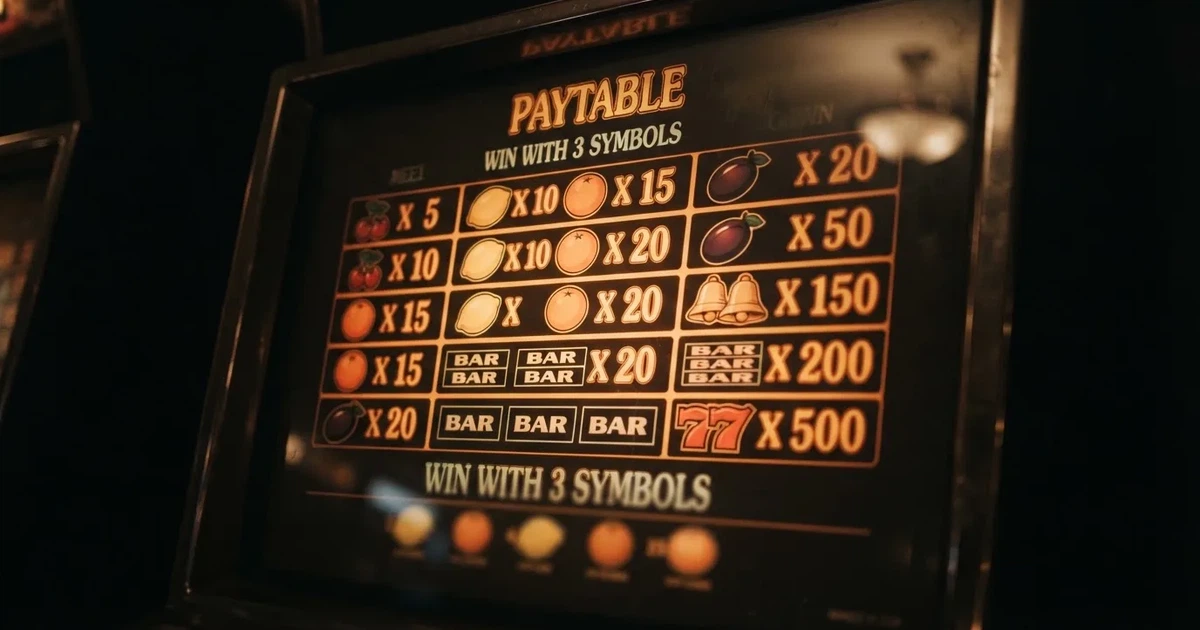
- Specific games: the paytables and what they tell you
- The shortlist: how any comparison of offshore sites has to be read
- Overview: what the Australian landscape actually looks like in 2026
- Legality: the Interactive Gambling Act and what it actually prohibits
- Responsible play: the limits that bind offshore brands
- Payments and payout speed: the offer an offshore brand cannot match
- Frequently asked questions
Pragmatic Play itself: what the studio is and is not
Pragmatic Play is a content supplier, not a casino. It is headquartered in Gibraltar and has been in operation since 2015, led by CEO Julian Jarvis and owned by a group of private investors headed by Veridian (Gibraltar) Limited. Its product is supplied through a single API that delivers slots and live-casino tables to operator brands including Flutter, Entain, bet365 and LeoVegas. The studio says it is licensed or certified in more than 30 jurisdictions — regulation by the UK Gambling Commission and a Class II licence from Romania’s Oficiul Național pentru Jocuri de Noroc sit among those — and its game certifications come from Gaming Laboratories International, Quinel and Gaming Associates. The catalogue itself is delivered in 33 languages and across all major currencies.

Two acquisitions frame the size of what Pragmatic Play carries. The first, completed on 26 June 2018, was Extreme Live Gaming, brought over from the Novomatic Group; that business had been running ten live tables — roulette, blackjack and baccarat — out of London studios. The second, announced on 28 January 2019, was VSoftCo, a virtual-sports supplier, which the company described as its second corporate acquisition. Through one integration, then, the studio has slots, live tables and virtuals. None of this changes what Australian law does with it.
That point is mechanical and worth being exact about. Australian law prohibits the supply of interactive gambling services to people in Australia; it does not address what a studio in Gibraltar licences. The licence a Pragmatic Play page points to — a Curaçao certificate, a Romania Class II, a UK Gambling Commission registration — is a licence for the markets that licence allows. The moment a site using that studio’s content markets real-money casino games to a player whose IP sits in Australia, the IGA, not the supplier’s licence, decides what is on offer.
Bonuses and free spins: the offer that isn’t an offer
Any page marketing Pragmatic Play slots to an Australian reader will quickly reach a bonus line. A deposit bonus. A free-spin package. A “200% up to A$5,000 + 200 free spins” string assembled from an affiliate feed. These offers have the shape of inducements: a headline multiple, a number of spins, a maximum amount. They are also the precise thing the regulator looks for first, because inducements are one of the named grounds on which the ACMA can act.
The reason these strings keep showing up is straightforward. Pragmatic Play slots, particularly the high-volatility releases, are tuned to read well on a bonus page — multiplier rounds, free-spin retriggers, “max win” numbers in the tens of thousands of times stake. The same properties make the games useful in marketing: the headline sits there whether or not the underlying wagering requirement is something a reader would clear. A 40-times bonus turnover on a small deposit and a 5-times turnover on a large one read the same in the marketing layer and very differently at the cashout screen.
The deeper point is that none of these bonus terms have been verified for this page. The plan that drove this writing did not provide wagering multiples, free-spin allocations, or game-weighting tables, because the only sources for those terms are affiliate marketing pages — the same pages the ACMA’s enforcement targets. A bonus headline is treated here as marketing copy, not as a contractual specification a reader can rely on.
Where a wagering multiple and a stake can be plugged into arithmetic, the result is rarely flattering. The expected cost of clearing a bonus is a function of the bonus size, the multiple, the stake per spin and the RTP of the game played through. Drop any of those and the gap between “what was promised” and “what it cost to claim it” widens. Promotional material does not give the reader those numbers. Where the numbers are missing, the conclusion is qualitative: an offer with a high multiple, a low max-cashout cap, or a short shelf life costs the player more than its headline suggests. That cost is what these offshore brands have been selling.
Mobile and apps: where Pragmatic Play content sits
Pragmatic Play’s product line is HTML5 by design. Slots load in a browser tab on a phone, scale to portrait and landscape, and run through the touch interface the studio built for live tables. There is no Pragmatic Play app a player downloads, because Pragmatic Play is not the operator. The app sits on the operator’s side — and the operator, in the Australian case, is an offshore brand the ACMA has identified as offering a prohibited service.
The reason this matters on a mobile page is that the convenience of a small-screen install is precisely what makes a prohibited product feel permitted. A pinned icon, a fingerprint login, a deposit flow tuned for a phone screen — these are the polish of a normal product, not proof that one is on offer. The same HTML5 framework runs on every offshore brand that carries Pragmatic Play, because that is how the studio ships its content. The mobile experience is real; the licence to offer it to Australians is not.
For a reader who wants the same games on a phone under Australian rules, the path is different. State and territory regulators licence gaming machines in clubs, pubs and casinos. A handful of those machines are Aristocrat Leisure products — the Australian-listed slot maker whose online arms are Product Madness (social casino) and Aristocrat Interactive (real-money online, formed in April 2024 from the merger of Aristocrat’s Anaxi unit with NeoGames, which includes Aspire Global, BtoBet and Pariplay). Aristocrat’s online real-money business is regulated in the jurisdictions Aristocrat Interactive operates in; it is not regulated in Australia, because no Australian jurisdiction issues that licence. The product, on a phone, is the part that exists; the offering, to an Australian, is the part the law forbids.
Specific games: the paytables and what they tell you
The Pragmatic Play catalogue runs to several hundred slot titles, with a parallel live-casino studio and a virtuals line inherited from the VSoftCo deal. Slot play runs on a five-reel format with between roughly twenty and fifty paylines on most titles; volatility runs from medium through very high; published RTP figures on the better-known titles sit in the mid-to-high 96s. A small handful of titles carry published “max win” caps — figures that, again, are useful in marketing copy rather than as a guarantee for a particular spin.
A worked example: Betsoft’s Good Girl Bad Girl 2, a slot from a peer studio, is published at 96.22% RTP, “Very High” volatility and a 15.59% hit rate, across 5 reels and 20 paylines. Those numbers are what the studio publishes; the actual session outcome depends on what is staked, for how long, and at which stake level. The point is not that this is the best or worst game in the catalogue. The point is that a slot page a reader lands on will lean on the published RTP figure as though it were a forecast, when in fact it is a long-run average over an effectively infinite number of spins.
For an Australian reader, the practical question is whether any Pragmatic Play slot — that one or any other — can be played under Australian rules. The answer is at the venue level, not the title level. A state-licensed club or casino may have a similar-looking machine from a different manufacturer; the IGA’s prohibition is on offering the product online to a person in Australia, and the IGA does not address what an onshore licensed machine does.
For readers who want to verify a title’s RTP and volatility independently, the path is the certification pages of the testing houses Pragmatic Play names: GLI, Quinel and Gaming Associates. These are not endorsements of any particular operator; they are confirmation that the random-number generator behind a slot behaves as the published math describes it to.
The shortlist: how any comparison of offshore sites has to be read
A “top eleven” or “best for Australians” list of Pragmatic Play casinos is a contradiction in terms. The Interactive Gambling Act 2001 prohibits the offering of online casino games to a person in Australia. A list ordered by bonus generosity, payout speed or game catalogue can rank those sites; what it cannot do is place them on the right side of Australian law. The shelf below is closed with that in mind.
The eleven brands here are the ones the ACMA has named in formal warnings — the regulator’s own roster, in the order in which the formal warnings are published. The first column gives the brand the ACMA’s notice named. The second gives the ACMA action and its date, drawn from the ACMA’s published formal-warning page. The third names the operator entity the ACMA named — the corporate holder behind the brand. The fourth is the question of whether that brand carries Pragmatic Play content in particular: where a public catalogue or aggregator page lists the brand alongside Pragmatic Play titles, the brand is marked as a Pragmatic Play-adjacent listing; where no such listing exists in the consulted sources, the brand is left unattached.
| Brand | ACMA action and date | Operator named by the ACMA | Subject support |
|---|---|---|---|
| RocketPlay | Formal warning, March 2026 | Pulsup Ltd (RocketPlay); earlier Dama N.V., May 2022 | — |
| Level Up Casino | Formal warning, May 2022 | Dama N.V. | listings-only (Wazdan public catalogue) |
| Woo Casino | Formal warning, March 2025 | Dama N.V. | — |
| Spirit Casino | Formal warning, May 2025 | Dama N.V. | — |
| National Casino | Formal warning, July 2025 | Consolutetish S.R.L. | listings-only (Betsoft and Pragmatic Play corporate pages name the brand) |
| Bizzo Casino | Formal warning, July 2025 | Consolutetish S.R.L.; earlier TechSolutions (CY) Group Ltd / TechSolutions Group N.V., 2022 | — |
| Ignition Casino | Formal warning, July 2025 | Bamboo Media | — |
| Instant Casino | Formal warning, February 2025 | EOD Code SRL | — |
| Jackbit | Formal warning, April 2026 | Ryker B.V. | — |
| Casino Intense | Formal warning, April 2025 | Sterplay Holding Ltd | listings-only (1spin4win, Aristocrat, Gambling Commission public sources) |
| Sky Crown | Formal warning, September 2022 | Hollycorn N.V. | — |
What the table is showing is not who is best. The same operator entity — Dama N.V. — sits behind four of the eleven names, which is why the ACMA’s actions against Dama recur across separate brand entries. Where a brand is marked “listings-only”, that means a public corporate or aggregator page mentioned the brand alongside a particular subject; the consulted sources did not provide an independent confirmation that the brand carries that subject’s games on the live product. A “—” is the article-language no-data marker: the consulted sources did not link the brand to the subject. Either reading leaves the brand where the ACMA put it — on the list of operators warned for offering prohibited services.
Overview: what the Australian landscape actually looks like in 2026
Three things sit in front of any Australian who types “Pragmatic Play casino” into a search box. The first is the catalogue itself, which is real, large and visible. The second is the offshore operator, which is the channel through which the catalogue reaches a person in Australia. The third is the IGA, which says that channel is not open.
State and territory authorities regulate gaming in clubs, pubs and casinos. Wagering on races and sport, placed before the event, is licensed — in practice by the Northern Territory Racing and Wagering Commission, which regulates 52 of Australia’s online bookmakers including Sportsbet, Bet365 and Ladbrokes, despite running with no full-time staff and meeting once a month in Darwin. Lotteries and keno are licensed by their state or territory. Online casino games are not licensed in any state or territory. The Interactive Gambling Act 2001, as strengthened by the Interactive Gambling Amendment Act 2017, makes the offering of those games to a person in Australia an offence.
The ACMA is the enforcement body. It investigates complaints, issues formal warnings and, where warnings do not change behaviour, asks Australian internet service providers to block sites at the network level. As of a round reported on 26 June 2026, a cumulative 1,751 illegal gambling and affiliate marketing websites had been blocked since the first blocking request in November 2019, and more than 230 unlicensed gambling services had left the Australian market since enforcement was strengthened in 2017. The most recently reported round asked ISPs to block 12 sites — 7Signs, ChromaBet, Donbet, Duospin, Freshbet, Slots Gem, Jacks Club, Lucky Start, Pointsbetz, Spinrise, Vinyl Casino and Wildsino — bringing the running tally to its current figure.
A second-order figure gives the size of what slips past enforcement. H2 Gambling Capital’s 2025 report estimates that Australians lose about A$3.9 billion a year to illegal gambling sites, and that the share of gambling going through legal channels fell from 74% in 2021 to 64%. The two numbers together — A$3.9 billion in losses, 1,751 sites blocked since November 2019, more than 230 operators gone — describe a market that is both policed and losing ground, with offshore brands continuing to find Australian players faster than the ACMA can take the brands off the network.
Legality: the Interactive Gambling Act and what it actually prohibits
The Interactive Gambling Act 2001 names a “prohibited interactive gambling service”: an online casino game, an online pokie, in-play betting. The 2017 amendment tightened the definition and extended the ACMA’s enforcement reach. What is permitted is wagering on races and sport placed before the event, lotteries and keno. Minimum age is 18.
The prohibition applies to the provider, not to the player. An Australian who opens an account with an offshore casino is not prosecuted. What that player does not have is Australian consumer protection: no Australian complaints body, no recourse if a withdrawal is refused, no guarantee that a balance survives an ACMA blocking order. The site can be blocked with funds still on it, and the player has nowhere to take the dispute. That asymmetry — provider-side prohibition, player-side inconvenience — is the structural feature of the offshore market.
The Interactive Gambling Amendment (Gambling Reform) Bill 2026 passed Parliament on 19 August 2026. Its advertising and inducement measures commence on 1 January 2027. On a page written in 2026, that is a law on the books but not yet in force; its practical effect on inducements attached to Pragmatic Play titles sits one calendar quarter ahead of the reader.
The IGA is enforced against operators, not against content suppliers. A studio shipping HTML5 slots through a single API is not the party the ACMA names in a formal warning. The warning names the brand and the operator entity behind it — Pulsup Ltd in the case of RocketPlay, Dama N.V. for Level Up, Consolutetish S.R.L. for National Casino, and so on through the eleven. The supplier relationship is incidental to the IGA’s reach.
Responsible play: the limits that bind offshore brands
Australian consumer-protection tools bind Australian-licensed services. BetStop, the National Self-Exclusion Register, has been live since August 2023 and applies to Australian-licensed online and phone wagering. An offshore casino is not connected to BetStop. A self-exclusion lodged with BetStop does not stop an offshore account from being opened; the offshore brand does not check the register.
For a reader who wants to exclude, the path runs through BetStop and through the operator they wager with, in that order. For a reader who needs support, the National Gambling Helpline at 1800 858 858 is free, runs 24 hours a day, and is paired with chat support at Gambling Help Online. These are the tools the offshore market does not provide, and the reason the offshore market carries a cost beyond the wager itself.
The same structural point applies to deposits. Since 11 June 2024, credit cards, credit-related products and digital currency are banned as payment for licensed online wagering in Australia, with operator penalties running up to A$247,500. Legal deposit routes for a licensed Australian wagering account are debit card, bank transfer, PayID/Osko and BPAY. A site asking an Australian player for a credit card or a crypto deposit is operating outside the Australian rules, and the question of whether to send it money is settled by that fact alone.
On the tax side, gambling winnings of a recreational player are not assessable income in Australia (section 6-5 of the ITAA 1997), and losses are not deductible — unless the person carries on a business of gambling, which is a model only and worth a check with the ATO. The reason this matters on a Pragmatic Play page is that an offshore brand will sometimes quote a “no tax on winnings” line. That line is true for Australians at recreational level, regardless of the brand; the offshore brand has not arranged anything.
Payments and payout speed: the offer an offshore brand cannot match
Payment terms are where an offshore brand advertises its strongest feature and where the gap between marketing and reality is widest. Withdrawal times of “under an hour” for crypto, “instant” for e-wallets, “same day” for cards — these are the strings attached to offshore brands that carry Pragmatic Play content. The ACMA’s blocking history is the counter-evidence: a site advertised as paying out within an hour can be network-blocked within a fortnight, with the player’s balance sitting on the wrong side of that block.
For Australian-licensed wagering, settlement times run through the deposit channels the IGA permits. PayID/Osko is effectively real-time at the bank-account level. BPAY clears overnight. Debit cards run through the card scheme’s standard settlement window. None of these will be advertised with the urgency of a crypto “instant withdrawal” — and that is precisely the point: the licensed channels are slower because they are auditable, and a withdrawal that the player can verify through their own bank is one the player can recover if something goes wrong.
Where an offshore brand is on the page — and every brand in the table above is — the practical question is what happens to a balance at the moment of a blocking order. The IGA directs ISPs to block the site. The player’s account is on the brand’s servers, not on the Australian network. A withdrawal request submitted the day before a block is at the brand’s discretion; one submitted after the block is, in practice, unrecoverable through Australian consumer law, because the brand is not within its reach.
The blocking rate is a measure of the ACMA’s enforcement reach. The first ACMA blocking request was issued in November 2019. By the round reported on 26 June 2026, a cumulative 1,751 illegal gambling and affiliate marketing sites had been blocked — a run of roughly seven years. That is somewhere between 200 and 250 blocks a year on average, accelerating into the most recent rounds. The arithmetic is rough because the published tallies are cumulative and the rounds vary in size; the band, not the point estimate, is what the data supports.
| Round period | Blocking metric |
|---|---|
| November 2019 to June 2026 | 1,751 sites blocked |
| Annualized rate | 200–250 sites/year |
The choice this leaves an Australian player is binary and worth stating plainly. The licensed channels settle slower and do not carry Pragmatic Play online. The offshore channels settle faster — when they settle — and carry products the IGA prohibits. There is no path that gives a reader both. The rest of this page is the ACMA’s record of what happens on the second of those two paths.
Frequently asked questions
Is Pragmatic Play legally available to players in Australia?
Pragmatic Play as a studio is licensed in more than 30 jurisdictions, but no Australian jurisdiction licences online casino games. The Interactive Gambling Act 2001 makes offering online casino games, online pokies or in-play betting to a person in Australia an offence, and the ACMA enforces the prohibition against the operator, not the supplier.
What kinds of games does Pragmatic Play make?
The studio supplies video slots, live-casino tables — roulette, blackjack and baccarat, originally via the Extreme Live Gaming acquisition completed in June 2018 — and virtual-sports products, the last added through the VSoftCo deal announced in January 2019. Slots run on HTML5; live tables run from studios serving multiple operator brands through a single API.
Are Pragmatic Play games offered at land-based venues in Australia?
Pragmatic Play does not supply gaming machines to Australian clubs, pubs or casinos. The onshore gaming-machine market is supplied by manufacturers including Aristocrat Leisure, which has its Australian headquarters in North Ryde, listed on the ASX under the ticker ALL and reported 2025 revenue of A$6.30 billion against a normalised net profit after tax and amortisation of A$1.55 billion. Aristocrat’s online arms are Product Madness for social casino and Aristocrat Interactive, formed in April 2024 from the Anaxi and NeoGames merger, for regulated real-money online — neither of which offers casino games to Australian residents.
How can Australians check whether a Pragmatic Play title is fair before ever considering play?
The studio names three testing houses — Gaming Laboratories International, Quinel and Gaming Associates. Each publishes certification records for the games it has tested, including published RTP figures, volatility classifications and RNG confirmation. Those records are not endorsements of any particular operator and do not address whether an offshore site is permitted to offer the game to Australian residents.
Why do offshore sites keep advertising Pragmatic Play games to Australian visitors?
H2 Gambling Capital’s 2025 report estimates Australians lose about A$3.9 billion a year to illegal gambling sites, and the share of gambling going through legal channels has fallen from 74% in 2021 to 64%. The market is large enough that offshore brands continue to accept the ACMA’s blocking regime as a cost of doing business, because the alternative — leaving the Australian market — costs them more in lost play.
What should an Australian do if they see a Pragmatic Play game promoted by an unlicensed site?
The ACMA accepts reports of suspected prohibited services through its website; the agency’s blocking round of 26 June 2026 — which added 12 sites including 7Signs, ChromaBet, Donbet, Duospin, Freshbet, Slots Gem, Jacks Club, Lucky Start, Pointsbetz, Spinrise, Vinyl Casino and Wildsino — grew out of exactly that reporting. The National Gambling Helpline at 1800 858 858 is the route for a player who has already opened an account and wants support.