
Quickspin casinos in Australia: what the ACMA action means for anyone looking at offshore sites
The phrase “Quickspin casino” does a lot of work in Australian search results, and almost none of it is on the side of the reader. Quickspin is a real studio, founded in Stockholm in 2011 and now part of Playtech, that builds the kinds of online slot games — Sakura Fortune, Big Bad Wolf, Sticky Bandits — that show up in lobby screenshots all over the internet. Those titles do appear at offshore sites that take Australian dollars, advertise in Australian time, and run welcome bonuses aimed squarely at Australian-looking traffic. What does not appear is an Australian licence: no state or territory issues one for online casino games, and the Interactive Gambling Act 2001 makes providing such a service to a person physically in Australia an offence. The Australian Communications and Media Authority (ACMA) has spent 2026’s first half issuing formal warnings and adding to its block list precisely because those offshore sites keep marketing the product. This page lays out what is on offer, who has been warned about it, and where the licensed alternatives — licensed for the products Australia actually licenses — actually sit.
Data current as of 29 October 2026, checked against the ACMA register, the UK Gambling Commission public register and the ACMA’s published enforcement actions.
Table of Contents
- Bonuses and free spins attached to Quickspin titles
- Mobile play and the Quickspin app question
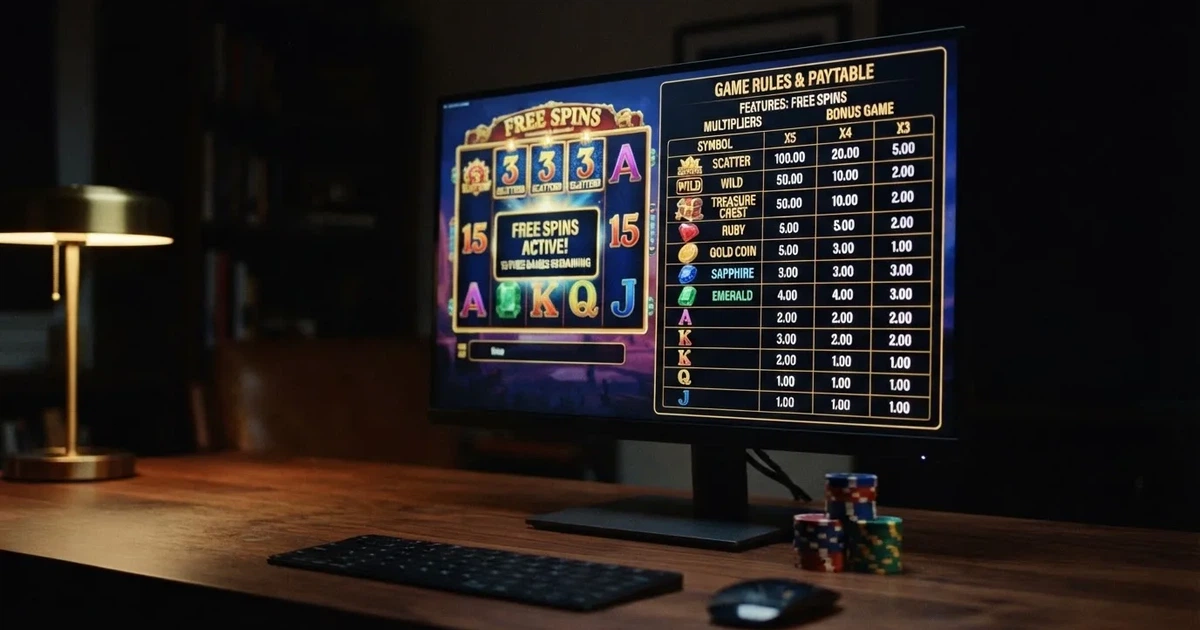
- What Quickspin actually makes — and what its paytables look like
- How the Top 11 shortlist is built, and why every entry looks the same
- How this market actually works in 2026
- Legality and the statute behind the formal warnings
- Responsible gambling supports available to an Australian player
- Deposits and withdrawals at sites hosting Quickspin titles
- What a reader comparing options actually decides
- How the ACMA’s blocking rate has moved over time
- RocketPlay
- Level Up Casino
- Woo Casino
- Spirit Casino
- National Casino
- Bizzo Casino
- Ignition Casino
- Instant Casino
- Jackbit
- Casino Intense
- Sky Crown
- What an Australian reader should do with this picture
- Common questions an Australian reader asks about Quickspin casinos
Bonuses and free spins attached to Quickspin titles
Almost every Quickspin-branded slot title at an offshore casino sits inside a “welcome package” of some shape: a percentage match on the first deposit, a stack of free spins on a named Quickspin game, sometimes both. The headline figure is the part the marketing writes first. The rest of the offer — what a player has to put through the machine before any of it can be withdrawn — is the part that determines what the offer is actually worth.

A deposit-match bonus is, on paper, free money. In practice it is a loan of stake that has to be turned over a number of times stated in the site’s terms before winnings become withdrawable. A “100% up to A$500 with 40x wagering” line means a A$500 deposit produces a A$500 bonus that has to be staked A$20,000 before any withdrawal — and the house edge runs against the player across that turnover. A free-spin grant on Sakura Fortune at A$0.20 per spin is, again on paper, 100 chances to win. In practice it is a fixed pool of bonus stake with the same kind of conversion requirement behind it and a ceiling on what can be cashed out from the resulting win.
A few rules of thumb hold across this market. Wagering requirements of 30x to 50x the bonus are ordinary. Anything above 50x is heavy against the player. Game-weighting rules often count slots at 100% toward the requirement, while table games and live dealer titles count at a fraction or not at all — which is why most bonus-chasing happens on slots, Quickspin’s included. Max-bet clauses during bonus play are common, usually A$5 or A$10 per spin, and breaching them voids the bonus. The expiry window for clearing a bonus is usually seven to thirty days; a longer window is friendlier than a short one for a player who cannot play daily.
Two further mechanics deserve naming because they shape what any Quickspin welcome package ends up being. The first is the max-cashout cap: many no-deposit free-spin offers cap withdrawable winnings at a fixed figure, sometimes A$100, sometimes A$200, regardless of how the spin lands. The second is the “bonus vs real money” order in which a site pays out: a withdrawal request while a bonus is still active will, on many sites, void the bonus and any associated winnings. Both are conditions the marketing page does not usually lead with.
The deeper issue is that none of this is governed by an Australian consumer protection regime. The ACMA’s formal warnings are not about whether a Quickspin free-spin offer is generous; they are about the fact that the site offering it is not licensed to offer online casino games to a person in Australia at all. The bonus terms are a layer on top of that fact, not a substitute for it.
Mobile play and the Quickspin app question
Quickspin builds in HTML5. That choice matters on a phone: the same game file runs in a mobile browser without a separate download, and load times on a modern handset on a decent 4G or 5G signal are a few seconds at most. Touch controls are handled by the studio — spin, bet-size, autoplay, paytable access all map to thumb-sized targets — and the games keep their portrait and landscape layouts across both Android Chrome and iOS Safari.

The “Quickspin casino app” that surfaces in app-store searches is rarely a Quickspin app. It is an offshore casino’s white-label mobile app, which loads Quickspin titles inside a wrapper alongside slots from many other studios. The legal position of that app, for someone in Australia, is the same as the browser version of the same site: it is a prohibited interactive gambling service under the Interactive Gambling Act 2001, and the ACMA has moved against several of the brands that distribute them.
What does work on a phone is the browser-based version of an offshore site that hosts Quickspin titles. There is no download to do, no compatibility quirk worth flagging for current-generation handsets, and no feature of the desktop game that the mobile build leaves out. The autoplay, the gamble feature on titles that have one, the bonus-buy button where the regulator permits it, all sit where the studio put them. The studio’s site itself — quickspin.com — is the cleanest source for confirming which titles the studio actually publishes and which devices they have been tested on.
For an Australian reader, the question of whether the mobile experience is good is the wrong question. The right one is whether the site offering it is licensed to offer online casino games to a person in Australia — and the answer, for every offshore site the ACMA has moved against, is no. A smooth mobile build does not change the legal position of the service.
What Quickspin actually makes — and what its paytables look like
Quickspin’s catalogue is slot-first. The studio describes itself as the maker of the games its three Stockholm founders wanted to play themselves, and the catalogue reflects that: video slots with strong art direction, distinctive bonus rounds, and the kind of mathematics that splits cleanly between low- and high-volatility titles. The studio’s licensing footprint is a Malta Gaming Authority Critical Gaming Supply Corporate licence (MGA/CRP/137/2007, issued 6 December 2018) and coverage through parent Playtech’s UK Gambling Commission account (number 38516). It operates from Stockholm, Sliema and Kyiv with about a hundred staff of more than thirty nationalities across five countries. None of that licensing is an Australian licence, and the Malta and UK permissions do not extend to offering online casino games to Australians.
The mechanics Quickspin leans on are familiar from the broader video-slot genre. Five-reel, three-row grids with twenty to forty paylines are the standard layout; sticky wilds, expanding wilds and free-spin retriggers appear in different combinations across the catalogue. Volatility varies sharply across the studio’s output — some titles sit in the medium range, others push into high-volatility territory with bonus rounds that pay infrequently and large when they do. Return-to-player percentages, where Quickspin publishes them, sit in the 96% to 97% band that is ordinary for the genre. The studio does not publish a single figure for the whole catalogue; each title carries its own math, and any site claiming a “Quickspin RTP” without naming the title is making a claim that does not hold.
The relationship between Quickspin and Aristocrat is worth naming because it is the closest the Australian reader gets to a domestic link. Aristocrat Leisure, founded in 1953 and ASX-listed in 1996, is the largest gambling-machine manufacturer in Australia and the second-largest slot-maker worldwide behind International Game Technology. Aristocrat’s land-based pokies are everywhere in Australian clubs and pubs, and the company’s online arms — Product Madness for social games, Aristocrat Interactive for regulated online real-money gambling — sit in the same broader market as Quickspin, but on a different licensing basis. Quickspin titles do not appear on Aristocrat’s Australian-licensed platforms; Aristocrat’s Australian-licensed offering is not online casino games at all.
A reader looking for a Quickspin-branded title at an Australian-licensed venue will not find one. The licensed Australian offering is land-based pokies (state and territory regulated, with their own self-exclusion registers), licensed online wagering with the Northern Territory Racing and Wagering Commission as the de facto regulator of 52 of the country’s online bookmakers, and the licensed lottery and keno products. None of those channels hosts Quickspin’s online slot catalogue.
How the Top 11 shortlist is built, and why every entry looks the same
There is no defensible ranking of “best Quickspin casino for Australians” in the conventional sense, because none of the sites that host Quickspin titles is licensed to take an Australian customer. What can be built, and what this page builds, is a list of offshore brands that the ACMA has moved against for offering prohibited online casino games — including Quickspin titles — to people in Australia. Each entry below names the brand, the ACMA action and date, the operator behind the brand, and what the ACMA’s own register says. The list is not a recommendation, and reading it as one misreads what it is. It is the ACMA’s own record of who has been warned, and the ACMA’s record is what an Australian reader should be working from.
The criteria that shape the order of the list are simple: date of ACMA action, with the most recent at the top; the ACMA-named operator rather than the trading brand; and the wording the ACMA itself used in the formal-warning publication. Where the ACMA has acted more than once against the same operator over different brands — Dama N.V. is the clearest example — each brand is listed separately, and the earlier warning is named alongside the later one. Where the ACMA’s own language describes the operator as one of several brands run by the same corporate group, that wording is carried forward.
The table that follows is the working form of the shortlist. It carries the brand, the ACMA action and date, the operator named by the ACMA in the formal-warning publication, and what is known about whether that operator surfaces Quickspin titles on its platform. Where research has no signal either way, that cell carries a dash rather than a guess. Where the operator’s own catalogue or a third-party listing names Quickspin, the table records the listing source — the operator’s own claim is not the same fact as an independent listing.
| Brand | ACMA action and date | Operator named by the ACMA | Quickspin title support |
|---|---|---|---|
| RocketPlay | Formal warning, March 2026 | Pulsup Ltd (earlier Dama N.V., May 2022) | — |
| Jackbit | Formal warning, April 2026 | Ryker B.V. | — |
| Level Up Casino | Formal warning, May 2022 | Dama N.V. | Listings only (Wazdan.com) |
| Woo Casino | Formal warning, March 2025 | Dama N.V. | — |
| Spirit Casino | Formal warning, May 2025 | Dama N.V. | — |
| National Casino | Formal warning, July 2025 | Consolutetish S.R.L. | Listings only (Betsoft.com, en.wikipedia.org, Pragmaticplay.com) |
| Bizzo Casino | Formal warning, July 2025 (earlier TechSolutions, 2022) | Consolutetish S.R.L. | — |
| Ignition Casino | Formal warning, July 2025 | Bamboo Media | — |
| Instant Casino | Formal warning, February 2025 | EOD Code SRL | — |
| Casino Intense | Formal warning, April 2025 | Sterplay Holding Ltd | Listings only (1spin4win, en.wikipedia.org, gamblingcommission.gov.uk) |
| Sky Crown | Formal warning, September 2022 | Hollycorn N.V. | — |
The dates matter because they show how the ACMA’s enforcement has moved over time. The earliest entry here — Sky Crown, September 2022 — is now nearly four years old. The most recent — RocketPlay in March 2026 and Jackbit in April 2026 — show the agency still naming new operators under the same statute. A reader looking at this list is not looking at a stale picture; the ACMA’s pace has not slowed.
How this market actually works in 2026
The offshore sites that market Quickspin titles to Australian traffic operate outside Australian law. They hold licences from other jurisdictions — Curaçao is the most common, the Malta Gaming Authority shows up on some, the Kahnawake Gaming Commission on others — and those licences authorise them to operate in their issuing country and in whatever other markets the licence text covers. None of them covers Australia for online casino games. The ACMA’s position, restated in each formal warning, is that offering such games to a person in Australia is a contravention of the Interactive Gambling Act 2001, regardless of the offshore licence the operator displays.
The player’s side of this picture is not symmetric. The IGA targets the provider, not the individual customer: there is no record of an Australian player being prosecuted for placing a bet at an offshore site, and the ACMA’s enforcement work is built around directing Australian internet service providers to block the offending sites at the network level. A player with money on a blocked site has no Australian complaints body to approach and no Australian court with clear jurisdiction over an offshore operator. That asymmetry is what the ACMA’s blocking list and formal-warning register are designed to make visible.
The scale of the offshore market the ACMA is working against has been quantified externally. H2 Gambling Capital’s 2025 report estimates Australians lose about A$3.9 billion a year to illegal gambling sites, and the share of gambling going through legal channels fell from 74% in 2021 to 64% over the same window. That is the figure a reader should hold alongside the formal-warning list: the enforcement action is being taken against a market measured in single-digit billions, and the legal-channel share is shrinking.
The ACMA’s blocking work is the metric the agency itself publishes. According to the ACMA as reported in June 2026, a total of 1,751 illegal gambling and affiliate marketing websites had been blocked since the first blocking request in November 2019, and more than 230 unlicensed gambling services had left the Australian market since enforcement was strengthened in 2017. The latest round reported on 26 June 2026 saw 12 more sites added to the block list: 7Signs, ChromaBet, Donbet, Duospin, Freshbet, Slots Gem, Jacks Club, Lucky Start, Pointsbetz.com, Spinrise, Vinyl Casino and Wildsino. The blocking rate, measured against the six-and-a-half-year span from November 2019 to June 2026, sits in the band of roughly 260 to 270 sites blocked per year on average — a steady, not spectacular, pace that has compounded into a list well into four figures.
Legality and the statute behind the formal warnings
The Interactive Gambling Act 2001, strengthened by the Interactive Gambling Amendment Act 2017, is the statute the ACMA enforces. The 2017 amendments are what turned the regime from one aimed at advertising and inducements into one that criminalises the provision of prohibited interactive gambling services — online casino games, online pokies and in-play betting — to a person physically in Australia. The 2017 changes also introduced the civil penalty provisions that the ACMA now uses for its formal-warning work.
What is and is not licensable in Australia follows the same dividing line. Wagering on races and sport placed before the event is licensable, and in practice is licensed by the Northern Territory Racing and Wagering Commission, which regulates 52 of the country’s online bookmakers — Sportsbet, Bet365 and Ladbrokes among them. The Commission has no full-time staff and meets once a month in Darwin, a fact that surfaces every time the Northern Territory’s de facto regulator role is reviewed. Lotteries and keno are licensable through state and territory regimes. Online casino games, online pokies and in-play betting are not licensable anywhere in Australia. The minimum age for any licensable form is 18.
The 2026 reform the page should note is the Interactive Gambling Amendment (Gambling Reform) Bill 2026, which passed Parliament on 19 August 2026. The bill’s advertising and inducement measures commence on 1 January 2027 — law passed, not yet in force on a page written for 2026. A reader in the second half of 2026 is reading under the 2017 regime; a reader from January 2027 onwards will be reading under the new inducement rules.
The payment-side ban that intersects with offshore sites is worth carrying here. Since 11 June 2024, credit cards, credit-related products and digital currency have been banned as payment for licensed online wagering, with penalties up to A$247,500 for operators. The legal deposit routes for licensed wagering are debit card, bank transfer, PayID/Osko and BPAY. An offshore site asking an Australian customer for a credit card or a crypto deposit is not just unlicensed for the product — it is using a payment route the licensed side of the market is forbidden to use.
Responsible gambling supports available to an Australian player
BetStop, the National Self-Exclusion Register, has been live since August 2023. It binds Australian-licensed online and phone wagering services — the bookmakers the NTRWC regulates, the lottery operators, the licensed keno products. An offshore casino is not connected to BetStop, and a self-exclusion registered through BetStop does not reach across to a Curaçao-licensed site hosting Quickspin titles. That gap is the most important fact about the register from the perspective of this page: it does what it says it does, and what it says it does is narrower than the offshore market.
The 24/7 support line is the National Gambling Helpline on 1800 858 858, free from any Australian phone, with web chat at Gambling Help Online. State and territory self-exclusion registers cover land-based venues, with the Victorian, New South Wales, Queensland, Western Australian, South Australian, Tasmanian, ACT and Northern Territory schemes each running their own process and database. An Australian considering play at any site hosting Quickspin titles can reach the helpline at any hour without naming a venue.
A player who has money on a blocked site has no Australian complaints body to approach. The ACMA’s blocking action is an enforcement tool aimed at the provider; it does not produce a refund mechanism for affected customers. The licensed side of the market does — complaints to licensed operators can be escalated through the relevant state or territory regulator — but that mechanism does not extend across to offshore brands. The asymmetry is structural, not procedural.
Deposits and withdrawals at sites hosting Quickspin titles
The deposit routes an offshore Quickspin-hosting site offers to an Australian customer are not the routes the Australian-licensed side is allowed to offer. Crypto deposits — Bitcoin, Ethereum, Tether and stablecoins — are standard on the offshore side, alongside Visa and Mastercard on some sites (despite the credit-card ban that applies to the licensed side, the offshore side operates on its own rules), e-wallet options, and bank transfer on a smaller number of brands. The mix varies by operator; a single brand’s cashier page usually lists three to six options.
Withdrawal speed is the variable the marketing writes around. The realistic spread on the offshore side runs from a few hours for an established e-wallet withdrawal at a brand with a clean queue to several business days for a first withdrawal, when the site’s “know your customer” process kicks in for the first time. First-time withdrawals are the slowest because the site is verifying identity documents for the first time — the process is the same in principle as the licensed side’s KYC, but the standards applied and the time taken to clear vary widely by operator. A player with a clean document set and a previously verified account will see a different timeline from a player withdrawing for the first time.
The structural point is that none of this runs under Australian consumer protection law. A withdrawal refused by an offshore operator has no Australian complaints body to escalate to. A bonus term reinterpreted after a big win cannot be challenged through an Australian regulator. The deposit-and-withdrawal experience the marketing describes is real, in the sense that the cashier works and the money moves; what is not real is the layer of consumer protection an Australian reader would assume is in place by default.
What a reader comparing options actually decides
The decision an Australian reader is making, when comparing “best Quickspin casinos” against each other, is whether to play at an unlicensed offshore site at all. The comparison within that set — which cashier is faster, which bonus is heavier, which game library is wider — is a comparison that takes the legal position as given. The frame the ACMA’s enforcement record imposes is different: it asks whether the comparison is the right one to be making, given that every site on the list has been the subject of a formal warning under the same statute.
A reader who has already decided to play at an offshore site, and is choosing between the brands on the ACMA’s list, has two things to weigh. The first is operator recency on the ACMA’s register: a brand warned in 2026 is operating under a more recent enforcement context than one warned in 2022, and the agency’s pace has not slowed. The second is the corporate grouping behind the brand: Dama N.V., which the ACMA has moved against over six brands between May 2022 and May 2025, is a different signal from a one-off warning to a single-operator brand. The signal is not “this brand is worse” but “this operator has been told repeatedly under the same statute and has continued the conduct.”
A reader who decides against offshore play has a different set of options. The licensed Australian offering is land-based pokies (state and territory regulated, with self-exclusion registers that work), licensed online wagering with the Northern Territory as the de facto regulator of 52 bookmakers, and the licensed lottery and keno products. None of those channels hosts Quickspin’s online slot catalogue. A reader who wants Quickspin-branded slots specifically, and wants them under a regulatory regime that reaches them, has no domestic option. That gap is the structural reason this page exists.
How the ACMA’s blocking rate has moved over time
The arithmetic that belongs on this page is the blocking rate itself: how many sites per year the ACMA has moved against since the regime began. The first blocking request went out in November 2019; the cumulative count as reported in June 2026 stood at 1,751 illegal gambling and affiliate marketing websites blocked. The June 2026 round itself added 12 more.
Two inputs go into the rate. The first is the cumulative total — 1,751 sites — as carried by the ACMA’s own June 2026 reporting. The second is the date of the first blocking request — November 2019 — as the same reporting names. The span between those two points runs from November 2019 to June 2026, which is six years and seven months, or 79 months. Divided across that span, the rate sits in the band of roughly 22 sites blocked per month on average, or 260 to 270 per year on a straight-line basis. That is the steady, compounding pace the agency’s network-level enforcement has produced.
The figure carries one condition an Australian reader should hold alongside it. The 1,751 figure counts both illegal gambling sites and affiliate marketing sites — the affiliate pages that promote them. The 230-odd services that have left the Australian market since 2017 are a different count, capturing operators that withdrew rather than waited for a block. The two figures are related, not the same, and they describe overlapping enforcement outcomes rather than a single stream. Reported as a band with that condition attached, the blocking rate tells the reader how steadily the ACMA’s regime has been applied — and how far short of “every site closed” that pace lands, which is the honest reading of any cumulative enforcement total.
RocketPlay
RocketPlay is the brand the ACMA has acted against most recently on this list. In March 2026 the agency issued a formal warning to Pulsup Ltd over Rocketplay.com.au — the same brand that was the subject of an earlier Dama N.V. warning in May 2022, when the ACMA named six casino brands under Dama’s umbrella in one action. The intervening years saw the RocketPlay trading name move between operators; the ACMA’s own record treats each operator as the responsible party for the period in question.
What the brand’s catalogue contains is not the subject of the ACMA action — the action is about the offer of prohibited interactive gambling services to Australians, not about any specific game. Research carries no signal one way or the other on whether RocketPlay hosts Quickspin titles at present; the table records that gap with a dash rather than a guess. The reader looking at RocketPlay is looking at a brand under active ACMA attention in 2026, which is the most recent position of any brand on the list.
Verdict: a brand to treat as under the freshest ACMA attention on the list, and a reminder that the same trading name can change hands and re-enter the ACMA’s enforcement record under a new operator.
Level Up Casino
Level Up Casino was named by the ACMA in the May 2022 formal-warning round against Dama N.V. alongside five other Dama brands — Bambet, Dazard, Rocketplay, Wild Tornado and Cobra Casinos. Dama N.V. has since been named again, over Woo Casino in March 2025 and Spirit Casino in May 2025, and over RocketPlay’s current operator Pulsup Ltd in March 2026. The Level Up Casino warning is the oldest Dama entry still active on this page.
The Quickspin support signal for Level Up is the thinnest kind research carries: a third-party listing that names the brand among Quickspin-hosting sites. That is not the same fact as the brand’s own claim, and the table records it as a listings-only signal with the source named. A reader who reaches for Level Up on the strength of a Quickspin listing is reaching on the thinnest of evidence about game availability, on top of a formal warning the ACMA has not updated.
Verdict: the brand sits on the ACMA’s register, the game-availability signal is a third-party listing, and there is nothing in the ACMA’s record that suggests Dama N.V. has been told once and complied.
Woo Casino
The ACMA issued a formal warning to Dama N.V. over Woo Casino in March 2025, two years and ten months after the agency’s first Dama warning in May 2022. The intervening period saw the ACMA’s enforcement against Dama’s other brands continue, and the Woo Casino action is the second Dama brand the agency moved against within a ten-month window of the same year. The pattern across the Dama portfolio is the shape that should be visible to a reader comparing brands within the same corporate group.
Research carries no signal on whether Woo Casino currently hosts Quickspin titles. The absence of a signal is not the same as the absence of the titles — Woo Casino’s game library would be a thing the brand’s own site would have to confirm, and research did not surface that confirmation either way. The table records the gap.
Verdict: Woo Casino is one entry in a Dama N.V. portfolio the ACMA has now warned about three times in four years, which is the structural signal here rather than any single feature of the Woo Casino brand.
Spirit Casino
Spirit Casino was the subject of a Dama N.V. formal warning from the ACMA in May 2025, two months after Woo Casino. The two warnings in the same year, over brands within the same operator group, are the ACMA’s clearest signal that the agency’s enforcement against Dama N.V. has not been a one-off. Spirit Casino is the fourth Dama brand on this list, after Level Up Casino, the earlier RocketPlay entry, and Woo Casino.
No research signal exists on Spirit Casino’s Quickspin hosting. The brand’s own catalogue would carry that fact if it were true, and the absence of a clear signal in research is what the table records. A reader looking at Spirit Casino is looking at a brand under a fresh-enough ACMA warning to be an active enforcement target, and inside an operator group the ACMA has named repeatedly.
Verdict: the freshest Dama brand on the list, and the cleanest example of what “the ACMA has not stopped naming this operator group” looks like in practice.
National Casino
National Casino was named by the ACMA in the July 2025 formal-warning round against Consolutetish S.R.L., alongside Bizzo Casino in the same action. The July 2025 round is the agency’s first action against Consolutetish, and the warning sits inside a year that also saw the ACMA move against Bamboo Media over Ignition Casino.
The Quickspin support signal for National Casino is the strongest kind research carries for any brand on this list. Third-party listings — the Betsoft.com catalogue reference, the en.wikipedia.org slot-listings reference, and a Pragmaticplay.com reference — name National Casino as a host of major-studio slot titles. Whether Quickspin specifically sits in that catalogue is a finer-grained question the listings do not settle. The table records the listings-only signal and names the sources.
Verdict: a brand with the broadest third-party signal for slot hosting on the list, sitting inside an operator group the ACMA named for the first time in July 2025.
Bizzo Casino
Bizzo Casino was named by the ACMA in the same July 2025 action against Consolutetish S.R.L. as National Casino, but with a longer history. The brand had already been the subject of a 2022 formal warning to TechSolutions (CY) Group Limited and TechSolutions Group N.V. The intervening three years saw the brand change corporate hands — Consolutetish S.R.L. is the operator the ACMA names in 2026, not TechSolutions — and the agency’s return to the brand under the new operator is itself a signal about how operator changes interact with the ACMA’s enforcement.
Research carries no signal on Bizzo’s Quickspin hosting. The brand’s own catalogue would settle that, and research did not surface a confirmation. The table records the gap.
Verdict: the brand on the list with the longest ACMA history under multiple operators, and a clear example of how operator turnover does not reset the agency’s enforcement record.
Ignition Casino
Ignition Casino was named by the ACMA in the July 2025 formal-warning round against Bamboo Media. The same round moved against Consolutetish S.R.L. over National Casino and Bizzo Casino. Ignition Casino is the only Bamboo Media brand on this page, and the agency’s first action against that operator group.
No research signal exists on Ignition’s Quickspin hosting. The brand’s product is the thing its own site would name, and research did not surface that. The table records the gap.
Verdict: a single-brand operator on the ACMA’s list, and the cleanest example of what a first-time warning against a previously unnamed operator group looks like.
Instant Casino
The ACMA issued a formal warning to EOD Code SRL over Instant Casino in February 2025, the earliest action on this list after Sky Crown’s September 2022 warning. The February 2025 warning is also the action the ACMA’s own “Formal Warning” publication describes in the most recent past tense of any of the EOD Code entries.
Research carries no signal on Instant Casino’s Quickspin catalogue. The brand’s own library would confirm it; research did not. The table records the gap.
Verdict: an early-2026 warning against a single-brand operator, sitting between the older Hollycorn N.V. action and the more recent Dama N.V. warnings that close out the year.
Jackbit
Jackbit is the most recent brand on the list. The ACMA issued a formal warning to Ryker B.V. over Jackbit and CasinOK in April 2026, one month after the RocketPlay action against Pulsup Ltd. The April 2026 round is the agency’s second 2026 action against a previously unnamed operator group, after the March 2026 RocketPlay round.
No research signal exists on Jackbit’s Quickspin hosting. The brand’s own catalogue would settle it, and research did not. The table records the gap.
Verdict: the freshest brand on the list, and one of two brands the ACMA moved against in 2026 under an operator group not previously named.
Casino Intense
Casino Intense was named by the ACMA in a formal warning to Sterplay Holding Ltd in April 2025. The warning sits in the same period as the Dama N.V. warnings against Woo Casino (March 2025) and Spirit Casino (May 2025), and the EOD Code SRL warning against Instant Casino (February 2025). April 2025 is the middle of a run of ACMA actions against operator groups the agency had not previously named.
The Quickspin support signal for Casino Intense is the listings-only kind research carries. Third-party references — the 1spin4win catalogue, an en.wikipedia.org slot-listings reference, and a gamblingcommission.gov.uk reference — name the brand in the context of slot-provider catalogues. Whether Quickspin specifically is among those titles is a finer-grained question the listings do not settle. The table records the listings-only signal with the sources named.
Verdict: a brand with a third-party slot-listing signal, inside an operator group the ACMA named for the first time in April 2025.
Sky Crown
Sky Crown is the oldest entry on the list. The ACMA issued a formal warning to Hollycorn N.V. over Sky Crown and Blue Leo, published in September 2022. The action is the agency’s earliest warning on this page and the only Hollycorn N.V. entry here.
Research carries no signal on Sky Crown’s Quickspin hosting. The brand’s own library would confirm it; research did not. The table records the gap.
Verdict: the oldest warning on the list, and a reminder that the ACMA’s enforcement record accumulates rather than resets — a 2022 warning is still part of the agency’s working register against the operator.
What an Australian reader should do with this picture
The picture the ACMA’s enforcement record paints is a market of offshore brands, each licensed somewhere other than Australia, each offering online casino games — Quickspin titles among them — to Australians in contravention of the Interactive Gambling Act 2001. The ACMA’s response has been steady rather than dramatic: formal warnings published by operator group, network-level blocks directed at Australian ISPs, and a cumulative list that, by June 2026, ran to 1,751 sites blocked since November 2019. That pace, applied across the offshore market, has compounded into a four-figure block list without reaching anything like “every offshore site closed”.
A reader who wants Quickspin-branded slots specifically has no domestic option. The licensed Australian offering is land-based pokies (state and territory regulated), licensed online wagering under the Northern Territory Racing and Wagering Commission’s de facto regulation of 52 bookmakers, and the licensed lottery and keno products. None of those channels hosts Quickspin’s online slot catalogue, and none is reached by an Australian self-exclusion register in a way that crosses over to the offshore side. The licensed and the offshore markets are separate regulatory worlds, with separate consumer-protection regimes, separate payment rules, and separate complaints mechanisms — or, in the offshore case, the absence of one.
A reader who notices a Quickspin title being promoted by an unlicensed site can report the site to the ACMA. The agency’s enforcement work depends on that flow of reports; the formal-warning register is built on it. The reader does not need to have played at the site to make a report, and the report does not require identifying the reporter.
Common questions an Australian reader asks about Quickspin casinos
Is Quickspin legally available to players in Australia?
Quickspin the studio is a real company, licensed by the Malta Gaming Authority and covered through Playtech’s UK Gambling Commission account. Quickspin titles at offshore casino sites are not legally available to players in Australia, because online casino games cannot be licensed in Australia under the Interactive Gambling Act 2001. A site offering them is operating in contravention of the Act, and the ACMA has issued formal warnings over multiple brands doing so.
What kinds of games does Quickspin make?
Quickspin’s catalogue is slot-first. Video slots with five-reel, three-row grids, twenty to forty paylines, sticky and expanding wilds, free-spin retriggers, and bonus rounds with the kind of art direction the studio’s three Stockholm founders wanted to play themselves. The studio publishes individual RTPs per title in the 96% to 97% range, with volatility ranging from medium to high across the catalogue. No single RTP figure covers the whole catalogue.
Are Quickspin games offered at land-based venues in Australia?
No. Quickspin’s catalogue is online-only. The closest Australian-domestic link is Aristocrat Leisure, Australia’s largest gambling-machine manufacturer, whose land-based pokies fill Australian clubs and pubs under state and territory regulation. Aristocrat’s online arms are separate businesses and do not host Quickspin titles. An Australian reader looking for Quickspin-branded slots at a licensed venue will not find them.
How can Australians check whether a Quickspin title is fair before considering play?
Quickspin publishes individual game RTPs on its own site and on the game-info pages of any regulated site that hosts its titles. Independent testing laboratories — GLI, Quinel, iTech Labs — certify Quickspin’s RNG across the jurisdictions where the studio is licensed. None of those certifications reach to an Australian player at an offshore site. The licensed-side testing regime the ACMA enforces does not cover offshore sites, because offshore sites are not licensed to operate in Australia.
Why do offshore sites keep advertising Quickspin games to Australian visitors?
Because the offshore market for Australian-facing traffic is large enough to justify the marketing spend. H2 Gambling Capital’s 2025 report estimates Australians lose about A$3.9 billion a year to illegal gambling sites, and the share of gambling going through legal channels fell from 74% in 2021 to 64%. The ACMA’s enforcement work is the regulatory response to that market, and the formal-warning list is the agency’s running record of who has been told under the Interactive Gambling Act 2001.
What should an Australian do if they see a Quickspin game promoted by an unlicensed site?
Report the site to the ACMA. The agency’s formal-warning work is built on those reports, and the block-list additions are the visible enforcement outcome. The 24/7 National Gambling Helpline on 1800 858 858, with web chat at Gambling Help Online, is the support line for any Australian whose own play has become a concern — separate from the reporting route, and available without naming a venue. BetStop, the National Self-Exclusion Register, binds Australian-licensed wagering services; an offshore casino is not connected to it, and a BetStop registration does not reach across.