
Best RTG casinos Australia 2026: why the shortlist keeps growing back
Every search for “best RTG casinos Australia” returns a fresh list of offshore brands. Every fresh list carries a brand the ACMA warned the year before, sometimes the same brand three or four times over under new operator names. The pattern is not a coincidence. It is the predictable shape of a market where the product is unlawful to supply and yet keeps being supplied. This page works through what is actually going on, why the lists cannot be taken at face value, and where a player in Australia who types “pokies” into a search bar ends up.
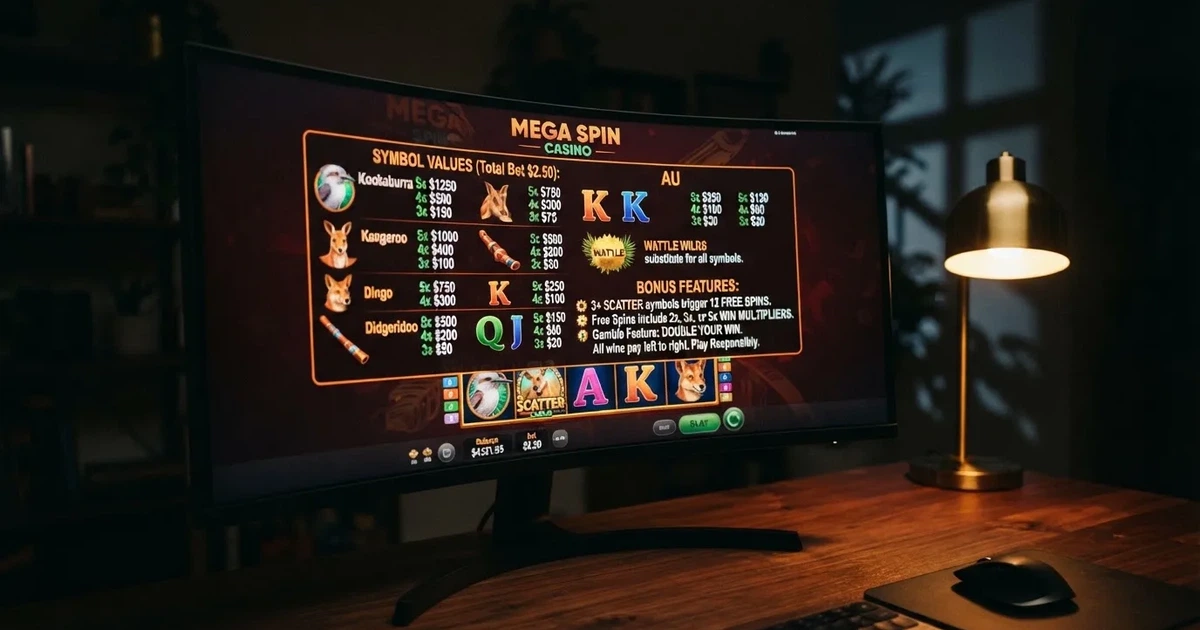
29 October 2026 · data checked against the Australian Communications and Media Authority’s published register of formal warnings and blocking actions.
Table of Contents
- Why a list of “RTG casinos” exists for Australia at all
- Responsible gambling — what is actually available to an Australian player
- What an RTG-branded slot actually is
- How this shortlist is put together — and what it leaves out
- The ACMA register — what it shows
- The operator write-ups — eleven brands, the same warning
- What the ACMA’s blocking arithmetic looks like
- Legality — the statute, the regulator, the gap
- Offshore RTG sites versus onshore Aristocrat venues
- Where this leaves a player who searched for these casinos
- Frequently asked questions
Why a list of “RTG casinos” exists for Australia at all
Real Time Gaming — RTG — is a slot and video poker studio founded in Atlanta in 1998, relocated to Heredia, Costa Rica in 2007–2008, and owned since January 2007 by Hastings International, a Curaçao-registered company. RTG distributes through operators, not directly to players. The operators it works with are, with very few exceptions, Curaçao-licensed offshore sites. None of those sites may lawfully offer online casino games to a person physically in Australia. So a “best RTG casinos Australia” list is, structurally, a list of offshore operators that RTG distributes to, each of which has chosen to take Australian traffic anyway.

That structural fact shapes everything else. The marketing words around these sites — “best”, “trusted”, “top-rated” — describe a ranking. The ranking is compiled by affiliate marketers, scored against criteria the affiliate itself sets, against a pool of operators the affiliate itself approached. It is not a regulatory clearance, not a consumer-protection rating, and not the Australian regulator’s view of who is lawful. Where an operator has been on the receiving end of an ACMA formal warning, that warning is the closest thing to an official view, and it is uniformly negative.
The numbers are not encouraging. H2 Gambling Capital’s 2025 estimate puts Australian losses to illegal online gambling at roughly A$3.9 billion a year, and tracks the share of gambling going through legal Australian channels falling from 74% in 2021 to 64%. That ten-point slide in four years is the size of the shift an offshore shortlist is the visible edge of.
Responsible gambling — what is actually available to an Australian player
Before the operator write-ups, it is worth being plain about where an Australian player can get help, because every section that follows describes a product the player should not be relying on.
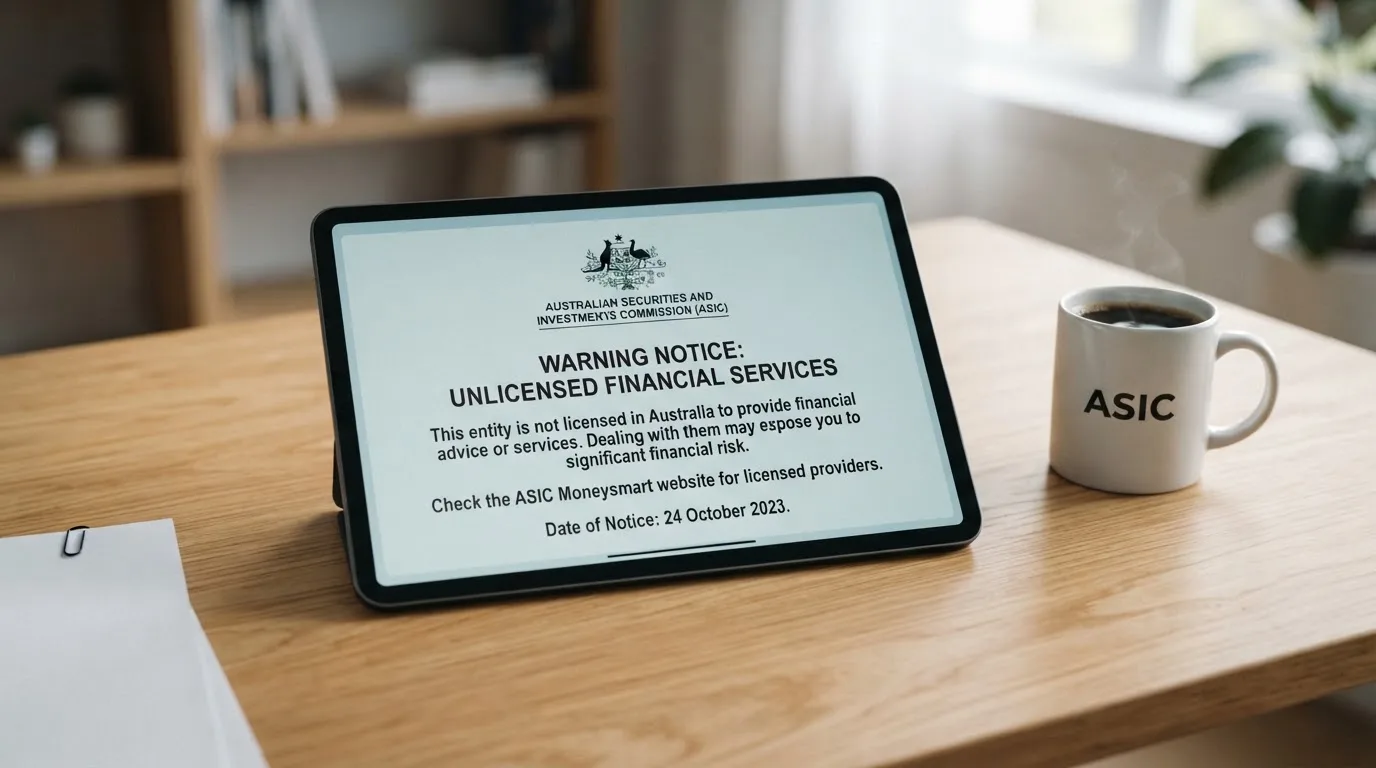
Gambling Help Online runs the National Gambling Helpline on 1800 858 858, free and twenty-four hours a day, with web chat. BetStop, the National Self-Exclusion Register, has been live since August 2023. Its effect is narrower than the name suggests: it binds Australian-licensed online and phone wagering services — sportsbooks and the like, licensed in the Northern Territory. It does not bind an offshore casino. A player who has self-excluded through BetStop and then signs up to a Curaçao-licensed RTG site will not be flagged, blocked or contacted. The exclusion register does not travel with the player outside the licensed Australian market.
State and territory bodies — the NSW Office of Liquor and Gaming, the Victorian Responsible Gambling Foundation, Gambling Help SA, Gambling Help WA and their equivalents — run their own self-exclusion schemes that apply to licensed Australian venues, including licensed land-based pubs and clubs with poker machines. Again, an offshore site is outside that reach. A player using a state exclusion scheme and a Curaçao offshore site at the same time has a gap that neither scheme covers.
This is the landscape an Australian sits inside. The licensed onshore product is sports and race wagering, lotteries and keno. The unlicensed offshore product is everything else, including the RTG-branded slots that the search results are full of. The responsible-gambling supports described above cover the first, not the second.
What an RTG-branded slot actually is
A player clicking on an “RTG casino” ends up, in most cases, at a Curaçao-licensed site running RTG’s library alongside slots from a dozen other studios. RTG-branded titles are a specific subset of what is on screen. The paytable, the mechanics and the maths come from RTG. The wrapper around them — the bonus structure, the deposit flow, the withdrawal queue — comes from the operator.
That split matters. RTG itself does not let operators alter payout settings on its slot and video poker games. Liability is controlled by RTG’s own rules: maximum-bet restrictions on individual titles are designed to keep any single progressive jackpot payout at or below about A$50,000. Those rules protect the operator from a single catastrophic hit. They do not protect the player from the operator.
The catalogue is large by industry standards, with hundreds of slot and table titles. Two characteristics travel with RTG slots that a player should know before signing up to anything carrying the brand:
-
A long history of capping max bets on individual titles after a big win. The clearest case was Caribbean 21 in 2004, when a player turned a A$1,000 deposit into A$1.3 million playing on RTG software at the Hampton Casino. RTG responded by capping Caribbean 21’s maximum bet at A$5, then removing the game from its portfolio entirely. The pattern of capping rather than celebrating is the studio’s default posture on big wins.
-
A reliance on progressive jackpots as the headline feature. RTG’s brand recognition in the Australian-facing market is largely the jackpot network — titles where the top prize builds across an operator network rather than from a single game’s spin cycle. The shape of the offer is a long-shot prize funded by ordinary players’ spins.
For an Australian player the only RTG-branded slots that are lawful to play are the ones sitting inside Australian-licensed land-based venues. Those machines are regulated by state and territory authorities, not by RTG. RTG’s online library, distributed through Curaçao operators, is the prohibited product.
How this shortlist is put together — and what it leaves out
The shortlists that rank “RTG casinos” for an Australian audience are, as a rule, compiled by affiliate marketers. An affiliate site approaches offshore operators, signs a revenue-share deal, and ranks the operators against criteria it has chosen. The criteria are usually some combination of deposit bonus size, number of games, withdrawal speed as claimed, and a “user rating” that the affiliate itself moderates. None of those criteria involve checking whether the operator is permitted to take Australian traffic. None of them check whether the operator has been warned by the ACMA. None of them weigh whether the player has any recourse if a withdrawal is refused.
That is the gap between the ranking and reality. The ranking is a marketing instrument. The ACMA register is a regulatory instrument. They measure different things. When an operator appears on an “RTG casinos Australia” shortlist while carrying an ACMA formal warning for offering prohibited services to Australians, the shortlist is not telling the reader anything it did not already know: the affiliate is publishing the operator, the ACMA has published the warning, and both facts sit on the public record.
Two broader factors compound the picture:
-
Offshore operators rebrand. Dama N.V. has run at least seven of the brands on the ACMA’s published warning list — Bambet, Dazard, Level Up, Rocketplay, Wild Tornado, Cobra Casino, plus Woo Casino and Spirit Casino in 2025. TechSolutions (CY) Group Limited and TechSolutions Group N.V. ran Bizzo Casino before 2022; Consolutetish S.R.L. runs it now. Hollycorn N.V. runs Sky Crown and Blue Leo. The operator name behind the casino changes; the brand on the player’s screen stays. A shortlist that ranks “the brand” without naming the operator entity underneath it is, in many cases, ranking the same operator several times under different labels.
-
ACMA actions are slow and the offshore market is fast. Between the first ACMA blocking request in November 2019 and June 2026, 1,751 illegal gambling and affiliate marketing websites have been blocked and more than 230 unlicensed services have left the Australian market. In the most recent published round alone — 26 June 2026 — the ACMA asked Australian ISPs to block twelve more sites: 7Signs, ChromaBet, Donbet, Duospin, Freshbet, Slots Gem, Jacks Club, Lucky Start, Pointsbetz, Spinrise, Vinyl Casino and Wildsino. None of those are RTG-licensed specifically, but each is the same kind of offshore operation the RTG shortlists are made of.
The ACMA register — what it shows
The following table summarises the ACMA’s published formal warnings over brands that appear on RTG-flavoured “best casinos for Australia” shortlists. A formal warning is the regulator’s last step before a blocking request. None of these entries means the brand is no longer trading offshore; offshore operators continue trading outside Australian reach until Australian ISPs are asked to block them at the DNS level.
| Brand | ACMA action and date | Operator named by the ACMA | Subject support |
|---|---|---|---|
| RocketPlay | Formal warning — March 2026 | Pulsup Ltd | — |
| Level Up Casino | Formal warning — May 2022 | Dama N.V. | listings only (Wazdan) |
| Woo Casino | Formal warning — March 2025 | Dama N.V. | — |
| Spirit Casino | Formal warning — May 2025 | Dama N.V. | — |
| National Casino | Formal warning — July 2025 | Consolutetish S.R.L. | listings only (Betsoft, en.wikipedia.org, Pragmatic Play) |
| Bizzo Casino | Formal warning — July 2025; earlier 2022 | Consolutetish S.R.L. (earlier TechSolutions) | — |
| Ignition Casino | Formal warning — July 2025 | Bamboo Media | — |
| Instant Casino | Formal warning — February 2025 | EOD Code SRL | — |
| Jackbit | Formal warning — April 2026 | Ryker B.V. | — |
| Casino Intense | Formal warning — April 2025 | Sterplay Holding Ltd | listings only (1spin4win, en.wikipedia.org, gamblingcommission.gov.uk) |
| Sky Crown | Formal warning — September 2022 | Hollycorn N.V. | — |
What the table is for. The point of reading the register is not to memorise which operator runs which brand. It is to see the shape: every brand on the list is the same kind of product (online casino games, prohibited to Australians), every warning is issued under the same statute (the Interactive Gambling Act 2001), and the operator entities behind the brands rotate while the brands themselves persist. The list is long because the underlying behaviour — offering RTG-flavoured casino games to Australians from a Curaçao licence — is the same across all of them.
What the table does not do. The table does not give an RTP or a jackpot size for any of these sites’ RTG games. The affiliate marketing pages do, and they are not sources. RTG itself publishes an RTP for a few of its titles, but RTG does not publish an RTP per operator — the operator runs the same library at the same maths. The table is a regulatory record, not a gameplay comparison.
The operator write-ups — eleven brands, the same warning
Each of the eleven operators below carries an ACMA formal warning under the Interactive Gambling Act 2001. The write-ups are not recommendations and not a ranking; they describe what the ACMA’s published record shows for each brand and what is publicly verifiable about the operator behind it. The product — online casino games — is prohibited to Australian residents. Any RTG title these operators run cannot lawfully be offered to a person in Australia.
1. RocketPlay — the ACMA’s most recent published warning over this brand
RocketPlay is the brand that gave the ACMA its most recent published action: a formal warning to Pulsup Ltd in March 2026 over Rocketplay. The same brand was the subject of an earlier formal warning to Dama N.V. in May 2022, alongside five other Dama N.V. brands. Two warnings, two different operator entities, the same brand on the player’s screen. That pattern — a brand outliving the company the ACMA addressed — is the rule on this list, not the exception. Worth noting if a reader is inclined to read a quiet period after 2022 as a clearance; it is not.
2. Level Up Casino — early in the ACMA’s published RTG-flavour record
Level Up Casino was named in the May 2022 formal warning to Dama N.V. alongside Bambet, Dazard, Rocketplay, Wild Tornado and Cobra Casino. It is one of the six that opened the ACMA’s published record on RTG-flavoured offshore operators marketing to Australians. Wazdan’s public listings reference the brand as a partner; nothing in that reference changes the regulatory status. Worth knowing as an entry-point brand: the ACMA’s first published warning on this group is now four years old, and the brand is still trading offshore.
3. Woo Casino — the 2025 warning over Dama N.V.
Woo Casino drew a fresh ACMA formal warning to Dama N.V. in March 2025, alongside Spirit Casino the following May. Two more warnings, the same operator. Dama N.V. is by some distance the most-warned operator entity on this register, and Woo Casino is the first of the pair the ACMA returned to in 2025. The lesson in the warning pattern is the same: a quiet year on the ACMA’s register is not a sign the operator has adjusted its Australian-facing product, only that the ACMA has not acted yet.
4. Spirit Casino — Dama N.V. again, two months later
Spirit Casino drew a formal warning to Dama N.V. in May 2025, two months after Woo Casino. Two back-to-back warnings to the same operator, on two separate brands, in the same calendar quarter. The pattern is the regulator working through the operator’s portfolio rather than catching a single rogue brand. The brand-by-brand framing that affiliate shortlists use — and that this page necessarily follows, because the ACMA’s warnings are addressed brand by brand — understates how concentrated the action is at the operator level.
5. National Casino — the operator change after the 2022 warning
National Casino drew an ACMA formal warning in July 2025 to Consolutetish S.R.L. The brand’s own history includes a 2022 warning to TechSolutions (CY) Group Limited and TechSolutions Group N.V. The brand was the subject of warnings to two different operators in three years. The library the brand carries — RTG alongside studios whose public listings name National Casino as a partner — does not change when the operator entity does. Worth knowing because “the brand was warned once and then cleaned up” is the story affiliate marketers tell, and it is not what the register shows.
6. Bizzo Casino — two warnings to two operators
Bizzo Casino drew a formal warning in July 2025 to Consolutetish S.R.L., three years after a 2022 warning to TechSolutions (CY) Group Limited and TechSolutions Group N.V. The same dual-warning shape as National Casino: the same brand, two operator entities, two ACMA actions. The 2025 warning was issued on the same day as the National Casino warning, which suggests the regulator’s investigators were working through Consolutetish S.R.L.’s portfolio rather than picking brands one at a time.
7. Ignition Casino — Bamboo Media’s first published warning
Ignition Casino drew an ACMA formal warning in July 2025 to Bamboo Media. It is the only published warning on the ACMA register that names Bamboo Media as the operator. The brand’s Australian-facing operation is the basis for the warning; the offshore licence the site displays in its footer is not an Australian licence and does not make the offering lawful.
8. Instant Casino — EOD Code SRL’s first published warning
Instant Casino drew an ACMA formal warning in February 2025 to EOD Code SRL. The brand is one of the more heavily marketed offshore casinos on affiliate shortlists for the Australian market; the warning preceded the marketing push by a full year in some cases. Worth knowing because the affiliate marketing pages are slower to update than the regulator’s register, and a brand can be on a “best RTG casinos” list while the ACMA has already published a warning.
9. Jackbit — Ryker B.V.’s 2026 action, paired with CasinOK
Jackbit drew an ACMA formal warning in April 2026 to Ryker B.V., paired with CasinOK on the same warning. Two brands, one operator, one warning — the same shape as the Dama N.V. 2025 pair. The site accepts crypto deposits and is marketed through affiliate channels; under the 11 June 2024 credit-and-crypto ban, a licensed Australian wagering service cannot take either form of payment, and an offshore site that does is operating outside the Australian rules.
10. Casino Intense — Sterplay Holding Ltd’s only published warning
Casino Intense drew an ACMA formal warning in April 2025 to Sterplay Holding Ltd. The brand appears on partner listings for several studios, including 1spin4win, whose public materials list the brand as a partner; the public listings do not address Australian legality. The April 2025 warning is the only published ACMA action on this brand.
11. Sky Crown — Hollycorn N.V.’s earliest published warning on this register
Sky Crown drew an ACMA formal warning to Hollycorn N.V. in September 2022, paired with Blue Leo on the same warning. It is the earliest Hollycorn N.V. action on the ACMA’s published register. Hollycorn is one of the larger Curaçao-licensed operator groups, and the pair Sky Crown / Blue Leo is the same shape as the Dama N.V. and Consolutetish S.R.L. pairs: two brands, one operator, one warning.
What the ACMA’s blocking arithmetic looks like
The ACMA’s published blocking record is the most concrete regulatory number on this page. By June 2026, a total of 1,751 illegal gambling and affiliate marketing websites had been blocked since the first blocking request in November 2019. That is the running total. The arithmetic the page can carry is simple and worth doing once.
The blocking rate is the running total divided by the elapsed time from the first blocking request to the present. From November 2019 to June 2026 is roughly 79 months. Across that span the ACMA has averaged roughly 22 blocked sites per month — somewhere between 18 and 26 depending on whether the months of the early 2020 lockdown period are counted. The variation is wide because blocking is lumpy: the regulator works in published rounds of eight to fifteen sites at a time, and individual months can carry zero published actions.
The honest reading: the rate is not a trend line the regulator is on top of. It is the speed at which the offshore market re-supplies the queue. A blocked site goes dark for an Australian player using Australian DNS; the same operator opens a new domain, runs the same library, and the affiliate shortlist picks it up under a new name. The 1,751 figure is the count of domains, not the count of operators, and not the count of brands.
Legality — the statute, the regulator, the gap
The Interactive Gambling Act 2001 (the IGA), strengthened by the Interactive Gambling Amendment Act 2017, makes it an offence to provide online casino games, online pokies or in-play betting to a person in Australia. No state or territory issues a licence for those products. What is licensable is wagering on races and sport placed before the event, lotteries and keno.
The regulator is the ACMA. The ACMA investigates, issues formal warnings, and directs Australian internet service providers to block illegal sites. The IGA targets the provider, not the player: an individual Australian who plays on an offshore site is not prosecuted. The cost is on the other side — no Australian consumer protection, no local complaints body, no recourse if a withdrawal is refused. The site can be blocked with a balance still sitting on it.
The Northern Territory Racing and Wagering Commission (the NTRWC) regulates 52 of Australia’s online bookmakers — including Sportsbet, Bet365 and Ladbrokes — under Northern Territory licences issued for tax reasons. The commission has no full-time staff and meets once a month in Darwin. The NTRWC’s role is to license wagering operators, not casino games; an RTG-flavoured online casino is not within its remit.
The 2026 reform. The Interactive Gambling Amendment (Gambling Reform) Bill 2026 passed Parliament on 19 August 2026. Its advertising and inducement measures commence on 1 January 2027. This is law with a start date, not yet in force on a 2026 page. The bill’s reach includes the kind of affiliate marketing that publishes “best RTG casinos Australia” shortlists, which is why it matters here; its effect on this page is forward-looking, not current.
Payments. Since 11 June 2024, credit cards, credit-related products and digital currency are banned as payment for licensed online wagering in Australia, with penalties up to A$247,500 for operators. The legal deposit routes for a licensed Australian wagering account are debit card, bank transfer, PayID/Osko and BPAY. A site asking an Australian for a credit card or a crypto deposit is operating outside the Australian rules. RTG-flavoured offshore sites typically accept crypto and sometimes credit cards; that is itself a flag, separate from the IGA question.
Tax. Gambling winnings of a recreational Australian player are not assessable income under section 6-5 of the ITAA 1997, and losses are not deductible. The exception is a player who carries on a business of gambling, which is a model only and not a representation. The general advice — check with the ATO — applies.
Offshore RTG sites versus onshore Aristocrat venues
Aristocrat Leisure Limited is the closest onshore analogue to what an Australian player is searching for, although the comparison is partial. Aristocrat is an Australian gambling machine manufacturer founded in 1953, listed on the ASX in 1996 under the ticker ALL, headquartered in North Ryde in Sydney, and described as the largest gambling-machine manufacturer in Australia and the second-largest slot-machine manufacturer worldwide behind International Game Technology. Aristocrat reported 2025 revenue of A$6.30 billion, normalised net profit after tax and amortisation of A$1.55 billion, and 7,400 employees.
Aristocrat’s machine catalogue is what a player in an Australian pub or club is actually sitting in front of when they sit down at a poker machine. Aristocrat has built an online arm — Aristocrat Interactive, formed in April 2024 by combining Anaxi with the acquired NeoGames group, which includes Aspire Global, BtoBet and Pariplay. Aristocrat Interactive is Aristocrat’s regulated online real-money-gambling business; it is licensed in the regulated markets Aristocrat operates in. It is not licensed to offer online casino games to Australian residents. The reason is the IGA, not Aristocrat’s willingness to enter the market.
That is the symmetry of the Australian situation. Aristocrat, an Australian manufacturer with a regulated online arm, cannot lawfully offer online casino games to Australians because the IGA prohibits them. RTG, a Curaçao-licensed offshore studio, does offer them to Australians through Curaçao-licensed offshore operators. The licensed product is the pub machine; the unlicensed product is the offshore site. The shortlists are the bridge between the two.
Where this leaves a player who searched for these casinos
Three things are true at the same time.
-
The product the search returned is unlawful to supply to Australians. Every brand on the shortlist carries an ACMA formal warning or is the same kind of operator as one that does. The product is the prohibited interactive gambling service in the language of the IGA.
-
The product is available offshore. The offshore operator will accept an Australian deposit, accept Australian players, run the RTG-branded slots the player searched for, and pay out — when it pays out — through a withdrawal method the operator chooses. There is no Australian consumer protection behind that withdrawal.
-
The licensed alternative is not the same product. The licensed Australian alternative to “RTG pokies online” is a poker machine in a pub or club, or a sports or race wagering account with a Northern Territory-licensed bookmaker. Neither is what the search returned.
For a player who arrived at this page through a search for the best RTG casinos in Australia, the consequence is that the shortlist is not what it claims to be. It is a list of offshore operators that have been the subject of regulatory action in Australia, ranked by criteria that do not include whether they have been. The licensed alternative is real, and it is not online casino.
The rest of the page answers the questions a reader asks after arriving at that conclusion.
Frequently asked questions
Is RTG legally available to players in Australia?
No. RTG-branded slot and table games are distributed through Curaçao-licensed offshore operators, and online casino games cannot be licensed in Australia under the Interactive Gambling Act 2001. The licensed Australian alternatives are wagering on races and sport (placed before the event), lotteries and keno, plus poker machines in licensed land-based venues.
What kinds of games does RTG make?
RTG makes online slot machines, video poker and a small table-game library, distributed through operator sites rather than directly to players. The brand is best known in the Australian-facing market for its progressive jackpot network, where the top prize builds across an operator network rather than from a single game’s spin cycle.
Are RTG games offered at land-based venues in Australia?
No. RTG is an online-only software studio based in Costa Rica and owned by a Curaçao company since 2007. The poker machines in Australian pubs and clubs are manufactured by other companies — Aristocrat, International Game Technology and their peers — and are regulated by state and territory authorities, not by RTG.
How can Australians check whether an RTG title is fair before ever considering play?
The honest answer is that an Australian player cannot check whether an offshore RTG site is fair in any way the Australian regulator recognises. The site is not licensed in Australia, is not bound by Australian consumer law, and is not connected to BetStop or to a state self-exclusion register. RTG itself does not let operators alter payout settings on its slot and video poker games, which is a studio-level rule, not an Australian regulatory guarantee.
Why do offshore sites keep advertising RTG games to Australian visitors?
Because the affiliate marketing channel pays them to. Affiliate sites rank offshore operators against criteria the affiliate sets, against operators the affiliate has signed commercial deals with. The ranking is a marketing instrument, not a regulatory clearance. The affiliate does not lose revenue when the ACMA issues a formal warning, only when the operator it ranks goes offline; offshore operators rotate through domains and brands fast enough that the shortlist stays full.
What should an Australian do if they see an RTG game promoted by an unlicensed site?
The short version is to report the site to the ACMA, to leave it alone, and to seek help from Gambling Help Online on 1800 858 858 if the promotion is triggering gambling the player did not intend. The licensed alternative for the recreational use case — poker machines in a licensed venue, or a wagering account with a Northern Territory-licensed bookmaker — is regulated and carries Australian consumer protection; the offshore alternative carries neither.