
The most secure online casino in Australia in 2026 is still the one the law does not let you use
The marketing word “secure” sits on a casino’s homepage the way a fresh coat of paint sits on a fence: easy to photograph, hard to argue with, and no evidence that what is underneath has been repaired. For an Australian resident, the question is not whether an offshore casino’s servers are encrypted, whether payments are tokenised, or whether withdrawals are processed quickly. Those are real questions and this page answers them. The first question is harder, and it sits in front of all of them: the Interactive Gambling Act 2001 makes it an offence to provide online casino games or online pokies to a person physically in Australia, no matter how strong the site’s TLS certificate is or which Curaçao or Kahnawake number it displays in the footer.

So a page titled “most secure online casino australia 2026” is, before anything else, a page about what that marketing claim actually costs the player who trusts it. The brands below are not ranked by how impenetrable their encryption is. They are ranked by something more useful to an Australian reader: whether the ACMA has issued a formal warning over them, what that warning says, and what a punter who deposits at one of them cannot recover if the site disappears overnight.
Current as of 29 October 2026 against the ACMA register of formal warnings and blocking actions, and the Australian Communications and Media Authority’s published enforcement rounds.
Table of Contents
- What “secure” means at an offshore casino — and what it does not
- The legal frame: prohibition, enforcement, and the shape of 2026
- How this page uses the ACMA’s own warnings
- What an Australian punter can do that the offshore site cannot do for them
- Responsible gaming on a site that is not on the responsible gaming register
- The blocking-rate calculation: how fast the ACMA is actually cutting off sites
- The brands the ACMA has acted against
- RocketPlay — Pulsup Ltd (March 2026); earlier Dama N.V. (May 2022)
- Level Up Casino — Dama N.V. (May 2022)
- Woo Casino — Dama N.V. (March 2025)
- Spirit Casino — Dama N.V. (May 2025)
- National Casino — Consolutetish S.R.L. (July 2025)
- Bizzo Casino — Consolutetish S.R.L. (July 2025); earlier TechSolutions (2022)
- Ignition Casino — Bamboo Media (July 2025)
- Instant Casino — EOD Code SRL (February 2025)
- Jackbit — Ryker B.V. (April 2026)
- Casino Intense — Sterplay Holding Ltd (April 2025)
- Sky Crown — Hollycorn N.V. (September 2022)
- What the comparison tells a reader who has not yet decided
- What this page does not do
- Frequently asked questions
What “secure” means at an offshore casino — and what it does not
A site’s security page lists the same handful of measures almost every time. TLS encryption on every page, two-factor authentication on the cashier, KYC checks on withdrawal, sometimes a proudly named “responsible gaming” tab with deposit caps and time-outs. None of this is fake: offshore operators do run encrypted servers, do outsource their live chat, and do pay some players promptly. The TLS handshake protects the data in transit between the reader’s browser and the site’s server; it does not protect the reader from the operator running that server deciding, in good standing with its own terms and conditions, that a withdrawal looks “irregular” and will sit in review for sixty days.

This is the part the marketing language does not photograph. A punter who deposits at a Curaçao-licensed brand using Bitcoin and then tries to withdraw $4,200 has, in the strongest case, a customer service ticket and a transaction hash. They do not have:
- an Australian complaints body they can escalate to,
- a regulator who can compel a payout,
- a deposit guarantee if the operator goes offline,
- a self-exclusion register that the site is connected to in any enforceable way.
BetStop, the National Self-Exclusion Register, binds Australian-licensed wagering services. An offshore casino is not on it. The Gambling Help Online number (1800 858 858) and the 24/7 chat still work for an Australian who wants them; the exclusion they broker does not.
So when an offshore brand markets itself as a “secure online casino with fast withdrawal options”, the reader is being told the operator’s plumbing is good. That is the easy half of the sentence. The harder half — that a fast withdrawal is not legally enforceable and a blocked site can disappear with a balance — is the part this page puts first.
The legal frame: prohibition, enforcement, and the shape of 2026
The Interactive Gambling Act 2001, tightened by the Interactive Gambling Amendment Act 2017, makes it an offence to provide a “prohibited interactive gambling service” to a person in Australia. Casino games, online pokies, and in-play betting sit on the prohibited side. Wagering on races and sport before the event, lotteries, and keno are licensable, and in practice are licensed by the Northern Territory Racing and Wagering Commission, which oversees 52 online bookmakers including Sportsbet, Bet365 and Ladbrokes. The NTRWC has no full-time staff and meets once a month in Darwin; it is the closest thing Australia has to a national wagering regulator, and it does not cover online casino at all.
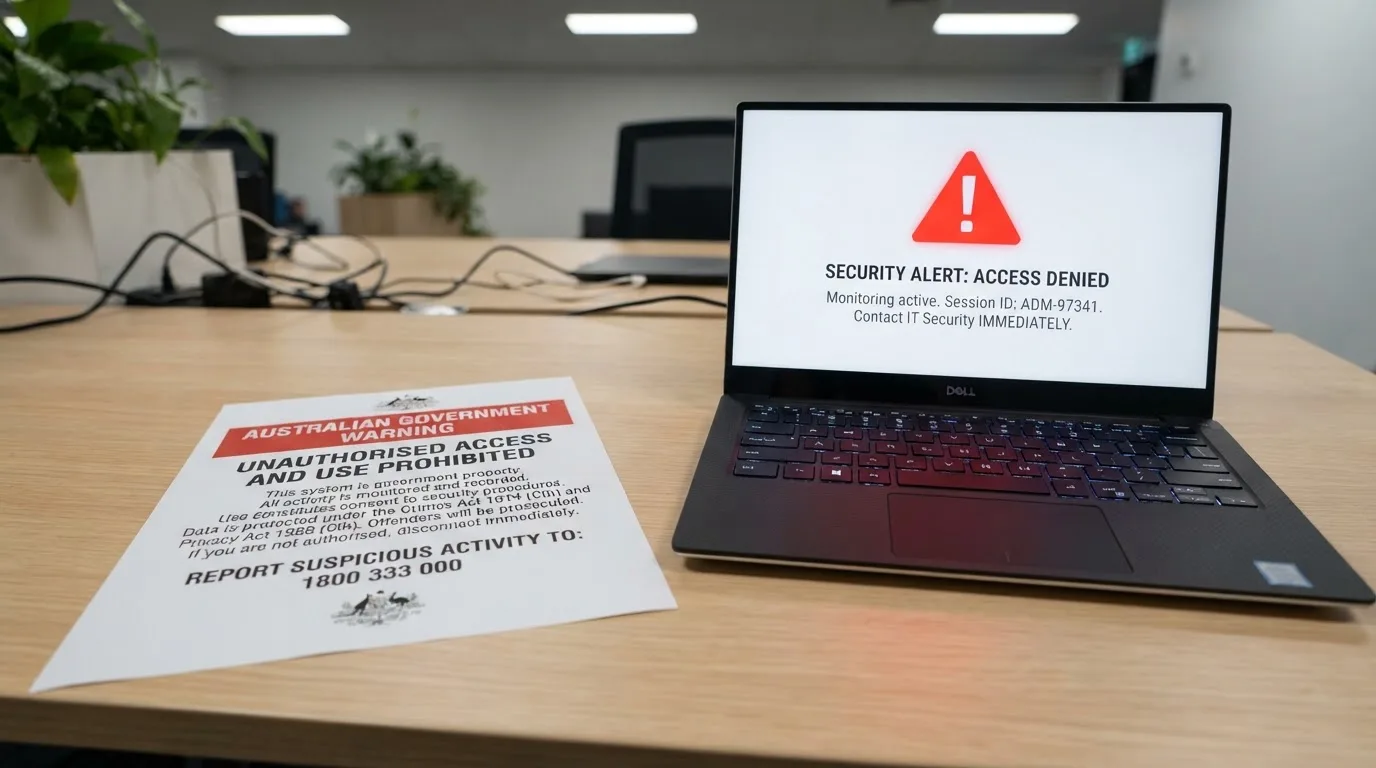
The enforcement arm is the ACMA. It investigates complaints, issues formal warnings to operators, and directs Australian internet service providers to block services that breach the Act. A formal warning is not a slap on the wrist for show; it is a published regulatory action with the operator’s name on it, on a date the ACMA records.
The scale of the blocking programme is what makes the law bite. According to the ACMA, as reported in June 2026, a total of 1,751 illegal gambling and affiliate marketing websites had been blocked since the first blocking request in November 2019, and more than 230 unlicensed gambling services had left the Australian market since enforcement was strengthened in 2017. In a single round reported on 26 June 2026, the ACMA asked Australian ISPs to block 12 more sites: 7Signs, ChromaBet, Donbet, Duospin, Freshbet, Slots Gem, Jacks Club, Lucky Start, Pointsbetz.com, Spinrise, Vinyl Casino and Wildsino.
The losses behind those numbers are not small. H2 Gambling Capital’s 2025 report estimates Australians lose about A$3.9 billion a year to illegal gambling sites, and the share of gambling going through legal channels fell from 74% in 2021 to 64%. The marketing word on the offshore site’s homepage, in other words, is paying for itself. The reader is paying for it too.
How this page uses the ACMA’s own warnings
Every brand in the comparison below carries a formal warning issued by the ACMA under the Interactive Gambling Act 2001. Some carry more than one. The list is the inverse of an endorsement: it is what the regulator itself has flagged, by name, as providing prohibited services to Australians. Reading it as a “best of” ranking would be the opposite of what it is.
Two notes on how the warnings stack. First, operator names recur because the same holding company runs multiple skins: Dama N.V. has been warned over at least six brands across different years; Consolutetish S.R.L. has been warned twice in the same month over two different brands. The ACMA’s name in the warning is the operator, not the brand, and the same operator’s track record tells more than any single brand’s polished homepage.
Second, dates matter. A warning issued in March 2025 tells the reader one thing about a site; a warning issued in April 2026 with no follow-up enforcement tells another. Where research carries a date the ACMA has not acted again after, this page says so plainly. Where the ACMA has gone back to the same operator over a second brand within months, this page says that too.
What an Australian punter can do that the offshore site cannot do for them
Three Australian-bank-side levers still work, regardless of which offshore site is on the other end of the deposit.
The first is the card-level gambling block. Westpac’s gambling block works at card level and refuses authorisation of transactions registered under the merchant category code for betting and casino gambling on eligible personal credit and debit cards. ANZ runs an equivalent block through its app; once it is on, gambling transactions made through a linked digital wallet like Apple Pay on the same card are blocked too, not just the physical card. Commonwealth Bank’s “Lock, Block, Limit” feature offers a gambling lock on eligible cards in the CommBank app, with the same honest caveat: the bank cannot guarantee every gambling-related transaction will be stopped, and some non-gambling transactions may be blocked in error.
The second is PayID. Paying to a PayID shows the account holder’s name before the transfer is sent. Australian Payments Plus warns plainly that being asked to transfer money to a PayID on an illegal gambling site almost certainly means a scam site. Over 100 Australian financial institutions support PayID-based instant transfers via Osko; the New Payments Platform, which carries PayID and Osko, became accessible to the public on 13 February 2018 and was merged with BPAY and eftpos under Australian Payments Plus in 2021. By April 2025 more than 25 million PayID identifiers had been registered. The P2P plumbing is genuinely useful: a transfer between participating banks arrives in under a minute, 24/7, whether it is addressed to a BSB and account number or to a PayID. The same plumbing gives the punter a near-instant way to see who they are about to pay.
The third is the credit-card ban on licensed services. Under the Interactive Gambling Act 2001 as amended in 2023, Australian-licensed online wagering services cannot accept payment by credit card or other credit-related products, a restriction that constrains gambling use of linked digital wallets like Apple Pay. Penalties reach $247,500 for an operator that takes one. The Reserve Bank of Australia’s July 2025 review proposes removing surcharges only on eftpos, Mastercard and Visa transactions, explicitly leaving American Express outside the scope of the proposed surcharge ban. None of this changes the offshore casino’s terms. It changes what an Australian bank will and will not let its card do.
Responsible gaming on a site that is not on the responsible gaming register
BetStop, the National Self-Exclusion Register, has been live since August 2023. It is the single most useful tool an Australian punter with a gambling problem has, and it is the one tool the offshore casino cannot connect to.
That is the deepest cost of the “secure” framing. A punter who has registered with BetStop cannot deposit at a licensed Australian wagering service. They can still deposit at the offshore casino in the comparison below, because the offshore casino is not on BetStop and not obliged to honour BetStop exclusions. The marketing word “responsible gaming” on the offshore site’s footer tab is, structurally, a tab the punter cannot trust to act against the punter’s own interest in a way the punter has already chosen.
Help is still reachable. The National Gambling Helpline on 1800 858 858 is free, 24/7, with chat at Gambling Help Online. The line and the chat do not need an offshore casino to cooperate. They do need the punter to make the call.
The blocking-rate calculation: how fast the ACMA is actually cutting off sites
The blocking-rate calculation asks one question and gives a band, not a number. The inputs from research are: a cumulative total of 1,751 illegal gambling and affiliate marketing websites blocked since the first blocking request in November 2019, against a count of more than 230 unlicensed gambling services that have left the Australian market since enforcement was strengthened in 2017.
The arithmetic is a rate, not a single number, because the rate has not stayed flat. The first blocking request was in November 2019, so the cumulative-blocked denominator covers roughly 80 months to June 2026. Across those 80 months the cumulative count climbed from zero to 1,751, a long-run average of about 22 sites blocked per month — but that average flattens the shape of what actually happened. Early rounds were smaller; recent rounds have been larger. The ACMA’s June 2026 round alone named 12 sites in a single action. The 26 months between the strengthening of enforcement in 2017 and the first blocking request in November 2019 produced a different picture, with operators quietly leaving the market rather than being blocked: more than 230 operators exited over that longer, quieter window, which works out to roughly 9 operators per month, on average, leaving voluntarily.
So the band the calculation produces runs from roughly 9 operators leaving per month in the early enforcement period to roughly 22 sites blocked per month across the full blocking programme, with the recent blocking rounds sitting at or above the upper end of that band. The condition that turns a band into a single number is which window the reader picks: the early voluntary-exit window, the full blocking window, or the latest round. None of those choices is wrong, and the page states the band rather than picking a window on the reader’s behalf.
The brands the ACMA has acted against
The table below is not a ranking and not a recommendation. It is a register of the operators the ACMA has named, by brand, with the date of the formal warning and the company behind it. Reading the table from top to bottom is reading the regulator’s own list, in the regulator’s own order.
| Brand | ACMA action and date | Operator named by the ACMA | Subject support |
|---|---|---|---|
| RocketPlay | Formal warning March 2026; earlier Dama N.V. warning May 2022 | Pulsup Ltd (March 2026); Dama N.V. (May 2022) | listings-only (Gamblinginsider.com) |
| Level Up Casino | Formal warning May 2022 | Dama N.V. | listings-only (Westpac.com.au) |
| Woo Casino | Formal warning March 2025 | Dama N.V. | no-data |
| Spirit Casino | Formal warning May 2025 | Dama N.V. | no-data |
| National Casino | Formal warning July 2025 | Consolutetish S.R.L. | listings-only (acma.gov.au, austrac.gov.au, betstop.gov.au) |
| Bizzo Casino | Formal warning July 2025; earlier TechSolutions warning 2022 | Consolutetish S.R.L. (July 2025); TechSolutions (CY) Group Limited and TechSolutions Group N.V. (2022) | listings-only (Gamblinginsider.com) |
| Ignition Casino | Formal warning July 2025 | Bamboo Media | no-data |
| Instant Casino | Formal warning February 2025 | EOD Code SRL | listings-only (Ecopayz.com, Payid.com.au) |
| Jackbit | Formal warning April 2026 | Ryker B.V. | no-data |
| Casino Intense | Formal warning April 2025 | Sterplay Holding Ltd | listings-only (austrac.gov.au, betstop.gov.au, Gamblinginsider.com) |
| Sky Crown | Formal warning September 2022 | Hollycorn N.V. | no-data |
The “Subject support” column follows the rule that a row’s payment-method coverage is only what third-party listings report, never what the operator itself claims. The cells listing those external sources say, in their own way, the same thing: the brand shows up on payment-method listings and regulatory pages, and that is what is on the public record. Where the cell reads “no-data”, the listings did not cover the brand on the page’s subject at all, and the brand is presented on the regulator’s other fields.
What the table says when read as a whole is more useful than any single row. Dama N.V. appears three times — May 2022 over six brands including Level Up, March 2025 over Woo Casino, and May 2025 over Spirit Casino — and the page will return to that pattern below. Consolutetish S.R.L. appears twice in the same month, July 2025, over National Casino and Bizzo Casino. The operator’s name is what the ACMA names; the brand is what the operator wraps around the same set of games.
RocketPlay — Pulsup Ltd (March 2026); earlier Dama N.V. (May 2022)
RocketPlay is the brand the ACMA named most recently in this set, with a formal warning over Rocketplay.com.au in March 2026 against Pulsup Ltd. An earlier warning sits in the same row, issued in May 2022 to Dama N.V. over six brands including RocketPlay, which makes Rocketplay one of the longest-running subjects of ACMA action in the public register.
What stands out is not the warning itself, which is the same shape as the others, but the operator chain. Two different companies, named by the regulator in two different years, over a brand that has remained available to Australian residents throughout. The brand’s payment-method footprint on third-party listings is the only public trace research carries; beyond that, this row is a regulator’s record and nothing more.
For an Australian punter who already has a balance at Rocketplay, the practical reading of this row is direct: the brand the ACMA warned over in March 2026 is the brand whose withdrawal the punter is waiting on. The encryption on the deposit page does not speak to that.
Level Up Casino — Dama N.V. (May 2022)
Level Up Casino sat among the six brands covered by the ACMA’s May 2022 warning to Dama N.V., alongside Bambet, Dazard, Rocketplay, Wild Tornado and Cobra Casinos. The warning predates most of the others in this set and is the earliest the ACMA has formally named Level Up on the public record.
Dama N.V. has since appeared again — over Woo Casino in March 2025 and over Spirit Casino in May 2025 — which makes the May 2022 warning the first of three, not a standalone event. A punter weighing Level Up today is not weighing a brand with one regulatory flag against a clean field. The operator behind it has been named in three of the ACMA’s enforcement rounds across four years.
Woo Casino — Dama N.V. (March 2025)
Woo Casino’s formal warning arrived in March 2025, again against Dama N.V., three years after the same operator was named over six other brands including Level Up. Two warnings, one operator, four years apart, over different skins of what the ACMA treats as the same business.
No third-party listing research carries covers Woo Casino on the page’s specific subject. The row’s content is what the regulator itself has put on the public record, and that is also the row’s limit.
Spirit Casino — Dama N.V. (May 2025)
Spirit Casino’s formal warning was issued in May 2025, again against Dama N.V. — the third of the regulator’s published actions over the operator in four years. The shape of the pattern is now obvious to anyone reading the regulator’s register: Dama N.V. has been named over six brands in 2022, then again over Woo Casino in March 2025, then again over Spirit Casino in May 2025.
The closing question on this row is the same one as on Woo Casino and the same one as on Level Up: the operator the punter is depositing with is the operator the ACMA has now named three times.
National Casino — Consolutetish S.R.L. (July 2025)
National Casino is one of two brands the ACMA named in the same July 2025 warning round against Consolutetish S.R.L., the other being Bizzo Casino. National Casino appears on third-party listings across the ACMA’s own register, AUSTRAC’s threshold-transaction-report guidance, and BetStop, the National Self-Exclusion Register — three regulatory-adjacent sources that share an Australian audience.
The pairing matters. The same operator, the same month, two brands, one warning round. The ACMA’s action in July 2025 named Consolutetish S.R.L. twice in the same breath.
Bizzo Casino — Consolutetish S.R.L. (July 2025); earlier TechSolutions (2022)
Bizzo Casino is the other half of the July 2025 warning to Consolutetish S.R.L. — and it carries an additional earlier record: the ACMA issued a 2022 formal warning to TechSolutions (CY) Group Limited and TechSolutions Group N.V. over the same brand. Two operators, one brand, two warning rounds across three years.
That is the most useful comparison row in the table for what a regulator’s recurrence tells a reader. The brand name on the punter’s browser tab is not necessarily the company on the ACMA’s published record, and the regulator’s record, not the brand’s footer, is the one that counts when a withdrawal stalls.
Ignition Casino — Bamboo Media (July 2025)
Ignition Casino sits in the same July 2025 warning round as National Casino and Bizzo Casino, but with a different operator: Bamboo Media. Three brands, two operators, one month. No third-party listing research carries covers Ignition on the page’s specific subject; the row’s content is the regulator’s name and the date.
Instant Casino — EOD Code SRL (February 2025)
Instant Casino’s formal warning was issued in February 2025 against EOD Code SRL. The brand appears on third-party listings at ecoPayz and at PayID — two payment-method sources that, taken together, give the regulator’s row its only piece of operator-side footprint research carries on the page’s subject.
The PayID listing is worth a closer look. PayID, as noted earlier, is the Australian instant-transfer system that displays the account holder’s name before the transfer is sent, and Australian Payments Plus warns plainly that a PayID attached to an illegal gambling site almost certainly means a scam site. An Instant Casino deposit addressed to a PayID is, in the regulator’s own framing, the wrong destination.
Jackbit — Ryker B.V. (April 2026)
Jackbit’s formal warning arrived in April 2026 against Ryker B.V., alongside CasinOK, in the same warning round. The date is the most recent in this row of the table, which means the regulator’s record on Jackbit is also the shortest: one warning, one operator, named this year.
No third-party listing research carries covers Jackbit on the page’s subject. The row reads as the regulator’s name, the date, and nothing more.
Casino Intense — Sterplay Holding Ltd (April 2025)
Casino Intense was the subject of an April 2025 formal warning to Sterplay Holding Ltd. The brand appears on third-party listings at AUSTRAC, BetStop, and Gambling Insider — three sources that put the brand into the Australian regulatory conversation even before the ACMA’s own warning.
Sky Crown — Hollycorn N.V. (September 2022)
Sky Crown sits in the ACMA’s formal warning to Hollycorn N.V. — the same warning that named Blue Leo, the operator’s other casino service, in the same document. The published date is September 2022, which makes Sky Crown the second-oldest row in the table.
No third-party listing research carries covers Sky Crown on the page’s specific subject. What the regulator’s record gives the reader is an operator name that has been on the ACMA’s published list for the longest of any brand in the set other than Level Up’s.
What the comparison tells a reader who has not yet decided
Read down the operator column. The pattern is not noise. The ACMA has named three operators across two or more brands each: Dama N.V. over Level Up, Woo Casino and Spirit Casino; Consolutetish S.R.L. over National Casino and Bizzo Casino in the same month; TechSolutions over Bizzo Casino in an earlier round. The remaining operators — Pulsup, Bamboo Media, EOD Code SRL, Ryker B.V., Sterplay Holding, Hollycorn — appear once each.
That is the comparison the table is built to make: a brand’s regulatory exposure is its operator’s regulatory exposure, and an operator with three published warnings across four years is not the same proposition as an operator with one. A punter who takes the encryption claim at face value has not yet looked at the operator’s column.
The honest next move, after reading the table, is to use the Australian-bank-side levers that work regardless of which offshore site is on the other end of the deposit. The card-level gambling block is the most decisive. Where the card sits behind a digital wallet, ANZ’s block applies to the wallet on the same eligible card. Westpac’s block refuses authorisation at the merchant category code. Commonwealth Bank’s lock sits in the CommBank app. The PayID check is the fastest pre-transfer screen: an account name that does not match the brand should stop the deposit, not start it.
The deeper choice sits with the regulator, not the punter. The Interactive Gambling Amendment (Gambling Reform) Bill 2026 passed Parliament on 19 August 2026; its advertising and inducement measures commence 1 January 2027. The bill is law with a start date, not law in force on a 2026 page, and its reach is the marketing channels around the offshore sites rather than the sites themselves.
What this page does not do
This page does not rank the eleven brands by encryption strength, by withdrawal speed, by game library, or by welcome package. The research that this page is built from does not carry those figures for most of the brands in the table, and where it does, the figures come from affiliate marketing pages whose interest in the answer is not the reader’s. The ranking the ACMA itself maintains — formal warnings, ordered by date and operator — is the only ranking the inputs support.
This page also does not recommend any of the eleven brands as a place to play. The product the brands offer is prohibited under the Interactive Gambling Act 2001 for Australian residents, the regulator has named each brand by name on the public record, and a punter who reads the table and picks a row is reading past the regulator’s own column.
What this page does is set the marketing word “secure” beside the regulatory word “prohibited”, and ask the reader to weigh both.
Frequently asked questions
Is a secure online casino automatically legal for a player in Australia to use?
No. The Interactive Gambling Act 2001 makes it an offence to provide online casino games or online pokies to a person in Australia, and that prohibition does not depend on the site’s encryption, licence, or withdrawal speed. The ACMA has issued formal warnings to every operator named on this page, none of which can lawfully serve Australian residents.
What does SSL protection actually secure on a casino site?
A TLS handshake protects the data in transit between the reader’s browser and the site’s server — login credentials, payment details, session tokens. It does not protect the reader from the operator running that server deciding a withdrawal looks irregular and will sit in review, or from the site being blocked by an Australian ISP with a balance still on it.
Does fast withdrawal processing have any connection to how secure a site is?
Only indirectly. A fast payout is a sign the operator’s payments plumbing works, which is also a sign the operator’s compliance team is not holding every withdrawal for review. It says nothing about whether the operator is licensed to serve Australian residents, whether the ACMA has named it, or whether the punter has any Australian recourse if the next withdrawal is refused.
How can a player check whether a casino site’s security claims are independently verified?
The most reliable check is the ACMA’s own register of formal warnings, which lists operators by name and date, and the BetStop register’s coverage, which shows whether the brand is connected to the National Self-Exclusion Register. An offshore brand is connected to neither. Third-party “secure casino” listings are marketing, not verification.
What details are most at risk if a casino site’s security is weak?
In order of consequence: payment-card numbers, then login credentials and account balance, then the player’s identity documents submitted for KYC. The TLS layer covers the first in transit; weak operator-side storage covers none of them after. The bigger risk, in practice, is not a breach but a refusal to pay — which no encryption prevents.
Does a secure internet casino store payment details differently from a regular retail site?
Tokenisation and PCI-DSS compliance are industry standards that a properly run casino site does follow, and a properly run retail site follows them too. The casino-specific risk is that the operator sits outside any Australian consumer protection regime, so a tokenisation failure has no Australian complaints body behind it. The storage layer is similar; the recourse layer is not.