
Best casino in Melbourne for Australian players in 2026: the licensed venue and the law around it
The search for the best casino in Melbourne rarely turns up a choice. There is one licensed casino in the city, and the operator that runs it, Crown Resorts, has spent five years answering a Royal Commission about how that licence was used. What looks like a comparison between venues is in practice a comparison between Crown Melbourne and the offshore casino sites the ACMA keeps blocking. This page sets the two side by side, on their own terms — what Crown Melbourne is, what it isn’t, and what an Australian is actually being offered when an offshore site displays a Curaçao licence badge.

Currency and licence register verified against ACMA and VGCCC notices as of 29 October 2026.
Table of Contents
- What “best” means when only one venue is licensed
- Legality and regulation: how the Interactive Gambling Act 2001 shapes the offer
- Responsible gaming: what actually applies to an Australian player
- Crown Melbourne: the licensed venue behind the search
- Games on the floor: baccarat, blackjack, craps, roulette and the pokie catalogue
- How the offshore sites line up against Crown Melbourne
- The blocking rate: how quickly the ACMA clears the backlog
- Adelaide Casino and Treasury Brisbane: the licensed comparators outside Melbourne
- Frequently asked questions
What “best” means when only one venue is licensed
A reader landing on this page is usually asking one of three questions: where the licensed Melbourne casino is, what it costs to get in the door, and whether the offshore sites they have seen advertised are legal. The third question has a one-line answer: no. The Interactive Gambling Act 2001, as tightened by the Interactive Gambling Amendment Act 2017, prohibits offering online casino games, online pokies and in-play betting to anyone in Australia, and no state or territory issues a licence for any of it. What is licensed is wagering on races and sport, lotteries and keno — most of it through Northern Territory-licensed bookmakers such as Sportsbet, Bet365 and Ladbrokes, which the Northern Territory Racing and Wagering Commission regulates without any full-time staff, meeting once a month in Darwin.
That leaves Crown Melbourne as the only place in the city where the games Australians search for — baccarat, blackjack, craps, roulette, slots — are on the floor under local supervision. The rest of this page works through what that means in practice: what the complex is, what it costs to enter, what the gaming floor looks like, what happens when an Australian hands their details to a site the ACMA has already acted against, and which offshore brands sit on the regulator’s most recent warning list.
Legality and regulation: how the Interactive Gambling Act 2001 shapes the offer
The IGA does not name “online casinos” — it names “prohibited interactive gambling services”, which covers any online casino game, online pokie or in-play sports bet offered to a person physically in Australia. The offence sits with the provider, not the player. An Australian who logs on to an offshore casino is not breaking the law themselves; the operator, and any Australian business that markets or refers traffic to it, is.

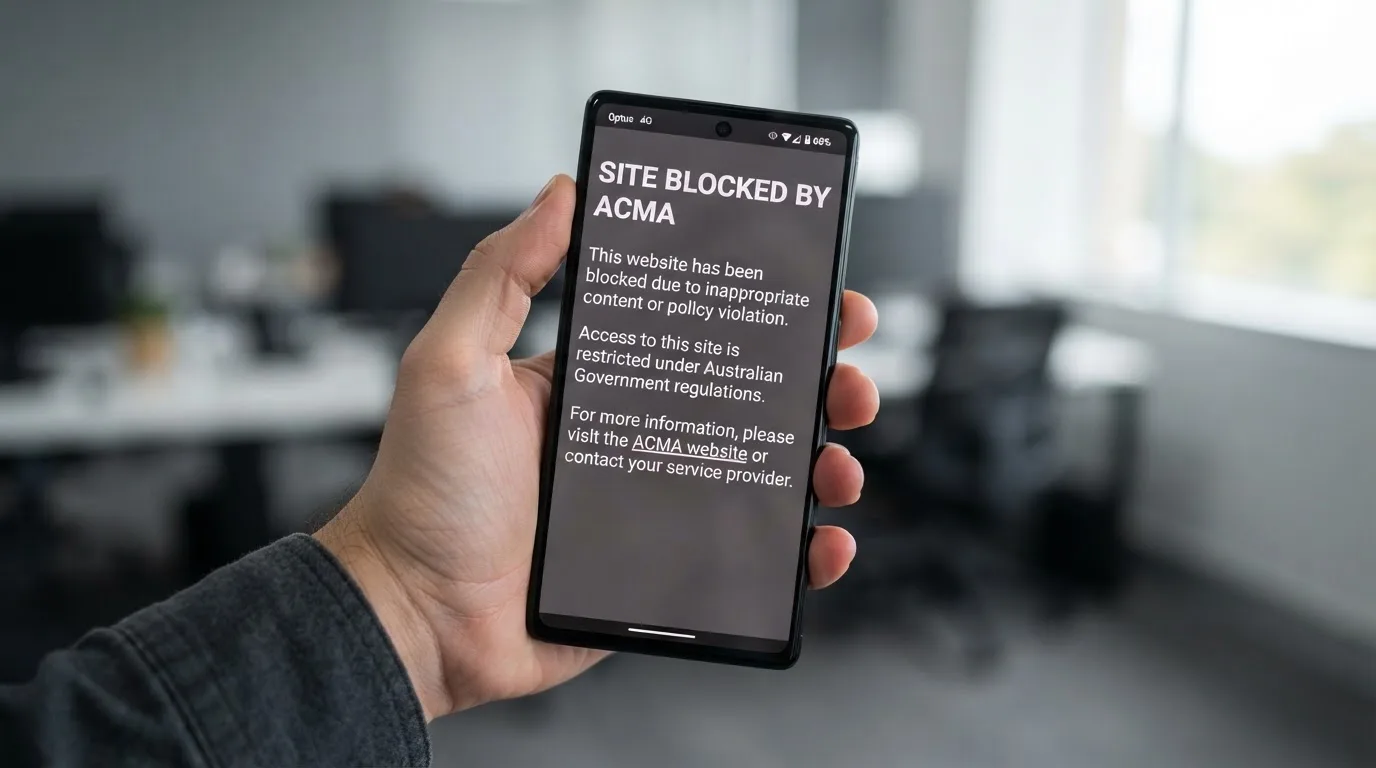
Enforcement runs through the ACMA. Its three tools are formal warnings, written directions to ISPs to block sites, and civil penalty proceedings. The cumulative record is substantial: as of the ACMA’s June 2026 round, 1,751 illegal gambling and affiliate marketing websites had been blocked since the first blocking request in November 2019, and more than 230 unlicensed services had left the Australian market since the 2017 amendments strengthened enforcement. The June 2026 round alone added 12 more names: 7Signs, ChromaBet, Donbet, Duospin, Freshbet, Slots Gem, Jacks Club, Lucky Start, Pointsbetz, Spinrise, Vinyl Casino and Wildsino.
For the player, the practical consequence of the offshore setup is straightforward. The site is licensed somewhere else, supervised by someone else, and held to a different rulebook. If a withdrawal stalls, there is no Australian complaints body to ring. If the site goes down with money still on it, the balance is unrecoverable through any Australian route. If the ACMA directs ISPs to block the domain, the site becomes unreachable overnight — a recurring, named risk for any account still open at that point. None of this is hypothetical; it has happened to every name on the list further down this page.
The credit-card and crypto ban as a tell
A second, narrower signal sits in the payment layer. Since 11 June 2024, credit cards, credit-related products and digital currency have been banned as payment for any licensed Australian online wagering service, with penalties up to A$247,500 for operators that breach the rule. The legal deposit routes for licensed wagering are debit card, bank transfer, PayID/Osko and BPAY. An offshore casino asking an Australian customer for a credit card or a Bitcoin deposit is not just outside Australian licensing — it is using payment instruments the Australian rule explicitly bars. Anyone who has to type a card number into one of these sites is already past the line.
Responsible gaming: what actually applies to an Australian player
The headline tool is BetStop, the National Self-Exclusion Register. Live since August 2023, BetStop binds every Australian-licensed online and phone wagering service, so a self-exclusion set through BetStop stops the customer from logging in, depositing or receiving marketing from licensed bookmakers Australia-wide. Offshore casino sites are not connected to BetStop — exclusion from one does not extend to another, and the offshore sites have no obligation to honour the registration at all.
The 24-hour support line is the National Gambling Helpline on 1800 858 858, free from any Australian phone, with online chat at Gambling Help Online. Both are open around the clock. For Melbourne specifically, the Victorian Gambling and Casino Control Commission runs face-to-face support and referral through its own channels; the regulator’s contact details are on its website, separate from the helpline.
Inside Crown Melbourne, the operator is bound by the responsible-gambling conditions imposed after the Finkelstein Royal Commission concluded in October 2021. Victoria’s Casino and Gambling Legislation Amendment Act 2021 created the VGCCC as the state’s dedicated casino regulator and banned junket operations at Victorian casinos. The Commission fined Crown A$80 million in June 2022 for processing A$164 million in illicit payments, then A$120 million in November 2022 for responsible-gambling breaches that included letting patrons gamble for more than 24 hours without a break. The behaviour the Commission was reacting to is now a regulated condition, with on-floor intervention a standard part of how the venue is supervised.
Crown Melbourne: the licensed venue behind the search
Crown Melbourne is an integrated casino and hotel resort on the south bank of the Yarra River. It opened temporarily on 30 June 1994 at the World Trade Centre on the north bank, then reopened on the south bank on 8 May 1997 in a permanent building designed by Bates Smart, Perrott Lyon Mathieson and Daryl Jackson. The complex spans about 510,000 m² — roughly two city blocks — and is the largest casino complex in the Southern Hemisphere. Crown Resorts has owned it since Publishing and Broadcasting Limited acquired the casino from founder Lloyd Williams’ operation in 1999.
Inside, the gaming floor covers about 220,000 sq ft (around 20,000 m²) with 540 licensed table games and 2,500 poker machines. The table count includes 100 poker tables, separate from the blackjack, baccarat, roulette and craps layouts on the main floor. The resort above the gaming floor holds 1,604 hotel rooms spread across three towers. Outside the complex, the rest of Victoria’s electronic gaming machine footprint is capped at 30,000 machines under state law; in 2021–22 there were 26,380 machines in 488 venues outside Crown, leaving room inside the cap but no appetite to use it. The state-wide picture in 2025–26 was a record: Victorians lost A$3.318 billion on electronic gaming machines in the year to mid-2026, according to the Victorian Local Governance Association.
The Royal Commission and what it changed
The Finkelstein Royal Commission into the Casino Operator and Licence concluded in October 2021. It found evidence of money laundering and strong ties to organised crime at Crown Melbourne, and recommended that Crown keep its licence only under a court-appointed Special Manager for a two-year review period. The Casino and Gambling Legislation Amendment Act 2021 followed, creating the VGCCC and banning junket operations. The two VGCCC fines that followed — A$80 million in June 2022 and A$120 million in November 2022 — were direct responses to the conduct the Commission documented. The venue’s licence has survived, but on terms set by the regulator and reviewed continuously, not on the trust-me model the old licence effectively was.
What an Australian actually sees on the floor
The practical answer for a visitor is this: Crown Melbourne runs the games the search terms ask about. Baccarat, blackjack, craps, roulette and a poker room of 100 tables are all on the main gaming floor. The 2,500 pokies on site operate under the same VGCCC framework as the rest of the state’s 26,380 machines outside the complex. There is no online version of this product. The Crown complex, the table games and the pokies are the only legally available access point in Melbourne; everything else carrying a “Melbourne” brand and an online cashier is operating against the Interactive Gambling Act.
Games on the floor: baccarat, blackjack, craps, roulette and the pokie catalogue
Crown Melbourne’s licensed catalogue is wide by Australian standards. The 540 tables on the gaming floor cover baccarat (multiple commission and no-commission layouts), blackjack (classic and variations), craps (with the full proposition betting range), roulette (both single-zero and double-zero wheels) and a dedicated poker room of 100 tables running cash games and tournaments separately from the main floor. The 2,500 pokies are spread across several gaming areas, with a higher-density section near the main entrance and quieter banks on the upper levels of the complex. Outside the casino, the state caps the rest of the pokie estate at 26,380 machines in 488 venues, all operating under the same regulatory framework as Crown.
Pokies return-to-player and the difference a venue makes
South Australia, by contrast, sets a minimum gaming-machine return-to-player rate of 87.5% and a general maximum bet of A$5.00 outside the casino; Adelaide Casino itself has no maximum-bet limit, and runs 950 gaming machines alongside 90 tables on its own floor. The structural point is that Crown Melbourne is not subject to a maximum-bet cap on its floor in the same way a South Australian pub or club is, and its machine RTP sits within the same regulatory envelope without being pinned to a specific minimum. The effect is felt at the table: Crown’s high-limit rooms run stakes the surrounding pubs and clubs cannot legally take, which is part of why the complex draws the international play it does.
For readers looking at the other end of the market — the pub and club pokies — Victoria’s record A$3.318 billion in 2025–26 losses is the relevant context. That number is the public cost of machines the state allows outside Crown, and the licensed Melbourne casino sits above that estate as a separate, separately regulated operation.
How the offshore sites line up against Crown Melbourne
Crown Melbourne has no Australian peer online. Every offshore casino offering “Melbourne” or “Australia” games to Australian residents is offering a product the IGA prohibits. The names below are not recommendations. They are the brands the ACMA itself has named in formal warnings since 2022, listed in the order research gives them, with the date of the warning and the operator the ACMA identified. Where the brand is also referenced in third-party listings, that is stated as a listing note, not as a fact about the site itself.
The table is what the ACMA has on its own record, plus what each brand’s own footprint looks like across the listings research consulted. Empty cells mean the research found nothing usable; they are not guesses.
| Brand | ACMA action and date | Operator named by the ACMA | Subject support |
|---|---|---|---|
| RocketPlay | Formal warning, March 2026; earlier Dama N.V. warning, May 2022 | Pulsup Ltd | — |
| Level Up Casino | Formal warning, May 2022 | Dama N.V. | Listings reference this name across general industry sources |
| Woo Casino | Formal warning, March 2025 | Dama N.V. | Listings reference this name across general industry sources |
| Spirit Casino | Formal warning, May 2025 | Dama N.V. | — |
| National Casino | Formal warning, July 2025 | Consolutetish S.R.L. | Listings reference this name across general industry sources |
| Bizzo Casino | Formal warning, July 2025; earlier 2022 warning to TechSolutions | Consolutetish S.R.L. | — |
| Ignition Casino | Formal warning, July 2025 | Bamboo Media | — |
| Instant Casino | Formal warning, February 2025 | EOD Code SRL | — |
| Jackbit | Formal warning, April 2026 | Ryker B.V. | — |
| Casino Intense | Formal warning, April 2025 | Sterplay Holding Ltd | Listings reference this name across general industry sources |
| Sky Crown | Formal warning, September 2022 | Hollycorn N.V. | Listings reference this name across general industry sources |
Two things stand out. First, the operator column reads as a roster of recurring names. Dama N.V. has been the subject of three separate ACMA formal warnings — May 2022, March 2025 and May 2025 — covering six brands in 2022 (Bambet, Dazard, Level Up, Rocketplay, Wild Tornado and Cobra Casinos) and two more in 2025 (Woo Casino, Spirit Casino). The IGA’s prohibition does not stop at the brand: the operator-level record shows the same corporate vehicle re-entering the Australian market under new trading names. Second, the warning frequency has not slowed. The ACMA published formal warnings in February 2025, March 2025, April 2025, May 2025, July 2025, March 2026 and April 2026 — a pace that puts a fresh warning roughly every two to three months. Each one names a different operator on the other side, but the underlying behaviour — offering prohibited interactive gambling services to Australians — is the same every time.
What an Australian should read off this list
The columns the table does not have are at least as informative as the ones it does. There is no Australian licence, no dispute resolution path and no local consumer protection for any of these brands. The payment column for an offshore casino is the inverse of the Australian rule: the sites ask for the instruments the licensed Australian wagering channels are banned from taking. The single fact a reader needs to take from the table is that the ACMA itself has, in its own enforcement record, named every brand here. That is not a market opinion — it is the regulator’s published position, dated to each warning.
The blocking rate: how quickly the ACMA clears the backlog
The arithmetic here is simple, and the answer is more useful as a band than as a single figure. Between the ACMA’s first blocking request in November 2019 and the June 2026 reporting round, 1,751 illegal gambling and affiliate websites were blocked. That is the cumulative numerator; the time between November 2019 and the June 2026 round is the denominator. Run that out as a monthly rate and the average works out to a band well above twenty sites per month across the whole period, with the published June 2026 round alone taking out twelve names at a single stroke. That single round is not the upper bound — the ACMA publishes rolling lists and individual blocking actions have at times cleared more — but it is the published reference point the regulator itself put on the record for 2026, and the better way to read the cumulative figure is as an ongoing average, not as a steady state.
The condition on the figure matters. The blocking tool is what the ACMA uses after a formal warning, an investigation and a written direction to Australian ISPs. It is not a preventive ban: each site has to be identified, served and then blocked, which is why the same operator keeps reappearing under new domains. The reader-facing version of the rate is that any site the ACMA has already named is at high risk of being blocked next, and any new site launched by the same operator is starting its clock from that position. What this gives the player is a sense of how exposed any balance held with an offshore site actually is — not a guarantee, but the regulator’s own rate of clearing the queue.
Adelaide Casino and Treasury Brisbane: the licensed comparators outside Melbourne
Two other Australian cities have licensed casinos worth knowing about for comparison, because they answer the natural follow-up — “what does a casino city other than Melbourne offer, and how does Crown Melbourne differ?” Neither is in Melbourne, but both are relevant to anyone weighing the relative strengths of Australian casino markets.
Adelaide Casino
Adelaide Casino, commercially traded as SkyCity Adelaide for stretches of its history, sits in the heritage-listed Adelaide railway station building on North Terrace. It opened on 12 December 1985 under South Australia’s state-owned Lotteries Commission, was sold to SkyCity Entertainment Group in June 2000, was rebranded SkyCity Adelaide in April 2001, then reverted to the Adelaide Casino name in 2009. A 2015–2021 Riverbank precinct redevelopment, worth about A$330 million, added the EOS by SkyCity tower — 120 hotel rooms and expanded gaming space — which opened in 2021.
The casino holds 90 gaming tables and 950 gaming machines, regulated by South Australia’s Independent Gambling Authority and Liquor and Gambling Commissioner. Its table-game monopoly in South Australia was extended to 30 June 2035 under a licence formalised on 11 October 2013, which also allows the casino to expand to up to 200 gaming tables and 1,500 gaming machines subject to redevelopment. In the 2007–08 financial year it paid more than A$41 million in taxes and charges to the state. The wider South Australian pokie estate — 11,672 machines in 471 venues outside the casino as of September 2023 — sits under a different rule: a minimum RTP of 87.5% and a maximum bet of A$5.00 outside the casino, with the casino itself exempt from the bet cap. South Australian gaming-machine losses outside Adelaide Casino totalled about A$0.92 billion in 2022–23, equivalent to about A$497 per adult.
The Star Brisbane at Queen’s Wharf
Treasury Casino, the prior Brisbane casino operated by Star Entertainment Group in the city’s historic Treasury Building, opened refurbished in April 1995 and ran until 25 August 2024, occupying a three-level gaming emporium of 80 tables and over 1,300 gaming machines, plus a hotel, six restaurants, five bars and a nightclub. It closed to make way for the new Star Brisbane at the A$3.6 billion Queen’s Wharf Brisbane precinct, which began a staged opening on 29 August 2024 with the main casino floor and premium gaming rooms opening first. Queensland had 21,122 gaming machines operating in 351 venues in October 2023. The opening landed amid concerns about the licence position of Star Entertainment Group, the lead partner at Queen’s Wharf, which has been under sustained regulatory scrutiny in New South Wales over its Sydney operations.
What the comparison tells a Melbourne reader
Crown Melbourne is larger on every dimension than either comparator: 540 tables and 2,500 pokies against Adelaide’s 90 tables and 950 machines and Brisbane’s 80 tables and 1,300 machines; 1,604 hotel rooms against the 120-room EOS tower at Adelaide and the Treasury Brisbane hotel. The regulatory environments differ in detail — South Australia’s RTP floor and bet cap apply outside Adelaide Casino but not inside it; Victoria’s 30,000-machine statewide limit sets a ceiling Crown sits below; Queensland has no equivalent machine cap on its casino but caps the wider pokie estate — but the legal framework is the same, because the IGA covers them all.
Frequently asked questions
What is the name of the main casino in Melbourne?
Crown Melbourne. It is the only casino licensed in Victoria, on the south bank of the Yarra River, and has run under Crown Resorts since 1999.
Where is the casino in Melbourne located?
Crown Melbourne sits on the south bank of the Yarra River, in a 510,000 m² complex that is the largest casino resort in the Southern Hemisphere. The complex is integrated with the Melbourne CBD across the river.
What is the minimum age to enter the casino in Melbourne?
- The minimum age applies across all Australian licensed casinos under the Interactive Gambling Act 2001 and the state-level casino legislation.
Does Crown Melbourne offer table games such as blackjack and baccarat?
Yes. The gaming floor runs about 540 licensed table games — blackjack, baccarat, craps and roulette, plus a 100-table dedicated poker room — alongside 2,500 poker machines.
Are there hotels within walking distance of the casino in Melbourne?
Crown Melbourne itself contains 1,604 hotel rooms across three towers. Several CBD hotels are also within walking distance across the Yarra.
Can Australians legally play at an online casino instead of visiting Crown Melbourne?
No. The Interactive Gambling Act 2001 prohibits offering online casino games, online pokies and in-play betting to people in Australia, and no state or territory licenses them. The ACMA blocks illegal sites and issues formal warnings to operators.